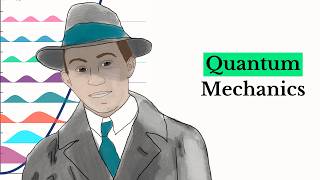
In 1921, English chemist Charles Rouely Bur proposed the addition of a new group of elements to the periodic table based on his model of the atom which was very similar to that of renowned physicist Neils Boore. In fact, some textbooks in the early 20th century labeled this model the Bore Bur model, but this has unfortunately been lost to time. Boore's model stated that electrons orbit the nucleus in distinct energy levels called shells.
and Bur added on to that by stating specifically how the shells are filled. According to Bur, the first four energy levels can house 2, 8, 18, and 32 electrons respectively. He also stated that the outermost layers of electrons, the veence shells, can only hold up to 8 electrons.
This seems like a contradiction as the third energy level can hold up to 18 electrons and the fourth 32 electrons. So, how could heavier elements ever [music] get past 8 electrons to satisfy the maximum occupancies of their higher energy levels? Rouley's answer to this conundrum is that these heavier elements start to fill the fourth energy level after eight electrons fill the third energy level, then reach two veence electrons, and then start to fill in the third energy level further until it reaches a maximum occupancy of 18 electrons.
He called the elements that behave this way the transition series of elements and thus the transition elements were born. The transition elements in the 1920s were a hot topic of scientific research as not all of them had yet been discovered. In some places on the table there were simply gaps with numbers representing their atomic numbers and names based on other elements.
Dmitri Mendelv had predicted the existence of these elements in his periodic table he proposed in 1869 based on patterns he recognized when organizing the elements based on their properties. When making these predictions, he named the missing elements based off of other known elements at the time using the Sanskrit names of the digits 1 [music] 2 and three as prefixes to these names based on if they were one two or three places down from the known element of the same group in his table. So for example, germanmanium was named AKA silicon before its discovery for it was one spot away from silicon on the periodic table and was in the same group.
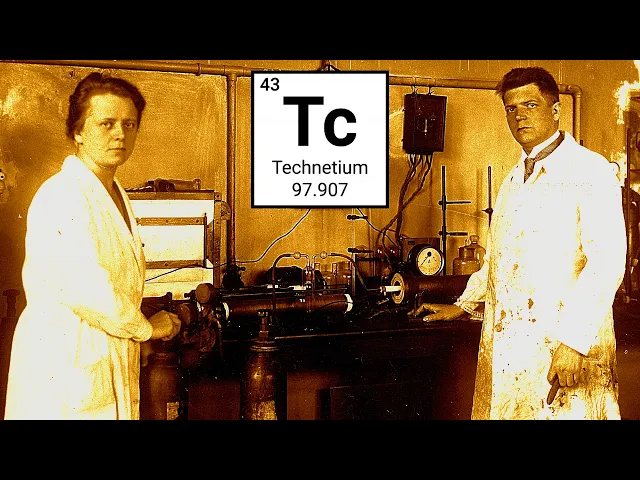
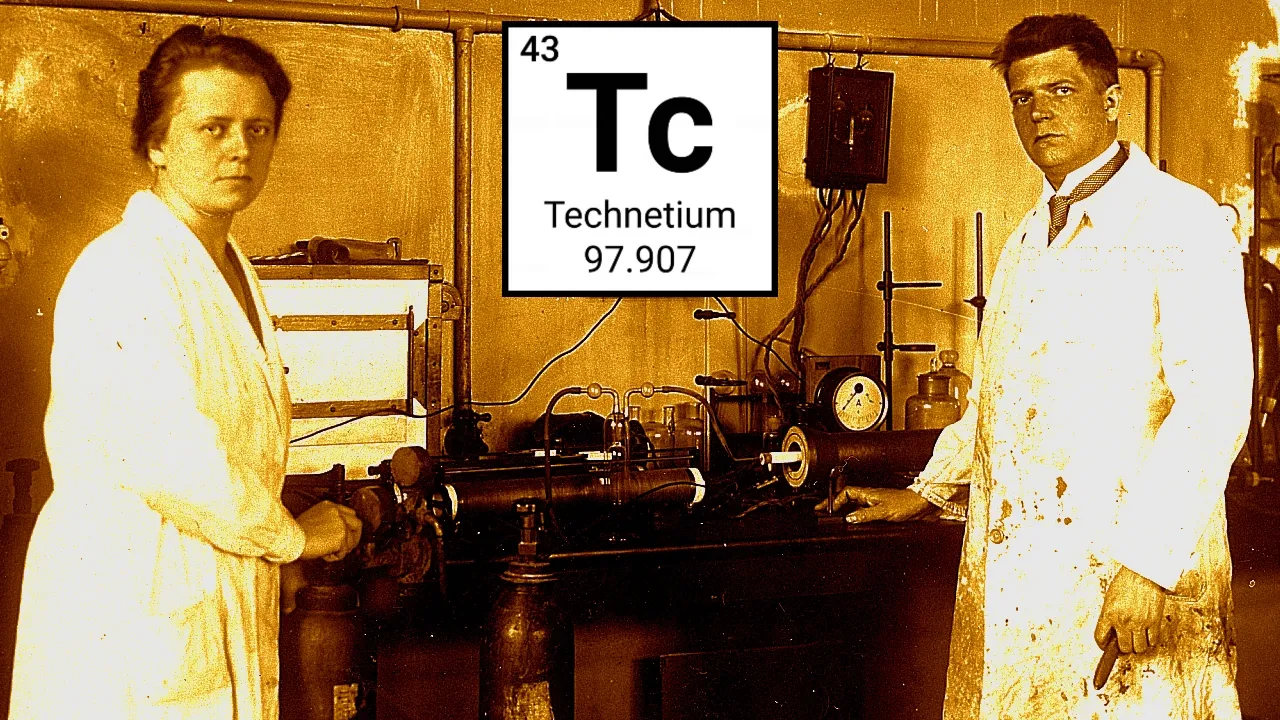
By 1923 after the discovery of the element Hapnneium by Durk Coer and George de he only two transition elements predicted by Mendelv remained to be discovered. These two were named Aka manganesees and devi manganesees as they occupied spaces one and two away from manganesees in the same group on the table. The quest to find these two elements was on spearheaded by a German husband and wife duo of chemists named Walter and Ida Nodk.
Walter Nodk was born in Berlin in August 1893. In his childhood he was educated at the prestigious Friedrich Vera Oberilshula. This was the same institution that housed Friedrich Vuler when he first synthesized ura in 1828, proving that inorganic compounds can create organic compounds and therefore disproving vitalism.
After his early education, Nadak enrolled in the University of Berlin and studied under the advisory of Walter Nernst, the same Walter Nernst who formulated the third law of thermodynamics. In fact, Nerst won the Nobel Prize in chemistry the same year as Nadak obtained his doctorate in 1920. Shortly after winning the Nobel Prize, Nerst moved to the physical technicia rice and stalt to accept its presidency and Walter moved with him.
Nadk succeeded Nernst 3 years later, the same year as Hafne was discovered and it was at this institution where he met his future partner Idatac. Idatac was born in February 1896 in a suburb on the Ryan River 85 km north of Cologne. Her father was the owner of a varnish factory.
So their family was wealthy and therefore Ida had plenty of opportunity. She received her education at the Berlin Hoshula, obtaining her doctorate in engineering in 1921. Before meeting Walter, Ida's ambition was in her father's business.
She specialized in organic chemistry and thought she could improve the linseed oil in her father's varnish. Ida joined the physical technicia rice in 1922 to advance her studies. But her life's goal was upended upon meeting Walter.
Walter had a keen interest in discovering new elements and she eventually decided she wanted to join him in his quest. The two fell in love and married four years later. The Nodex together called themselves the Arbutka Mineshaft, meaning work unit, and formed a bond that extended from their work lives to their personal lives, very similarly to how Pierre and Marie Curi did.
Walter and Ida's first task they sought after together was finding the remaining two undiscovered transition metals, a manganese and dev manganesees. The first step in searching for a new element is determining where you should look. The Nautics knew that for some reason elements with odd atomic numbers appeared less frequently in nature than elements with even atomic numbers, although they didn't know why.
They were also aware of a certain pattern-like behavior in the periodic table, known as the diagonal relationship. This is a phenomenon in which elements that are diagonal to one another on the periodic table [music] in this specific orientation show very similar chemical properties. Although this pattern seems to only predominantly happen in the first couple of rows of the periodic table, there were some instances where this relationship extended into the transition elements.
Going off of this information, they planned a trip to Scandinavia after their wedding to obtain samples of minerals not readily available to them from mines to study and try and find these elements. However, in the meantime, they decided to test platinum and colite ores, which did in fact happen to be readily available to them. They chose these ores because of their tendencies to have traces of many radioactive elements in them.
Ida herself took a year sbatical to extend her knowledge of chemical separation processes to better prepare herself for this quest. In 1925, while studying these ores, they came across an interesting white deposit that formed after a sublimation test. Sublimation is a process in which a solid turns straight into a gas, bypassing the liquid phase.
They took the sample 400 m north to the lab of Ottober Berg where together the three of them analyzed the X-ray spectra of the sublimate. Standing on the shoulders of Henry Mosley who related the X-ray spectrum of an element to its atomic number. They used the X-ray spectra of the sample to determine what elements this white sublimate was made out of.
After careful examination, they concluded that they had found both elements 43 and 75. Akamanganesees and vanganesees. The three of them gave the two elements new names with element 43 being dubbed Missouri after Missouri where Walter's family originated.
Element 75 was dubbed Reinium after the Ryan River where Ida was from. The next task was to find physical traces of the elements, which was much easier said than done. They were able to do so with the element 75.
Though during their trip to Scandinavia, they analyzed ores from over 100 mines and eventually found traces of reinium and malibdonite, validating the diagonal relationship I mentioned earlier. After 2 years of hard work, they were able to isolate 1 g of reinium from 666 kg of malibdenite. Element 43, though despite their efforts, was nowhere to be found.
Reinium, unbeknownst to them at the time, would be the last stable element discovered naturally in the course of human history. The Nautics pursuit to discover element 43 was one of the many, many unsuccessful attempts to find the element. Unbeknownst to the Nodics, as well as all scientists before them, element 43 is not naturally found on Earth whatsoever.
This is due to just how unstable it really is. There are no stable isotopes of element 43. And even the most stable isotope has a halflife of 4.
2 million years. Given the age of the earth to be about 4. 6 billion years, even the most stable isotope of element 43 would be long gone well before humans even existed.
Let's look at this chart to put it in perspective. Let's say for the sake of argument that the entire earth was made up of the most stable isotope of element 43 when it was formed. Therefore, the initial weight of our sample would be the weight of the earth in kg.
Each step here is the isotope decaying through its half-life, which is 4. 2 million years. This column here represents how much time we have left until present [music] day, starting at 4.
6 6 billion years ago when Earth was formed and ticking time backwards for each half-life that occurs for our isotope. And this column here represents the number of atoms of our most stable isotope of element 43 starting at 3. 711 * 10 49 at the time of Earth's formation.
As we go through these half-life steps, it becomes clear just how quickly our isotope is going to decay from existence entirely. Our isotope of element 43 decays so quickly that only 344 million years would have passed before the entire earth would have decayed to the point to where merely 1 kg of element 43 would be left on the entire earth. At this point in our chart, it becomes less sensible to measure how much of our isotope we have left in terms of kg.
So at this point, we're going to switch over to the amount of atoms present. After about 529 million years, we've reached a point to where under a trillion atoms remain of our isotope, which is already an extremely small amount of substance. If we keep going, our isotope decays to less than 1 billion atoms at 570 million years.
If we keep pushing further, we're under even 1 million atoms after just 613 million years. And by the time we hit 697 million years, we're down to approximately [music] just one atom left of our isotope. At some point close to this time in our chart, the last remaining atom of our isotope will decay, leaving no trace that the isotope ever even existed, let alone constituted the mass of the entire Earth.
The only way that element 43 could ever be discovered in human history, was to make it ourselves. The man who had finally discovered this artificially created element was just beginning his studies alongside Enrico Fermy at the University of Rome. While the Nodex were discovering reinium.
Alio Gino See was born in 1905 in Tivoli, Italy which is just outside of Rome. After graduating from the University of Rome, he served a short stint in the military before becoming a professor of physics at the same university he graduated from. Upon returning to Rome and reuniting with his old buddy Fermy, he joined the [music] Via Panispera boys alongside him to pursue the quest of causing nuclear reactions through bombardments of slow neutrons.
Seagra switched universities in 1936 becoming director of the department of physics at the University of Polarmo. It was on a trip to Berkeley, California though, where Cray found a source of inspiration that would alter the course of his life. During his trip, he visited the Berkeley Radiation Laboratory, where he met Ernest Lawrence, the man who invented the cyclron, which was one of the first particle accelerators ever created.
Lawrence gave Sea a few pieces of irradiated scrap metal, which Seg returned to Polarmo and isolated several radioactive elements from. Seg continued to receive irradiated samples from Berkeley after returning to Polarmo. And in 1937, [music] he struck gold.
Lawrence had shipped Cray a strip of radioactive malibdinum that had been previously used as a deflector plate in the cyclron and had been bombarded with duterons [music] which are hydrogen atoms with one proton and one neutron. A brilliant idea struck Cray as soon as he got his hands on the material that the strip might contain traces of element 43 synthesized from the bombardment of the duderons into the malibdinum. He however could not isolate this himself as he lacked the chemical expertise.
Luckily his university building at Polarmo shared the department of physics with the department of minology which was headed by Italian chemist Carlo Perier. Seag quickly rushed to the minology department and the two of them got to work. They followed similar separation methods to those pioneered by the curies decades earlier.
First they removed impurities from the strip by reacting it with boiling ammonia. It was in these impurities where the products of nuclear reactions would hypothetically reside. Then they [music] used an ingenious method carriers.
Cramp and Perryier suspected that the amount of radioactive atoms in the extracted solution would be too little to collect itself and would have to be carried by more massive samples out of the solution. Those stable elements would then be examined for radioactivity. If they tested positive, then the radioactive substance in the solution would have been an isotope of that carrier element.
They tried many carrier elements such as malibdinum as well as many elements with similar atomic masses and similar chemical properties to malibdinum such as manganesees and zirconium. They isolated these elements after adding them to the radioactive solution, but found no radioactivity in any of the resulting samples. Lastly, they added reinium as a carrier, but like all carrier elements before, the extracted reinium showed no signs of radioactivity.
Cra and Perier concluded that the remaining solution, which was still radioactive, contained element 43 as they had tried all known possible radioactive elements and therefore there was no other sensible explanation for the radioactivity of the solution. Upon coming to the conclusion that they had found element 43, Cray himself visited the Nautics to give word that he had found the element that the husband and wife duo had supposedly seen through X-ray analysis some years before. However, upon conversing with Walter in person, Walter could not show Alio the X-ray plates and claimed that they had accidentally been broken at some point in the past.
Seag returned to Polarmo and stated that the Nautics showed no clear-cut results in regard to element 43 and that he had obtained no definitive information. Seag continued to work with Lawrence and the cyclletron at Berkeley through the coming years and they eventually were able to confirm the existence of element 43 further through X-ray analysis as the Nodics had claimed to have done years before. Seagra had both X-ray analysis and alleged physical traces of element 43 as evidence.
So it had become safe to say that he had discovered the element alongside the help of Perier and Lawrence. By 1947, an article was published in Nature, finally giving element 43 its name, technesium, stemming from the Greek word technos, meaning artificial. Later in life, Walter Nodk claimed that neither he nor Ida was ever invited by anyone to discuss their findings on Missouri until Cray showed up over a decade later.
Despite this claim, the lack of evidence from the Nautics ultimately meant that no one could definitively say if they had discovered element 43. On top of that, there was a lot of backlash in the scientific community over the naming of the element 43 by the Nautics as Missurium. Some say the Nautics were referencing the Battle of the Missurian Lakes in World War I in which Germany defeated Russia.
A combination of this backlash and the lack of evidence in later life by the Nautics led to them inevitably losing credit for the discovery of element 43. Neither of the Nautics won a Nobel Prize in their lifetime despite multiple nominations and other achievements in their lives and most say it is because of the fiasco over element 43. Ida's boldest action as a scientist was her challenge she put up against Enrico Fermy as he was winning the Nobel Prize in physics in 1938.
She correctly fought Ferm's conclusions that neutron bombardment was creating new transuranium elements and proposed that instead smaller atomic fragments were being created. She even went as far as to propose the concept of nuclear fision 5 years before Otto Han, Lisa Miner and Fritz Strasmon announced the results. It is said that Ida tried to convince Otto Han of nuclear fision, but Han dismissed her, saying, quote, "One mistake is enough.
" Referring to the fiasco with element 43. However, later in life in 1966 on a radio broadcast, Otto Han did admit Ida was right after all about nuclear fision. Seg himself did eventually win a Nobel Prize, but it wasn't for the discovery of technesium.
Rather, it was shared with Owen Chamberlain in 1959 for the discovery of the anti-roton. The story of technesium is quite an interesting one which ended in a harshly damaged reputation for the so-called work unit of Walter and Idonautic. Whether or not this type of treatment towards them was fair is up for debate, but no one can discredit their discovery of reinium.
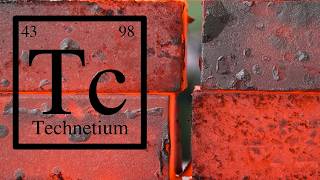
By 1937, the first three rows of the transition metals had been filled, and the predictions made by Mendelv way back in 1869 had finally come to full fruition. Not only that, but in the same process of validating Mena's predictions, scientists transitioned from discovering elements naturally occurring on Earth to manufacturing their discoveries by making them in labs. Today, an isotope of technesium, technesium 99m, [music] is commonly used in radioactive imaging as it decays very quickly.
With a half-life of 6 hours and with the emission of gamma rays, it's able to reduce the amount of radiation a patient is exposed to and simultaneously collect data inside the body quite effectively. Technesium has changed the world, not just in the physics lab, but also in medical science. and the history of its discovery provides quite an interesting perspective not only on the elements but on human nature as well.
If you enjoyed this video, please consider liking and subscribing. Click here if you want to see more scientific progress made during this time period. Thank you for watching and I will see you in the next video.