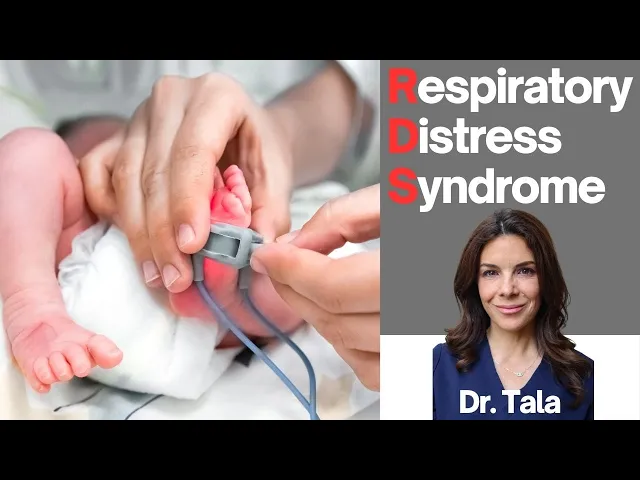
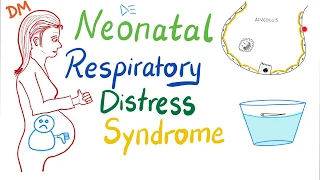
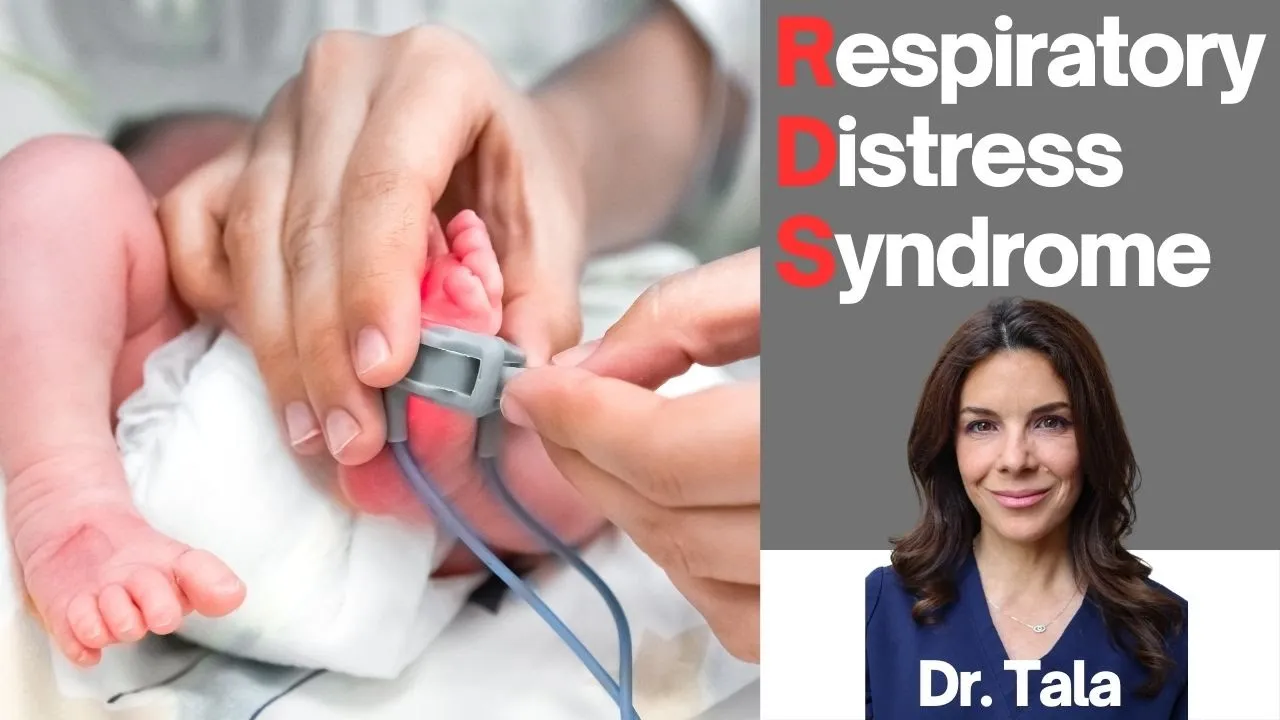
[Applause] ultimately though you should be getting a chest x-ray and there are three signs on the chest x-ray that would make it consistent with audio hello and welcome to tyler talks thank you today we're going to be talking about respiratory distress syndrome or rds it's also called hyland membrane disease or hmd as you all know rds is a major cause of both morbidity and mortality in the nicu and it's something that we deal with pretty much every single day in the nicu so it really is very important that you understand this whole concept so today
we're going to go through what causes rds the symptoms of rds the chest x-ray findings that you'd see with rds and then also the treatment so let's talk about the causes i know i've become a stopped record with this but like all three letter acronyms the smaller the baby the younger the baby then the higher the frequency and the worse the severity of rds just like pretty much everything else in the nicu and the reason for that is what causes rds is the immaturity of the lungs so there's immaturity of the lungs themselves and if
you think about it the lungs are still really really growing and developing in neutral and even after birth in fact the saccule stage which produces the respiratory bronchioles which are really the first surface that can tolerate gas exchange do not develop until about 24 weeks which is why babies younger than 24 weeks are really not very good at surviving the alveolar stage doesn't develop until 32 weeks so really in that like late second trimester period babies are pretty much breathing through the respiratory bronchioles the surfactant production does start at 20 weeks and it's produced by
different cells within the respiratory system eventually it's the alveolar cells but it starts at 20 weeks but not with a very high level production the level of surfactant production until term is really very very low and more importantly than that the way that the surfactant is recycled is also very inefficient whereas in term kids and and older people and adults surfactant is constantly being recycled so really there are two causes the first one is obviously just immaturity of the lungs if you've got less cells that are capable of gas exchange then obviously a baby is
going to have difficulties breathing the second reason is the surfactant deficiency so why is surfactant important surfactant is mostly a phospholipid so it's a very fatty substance with about 10 percent of proteins and its job is very much like a detergent so when you have a bunch of fluid molecules covering an area so if you have a bunch of water molecules covering an area those water molecules are attracted to each other and form bonds between each other so thus creating surface tension so the higher the attraction between those water molecules the higher the surface tension
and you can imagine the surface tension inside a little ball of cells is going to pull the sides of the ball towards each other and create collapse so the higher the surface tension the higher the intrinsic pressure is needed to keep those cells open or to keep the alveoli open what the surfactant does is it's basically like a detergent just when you're like washing dishes and you pour in some dishwasher detergent it breaks up all those water molecules so it breaks down the surface tension therefore the pressure that is needed to keep that ball of
alveoli cells open is much much lower so what you're then hoping is that those areas of the alveoli are not going to collapse because the pressure that is being delivered is enough to keep them open so ultimately we need surfactant to break up the surface tension within the alveoli so that less pressure is needed to keep them open so let's go over the symptoms i'm sure you've all seen this before but if a baby does have the immature lungs or lacking surfactant then pretty much as soon as the baby is born the baby is going
to be in respiratory distress this is slightly different from ttn which can worsen over the first few hours of life with rds pretty much as soon as they're born they're going to have difficulties breathing their lungs can be completely collapsed or they could just have a lot of increased worker breathing as they're desperately trying to get the pressure in to try to expand their lungs or make up for that missing surfactant so you can have completely no respiratory effort if the lungs are completely collapsed and the baby literally doesn't have the effort to open them
or you can have the increased worker breathing which is things like the retractions when you have the subcostal retractions the retro thermal retractions the suprasternal retractions where you're just seeing the skin get sucked in and out behind or underneath the ribs you could also have the grunting so that's when you hear this noise that so the baby is trying to stent open the lungs by increasing that pressure right at the end of expiration to try to prevent further athleticism that can also be a marker that there is surfactant missing the baby could be technic so
just breathing really really quickly because the baby isn't breathing deeply enough so it's trying to get rid of its co2 by breathing faster eventually if the baby is really in trouble then the baby will have desaturation so the oxygen saturations will go down in the 80s or 70s or even worse than that so any signs of increased worker breathing are all going to be very consistent with rds so how do you prevent rds like i've said a million times before you prevent it by preventing preterm births which we're not very good at but the most
helpful thing that can happen before birth is that the mother is given the prenatal steroids so the prenatal steroids that the mother is given the methylmethasone shots um 24 hours before delivery hopefully and at least 48 hours before delivery decreases the rate of both of the severity and the frequency of the rds as well as like we already said ivh so it's very very helpful when those mothers get steroids right before delivery so preventing preterm birth and giving steroids to the mother there's a lot of conversation about babies that are more stressed generally have slightly
better lungs and there is some truth to that if the mother was having high blood pressures during delivery or during pregnancy or some other stress going on with the placenta then that can increase the innate steroid release from the babies and that itself could help mature the lungs that isn't always the case though the mother having choreoamnionitis so having a bad infection generally increases the whole overall inflammation in the baby and that would probably make rds worse so now let's talk about chest x-rays and general diagnosis of rds like i already said a lot of
it is going to be a clinical diagnosis so a premature baby um who is born especially if the mother didn't receive steroids right before delivery and the rds can continue all the way up to the late pre-term infants in fact the highest proportion of babies in america that suffer from rds are late pre-term infants between 34 and 37 weeks and the reason for that is there are a lot more lately time infants born than the micro preemies you can even have rds in a 37 38 week that's especially true if the mother had sugar issues
during the pregnancy so if she had gestational diabetes it's very possible that you end up with a 37 38 weaker that has fact and deficiency so the first thing that you have to look at is the overall history the second thing obviously is the physical exam so like i already said increased worker breathing maybe if the baby is already on cpap or on the bed they start requiring increased support the third thing that you're going to get is a gas so i'm going to talk about this in a different video but you're looking for the
ventilation as well as the oxygenation so is the baby getting the oxygen in is the baby being able to breathe out the co2 that it needs to if both of those are very off then obviously we're a lot more worried about rds ultimately though you should be getting a chest x-ray and there are three signs on the chest x-ray that would make it consistent with rds the first one is hypoinflation so overall just collapse of the lungs so the reason for that like we already talked about is that when you have a very high surface
tension or you don't have surfactant in the alveoli they're going to collapse much easier and if you have enough collapse of enough alveoli then you'll end up with atelectasis throughout the lungs so you look at a chest x-ray and instead of being eight nine ribs expanded it could be six ribs expanded so that would be very consistent with rds remember that it is a less reliable marker when you're on the breathing machine if you put a baby on a breathing machine and you pump up the peep to 10 and the peppers at 30 then at
that point you're probably going to be expanding the lungs and so you're not going to expect hyperinflation on an x-ray like that but that's the first one hyperinflation the second one is the overall just diffuse ground glass appearance and what that refers to is just the overall haziness throughout the x-rays and that again is consistent with areas of micro athleticism so just areas of collapse all over the lungs the third thing that you would expect to see are air bronchograms and this is probably the most pathetic mnemonic marker for rds which means that you see
it you're like okay that's probably rds and that is when you can literally see all the bronchi as well as the bronchioles throughout the lung field so because of the haziness of the lungs themselves you're able to trace the exact pattern of the bronchials and bronchi in the lung field and that is very consistent with rds so it's a constellation of all those symptoms and the chest x-ray which would make you more secure in making the diagnosis of rds and then let's talk about treatment the best thing that's happened in neonatology in like the last
40 years is that they were able to extract the surfactant from cows as well as lambs and be able to administer that surfactant into premature infants so just giving surfactant has greatly reduced the morbidity and the mortality of all nicu babies so we do have surfactant available both the natural surfactant from animals as well as an artificial surfactant which so far has not been shown to be as effective as the natural surfactants the way that we give the surfactant so far has been by intubating the baby so we have to put a breathing tube down
into the baby's trachea and then we will literally push in the surfactant and it looks like this kind of creamy white liquid and you give somewhere between 2.5 to 3 cc's per kilo of the baby depending on the type of surfactant brown that it is and you're literally pushing it into the baby's lungs and the baby if they really do have a surfactant deficiency will just soak it all up and you can literally see the oxygen fio2 that the baby needs go down from like 60 percent down to 30 or 25 just as you're administering
the surfactant the lungs just suck it up really nicely what's interesting and this is going to be a huge development to neonatology over the coming years is there have been less invasive ways of delivering the surfactant which are in the process of being formed so instead of actually having to intubate the kid there's a way now of being able to just administer the surfactant more superficially or even aerosolize aerosolized surfactant so you're giving it just like a nebulizer treatment just like albuterol or something else like that so that's probably going to be developing in the
next few years for now though the main way that we're giving surfactant is with intubation the other big change in the treatment of rds has just been the effective usage of positive pressure ventilation so now we have this whole gamut of mechanical support that we can give to babies to make sure that we're giving them the support they need while their lungs heal while their lungs grow and while they start making their own surfactant so that goes all the way from just a nasal cannula so a little bit of oxygen in the nose to if
they need a little bit more support then we can give them cpap which is basically continuously giving them pressure to keep the alveoli open towards the end of expiration to all the way to being put on a breathing machine where the machines are literally breathing for the babies and pushing in a pit as well as keeping the lungs expanded at the end of their expiration cycle as well so the ultimate treatment for rds is just giving them the support that they need until their lungs heal themselves i hope you learned something that was a very
important topic in the nicu so if you do have questions then please comment below otherwise please like and subscribe and thank you for watching [Music] you