Picture this. You send the text to a friend and they don't respond for a few hours. Suddenly your mind starts spinning.
Maybe they're angry with you. Maybe you said something wrong. Maybe they don't want to be friends anymore.
Before you know it, you've convinced yourself that this friendship is over. All because of one unreturned text. Sound familiar?
We've all been there. But here's what's really happening. Your brain is lying to you.
I'm Doctor Tracey Marks, a psychiatrist, and I make mental health education videos to help you strengthen your mind, fortify your brain, and build resilience. We're continuing our series on rewiring thought patterns for resilience. In our previous videos, we explored how mindful awareness helps you notice your thoughts without getting swept away by them, and how self-compassion gives you the emotional safety.
To examine these thoughts honestly. Today we're looking at why your brain creates these mental false alarms and more importantly, how to fact check them before they ruin your day. Because the truth is, many of the thoughts that cause us the most distress aren't based on reality at all.
They're cognitive distortions and what you learn to spot them. You can start building a more resilient, realistic way of thinking. So what are cognitive distortions?
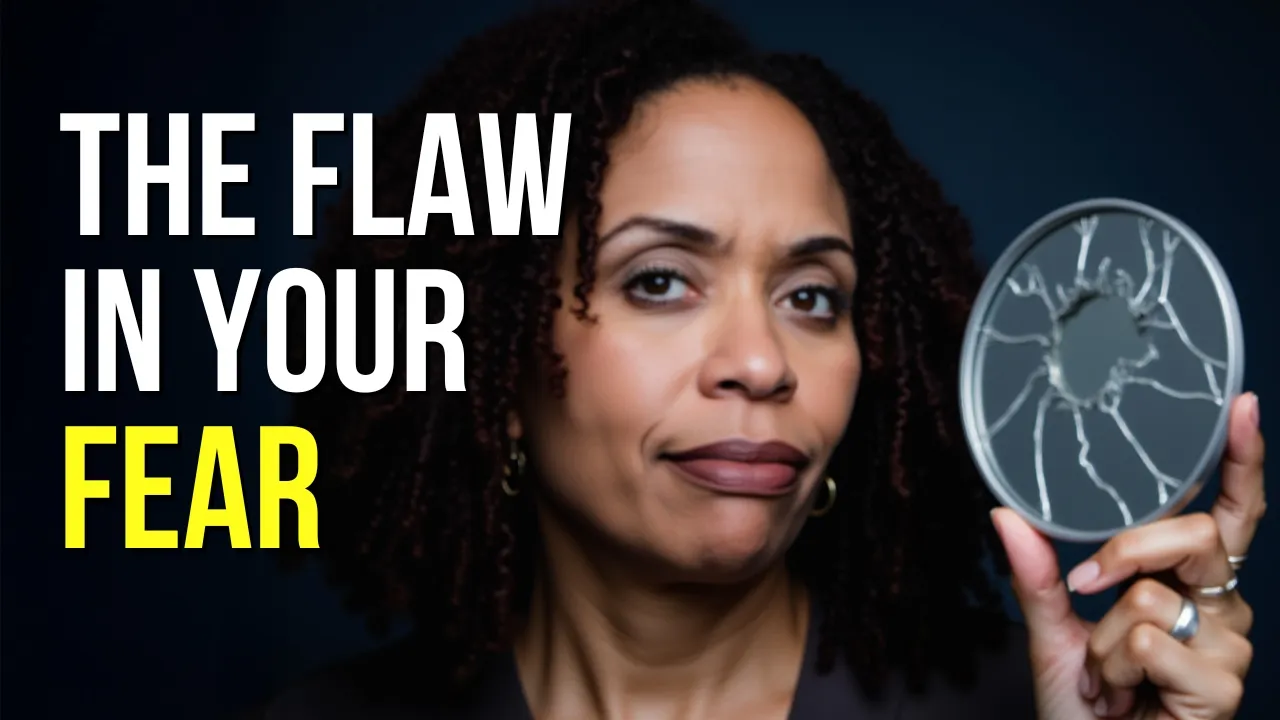
Cognitive distortions are biased ways of thinking that twist how you interpret events. They're often negative, automatic and inaccurate, but they feel true. They're like having a funhouse mirror in your mind that makes everything look scarier or more catastrophic than it really is.
Why would your brain do this? Because it's always looking for ways to be more efficient. It creates shortcuts to help you interpret situations quickly.
But those shortcuts aren't always accurate, especially when you're under stress. When you experience stress or uncertainty, your amygdala, the brain's alarm center, lights up. It's scanning for signs of danger and tends to on the side of caution.
And that's great when there's an actual threat, like a fire alarm going off, but it's not as helpful when the danger is something like not getting a reply to a text message. Meanwhile, your prefrontal cortex that part of the brain responsible for rational thinking and perspective taking, gets overridden. And over time, if you don't question those distorted thoughts, they get reinforced.
That's neuroplasticity in action. Your brain is strengthening those pathways, making the distortion easier to access the next time. But just like these patterns get reinforced through repetition, they can also be rewired through repetition.
You can teach your brain to think differently. And that's what we're going to do next. Let me walk you through four common distortions that tend to show up when we're under stress.
The first one is catastrophizing, and this is when your mind immediately jumps to the worst possible outcome. You feel a headache and assume it's a brain tumor. Your partner is quiet and you're convinced that they want to break up.
You don't hear back from a job interview and you're certain you'll never find work again. Catastrophizing takes a small possibility and treats it like an inevitable reality. The second is all or none thinking.
And this is black and white extreme thinking. You're either a success or failure. Things are either perfect or a disaster.
If you make one mistake, then the whole day is ruined. And this kind of thinking doesn't allow space for nuance, and it can lead to shame and self-blame when life doesn't go exactly as planned. The third kind of distorted thinking is mind reading, and this is when you assume that you know what other people are thinking, and it's usually something negative about you.
Here are some examples. You see, someone frowned, and you're certain that they're judging you. A coworker doesn't say good morning and you're convinced that they're angry with you.
You give a presentation and interpret neutral facial expressions as signs of disapproval. The truth is, we're terrible at reading minds, but our brains will fill in the blanks with our worst fears. And the fourth kind of distorted thinking is personalization.
And this is where you take responsibility for things that aren't actually yours to own. If your friend seems upset, you assume it's because of something that you did. Or if a meeting doesn't go well, you blame yourself for not keeping the team on track.
Even though there were multiple factors at play. And here's the thing about these distortions they feel true. When you're in the middle of catastrophic thinking, it doesn't feel like you're overreacting.
It feels like you're just being realistic about genuine threats. And that's exactly why they're so powerful and so damaging to our resilience. But here's the good news.
Just like we talked about in our mindfulness video, you don't have to believe every thought that pops into your head. You can learn to fact check your thoughts just like you would fact check information you read online. Here's a technique we can call becoming the evidence check.
When you notice yourself feeling anxious, upset, or overwhelmed by a particular thought. You can pause and ask yourself one key question what's the evidence for this thought? Let me show you how this works.
Let's go back to the unreturned text example. You sent a message to your friend and they haven't responded. Your mind starts telling you they must be angry with me.
I probably said something wrong. They don't want to be friends anymore. Now, instead of just accepting that thought as truth, you pause and ask, what's the evidence for this?
You might realize that your friend has been busy with work lately, or maybe they're just doing something and don't have their phone with them. You know, if you live in a two bedroom apartment. Your phone may always be within earshot, but if you're in a larger multi-story home, you can sit for hours in a place where your phone is not even very close to you and you can't hear text messages come through.
That's just kind of the reality of that kind of living. There's a dozen innocent reasons why someone might not respond immediately to a text. When you actually look for the evidence, you often discover that the scary story your brain is telling you has very little support, and that creates space for more realistic, balanced thoughts to emerge.
Now, this doesn't mean that you ignore genuine problems or dismiss valid concerns. If your friend has been consistently distant and avoiding you for weeks, then that might be worth a conversation. The evidence check isn't about being unrealistically positive, either.
It's about evaluating your perspective and separating real problems from imaginary ones. The key is learning to approach your thoughts with curiosity instead of automatically believing them. Instead of thinking, this thought must be true because I'm feeling anxious, you can think I'm having an anxious thought.
Let me check if it's based on evidence, or if my brain is just trying to protect me from some imaginary threat. And here's where the self-compassion that we talked about in our previous video becomes important when you catch yourself engaging in distorted thinking. The goal isn't to judge yourself or feel bad about it.
Remember, the brain is just trying to protect you, even if it's doing it in a clumsy way. You can acknowledge distortion with kindness. There I go.
Catastrophizing again. My brain is just trying to keep me safe. But I don't need to believe this scary story right now.
And this is where the mindfulness skills that we covered earlier really pay off. The more you practice noticing your thoughts without immediately getting caught up in them, the easier it becomes to step back and evaluate whether those thoughts are helpful or accurate. The evidence check becomes even more effective when you make it a regular practice.
You don't need to analyze every thought that you have, because that would just be exhausting. But when you notice yourself feeling particularly anxious or upset, that's the cue to pause and examine what story your mind is telling you. Start with just one recurring worry or anxious thought.
Maybe it's something that you tend to catastrophize about, like your health, your relationships, or your work for formats. Then next time that familiar thought pattern starts up. Try the evidence check.
Ask yourself what facts support this worry? What facts contradict it? What would I tell a friend who came to me with the same concerns?
Often you'll find that when you step outside of your own head and just look at the situation objectively, the evidence for your worst fears is pretty thin. And that realization alone can provide tremendous relief and help you respond more rationally. The final piece to this is reinforcement.
Neuroplasticity doesn't care how big the change is. It cares how often you practice it. So the more you can repeat the thought checking process, the stronger those new brain pathways become.
You might not notice a big shift after one reframe, but after 10 or 30 you'll start to feel the change and you'll have more mental space. You'll spend less time stuck in emotional spirals, and you'll start to trust your ability to interpret situations more clearly and compassionately. So here's your takeaway.
You can't control every thought that pops into your mind, but you can decide whether to believe it, question it, or rewrite it. And next week we're going to talk about what to do when your thoughts spiral. How to interrupt that chain reaction before it pulls you under.
I'll share three tools that help you ground, regulate, and reset your mind in the moment. For now, I encourage you to experiment with the evidence. Check this week.
Pick one thought pattern that tends to make you anxious upset, and then the next time it shows up. Pause and ask yourself what evidence supports it. You might be surprised by what you discover.
Thanks for watching today. If you found this video helpful, make sure to subscribe and hit the notification bell so you don't miss the next video in our series. I'll see you next time.