What? Heat. The sound of gunfire echoes.
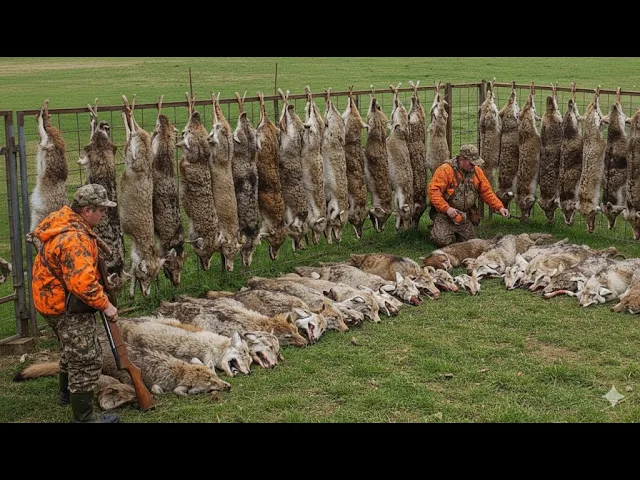
A gray wolf falls. But this is no rare sight for farmers. In rural Minnesota and Idaho, wolves have been growing in number, becoming a nightmare for farmers.
They attack and threaten cattle, sheep, and livestock at any moment. In Minnesota, hunters and farmers managed to take down around 600 wolves in a single year. But is hunting truly the only way to keep nature in balance while protecting a farmer's livelihood?
Join us. Hit that subscribe button and listen to the call of the wild. Trust me, you won't be disappointed if you watch this video till the end.
There's so much more ahead. Hey. Hey.
[Music] [Music] In northern America, grey wolves are not only symbols of wilderness. They are professional predators with a powerful bite force of up to 1,500 lb per square inch. Enough to crush bones in a single snap.
A wolf can travel dozens of miles in a day, working with its pack to chase prey. They can wipe out an entire herd of sheep in just a few hours. in Minnesota.
Records show wolves taking down 70 sheep in a single night, causing devastating financial losses and leaving farmers anxious and sleepless. Many families are left with nothing. Faced with that situation, hunters and farmers took up guns to chase the wolves to protect their livestock.
[Music] [Applause] In the US, wolf hunting is not done recklessly. It is organized into hunting seasons and closely regulated by state authorities. The goal is to reduce farm damage without wiping out wolves entirely.
[Music] Hunting season typically begins in the fall when wolves roam more in search of food before harsh winter and lasts until late winter or early spring. [Music] [Applause] [Applause] Hunters must meet strict requirements. For instance, you must be at least 18 years old to get a hunting license.
Each state sets quotas limiting the number of wolves that can be harvested. [Music] Last year alone, Idaho issued over 180,000 permits, an enormous number reflecting both the demand among hunters and the importance of wolf hunting to rural life. Good shot.
Some regions require hunters to report the number of wolves taken in exact locations, ensuring authorities adjust policies in time. This prevents wolf hunting from becoming an uncontrolled slaughter, turning it instead into a part of wildlife management. Good hit.
Smoked him. For many hunters, wolf season is more than pest control. It is tradition.
It allows them to protect their land, show skill and courage, and feel deeply connected with nature. Good shot. Oh man.
First one. Preparation is everything. The main weapon is the rifle with 308 Winchester and306 Springfield being favorites for their accuracy and stopping power at long range.
[Music] [Music] Binoculars are essential for spotting wolves hundreds of yards away, and camouflage clothing helps hunters blend into the wilderness. [Music] I'm hearing But weapons aren't enough. Hunters also rely on skill and tricks.
Some use trained hunting dogs capable of mimicking the call of a wolf pup, luring packs closer. They brought their tightness. [Music] [Music] [Applause] God, a double.
Some other hunters use electronic devices to emit sounds that imitate the howling of wolves or the miserable cries of wounded prey. or the sound of fawns calling for their mothers. These sounds awaken the hunting instinct, causing wolves to come closer, creating the best conditions for hunters to take them down.
[Music] [Music] The ideal shooting range is between 100 to 220 yards, aiming behind the shoulder or at the chest for a lethal shot. Wolf hunting requires patience, concentration, and sniper skills. [Music] To many hunters, it's not just about hitting the target, but proving composure, courage, and respect for their prey.
Heat. [Music] Heat. [Music] Nice shot.
The statistics are alarming. Minnesota is home to over 3,000 wolves expanding their territory, while Idaho has around 2,000 wolves. shot me.
[Music] You crushed it. [Music] In 2023, Minnesota reported more than 400 wolves killed, while Idaho reported 347. Heat.
[Music] Heat. [Music] Heat. Heat.
[Music] [Music] Even so, all hunting activities are strictly regulated to ensure wolf populations remain stable and healthy. Wolf hunting isn't just about controlling numbers or protecting livestock. It's deeply tied to the identity and traditions of hunters.
It serves as a bridge connecting them to the land they live on and the heritage passed down from their ancestors. [Music] Each hunting season is also a chance for them to demonstrate their skill, courage, and respect for the wild. [Music] She was [Music] [Music] If hunting wolves By day is hard, night hunting is even more challenging.
[Music] [Music] [Music] Thank [Music] [Music] Wolves are nocturnal, moving silently in the dark, attacking livestock at night, keeping farmers awake in fear. This forces hunters to stay up through the night, starting at dusk and waiting until dawn. Do it.
[Music] Do it. [Music] Do it. [Music] Where's your daddy?
[Music] Night hunts require advanced gear. Standard rifles like the 308 Winchester or 306. Let me get him right there.
Yeah. Hey. Hey.
Springfield are equipped with infrared scopes to see in the dark. Game on. 1 2 3.
[Music] John, can you shoot that close one? Hunters often use red light flashlights. Dark camouflage and quiet footwear help them move like shadows deep into wolf territory.
Night hunts demand extreme patience. Hunters usually stay hidden in high spots, scanning large areas, moving inch by inch without noise. Woo!
[Music] Woo! [Music] Effective range is usually 100 to 200 yd, though shots are sometimes taken farther. Hey.
Hey. Kill him. Kill him.
[Music] Despite difficulties, night hunting is highly effective. Statistics show twice as many wolves are killed at night compared to daytime. Do it.
In Montana, the wolf season lasts 6 months, September to March. In 2022, 60% of wolves harvested were taken during night hunts. Kill him.
Kill him. Kill him. For farmers, this is no sport.
One wolf can kill up to 20 sheep in a night, causing millions in losses yearly. Night hunting becomes essential for protecting livestock and maintaining ecological balance. [Music] kill him.
Besides rifles, trapping is another tool Americans use against wolves. The advantage, it works even without hunters present. Instead of waiting hours in ambush, they exploit wolf habits and place traps along trails, water sources, or forest edges.
[Music] The most common trap is the steel foothold trap with strong springs and gripping jaws. Hunters dig a small hole, set the trap, then cover it with dirt or leaves to camouflage. To lure wolves in, bait is used.
canned fish, raw meat, or artificial scents mimicking prey. [Music] Each trap is chained to a stake or tree to hold the wolf in place. The design is meant to restrain without breaking bones.
By law, traps must be checked daily to prevent wolves from suffering too long. Balancing control with humane treatment. In Minnesota, 2023 saw about 90 wolves trapped.
Nearly 30% of all wolves killed that season. This shows traps are highly effective tools alongside rifles. The debate remains which is better, hunting or trapping.
Hunters claim hunting is fairer and traditional, while trappers argue it is safer and more effective. But the shared goal remains balance nature and protect rural livelihoods. [Music] In Minnesota and Idaho, wolves are both a symbol of nature and a constant threat to farmers.
Gunshots echoing through the forest, silent traps set on trails. These acts are not to erase wolves, but to ensure people and nature can coexist. Yet the question remains, hunting or trapping, which best protects harvest while maintaining the fragile balance of the ecosystem?
The answer may lie in the eyes of the farmer, the hunter, and in the haunting howls of wolves across America's wildlands. Share your thoughts in the comments below. And don't forget to subscribe so you won't miss our next journey, where each film brings you closer to the raw yet deeply human stories of the wild.
Because this isn't just a story about wolves. It's about humanity's place in Earth's circle of survival.