The other day I was rewatching an episode one of my absolute favorite shows— Arrested Development—and I stumbled upon a fascinating theological question. See if you catch it: [clip] For those who don’t know the show, the older lady in this scene, Gangy, is the matriarch of an absolutely degenerate family that owns a housing company in trouble with the law, hence the show’s punny name, Arrested Development. She is petty and cruel, constantly manipulating people to get what she wants, and so when her son, Michael, says that God is not going to take her call after all of these years, the viewer sees the humor in it: she is so bad that even God doesn’t like her.
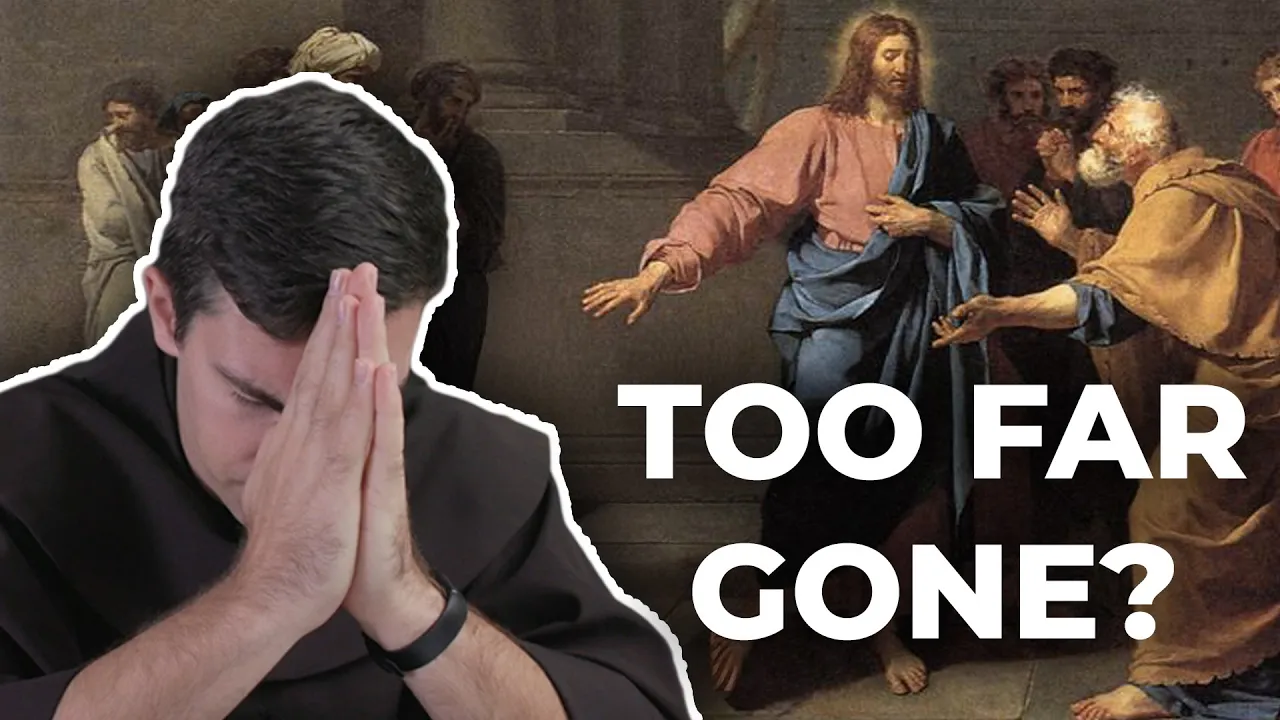
But it raises an interesting question, doesn’t it? Here you have a woman who is completely wrapped up in herself, curses others, drinks to excess, and does everything she can to make others unhappy… and yet, is in a seemingly genuine, vulnerable state with at least some level of contrition. Would God take her call after all these years?
In other words, does God listen to the prayers of sinners? In a state of mortal sin, are we really cut off from God’s grace. The answer… is that it depends.
Our first thought is obviously yes, that God loves everyone and that no one is ever too far gone, and yet scripture can tell a different story at times. There are A LOT of passages showing that God does not like nor listen to the prayers of sinners. In Psalm 66:18, we read, “Had I cherished evil in my heart, the Lord would not have heard.
” Proverbs 28:9 teaches that “Those who turn their ears from hearing instruction, even their prayer is an abomination. ” Most striking is probably psalm 5 in which we read: “You are not a god who delights in evil; no wicked person finds refuge with you; the arrogant cannot stand before your eyes. You hate all who do evil; you destroy those who speak falsely.
A bloody and fraudulent man the LORD abhors. ” It’s because of this that we can see in Isaiah that God himself condemns the worship of wicked people because of its hypocrisy: “Trample my courts no more! To bring offerings is useless; incense is an abomination to me.
New moon and sabbath, calling assemblies—festive convocations with wickedness—these I cannot bear. Your new moons and festivals I detest; they weigh me down, I tire of the load. When you spread out your hands, I will close my eyes to you; Though you pray the more, I will not listen.
Your hands are full of blood! ” Even the blind man cured by Jesus gives testimony to this in the Gospel of John when attempting to prove Jesus’ innocence to the Pharisees: “We know that God does not listen to sinners, but if one is devout and does his will, he listens to him. ” Clearly, the way we live has at least some connection to our prayer life.
Those who are sinless in the eyes of God will be heard, and those who sin gravely will either be ignored or punished for their hypocritical prayers. So, on the one hand, yes, it is true that sinning is not in our best interest when it comes to praying. If we want God to hear and answer us, approaching him with arrogance or hatred in our hearts, or with every intention to sin again is not going to end well for us.
That being said, this is obviously not the whole story, which is why it’s important to temper some of those passages with ones showing the immensity of God’s mercy. For instance, much of the book of Hosea is about God winning back Israel after its idolatry, colorfully depicted as a harlot wife. Despite her many sins, God declares, “Therefore, I will allure her now; I will lead her into the wilderness and speak persuasively to her.
” “I will betroth you to me forever: I will betroth you to me with justice and with judgment, with loyalty and with compassion; I will betroth you to me with fidelity, and you shall know the LORD. ” While sin abhors God, he does not abandon sinners… he goes after them. How many times does he send prophets to win back sinful people.
How many times does he beg them to turn their hearts? Despite their unfaithfulness, God is always faithful. Despite their straying from his love, he never withholds it forever.
After all, what does Jesus say defines his mission? “Those who are well do not need a physician, but the sick do. I did not come to call the righteous but sinners.
” And so, caveat number 1 is that, while God does hate that people sin and the sin within us creates separation between us and God, we are never completely cut off from his love and grace. Even if we turn our back on him and run away, he will continue to pursue us. Because of this, we know that God does not expect us to be perfect immediately but is always at work in us, converting our hearts ever so slightly.
Even a minuscule turn in the right direction is welcomed. In the story of the Pharisee and the tax collector, Jesus praises the tax collector for recognizing himself a sinner. The man does not completely renounce his post, he doesn’t make up for all those he extorted, as Zacchaeus promises to do, but there is movement in him, the beginnings of contrition.
He’s not a perfect disciple putting God above all else, but he is still lauded for his humble prayer. We can see the same with the prodigal son. For the father, it is the mere act of turning around that is enough to be welcomed back.
The son is not even given a chance to apologize before he his hugged. When a sinner recognizes that they have sinned, no matter how grave the sin is, the Church teaches that the Holy Spirit is at work in them and that God is pleased. They are far from perfect—motivated at this stage only by their fear of punishment or disgust with their sin rather than a true love for God—but it is a start.
The catechism calls this imperfect contrition, or attrition. It is a gift from God, a prompting of the Holy Spirit, and “can initiate an interior process which, under the prompting of grace, will be brought to completion by sacramental absolution. ” And so, caveat number 2, while God does hate that people sin and the sin within us creates separation between us and God, if we show even the slightly bit of sorrow and disgust for our sins, even if we are not completely resolute to reform our lives and love God completely, God does listen to our prayers and works with us.
You give God even a seed of hope and He is going to start watering. But there is one more another caveat that we need to make, and it may be the hardest for some Catholics to accept because it forces us to acknowledge the radical nature of God’s love that goes beyond rules and conventions. Again, according to the catechism, someone in a state of mortal sin, someone who has turned from God’s love in the worst possible ways, can not only be heard by God, but be forgiven by him directly.
“When it arises from a love by which God is loved above all else, contrition is called ‘perfect’ (contrition of charity). Such contrition remits venial sins; it also obtains forgiveness of mortal sins if it includes the firm resolution to have recourse to sacramental confession as soon as possible. ” Notice what the church teaches here, drawing on the decrees of the Council of Trent.
It is not that someone in a state of mortal sin is floundering out there on their own with God ignoring them until they go to confession, it is that even in our sinfulness, even in the gravity of our actions, God so desires our conversion—and is so much more powerful than our sins—that he is not only listens to our prayers, but if they are spoken with perfect contrition and firm resolution to go to confession as soon as we can, it is the act praying to God and desiring reconciliation, not the sacrament of reconciliation itself, that forgives mortal sins. This is not to say that the sacrament then becomes optional, as the Council of Trent makes clear. The desire for the sacrament, which necessarily leads to the sacrament being celebrated at a later time, must be included in the act of contrition for it to be considered perfect.
But it is to say that forgiveness can occur before and outside the sacrament. And so, does God hate that people sin and does the sin within us creates separation between us and God,? Yes.
Does this mean that he refuses to take our calls or is limited in answering our prayers? Absolutely not. For those with arrogance in their hearts or pray without contrition, he will ignore us, but for those who genuinely desire him above all, he will reconcile us to himself as soon as we ask.
The problem, it would seem, then, has nothing to do with God’s faithfulness to us, and everything to do with our ability to make a good prayer in the first place. It is not our sin that turns God away from us, but our sin that turns us away from God. Nowhere in the catechism does it say that God ignores the prayers of those who commit mortal sins or withholds his grace from sinners.
Rather, it says that mortal sins “results in the loss of charity and the privation of sanctifying grace, that is, of the state of grace. ” In other words, when we do really bad things, it becomes harder for us to love and harder to participate in the work of God. Something has been wounded in us, predisposing us to choosing more evil things in the future.
God may be chasing after us. He may be trying to forgive us. He may be waiting by the phone for us to call, but the reason he never takes our call is because we are so weighed down by our sin and caught up in ourselves that we never bother to make the call in the first place.
That, I believe, is the problem right there, and why sin separates us from God. It is not that God turns from us, but that we are less able to turn to him. And so, do you have a prayer for God?
Are you worried that you’ve been away too long and he might not answer. Have no fear. Approach him with humility and contrition.
Even if you’re not ready to completely change your life just yet, even if you don’t have perfect contrition, go to him with even as little as the sadness that you’re not sad about your sins, and speak from the heart. You may not be perfect, but he will take what you can give. He will find the sorrow in your heart and he will crack it open, filling you with what you need to go forward.
Your sin is not keeping God from you, it is keeping you from God in your shame and selfishness. Let is go. Let it all go.
Turn to God, give him what you can, and he will listen.