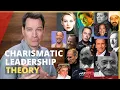
- We're going to talk about the theory behind charismatic leadership. Are some people born with charisma? Or can you personally learn to be more charismatic?
And is this even a make or break leadership quality to begin with? Let's take a look at the details. (upbeat music) Charisma is at the intersection of leadership and communication and that's what this channel is all about.
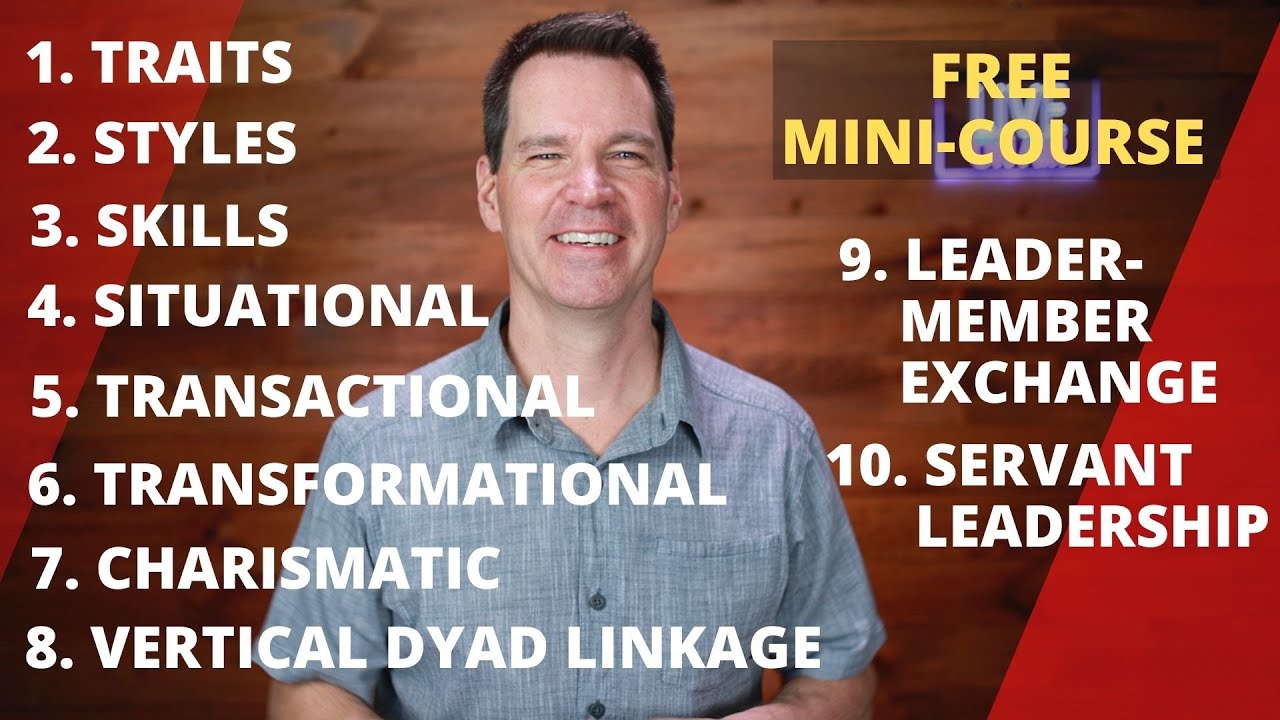
I have some related videos on transformational leadership, transactional leadership, the traits approach to leadership, and I'll put links to all of those in the description below this video. But we're not so much going to teach you here how to turn on your charisma. We're going to unpack what this concept means, and look at the positives and look at the dark side.
And then I'll give you my point of view on whether or not charisma is learnable. The more definitions you look up, the more you'll see three common aspects that capture the word charisma. It means number one, appeal.
Charismatic people have an attractiveness, charm, a special kind of magnetism. Number two, gift. We think of charisma as a divine magical or supernatural gift and power that sets them apart from ordinary people.
And number three, charismatic leaders have loyal followers. They inspire, and excite, and enthusiastic and loyal crowd. They usually have an influence over a large group of followers.
Many writers start with Max Weber's explanation of charisma from 1922. "A certain quality of an individual personality by virtue of which he is set apart from ordinary men and treated as endowed with supernatural, superhuman or at least specifically exceptional powers or qualities. " Robert House use Weber's work when he wrote his article on charismatic leadership in 1976.
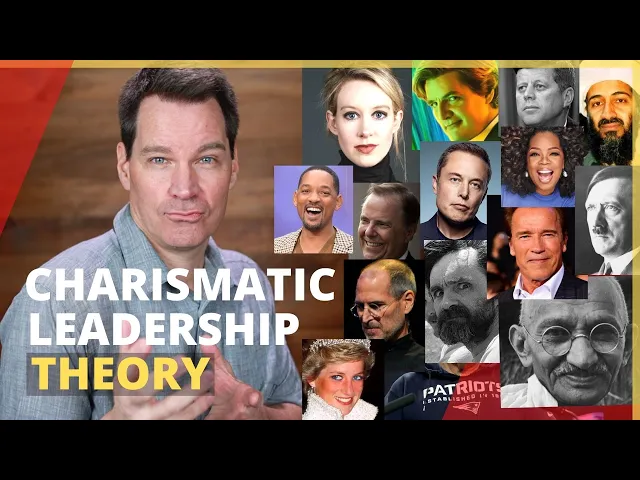
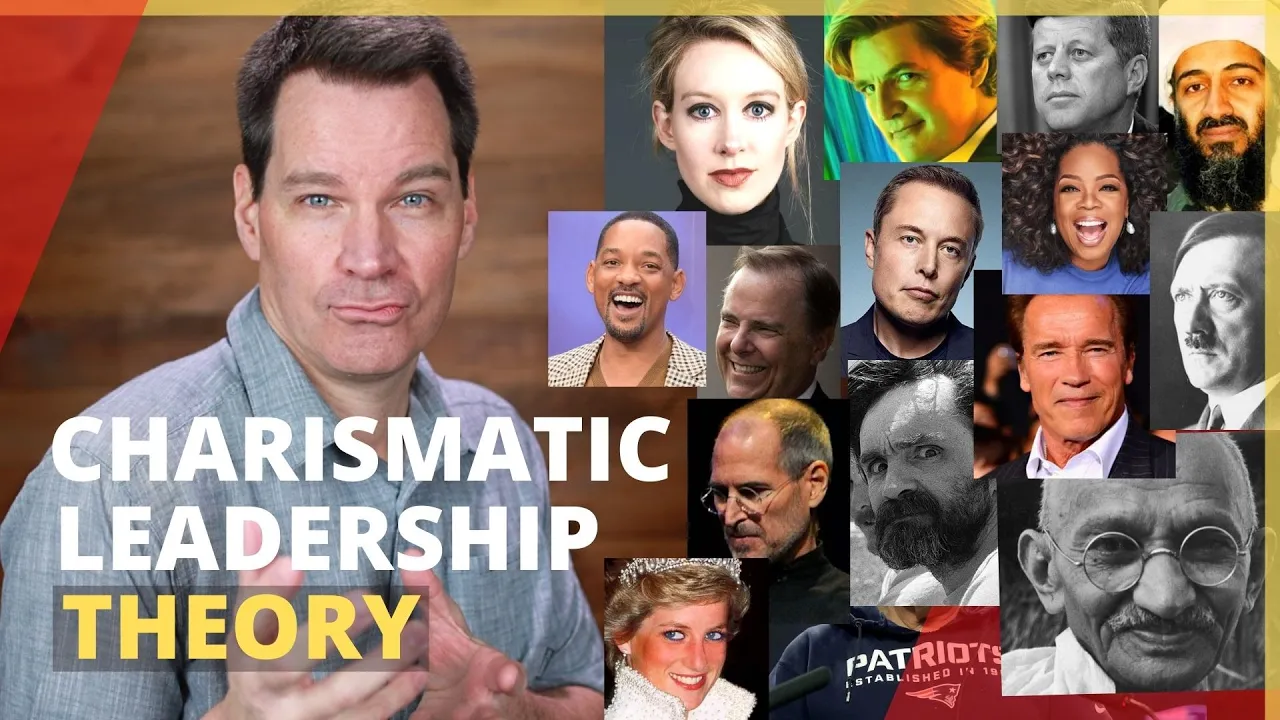
He said, "Transcendence is attributed implicitly to both the qualities of a leader and the content of his mission. " There's something about charismatic leaders and their mission that goes above and beyond what we're used to seeing. To me some quick examples of charismatic leaders are Arnold Schwarzenegger, the late princess Diana and Will Smith.
They're all different, but there's a special, almost undefinable spark that sets them apart from the crowd. For all their individual uniqueness, Peter Northouse wrote about the commonalities that charismatic leaders shared in his book. He spells out the five qualities or typical behaviors we see in good charismatic leaders.
First, they are strong role models for the beliefs and values they want their followers to adopt. Gandhi was a great role model for the non-violent, civil disobedience that he was advocating for. He walked the talk, in other words.
Second, charismatic leaders demonstrate competence to their followers. They at least appear as if they know what they're doing. Third, they communicate goals.
These goals are usually driven by a clear, ideological or moral position. Martin Luther King, Jr. , for example, drove his message with a clear and moral position.
Four, they communicate high expectations for their followers and believe their followers' ability to meet those expectations. This gives followers the confidence that they can succeed. And fifth, charismatic leaders arouse the motives of followers.
We can see this in JFK's famous quotation, "Ask not what your country can do for you, ask what you can do for your country. He aroused the motive of service that he wanted his followers to translate into action. You'll notice that strong theme running through these five behaviors is the way leaders engage their followers.
If they don't get their followers engaged, excited and motivated in a special way, then leaders may not qualify as charismatic. Another key issue is the role of context. Writers who study charisma point out that these leaders are more likely to find a place to lead followers when the situation or the context is putting pressure or stress on followers, in some way.
Sometimes there is a felt need and exigence for a powerful leader to come in and show followers the way. There are some problems, some unmet need in the followers' lives, and the charismatic leader comes along and offers a compelling the solution. So far, we've talked about positive examples of charisma, but there is a dark side too.
One key criticism is that many charismatic leaders throughout history, have used their influence for their own benefit. Not for the benefit of their followers. Some charismatic leaders use the power of their influence to essentially gain more power and control for themselves, but ultimately they have a destructive influence on society, and even on the followers who support them.
Typical unethical examples are Hitler, Charles Manson, Osama bin Laden and numerous cult leaders. In corporate America, we see examples like Enron's CEO, Jeff Skilling and Theranos CEO, Elizabeth Holmes and the movie "Wonder Woman 1984," the bad guy Max Lord, is an example of a charismatic but ultimately unethical leader. Charisma and ethics do not come in a package.
I also want to talk about a less obvious and less serious problem that I have seen in everyday life on campus and in professional settings, but it still matters. And I'll call it the leadership skill deficiency. Sometimes I will see individuals with fairly charismatic personalities who can get by on it.
At least in the short run. They're outgoing and they stand out and they project a certain amount of confidence. Many people view charisma as one in the same with leadership, but really it's not necessary at all to have charisma to be effective.
In fact, some people turn up the volume on their charisma to cover over, a lack of actual leadership skills. Some people might light up a room, command attention but then they'll have trouble meeting simple deadlines or following through on their own work. Not everybody who has that special spark of charisma can back it up with actual competence.
The downside of that is that, if these individuals are given too much leadership too fast, it will begin to expose their lack of competence in key areas and set them up for failure. Given that, let's talk about the issue that many people ask about. Are people really born with a special set of gifts and talents that sets them apart from ordinary people?
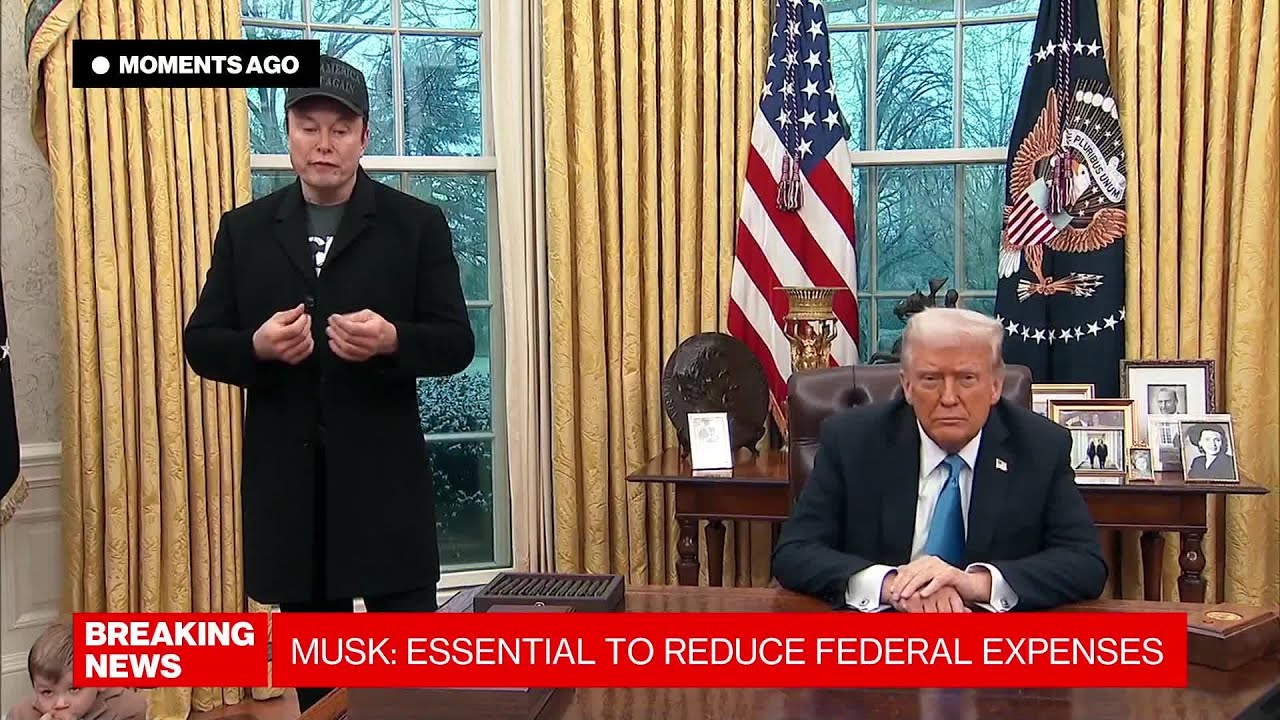
Or is charisma learnable over time? And I believe that the answer is both can be true, with one exception. So on the one hand there's no denying that people like Elon Musk, Steve Jobs, Oprah Winfrey really do seem to stand apart.
To me, certain people really do appear to be born with charisma. At the same time many of the qualities that we talked about can be learned and improved with practice. Almost anybody, for example, can become a strong role model or communicate high expectations if they set their mind to it.
So while we may not all be born with that special ingredient, that gift charisma, we can all certainly learn to develop it to some extent. For example, there's an area of research about our willingness to communicate, or WTC. And it shows that simply by communicating a little more than usual with the people around us.
Other people will almost instantly see us as more attractive, more credible. And they're more likely to see us as opinion leaders. I know many people who grew into compelling charismatic leaders over time by working at it.
So the short answer is that people can be both born that way, I suppose, and also learn to be more charismatic. But there's one exception, one complication to that answer. And that is the issue of followers.
For whatever reason, even people with the strongest collection of leadership skills do not rise to the of exciting loyal followers. Some people can do all of the behaviors and still seem to be missing that special spark. So just acting more charismatically does not mean that people will respond to you in that way.
Now, the good news is there are many ways to be an effective leader that have nothing to do with charisma. In fact, many leaders have accomplished incredible things and we would not describe them at all as charismatic. Bill Belichick, for example, is the coach of the New England Patriots.
And he's won six Super Bowls. He's incredibly effective at getting results. But few people would describe him as having charisma.
He's almost completely unlikable even among his own players. So having charisma does not automatically mean leaders will be effective. It doesn't mean they are good and moral.
Charisma is not in any way, a precondition for successful leadership. In other words, it might be helpful but it's not a make or break leadership quality. Not even close.
Effective leaders come in all shapes, sizes and styles. Before I go, I have three related leadership videos on transformational leadership, transactional leadership and the traits approach to leadership. And I will put links to that in the description below as well as a link to my Communication Coach Academy, where I offer classes.
So until next time, thanks, God bless. And I will see you soon.