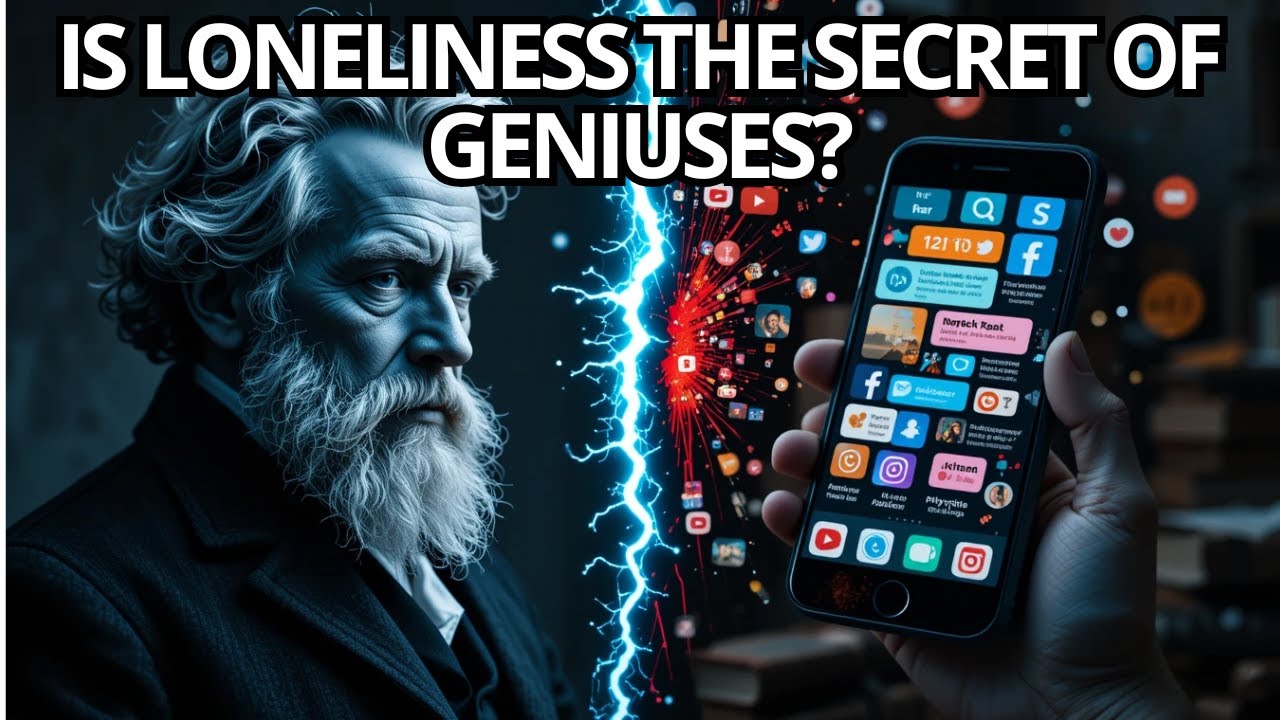
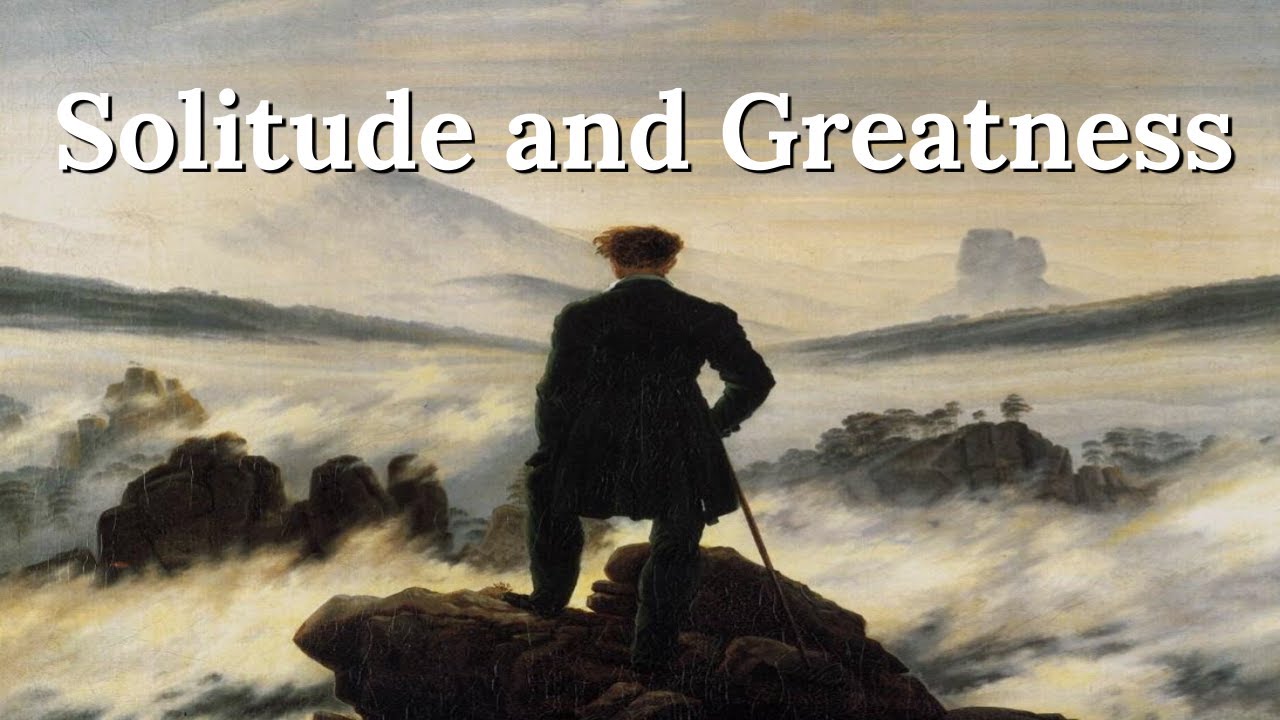
why did some of the greatest Minds in history prefer Solitude what makes brilliant thinkers feel repulsed by social life and is isolation a curse or a privilege reserved for the intellectually Superior Arthur schopenhauer one of the most pessimistic yet Visionary philosophers of the 19 century had an answer to these questions and it was far from flattering to society to him the world was full of superficial people driven by Petty impulses trapped in Trivial conversations and meaningless distractions genius by its very nature demanded distance from this mediocre spectacle as he famously wrote Solitude is the fate
of all exceptional minds but was he right or is this disdain for social interaction merely a symptom of an inability to connect think of great figures like Nicola Tesla Emily Dickinson or Isaac Newton all known for their genius and interestingly for their isolation were they examples of intelligence that transcends the ordinary or simply misunderstood Souls doomed to wander the world alone today we'll dive into schopenhauer's ideas to understand why intelligent people seem to care less about social life and whether this is truly an advantage or just a sophisticated form of alienation now that you're already
thinking about it let's get to the first point imagine a genius completely immersed in his own thoughts lost in complex theories while the world around him carries on while everyone else is busy talking about the weather he is contemplating the fate of humanity While others engage in Trivial discussions he is trying to understand the nature of existence and inevitably he finds himself isolated Arthur schopenhauer believed that this Detachment was not a choice but an inevitable consequence of intellectual superiority according to him the more a person stands out intellectually the harder it becomes to find peers
capable of sharing deep ideas and emotions in his view Superior intelligence creates a natural barrier between the individual and society as the concerns and interests of the majority are radically different from those who see the world on a broader scale a man can only be himself while he is alone and if he does not love Solitude he will not love freedom for it is only when he is alone that he is truly free to schopenhauer Solitude was not merely a burden but a necessary Refuge he saw society as an environment where intellect was often stifled
by social expectations and the trivial interests of the majority he observed that those who were intellectually Superior often felt a sense of displacement when trying to interact with the common world as they saw beyond the obvious and understood realities that escaped General comprehension this isolation can be seen throughout history in numerous brilliant figures Nicola Tesla for instance spent much of his life alone avoiding human contact whenever possible because he believed it would interfere with his work friedi Nicha another thinker who valued Solitude claimed that the crowd is a sea in which free Spirits drown but
this isolation comes at a price the need to distance oneself from social conventions can result in a profound sense of alienation schopenhauer recognized this dilemma and believed that while Solitude could be liberating for great thinkers it could also be a burden on the soul this is why many of History's Greatest intellectuals went through periods of depression and anxiety not because they were weak but because they saw the world in a way that most could never begin to Fathom and then comes the big question is this isolation a curse or a blessing for schopenhauer the answer
was clear he believed that great thinkers should embrace their Solitude as a gift for only in silence and distance from social mediocrity could they truly achieve their greatest accomplishments schopenhauer did not see social life as a space for genuine exchange or authentic connection but rather as a Grand Theater where individuals played predefined roles trapped in an eternal performance of appearances and selfish interests according to him Society was nothing more than a stage where people acted for one another hiding their true intentions behind carefully constructed masks sociability is for most people just a mask under which
they hide their banality this pessimistic view was directly linked to his main work the world as will and representation where he argued that everything we perceive is nothing more than a projection of our minds to him social life was just an illusion a spectacle that distracted individuals from true knowledge about themselves and the nature of the world schopenhauer believed that most people were trapped in Trivial concerns status gossip Petty power struggles and the pursuit of recognition in his View the average human being was a slave to the will a blind and irrational drive that governs
our actions and keeps us stuck in an endless cycle of desires the search for social validation was nothing more than a reflection of this uncontrollable will and that's where the problem lies While most people were immersed in this shallow routine those with sharper intellect saw everything in a way that was almost cruel to them Society seemed like a meaningless game where interactions rarely went beyond the surface this disdain for social life was not exclusive to schopenhauer other great thinkers also expressed contempt for the superficiality of society n for instance stated that convictions are more dangerous
enemies of Truth than lies highlighting how people prefer to cling to Illusions rather than face reality honestly this conflict between the pursuit of knowledge and the demands of social life created an insurmountable gap between the brightest minds and the rest of humanity the result intellectual isolation became inevitable but there is a side effect prolonged Solitude can lead to disillusionment apathy and even contempt for the outside world schopenhauer was aware of this and warned that for those who saw beyond the social illusion the only alternative was to accept this reality and learn to live with it
but how does this isolation manifest in daily life why do intellectually Superior individuals so often feel frustrated with social interaction in the next section we will explore the clash between genius and mediocrity and how it pushes great thinkers away from ordinary life schopenhauer did not mince words when describing his view of humanity to him most people were driven by superficial and selfish interests with no inclination for contemplation or deep thought this created an inevitable Chasm between those in dowed with high intelligence and the vast majority whom he saw as distracted by trivialities and frivolities mediocrity
generally recognizes only itself genius on the other hand sees mediocrity but finds itself alone this intellectual isol occurs because the Thinker is by nature someone who seeks to understand the world in depth While most people are preoccupied with trivial matters such as status gossip or fleeting entertainment the genius is trying to unravel the mysteries of existence and when they attempt to share their ideas they often encounter indifference or misunderstanding this explains why so many great thinkers have felt frustrated with Society schopenhauer himself despised interacting with Ordinary People believing that the mediocrity of the majority The
Genius of the few this sentiment resonates with voltaire's famous remark The Secret of being boring is to tell everything you know the problem is not just a matter of communication difficulties but a fundamental difference in interests the genius seeks Universal truths while the majority seek pleasure and distraction this conflict is unavoidable to schopenhauer this intellectual Gap made social interactions burdensome for those with elevated Minds we can observe this dynamic in numerous historical figures Nicola Tesla for in instance avoided social events and trivial interactions considering them a waste of time Isaac Newton was known for his
reclusiveness and impatience with mundane conversations even Albert Einstein one of the most celebrated scientists in history admitted that he preferred Solitude over the company of people who did not share his interest in deep ideas but this distancing from society doesn't happen solely by the genius's choice often Society itself rejects those who think differently Innovative and unconventional thinking frequently causes discomfort and resistance n called this the resentment of mediocrity the tendency of ordinary people to despise an attack what they do not understand or what makes them feel inferior thus the genius not only withdraws by choice
but is also pushed away by the hostility of the world around them this forced Solitude can lead to feelings of alienation and even a disdain for social interaction in light of this a fundamental question arises if the world is a hostile place for great thinkers how should they deal with this reality schopenhauer believed there was a solution and it did not lie in trying to fit into society but rather in embracing and cultivating Solitude as a refuge for thought and contemplation is loneliness a Destiny or a choice for schopenhauer it was both he saw Solitude
as an inevitable consequence of superior intelligence but also as an opportunity for intellectual and spiritual growth the common man cannot bear Solitude because he only feels good in the company of others the elevated man seeks Solitude because in it he finds himself self this perspective brings us to an essential Point loneliness is not a punishment but a privilege it offers the Thinker a chance to immerse themselves in their own ideas without distractions without having to conform to the empty social conventions that dominate everyday life it is in this silent space that creativity flourishes and understanding
deepens many of History's Greatest thinkers scientists and artists made Solitude their Inseparable companion Emily Dickinson spent most of her life isolated in her home dedicating herself entirely to writing Kant was known for his meticulous routine and his disdain for social events Beethoven as his deafness progressed found in solitude the strength to compose some of the most powerful symphonies in history Solitude not only allows for deep thought but also preserves the authenticity of Genius schopenhauer believed that by becoming too involved with Society a brilliant mind risks getting lost in distractions and compromising its Clarity of vision
this perspective strongly resonates with the Buddhist concept of Detachment Buddhism one of schopenhauer's greatest philosophical influences teaches that attachment to the external world and social interactions often leads to suffering true growth occurs through introspection and distancing oneself from the illusions of the material world however there is a dilemma in this Choice human beings are by Nature social creatures the need for belonging is part of our biology and prolonged Solitude can lead to anguish and Melancholy even the greatest thinkers no matter how much they valued seclusion suffered from the lack of meaningful connections nche for example
who also saw Solitude as a path to Greatness admitted that it could be painful in Thus Spoke zarathustra he describes the philosopher as a Hermit who descends from the mountain to share his wisdom only to be met with rejection and misunder understanding this dilemma is real withdrawing from society brings freedom but it also carries an existential burden that is difficult to bear schopenhauer however had a solution to this problem he believed that while a genius could never fully fit in into society there was a way to interact with the world without being affected by its
mediocrity adopting a philosophical Detachment a kind of emotional neutrality that allowed one to coexist with others without becoming too involved and this strategy leads us to the final Point how can we navigate the world without being consumed by its superficiality if having a brilliant mind means ending up alone how do great thinkers manage to live in society without feeling suffocated by so much superficiality schopenhauer had an answer to this the strategy of Detachment or rather good old philosophical Detachment happiness belongs to those who are self-sufficient for him the secret wasn't about trying to fit in
or making an effort to change others but rather developing an attitude of serene distance like an observer analyzing reality without being affected by it schopenhauer suggested that instead of fighting against the world's mediocrity The Thinker should learn to face it with the same attitude a scientist observes in experiment with curiosity but without emotion involvement this means accepting the banality of social life without being irritated by it understanding the intellectual limitations of most people without becoming frustrated and maintaining one's mental independence without feeling the need for external validation this strategy is similar to the stoic approach
which advocated controlling emotions in the face of adversity Marcus Aurelius one of the greatest exponents of stoicism wrote in his meditations give yourself a gift the gift of indifference toward what is beyond your control the world will always be a Place full of feudal distractions and empty conversations but it is up to the individual to decide how much of it deserves their attention a thinker should not completely isolate themselves from society but rather engage with it strategically absorbing only what is useful and discarding what is irrelevant despite having no patience for society schopenhauer did not
believe that total isolation was the solution he knew that even great thinkers needed some level of human contact whether to exchange ideas or simply to avoid sinking into complete loneliness the key according to him was to carefully choose whom to connect with and keep interactions minimal just enough to get by in the world without going insane this philosophy is still relevant today in a world filled with digital distractions fake news and superficial relationships knowing how to filter information and interactions is essential intelligence is not just about understanding the world but about navigating it without losing
oneself schopenhauer teaches us that instead of lamenting the lack of connection with most people we should see it as a sign of our intellectual Freedom after all Solitude can be a burden but it is also a privilege an opportunity to explore our own thoughts without external interference and now the question remains do you prefer to adapt to the world or accept it as it is and preserve your intellectual Freedom if you've made it this far you've probably realized that the connection between intelligence and isolation is not just a quirk of Fate but a natural consequence
of deep thought schopenhauer showed us that great minds often find more comfort in solitude than in the company of the crowd not out of arrogance but because the superficiality of social interactions can be exhausting for those who see beyond appearances the more intelligent a man is the more inclined he is to solitude but does this mean that being alone is the only path not necessarily the key is understanding that Solitude doesn't have to be seen as a punishment but rather as a refuge being alone doesn't mean being abandoned it means having the time to think
reflect and grow without the distractions and pressures of society and perhaps this is the true test of intelligence knowing how to balance the world and introspection choosing when to connect and when to step back schopenhauer gives us the key to this freedom but it is up to each of us to decide how to use it if you've made it this far I'm sure that at some point you've felt that strange mix of freedom and isolation that schopenhauer described intelligence can be a refuge but it can also be a prison right but you know what there's
something deeply liberating about accepting that not every silence needs to be filled that not every connection is worth the effort you're not alone on this journey even if the path feels solitary after all as old Arthur once said loneliness isn't the problem the problem is the wrong company I remember this one time when after hours lost in a book I caught myself staring at the wall reflecting on some Grand idea until someone interrupted my philosophical moment to ask if I had seen the latest reality show or heard the hottest gossip that's when it hit me
wanting deeper convers ations is an arrogance it's a necessity if you've ever been through this you know how frustrating it is to feel like you're speaking another language like your mind is sailing across the ocean while everyone else insists on splashing around in a puddle but you know what there's a bright side to it you don't have to get lost in the noise you have the privilege of choosing your Solitude now let's be real if you enjoyed this video you already know what to do hit that like button drop a comment below and subscribe to
the channel or you can just ignore all of this and go back to that riveting conversation about the weather and the latest Tik Tock Trend but let's be honest if you've watched this far you already know you deserve discussions that are a little more stimulating right and if you think this video made you reflect just wait until you see what I've lined up for you next two videos that will make you even more Restless in a good way of course but fair warning after watching you might never see the world the same way again click
at your own risk