Okay, so you should be coming from part 10 of the series. These videos are part of a topical series and should be watched from the beginning in order if you're going to understand what is being presented. So please, if you have not watched from part one, stop this video and start back from video one.
In the last video, part 10, we went over how Christianity became the religion of Rome under Constantine. Since the beginning of this series, I have been explaining that the religion of Christianity is a religion of tears. As we have been going over the history, I believe for anyone listening with an intent to understand, rather than just disagree, this should be made clear by now.
But there is so much more evidence and understanding that should be had so that when you go out to witness and when you speak to others, you can speak from an educated point of view and bring about points that they have never heard of before. There is one topic that we need to get to, which is about the Trinity, but in order to get there, I have been laying a foundation of understanding that, once we get to the subject, the whole thing can be understood. As we continue to understand Christianity, it's not possible to continue to understand the creation of it without understanding a major concept that is a major influence in this world; but it's something that's not spoken about in great detail, so we need to go over it.
Let me make this point known clearly: Christianity is a religion that is said to be built upon the foundation of the Yahudim who walked with Messiah. But this is not true; it is only part of the truth that is leaving out a great deal of information that makes all the difference. You see, when you dig deep into the beginning foundations of Christianity, you see something very different at the surface.
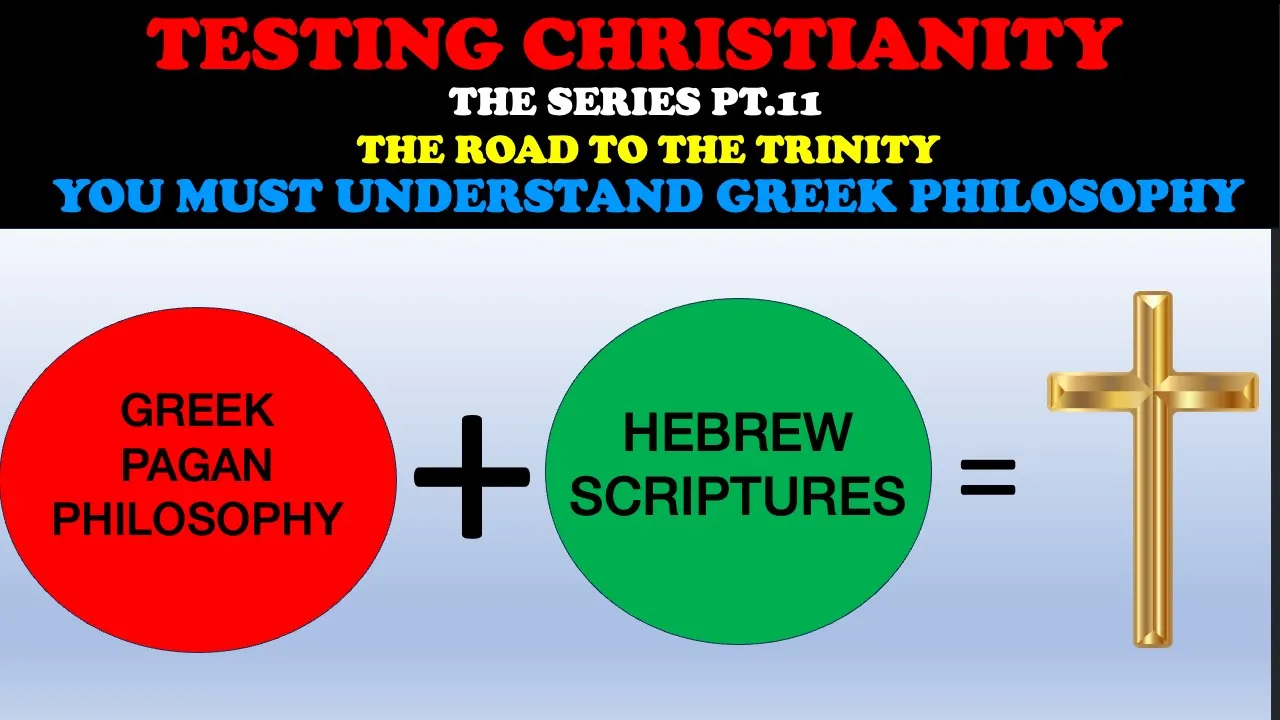
What we find is that the claim that Christianity is a religion that is said to be built upon the foundation of the Yahudim who walked with Messiah is a disguise that hides the truth that Christianity is a faith inspired by the foundation of Yahudim who walked with Messiah, but it's actually grounded and built more upon Greek philosophy. This view right here must be the main understanding that's understood when understanding Christianity, because if you do not understand the Greek philosophical mindset, you will not understand the main point of what I'm saying. And here's the problem: for many of us who live in the United States or are part of a colony or nation that has been colonized by Western civilization, you have been taught and indoctrinated by the mindset of the Greeks, and most of us don't even know it.
But this is what Christianity is, and this is why it lacks true reverence for our Father, according to the way He has actually led and commanded His people. I alluded to this and spoke about this in part seven, but it's important that I really break this down so there is more than enough clarity given. It's important that we review this so that there is a way to identify and discern between the wheat and the tares.
We want to understand the separation between the truth of the way versus when Christianity took over; it became the main authority because there is a lot of history that goes missing under the label and guise of Christianity. If this history was told properly, this world would recognize that it's being hustled and manipulated by Satan. You see, the true assembly of the way that was growing largely resisted the infiltration of the pagan converts to the faith who were bringing in their Greek philosophy and intertwining it with the faith.
They were holding on firm to the teaching of the apostles, drawing their doctrine from the writings of the apostles and the holy scriptures, the books of the Old Testament, which, as Paul has stated, are able to make you wise for salvation. That's 2 Timothy 3:15. You see, as the faith of the way began to spread, there were two different plants that were growing from two different seeds.
There was a split, and as I have been repeatedly saying, this split was due to the planting of tares. On one side was the truth—the ones who stuck to the plain and simple teachings of the scriptures—and on the other side was increasingly compromised with pagan thought and practices adopted from the Greco-Roman world. As I have been explaining, the split that happened was the beginning of the tares that began to be spread; it became the main basis of the Christian faith, but it wasn't told to the masses.
You know, I get it; you may want to fight against this. Let me show you how you can see this as a real thing in today's world. Let me show you.
Early on, as this ministry began to grow, as I was bringing out certain truths, all of a sudden, I was getting this label that I did not understand. Why did people think this was a bad thing? People were calling me a part of the Hebrew Roots cult, and at first, I was like, "I'm not a part of any group," so I know they're crazy and just needed a label.
But I couldn't understand why anyone would think there was a problem with the Hebrew roots of the scriptures. Get it? Our Father did not deal with the Greeks; He did not deal with the Romans; He did not deal with the English Anglo-Saxons.
He was in covenant with the Israelites who were partakers of the covenant passed down from their forefather Jacob, who received it from his father Isaac, who received it from his. . .
Father Abraham, all of these men were Hebrews, and therefore everything about the foundation of the Bible is rooted in the Hebrews. If you're saying that you worship the God of Abraham, Isaac, and Jacob, you're worshiping the God of the Hebrews. Hebrew Roots—our Father is only in covenant with Yarel, who are Hebrews.
You'll see no other place that He made a covenant with any other people. So when people have spoken against the Hebrew Roots, it never made sense to me until I realized that what they're actually saying is that Christianity is not rooted in the Hebrews; it's rooted in the Greeks, and that's why there's a problem. It's right in front of our faces, but because they did not explain it, it was a little hard to gather.
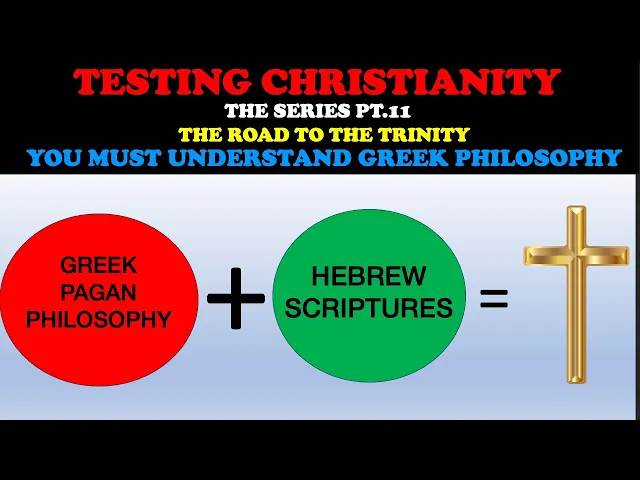
Christianity is a religion of the Romans that is inspired by the Hebrews, but built around the philosophy of the Greeks. Let me say it again: Christianity is a religion of the Romans that is inspired by the Hebrews, but built around the philosophy of the Greeks. Once this is made known to you and you understand this, it will open your eyes to many things hidden right in plain sight.
Now, here's the thing: at this period in time, there are more people with college degrees than at any other point in history. I believe most people that we know today have come through a formal education system that they believe has educated them, but the truth is that people are not educated; they are indoctrinated. These schools and the education system have not taught us information; they taught us how they want us to look at the world.
We learned about the world through their influence, and the better we take that information, the higher score we get. So, while there are so many educated folks, not many people know that much about the subjects that matter, and one of them that matters for sure is Greek philosophy. For the Western world to be so intertwined and influenced by Hellenistic culture, it is absolutely crazy that we know very little about the Greek influence on the world that was later adopted by the Romans.
So I would like to take the time to break this down for you by going over who the Greeks were. What I will do is go back in time and teach some history. We will go back to the first half of the fifth century BC; this was the period in time after Nebuchadnezzar's Babylon and Persia's King Cyrus let the Yahudim go and rebuild the Temple.
Okay, so let's look at it. In the first half of the fifth century, the Yahudim were struggling to rebuild their homeland. Many still resided in the lands of their former Babylonian masters, though Persia was now the empire in control, ruling those territories.
Even though King Cyrus let the Yahudim go back and rebuild their homeland and rebuild the Temple, not all of them went back. That's what I'm saying. Now, at the same time, on a peninsula in the northern Mediterranean, the children of Yavan were growing in strength.
They were uniting to battle and face the Persian Empire—the Hellenes, or Greeks, as we know them today. These are the children of Yavan that descended from Yith. These Greeks, under the leadership of the city-states of Athens and Sparta, fought and eventually defeated the huge Persian army in battles that we have been indoctrinated into celebrating—like, you know, the movie "300.
" This is the time period that I'm speaking of when they battled the Persians and then became the dominant empire. So before the Persian Wars, the Greeks were already building a civilization and were in their Golden Age. They began innovations in their architecture, medicine, writing, poetry, sculpture, dramas, comedic plays, astronomy, and government.
Their innovations in government laid the foundations of democracy as we know it today. In their society, every male citizen was a member of the ekklesia, which means "assembly. " This group met about 40 times a year to make political decisions, so all the male citizens were able to participate in making the decisions they wanted for the city.
There was another body of 500 men called the Boule, who dealt with the day-to-day business of the government. And yes, this is who the first Black Greek fraternity, Sigma Pi, also known as the Boule, were inspired by—naming themselves a bunch of sellout Negroes inspired by cultures that came to oppress and hijack their own people. So anyways, in Sparta, they developed a military culture, hence, like we know from the movie "300," and Athens became a trading and seafaring power with a strong navy.
From these two Greek city-states, Hellenistic culture started to spread by colonizing towns on the shores of the Aegean and Mediterranean Seas. So let's talk about what they believed in. What did the Greeks believe?
The Greeks believed in the development of both mind and body. They founded gymnasiums for teaching language, mathematics, and the arts. Athletes from all over Greece competed in sporting games honoring the gods.
The greatest of these events was the Olympics, which was held every four years. The Greek religion was based on the belief that the gods and goddesses lived on Mount Olympus. The chief Grecian god was Zeus, who ruled over an array of super beings who displayed human weaknesses.
They followed the same pagan beliefs of all the other pagan empires before them, with their worship of the Father God, Mother Goddess (who was Artemis), and their reborn Son God (who was Apollo). There was Athena, the goddess of wisdom; Poseidon, the god of the seas; Aphrodite, the goddess of love and beauty; and Hermes, the messenger of Zeus. The gods and goddesses would give cryptic messages to mortals through oracles.
Most famous of these oracles spoke from the temple at Delphi. This was the period of mythology that controlled the world before the Greeks changed everything. As I've explained many times, the world was influenced by pagans—those who believed in polytheism.
They believed in many gods, and it was through their belief in the many gods that they rationalized the world. Myths were passed down orally, shaping cultural values and explaining the origins of the universe, human beings, and natural phenomena. For instance, in mythology, Zeus is an example of a passive creator.
In the story of how he instructed his sons to create humans and animals on Earth, Zeus is their creator. This is how they thought, and that was the way of Greece and all the other pagan empires before this time. Using Egypt as an example, Ra in their mythology and religion is the sun god and was considered the primary creator deity.
He was believed to have brought forth all of life; Ra is their creator. This was their religion and the way that they viewed the world. This is what I'm speaking of when I refer to mythology and religion.
But in the Golden Age of Greece, in the fifth century BC, this all changed, and it's this change that transformed the world. As I explained earlier, the Golden Age of Greece, also known as the Golden Age of Athens, was a period of cultural, political, and economic flourishing in the fifth century BC, and this culture was the foundation of Rome when Rome became a Christian nation. This Golden Age of Greece is what the United States itself is built and modeled after.
Everything we know today is intertwined with this Golden Age of Greece; we are all influenced by Greek Hellenistic culture. Of the many different parts of this culture, none is more influential than what changed with the introduction of Greek philosophy. So, let's deal with it.
The name "philosophy" is itself Greek. The word philosophy comes from the Greek words "philos" and "sophia," which mean "love" and "wisdom," respectively. The term philosophy can be translated as "lover of wisdom.
" Thus, ancient philosophy must be understood by first comprehending its creators, the Greeks. History will show that this Greek philosophy continued during the Roman Empire, all the way down to the reign of Justinian, who was the Roman Emperor from 527 to 565, when it all was merged into Christianity. From that point in history, it was no longer discussed in the way of its origin, which is why people today don't recognize how much Greek philosophy is intertwined with Christianity.
They just stopped speaking about their philosophy, and it all became the way of the Chans. So, what is Greek philosophy? Greek philosophy is a collection of ideas that originated in ancient Greece and is characterized by a focus on logic and rational thought.
It is a way of thought. Greek philosophy opened the doors to a particular way of thinking that provided the roots for our current modern Western intellectual tradition. The way that we think today comes from Greek philosophy.
It generates thoughts around many questions that people never get answers to but will debate for eternity: questions like, "Why are we here? What is the meaning of life? What is the nature of reality?
What is the fundamental substance of the universe? What is the meaning of justice? How can one live a good life?
What is knowledge? What is the relationship between the mind and the body? " These are questions that stem from the Greek way of thinking.
This was never a way of thinking from the Hebrews. Ancient Greek philosophy is a system of thought first developed in the 6th century BC by Thales of Miletus (circa 623 to 548 BC). This man is regarded as the first Western philosopher and mathematician.
He was born and lived in Miletus, a Greek colony in Ionia (modern Turkey). Ionia is referenced as the birthplace of Greek philosophy because of him; he is known as the first philosopher in the Greek tradition. So, let's connect the dots.
You remember when I spoke about the original way of thought with the pagan world, which we now label as mythology. It was through their mythological beliefs in their many gods that they rationalized the world. That was the way they used to understand the world.
Because of the influence of this man, Thales of Miletus, the Greeks eventually broke away from the prior use of mythology to explain the world and instead started using reasoning in natural philosophy. It's because of that influence that he is referred to as the first to have engaged in mathematics, science, and deductive reasoning. Now, in understanding this, I need to make this clear: It's important to understand that they never actually really went away from their gods.
It's not like they just stopped believing in their gods. No, they used a new way of thinking to rationalize the world—that's all. This is very important to understand in the way I see this time period.
When I'm analyzing it, I observe that during this time period, the northern tribes of Yasharel were already exiled from the land when Assyria conquered them, and then Yahuda was also exiled to Babylon. The kingdom was broken, and during this time, our Father was giving prophecy to the prophets like Jeremiah, Isaiah, and Ezekiel about the coming Messiah and Redeemer. Satan began to change his ways and the doctrines that he had controlled the pagan world through from the beginning.
He began to use these people—the Greeks—in order to create a new mindset that would lead the world to him, and so he started to change their way of thought. Away from the original way he showed them through their false pagan gods, which started with Nimrod, this Doctrine never replaced or changed the gods; he only changed the way the people thought about these gods. This is what Greek philosophy is.
For instance, I want you to think about this: we say that Christos means the same thing as Messiah. We know the Hebrews had a prophecy of expecting a Messiah to come. Why did the Greeks have an expectation or word for an anointed one?
Again, they were using the label Christianos for the people that worshiped SES before the Messiah ever even came. They already had an expectation of an anointed one. What I'm saying is that this idea, to them, wasn’t new, and it’s a pagan culture.
So why wasn’t it new? You have to think about that. But anyway, that's not my main point.
What I'm explaining here is what Greek philosophy is. So, as we're going to go through it, let me go through some major points in regard to Greek philosophy. First of all, Greek philosophy deals with reason and inquiry.
Greek philosophy emphasized the use of reason and logic and the idea of observing the natural world impartially. It began a focus on deductive reasoning. Next, it also deals with major contributions to math and science.
Ancient Greek mathematicians like Pythagoras, Euclid, and Archimedes made major contributions to math, including the concept of mathematical proofs and basic ideas about geometry. I will speak more about that soon, but understand that geometry is a big part of Freemasonry; it's a big part of the occult. This is where it comes from.
Also, in Greek philosophy, it contributed to breakthroughs in medical discoveries. Hippocrates, an ancient Greek physician, is considered the founder of medicine, which is medical care based on observation of clinical signs and rational conclusions and does not rely on religious or magical beliefs. He established a medical school, wrote medical treatises, and is known for his systematic and empirical investigation of diseases and remedies.
Yes, the Hippocratic Oath is named after the Greek physician Hippocrates. Additionally, it deals with the four elements. Greek philosophy held that the universe was made up of four elements: fire, water, earth, and air.
This is where you start seeing the occult manifesting itself. Also, like I said earlier, with math like geometry, those elements—this is what witches use. This is occult knowledge that they're talking about here.
Anytime you see people bring up these four elements, know that they're talking about witchcraft and the occult. Furthermore, Greek philosophy includes mythology. Again, they never did away with the mythological pagan gods; they still believed in them.
They just believed that the mythical stories, like Homer's Odyssey and Iliad, revealed allegorical truths about the cosmic order, human nature, and the gods. They used their reasoning to understand it, but they always believed in their pagan gods. Then there's Socratic philosophy.
Socrates' philosophy focused on ethical matters, and he taught that all virtue is knowledge. He believed that people do not desire what is bad, and that if someone does something bad, it must be out of ignorance or unwillingness. This is all the premise and foundation of Greek philosophy.
I wanted to introduce you to it first in this part of the series, but I'm going to break this down piece by piece so that this history that has not been told to us can now be better understood. I wonder, in all these seminary schools, all these religious schools, and all these people with master's degrees in divinity, how many people understand how much Greek philosophy is intertwined with Christianity, and they don't recognize that this is a problem. It really is mind-baffling to me.
I don't understand how we can go to church for decades and nobody speaks about the intertwining of the Hebrew faith with Greek philosophy. But we're done with that now. I don't care what anybody's talking about; this is done.
Our people fought major wars against the infiltration of the Greeks in the Maccabean Wars, and I refuse to be in a religion that uses our Messiah and intertwines their nasty religion. Absolutely not. But let me get back to it.
The founders of Christianity, the early church fathers, believed in this foundation of Greek philosophy; they believed in it wholeheartedly. If you don't understand Greek philosophy, why would you think that it was wrong? Or maybe you thought it's inconsequential; it didn’t matter.
I want you to remember what the early church fathers said in regard to Greek philosophy. Here are some quotes from Clement of Alexandria: “Hellenic philosophy does not comprehend the whole extent of the truth; besides, it is destitute of strength to perform the commandments of the Lord. Yet it prepares the way for the truly royal teaching.
” Another quote: “Philosophy is not then the product of vice, since it makes men virtuous. It follows then that it is the work of God. ” Lastly, “Not only the believer, but even the pagan, is judged most righteously; for God knew, by virtue of His foreknowledge, that the Gentile would not believe.
Nevertheless, in order that the Gentile might receive his own perfection, God gave him philosophy; however, He gave it to him previous to faith, and He gave the sun, the moon, and the stars to be worshiped; for the Law says God made them for the nations so that they might not become altogether atheistic and so utterly perish. Nevertheless, the Gentiles, even in the instance of this commandment, became devoid of sense and addicted themselves to graven images; therefore they are judged unless they repent. This was the way given to the nations to rise up to God by means of the.
. . Worship of the heavenly bodies is prevalent, but there are those who would not abide by those heavenly bodies that have been assigned to them; rather, they fell away from them to wooden blocks and stones, so they were considered beyond salvation.
Clement of Alexandria states, "Get this: the early church believed that Greek philosophy prepared them to know our Father and be ready to be stewards of this new faith of Christianity. " They ignored those verses when Paul said, "Beware lest anyone cheat you through philosophy and empty deceit, according to the tradition of men, according to the basic principles of the world, and not according to Messiah" (Colossians 2:8). They just ignored that—right there; ignored it completely.
You see, Christianity is a blend of the Hebrew Scriptures mixed in with Greek philosophy, and this is exactly why it is a religion of tears. It is not based according to Messiah, but is a faith rooted in philosophy, traditions of men, and the basic principles of the world—everything that Paul warned against. As we go through this history, you will see how Greek philosophy was blended directly into Christianity, and this is exactly why I reject it.
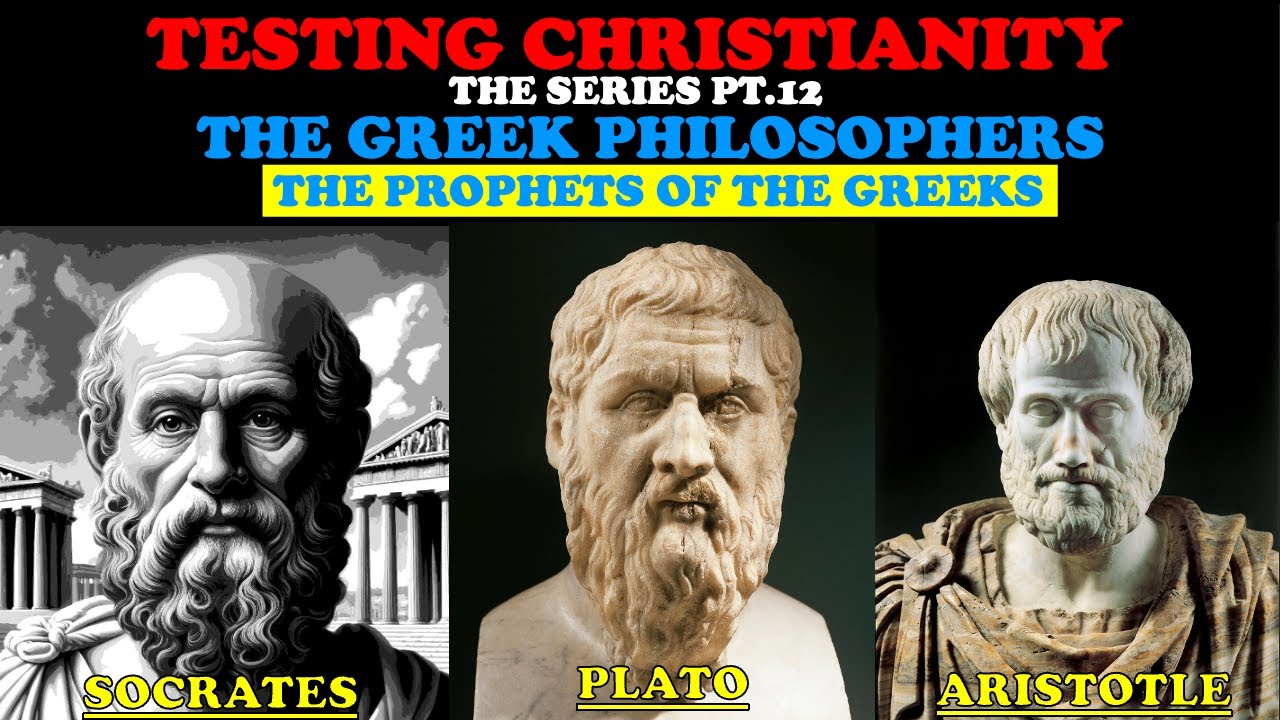
But I'm going to stop here because I don't want to overwhelm; I want to give this in bite-sized pieces so information is able to be digested and not missed by other major points. The point that we're at in this series right now is introducing Greek philosophy. In the next part, we're going to dig deeper and discuss the Greek philosophers that were the major influence on the early church fathers—men like Plato and Socrates.
They cannot be ignored. We are doing all this to make our way to understanding the Trinity, but as we discuss this and make our way to understanding the Trinity, I want you to do your own thinking. I want you to ask yourself, now that you understand a little bit about Greek philosophy: does this question—"Is Yahusha God?
"—or even more relevant, because they use his English name, "Is Jesus God? "—ask yourself: is this question one that came from the minds of the Hebrews, the apostles that followed the way, or did this way of thought originate from Greek philosophy? So again, did this way of thought originate from the Hebrews, or is it an influence of Greek philosophy?
Ask yourself that question, and if you start looking at this and asking yourself this, you'll be better able to understand the ways of thinking that we must separate from. But this is just the intro; we will get deeper into it in the next video. In the meantime, please remember: Christianity is a religion that, on the surface, seems biblical, but when you dig deep into the doctrines, it is not a doctrine of service to our Father but a doctrine of abusing grace, editing covenants, rejecting the way our Father actually chose to reach humanity, and making it only about the way Christians want to receive Him.
It lacks the love, obedience, and reverence for our Father that He deserves, and in the end, it does not prepare those who follow it to be ready for what our Father plans to do in the last days. If you desire to be ready for our Father and His plan for us, you must come out of this religion of tears and come to our Father in truth. Please move to Part 12 in this playlist and understand the Greek philosophers who influenced the early church fathers.
Click the link to the next video and let's talk some more. Be blessed. Hallelujah!
Praise Yah! Okay, thanks again for watching. If this has blessed you, please like this and share this video with your family and your friends.
This video series is highly important for those trying to be ready for our Father. This is Part 11 of the series; click this link or just move on to the next video in the playlist. As always, I want to thank all who donate and contribute to this ministry.
This series would not be possible without your support. I thank you sincerely. Be blessed.
Okay, thanks again for watching, everyone. See you in Part 12. I love you all!


![Fall Asleep Listening to Genesis: Bedtime Scripture for Deep Sleep [Holy Bible Audio]](https://img.youtube.com/vi/46IfXNk8YI8/maxresdefault.jpg)