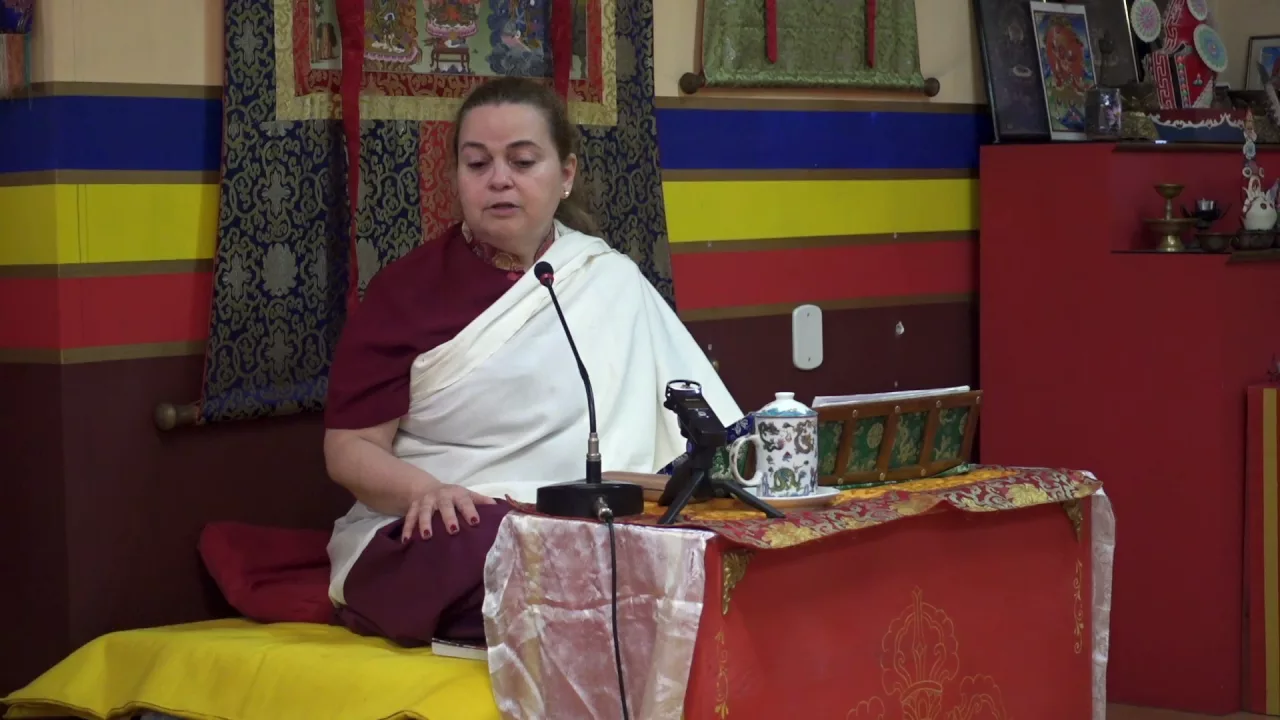
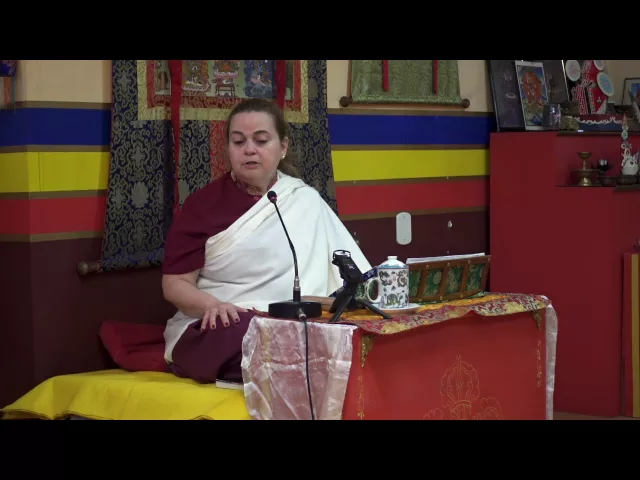
Good afternoon everyone, welcome, this is a Buddhist center, a Buddhist temple of the Karma Kagyu lineage of Tibetan Buddhism which is called Vajrayana so within Buddhism, we have great three schools, great three unifications which are Hinayana Buddhism or Theravada, Mahayana Buddhism and within Mahayana Buddhism includes Zen, Chan Buddhism, which is more from the China and Japan region, Theravada is more from the South Asia region, and we have Vajrayana Buddhism, which is tibetan Buddhism. Within Tibetan Buddhism we have four major schools. One of them is called Gelugpa, whose head is the Dalai Lama, another is called Sakya, whose head is Sakya Trizin another is called Nyingma which is a set of schools that follow the same methodology and each era is a different agreed head among them there is the Karma Kagyu school.
which is our school here, whose head is the Karmapa who is the one in the photo over there inside the altar. And what changes? What changes from these four schools?
In reality, it is as if we were teaching a child to read and write using Piaget methodology or Montessorian methodology or Logosophical methodology. In reality, they are different methodologies, but in the end the child will be literate in the same way. So that's the difference between them, just in the methodology of how to reach the goals.
So specifically within our lineage, we have the Karmapa, who is the head of our lineage, who is the one in the picture. Yeah, the middle one, the middle picture. And then many people ask: Well, how does Buddhism work?
How does Buddhism work? In reality, there are several ways for it to work. And what's cool is that Buddha taught in a way that met the needs of all people in different ways and that developed.
And the reason for these different schools is because Buddha's teachings that spread when he met regions there was an assimilation of the socio-economic and cultural aspects of each region. So we have Theravada or Hinayana Buddhism, which is from South Asia, which takes in Laos, Cambodia, Vietnam, Burma, Thailand, Myanmar, so it assimilated the culture and had a little modification, he added. When he went to China and Japan, he had the Tao, which was the Taoist philosophy, he also assimilated and modified it a little.
And when he arrived in Tibet, Tibet was such a virgin people of philosophies. It had a very primitive culture and religion, so it assimilated Buddhism in its entirety. So there are many people who say: Ah, but Tibetan Buddhism is the most faithful to Buddha's teachings.
No, that's not it. it's just that the region there was a region that didn't have such a strong philosophy and fully assimilated things. And during the ups and downs of Buddhism around the world, they guarded the original texts in such a way that nowadays people have the original texts within Tibetan Buddhism more reliably than elsewhere.
So how does Buddhism work? Because is Buddhism a religion, is it a philosophy of life? I usually say that you make Buddhism what you want for yourself and what best meets your needs.
If you want Buddhism as a philosophy of life, it will be a philosophy of life, because the teachings are full of guidelines for ethics, morals, conduct, good living. And if you want it as a religion, it will also assume this role, because it has these components of spirituality where you say a prayer anyway. But for me specifically, and what happened to me is not what will happen to you or other people.
it started as a philosophy of life and became religion beyond religion. I think I don't have words to define this in my life because it was beyond anything I imagined. That's why I incorporated it into my life in such a way that I wouldn't trade it for anything, but the search is a very personal and very individual path.
What's good for me isn't good for you and it's not good for anyone else. And not even Buddhism is the lord of truth it is just a path. And whoever wants to and whoever finds in it the answer to all the things that we look for in life, our yearnings, our needs and everything else, enters it.
So there is a philosophical part within Buddhism that deals with the mind, the workings of the mind, meditation itself, meditation techniques. Meditation within Tibetan Buddhism is a little bit different. I would say that at some point it is very different from yoga meditation, Indian meditation, meditation even from other schools.
It's very specific. And nowadays we have to be careful because on every corner there is a tantric meditation, a Tibetan meditation. Until now the wave of Buddhist meditation is waning, I don't know.
But, and like everything that is philosophy, sect or anything else or religion, there are good things, there are distortions, there are distortions, there are paths that are not very qualitative. So it's up to us to look for what suits us. There is a phrase, even a phrase like this : Everything is lawful for me, but.
. . No.
Everything is lawful for me, but not everything suits me. So, we have to. .
. The Buddha himself said: don't believe my words just because I'm the Buddha I'm talking about. You have to listen, meditate on these words, see if they apply to you, and if you think it's good for you, it applies to you, then you incorporate it into your life.
So the path, folks, is very lonely, it's individual because it depends exclusively on our free will to make the choices and whether you follow it or not. Because if you follow the good things, the right things, you'll get a good return. A sure comeback.
If you follow the not very good things you will also have a not very good return. So it's up to us. Well, then, how does this part, the philosophical part of the thing work ?
Because there are many people who. . .
Before talking about that, why do we look for something in life? Some sect, some religion, some philosophy. .
. Because we are not well. Because we are suffering, we are looking for something.
And everyone suffers. Everyone suffers, there is not this or that everyone suffers so we look for something that gives relief to our suffering, to our needs, to our day-to-day anxieties, to our mental confusion. A human being is characterized by attachment, desire desire that I say is not sexual desire itself , it's attachment or aversion, we want things, we want things, we fight to have them, when we have it, we're scared to death of losing , when we lose, we suffer also then we are never happy, we are never happy it is always modifying, changing, so we only look for it when we need it, we only return to spirituality when we suffer , when we need something, when we need a breath or even need not necessarily suffer an event in life but when we don't see a meaning or want to seek a meaning, or want to make a difference in people's lives.
People are looking. So in reality we are somehow bothered. And this is a characteristic of every being in Buddhism, we call a sentient being that being that is aware of its existence.
And that even an insect has. So an insect also suffers, and also enjoys. When hungry, the insect goes there, eats or sucks sap, sucks blood.
He is satisfying a need of his own so he is happy at that time. Although he does not have a conscience like ours, he is also a being who also suffers when he is hungry , when he is cold, and who also has his needs satisfied, and also feels well, is happy. Dog, cat, insect, everything, everything is sentient being.
Plants, so far it has not been shown that they are aware of their existence although they respond very well to energies. So we look for it, but when we look for it, we don't know very well what we are looking for , so we go here, go there and I think this search is very valid because we have to go to meet what really tells us to the heart and satisfies. So, there are people who come to Buddhism exactly looking for the most philosophical part, which is.
. . so what is the most philosophical part of the thing?
They are the studies of the mind, of meditation and that do not necessarily involve religious concepts. Anyway, we do training on how to dominate our minds, these thoughts that come and go and meditation techniques so that we acquire a little more peace, tranquility because the thoughts, emotions that move us and that bring us suffering, this will always happen, no matter how much a person isolates himself on top of a mountain, becomes a monk, spends his life meditating , that person will also have distorted thoughts, there will be suffering, because this is inherent in human beings, we do not have it how to get rid of it but meditation brings us the ability to know how to deal with these feelings with these emotions that sometimes work in our bodies like a poison. It's really bad, when we're angry the anger seems to spread, the blood boils and the person loses his lucidity.
He does things he shouldn't, where we even have crimes of passion. Jealousy, anger. .
. This is something that dominates us. It really is poison.
So we tend to say that they are mental poisons because it really affects our bodies , our actions, our words and the moment we understand how this works and through meditation techniques we start to master it, we becomes aware of: I am a human being. I will be liable to have moments of joy, moments of sadness, anger, pride, envy, the feeling that I have been rejected , in short, all the good feelings and all the bad feelings, but when that feeling appears, you , through everything you understood , everything you learned, in fractions of a second, because people's minds can do that, in fractions of a second you isolate yourself from that situation and say: No, wait a minute. Why am I angry?
Why am I feeling rejected? Why am I - even not only the bad side but the good side too. Why am I so happy?
Why am I happy to drink this glass of juice? When you come to understand how this works and how to deal with it, you no longer have the harmful effects that those bad feelings could bring you, you start to measure your actions more in words, in deeds and you also learn to take precautions , because too much happiness also numbs. It's not just the bad moments that bring disturbances in our mind, the happy moments too.
So, living in balance is something very difficult for us on a daily basis, where you have to work, you have to deal with other human beings who have the same things as you and have the same yearnings as you, to be happy . So the philosophical part of Buddhism teaches that. Because look, guys, it's very difficult, it's very difficult.
And then comes the other part, which is the part that I would say is the part I don't want to use that word, the religious part of the thing, but it's not quite the religious part. But it is the part where it teaches you the skillful means for you, in a quick way, to reach everything that the philosophical part teaches and preaches. Because it's no use for us to sit here and talk a lot about how the mind works, what should be done if we don't teach how to do it.
The theory explains many things and can even tell you, look, you sit like this and such, but without the practical part it's difficult, isn't it? And this complementation, this other part within Buddhism, which I say provides the skillful means for us to put into practice in our lives everything that philosophy taught is the part where we learn who it was who brought this to us through the so inside a Buddhist temple you see that there are many colors, there are many figures, there are many statues and everything. .
. there are many tankas. Tankas are those paintings made with fabrics and painted by hand, everything has a meaning, everything.
So it's in this part that complements, that will teach you how to put it, you'll learn why we use all these skillful means because when we talk about the mind we say: I wouldn't need any of that. Really , you wouldn't need any of that , but if you were an enlightened person, if you were a realized Buddha, you wouldn't need any of that, but we are not, we need instruments and, within the techniques of doing meditation, there are practices that we does with the texts, which we call sadhana. Sadhanas are texts, written in Tibetan for us, there is transliteration and translation for us to know what we are talking about, what we are doing, which are nothing more than a liturgy where your mind reminds you of someone's qualities, or the meditation and visualization techniques you should do during the time you are reading and chanting a liturgy.
I'm not going to say prayer because this here goes beyond a prayer basically, the texts of a sadhana they are prayer if you want it to be it's a meditation script if you want it to be that way and it's an instrument, above all, to you accomplish what the text proposes. So we have liturgy, so we use sadhana that are linked to the practice. For example , Medicine Buddha, Compassion Buddha, Tara, who are deities specifically related to that subject.
The Medicine Buddha is obvious, health, wellness. The Buddha of Compassion also wants to develop our compassion and understanding, not only ours but also that of beings. The sadhana of Tara, who is a female deity, goes back to our mental and physical difficulties.
So the part that I say is the skillful means for us to put the philosophy of life into practice is composed then of the sadhanas, the meditation itself , the rituals, the altar, the tankhas, the figures they made because the techniques of meditation that we use here inside the temple are the same ones that Buddha taught 800 years before Christ I think that's it, 800 or thereabouts. Lama Tarchin who is good for dates I'm not very good with dates. They are the same, and that came , you know, from father to son, from master to disciple within the lineage, uninterruptedly so we receive it, that's why we value a lot the people who brought this knowledge to us and here, those sponsors who are there on the wall on the right side of those who enter the Gompa are the representations of the people who brought this knowledge to us.
from the primordial Buddha to us, to our days. Valuing this and giving thanks is very important because these people were fulfilled people and they bring a blessing from this realization in the teachings they pass on to us, so we call them the blessings of the lineage the blessings of the lineage are very present in everything that we do for that's why when we go to do a practice, we receive a reading of what we call lung and we receive a practice permit called wang and also the Lama explains how to do it, which is called tri. So, in reality, it's no use for me to let you take a text and repeat that text without knowing what to do with it, so it exists for those people who want to go deeper into meditation techniques, transforming what we want, want into reality transform word, body and mind into something better, into something good, and live and experience life in a way that makes us happier and can spread it around us.
Because we don't fix the world, people, there's no way. But if you change your word, body and mind, your mental posture, you will certainly influence those around you and with that you are improving things around you . world.
So if we can't get the macro, let's get our microcosm around us because everyone wants to be happy, that's the basics but everyone suffers. Everyone is subject to these storms of our mind, of our feelings, because we are the world there's no way when you're hungry you want to eat and when you eat you feel good, that's human. Well, then, I explained about the sadhanas, how to even set up an altar , in reality you ask yourself this question: Buddhas and realized people don't need to offer water, light, there are some places that even offer food, you really don't need it, people then why do we do this?
We do this to practice our generosity, our discipline, our methodology. So, setting up an altar is a ritual, making water offerings every time we offer water, there, we offer water not only to the buddhas, but also to all beings that need water. Is it really going to bring water there for that person who is suffering in the desert without water?
Physically, it won't take water. But for us, in our mental posture, this changes our openness to others, our generosity to others , our love, compassion for others, so much that it affects the person. It is the same thing as saying that prayer is worthless.
Of course it's worth it. But the first thing a prayer changes is yourself , and then it achieves its goal. So everything has a reason.
So, the person who wants to delve deeper into Buddhism, into the why of things and wants a faster evolution, then he directs himself to the path of practices and there is a whole teaching methodology, and such. So, summing up, with that I gave you an overview of what Buddhism is, of the schools so, reviewing, we have South Asia that has Hinayana or Theravada Buddhism, South Asia is the monks who wear the robe yellow we have, then, Mahayana Buddhism which is from China, Japan, which encompasses Zen Buddhism, Chan Buddhism and has Tibetan Buddhism, Mahayana Buddhism uses black and Tibetan Buddhism which uses the wine more related to Tibet called of Vajrayana or Tibetan Buddhism. I also made a review that within Buddhism we have the philosophical part and the practical part.
The practical part, then, is the skilful means by which we put philosophy into practice in our lives, because for us, when we are out on the street and are overtaken on the right or have been robbed, we need a lot of practice in order not to suffer, not to be angry, not to have hate, or not to have a reaction against the person. That's an obvious example, isn't it? A more subtle example are the examples that we have at home, in the family or in relationships with our partner, in short, with all of that.
So, it exists for anyone who wants to be able to put this philosophy into their lives more quickly . And then the very basics are meditation, that's where it comes in, and I usually say there was a time here at the beginning of KTT where we did regular meditation sessions during the week, there was an evangelical who came to meditate here, I thought that was the best thing because he came, I don't even know if he talked to his pastor or not, but he came basically for philosophy, to meditate. So I think that's what's beautiful about Buddhism that it gives people everything they want.
Now, it's up to you to follow or not. As I said at the beginning, the path is individual and lonely. There are situations where the Lama has the ability to teach you, and it's like pulling you by the hand to help you go faster.
It happens but it's also for people who want it. So what about Lama? That concept of Lama was missing.
Lama, the meaning of Lama is master, so there are nomenclatures, there are several that change in some lineages, some schools , but basically, within our lineage Lama is the person who did the three and a half years of retreat and received the teachings not only philosophical and practical ones as well and is qualified to pass and give meditation, even so punctuated by the master. We always have a master , so whenever you meet a Lama you see, behind him, his master. Every Lama does not make himself.
It's done with a master. My master and Lama Tartchin's master is Khenpo Khartar Rinpoche , who is a person. .
I don't know if there's a picture of him . from KTD, which is Karma Triyana Dharmachakra which is where we did the retreat there in the US is a wonderful person so I. .
. Sorry. Every time I talk about him I am filled with happiness because I have no words to thank him for his generosity, which is teaching.
It's such a wonderful thing. They are people who dedicate themselves, dedicate their whole lives to training people, teaching, supporting and everything else. I think it's worth taking a look at the KTD website and seeing his work and what he teaches.
Wow, it's fantastic. And that's it. That's why I say that the blessings of the lineage, the blessings of those who teach and reach us, are wonderful.
So the Lama is the person who is a master, a teacher. But there are Lamas and Lamas, you know? So, people who are realized, we feel, we see and they are very precious, that's why they receive the title of Rinpoche.
Rinpoche means precious. This title is usually given by the head of the lineage, in this case the Karmapa. In this case, he gave it to Khenpo Karthar Rinpoche.
Mud is just a title and a preparation you have. The Lama may or may not be a monk. The monk, or nun, is the person who takes vows and enters monastic life, with all those rules and lives inside the monastery.
The monk can also be a Lama or it is not enough to do the three-year retreat and in the end the master is the one who gives you the title of Lama or invites you to do it again, or not and the master is also the one who guides you what you are going to do do in your life. So, in terms of practice, teaching, what you will be able to teach, be able to do and be able to help people in the best possible way. And, there are also within Buddhism you will hear about Tulkus.
What is Tulku? Tulkus are people who are already reborn, because within Buddhism we believe in reincarnation, who are already reborn with a certain degree of evolution and so they have a very quick way to help people and these people are usually recognized. And within our lineage, which is wonderful, the Karmapa he is the seventeenth of our lineage .
Before he dies he leaves a letter describing his father's name, mother's name and where he will be born and what year. So when he dies they open the letter and then it's very easy. See the region, the year you will be born, the father's name and the mother's name.
Sometimes it gets down to details like how many brothers and whatnot. This has not failed for 17 generations. Look how wonderful.
This is to prove to us that things really exist. It is enough for us to be able to see, because what most disturbs us is that we have so many veils covering our vision, our understanding, our understanding of life, of the mind, of how things work, that we start to become disbelieving . to stay like this with a very strong support for things and not be open to the things that are in front of us.
Well, then, basically it was a general brushing about Buddhism, about the lineages, the schools, how they work and the flagship of any place is meditation, so there are meditation techniques, how to meditate and everything else and within these techniques that in principle are basic posture techniques , how do you sit, how do you position your hands, head, spine there's the physical part, the mental part of how you position yourself, mentally at the time of meditation And there's people who say: Oh, but I will never be able to stop my mind from calming down, I can't sit down, I keep moving, thoughts come and go. No problem. There is a technique for this and in reality we don't want you to stop.
Meditation itself is not stopping thinking, stopping thoughts coming and going, not because that is characteristic of our mind, our mind, although we don't know how to define it, we know how to qualify it. Our mind cognizes, our mind has many thoughts, and thought is feeling. And it's one thought after another.
If you think , for example, of a fly that is flying in front of you, you look at the fly that is flying, suddenly you already look at the color of the girl's dress, the other's shoes, and it's always like that in our entire visual field, tactile, auditory , sensory, everything is the gateway to our thoughts. In fact, meditation will teach you how to deal with all these interactions that we have with the world through our sensory organ of the senses and it will also teach you how to deal when we turn off that sensitive and we are left with only the mind that it's a deeper part of meditation where you can isolate your sensorium in general and work with just your mind. So this is the initial brushstroke.
Does anyone have any questions, anything I've talked about so far? Is meditation always with mantra? Not necessarily.
Meditation can take place in many ways. You can meditate by doing mantras, you can meditate by reading the sadhana, you can meditate by paying attention to an object with your sense organ. It can be vision, hearing.
So meditation uses various instruments to accomplish itself. You must choose the one that best suits you, the one that you feel most comfortable with. Because meditating has to be good, it has to be light , it can't be, something like that you don't feel well physically, that you don't feel well mentally, it has to be something fluid.
So it's an instrument. The mantra is nothing but an instrument. Then, prolonging it a little longer, they say: Ah, but the mantra, the sound of the mantra channels such an energy that it messes with such and such a chakra.
Alright, that happens, but let's not mystify it, that's not the importance the importance is that the mantra is an instrument for you to learn to master your mind. Usually the mantra has a meaning. Generally, this mantra, which has been taught over time, from master to disciple, carries an energy, in sound, in words, all of this we evoke when we are doing a mantra and it brings.
. . it calms the mind also, because you focus there but we can focus with many other instruments.
Anyone else want to ask something for us to move on to another phase? Any question? And we can never, like, be in a hurry either because things need to take time.
It's like the time you plant , sow and reap things need to mature within us. Even because there are some other concepts for those who choose to understand better, we start to understand better the karma of each one. And karma within Tibetan Buddhism has a different concept of karma than that used in spirituality in general.
Karma for us is all action. An action. This is karma.
An action. Not necessarily related to action and reaction. It exists, but it's not directly related.
Karma is action. Many people also think that karma is only negative. AND.
There is a. . .
Karma is action, every action that we experience, performs And karma, in general, depends a lot on the actions that we. . .
on the causes and conditions that we ourselves do, for it to be realized.



![[1 Hour] The Sound of Inner Peace 5 | Relaxing Music for Meditation, Zen, Yoga & Stress Relief](https://img.youtube.com/vi/a98zkXRKeCs/mqdefault.jpg)