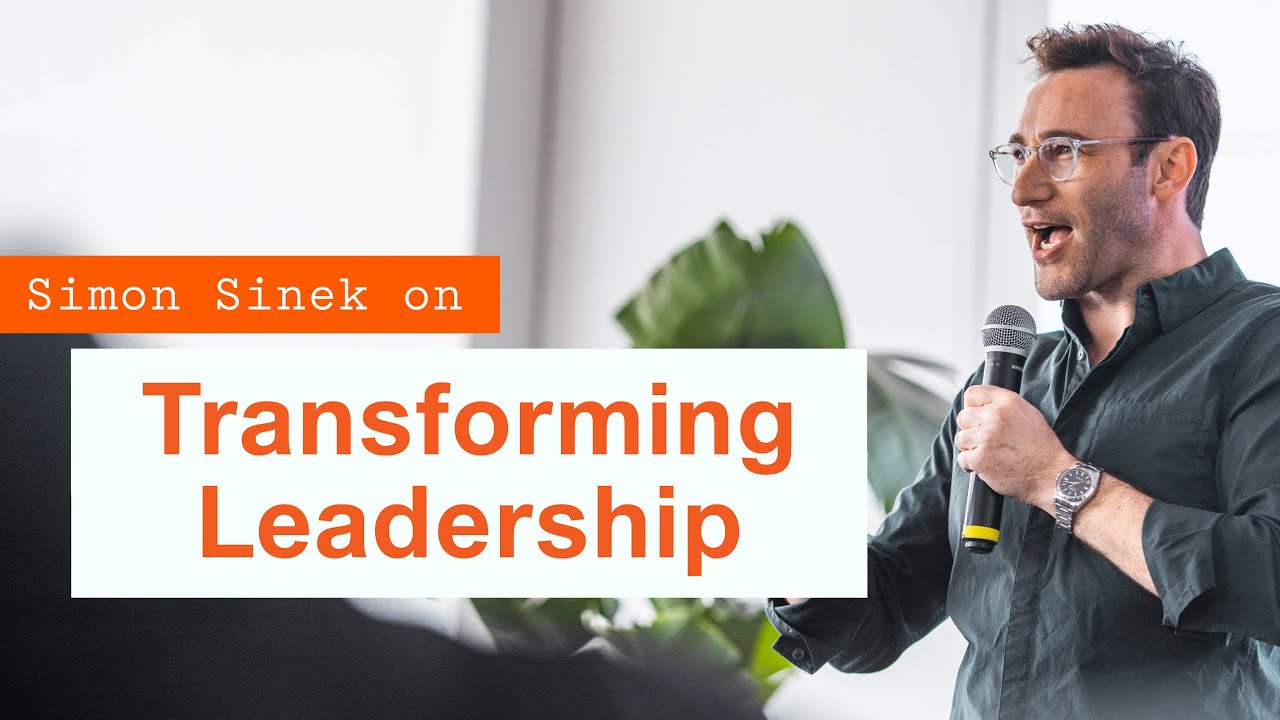
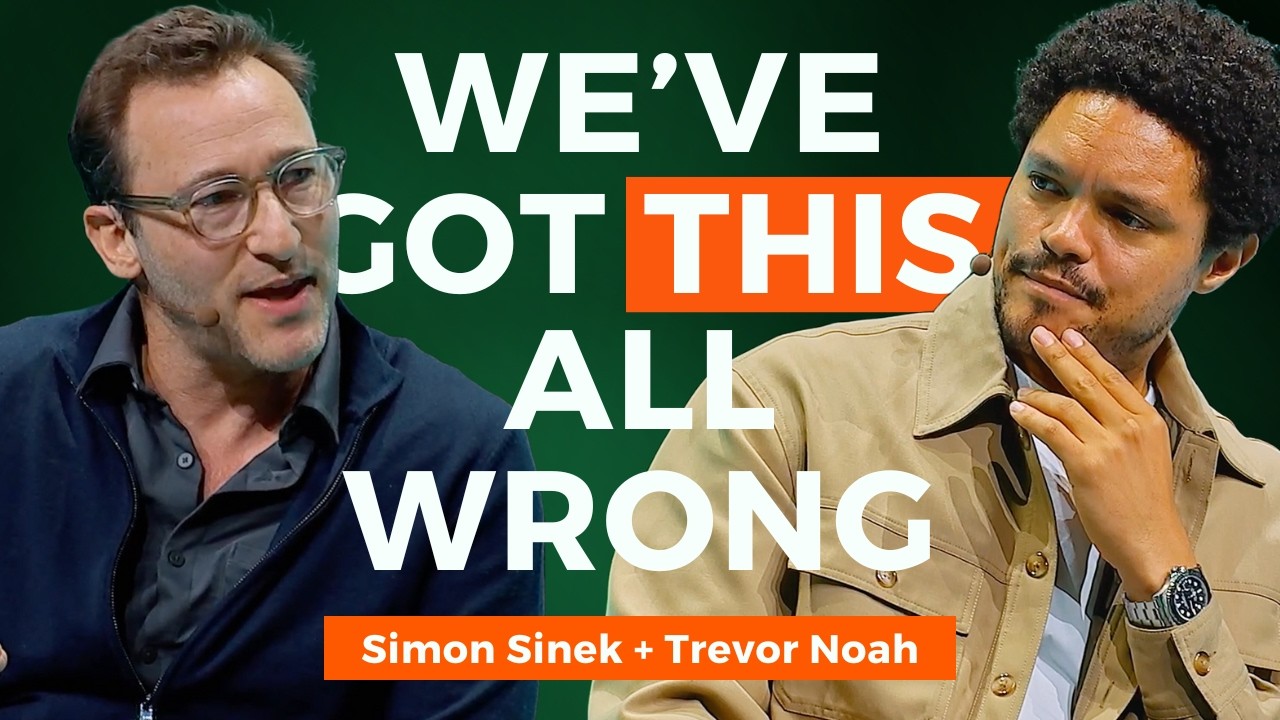
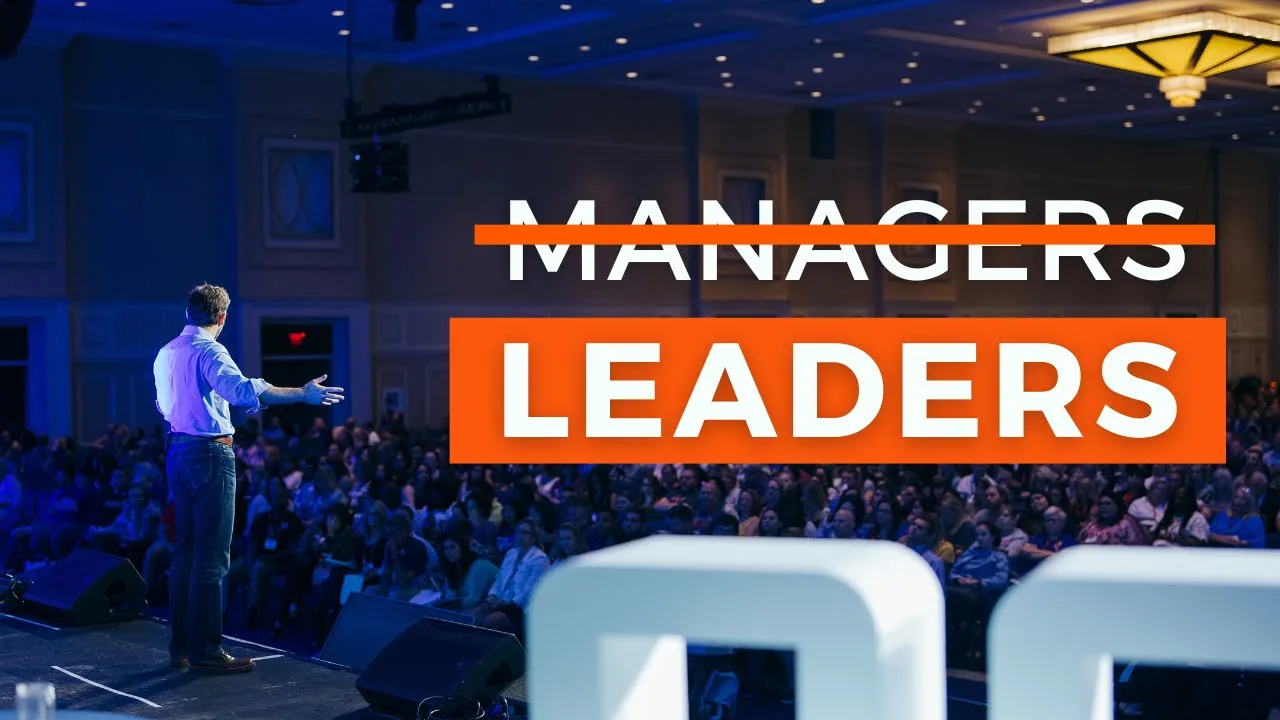
hi everyone I'm so excited to welcome you to leadership lab my name is sopia chova I'm the VP of people strategy and I wanted to first start by saying thank you for taking the time to come to our first leadership lab please join me in welcoming Simon cic who's an award-winning author and speaker and our uh VP of engineering Tower rabu to the stage to will be interviewing Simon cic and there will be time for some questions please give them a warm welcome so I appreciate the the warm welcome Sophia and I'm grateful to be
here it's great to to be here with you Simon nice to be here with you awesome awesome all right so um I'm gonna start with some questions um and throughout these questions I'm G to attempt to intersperse a bit of my experience and perspective as a way of reflecting some of the things that I imagine uh my my colleagues here are going through and perhaps we punctuated with the some Q&A at the at the end perf all right so early in my career I felt like leadership is basically the way that you treat others like
you know just how how you act um and I think I'm a nice guy and that's that's how I I showed up based on those principles until I met um a manager of mine his name is Grant English who said no no T listen you got to study it like a science right um so so so that said I'm I'm curious you know your take on um the distinction between manager and leader right you know it resonates with me personally so you know what's the difference and uh what does it look like to cultivate leadership
as a skill as a sign yeah great great question and I think that this is about pushing and challenging each other and this becomes your first challenge because you introduced everybody as people managers uh but the problem is is no one wakes up in the morning and wants to be managed totally yeah people wake up in the morning and they want to be led yeah and the reality is you can't manage people you can manage a process you can manage a project you can manage a schedule but you lead people it is a it is
a human function yeah um and the best leaders that I know uh first of all like I said usually we treat management as a position or a rank in a in a in an organization but leadership is a responsibility and it's the awesome responsibility to see those around us rise yeah and you are right uh because leadership is a skill uh number one is we have to learn it most of us do the jobs uh that we're good at and we probably had some sort of training along the way we may have gone to school
for engineering or being a lawyer or whatever it is or if we didn't the company will give us on the job training and they have most companies have pretty sophisticated training programs especially for junior people why because they want us to be good at the job that's why they look at our our grades and how we did at school or how we're doing in the training program and if you are good at your job you will get promoted and you'll eventually get promoted into a position where you no longer do the job that you were
trained to do you now have to do a new job called leadership and we often get little to no training on how to do that job so you're 100% right it's a skill and the skill must be studied sometimes and I and I expect that the company offers formal training as leaders their way up the ranks uh but also we have to take responsibility and all the best leaders I've ever met study it they read books they read articles they watch talks and they have conversations about it constantly they are fascinated by it because it's
the thing they're trying to learn and they never ever think of themselves as experts they always think of themselves as students amazing amazing the the piece around people managers as a bit of a misnomer as to what we're trying to achieve here is it actually resonates so perhaps that's big thing everyone here is a people leader and maybe we strike that from and and I'm as a followup I'm curious around this notion that management becomes an Ascension from a perception standpoint but what about leadership and is that in the domain of people managers yeah solely
so there's formal rank which affords you Authority but leadership has nothing to do with rank yeah as I said before leadership is the awesome respons responsibility to see those around us rise and people will only follow you if they trust you and feel like you have their back they'll do as you say because you have authority over them or they may have fear yeah but uh but respect and and psychological safety that leads to followership um which is when people give you their Blood Sweat and Tears partially because they want to do right by the
company but largely because they want to make you proud uh and so the question is is what conditions do you have to create that somebody would want to do something for you willingly and wanting so just to go off in a little tangent if you're interested in this kind of thing you can always interrupt me by the way I'm like a windup toy you just put a coin in it I'll do my best I'll do my so so you can just as a quick aside you'll appreciate this so we've all been in meetings where um
somebody is talking they've made their point but they just keep going and going and going and we all feel bad because we don't want to interrupt and we don't know how to interrupt or when so we just sit there or is this cute for me to interrupt you Simon yes but or we go off the reservation and we're making a different point and again same thing so in our company we came up with a thing called banana which is if somebody made their point anyone in the room can just say banana which means we get
it let's move on and it's a very polite way of interrupting so you can banana me anytime you got it I will I will work I'll do my best to Banana you and others here um as you go on so I was I was gonna say how the psychological safety is created and and what the actual anthropological responsibility of a leader is really quickly because this I find this interesting um way back when caveman times uh human beings lived in populations that were rarely bigger than about 150 people that was about the size of a
tribe right give or take but it was that those are the M that's where it kind of maxed out in that range um uh and we have to help each other we have to work together because as human beings by ourselves we're not strong I can't kill a cyber saber tiger defend myself against a woly mammoth by myself not going work out but as a group we are absolutely remarkable we have to remember that we're social tribal animals our survival depends on each other which means if I go to sleep I have to trust that
you will watch for D perfectly good system and vice versa um we're constantly assessing and judging in our society who's alha right um so if you're the strong one in the tribe you can shove your way to the front of the line to get the food if you're the artist in the family you get an elbow in the face this is a bad system because if you punch me in the face in the afternoon I'm probably not going to wake you and alert you to Danger right bad system so we we we evolved into hierarchical
animals where we're constantly assessing and judging each other who's Alpha right and it can be based on whatever depends on the population you know uh on what what we consider Alpha status and when we assess that someone is more senior than us in the organization we voluntarily step back yeah and and allow the the the alphas to eat first right so no elbow in the face and I'm guaranteed to to get some food now the the the the we're not stupid right we don't give our Alphas first choice of meat and first choice of mate
for nothing there's a deep-seated social expectation I'll take that all right so next question so Simon the the leadership lab that Sophia mentioned yeah um has as she she discussed a Q3 topic called license to challeng right which is is we we're thinking about as a form of psychological safety and and the belief here is that it can unlock innovation in our teams we want to hear from them we want them to throw out bananas and and let us know when when things are going Ary right that's the spirit now however when we say psychological
safety it can very well mean different things to each of us for example I could say isn't that simply just being nice to I mean we're all nice to each other we do that we know how to do nice Etsy nice as we call it right um can you help unpack that for us like what is psychological safety truly and and what is it what is it not and and why is it so fundamental to success yeah it's nothing to do with someone's personality uh that's number one right okay um I've been in organizations that
are so nice but they're so nice that they're passive aggressive that nobody gives you any feedback and nobody tells you anything because nobody wants to offend you and and as a result people's careers just sort of FL they just sort of live in The Ether because nobody gives me damn feedback right so nice can go too far yeah um uh uh psychological safety is very simple it means that I feel safe to say I made a mistake or I don't know yes or I'm struggling at home and it's affecting my work or I'm scared without
any fear of humiliation or retribution without any fear that it's going to affect my career in fact I can say these things with confidence that the team and my leaders will rush into support me yeah we've all been on teams that have that we've also been on teams all of us where you would never admit a mistake or say you don't know because you Fear public humiliation or being uh have it hurting your career and so we spend our days lying hiding and faking yeah so psychological safety is is is is very clearly uh the
the feeling safe to to say those things I I love that and you know as a leadup to to this meeting or this conversation that we're having um just as a proof point I I was super nervous as I as I told you and folks who know me will be like oh that's that's nonsense to um but in admitting that a lot of improvements and tweaks were made along the way I got this little clipboard from Andrea she like hey I'll print it out for you pal it'll be okay um I got some pep talks
from like my peers here like you know T you can you can do this I'm like okay maybe 1015 minutes in we'll see but and I got you too t yeah and and I love that because you know the the notion of it being an abstract thing and you can't connected to real world examples and we don't want to talk about what the benefits of it I I think is is worth mentioning so I love the example and thank you thank you for framing that in that way especially um the the feedback piece um so
uh that'll segue into my next question so when I think about psychological safety I believe that trust is a key piece right to this right which makes coaching and feedback as you mentioned um much more productive so like what's your take on what psychological safety looks like when it's done well um and the inverse is what are signs that it's going starting to grow within a team sorry so the question you're asking is not dissimilar to how do I make a friend or how do I build a relationship which is clearly you can't go on
a first date and have trust and ask for a hand in marriage it's ridiculous right um uh but and and and the dance that we do and building friendship and building trust in our personal lives can be somewhat short and somewhat long but it's not instantaneous ever and it's the same at work there's no single decision that you can make or one thing that you do that all of a sudden everybody loves you and everybody comes along at a different time even on your own team right right we don't know what people's previous experiences have
been so there's a few things we have to remember which is it's a process and it's a little bit like working out which is you know you're asking how do I build trust I'm saying okay if you want to work out and get into shape you're gonna have to do chest you're GNA have to do arms you're gonna have to do legs you're GNA have to do core and you're like great where do I start I'm like yes just pick one it doesn't matter you're gonna have to do it all right it's the same thing
I'll give you some pointers there's many other things but just it doesn't matter the order just please just do one go go so number one which I think is one of the most important things um and you demonstrated it t which is uh leaders have to lead by example just like children follow their parents uh people on a team will follow the example of their boss if the boss lies yells screams always has all the right answers guess what you're going to get from the team you're going to get pushiness you're going to get people
jockeying to be right all the time right the leader will set the example and so it doesn't actually work when the leader says um hey if you make a mistake or if you if you don't know something tell me I'm I'm totally cool I'm building psychological safety here till you do it right it's not gonna work it's actually not gonna work what actually does work is when the leader says um I don't know you're asking me a question I'll be honest with you I don't know I don't know or I screwed up and I need
your help to fix it right now people are afraid of doing those things because it is that word that scares a lot of people vulnerable right because it's admitting weakness but admitting weakness and being vulnerable and being weak and being vulnerable are not the same thing right so I don't want anybody to ever say oh I'm I'm so nervous I'm useless at this I can't I don't even know how this is not going to go well right like that will not Inspire confidence own it be confident in the expression so for example hey I have
no clue what's going on I am so nervous you have no idea and unless somebody helps me this is not gonna go well sounds familiar great great but listen to the tone of voice it's so different yeah and if the leader goes first in pretty short order you will find that people will start to take the risk to do the same per the leader's example and we have to welcome it that if somebody says I made a mistake we can't say what' you do now you go on I got you what do you need if
somebody says I'm struggling at home you go it's okay don't worry about it we'll we'll take care of the work thing this week don't worry about it you know so we have to we have to we have to affirm those risks that people are taking amazing amazing so I've seen a bunch of your stuff and I love the stories that that come out of like the material that you have so do you have any stories of leaders that you've worked with who've done a great job of building like this this pychological safety that that you
you're describing uh I mean one of the best leaders I ever had young in my career um I was a junior uh I think the official title was Junior idiot um had a big Ad Agency um I filled the specs perfectly by the way um uh and uh my B my it wasn't actually my boss it was my boss's boss it was the big boss uh who ran the whole the whole group his name was Peter and tagio one of the best leaders I've ever had in my life um uh Peter I wouldn't call him
warm he was very nice but he didn't exude warmth you know um so that goes to that nice thing like you know you don't have to be everybody's friend yeah um you have to be friendly but you don't have to be everybody's friend in fact that's a different conversation trying to be everybody's friend actually undermines leadership different conversation but Peter never answered a damn question ever right hey Peter what should I do what do you think we should do you know Peter i' I've exhausted all the the the that's why I'm coming to you was
I don't know he goes well what do you think just tell me what you think he never answered a damn question and it was at times excruciating what ended up happening is he taught me self-reliance he taught me to think for myself but he also taught me to bounce ideas of other people because if I had to go tell Peter who's my boss's boss what my idea was I be I better be pretty confident that I've that I've battle tested it with a few people before he shoots all the holes in it yeah yeah so
it taught me to ask for help and this is I think one of the mistakes people make especially young people because we tell them to be self-reliant and all this and they go and tell you their ideas because they want to prove but they haven't battl tested it and we shoot ideas and and then they say well you don't provide psych psychological safety right interesting so so that's our job which is to push and push and push with love with with support but at the same time we're holding them to high standards so they better
bring good work to us I don't expect them to come with me to come to me with right answers I expect them to come to me with thoughtful answers got it so so Peter was one of the best leaders I ever had and I don't think he ever answered a question ever that's fantastic all right that's it no no more answers no more answers yeah just just questions um Spirit of questions I've got another question um now good segue by the way thank you thank you um so you described Peter and and his pension for
asking questions as a way of sort of triggering that for you right now what are some shorefire ways in which a manager can extinguish psychological safety where are the where the the minefields waiting for us yeah so um there's a great story that Nelson Mandela used to tell um uh he was asked by a journal now Nelson Mandel is a very very important case study in in the leadership world because he is universally around the world regarded as a great leader different people are viewed differently depending on where you go in the world but not
Nelson Mandela which is why he's an important case right because it's Universal and he was asked by a journalist how did you learn to Be an Effective leader to be a good leader and he tells the story he told the story of his childhood he grew up as the son of a tribal chief his dad was a tribal Chief and he says he said I remember going to tribal meetings with my father and I remember two things they always sat in a circle and my father was always the last to speak now if you think
about it when we come into meetings the number of times we sit at the head of the table versus sitting in the middle of the table we create a hierarchy that's number one as opposed to even on a even on a on a on a on a rectangular table can create a circle right um and you think of the number of times we come into meetings and we go okay here's the challenge we're facing guys even if it's somebody who's good and well-liked and all that here's the challenge we're facing um I I want to
get your point of view here's what I think but tell me what you think yeah too late too late you've either biased the room or you've made people feel that their opinions don't matter so it takes a lot of discipline for our leader to say here's the challenge tell me what you think and then shut up and if it's quiet don't say anyone anyone anyone because people who are need to think before they speak not like me who just thinks out loud right you're doing great process every time you say anyone it restarts the system
so you have to get comfortable with uncomfortable silence and someone will break it and and you have to be good at at leading the room now what do I mean by that much is said in leadership about self-awareness you have to be self-aware I actually think that's very difficult I don't know my blind spots I don't know how people receive me right self-awareness is actually very difficult I think we have to practice situational awareness that's more important right so that when you're sitting in that room and you've asked for help you've asked for ideas one
person's doing all the Talking are you aware of that can you say Dave love the ideas let's hear from somebody else or are you in the corner of your eye are you ing the person who goes and you're like hey Stacy you want to say something yeah or somebody who hasn't spoken at all and at the very end you go hey ta I know I know you have a point of view I want to know what it is and and and the the point is is that a good leader isn't leading the idea set they're
leading the room and by the way the leader may change their mind zero based on their original thoughts but you'll make people feel heard and you get all the benefit of all those new thinking so you actually might learn something and actually might change your point of view and then at the end the leader can say I came in here with this point of view but I gotta say this was more valuable to me and I've changed my mind wow wow amazing thank you for sharing that and and the the takeaways here are again back
to the skill there's a lot of intentionality and what you describe it's not just like hey just naturally hang out and and high five or fist bump no um and and it's great that we have this series because I think it's going to be valuable for for a lot of us to be intentional about those things that you talked about hierarchy facilitating and not leading in the traditional sense so I love that if I may and if I may yes please this stuff is difficult it it all requires practice and you you will rarely get
it right the first couple of times it is a process like getting in shape right it is a process you have to trust the process yeah and of the people who are in that room I highly highly highly recommend you find a buddy at least one or a peer group because it is too difficult to do this thing called leadership alone right it's like even parents there's you know the traditional nuclear family has two parents but even if you're a single parent you still ask for help from your parents and your friends you still you
still get feedback and input leadership is the same don't be so fool hearty to think that you can do this all alone you need the mechanism to say oh I tried it today and it freaking blew up in my face even if it's just a a a cathartic venting make sure you have a leadership buddy amazing leadership buddy I love the concept um all right so following the SP side um we're managers here or leaders if I will to if I were to reframe it they'll all have an opportunity to learn about the different levels
of psychological safety um and and the one to hone in on is a challeng your safety because it's the highest form um that that teams should strive for um so and and to impact that a bit is um it's it's the goal here is to allow us to thoughtfully challenge each other and push the status quo right um but why is challenging so difficult for individuals um what's your assessment here what makes it really hard to create a truly safe environment to challenge in that way so there's multiple reasons it's layered and messy like just
like people are layered and messy right yeah I mean some of it may have nothing to do with the leadership environment you've built it may go back to someone's childhood that they just got yelled at all the time by their parents you know for anything they said they're going to carry that baggage with them for the rest of their lives and so you know it becomes difficult just sort of anti- their personality to do these things yeah or we don't know the companies they worked at before you know that you know once bitten twice shy
so we have to be patient that everybody comes along at their own pace and it's not bad or wrong and no one is failing if they're not challenging right so there's a few things to remember and hierarchy plays into it right so for example a Marine General friend of mine he says his test for a good leader is uh uh is if the group has taken ownership of their Lieutenant so is it the lieutenant or is it our Lieutenant right and that's the first lion leader now the the the leader that's seven L four lines
away it's always the colonel it's never our it's always the vice president it's never our vice president right yeah yeah yeah yeah uh and so Challenger is very easy here because the relationship is close it's intimate it's daily it's familiar and we we need it here now if you come up into a meeting and you've got a lot of people who are two three four levels in the hierarchy beneath you the challenge your culture you're going to get is be very difficult not because they're bad people not because they don't challenge there's either respect component
or an intimidation component interesting I struggle with it on my own team right that I I know my team challenges each other I wish they would challenge me more yeah yeah yeah so so one of the things that I have to do is I have to push it and I have to invite it so how do I do that yeah like I'll say like one of my favorite tests is okay what sucked and what sucked less if I made if I did a thing I'm say all right what sucked and what sucked less right um
or can you tell me specifically something I can do better and it it doesn't work in the hallway it's got to be in a safe container some sort of feedback mechanism meeting um or simply saying look guys I don't know the answer I need your points of view and one by one they'll start you know where are my blind spots like have to set the tone but just be aware that the that the hierarchy does factor in to someone's feeling of of of uh willingness it doesn't mean you have a weak culture but this if
you have no challenging here that that's a problem got it so this so tell me a little bit of your perspective on on te approaches to break that sense of hierarchy for example we have oneone skip levels Etc fir side chats Josh come up here the ET will come up here whatever um but is there a different thing that we should be doing to sort of invite that level of cander so you can't break it you can mitigate it right so uh if Steph Spielberg walked into the room you would show him incredible respect why
because it's Stephen Spielberg or in my world George Lucas right yeah yeah I got like love it you know so so like I'd be like oh my God it's George Lucas oh my God it's George Lucas and he says tell me what I did wrong I'm like oh it's amazing right like I love your stuff I love you I love everything you've done right um he can't break it but he can make me feel a little safer and he can mitigate it what's more important for Josh or any senior leader what's more important is that
they create a culture of Challenge from their from their uh Circles of influence from the regular impact they have so if Josh creates a a circle a challenge culture in his direct reports guess how they'll lead their direct reports and guess how they'll lead their direct reports yeah and so the most important thing is is the culture you create in your sphere and then it ripples by the way it goes the opposite as well no no challeng your culture at the top you're gonna find only small pockets of it uh uh throughout the company got
it and we call those Rebels right we call those we call those Rebels we or those the people who have this weird like I don't care if you fire me you know yeah yeah totally totally right I I I love it I love it I I I appreciate that a lot I want to do a quick time check sweet good I'm good so gonna Shi to a lightning round unless I miss something significant and if I did I apologize profusely to you all in advance um all right um what three characteristics make a great leader
so this question comes up a lot and you know you you read articles and they're like Charisma you know I I've known a lot of great leaders who you wouldn't even know they're the leader they like walk with their shoulder against the wall right um so you know those things I I've seen yes and no but the the the few things that I've seen universally about amongst the great leaders I've met number one um and these things number one and number two sort of go together number one is courage number one is courage uh the
courage to speak truth to power the courage to be honest about my own failings my own my own capabilities um the courage to be open about my my failings and my capabilities like these things are excruciating the courage to tell somebody something that you know is going to hurt their feelings like these things leadership is an incredibly difficult thing to do um and and courage which then begs the question where does courage come from and I do not believe for one minute that courage is a deep internal fortitude where you dig down deep and find
the courage courage for me is social yeah so like I have the courage to jump out of a plane because the parachute on my back the external thing yeah gave me the courage and so you need at least one person in your life professionally or personally to say I believe in you you got this and if everything goes south I'll be I'll still be there with you that'll give you courage number two closely tied is integrity which is to do the right thing and weirdly we all know what the right thing is RA rather than
doing the expedient thing like I can't stand it when companies do unethical things and all the CEOs are dragged in front of Congress and they all say this same thing we broke no laws no you you didn't break a law by raising the price of your essential drug by a thousand perc but it's pretty unethical yeah right like we all know what right is and the law is a lower standard um and so the the courage to have integrity and integrity driving my courage like those things go go together and the third one I'd say
um they're a student of communication it's a huge part of of leadership is the skill of listening and the skill of speaking in a way that allows people uh to not only to feel listening in a way that allows people to feel heard and speaking in a way that people can hear as opposed to triggering people etc etc got it I love that appreciate those those responses I got another one for you um all right if you need this group of leaders not managers um to do one thing this week to help them begin building
Trust and their teams what would that be um the first thing would be to go back to your teams and say one of the things that I love about this company is that um the company wants us to be better leaders better leaders of people and we had our first you know Gathering that was all about challenging and there's an expectation at some point that we're going to challenge you to think bigger think better do you know push push your boundaries but that starts with me and I've been challenged by the company to take myself
on and be a better leader over the next few months you're going to see me experimenting with techniques and strategies some of them will work some of them won't some of them uh I'll be good at and some of them I will fumble and stumble be patient with me and give me lots of feedback because I really want to be the best leader I can be for you so make an announcement of the journey that you're on because it is a bumpy road and you want your people to be patient and supportive as you're on
your journey to be a better leader which in turn benefits them amazing something about that response resonated with me and this is the aspect of there is this return of psychological safety that comes back to us as Leaders when we provide it to our teams and I'm wondering if I'm reading that right given like what you described yes it is a relationship yeah yeah and we call you leader not because you have rank or authority we've already established that right we call you leader because you went first first towards the danger first to speak of
your uh mistakes first to admit you don't know and that courage to go first is why we give you all of the perks we give you higher salary and all the other advantages you get as a leader but those perks are not free there's a deep-seated psychological expectation that only advantages you get in a leadership position come at the cost of you being vulnerable first and protecting the group amazing thank you thank you um all right slight twist here now what's the one piece of common leadership advice that you think is flawed that you want
to warn us about don't do it well that's a great question um I think the uh a lot of the old sort of Jack welan things we hear you know do as I say not as I do false totally false um because I said so false give people context for the decisions you make or the questions you ask even the instructions you give can you do this here's why right like context is everything yeah um and I think and this one I know is difficult for a public company but um uh shareholders do not come
first ever at best they come third after your employees and your customers and if your employees or customers are taken care of your shareholders will be taken care of but if you share prioritize your shareholder you might hurt your customer or your employee so I think that that oldfashioned dinosaur thought um you can be you can be performance-driven but it's for the benefit of the customer and the employee yeah yeah and I imagine that Spurs like engagement as a as a side effect and it's and by the way in this modern day and age where
we've sort of accepted that shareholder Supremacy is the thing to announce and publicly say no it's a recent thing it's a kind of 1980s 90s thing it's not the thing it's it's a thing that hasn't served our nation or the companies or the economy or the people who work in those companies um it's only served one group the external group that doesn't actually care about us um and and we talk about Courage the CEOs who say invest in us or don't invest in us you know uh we will not be fair weed fans but if
you believe in our cause and you like our management you like our strategy welcome all right I'm gonna wrap this up with my last question um and so what is the one thing you wish but before I do that thank you for that response Simon it was it was great I appreciated it and I imagine others did too um so what is the one thing you wish you knew about leadership when you were at the very start of your journey of becoming one oh super simple um I don't have to know all the answers and
I don't have to pretend that I do as a young leader I thought my credibility came from my intelligence I thought my credibility came from having answers to every question I thought my credibility came from knowing what to do complete nonsense the single best thing I ever learned that transformed me as a leader and as a person is the confidence to say I don't know amazing well leaning on the very gracious Andrea she has given me the cue that it's time to open for Q&A right yeah we're going to take a couple questions we can
start with the audience and then if you're virtual uh drop your question in the MC and I'll read it alloud for you we just have time for a few hello um hi Simon hi ta just Round of Applause because this conversation was really inspiring so thank you okay I will make this quick how can we encourage leadership from both different orgs or tribes because we're all around 150 here um breaking down the perceived gap of alpha between disciplines P the perceived gap of what between disciplines so creative engineering product marketing oh yeah yeah well first
of all one of the ways we organize companies is as you've said right and um there's a few techniques some of them more formal some of them less formal more formal which is create teams based on a project with a blend of them and put them in a put them in a room together and they have no choice but to work together I love that um that's more formal less formal is the Kaizen technique from the Toyota way which is um take somebody out of out engineering and have them go work in marketing to help
solve a problem and vice versa and they bring all of that they start to learn not just to present their ideas but they learn the challenges the other group has um and the most important one is get people to talk like you know a for a formal monthly quarterly meeting where the different groups present to each other one of my favorite companies that does this really really well is 3M uh uh in Minneapolis and 3M is one of the most innovative that ever existed on the planet the number of patents they have is extraordinary and
one of the ways that they do it is on a regular basis it's not required but it is very heavily attended the engineers all stand on the stage and say what they're working on and say what's working and what's not working they don't believe in Failure they believe you just whatever you're doing didn't didn't didn't uh fulfill the brief so I'm trying to make a strong adhesive I acent made made a weak adhesive and what they get is the support from each other so I think a form where people can say here's what we're working
on and here's what's not working and here's what we're struggling with and everybody can hear what's going on I just love I love things like that thanks for the question and thanks for the response Simon I'm gonna read um one from the MC this question is from Alejandro how do you break the bias of sharing an unpopular opinion when the majority is leading to one opinion um okay great question number one um you have to disconnect connect uh uh the the opinion you have from yourself meaning it's not personal and one of the things that
happens that makes things go sideways is when we have a Clarity or we have a different point of view we take it really personally right we want the company to do this we want the group to do this we want to be heard and if they don't we get upset and like why I'm just trying to help right but the point is you made it personal and what I've learned is when you shift accountability because when you make it personal you take on all the accountability right but when you shift the accountability you're more likely
to be heard saying if it's so completely sort of like hey I have a different point of view I don't know if it's right or wrong but it's challenging can I let me just make a point right and you say that point and you get push back right and you instead of defending the idea and and trying to be right versus the push back because now it's becoming personal right you're defending my idea right you simply say hey look look look look I'm not going to fight I'm not trying to be right I'm not trying
to tell you you're wrong I'm literally not going to fight with you this is your decision you do what you think is right I want you to have the benefit of another point of view but if you think it's the wrong point of view then ignore me and I've learned that the more you can emotionally disconnect yourself from the the the the advice you're giving weirdly the more often it's heard love that um any more from the audience in person we've got some time we're a little ahead of schedule Nicole sure hi I'm Nicole I
lead our Dei team at Etsy and my question is does all of this advice extend just as well um from the work context to the personal or here we are in a pre-election season political contexts that come into uh these conversations come into the workplace uh the simple answer is yes uh uh um human beings are engaged in relationship whether they're personal relationship ship or professional relationships it's relationship and many of the same things not all but many of the same things apply um rational versus emotional are you good at assessing when somebody's pres presenting
an opinion or something emotional and it happens all the time we do it in our relation in our personal relationships right somebody says to you uh you know you didn't you you didn't you didn't do that thing three times you're like I didn't do that thing twice like we correct the facts when they're emotional don't do that right it's got nothing to or or we have a rule and company if it's above a five it's about something else right so like at home it's be like why do you always leave the fridge open if that's
the reaction to leaving the fridge open it's not about the fridge right so to be a student of like assessing like is this the thing or is this something else don't don't be rational in in a you can't bring facts to an emotional gunfight you know you have to all you have to do when when there's emotion is is allow someone to feel heard and um and when politics come in which you know is is so uncomfortable and destructive inside uh well inside everything uh um our goal is not to fight with the person or
prove them wrong our goal is simply to hold space and make them feel heard and that's a skill that we have to do better at as employees as as brothers as sisters as spouses as boyfriends as girlfriends and uh As Americans we are crap at listening um and if you want to teach one skill in your company that will have ripples that will benefit society and people's homes beyond beyond beyond start teaching effective listening Nicole's taking notes back there okay we have uh one more question in MC that I'll read this is from Sali should
the leadership principles or guidelines change based on the changes in the company culture for example of a company's getting more performance focused during a difficult economic time why or why not and if the answer is yes how great question absolutely leadership styles adapt for the situation you're in right so um there are some leaders who lead with command and control command and control is not useless it's just not sustainable and so if you're always like that you'll exhaust your people and burn them out and probably break um levels of trust at some point but in
periods of extremely high stress like Co and going into lockdown and all of that extreme extremely high stress it is totally okay for a leader to go into command and control but you have to have been that a uh that really effective sort of kind of leader that we were talking about to build a trust before that command and control doesn't work if you don't have the trust of the people and so if you I learned this from from The Ring cor I forgive the forgive the analogy but but you know when you go into
combat leaders just bark orders that's what they do but they what people don't see is that's not what it's like back at home station they've built trust over months if not years so that their their people trust them when they go into command and control and by the way be open about it when we went into lockdown when we went into Co I said out loud to our company Hey listen the stress is high and the pressure is Extreme and I want to know your feelings I care about those things and if I said something
in an awkward way in a meeting and our traditional way of doing it is you sort of bring it to my attention quickly I need you to know bring it to me in two weeks I like right now we're focus and people were fine with it but I set I set expectations that it was going to be different and it was going to be shortterm that's really important so yes you can adjust your style for the situation you're in what you can't do is be Mushy Mushy and you know super patient with when you when
when stress and deadlines are extreme but at the same time you can't be command and control when the stress is is normal oh we've got got another question here in the audience um you so you talked about self-awareness and how that's like one of the most difficult things to do and you also talked about kind of people think of psychological safety sometimes as being like positive and you can have this problem where you have psych uh what I might call toxic positivity um and so I'm wondering how do we measure as an organization whether we're
making progress on psychological safety when we think we're already good at it and see the problems when the culture is overly positive yeah so you're such a great question toxic positivity is thinking everything's good or telling everybody everything's good you know it's so I guess the equivalent of giving everybody a giving everybody a trophy right and it's the unwillingness to ever give difficult feedback now the question is is have you learned the technique to give difficult feedback so that people will hear it rather than be defensive and angry um uh and so one of the
ways you can judge is it is it excessively positive or you actually creating psychological safety is ask what you know ask the people on a on a regular basis you know do you feel safe to admit a mistake do you feel safe to ask for help do you feel safe to say I don't know and see what people say right at the same time you'll see it in the product you'll generally see if you have psychologically safety you'll generally see uh the number of people quitting go down you'll generally see Innovation go up you'll generally
see over the more consistent performance but you'll see it also just as the leader of the group is you'll see your team teaming together you'll see your team relying on each other uh and the more that you step back like I I made an executive sort of decision the other day and I was sort of a little not very clear about what the decision was you know I was like we need to do this right not telling anybody to do anything and somebody said well what's the decision and I said I want each of the
team leaders to go back do experiments with their team and then tell me which is the best solution and so the more you push out the opportunity to try and experiment you'll get the benefit of of all of that and you'll have a sense of it but it there's multiple data points that you'll need some of them formal some of them informal one quick follow so if there's no psychological safety how are you going to get people to tell you that there is the space to tell you that they made mistakes is it just like
looking at people doing that how do you know how much is enough versus yeah so so one of them is accountability right so is somebody checking in with you every time before they make a decision hey hey is it okay if I if I if I change the this from blue to green hey is it is it okay if I if I call one of our people hey is it okay if I send this out hey is it okay okay I give the support to your boss right and the problem is is the more we
answer all those questions we're actually removing accountability for me one of my biggest pet peeves is when we go on a company off site or vacation that we're on our emails and checking in on everything nothing undermines trust more then you can't even go away for a week and you don't even trust your team to make decisions while you're not there you know like when I go on vacation I tell my team hey I'm gone for a week if there's an emergency deal with it I'll see you in a week bye right and what that
does is it says I trust you and you're accountable not me the more I answer their questions the more I remove accountability from them the more I and by the way accountability means sometimes they get it right and sometimes they screw it up and so when they get it wrong is it stylistic I just would have done it differently we have to sort of learn to put our egos aside there but if it went sideways assuming there's no negligence you know like that there wasn't like gross irresponsibility that's a different conversation but if something just
went sideways you go oh my God that went sideways okay let's figure this out what's your first what's your first suggestion how we can put this right I got you let's just figure this out together and the more of that that happens the pushing accountability we're not very good at we're not very because we're we're constantly connected which accidentally removes accountability for peopleone is this on okay thanks everyone for the questions I have the pleasure of wrapping us up and so it's my turn to be nervous now to I'm just kidding um I just want
to say thank you to TA and thank you to Simon I think they did an amazing job let's give them a round of applause