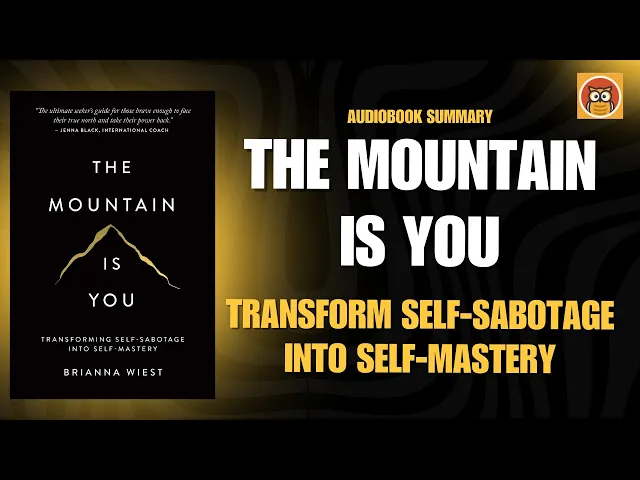
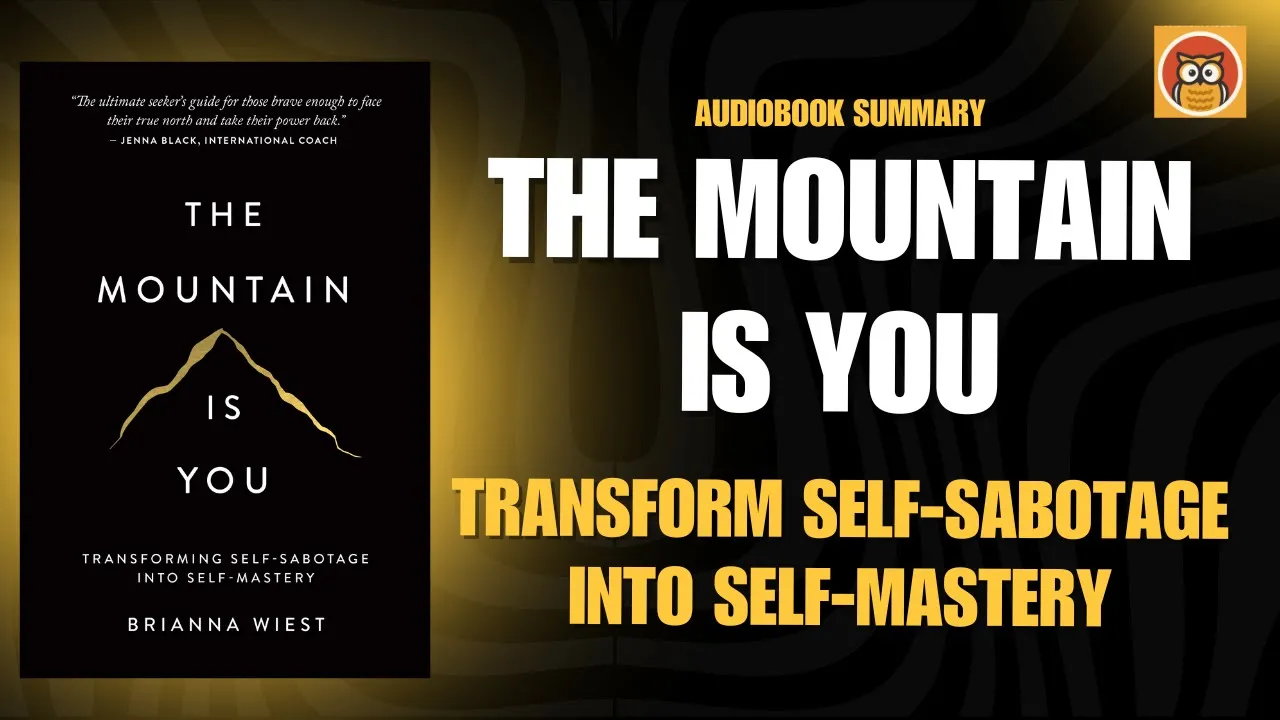
all right so um I'm really excited to dive into all this research you sent my way about self- sabotage yeah and looks like our main source here is Brian Weiss's book the mountain is you great book which I have to say is a pretty powerful title when you think about it definitely have you ever felt like you're kind of Your Own Worst Enemy oh yeah like you're standing in your own way like that's self- sabotage in a nutshell right wanting one thing you know consciously but then unconsciously you're acting in ways that totally prevent you
from getting it it's such a weird thing right that we do that and Weiss she really Nails why we do this to ourselves in the book and it's not like about self-hatred or anything or a lack of willpower it's more of a defense mechanism oh interesting yeah we sabotage ourselves to avoid facing like deeper fears and insecurities so it's like wanting to eat healthy right but then somehow you end up at drive-thru anyway exactly perfect example on the surface you're all about nourishing your body but then maybe there's this underlying fear you know right of
like deprivation or this need for comfort that just kind of drives you towards those less healthy choices yeah that makes a lot of sense now whis she really dives into different forms of this self-sabotage in the book she does and some of them I think might really resonate for example she talks about uprooting oh yeah uprooting which is basically constantly needing a fresh start so you might be jumping between jobs maybe relationships but never really addressing like the root causes of your dissatisfaction and what's interesting about that about uprooting is that it can actually stem
from um a fear of commitment oh or like a belief that you're not good enough to deserve lasting happiness so it's easier to run away start over than to actually like confront the possibility of failure or rejection yeah it's almost like you're running from yourself huh totally instead of dealing with the issue you just keep recreating the same patterns in different scenarios over and over again she also highlights procrastination which I think we can all relate to at some level oh for sure we all procrastinate sometimes yeah but when it becomes this chronic pattern you
know there might be a sign of something deeper for right and uh Weiss suggests that it can often be linked to fear of success actually really yeah the idea that if you actually achieve your goals you might become more visible more vulnerable or even disliked by others I mean but isn't some level of fear healthy oh absolutely like how do we know when fear is holding us back versus protecting us that's the uh that's where self-awareness comes in healthy fear like you said it helps us stay safe make good decisions right but when fear becomes
irrational or paralyzing it can really keep us from pursuing our dreams from living a full life exactly it's about recognizing when fear is based on like real threats versus um imagined ones so with procrastination it's like you're afraid of the potential negative consequences of succeeding without even giving yourself the chance to like experience the positives totally yeah Weiss also talks about perfectionism as a form of self-sabotage yes and that's an interesting one it is because it's often disguised as a positive trait right we're taught to strive for excellence be the best we can be but
when Prof ISM becomes an obsession it could really lead to paralysis yeah and procrastination because nothing's ever good enough you're always striving for this unattainable ideal it prevents you from like finishing projects or putting your work out into the world totally the fear of not being good enough it can keep you stuck in the cycle of self-doubt self-criticism right it can also come from a fear of judgment oh okay like if you never finish anything no one can criticize it that's such a good point it's like using perfectionism as a shield to protect yourself from
potential criticism or rejection now whis also talks about this thing called downplaying success which is kind of the opposite of perfectionism isn't it yeah it's a very subtle form of self-sabotage inter where you're diminishing your accomplishments downplaying your talents or even avoiding opportunities that could lead to more success like you're afraid to let yourself shine yeah why do you think people do that well I think it can be rooted in a few different things okay uh uh sometimes it's about not wanting to like stand out from the crowd you know right right or make other
people uncomfortable it can also be like a way of protecting yourself from the pressure of having to maintain a certain level of success once you've achieved it right yeah yeah or maybe even a fear of being seen as like arrogant or boastful could be it's like trying to fly into the radar to avoid attention or scrutiny and then there's the busy trap oh yeah always running around filling every second with something yeah but never actually addressing the deeper issues that you might be avoiding busyness can be a really sneaky form of self-sabotage because it creates
this like illusion of productivity and importance but it can also be a way of numbing yourself out okay you know avoiding difficult emotions or distracting yourself from the things that really matter it's like you're constantly on the go but never really arriving anywhere yeah yeah and speaking of connections Weist also talks about surrounding yourself with the wrong people oh yeah staying in relationships that drain your energy and hold you back that's a big one the company we keep has a huge impact on our lives it does yeah if you're surrounded by people who are always
negative or critical or draining it's going to be really hard to break free from self-sabotaging patterns so it's not just about cutting ties with like toxic people right but also being more intentional about who you let into your life making making sure that they're supportive you know of your growth and well-being absolutely now there's one more form of self-sabotage that way talks about that I think a lot of people struggle with and that's worrying about irrational fears oh yeah worrying about irrational fears can be a way of like staying in your comfort zone avoiding risks
right or just distracting yourself from you know more pressing issues for sure it's almost like you're creating these worst case scenarios in your mind right as a way to avoid facing reality or um taking action to change it we've talked about a lot of different forms of self-sabotage here and I'm sure some of them have really resonated with you but the good news is that whis doesn't just leave us with a diagnosis you know right she offers a path forward she does she provides this like framework for understanding these patterns and tools for transforming them
exactly and it all starts with understanding our triggers yeah okay so let's unpack that okay what exactly do she mean by triggers well she sees triggers as signposts not the problem themselves they point to unresolved pain or areas where you need to grow so instead of trying to avoid them or suppress your triggers she encourages you to see them as opportunities for like self-discovery so it's like the those negative emotions are trying to tell us something but instead of listening we just try to like shove them down or distract ourselves from them exactly and the
more you resist those emotions the more power they have over you okay but if you can learn to approach them with curiosity you know right and compassion you can start to unlock the wisdom that they hold so how do you actually do that how do you start listening to those negative emotions instead of just trying to avoid them well Weiss suggests that one of the first steps is to Simply recognize and acknowledge your feelings okay without judging them what are you feeling where do you feel it in your body where thoughts are going through your
mind don't try to change it don't try to fix anything just observe I mean that sounds simple enough but I imagine it could be pretty challenging especially when you're dealing with like really intense emotions oh it definitely takes practice Yeah but the more you do it the easier it gets right and the more you allow yourself to feel those emotions the less power they have over you it's like you're taking the wind out of their sales by simply acknowledging that they're there exactly now Weist she talks about a few specific emotions she does and how
we could reframe our relationship with him for example she suggests that sadness instead of being seen as a weakness can actually be a source of strength a totally interesting sadness gives you permission to grieve to process loss to connect with your vulnerability so it's like giving yourself permission to feel sad yeah without judging yourself for it exactly and guilt which can be so so debilitating can actually help you um identify past experiences okay that might have shaped your sense of being like wrong or burdensome it's like a clue to help you understand where those feelings
coming from and then you know you can start to challenge those negative beliefs exactly now what about embarrassment yeah that's another one that can be really tough to deal with it pan embarrassment often highlights those behaviors that are just like misaligned with who you want to be right and it can be an opportunity for growth and self-reflection for sure I've starting to see pattern here it's like every negative emotion when you really look at it can teach you something about yourself it really can regret for example yeah regret it can be incredibly powerful in highlighting
unmet needs and desires that you might be ignoring exactly so it's not just about like dwelling on the past right but using those feelings to inform your future choices I like that what about fear that's a big one fear for a lot of people it is can be a powerful motivator but also a paralyzing Force we just suggests that um instead of suppressing or ignoring your fears try to understand like the root cause what are you afraid of why are you afraid of it what are the potential consequences of facing your fear and what are
the potential consequences of not facing it okay this is all starting to make sense but it also feels um a bit overwhelming yeah how do we actually do this how do we move from understanding our triggers to actually changing our Behavior that's where emotional intelligence comes in emotional intelligence what exactly is that so you're talking about emotional intelligence right emotional intelligence what is that exactly so it's uh it's basically the ability to understand and manage your emotions okay not suppressing them which like we said usually backfires right but like becoming aware of them and choosing
how you respond to them so it's like the difference between feeling angry and then you know lashing out at someone versus like recognizing that anger and then choosing a more constructive way to express it yeah exactly it's about uh recognizing your feelings understanding where they're coming from and then even if your emotions are pulling you in a different direction choosing a course of action that aligns with your values and goals that makes sense so it sounds like emotional intelligence is really key to Breaking Free from those self-sabotaging patterns but what about the past how do
we deal with all the you know baggage we might be carrying from past experiences well wiy acknowledges that the past plays a big role in shaping our present Behavior right but she offers some really powerful strategies for like releasing that past not by erasing it or anything but by processing it okay and extracting the lessons it holds what kind of strategies are we talking about here well one technique she recommends is writing a letter to your younger self oh interesting yeah it's a way to offer that younger version of yourself the understanding the support the
compassion they may not have gotten at the time you can acknowledge their pain validate their feelings offer words of encouragement and guidance it's like reparenting yourself in a way it also sounds like a way to kind of recognize how far you've come yeah to see how much you've grown and learned since then exactly it's a really powerful way to shift your perspective and cultivate self-compassion now west also emphasizes the importance of mindfulness practices yes things like meditation or yoga as a way to reconnect with your body and you know process emotions more fully MH so
it's not just about like thinking your way out of self-sabotage but also feeling your way through it yeah exactly it's about integrating um both mind and body into the healing process she also talks about this idea of emotional backlog emotional backlog what is that it's like uh all those unresolved emotions we carry with us from the past okay so imagine a backpack that you've been carrying since childhood right and every time you experience a difficult or painful emotion you just shove it in this backpack yeah and over time that backpack gets heavier and heavier weighing
you down and it starts to affect your ability to move freely wow that's a powerful image so how do you empty that backpack well it's about creating space to uh process those emotions allowing yourself to feel them fully and then releasing them okay mindfulness practices can be helpful here as well as therapy journaling or even just spending time in nature this all makes sense you know know intellectually yeah but what about those really like deep-seated traumas the ones that feel like etched into your very being whis addresses this too she explains that trauma can actually
be stored physically in your body wait so it's not just in your mind it's like in your muscles and Bones yes exactly and that physical tension can keep you trapped in this like cycle of fear and reactivity wow that's intense so how do you release that Trauma from your body it starts with awareness paying attention to uh how your body feels when you're experiencing those triggering emotions noticing any areas of tension or discomfort and then gently working to release that tension through things like deep breathing stretching yoga massage it sounds like it's all about reconnecting
with your body and learning to listen to its signals it is now whis also mentions that healing trauma involves like restoring a sense of safety yes that's crucial trauma of shatters our sense of Safety and Security makes us feel like the world is a dangerous and unpredictable Place healing involves rebuilding that sense of safety both internally and externally how do you do that especially when the trauma stems from something that happened in the past well it's about addressing the specific area of trauma okay so for example if the trauma is related to say a past
relationship healing might involve building healthy and supportive relationships in the present oh okay or if the trauma is related to a loss of control control healing might involve reclaiming your agency and making empowered choices in your life so it's about like taking back your power rebuilding trust and creating a sense of stability and Security in your life exactly Okay so we've talked about releasing the past and building emotional intelligence yeah but what about the future right how do you actually start creating a life that's aligned with your like truest self that's where whis's concept of
the highest potential future self comes in okay and it's one of the most in and empowering parts of her book okay tell me more about this Highest Potential future self it's about envisioning um the best possible version of yourself in the future okay the you that has overcome those self-sabotaging patterns and is living a life that's truly aligned with you know their values and purpose it's about tapping into the wisdom and Clarity of that future self and using their guidance to like inform your present actions so it's like asking your future self for advice but
how do you actually do that through visualization whis guides you through this really powerful visualization exercise where you imagine meeting your Highest Potential future self it sounds a bit like a guided meditation I'm kind of curious to try this oh it's great walk me through it okay so close your eyes and imagine yourself a few years down the road you're living this life that feels fulfilling and meaningful you've achieved your goals you're surrounded by people you love okay and you feel this deep sense of peace and contentment really step into this Vision what are you
doing where are you who are you with what do you see hear smell taste and feel I love how sensory this is it's like you're really there right now imagine your Highest Potential future self approaching you take a moment to just observe them what qualities do they embody what kind of energy do they radiate what do you notice about their appearance their demeanor their way of being in the world this is so fascinating I'm starting to get a glimpse of my own like Highest Potential future self now imagine having a conversation with this future version
of you ask them for guidance what advice do they have for you what steps can you take to move closer to this Vision what challenges might you face along the way and how can you overcome them I'm starting to feel this like sense of clarity and direction it's like my future self is giving me a road map and here's a powerful symbol imagine your future self handing you a set of keys the these Keys represent the tools the resources the wisdom you need to unlock your full potential and create the life you desire wow take
those keys and hold them in your hand feel their weight their texture their energy this is so powerful it's like I'm receiving a gift it is it's a gift of guidance support and empowerment West suggests that the more you connect with this vision and embody the qualities of your Highest Potential future self the more you'll start to attract the experiences and opportunities that will help you create that reality this whole concept is blowing my mind I'm starting to see self-sabotage in a whole new light and it's actually making me feel more hopeful like I have
more control over my destiny than I thought that's the beauty of it you're not powerless you have the ability to choose a different path to break free from those self-sabotaging patterns and step into a future that is aligned with your truest self but remember change takes time and effort it's not a quick fix it's a journey of self-discovery and growth Okay so we've talked about releasing the past building emotional intelligence and connecting with our Highest Potential future self but uh let's get even more practical here what are some tangible steps we can take to kind
of bridge the gap between that ideal vision and our current reality well whist offers a whole toolbox of strategies but one of the most important shifts she recommends is to focus on cultivating inner peace rather than constantly chasing happiness that's interesting inner peace over happiness because happiness as we often think of it is fleeting it's dependent on like external circumstances on things going our way right inner peace is a more stable and enduring state of being it's about finding contentment and acceptance regardless of what's happening around you like finding that calm in the center of
the storm okay I'm starting to see the appeal but how do you actually cultivate inner peace it sounds kind of esoteric it's more practical than you might think we just emphasize izes the importance of aligning your goals with your core values and principles it's not just about achieving any goal okay it's about pursuing goals that are in harmony with who you are at your deepest level so it's about like identifying what truly matters to you and then making sure your actions are in alignment with those values exactly and it can explain why you might achieve
a goal and still feel unfulfilled it's because the goal itself wasn't aligned with what truly matters to you this is making me want to do a serious inventory of my goals yeah so let's say you've done the work of identifying your principles and aligning your goals what are some practical steps you can take to actually start moving from self-sabotage to self-mastery weenus offers a range of strategies but here are a few that really stand out great let's hear them so uh before we went to the last section you were about to tell me about some
of Brianna whis's strategies oh right so first she really emphasizes adopting um personal principles to kind of guide your actions okay it's about moving Beyond just good intentions and creating a set of like guidelines for yourself that will help you stay on track even when things get tough it's like creating a personal code of conduct a set of rules to live by exactly and it's not about being rigid or anything it's more about like having a framework that gives you Clarity and Direction when you're faced with you know those tough choices right I like that
what else um another good strategy is to make plans to address challenges instead of just worrying about them oh worry is like a form of self-sabotage in itself right keeps you stuck in that cycle of fear and inaction so instead she encourages you to shift from worry to problem solving no identify the issue brainstorm potential Solutions and then take action ask yourself what steps can you take like today to start moving forward that's a good point it feels way more empowering you know it is it's about taking control instead of letting anxiety run wild exactly
I can see how that would be helpful and remember you don't have to do everything alone oh that's true it's okay to ask for help yeah whether it's a friend a family member a therapist a mentor reaching out for support can make a world of difference that's a good reminder it's so easy to fall into that trap of thinking you have to do everything yourself and it is weest also talks about the importance of letting go of the past Not By ignoring it right but by like extracting the lessons it holds and moving forward with
wisdom and compassion for yourself so it's about turning those past experiences into fuel for growth rather than letting them hold you back exactly and um finally don't forget to schedule time for joy and play oh that's a good one it sounds counterintuitive but in our you know super busy goal oriented world it's so easy to let those things Fall by the wayside yes we reminds us that these activities they're not frivolous they're essential for our well-being yeah and they impact our ability to like show up in all areas of Our Lives sense if you're constantly
Running on Empty you're not going to have the energy or the creativity to pursue your goals or even you know nurture your relationships exactly it all comes back to that idea of inner peace when you prioritize joy and play you cultivate that sense of balance and contentment that allows you to approach life with more ease and Grace this has been such a a rich and insightful conversation I hope you're feeling um inspired to start applying some of these principles in your own life I am remember even small shifts can create massive momentum it's not about
overnight transformation it's about consistent intentional action absolutely understanding self-sabotage is like the first step to overcoming it you have the power to change your life it might feel daunting at times but you've got this you do as you keep exploring these Concepts think about one small actionable step that you can take like today to address a specific self-sabotaging behavior you might have even a tiny shift can create momentum towards you know more fulfilling life what resonated with you the most today what feels most relevant to you yeah think about that and also just remember even
being aware of these patterns is huge it's like um shining a light on those unconscious behaviors that have been holding you back mhm now that you see them you can start to change them this has been such an incredible journey of self-discovery it's like we've um climbed a mountain of self-sabotage and reached a peak of self-awareness I love that and remember the journey doesn't end here it's about continuing to explore to learn to grow and most importantly to be kind and compassionate with yourself along the way beautifully said and as always happy deep diving thank
you for joining us at wisdom house where we bring you Timeless insights from the greatest books if you found this deep dive valuable don't forget to like comment share and subscribe to wisdom house stay curious stay inspired and we'll see you in the next video