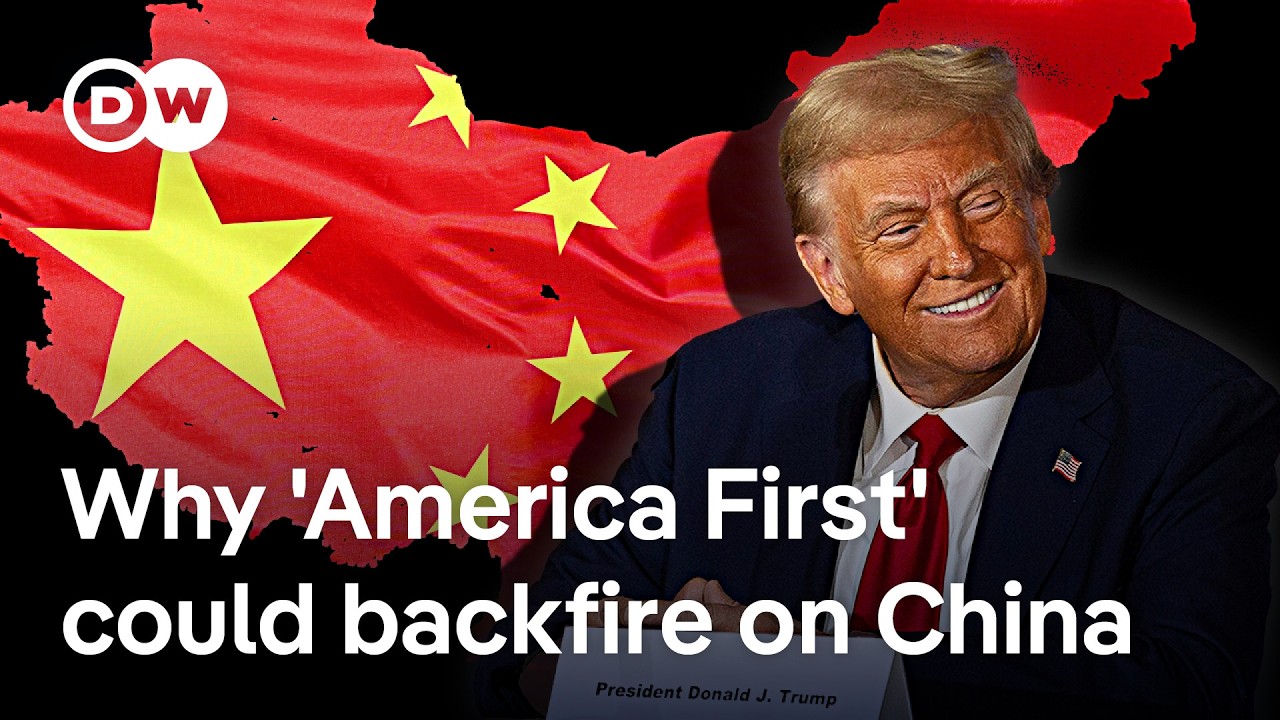
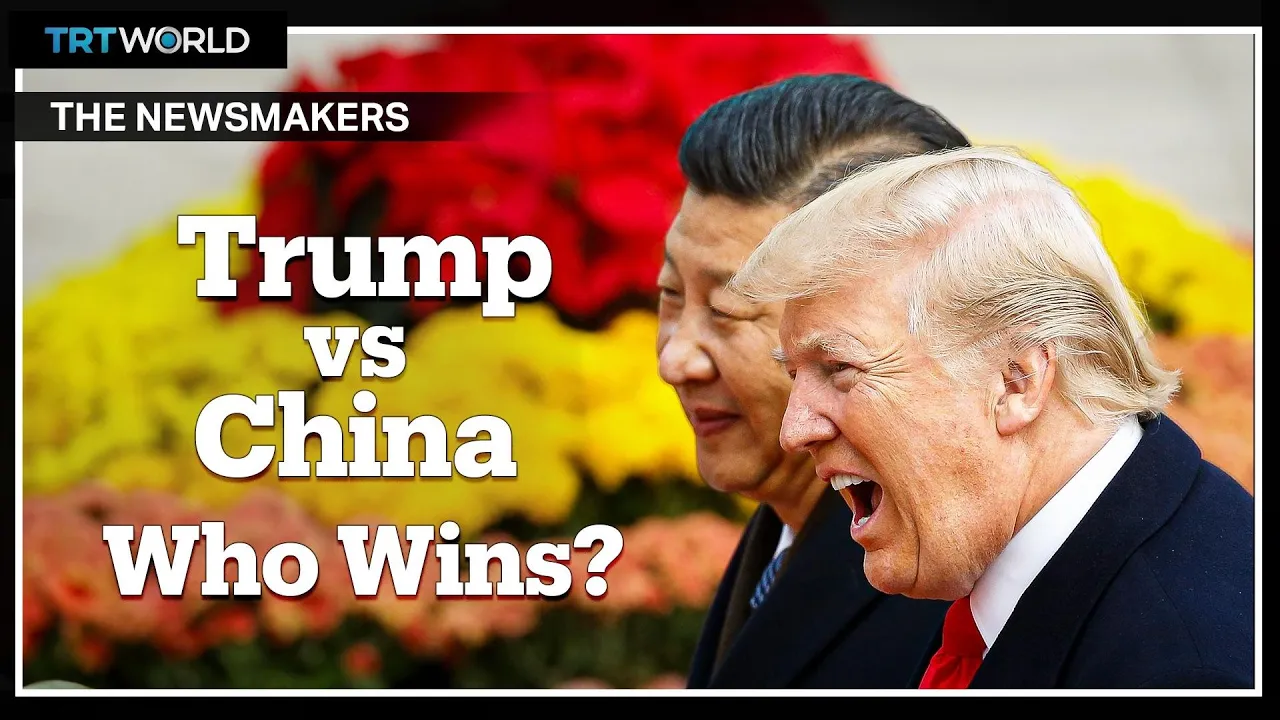
[Music] can a trade war with China be one US president-elect Donald Trump vows to put America First promising up to 60% tariffs on Chinese Imports so will we see a stronger US economy at China's expense or a lose lose scenario to make the global economy suffer I'm Andrea sankin today's newsmaker is the US China relationship [Music] millions of American voters loved the promise of punishing China to bring jobs and prosperity back to the US but many questioned if that's even possible given us manufacturing employment has been declining for decades in some ways cheaper Chinese products
have boosted the US retail sector and fueled more us consum asson so if that equation changes would the US really come out ahead and how will US consumers respond to more expensive retail prices add to that geopolitical uncertainty over Taiwan plus the so-called rise of the global South and we really are entering some unchartered territory here's a look China us relations are heading into uncertain times as Donald Trump prepares to return to the White House the two Global superpowers have had Rocky relations in recent Rec years and they look set to get worse during his
first term president Trump started a trade war with China imposing High tariffs on many Chinese goods and Beijing retaliated placing its own tariffs against the US the current US President Joe Biden kept those tariffs in place and even increased some of them to try to reduce the US dependence on China furthermore tensions over taiwan's future have only served to worsen the relation ship last year the US exported $48 billion worth of goods to China while importing more than $500 billion now Trump is pledging to scrap China's favored trading status and impose 60% or more tariffs
on all Chinese Goods Trump's claims High tariffs would protect the domestic economy and generate huge tax revenue for his government the third most beautiful word is the word tariff you know par it really did tariffs needed a press agent because all these crooked politicians they didn't like it you know they're all taken care of by foreign countries they don't like tariffs but we're doing the tariffs and we're going to you know I charge Cher China was charged by me that would hit China's electric vehicle and solar Industries which are by far the largest in the
world Trump's policies could also put further pressure on China's semiconductor industry as Washington has already implemented broad export controls over the transfer of key Technologies yet Beijing says there will be no winner in a trade war and calls for sustainable relations it is hope that the two sides will uphold the principles of mutual respect peaceful coexistence and cooperation also win-win results strengthening dialogue and communication to properly manage differences and expand mutually beneficial Corporation this all comes as China's economy is in trouble the country suffers from slow growth it's real estate market is crashing and local
governments are in huge debt the economy is definitely not good now it's very difficult to make money in Beijing food accommodation all consumption is very expensive housing is all two or 3,000 y Foods vegetables everything is very expensive and the issue of Taiwan is not going away Trump has said that if China were to invade Taiwan he would impose additional tariffs he also said Taiwan should pay for the us protection as Washington provides billions of dollars of weapons to the island some believe Trump's America First policy could weaken Pacific alliances and create opportunities for Beijing
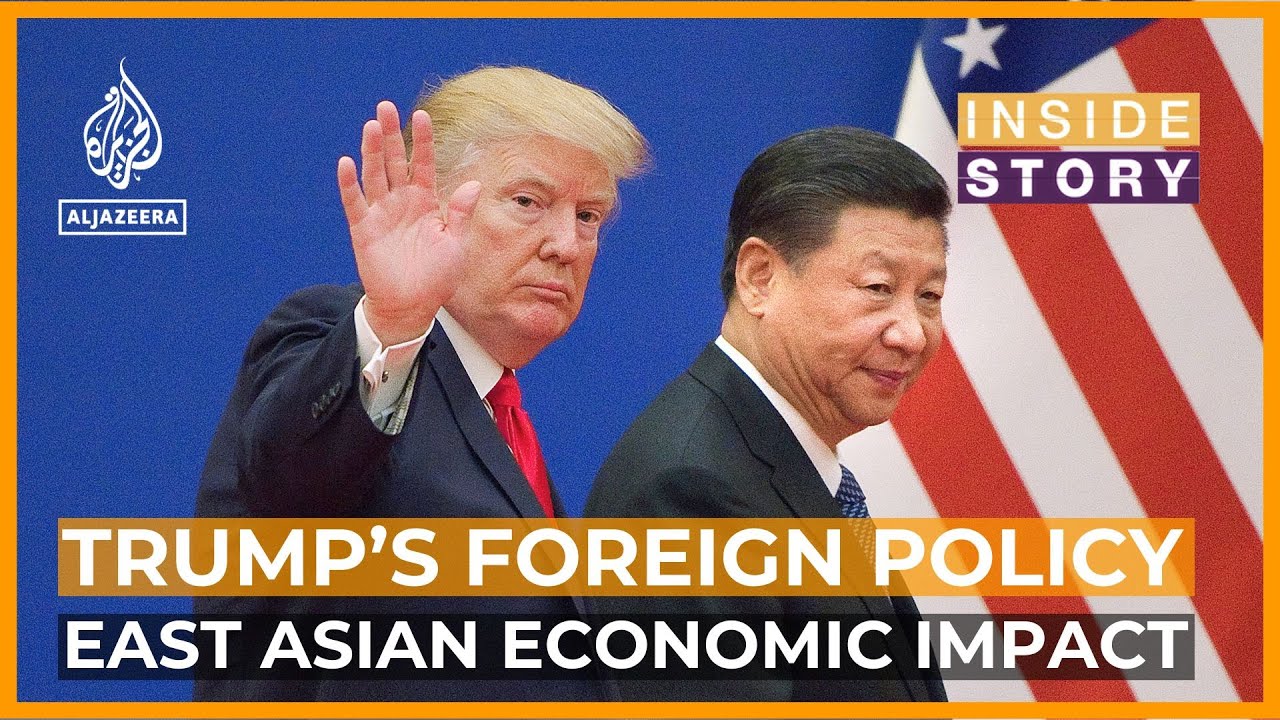
under the Trump Administration there would likely be an atrophy of the alliance system so as you look at the various allian such as NATO at least those may be weakened a bit or at least there's going to be more pressure on Partners to pay for their share of the protection for example so that may be an opportunity for China to allow them a more forward presence within their own geographic area primarily the Pacific Trump has often called the Chinese leader xiin ping a very good friend but also has described him as dangerous a new showdown
between the US and China could yield grim consequen is not only for both Nations but for the entire world so should the US China relationship become more adversarial would there be a winner or could we all pay the price for the derailment of what is arguably the world's most important trade partnership we'll joining me now to debate that and more are from Beijing Chinese Affairs analyst inar Tangen from an Arbor Michigan former State Department senior official in the Obama Administration Jeffrey Stacy and from Washington former US diplomat and head of global risk and intelligence at
control risks Mr Dane shoro thanks all so much for being with me Dane I'm going to begin with you and let's just look at Trump's you know basic logic here increase tariffs on China boost us productivity replace Chinese Goods with American-made products and you know create jobs pretty simple logic but can it work can the us simply bring manufacturing and those jobs back simplistic way to look at things um and we saw that in the first Administration uh and what happened as a result was you might have had some movement on the margins in terms
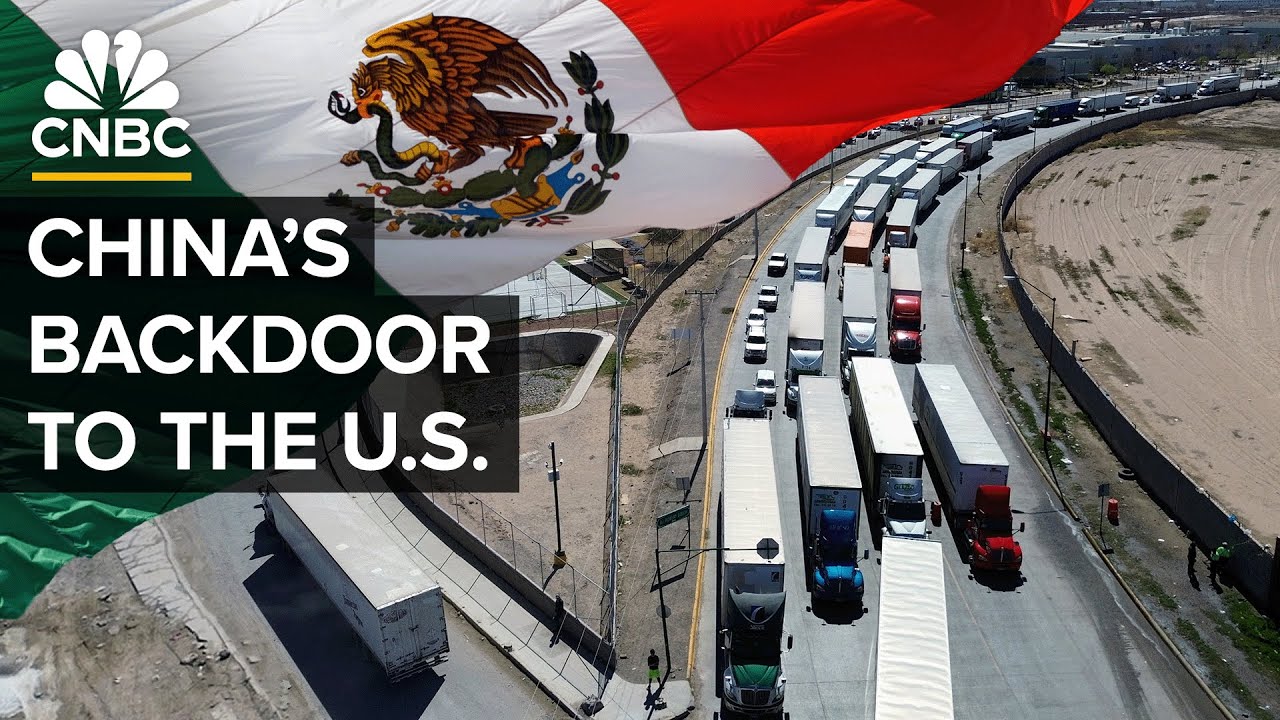
of what people sometimes call reshoring of certain um processes to the United States but for the most part those processes shifted to third countries so places like Mexico and Vietnam and Malaysia and Hungary um have done very well out of out of the reshoring um and if you look at what happened with us China trade the US Direct tra uh imports from China dropped but the imports from those intermediary count those connector economies sometimes we call them uh increased by exactly the same amount so it did shift around and yes you you can probably find
anecdotes where some actually came back to the United States but for the most part it went to third countries and so China is simply exporting intermediary products to those countries and those those countries those products are being assembled in those countries and then exported to the United States okay so one's loss is another's gain but Jeffrey Stacy have Americans been winning well I'm not sure if that's the right frame to think about this in terms of well there are security aspects obviously that are connected to all of this and we should probably speak about some
of those as well the biggest risk is the wild card that uh incoming president Trump is effectively and where he will take things he was all over the map last time he was in power Visa V the China relationship he's likely to be again but um whether it's economic trade issues or security issues it's probably wise for president XI to effectively plate him and work on sort of scoring an early diplomatic um kind of Engagement um bonus by you know sort of reaching out for early conversation with incoming president Trump and seeing you know let
allowing them to feel each other out on both sides of of the aisle here in terms of the relationship and and plan to meet um that would get things started because it's really a question now obviously I think the way you frame it is in relation to the election outcome here and how voters really are looking for even more protection and that will be a Temptation for Trump he's got a lot of hawks um in in terms of um the economic side of the aisle that will likely be in his administration okay well let me
ask inar if you think what Jeffrey is suggesting could be a good strategy to have President shei kind of plate president-elect Trump proactively yeah I I I disagree with that completely uh the idea that you given to to a bully only encourages them I I think you you have to have strategic patience and that's what U Beijing has adopted they they know pretty much what's uh coming down the line um Trump believes that the tariffs uh combined with de valuing the US dollar will make uh the US economy uh competitive as a manufacturing Zone I
think most people would uh doubt that and uh China is not threatened by it the issue is the unpredictability right now um he said that he wants to put in 60% tariffs against China 10% against the world um and it maybe more I mean he said 200% 100% against uh um cars from Europe and things like this so you you don't really know where he's going to come whether he's going to come in on day one and slap 60% on or say he's going to phase it in but I do agree with this idea that
Trump is very susceptible to flattery he's still that young man who was you know uh coming from New Jersey going into Manhattan with in a limousine um trying to join The In Crowd and he very much wants to be considered a heavyweight to be the equal of Putin and and she to the extent that they're willing to uh you know have him there and make much of them I think that does help but he's he's absolutely committed uh to you know his course of action and he's not going to be stopped there are no there
are no safety valves on on him at this juncture he has the house he has well probably has the house uh the Senate and of course the Supreme Court and the presidency so he's going to go forward with what he thinks he has you know if you if you really have any doubts about where he's going read uh the 2023 book by Robert lighthiser uh who has been changing the uh Republican party into this kind of we are going to um bring everything back to the US by hooker by crook uh just doesn't seem to
pencil out but talk to me though quickly if you can about about China itself and its economy and what the repercussions could be because China's economy is by many accounts you know it's flailing right now it's not at its best if we can put it that way um and 60% tariffs on its exports when the US is still technically its biggest customer uh can't do China any good so yeah what are the global repercussions for you know a failing Chinese economy how much does everyone have to pay the price if at all I'm for that
okay so Andrew I'm going to reject your characterization China is not a failing economy it's it's going to grow around 5% this year um the US represents about 3% of uh China's GDP in terms of its trade but it's actually the third largest trading partner for China aan is growing at uh double uh digit spaces I mean um percentage uh on there and Europe is still factor in fact the US deficit with China actually increased the issue is that CH that the US consumes more than it produces it doesn't buy it from China it buys
it from somewhere else and Chinese intermediate Goods find their way to those markets as the first uh presenter uh indicated okay just you know to throw this out there inar and and and uh Dane I'm going to come back to you but I mean many say yes you say China is growing at 5% that could be true but many economists will tell you China's economy kind of has to run just to stand still we can talk about that a little bit more in a second but but let me come back to Dane Dane tell us
so on the flip side of this what American consumers really want are they prepared for what could be again the repercussions for these kinds of tariffs and are they prepared to pay more for things that they've been accustomed to getting you know cheaply you know the American Consumer has become hooked on cheap products from China right and in the past that came directly from China as we were saying before and now quite often it comes from an intermediary country whether it's Mexico or Vietnam or somewhere else so in a way the benefits have been maintained
even though the label may say a different country I want to pick up on something that Jeff said earlier which I thought was quite interesting though about um you know we tend to look at these things always from the US perspective and what's happened in the US and what's happened in the US political um landscape it's important to remember that this is not 2016 uh when President Trump first took power uh this is not 2016 China and it's not 2016 United States right the relationship has gotten significantly worse I would argue since then uh the
as we always say you know here the the only thing that both sides of the party both sides of the aisle both parties can agree on is the fact that China is a competitor if not an adversary and so you to Honor's point you find a lot of um uh you will find a lot you do find a lot of push for more actions against China whether it's in the trade space whether it's in the security space whether it's in Tech um and so that is very different the other thing that's different of course is
that Xi Jinping was just finishing his first term when President um Trump became president the first time now he's into three and China the system in China the the standing committee the polit BAU all of these things have changed of course lot since 2016 he has a much firmer control on the apparatus of government than he had then um you're also right though to point out that the economy uh is not doing so well and actually one of the one of the not doing as well as it had been that was predicted for a long
time China couldn't keep growing at the rates that it that it had been it was not possible but uh one of the bright spots in the economy has been trade um not just with the United States but with the rest of the world and and um so if president Trump or his administration were to take very severe actions and I know mentioned not just against China but about you know across many many countries um there would be an impact on China whether it's direct or indirect because China is the largest trading economy in the world
so there would be an impact there and it is one of the bright spots right now in the Chinese economy and of course the in the in the Chinese economy the United States is not the only country that has problems with Chinese trade right a lot of countries have problems with Chinese dumping so to speak particularly things like steel um in their markets because one of the factors of the down term in the CH in the domestic Chinese economy has been and this is not unique to China Korea did it in the past and Japan
has done it in the past it's kind of part of the economic model when you don't have domestic demand you export and so they've been pushing out exports essentially exporting deflation in certain categories right so the United States is not the only country that has a trade problem with China uh Jeffrey let me ask you though if and and this maybe should have been you know the precursor question here actually because Trump has said what he said but some are questioning if he can really deliver on it and if he's going to want to do
you think though he can backtrack or at any point or has he just made too many promises to do what he's promised to do and take some very dramatic partic potentially globally you know altering steps well it's hard to take him at his word because he's proposing something so radical so outsized that um in economic relations we really haven't seen anything like that before what we expect is that he'll be talked out of some of this even though he has the power to do it I mean it's within the presidential prerogative essentially to do any
level of tariffs in any direction without much uh domestic you know feedback let alone opposition from any other Branch um so the question really is going to be you know what kind of relationship do these two leaders establish with one another this is what uh incoming president Trump puts the most stock in um is he getting along with the other president and in in this case president she's challenge is is to um get to him and get to him early there is a potential trade-off we should talk about the security aspects of this because all
economic relations are not happening in a vacuum here these are in infinitely connected up with the Strategic side of the equation and that's where there's a a potential tradeoff and and that relates to Taiwan on the one hand and tariffs on the other there is Middle Ground in terms of um any kind of achievement um on the Trump side where China might agree to um essentially stabilize relations with Taiwan and and bring down the temperature and what have you in return for the US doing so on the Tariff side yeah that's really what's going to
start to uh drive this relationship yeah you actually uh jumped ahead of me there but that's exactly what I wanted to ask about Jeffrey I'll let you comment quickly and then I'd like to move on to to inard because I'll just ask it in these terms about how insecure or not you think Taiwan should feel right now with Trump's elections because there is as you say the Strategic angle to it taiwan's probably going to be you know in the middle absolutely they're feeling much less secure um the increase in threats is palpable and you've got
a situation where China is now looking at what is happening in Ukraine in terms of the Western Alliance and what Trump will do there that will signal a great deal so you've got Taiwan absolutely feeling squeezed and threatened uh but it is um essentially in a position where um president Trump to do something similar to President Biden and and um you know if if she um angers him um he's likely to have a costic response and it will center right on whether the US will come to taiwan's defense and whether he'll be verbally open about
that in a way that President Biden has been okay in I mean you've always said China doesn't want conflict but when you hear that description of how it could potentially escalate quickly because of you know just something as basic as Trump's own temperament what are your concerns going forward well actually I'm I'm quite the other way I mean when Trump was asked about Taiwan his response was if China invades Taiwan I will put 200% tariffs on them well what does that say signify it means that he's not really interested in military response uh that he'll
take an economic response so I I think everyone can breathe a sigh of relief despite the the dark clouds being cast by my colleague there um the fact is Taiwan uh just even when they have these military exercises on the on the island itself people just go about their normal business they've been uh living underneath you know next to the volcano for a long period of time this idea that they're all sitting sitting in their homes frightened you know clinging and hoping the US will come and save them is nonsense it has nothing to do
with the reality and an exaggeration but well yeah it's the way you made it sound is if you know they're frightened and they're you know that is nonsense strategically not I don't know why you would even be gauged something like that so let let's get to the heart of this uh Taiwan isn't the issue uh Taiwan is uh and everything else in terms of um you know foreign policy are simply pegs or Checkers or you want to call it pieces on the game board Donald Trump is interested in economics he wants to use all of
these things as leverage in order to get what he thinks is going to be a stronger America um and he's that's the way he's going to play it that's the way he's played it in business and that's the way he's going to play it now it's just he's going to be unfettered uh I do agree that there's a question of when he comes in how much um how many tariffs he put in does he phase them in starting with you know 5% for everybody and then 10% in a year uh how does he do that
if he does it all at once the shock would literally kill a large part of the American population who are already suffering over 70% of the people before the election said they were living uh paycheck to paycheck imagine if you uh suffered another 20% decrease in your uh your spending power that would be really fatal let me ask Jane about that though because yeah the um there are many who feel a very dark cloud is kind of hanging over the globe and the global economy right now not least because if Trump's you know dramatic steps
towards the global economy do go wrongly there's a problem here that when economies do go into severe decline you know history has shown us that sometimes the way out is a war economy and when there are these triggers you know for something like Taiwan uh that that could be the way that you know we could see the world what pull itself out of a slump if you're looking at you know as I said historic Cycles before and we have to admit that there has been you can call it extreme but there has been talk of
a third world war actually somewhere you know in our future so what concerns you there in seeing that if you take these risks with the economies and they plunge deeper into economic crisis what's the endgame well I think I know was right that you know president Trump since his first Administration has been pretty consistently has been had this message that um you know I won't get you into war there was no war when I was you know president the first time I'm not a you know a conflict driven you know leader etc etc uh he
is very much driven by economics as he said um I think while he will be unfettered in terms of uh party control I think one of the things that will be interesting to watch is well we know a couple of things first is that he is very much driven by sentiment that is visible particularly in markets right so he when the markets go up he's he sees that as a sign of success um in the case of a conflict markets would not go up um he also it' be very interesting to see as with as
with any new leader who he puts in key positions in his cabinet um and I think that's going to be the next thing the thing that everybody is watching now is you know who's gonna who who's going to choose for Secretary of Treasury and state and defense and all these key roles who and what what kind of part of the establishment will they come from are they going to come from kind of the American America First establishment kind of of the JD bance uh School are they going to come from U more let's say more
traditional Republican um um uh viewpoints um such as steveen nin who was his first uh Secretary of the Treasury and so I think those are going to be some key appointments to watch to see who can actually um influence his decisions kind of on a dayby day basis you know the the the old joke in the first term was who's the most powerful person in Washington Donald Trump in his first presidency who's the second most powerful person in Washington the person who last spoke to Donald Trump because He follows very much those those key people
around him so I think that's really the next thing to watch is who he puts in those key rolls and that will give you some idea of the direction Jeffrey is that what you're watching for as well I mean will that determine where all of this might be going to a degree yes but what's going to happen is that um China and others are going to test the incoming president and they're going to test him not so much economically but on the security side and so as much as we think that oh Donald Trump is
a transactional president and he really doesn't want war um in fact um he had um a general in Iran assassinated uh targeted and um when he's tested that's when the strongman tendency for him on the military side that impulse will be hard for him to resist and so effectively we are going to see the security side come to the four sooner than most think and the erratic aspect of incoming president Trump is the biggest Factor so it's a bit naive to think that everything is calm and we should just you know focus on economic relations
and that's how this incoming president is oriented he is all all over the place as Dane was just alluding to and we're likely to see the real tests come on the security side and then we're gonna have to hope that it'll be people like Robert O'Brien in instead of a Rick reell and others that are close to him uh when those questions are asked and decisions need to be made Jeffrey I'm going to have to cut you off there and apologize to inard that I can't give you a final word because unfortunately we're completely out
of time for this edition of the newsmakers but I'd like to thank all three of you sincerely so much for being with us our viewers of course for joining us as well remember you can follow us on X and do be sure to subscribe to our YouTube channel I'm Andrea sanki we'll see you next time [Music]