You're hitting the nail right on the head. Super powerful. There's enough work here for a year already.
I got a message from my buddy Alex Icon, the founder and CEO of Five Minutee Journal. Company's doing over $15 million in revenue a year, but he needs to figure out how to crack the code on building his personal brand. I went over to his offices here in London, England, and I broke down two core systems and asked one key question that is imperative if you want to go and scale a personal brand and have a lot of fun along the journey.
I'm going to bring you into the room where I was helping him. Let's get into it. We're here in London.
We're not in the Dolommites anymore. Yeah. Do you want to get into just like the context in terms of what you're kind of currently working on, how you're kind of trying to link that to the personal brand and maybe some of the gaps you're currently experiencing or just things you want some clarity on?
>> Yeah, for sure. I think the most important part is really I built intelligent change without me being the face of the products or the brand and has done tremendously well. You know, we sold over 4 million products around the world.
The five-minute journal being the bestseller product I've created now over a decade ago. Now I feel even though in my previous business I did use that strategy of being a founder, not myself included, but using that strategy my co-founder being doing YouTube videos, creating content, being consistent, being authentic and then that's what really helped us grow that business a lot. And I feel now we're not doing that for intelligent change.
And that's why I feel now's the time to be able to put myself in front of camera, start creating content, and most importantly, delivering value to people, educating them on, you know, the benefits that our products can help in their lives in a way I've been hiding. >> Yeah. Yeah.
All right. Well, we got to get you, you know, out of the shadows. It's time.
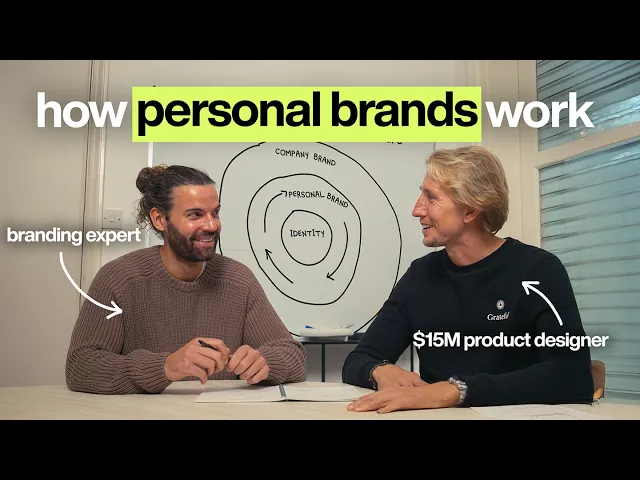
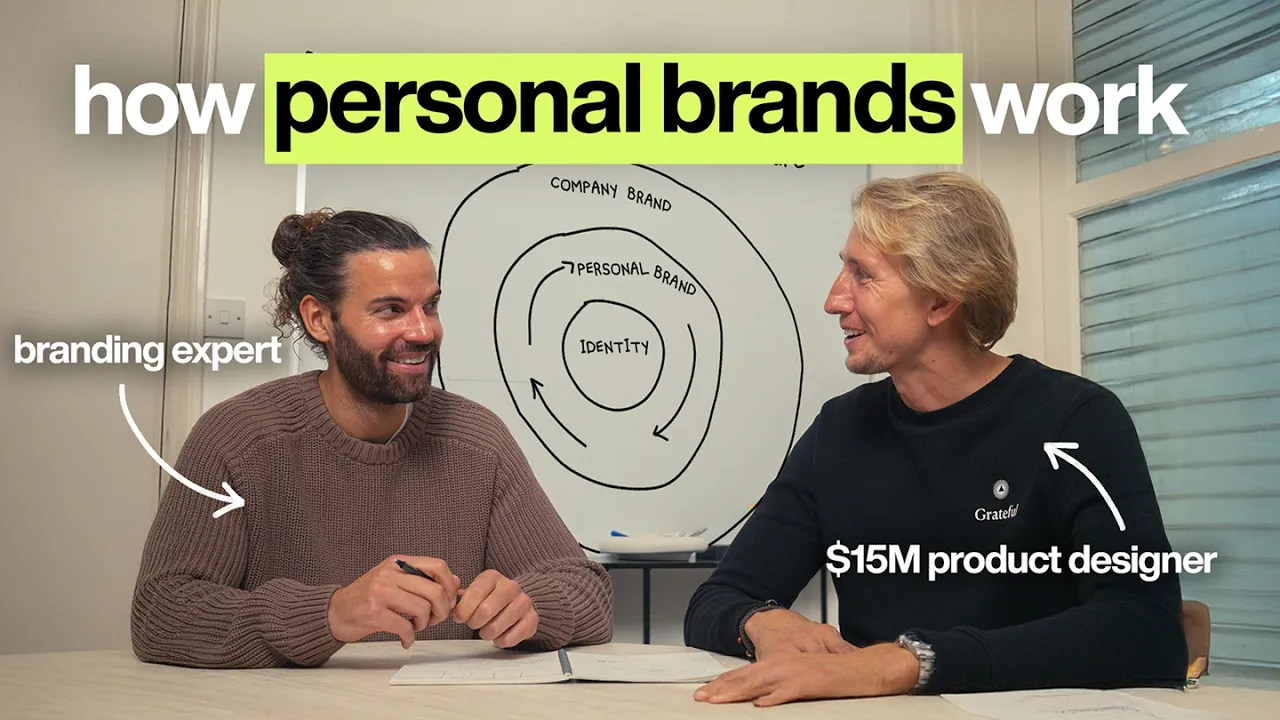
All right. The first part here is the founder identity infrastructure. You know, I see so many founders going and they've built a company brand and they're not sure how to go and fit in their profitable personal brand into the overall architecture of what they're building.
This is where the founder identity infrastructure comes in. being able to seamlessly link the core identity of what makes you special as a founder and then link that with your personal brand and your company brand so they all feel like they're part of one seamless voice, one brand and one kind of common emotional resonance. We can kind of think of in the center some things that you'd say are kind of core to like your own identity as it kind of pertains to some of the stuff we're talking about.
>> Mhm. And then we can get into like how then the you know sort of personal brand plays in. And then if we got enough room on this uh white party enough and then kind of like the themes around like your uh company brand you know at founder OS as an example my own personal identity is around travel freedom you know giving people clarity.
When there's that degree of synchronicity across these three core areas, you create a brand, a personal brand, a company brand that deeply resonates with people and that people kind of just gravitate to. So, where I like to start at with this exercise is at the core. It's your founder identity.
And so, that's exactly where I start here with Alex to help bring him some clarity. Inevitably, like I think for any business, right, but especially like for what you're building, you said like for years like people really gravitate towards like your lifestyle. Inevitably, it's like that founder energy, right?
that's really different. So, it's nice to start from like, okay, at the center here, like what's the core like energy you want to be putting out there? What's like the core themes that are like true to you that inevitably as you start building your personal brand, it just feels super authentic, right?
It doesn't feel like effort or you have to put on some face or you have to like manufacture some content. It's kind of like this is just who I am and is real. And that's I think also, you know, we think about five minute journal productivity planner and like the whole suite of products you've built.
I think that's like one of the things probably that's something I resonate with it, right? It's like it's authentic. It's it's kind of organic.
It's natural. Like it's not overly forced. It's just helping you kind of design a more intentional life.
>> Yeah. For me, identity, it all started even with the five-minute journal with gratitude, appreciation, like positivity. And that was the the thing that drove into creating that product was how do I you know this one simple habit cuz I started practicing gratitude as a practice like on my come up cuz I come from very you know I was poor growing up and on welfare just you know then my father died just had a lot of happen really >> and was living this dark era of my life and what helped me come out of that was actually starting to be and practice gratitude.
And you may think like that's how like people usually say, well, it's easy for me to be grateful now, right? The life that I have of freedom, of lifestyle, of money and luxury. However, it actually started when I was starting to be grateful when I had nothing and and all the bad things were happening and learning to pause and okay, what can I appreciate in this moment and starting seeing opportunity when I feel feel like there's none.
That's why my identity even now, you know, like it's really based on just gratitude and appreciation. >> Cool. And so when you think about other aspects of like your kind of like character, your identity, the general energy you're putting out there, like you know, >> positivity.
Cool. Just really positive and seeing the good in yourself and others in the world. >> I think there's also an aspect of like lifestyle design.
>> Oh, pure lifestyle. >> Yeah. Yeah.
like really being able to take and create the life that you've always dreamed of, especially as like maybe it pertains like when you think about and there's going to be a lot of people that are aware of like things like the five-minute journal. They're going to become aware of you throughout this journey as it keeps on compounding. Like what do you hope are some of the things that like they really gravitate towards when they're like, "Oh I didn't know this was the guy behind 5-minute journal.
" Like fascinating. Is there anything that comes to mind there is to like >> I I think what comes up is like overcoming obstacles, challenges and to keep challenging yourself, you know, so in a way, >> right? The journey of it.
>> Yeah, the journey of it. >> Cool. Then when you start to think about maybe like the personal brand, when you think about some like the subjects you want to be putting out there, like different formats you're thinking about like how are you currently kind of thinking about that world of things?
Well, I one of the things that we've talked to you about is obviously lifestyle as ties into a lot of the personal brand and in terms of I do believe that even my own life I've used the products I've created to help me achieve that lifestyle freedom, you know, in general. Not sure how to kind of communicate that or it's okay, >> but it's expanding on that lifestyle design. Yeah.
like the freedom aspect of being able to, as you said this week, go to Rwanda and see the gorillas cuz I want to and I can, you know. So, I've been doing this stuff for over a decade now >> and I just do it cuz it's innately me. I believe that life is here to be lived and both, you know, me and you have this opportunity of like being a real playing characters like we're not just >> we're in the game.
You're in the arena. >> Yeah, we're in the arena. we're we're in it and we're also able to use this world as seeing not just my city or country.
We have the whole world as our playground and getting to play with it. I think that's a big part of the the brand and the personal brand. When you think about things like your best year guide or productivity planner or five-minute journal like would you consider those like different systems or frameworks cuz there's definitely something going on there too.
>> Oh purely I So how do you >> So do you see that as systems or frameworks or what do you call them? >> Uh frameworks. frameworks because I think another misunderstood thing is people think that I am super organized without these frameworks.
For example, if I don't use the productivity planner myself, I'm just a disaster. There's also like these like whether it's like these rhythms that you have in your year, in your week, right? Or like different rituals or different, you know, habits, which I think is like largely like what your brand is supposed to be incorporated in.
Like you wake up, you use the five-minute journal. You end your day, you use five-minute journal. Every end of year, you use your best year guide.
You know, like these are like there's a rhythm to using your products, but they're based on the rhythm that you have in your own life. >> Oh, for sure. >> Right.
So, in a sense, it's like you have this like lifestyle. You like have always relied on this like rhythm that is like based on certain frameworks. And when you do that, right, it feeds this lifestyle.
>> Yeah. >> And it's kind of like that's like this kind of I don't know system for how you live with like you know incorporating gratitude in the morning and evening, keeping things positive, being intentional about how you design it. Um so then as you start to think about then the company brand like what's sort of some of like the pillars there that you guys have used to kind of establish you know yourselves and create like a emotional resonance with really creating the life that you've always dreamed of right so kind of intentional living >> also at the core is really one of the main pillars of inspirations for intelligent change is Maso's hierarchy of needs and self-actualization.
So for us as a company, we're a self-actualization company. You know, helping people realize their full potential that they're here here to live. And so with a company brand, that's like what we help you achieve is to self-actualize as a human.
The next step here is the content GPS. Now listen, most founders, they want to go and build an amazing personal brand, but you know what's essential if you're going to do it long term? Profits.
The reality is excitement, motivation can only get you so far. But when you actually want to go and scale something meaningful, it takes the right systems, the right product, the right content, and the right people. And guess what?
Some of those things cost money. All right, so we got the pieces of it. Audience, we're going to think about the formats.
Then we got to own this audience so that we actually control it versus just on platform. And then we need to monetize it. So obviously like the more efficient you are at this, you know, the quicker you're able to then go and convert someone from say a follower on Instagram or subscriber on YouTube to actually going and purchasing.
There's that saying that's like the person that wins any category is the one that can spend the most per customer. If we're able to effectively monetize all those eyeballs, you're going to have great systems. You're going to be able to afford really good people.
You're not gonna b at like, oh like we got to bring on this like insane Instagram manager and have someone just manage YouTube and have you're gonna be like, hey, listen, as long as they can drive a lot of audience growth, I know that the rest of the system's super efficient and I can afford to do this. >> So the way to think about this, let's start with like where your audience is going to be. So what are the platforms you're focused on?
YouTube, Instagram, uh, LinkedIn. So yeah, so we've got the audience across YouTube, Instagram, LinkedIn, and then yeah, I think it's just about being intentional, like you're building an intentional brand. We kind of mapped out like the general like emotion you're trying to tap into, the identity of it.
Now, we want to be as intentional about the science of driving people from awareness through to transaction. So you're going to be on YouTube, Instagram, LinkedIn to start. Obviously, yeah, the goal of any founder is like to be omniresent, right?
You want to be across all these places, everywhere to everyone, right? But it generally starts with just being super intentional about two, three max, right? So you don't spread yourself too thin and you can go way deeper on those platforms versus just spreading yourself across a bunch on YouTube.
Have you figured out the formats that work best for you on these or do you need some help there? Currently we've launched the podcast, so the intelligent change podcast with myself that we've launched. However, we're going to be launching like a separate channel just for like more vlogs and more just talking sit down video styles.
When you look through the five-minute journal, you look through the productivity planner, best year guide, like these all there's like 10 YouTube videos around the system in each one. >> Like my morning gratitude practice, my evening routine, my annual planning guide, my way of reflecting on 2025, how to go and plan 2026, how I approach a new month, how I reflect on an old month. Like there's tons of habits and systems and rhythms and routines that you've built your own life going from like nothing to something, you know, your come up and that's what then manifested itself in the physical product of these things.
And I think because you're so far along your journey, like I'm guilty of this all the time, by the way, you forget like all that intentionality that went into all these things. And each one of those thoughts, right, is like a 10-minute little like framework that you could describe that framework, the why the way it is, right? Like the best year guide is based off of EOS.
EOS has like the how do you use these for your meetings? How do you get your team onboarded to this? How do you go and plan out your year on this?
How do you do the quarterly planning on it? How do you run a quarterly team retreat? How do you incorporate the best your guide into your team?
There's like so many frameworks >> on all of those, right? One thing that's useful is to think about, okay, how does the content format tightly couple with the product? So as an example, we could go and make some interview where we interview some Buddhist monk and that Buddhist monk talks about gratitude being important.
I would say on a scale of like 0 to 10, that being incorporated say with like the gratitude practice and five-minute journal, we give it like a six. Like yes, he's talking about how gratitude is important in this podcast. Like oh yes, and the five-minute journal helps you with gratitude.
Okay. Like there's a tie in there, but it's not like bam versus you create a YouTube video around the 5-minute practice that changed my life. It's like and it's literally just going through the 5-minute journal overhead cam, you doing the thing, showing like you and how you used it throughout your day, telling the story behind it, how you created this.
The whole video is around this practice that's changed your life. And the five-minute journal almost becomes like the hero to the story. And then like in a video like that, that's like a 10 out of 10 in terms of the tiein from like the format to monetization because everyone's going to be watching this thing and instantly be like, "What is this thing?
Where can I get this? This looks insane. I want to have the same sort of come up and the same sort of success and fulfillment that Alex has and the examples he's given me throughout the video as well.
Like I need to get this thing. " And it's like cool link in the description. So what would you call then in terms of format?
So I would just say intentional frameworks. I would have a Google sheet I would make if I were you. So I would map out framework, product, idea, title and then have you posted it on all the platforms >> because then you know you have okay this is the framework that I go over.
This is the product that comes from which is going to be the hero of the video. This is the idea. Oh, we're going to walk through it in a how-to.
We're going to show a day in the life. We're going to show the behind thes scenes process of this whatever. And then here's the title of that video.
Okay, let's just make this thing now. >> Exactly. So I feel like this like if you have this intelligent change pod that's kind of like your that's like your lifestyle character development which I think is important.
Now we need like as an example you to get into like more of like the intentional frameworks like the science behind this more. You're hitting the nail right on the head for a long time. I have a fairly large audience.
However, I've just been, you know, showing off my lifestyle and travel, but it doesn't really convert to the actual product because I'm not demonstrating, as you said, the frameworks, the products, and how it actually benefits and delivers value to people people's lives. When I think about the best entrepreneurs I know, they're some of the best investors that I know. They are amazing capital allocators.
So, what we want to make sure of here is that we're building a profitable personal brand, not just a personal brand. And the number one system I've ever invented in order to do that is the content GPS system. What I do here in this next clip with Alex is go and break down his content GPS all the way from his audience to the formats to the owned audience inside of his newsletter and then his monetization.
So, let's get into it. And when I think about how generous you could be with all this, he's like, you've made the vehicle, which is all these journals and guides and planners. Now, show people how to genuinely actually use these things by showing the what and the how to do them so that they can go and achieve the same success that you've achieved.
That would be the most inenerous thing that you could do for your audience. From there, your pillar piece of content would probably be on YouTube. A lot of your Instagram content can just be the best pieces of this long form stuff.
And I could see you also making some like howto and how I type content for just Instagram shorts as well. as an example, like you could have like short videos that come out like one every other day and it's you talking about the framework. So in a sense like your morning ritual and then on the top part of the reel, so like the bottom top part is maybe you talking about the thing, the bottom part is then an overhead cam of you actually filling it out.
You feel me? >> Yeah. >> The thing that LinkedIn and people there are going to want to see.
It's a professional network. People are less inclined to really gravitate towards like just like lifestyle stuff. I think it's the same sort of educational type stuff that just needs to be translated into long form posts, you know, with like, you know, it could be like things like listicles or how-tos.
All this stuff needs to have CTAs. The one should go to like any product that's featured in it. And then the second is to your newsletter.
And we want to actually own this attention for like the next 5 10 years, right? be able to communicate them into oneonone kind of rich format which is email, phone numbers even and then be able to convert them to your brand not just next week, next month but like over the next like 5 years. >> Yeah, for sure.
>> Then when we think about the owned audience, right, this is like likely just like a newsletter. I think the secret to this is it's like probably a weekly newsletter. Let's just say every Tuesday, every Saturday, it doesn't matter the day of the week, but keep it the same day of the week, an episodic and like each week sharing like maybe a story and a core framework that's like changed your life and then helping others like implement it.
How do you feel about let's say on a newsletter just featuring the new content that goes out, let's say on the how-to, hey, here's the how I changed my life. Yeah. 5 minutes and just feeding that to the newsletter.
Yeah, that's a good I would say that's a great like V1 is just like sharing like you know share the newest YouTube video like on the newsletter. So one of the magic things I would consider doing here too I would have lead magnets that you're driving people to on these platforms. I watch a YouTube video around this five minute process that's going to change my life and then the lead magnet, let's say, is just like a one-pager on like the practice, right?
So, it's kind of like this onepage gratitude practice. So, then everyone cuz it's free, just like goes and gets the PDF inside of the PDF or the Google doc or whatever, there's then links to go buy the five-minute journal, different lead magnets that they're given and those probably map to the frameworks. So over time, like in two years, like I wouldn't be surprised if you had like 20 lead magnets.
They get then a fiveday welcome sequence, okay? And then a fiveday what I call like a FOMO sequence, which is like a fear of missing out, okay? So someone is on YouTube, they see this 5-minute journal thing, they go get the lead magnet, they get this like one pager, they see that, they're like, "Shit, I want to get this 5-minute journal thing.
" They buy it. They join now your newsletter. in there.
They're put into like say your weekly Saturday newsletter list, but because they're a new subscriber, right? They're going to get five days of like, you know, say the YouTube videos on Tuesday, on Wednesday, Thursday, Friday, Saturday, Sunday. They're going to be indoctrinated to your brand, the mission, what it's about, the stories of people you've impacted, how Tim Ferrris uses this, all that good stuff.
>> So, by the end of those 5 days, they're like, "This brand's legit. I didn't know it was this legit. " >> And then showing them like the best of the best you've got.
Then after those initial 5 days, there's four or 5 days of these FOMO emails, which is now you're going to more directly sell people on the product. And so now what we're doing is we're like pushing people through the funnel fast, right? They've watched the YouTube video, they downloaded the thing within those first 10 days.
Ideally, we're already monetizing these folks, which then is like, you know, an immediate like 30-day return on that YouTube video you made. >> These are all going to be UTM, right? So you can track all these sales, too.
and pull them back to like what YouTube video they came from. And so what you may learn over time is like no one cares about this five minute practice on social as much. But damn, we make a lot of money when we talk about productivity stuff.
We should just go way deeper in there. Especially if we're looking to really crank the engine of our media company on the monetized side then, right? We have the key thing here is like obviously yeah your whole suite of products which speak for themselves.
The right thing to have here too is like having lead magnets in the description of YouTube videos, driving people to the email list. So, you're going to need the right CTAs obviously set up on, you know, YouTube, on IG, and on LinkedIn. They're all slightly nuanced, but I would just do is look at my content on each platform and just copy the way I do it.
In YouTube, a link to the newsletter at the top or the free thing. Second link maybe to directly purchase the thing that you featured in it. On IG, you'd have probably Many Chat set up.
Do you guys use many currently? >> Yeah. So really getting that ripping.
So now like in a short video, it's a how-to video. It features fiveminute journal. They can go and message you five in the comments.
Boom. You're like, "Well, what's your email? " You're going to ask for their email.
They're going to give you their email. Then you're going to go send them the onepage free gratitude guide. >> Mhm.
>> And then now they're in your welcome sequence and they're going to get nurtured over time and probably purchase if they're really looking to build an intentional life. And then LinkedIn, same sort of deal. I think like the big infrastructure for you just to get going is like one, you know, two getting the lead magnet and land pages going and then getting the welcome sequence and FOMO built.
That's like infrastructure that's missing behind the attention you're getting going. That's how I would think about it. >> Yeah.
Perfect. Yeah. Now you've understood a little bit more about the art, the science, right?
You get your identity right and then you get the infrastructure right with the content GPS. You know, you're making content that's growing your audience. you're monetizing all that attention with your content GPS.
This is all good, right? But the core thing that people need to be aware of as they're going and building a founder brand is as follows. You got to make it fun.
In any given decision that you have in your business, you have an abundance of ways you can go and approach it. You have an abundance of ways you can build a team. You have an abundance of ways you can go and offer a different product.
You have an abundance of ways that you can go and structure your days, your weeks, your years. And so why not choose the thing that is the most fun that fires you up? We only live once.
And so what I get into here with Alex in this next clip is what I believe is the most important question in business. What would this look like if it were fun? Last thing I would share with you is like I think it's possible like within reason with businesses like we've built, right?
like where we've like really intentionally designed these things to make any of these things fun >> if you give yourself space to take a step back for a sec now that we've like mapped out the strategy and go like screw how you did that with hair extensions like I mean that's blah you know what I mean like how could you actually you can make this fun yeah I think that's the most important questions I ask something that I always remind people in regards to even business cuz many times people believe that business is super hard you have to hustle and actually one of the things that I'm stepping in now is also telling like people, you know, I've the way I've built my life and businesses, I've had fun. I've actually lived an incredible life on this whole journey doesn't have to be that you're just stuck in a fluorescent room all day grinding it out and not, you know, sleeping on the weekends or whatever. I believe that similar to you, what you've shown is that ability to live your life, travel, and still build substantial businesses.
So, what how would this look like if it was easier and something built around your lifestyle? So, thank you for also showing the reality of that, the possibility. >> Oh, thanks for uh having us over here.
It's been good. Thanks, dude. Appreciate you.
>> Thank you. Thanks so much. >> So, there we go.
We've gone and broken down how to go and build an amazing brand identity, then how to go and drive attention through to revenue, and then the core question if you want to go and scale a personal brand while having a ton of fun. Now, if you want to go and get all the systems that I presented here in this video, you should definitely go and download the founder infrastructure guide via the link in the description. You can go and fill out your content GPS, create your founder identity and company identity, and make sure that all along the way you're having a ton of fun.
So, go and download that guide via the link in the description. If you love this video, you would love this video of me going and helping out my good buddy Blake. Thanks for watching.
Like and subscribe and welcome to the founder freedom movement.