all right this is unit four notes Oceanic Oceanic Oceanic convergence this is video five Flex Flex melting and we're going uh we're going basically to find where does the magma for the volcanoes come from so um flux melting uh Granite Dred Granite melts at uh 23,000 degrees Fahrenheit wet Granite so Granite with water in it melts at almost half that temperature 1,200 degrees Fahrenheit um why this inherent difference is because what ends up happening is water gets into the Rocks okay get into the Rocks into between the crystals and the cracks in the Rock so
it gets into the pore space in a rock water boils at 100 degrees Celsius you know uh 300 whatever degrees Fahrenheit I'm not sure the number 100 degrees celsus okay so the big thing is water is boiling at a much lower temperature than than granite melts at so Granite dry melts at you know 1,260 degrees CSUS water is boiling well before that temperature so it boils water starts to boil well before the rock starts to actually melt keep in mind that as I boil water as I boil water that water first off as it's heating
is expanding so as the water gets hotter it's hotter and hotter it's expanding then then on top of it once it goes from a liquid to a gas it expands even more and a huge change in volume okay um so what ends up happening is the boiling water breaks apart the rock so inside the rock there's these little gas bubbles that are literally exploding apart the rock the water is in there and it pushes the rock out right thermal expansion it creates pressure fast moving air Mo steam molecules water molecules are bouncing around and are
literally pushing apart the rock okay so that's why once I wet a piece of granite I have a wet piece of granite it melted a lower temperature because essentially the water is helping it melt the water is there breaking apart the crystals and the chunks of rock apart allowing it to melt at a much sooner temp at much lower temperature so what effect does this have on a volcanic uh Volcan where the volcanoes are As you move horizontal as so this subducting plate as it moves down it it's uh it as it moves horizontally it
also goes down it's moving down in an angle okay normally this angle is somewhere around 30 less than 30 degrees so it's not really like diving down quick it's going down very very gradually okay as it goes down very very gradually as it moves to the side and goes down very very gradually the temperature is increasing once again as you go down temperatures increase but once again the temperature is not increasing that fast because it's not going down that fast as it moves sideways it only goes down a little bit so with flux melting the
plate melts sooner so two things happen the plate doesn't have to go down as deep before it has to melt it melts it starts to partially melt well before the moho and the ethosphere so remember the moho is the boundary between the athenos spere and lithosphere it's where I go from a solid um to a plastic where my rocks go from a solid to a plastic but what ends up happening with the water is this melting starts way before that boundary abnormally shallow um the other cool thing is once again it's going down at a
very shallow angle okay so for every little bit it moves for every you know let's say you know let's say mile it moves sideways it only goes down a couple feet okay so the plate doesn't have to travel as far hor onally before it melts as well so um so the Plate's going down it's going down it's going down it only has to go over you know a few miles before it starts to melt if there was no flux melting the plate would have to travel hundreds or thousands of miles horizontally before it went down
deep enough to melt so here it starts melting only you know tens of couple to tens of miles from the subduction zone and then it actually starts to melt compared to thousands hundreds and thousands if it was dry and didn't have FX melting so this moves the volcano extremely close to the startups abduction like I said couple miles to you know a couple miles to tens of Miles um so the volcanoes the volcanoes which are the result of flux melting are very close to the subductions of if there was no flux melting um the volcanoes
would either be very very far from the subduction zone hundreds to thousands of miles or realistically there would be no volcanoes at all because the plate would make it all the way down to the athenos spere before it would start to melt and then essentially it would have no effect on the lithosphere it would be just into the athenos fere okay so if flux melting did not did not exist volcanoes would would not be either okay or if Flex melting did not exist volcanos would either be once again the volcanoes would be very very far
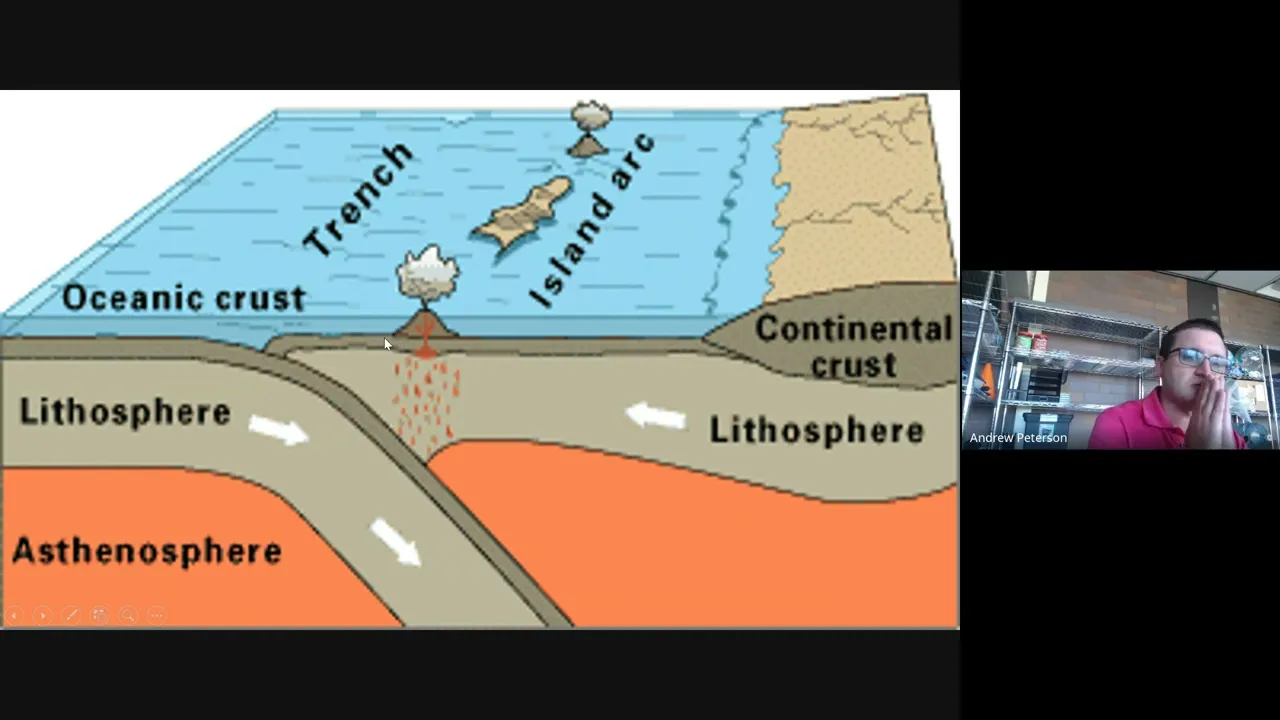
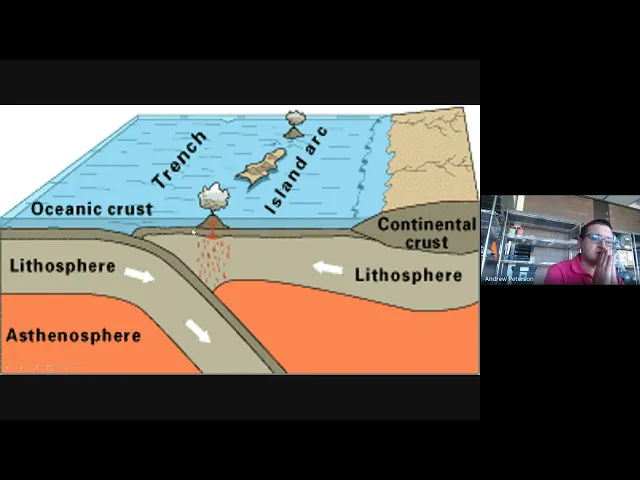
from the boundary or non-existent because it would have the the plate would have to go all the way down to the athenos spere before it would melt and that would mean that it would not Bubble Up back to the surface so once again the plate subducts and this subduction is well exaggerated once again most subduction is less than 30 degrees so as the plate subducts it moves horizontally as well as down vertically as it moves down vertically I introduce flux melting and that flux melting produces volcanoes very very very very close um very very very
close to the plate boundary the plate boundary being I lost my mouse here right that's the trench I get a line of volcanoes incredibly Incredibly Close to the oceanic cross because once again the plate doesn't have to travel as deep or as far horizontally in this case to the right um to melt okay um so that's cool so volcanoes hinted at them let's talk more about them the flux melting leads to the quick production of magma quick in the fact that it is both at a shallow depth and both close to the boundary this flux
melting forces melting in both plates the water there's water in both plates due to crack so imagine there's literally like in some ways a crack literally between the two plates that extends down into the Earth it's not a perfect crack we would be able like go down there and look down the crack but nonetheless there's this like gap between the two plates that extends downwards and horizontally so Steam from the lower plate is released melting the upper plate so there's melting in both plates uh primarily there's melting in the upper plate what ends up happening
is the less dense magma that's the magma from the less dense plate so like oceanic continental it's from the continental plate floats up to the surface so there's melting in both plates with a little bit more melting in the upper plate than the lower plate because once again steam Rises but when so I have these like two mag these two magma sources and lo and behold it is the less dense magma that rises up to the surface it is the less dense magma that rises up to the surface because less dense things come and that
less dense magma comes from the less dense plate and that less dense plate is the plate that is on top okay so an oceanic continental it's the continental crust in Oceanic Oceanic it is the younger oceanic crust so the volcanoes form that match the chemical composition of the less dense plate they sit on so melting in both plates produces magma in both plates the less dense magma from the less dense plate Rises and makes volcanoes on the less dense plate so in the case of I'll use oceanic continental because it's the easiest in the oceanic
continental the oceanic crust and the continental crusts both melt the Continental magma the felsic magma rises up and makes felsic volcanoes on the continental crust so the continental crust melts and literally just makes a volcano for itself so once again uh there's Force melting in both plates and I get this kind of like um this shows the uh the moho boundary but what ends up happening is I get this bubbling up where the it's the less dense plate that the magma from the less dense plate rub bubbles up and um shows this volcano what this
image is kind of showing is essentially this magma rises up and makes a pool here with the moho that pool then releases steam that melts this plate and that rises up to make the volcano so it's showing you that it's trying to show you that the subducting plate releases this uh steam this gas these volatile liquids and those volatile liquids melt the plate above it okay










![Gentle Rain 🌧️ sounds to sleep/study to [Indoor]](https://img.youtube.com/vi/-OekvEFm1lo/maxresdefault.jpg)