So I thank you. I understand that you have to go back a couple of years to the mid 20s the mid 1920s when the Fed. In the in the wake of the First World War Europe was very badly financially damaged.
Sterling which was the linchpin of the gold standard was severely weakened. Britain lost a lot of its reserves and a lot of gold reserves were gravitated to the US. So there was a there was a total mal distribution of gold reserves and the U.
S. . Benjamin Strong who was the governor of the New York Fed.
Established a partnership with Montagu Norman who is the governor of the Bank of England to try to stabilize Sterling. And in order to do that. The U.
S. pursued a very easy monetary policy. And Britain pursued a relatively tight monetary policy and that the hope was that that would allow Sterling which was grossly overvalued to become realigned with with the dollar.
The dilemma was that the sort of monetary policy that the US was pursuing with exchange rates in mind was precisely the wrong monetary policy for its domestic objectives. And so starting in about 1927 when the US eased interest rates were just too low in the US and they caused the stock market bubble. And that started in the middle of 27 and the Fed clung to low interest rates for about a year after that and then realized that it had made a big mistake.
And in today's language essentially found itself behind the curve. And played catch up. So it had to take interest rates from below 3 percent up to 6 percent to control to try to control.
The stock market bubble. And when it you know when the Fed stays too easy for too long and then has to play catch up a Titan. The result was the stock market went up too high.
And then came crashing down when interest rates were raised. So then in a nutshell with the with a potted history from 1927 to 29. In the first year they actually did a remarkably good job.
They cut interest rates from 6 percent to two and a half. The New York Fed injected a whole lot of reserves. And it looked as if they were stabilized.
They had stabilized the economy. So by early 1930 that you know it looked as if they had actually. Some sort of managed to get through the crisis in reasonable shape.
What happened subsequently was that we got a series of banking crises starting in first in 1930. Then another one in 1931. Then a couple more in 1932.
And the U. S. banking system essentially cratered.
And here the Fed did two things wrong. One when they eased. They stopped too soon.
Or did three things wrong. They stopped too soon. They didn't act as the lender of last resort for the banking system.
So the number of banks a series of banks went under including most famously the bank the United States which had a massive contagion effect. And thirdly they tightened. First in 1931 when they when they started losing gold reserves.
And by the rules of the gold standard you did or you're the single most important objective of monetary policy was to stabilize your exchange rate. And the single best indicator of whether that was working was your gold reserves. So they tightened in the middle of the Great Depression with unemployment at 15 percent.
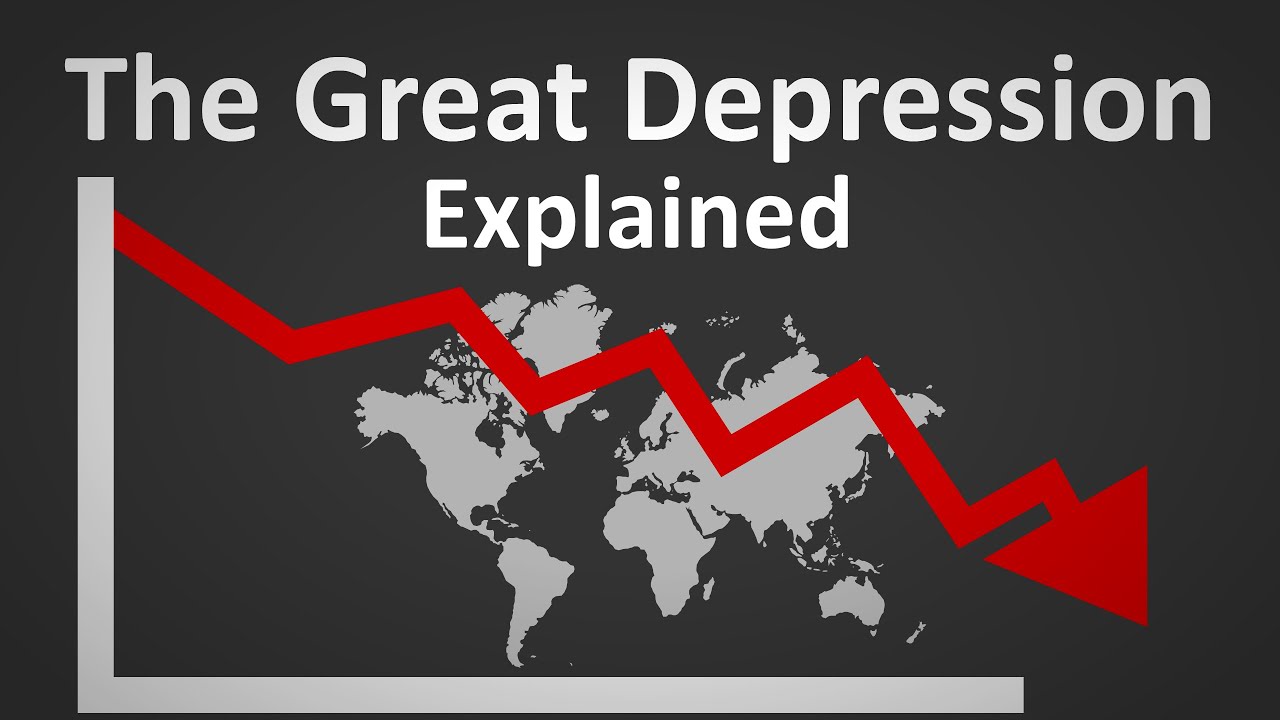
They took rates up. They did it again in 32 when there was another run on the dollar when people feared that Roosevelt would take the US off the gold standard. So the combination of not easing enough allowing the banking system to crater and tightening to try to stabilize gold reserves in the US with was what it took to depress what was a depression into the Great Depression.
I mean I think there were sort of four main reasons. One was the Fed was in its infancy so it had never experienced anything like this. And there were sort of glaring institutional weaknesses.
In particular the split between the Reserve Board of the the board for the Board of Governors and the Federal Reserve Banks. And when the when the the act was first written essentially it was conceived that the Federal Reserve. Banks were the primary actors and the Federal Reserve Board was in effect like a regulatory authority which could decline to which could which which had a right of veto but didn't have the right didn't have enough power to implement new policies.
And so you ended up getting a sort of stalemate where Federal Reserve banks particularly the New York Fed would propose a policy and the Federal Reserve Board would reject it. And so nothing happened. So that's the first thing.
The second is. The gold standard. The importance of the exchange.
The single most important variable of economic policy was the exchange rate. And Covid countries have been willing to sacrifice domestic employment objectives all sorts of objectives for the sake of stabilizing the exchange rate. Those were the rules of the game with the gold standard and the Fed got caught up with that.
It was compounded by some crazy rules that the Fed were of the Fed's own making which caused it to start tightening even though it had lots of gold reserves and these had to do with when the Federal Reserve Act was created. For example the Fed was not an eligible security for the Fed in its balance sheet was not government securities weren't eligible because they had a passionate affair that you know essentially we'd have a monetary authority that was essentially monetizing fiscal deficits. So government debt was an eligible.
That meant only private debt was eligible. Bankers acceptances and in the middle of the Great Depression when private credit had collapsed there weren't that many weren't enough. Bankers acceptances around.
So essentially the Fed then faced this sort of artificial limit on how much gold it could dispense with and therefore tighten prematurely. And in that sort of. That problem of the Fed being too rigidly bound by its own internal rules was a major problem.
And then finally. The the question of you know why did it fail to act as lender of last resort. He was responsible for the easy money that led to the bubble.
And. But the key thing about him. Was that he was a very forceful character and an innovator.
He was the. He invented open market operations. And he had the sort of authority.
I mean I describe him sometimes as a sort of Paul Volcker type person that he had the authority and the stature to be able to make up rules as he went along and re re interpret the rules. And to the extent the Fed was hidebound by some of its internal rules. One one suspects that strong if he had lived would have not felt so high bound would have been much more aggressive about doing the right sorts of things.
And he more than anyone else because of the experience during the 1937 crisis when he was a lieutenant J. P. Morgan was that would have would have understood the lender of last resort role of the Fed.
In a crisis you end up entering into uncharted territory. There is no playbook or rule book that you can follow. You have to start inventing the new rules.
They you know they had to do it in twenty nine. They ended up doing it in 2008. And you need people at the head of the institutions that are willing to to try new things because you're in for you know this is uncharted territory.
So I suppose that's the that's the leadership question the institutional set up. It essentially. What you don't want is an institutional set up that puts so many barriers to innovation by the central bank that it's stymied along the way.
And you know what. I describe the Fed being I'm bound by its own internal rules. That's what I mean.
And I think again 2008 is an example of how the the authorities were willing to to. Sort of stick to the spirit of the law. But sort of bend the rules somewhat in this in their willingness to lend to non banks their willingness to create special purpose vehicles so that they could make a channel money into money market funds that their willingness to use Treasury money.
There was know lying around the exchange rate stabilization fund too as a guarantee for money market funds. These are all remarkably innovative measures. My perspective on 29 was that the central dilemma the Fed had was that it had two incompatible goals.
An exchange rate goal. And a domestic financial stability bill. And it never fully understood that the youth were in terrible conflict.
So so. And you know did did they did they um. I mean I should step back and say I think they actually did understand they had that conflict but never figured out how to reconcile the.
So is there a similar. Is there a similar conflict that we face today. In in in evaluating how monetary policy is conducted.
And here I mean I personally believe that we have a. Conflict between the sort of monetary policy that we need for. Domestic economic activity.
I inflation slash on employment goals. And the sort of monetary policy we need for financial stability governance. And that is the central conflict and we still don't really understand how to how to reconcile those two and in part because we don't really understand what all the various ways in which monetary policy affects financial stability.