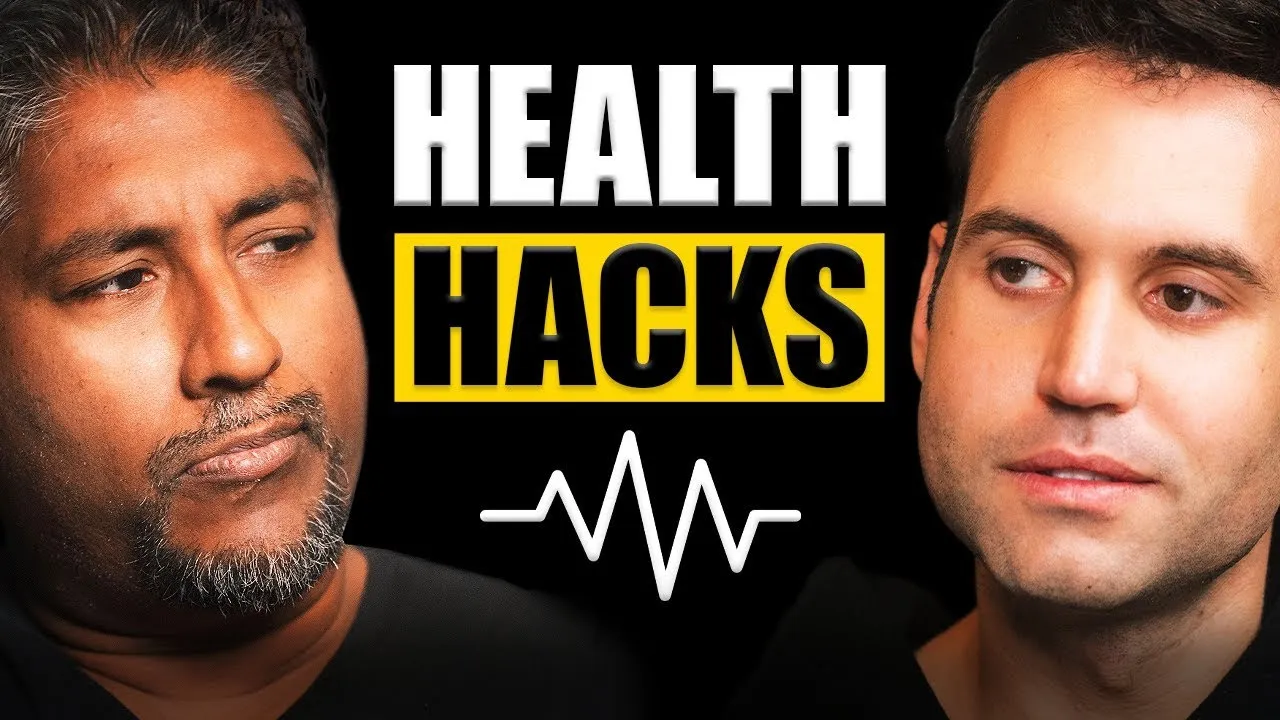
I was dealing with a really severe Crohn's colitis flare. It got pretty bad. In my case, I had a $2 million hospital bill. I was monetized by the hospital system. 60% of the revenue from hospitals comes from surgeries. And I'd venture to say that a reasonable proportion of those surgeries are likely medically unnecessary. Why are we relying on these bodies to tell us the truth in the world? My big takeaway would just be... Jacob Peters, welcome to my show. I'm excited to have you here. You're the CEO of Superpower, and I use you as a
customer. And I've been very, very impressed with what I've seen so far. But for those of the audience who don't know who you are, could you please give us a quick introduction, your background, and what insights you have today to share with us? Thanks, Vinny. Excited to be here. So you should listen to this episode, because you're probably not listening as healthy as you think. I got into the health space after starting a half billion-dollar SaaS company in my early 20s and creating a startup incubator that helped create a few billion dollars in private market
cap of value across all the startups that we helped get off the ground. And then I ultimately ended up enduring what was, unfortunately, a near-death health experience, where because of a number of genetic factors coupled with years and years of poor lifestyle decisions and sacrificing my health to get my businesses off the ground, coupled with the perfect storm of environmental factors, I found myself in the hospital with a two-million-dollar hospital bill and a few surgeries where they had to cut out a few of my organs to save my life. And this all could have been
100% avoided, which has led me on the crusade and ultimately became the catalyst for what I'm building now with SuperPower, which we believe is the doctor's clinic of the future and something that can be in the hands of half of America in 10 years. Great. Well, I'm glad you're still sitting here with us and building what you've built. I've always said that I think you are your own best doctor and everyone in the world, your primary physician should be yourself. You should know yourself inside out. You should know how your body works, what your markers
are. And so let's talk about the primary product. The reason I found you is that people who know that I'm into health and wellness connected me with you because I do a lot of blood tests. I probably go three times a year for about 200 different markers. It's actually probably more per year, but my main tests are three a year and about 200 markers. And it was a very easy process. I signed up. A phlebotomist came to my house, took my blood. And a couple of days later, all these results are showing up in your
website and you're able to categorize everything from cholesterol to liver function, enzyme function, et cetera, all the way down. Tell us a little bit about your core product offering at Superpower so we can get a sense of why that's the starting point for your health. Yeah. And you make a great point about us being our own doctors. So there's this beautiful thing that technology enables across the board, which is this idea of sovereignty, right? And across every industry, we've seen this story play out, you know, banking, right? Like you no longer have to be beholden
by the traditional financial system, right? You can be your own bank and like a Bitcoin wall on the blockchain, right? And this is happening in every different type of vertical, right? Like you don't need a financial advisor. You can be your own medicine and healthcare is the next domino to fall here, except it hasn't happened yet because it's a very complicated, regulated industry. And only now is like, do the infrastructure tools and the digital tools exist to be able to build great consumer experiences and healthcare that can connect dots for people that weren't previously being
connected. And also there's like a really exciting crop of, you know, engineering design and business building talent that's flooding into the space, which is kind of like the philosophy that we're looking to bring to the healthcare world with Superpower. The way the product experience works today is we're basically trying to do all the things that traditional medicine isn't really able nor incentivized or like knowledgeable enough to be able to do right now. And there's this kind of like heuristic idea that's generally pretty commonly accepted within healthcare and medicine today, which is this idea of the
19 year gap, meaning that traditional kind of like standard primary care protocols or like emergency room protocols or like the care you'd get at a hospital or health system or from like a, you know, a kind of a layman doctor is about 19 to 20 years behind the frontier of the science. And there's a lot of reasons why like, you know, things basically have been innovating fast and things haven't kept up. And, you know, it's, there's frictions with legal risk, right? Like we're very, we have a very litigious society. So, you know, physicians are very
like risk-off and health systems are risk-off. It's also the fact that you don't really get much formal training beyond, you know, medical school and there's no time nor incentive for physicians to stay abreast with the edge of the research. So these things just take time, right? And then like the last thing is, you know, it just takes a while for the scientific community to kind of come to a consensus. And ultimately like, you know, when it comes to science, there is ultimately no fact. It's all just kind of like a series of probabilistic judgment. So
it's hard for people to kind of collectively make, you know, call us like what's actually legit versus what's not. But what's happening is we're at this really interesting inflection point where because of just like the, you know, compounding effect of innovation and understanding and like knowledge accumulation that's happened because of the internet and because of like more smart people and flooding into the health space, I think we're at the beginning of an exponential part of the J-curve where that 19-year gap is, you know, Going to become like a 50, 60-year gap very, very shortly because
our understanding is advancing exponentially faster than like the kind of system's ability to incorporate all this new healthcare information. So what we've done really, modeled after a lot of what high-end concierge doctors do who have full-time research teams to stay on the bleeding edge of what's happening in science and incorporating into their clinical models, we basically built an engine of like dozens of these doctors who are, you know, working with them to get their brains into our system. Plus we have our own research team, you know, that is going out and kind of staying aware
of what's on the frontier and bring all of that into our clinical model. And it makes it so that like, you know, we can start this patient experience and this member experience with getting a complete understanding of everything that's happening in your body and your life and your history, marrying that with like the latest and advanced diagnostic testing and ultimately using it to create like an end-of-one personalized plan. And this is very, you know, antithetical to the way that a lot of traditional primary care medicine has been delivered, right? So again, everything is sort of
like by the protocol. It's one size fits all. And it's generally just like a pharmaceutical solution that you're offered. A good example of this, you know, at like the most kind of rudimentary and basic level is what HIMSS and Rho have done, right? They've taken discrete use cases or things that you'd get from a primary care doctor, and they've like unbundled it, discretized it, and built a product experience around it where the human is fungible. So let's take like hair loss as an example, right? Like you have a hair loss problem, you go to HIMSS.com,
you go to Rho, you fill out a four-question questionnaire, a doctor checks a box, and you get your pharmaceutical for like topical hair loss or whatever, right? It's a one-size-fits-all formula, and they're just basically checking the boxes without really understanding anything about you. And that's, you know, obviously like a scaled version of like, you know, what a primary care or traditional doctor might be doing across like a lot of different conditions. Now contrast that with the future that we're building towards and the ultimate like personalized patient experience that we want to create with superpower. You
could imagine us taking instead of four-question, you know, days that we could take 30 questions, everything from like, hey, you know, did your father or mother die of heart disease or liver cancer married with like, you know, what is sort of your level of toxin exposure in your environment? You know, are you sleeping in polyester bedsheets which can disrupt your hormones at night? You know, do you sleep with your door closed? That could basically change the carbon dioxide levels in your room, which can affect your heart rate variability and the quality of your sleep all
the way to do you have certain genetic snips or like just what even is like your blood biomarker trend line looking like for a few very key markers that are indicative of your habits and lifestyle, right? Like your HbA1c, which measures, you know, kind of your glucose pattern over an insulin spiking and blood sugar spiking over the past prior few months. And you took all of that information and then not only did you use that information to provide a personalized recommendation that's not cookie cutter One-size-fits-all and just like a, you know, a basic pharmaceutical, but
you actually had a holistic plan that was a pharmaceutical plus four supplements to correct key nutrient deficiencies plus, you know, some maybe some natural thyroid medication to correct an imbalanced thyroid, which could be contributing to the hair loss, you know, plus four different lifestyle routine changes that could very much impact your level of healthfulness like, you know, getting sunlight first thing in the morning or getting more sunlight on your scalp, which again, all things that theoretically, you know, you should be doing to correct that problem. So what you're really saying is like a more holistic
approach to health? Yeah. Because the problem with drugs is you take one thing and it upsets another part of, you know, basically it disrupts homeostasis in the body, right? Your body starts doing different things because this medication is impacting you in ways that have, in fact, most of the drugs, you know, when you listen to these ads on TV, it says, it gives you this warning of like, can cause this, this, this, this, this for like 25 seconds of the ad. Be careful. You can die of that. And that's because pretty much all the studies
done with these synthetic drugs have side effects and these side effects, then you think something else is wrong with you. So you take another drug. And I had another guest on the show where we were talking about the fact that, you know, when you have these drugs piling up, by the time you get to 70 or 80, you're taking 20 drugs. And most of them are just to combat some sort of side effect that the original one or two drugs are taking. Let's click into this, you know, how, how, how, how crazy, you know, the
pharmaceutical industry really is and apply to the specific example you, you brought up. And, you know, I've gone quite deep into this with, you know, a few kind of key leaders who brought around the table to help, to help build our company and our understanding of, of healthcare. And then I've invested in a number of, you know, kind of biotech and frontier therapeutic companies. So have like a sense of how this, how this model works. And for a lot of drugs, you know, when they get to like the later phases of clinical trials before, you
know, they actually become commercialized and brought, brought on the market, you know, when they test for symptoms and side effects, a lot of times it's, it's purely anecdotal. You know, they're not running the superpower baseline blood tests, you know, where they send a nurse to you and measure 80 different biomarkers across, you know, effectively a really wide smattering of your organ systems. There may be, if they're testing at all, you know, a few things, you know, there may be some, some like rudimentary biomarkers, a few CBC, CMP blood tests, which are again, just like maybe
your blood cell counts and things, but they're just missing data points. So these drugs are getting pushed through with having a very incomplete understanding of the ramification, the downstream ramifications of how they might be impacting the body, which is, which is frankly really scary. The other thing is a lot of drugs, you know, they've been around for, for decades and decades, but you know, we didn't even have this level of like testing back then. So new things are coming out now around like, you know, the downsides of even things like statins, which are, you know,
very popular commonly prescribed drug. And yes, if you're an imminent risk of heart disease, you know, like even the kind of integrative medicine doctors that I work with who are generally anti-statin, they'll sometimes come around and say, okay, in some cases it's, it's necessary. But the reality is, you know, it has effects that we're just now starting to understand because we have these new advanced testing methodologies that like were never, you know, used nor required by pharmaceutical companies during, during the later stages of clinical trials to effectively, you know, determine the safety of these, of
these drugs. Hi, this is Vinny. Thank you for being a viewer or subscriber to my channel. And if you are a viewer and not a subscriber, please hit the subscribe button. I love producing content for you guys, and I really, really appreciate all the feedback and the comments that you post. I want to hear from you about which guests you want to see on my show and more importantly, which questions you want to ask them. I'm going to try my best to get them on just for you. Thanks so much. And now back to the
show. So before we continue, I want to, I want to just, I want to just double click on your, on your hair loss points early on. So I, about a year ago, I started noticing like thinning of my hair, hair loss issues. And I went to HIMSS and I had no consultation with the doctor. I order it and it rides. And I started doing some research on, I think it was finasteride. Topical or oral? Topical, topical. I don't want to, I don't take oral stuff. So I got this stuff that I started using and then
obviously all the dangers with it, right? When you stop using it, you're going to start losing your hair, blah, blah, blah. And I started applying it. And what I found was, I started getting like, the scalp became sensitive. So I started feeling like a little sore, but it wasn't terrible. The hair started growing back and, but it wasn't like great results. It was okay. And then I started also doing research around it and found that obviously gut dysbiosis is a big problem. So I said, okay, let me focus on my gut for a bit. So
I focused on some gut stuff, did some gut tests, took some antibiotics, cleared out whatever was there. And that kind of helped a bit, but not enough. And eventually I just went off the HIMSS. And I switched to a plant-based product from Honduras called batana oil. You've heard of that? And it's worked wonders. I mean, I've been on it for maybe six months and my hair hasn't looked better for me in a long time. It's thicker. I'm off the prescription drugs. I'm off the HIMSS. I use it four or five days a week. I rub
it into my scalp. And between correcting the gut dysbiosis and then re-nourishing the roots and the scalp in my hair, I was able to fix the problem and it's back to normal. And so that's just an example of like, I mean, I'm not digging on HIMSS or anything like that, but the pharmaceutical... I'm down to dig on HIMSS. You can, fine. But the pharmaceutical industry makes money on a subscription product like that where you're paying for it every single month for years and years and not solving the root cause. Excuse the pun. But I was
able to figure out that for me, it was either it's a gut issue or it's something in the scalp. And I attacked it from both sides and naturally solved the problem. Yeah. It's a brilliant point. People deserve N1 personalized root cause medicine. And this is so far from the standard today. Yeah. Thanks for joining my podcast. I'd like to take a moment to introduce you to my company, Rumi, the future of AI meetings. During your conversation using Rumi, our in-meeting AI generates fully editable summaries, insights, and action items within the AI feed. Talking about something
sensitive, we're off the record. You decide when Rumi's AI listens, ensuring your privacy remains intact. When the meeting's over, Rumi's commitment isn't. Revisit the essentials with instant recordings and get detailed meeting summary straight to your inbox. Discover the next generation of meetings. Rumi, AI enhanced, privacy focused. Jump in and get started for free at rumi.ai. Now back to the podcast. Yeah. And so that's a big issue. Okay. So let's move on to the next question I've got for you. So when you look at guys like Brian Johnson, okay, and his quest for immortality, and he's,
I think he calls it a don't die movement, right? What should people be focusing on? The length of your life or the quality of your life? I guess you're trying to like balance the two out, but what's more important for you do you think right now? Yeah. For me personally, I'm like less concerned with the end goal, so to speak. I'm more trying to focus on how do I feel every single day and like, what does that unlock for me from a performance standpoint? And there's a framework that I've been going back to lately, which
is what are like the visible things that are suboptimal and wrong with your health? And then like the invisible things. And I think the problem that I see that's pretty ubiquitous right now is people are way too focused on like this just like nebulous end state idea of longevity or they have the opposite problem, which is like, they're like, I'm healthy, right? I feel fine. I feel good. But here's how the brain really, really works. It's amazing at adapting to our circumstances and like you kind of recalibrate to your baseline. And like if your health,
visibly you might feel okay because your brain has like recalibrated and said, hey, this is the new normal. Like, I'm fine. I feel good. But you almost don't know like how good you could actually feel if you dialed a few different levers. And then the reason for that is because there's this like invisible side of things that you don't know about, right? Like if you have a bunch of key nutrient deficiencies, because the brain is good at like adapting you're not going to notice any symptoms. A lot of these things don't even have, you know,
symptoms because backup systems, just as backup systems, right? Like the body recalibrates. It's why, you know, when I go to San Francisco and I see, you know, people who like haven't showered in months or, you know, on the street, like God bless them. But like, you know, they're but like, you know, it's, I'm like, how are these people living, you know, off of effectively, you know, like low nutrient quality meals, two, three, four hours of sleep in the street. And it's because like the body is actually like amazingly resilient at changing it up its biological
or biochemical pathways in order to just like, you know, keep you on living, right? And that's an extreme example, right? You know, I think it's actually not an extreme example. I think it's actually the human body adapts well to extreme situations. So this is why when we do cold plunges or we do hot saunas or we go fasting, these are extreme stresses that we're placing on our body. And it adapts to that in ways which are positive for us because it builds up a level of resistance to that extremity. And that's why people can push
themselves harder, longer, faster when they're doing sprinting or sports. It's because your body adapts it. So if you keep your body in a comfort zone the whole time, it doesn't learn to adapt to the extremes. The moment you push the extremes, those stresses create a reaction in your body in different neural pathways. And those stresses on your body are actually in some ways healthier. So someone living on the street, that's a stressor, but they're not dying necessarily. Yeah, yeah. And this is, you know, I have a great deal of respect for what Brian Johnson has
done to bring just excitement and kind of mainstream acclaim or criticism. But I think all press is good press in a sense. And I'm a big believer in this broader movement of like, we need to have more attention on our healths. And he's done great things there. But from a medical perspective, the integrative trained doctors who I work with, their kind of criticism with his routine is that it doesn't allow for hormesis, which is this idea that like you want to kind of be like, you know, constantly shocking the body with different routines and patterns,
you know, diverse types of nutrients, because the body can basically like adapt to certain types of like certain pathways become like, you know, calcified in a sense. I don't mean calcifying like the literal, you know, biochemicals, I mean, more like in the abstract, you know, figurative sense, like your body becomes dependent on certain nutrients coming in at certain times every single day. It's why I switch up my supplement routine. Like, I'm not taking the same things every single week. I do it randomly on purpose. I do the same thing. I do the same thing. So
I have all my supplements, and I rotate through that. And my wife, like, will look at my supplement and say, should you take all of this every day? I'm like, not every day, but I rotate. And you have to rotate. So some days I won't take certain things. Like, for example, I have beef supplement pills. So on days I'm eating fish, I'll throw in some like extra liver from the pills because, you know, just to mix it up, right? So I don't always eat the same food every day either. And you've got to mix up
the supplementation. And I think when I travel sometimes, I just don't take some pills. I take a week off, no supplements. I call it a supplement holiday. Yeah, exactly. I don't take vacations. I take supplement holidays. I take very few things that I take every single day without fail. But most things, you have to rotate through it. And now again, I'll chuck in some new things just because I think I totally agree with you on that. What timeline do you think is out there for people to move to personalized health? So I'm an early adopter.
You're an early adopter. We have tons of friends who are. But I would say maybe 5% of my friends do this. Maybe 5%. Most of them don't. They kind of go to their doctor once a year. They do their annual meds. They don't really take... Like, if you walk into my room and look at my supplement, and I'll show you in a bit. But if you look at my supplement stack, it's like I'm deemed as crazy by my friends because I take so many supplements and I have so much interest in all this stuff. But
that's me. When does this actually go mainstream where people start caring about this enough that they do it for themselves? We're early. Yeah. So the way I've seen, having lived through a few different tech cycles. And tech is a really interesting subset of the broader market because everything moves so fast. So I've seen a few tech cycles in the last decade of being in startups and building companies. And it's never an all at once shift. It's basically the compounding of a bunch of little micro innovations and understandings. Let's take an example of what's happened in
even the past month. All my friends who are not even that interested in health yet, they've started... I see them on social media and group chats I'm in and just over dinner conversations talking about microplastics and water bottles or nanoplastics. We've all known about microplastics for a while, but it's kind of a meme, honestly, but there's now new research that is coming out and it's pretty damning. I'm seeing this stuff when I go to my parents' house and they're watching CNBC or Fox or CNN. It's on mainstream television now that you get basically hundreds of
millions of particles of nanoplastics every time you drink a bottle of water. And that stuff is provably bad. It's provably endocrine disrupting. And there was even studies that came out literally four days ago that people who had atherosclerosis and plaque building up in their arteries and having challenges with their heart, they found that 100% of those people, the composition was not basically just calcium or other deposits. It was actually partly made of nanoplastics. So we've known this for a while. It's actually funny. I'm smiling and laughing at you because literally when we filmed the episode
yesterday, exact same topic came up. And this is an issue people don't appreciate. I have no plastic bottles in my house. I only use the Yeti aluminum cans. I carry water on. I have a hydrogen filter downstairs. I have a reverse osmosis throughout the whole house. So I'm always drinking... Is this reverse osmosis? Yes, it is. That might even be hydrogen. I see the bubbles. Yeah, it's hydrogen water. We basically cut out all plastics. When I travel, I rarely have bottles of water. If I have water, I look for hard plastic bottles. So Fiji, typically,
I'd stay away from the recycled plastic bottles because that's even worse because now it's been oxidized and whatever else multiple times. And I think this is a big issue. And I actually picked this up. And I made this point in the previous episode. I picked this up because my estradiol levels were spiking and the doctor couldn't figure out why. And we looked into it and everything else is fine. So all my other hormone levels were perfectly fine. But this estradiol was going up. And then they said to me, look, it might be plastic. You might
have plastics in your system. I'm like, well, gee, I drink 12 plastic bottles of water a day. I stopped it. Did you get a toxin test? I didn't actually bother going that far. I just cut out plastic bottles. Initially, I cut it out like maybe 70%, 80%. Now I'm down to 99% of my year. I do not drink water. If I go to a restaurant and it's like water out of a plastic bottle, I just have tap water instead. Now it's probably 50-50 because the tap water is not obviously great in most places. And if
I go overseas, I'd rather actually just have a juice or something at that point. I'm really parched. But I have Voss water. I have Aquapana when I'm in restaurants. I stay away from plastic bottles as much as possible. And the biggest issue is that these bottles sit in the sun. And people don't realize that they sit in these trucks and they go to Costco or wherever, and you buy these Kirkland bottles, which is extremely thin plastic. And it's been sitting and cooking in the sun already for hours a day on a truck and heating up.
And now you've got plastics. So now that I've been off plastic bottles and water so much, I can taste the plastic in the water. And it makes me sick immediately. It is so funny you bring that up because I taste it as well now too. So when I drink an aluminum can of water, like liquid death or something, maybe I'm just a little bit neurotic. But you kind of have to be in order to keep yourself healthy in this unfortunately toxic environment we live in. But I can really taste the BPA. Because the aluminum can
has got plastic in it. It's all lined with plastic. Yeah. So I'm with you. I will say that the aluminum cans are somewhat better for some reason because I think somehow it keeps the heat. It doesn't degrade as much. But I agree with you. But I had a bottle of Aquafina through the airport the other day. I didn't have a choice. I was stuck with no water. There's no refill. I was thirsty. And I was feeling nauseous within like an hour, like really badly. I thought I was going to throw up. So I'm definitely like,
even the liquid death in the cans, I'm off that now. Again, what do you do when you're starving or thirsty and you're like in a desert effectively? I mean, what do you do? You have to have some water, right? At that point, like, yeah. But finding a bottle, I try and find, I even do the bottles of iced tea and stuff if you can find the iced tea bottles because those are normally quite thick bottles. Just find a thick bottle. I wish they made more water in glass bottles. I think the government needs to bring
back some sort of like incentive and recycling program to get everything to move back to glass like it was in the 40s. So you look at what's going on since the 40s to now and how our health has declined. Plastic's a big part of that. Plastic's in seat belts. We actually, so my research team, we see so much about seed oils and we've decided to dig in. We're going to release this in a few weeks. Oh, really? We need an episode on that too as well. Really? Okay. We're basically trying- We should collab. We're trying
to come out with like, what is just like the canonical kind of source of truth or at least like put all the different conflicting data points all in one long form essay to help people decide for themselves, right? Like, where does kind of the seed oil debate start and stop? But going back to your question, which is like, when is this going to become the mainstream, right? Like personalized medicine and holistic medicine, where you look at every aspect of your health from like, you know, what are you predisposed to genetically to like, how are your
lifestyle factors and like everything from the plastics you're drinking to like, you know, level your exercising impact in your health, you know, All the way to like, what does your actual biochemistry at this point in time say about your body and using that to make health decisions? It's going to happen through all these like, you know, small like discrete pieces of awareness that continue to come up and happen right now. It's now plastics today. You know, maybe it was PFA is a little bit a while ago. You know, things are going to start to come
out when you have people on podcasts and influencers and people in popular culture talking about, you know, some of the twisted incentives in, in healthcare. Like, you know, in my case, I'm going to be sharing my story a bit more publicly pretty soon. So this is a bit of a teaser, but like, you know, I was monetized by the hospital system. In my case, I had a $2 million hospital bill, literally as big as a pre-seed round these days, you know, because like 60% of the revenue from hospitals comes from surgeries. And, you know, I'd
venture to say that, you know, at least I don't want to say all. And again, you know, I want to be cautious of the way I word this, but like, I'd say at least a proportion, a reasonable proportion of those surgeries are like likely medically unnecessary. So in my case, you know, I was dealing with a really severe Crohn's colitis flare, which, you know, for those listening who aren't as familiar, it's basically an autoimmune disease where your own body starts attacking your colon and your, your digestive tract and your organs, it got pretty bad. And,
you know, they basic, I was basically told by, you know, the, the gastro team that I was working with at the hospital, but I was stuck there, you know, for like weeks and weeks and weeks that the only thing that they can do is cut out the organ in order to stop the flaring. Cause eventually, you know, if you leave this thing festering for months and months, like you can basically die, right. Of like what's called toxic megacolon, which is when your colon swells up really large and you know, you're going to be then an
impending risk of death. And, you know, they decided to like, you know, push the surgery on me, which, you know, it's going to make them millions of dollars, both from the surgeries itself. There was like three to seven surgeries that you have to do because they have to cut out different pieces of your stomach at different times. And then they are going to make, you know, a killing on like the postoperative care, right? Like you have to go to see all these different types of nurses to help you with like, you know, the, the, the,
the post care after they do this operation. It's just, it's a huge mess. They actually completely removed my colon to rectum. So I have like no, you know, lower digestive tract. It's, it's pretty gnarly. But they made a lot of money on me now. And they did it by again, not addressing the root cause of what was causing the immune system flare up because they don't even know. But instead just like cutting it out via the surgery. After I went through this entire experience and, you know, kind of started to discover the frontier of medicine
by working with, you know, a handful of these like concierge integrative medicine, meaning like they look at, you know, your whole body physicians who help, you know, people with really complex cases or even just like help people who have money and are in the know with like, you know, increasing their longevity. Basically all the stuff we do at superpower, but like, you know, for a hundred X price, I started working with a lot of these doctors and thankfully I was in like a blessed financial position where I could, you know, spend my own personal capital
to, to, to heal and to learn. And I was told by one of my physicians that she had seen quote a dozen other people with pretty much my exact condition. And like the disease had progressed to like, you know, the same exact state more or less. And she only lost one colon. The other 11, she's able to save with a protocol of like less than, you know, $15,000 consisting of everything from like hyperbaric oxygen, which, you know, is literally insurance approved for diabetes therapy because it's wound healing. Right. And if your stomach has ulcers and
wounds in it you don't, you could heal that plus a handful of peptides, which are just these like naturally occurring chains of amino acids in the body that can help with healing. Plus balancing your microbiome with a few key targeted you know, like bacteria, like acromancia and these things that like can basically help, you know, quality inflammation in your gut from a bacterial perspective, addressing some key nutrient deficiencies that I had removing some high levels of toxins. I had like a mercury level that was like eight times, you know, the even like safe upper limit,
which I think the safe upper limit should be zero because that stuff shouldn't be in our bodies. You know, plus a bunch of mold and mycotoxin, you know, poison because I'd been exposed to mold and it was just hiding out in all my mucous membranes and a really messed up central nervous system. And she's like, here's how we would have, you know, recalibrated that effectively right through everything from like vagal nerve stimulation to just like having better mental frameworks for dealing with stress, you know, everything from cognitive behavioral therapy to just like learning to like
be aware of the state, you know, that your nervous system, your body is in and like, you know, kind of getting yourself to calm down and chill out. And like that's the protocol, you know, if you want to address the root cause of, you know, something like severe autoimmune disease by healing the lining of the gut, rebalancing the microbiome, addressing the key nutrient deficiencies that you have in your body so that your basically immune system has like a fighting chance, right? Because anytime you have to fight something, it's literally depleting nutrients in order to like,
you know, keep things going and ultimately like lowering your stress levels and like keeping your body in like a much more calm, you know, rest and digest state versus kind of being always on and triggered. And like that's, you know, the formula I should have been given, but the system would have made again like 200x less money off that or 2000x less money. And they also just didn't know about it because of this like 19 year gap that we've discussed. Wow. So how do you function now without the colon? How's your diet changed? Yeah, so
the weirdest thing... I'm sorry to hear. This is like a horror story. I'm like still sitting in shock because someone young and healthy like you should not have to have gone through that. Yeah, thanks Vinny. So, you know, the biggest change in, you know, I'm kind of like a weird N-of-1 like medical specimen. So I'm, you know, truly like I need the platform we're building, right? Like there's... I'm building this for myself, you know, and not just for, you know, myself who's had to deal with this horrible disease, but like for everybody else who like
should never have to go through not just anything similar, but like not even just like you settle for complacency or mediocrity or like whatever the current status of their health is. Like we want to take people from baseline to fully healed state across like every single dimension and people don't even know where to start, right? And in my case, you know, one of the biggest challenges I deal with with not having a colon is that my small intestine has sort of adapted and changed its function to be like a hybrid colon, small intestine, you know,
like hybrid organ basically. So the purpose of the colon is basically to like hold stool, house some of your microbiome where like, you know, basically the microbial populations can create things like different hormones and neurotransmitters and things in your body. It can absorb some nutrients as well. And then, but it really, its kind of main purpose in my, you know, the way I look at it is just like absorbing water and like keeping you hydrated, right? It's like not to get too graphic, but it's why stool is like really, really hard or it should be
at least a little firmer. It's because your body is literally pulling water out of your colon and bring it into the rest of your body so that you can stay hydrated. And then your small intestine is mainly absorbing nutrients. That's basically what it's doing. In my case, because I don't have that function, when I first got the surgery, I was like hella dehydrated for like weeks and weeks. I mean, like even when I would drink water, I would actually feel more dehydrated. So I had to take basically like a fuck ton of electrolyte powder. But
that doesn't help. That makes it worse, doesn't it? Well, no, the electrolyte powder was helping, but like basically what was happening is my body had to like adapt, literally like epigenetically change on the spot just to keep me alive and hydrated where my small intestine, my body was basically like, hey, small intestine, you now have to change your job up. Instead of just absorbing nutrients, you have to start also absorbing water. So what that means is like now my small intestine is kind of doing double duty. It's like maybe half the time absorbing nutrients and
the other half the time absorbing water. And if it's not absorbing nutrients 100% of the time, it means I'm not going to get as much nutrients for my food. So I've had to basically adjust my diet completely to eat like one way more calories just to like, you know, keep the same level of weight and muscle that I want to take way more nutrients. So I have like this stuff, this like rice bran powder that like, you know, one of my doctors gives to a lot of her, you know, nutrient deprived cancer patients that I
take, you know, every morning, which has just like a ton of nutrients. I take like extra supplements and vitamins and nutrients. And then I'm just like crushing, you know, these like electrolyte powders every single day to keep myself hydrated. Interesting, because I know if I take too much electrolyte powders, it makes basically, you have water in your stools because obviously you have excess water to get through. But help me understand that the microbiome that doesn't exist anymore in your colon that's missing, obviously, your small intestine is supposed to be sterile. You're not supposed to have
gut bacteria in there. Yes. So this is, again, why like I'm sort of, a weird specimen and trying to figure this out. So because I think what, you know, what happens and I've dug into this, it's so crazy that like, they literally will do this surgery on you, tell you it's life saving, and then not educate you at all. And, you know, to be fair, they just don't know. But again, it's because of the incentives that we've talked about in the research gap. So I've actually had to like, you know, employ my own functional researcher
who sat down and like read hundreds of papers and is just, you know, going out to all these esoteric communities and reading these substacks. And, you know, they go to conferences, entire conferences around like, you know, kind of frontier understanding of the microbiome to come back and like help me understand what's actually happening in my body. And we suspect that the microbiome has actually like migrated partly into my small intestine. So again, I have this like weird hybrid organ. Throughout the whole track or just some part of it? Probably the bottom end of the track.
Yeah, makes sense. Yeah, so. Because the neurotransmitters, the dopamine, all that stuff that gets during your gut now has to be, you're still functioning, you're still speaking. Exactly. You seem like a happy guy. My personality didn't change. Yeah, exactly. One thing that did change, you know, which is probably for the better. And I'm actually, you know, weirdly grateful that this entire situation unfolded is I now genuinely just have like a unbridled fearlessness for like anything that life, you know, throws at me. And the reason for that is because, and I've spoken to other people who
have gone through like, you know, similar life threatening situations. And it's, we're kind of weirdly like the only people that also understand this. But like, being faced with your own mortality, fundamentally alters the perception from which you like perceive day to day reality. Like it fucks with your mind forever, I think in a positive way, because I'm much more grateful and like, you know, fearless of anything that gets thrown at me. I think I think it applies to you as you get older as well. I'm young, I'm 29. So yeah, I'm 45 now. And I
started learning how to fly recently. And I've always been scared of being in a small propeller plane, flying around the sky. And like, oh my gosh, but as you get older, you like face with your own mortality. And like, well, you know, I only have how many years left? Like, I'm probably at least 50% through my life if I live a good life. Not a superpower can help. If you can help, maybe more. But you know, like maybe when I was 20 or 15, you know, I'd be like a little bit more scared of like,
oh, I got my whole life ahead of me. Now I'm like, well, my, I don't have that much in terms of my good, good health years. They're probably mostly behind me. Obviously, I may have another 10, 15, 20 years ahead of me. But doing new things and stuff, which was which would make me scared previously, is becoming a little easier for me because I'm like, well, you know, I've lived a good life so far. How many years I've lived. I think it's the same thing when you have these near death experiences. You become a little
bit more fearless because you just accept death as, you know, if it happens, it happens, right? I think that's definitely, that's definitely a part of it. I think there is an aspect, though, of like being so close, like it's almost like, you know, we kind of take health for granted. Yeah. Right. Like if you don't, if you're not in a hospital bed for three months, like where your mind is, you know, effectively on a different plane of existence than your body. And there's like this big disconnect, right? Like my mind was pretty much rock solid
and fine the entire time. Like, believe it or not, I was not, you know, in some spiraling depression. I was actually like the opposite. I was like hyper positive. And, you know, everyone that would come visit me in the hospital where I even could get visitors, you know, were like, wow, you seem like in such great spirits, like, you know, you're really kicking. But my body was like down. And it was just like strange dissonance where I was just like, you know, my brain was basically functioning optimally and like my body was not on the
same level. And it's a really tough thing to describe, but it just makes you grateful for like the days, you know, that you do have like normal functioning. I think maybe that's the key difference, you know, between maybe just like fearlessness from old age versus something like this. I mean, it was so profound. Like when I finally got out of the hospital and after like a few months of recovery post-surgery, like I went running for the first time. I cried for the first time in my adult life. Like uncontrollable, like, you know, tears just like
streaming on my face. I'm like, this is what it feels like to be able to do normal things again with my body. That's great. So what do you eat now? What does your diet consist of, like, given your situation and how has your diet changed before you had your surgery and to now? What's different? So I've become much more educated on, you know, what's supremely good for the body. So my diet pretty much consists of a handful of vegetables, like sweet potatoes and a few different leafy greens that, like, I don't believe to be phytotoxic
because that's another, you know, big discussion we could have. And again. But let's talk about that. So which leafy greens and which ones do you think are phytotoxic and which ones are not? Yeah, I don't really eat too much broccoli. I'm with you on that. Yeah, yeah. Yeah, I really like onions and asparagus. And here's the thing with food and nutrition. It's so, you know, dogmatic. And I think that's just a function of, like, the fact that it's complicated, right? It's a very large mathematical space. Food is code for the body. And, you know, all
you're basically doing is, like, you know, matching up all the different pathways that your body needs for nutrients and then all the nutrient compositions of what these foods have. And like, yeah, some of these vegetables, like, aren't necessarily as good for us as we might think. So the functional nutritionists that I work with, you know, they've kind of given me this list of what I don't. Fruits, I pretty much mostly eat everything. I think fruits are amazing. I'm actually, like, not that scared about, you know, my blood sugar spiking from fruits because, you know, when
I notice that I eat fruits because, like, a lot of them have fiber content, you know, even things like oranges, it actually doesn't spike my glucose as much. You know, we have CGMs, glucose monitors. There we go. Yeah, we have them on super power now, right? And we pull all that data into your ecosystem. But, you know, I notice that my, you know, like, blood sugar is not spiking quite as much when I'll eat, you know, something that's a little bit more fibrous as a fruit. So I eat plenty of fruit. I stack it with
macadamia nut butter oftentimes because, again, the fat can help, like, blunt. I had a banana. Did you eat it with macadamia nut? No, I had a protein shake with banana. Okay. Yeah, but, like, I'll even notice when I eat, you know, macadamia nut butter, for example, which is very low in polyunsaturated fatty acids, which is the kind of, you know, fat. That's the best nut, by the way. Number one, by far. It's really, really great. I mean, Mark Zuckerberg was just talking about, you know, he wants to start a macadamia nut tree farm. Right. He
already has one. He already has one. He feeds his cattle macadamia nuts. And it's like, I would love to get some of that steak. Zach, if you're watching, I'd love an invitation to Hawaii. I already want to try the steak. We are what we eat. It's, you know, it's like an aphorism for reason, because when you feed cattle really low quality food or corn and soy and all these different things, it changes the ultimate underlying, you know, chemical structure of, like, the proteins and the fats that you end up eating. So, you know, cows that
are, cattle that are fed macadamia nuts in their diets or grass even, like, it's going to have a much healthier balance of saturated to polyunsaturated to monounsaturated fats that I like to have in my diet. So when it comes to fish, which I also eat, it's a real problem now that we have to screen our seafood for mercury and, like, toxin metals. So there's a company that I invested in called Sea-Topia. I'm a customer. You are? Yeah. Yeah. Okay. That's epic. Yeah. It's great because they sell. Actually, we're having Sea-Topia fish for lunch today. We
are. Okay. I do my research. This made my day. But it's a great, it's a great platform. You know, I wasn't paid to say this, but, you know, I will disclose I have a vested interest in the company. But, like, they're really cool because they have a, like, fish farm process where they guarantee that there is no, you know, mercury or microplastics or, like, any of these harmful toxins that eventually have been finding their way into our water streams in our fish supply. It's literally the only fish I have. I mean, obviously, when I travel,
I can't hold on a bag of fish with me. But if I eat out, but at home, this is all we eat. And this is going to be a big consumer category. What I mean by that is toxin-free food as, like, a marketing slogan. So the salt I use, guess what their slogan is? Microplastic-free salt. I've got that downstairs as well. The Vera. I'm not sure it's the same brand, but I work in that. Microplastic-free salt. Yeah, it's probably the same one. So anyway, we have that on the superpower marketplace. You know, part of the
thing we're trying to build is also just, like, a curated ecosystem of trusted, you know, toxin-free and additive-free health products. It makes a difference. I mean, when I say to people, when I go on this, like, I go on the same tirade, like, you know, why do you eat microplastics in your food? Oh, well, I don't feel bad. Okay. Would you feel, would you mind if I put, like, one hundredth of a lethal dose of arsenic in your food every day? No. It's crazy. It's poison. Same thing. You know, the dose makes the poison, right?
And so that's the issue here. People are willing to take in very small amounts of something which is poisonous because it's in low doses. But the moment you say it's a big brand name poison like arsenic, then it's like, oh, that's terrible or mercury or whatever. But this stuff is lethal for you at high enough doses and it accumulates in your blood, in your body, in your tissues. It is poisonous and it is harmful even on a micro scale. Even when you get down to, you know, a lot of people go on about, like, homeopathic
medicine, and I've seen it actually work in a number of instances. But, you know, because you look at the titration rates and it becomes down to, like, there's not even a molecule in it. At that point, I'm probably, like, yeah, okay, I agree. But even some of the homeopathic medication where there's just, like, you know, five, ten parts per million, that's, like, some of the levels that you see in blood for other medication or other pathogens where it actually causes a problem. You have, like, hey, you have, like, 15 parts per million of this pathogen
in your blood. It's causing problems. So, why wouldn't a medication that has a similar concentration not counteract that? And I think that when we look at nanoplastics and microplastics and the concentrations in PPMs, even though they're extremely low, they're harmful. I struggle with the scientific community on this because you can't have it both ways. You can't say that this is harmful at low doses, but this is not beneficial at low doses. Yes. And there's a few, like, discrete problems here that we should talk about about, you know, why there's these standards. Who created these standards?
How influenced were those standards, right? So, I was watching the news the other night, them talking about the nanoplastic, you know, prevalence that's now in all these bottled waters. And, like, the statement they had on the screen was a blurb from the National, like, Bottled Water Association saying that, like, there are no provable studies that nanoplastics are, like, harmful to human health. And it's, like, well, one, just because, like, there's no studies yet. But also it's, like, those studies would have to get funded. The association's never going to fund those things. You know, if there
were studies that even said it was safe, would you trust it if the associations were funding it? I mean, you know, no. And then, you know, the next problem is that, you know, the kind of, I guess, you know, kind of mainstream medical establishment, you know, might say, like, because there's no studies, like, we can't, you know, comment on the efficacy, which is also a problem. Why are we relying on these bodies to tell us the truth in the world? Yeah. Why are we relying on organizations that are funded by special interest groups that have
a, you know, like, it makes no sense to me if you're not doing your own research and actually looking at the data, the anecdotal data, and what just makes sense, like, theoretically. So, again, all this stuff is starting to come out now, right? Like, at least in the fringe, more fringe, you know, niche communities that we're in on Twitter and the tech industry and the group chats we're a part of, like, or the subsects we subscribe to, like, this stuff is starting to come out. You know, it's going to become more mainstream. Consumers are going
to start to become aware and educated, and they're going to be frustrated. And, you know, within, like, the next decade, I see, hopefully, like, a flipping happen, right, where people really buy into this idea of health sovereignty and, you know, decide to start, like, making decisions for themselves, or maybe there's going to be companies that pop up, like, what we're doing that, you know, our clinical opinion is basically, like, you know, no level of toxin is safe. Yeah, exactly. I take brown seaweed every day because I eat a lot of fish. And I'm taking less
now because I take the Zootopia fish, I know it's mercury free, but my mercury levels are too high. They were, like, 16. And so I've been taking brown seaweed to try and flush it out, but then also migrating away from, you know, eating out and sushi and whatever else. What I've been doing is going in the sauna in the morning, but taking a binder beforehand, which, you know, something like charcoal or... Oh, charcoal is great. Yeah, yeah, yeah. It can help, you know, bind to the metals and excrete them from your body so that they
don't recirculate. I use the coconut charcoal. Yeah. Activated charcoal. The funny thing with the sauna is I was doing it before bed for the longest time, and my sleep was getting worse, and I realized this because my heart rate was getting... Yep. So now I do it in the morning. What temperature do you get up to? At least 180. That's where, you know, you start to see... Which sauna do you have that gets that high? Even if it's 145, you're still getting the benefits of, like, detox, from my understanding, but... Sure, but you have to
spend longer in there as well. That, but you're not getting the cardiac benefits because it actually simulates, like, a low-intensity workout. Yeah. How long do you stay in the sauna for at 185? Because that's really hot. Yeah, not more than, like, 20 minutes. Okay, I have a real hot button when it comes to health right now, and that's seed oils. I personally have gone through hell before I cut seed oils out of my diet. I went and had fried chicken the one day, and the next morning, I woke up, and both my arms were lame,
like, with just, like... I couldn't feel anything else. Information was all over. It's like, literally, I had to tap my arms to get blood flow back into my arms so I could feel again. And it happened quite a few times, and I never put a two and two together. And then the chicken incident happened, and then it was a big, you know, corn-fed steak, but it's never one thing. It's this accumulation over weeks and weeks of eating seed oils in your diet. So canola oils, etc. And when it accumulates to a certain tipping point, your
HSCRP goes up. It was, like, 4 point something. Mine's down to 1.7 right now. And the standard American diet, I think people are around 15 to 20 times. So your 6 to 3 ratio of omegas. So when you get your body to those levels of information, things start going wonky. I cut out all seed oils out of my diet. Literally, the only time I have a seed oil is when I inadvertently have to. We travel, we have to go places. You can't always be pedantic about it, otherwise you'll probably starve. But I have seen magnificent
results cutting seed oils out of my diet. And so let's talk about seed oils for a bit. And what do you think is the issue with seed oils in general? I mean, the 6 to 3 ratio is one problem. The chemicals, I guess, that they use are now stuck in the seed oils. And then also the products on the shelf. They did a study recently of all the extra virgin olive oils on the shelves. And they were all not pure. So I'd love to just spend, you know, the floor is yours. Give me your take
for the next couple minutes on how this is becoming a pervasive problem in society. The debate on seed oils is fervent and nuanced. So, you know, you have, and again, this is the challenge with science, right? Like just because the nature of science, there's no truth. It's a lot of like, you know, probabilistic judgments. So you have different camps of people that have different, you know, informations that they're looking at saying different things about the seed oil debate. And it really shouldn't be the seed oil debate as much as it should be like the polyunsaturated
fatty acid debate more broadly, which is like, you know, the predominant type of fat that's found in these types of industrial produced oils. My take is that if you just think about a few things from first principles, they're most likely not so great. Number one, humans historically did not eat a big ratio of polyunsaturated fatty acids. So why would you want to eat something different than the like evolutionary environment that your, you know, preceding ancestors, you know, created, right? Or thrived in, right? And you might say, oh, well, like people died at, you know, age
30, or like most people didn't even live past like four months old, or like they died at that birth or something. But like, I just think from first principles, like it's actually crazy that, you know, if we talk about this omega-6 to omega-3 ratio, or just like the ratio of, you know, polyunsaturated fatty acids from a 6 to 3 in your body to none, it's really, really just like absurd that we're eating something that's like a 20x differential relative to like the environment that we evolved. Now, you could also say like, you know, well, we
didn't sleep very well. And, you know, people were very probably malnourished. And the body was basically just designed to be able to carry on his genes, die at age 30. And then that was the brutish and short life we had. But I still just think that's crazy that we've even like normalized something that's that drastic of a difference. The second is they are like an inherent processed food. So anytime something is processed, you know, you're taking 80 ears of corn or like, you know, 800 sunflower seeds, and you're deducing it down to like an oil
that's like, you know, this big, like it has to go through a pretty gnarly chemical extraction process in order for that to happen. You know, where like the actual like chemical nature of the product is changed. And there's a lot of additives and chemicals that, you know, probably are not that great for us. You know, in order to like get it to be something that's like shelf stable. And there's also a problem with like oxidization, where if it sits, you know, too long out, again, changes the chemical nature of it. These things are housed in
plastic bottles a lot of times. So like all that processing is just really, really bad. And if you think about that from first principles, it's like, okay, well, you're adding and changing a bunch of stuff from what nature has. Probably not that great. But then also could an average human sit there and eat 80 ears of corn? No, they would get sick after like the fourth one, right? Yet, if you, you know, drink even like a few tablespoons of corn oil or something, like you're effectively consuming the same amount, like how does that even compute,
you know? So that's the second big problem with it. The third big problem is when we start to get into like the actual, you know, downstream potential problems that come from consuming way too many polyunsaturated fatty acids. And oftentimes these oils are packaged with other types of foods, right? Like if, you know, you're eating a protein bar and it has a bunch of polyunsaturated fatty acids from one of these like, you know, corn or safflower, sunflower, canola oil things, it probably has other bad stuff in it as well. So there's, I venture to say there's
a big correlation between if there's oil, there's probably a bunch of other bad shit. But it comes down to, you know, what's actually happening in the body if you're like tissues are like way too high in polyunsaturated fatty acids. And like this is where the studies start to get a bit nebulous. And admittedly, we don't have great data. So again, it's kind of just like a judgment call you have to make, right? So I'm choosing to look at and consider certain data that says, you know, it's not that great for me, right? There's a handful
of studies that show, you know, it can basically be disruptive to your metabolism. Some of these studies are in, you know, rats or like some of them are like, you know, low populations of humans. So it's hard to like draw strong conclusions, but it's kind of like the best we have. So here's where the science gets a bit nebulous because you have a certain amount of studies that say a high concentration of like omega-6 fatty acids or linoleic acid is like inflammation, you know, producing an inflammatory. You probably have just as many studies, you know,
if not more saying it's not. So it's kind of one of these situations like, who do you choose to believe? What do you ultimately listen to? You know, the other thing is, you know, beyond just like the blood serum levels of these fatty acids, you also have to think about your tissue composition, right? So because of this idea, we are what we eat. If we're eating way more, you know, omega-6 fatty acids, your fat tissue, your adipose tissue, which is, you know, even in a healthy person, it's about 10% body fat, like that's literally 10%
of your body. If a high proportion of that is, you know, polyunsaturated fatty acids, that is where we start to see some really, really interesting, you know, studies that maybe aren't necessarily as, you know, brought up in kind of this online narrative and in discourse. So there's a paper from Advances in Nutrition that says that the levels of PUFA fats, polyunsaturated fatty acids, stored in the body tissue have increased almost 200% over the last half. Century. So it's not just like the ratio, which is, you know, serum measuring your blood, but it's actually the fat
tissue itself. And the reason that that can cause a problem is this idea of lipid peroxidation, where like the fats in our cells kind of get like rusty from, you know, like bad free radical particles, making the cells a little bit more like weaker and susceptible to damage. So like this increased lipid peroxidation due to like higher PUFA content in the cells, you know, can basically contribute to like what's known as like oxidative stress or like an imbalance between like, you know, the production of reactive oxygen species, you know, the body's ability to like detoxify
this stuff, which ultimately can have the downstream negative impacts on DNA. It can be hard in your liver, all these different types of things. And then we see a few studies that, you know, are a little bit, again, less like scientifically rigorous, but still interesting to at least consider and bring into the debate, where, you know, high polyunsaturated fatty acid content in your tissue cells can be correlated with heart disease, make it harder to recover from cancer, disrupt your thyroid function, or even like change your metabolism. One of the most, you know, interesting ones on
here is it can actually impact your body's ability to produce oxytocin, which is like the love hormone. So like maybe, you know, who knows? It could be pseudoscience, but like collectively, you know, perhaps all the increased seed oil intake is, you know, causing everyone to become slightly, you know, less empathetic with one another. That's crazy. So your body storing these PUFAs, it's going to make you metabolically unhealthy. And this is kind of like fatty liver disease as well, right? So a lot of the fat that gets stored could also be polyunsaturated fatty acids. And that's
what's going to be... Because there's a lot of science emerging right now that fatty liver disease or just, you know, visceral fat in particular is leading to a lot of unwanted health situations in many people. And, you know, I guess because the diets are really high in canola oil and whatever else, we're storing the wrong types of fat in our body. Yeah. And it's so hard to avoid. I mean, it's beyond just the seed oils. Again, it's this whole idea of polyunsaturated fatty acids. So why is it so endemic in the society? Because it's cheap.
Incentives. Incentives affect behavior. Okay. So what you're saying is, and I'm going to reach out to you a little bit though, you're saying that the government is keeping food prices low to show inflation is low while printing excess amounts of money to fund agendas which don't really help us and we're getting sicker and unhealthier and we don't know why. Yeah. I don't believe in the whole, you know, like Illuminati, like, you know, cabal of people. Oh, no, I agree. No, no, no. I don't believe, I actually don't believe it. I don't believe it's like some
centrally controlled thing. Yeah. It's just the incentive, you know, like Warren Buffett says... It's just twisted webs of massive amounts of incentives, you know, all kind of pushing us in the wrong direction. Exactly. So, you know, but again, I do think like the way that, you know, I've seen these cycles play out in other markets is like it's just a pendulum effect, right? Things have to get worse before they can get better. So it's going to reach a tipping point, you know, where eventually there's, you know, now enough like public discourse about this stuff, some
smart, you know, scientists maybe backed by the right money are going to start figuring out the studies. We're going to get the ways to test this stuff and the truth is going to, or at least a better judgment call is going to come out and then that's going to spur a wave of like entrepreneurial innovation. A lot of companies, you know, building like vegetable oil, poof of low products. Consumers are going to start to demand it because like they're seeing it in their feeds. Well, are they? It's already happening. Are they? If you go to
like Restaurant Depot and those places that sell restaurants stuff, you know, when you walk into a restaurant and you sit down, nobody, and I do, but nobody asks what oil you use. This morning I had an omelet and I had to ask them to cook it in butter. I did the same thing. They probably cut the butter with 80% canola oil. So like it's avoidable. And then the eggs I'm eating, you know, are not fed on, you know, grass. They're fed on grains. They're probably terrible additives. So like the omega-6 ratio is off on the
eggs. Yep, I agree. So I have this problem all the time when I eat out. I'm like, you know, so when I eat out, I go for steak, please, no oils, just cook it on the grill and keep it as clean as possible. That's all you can do when you eat out. I bring my own beef tallow to restaurants. Do you? Yeah. What do you do? Would you put it on the steak offers or do you attempt to cook it? I give it to them. And half the time I get cooked out of the restaurant
and they're like, sir, we can't violate Los Angeles County health codes. And I'm like, I'll take my business somewhere else. Really? You actually bring your own tallow? But why would you just have it cooked on the grill directly? Well, it depends, right? If you go to Thai food, you know, cooking noodles, they have to use, you know. Okay. Yeah, they're not going to do that. Cooking lubricant. So, yeah. Yeah, I literally 90% of my eating out is steak houses because they're pretty accommodating. They'll put it on the grill with no oils and you can get
it. I have friends that bring their own steaks to restaurants. So I'm not even the most extreme. When you see the inside of a health shop, like a GNC vitamin shop, and I was in one the other day, and you walk around trying to get clean supplements, what do you do? I mean, I went in trying to get essential amino acids. Very basic, simple. Everything is cut with some filler or it's got sucralose in it. All the products, all the protein powders in the health shops, they all have sucralose and additives and sweeteners and sunflower
oil and whatever else. You know, safflower oil, like it's got all these stabilizers and the protein bars in it. How are these called health shops when you walk in there and it's got the worst poisons for your body in these things? And I understand all these fitness gym guys who are pumping like huge weights and living off these supplements all day. How they're okay putting this stuff in their bodies? Yeah, a lot going on there. It's not health, it's marketing, as with most things. But I've actually done like a bit of a 180 on supplements.
I used to be like a supplement maxi. I was a wrestler in high school and discovered that you could basically supercharge your body by giving it extra doses of the right things. And then I started, as I dug more into nutrition, I'm like, you know, maybe these things are like, you know, and I just have to eat healthy. I've actually done a complete about-face where now I'm back and same with all the more holistic doctors that we now work with believe, which is that foods are actually calorie per nutrient less nutritious than they were dozens
and hundreds of years ago. Like let's take a blueberry as an example. Like I eat blueberries, you know, most mornings. The size of like, you know, a natural wild blueberry, like before genetically modified crops came out, like a hundred years ago, it was like, you know, the size of maybe like a pinky fingernail. Like if you ever get wild at the store, it's they're really, really tiny. Now blueberries are like the size of like, you know, two thumbnail. Like it's, they're huge. And basically what's happened is you're getting like, you know, four to six times
the calories because they pump up the sugar volume with the genetic engineering, but you're getting one sixth the amount of nutrients. So we're all, this is across the board in a lot of different foods. Even anything that's remotely processed, like breads and grains, they're actually like extracting and stripping a lot of the natural, you know, things and adding back in man-made versions of vitamins. Same thing with vitamins that you have that you take from the supplements for like a GNC. Oftentimes it's like a man-made version of a supplement that's like way less bioavailable. So there's
just like kind of fundamental flaws and challenges in our food supply that make it, you know, I think harder to get as many nutrients as you need. So my hot take is sort of that, like no one's getting enough micronutrients and honestly no one's talking about it. So that's why I'm like very, you know, much a fan of supplements. And like, you know, you see a lot of functional doctors prescribe supplement routines. They work, right? Brian Johnson takes, you know, 42 supplements a day or whatnot, like I probably take 30. And it's, you know, you
take, I've seen your cabinet, like these things work. And there's like a certain taboo against them as well. Like, oh, well, they're not pharmaceutical drugs. They haven't been studied. How do you know? But like more and more studies are coming out about a lot of these compounds. A lot of the compounds don't have great studies because again, there's no incentive because you can't patent a supplement like you can a pharmaceutical. So it all comes down to the incentive and the vested interest. But again, all these things are just like code for the body, right? It's
molecules that act on certain pathways and do certain jobs. It's also expensive, right? So my supplement routine probably costs two to $3,000 a month. I mean, that's unaffordable for most people. But I'm willing to invest in my health and I'm able to. So I'm fortunate that I can afford that. What do you suggest for people who can't afford that much money spent on supplements every month? If they had to choose the top two or three supplements that they can afford, what should they be taking? Yeah, so there's an 80-20 to it, obviously, right? And I'll
maybe speak from like experience because we have like aggregate anonymous data from everyone that joins Superpower. And basically most members, we look at them anonymously in aggregate, are by and large like highly deficient in vitamin D. So because we're all not getting enough sunlight, we're sitting inside, recording this podcast inside, like even if you're sitting under a shaded tree outside, you're getting like significantly more sunlight and sun exposure to your skin, which helps with vitamin D synthesis than you would be if like you're outside. So like basically even being outside under shade is better for
you than like being inside under no sun or light whatsoever. So most people are vitamin D deficient. And if you're not going outside enough, like it's probably a really powerful supplement. There's really not many downsides to supplement. Like it's hard to overdose. You want to kind of do it guided by a practitioner. That's why we have a concierge doctor that you can always text through Superpower for like a super low cost. And second would be magnesium. One of the other big challenges with the kind of like nutrient density in our foods that I discussed is
the soil over hundreds and hundreds of like farming cycles and all these farms throughout the years has actually become depleted of natural nutrients. Like magnesium is something that's like generally found and it translates, right? Like it's like in the same way you are where you eat, it's like you are where you grow, right? So like if you're a potato and you are grown in a field with like nutrient depleted soil, you're going to have way less nutrients that translate down to like the potato. So I think people need to start to wrap their heads around
this idea that like, you know, it's not just about the calorie count and it's not just about like, you know, the food. It's actually like, okay, well, let's think about where was it grown, how was it grown and does that actually translate down into like a healthy micronutrient status? So magnesium is one of these things where like it's like 6X less, you know, prevalent than our traditional more ancestral diet. It's less in the soil, it's less prevalent in the major foods we eat and it's so critical for like hundreds of different bodily processes. And the
crazy thing is it oftentimes doesn't even show up in a serum blood test which starts to show us like how complicated the body really is. You know, you can't just kind of optimize for biomarkers. Like that's, I think, you know, just the biohack tech bro, you know, kind of reductionistic view of a lot of this stuff. That's why I think, you know, a lot of kind of like, you know, current mainstream medicine is, you know, might like turn their head at some of the things that we're doing. But, you know, I wholeheartedly believe in it.
And, you know, it's because you could basically have normal magnesium levels in your blood serum but that doesn't mean that your cells and like your organs are like in the pathways and the processes that need it are getting enough magnesium because what will happen is the body will actually pull magnesium from its source to keep it circulating in the bloodstream. So you can't always trust what's on the paper from the test. You kind of have to like think two or three derivatives deeper which is also where, you know, consumer diagnostic testing gets a bit nebulous
and hard because you need, you know, smart people and smart algorithms on the other end to consider all of these things and oftentimes it's not. It's funny that you say vitamin D and magnesium. Those are my top two as well. But did you know, and it's not a trick question, the interconnectivity and relationship between the two? Because if you supplement vitamin D you have to add magnesium to your diet. Yep, yeah. And you also probably have to add vitamin K2. Yeah, K1, 2, and 3. And then, so I do an ADK supplement and I have
magnesium as well. And it's just because the moment you're supplementing D you require more magnesium in your system. So that's another way, a thing to just be aware of is like anytime you turn one lever because the body's so complicated and interconnected you're actually, you know, tuning thousands of micro levers. What doses do you recommend for the average person? I mean, I take 7,000 IUs of vitamin D a day. I'm dark skinned. I don't get a lot of sun. And even when I do, the melanin in my skin blocks the sun. So I have to
take high levels. Otherwise I am deficient. Magnesium, I'm on about 600 milligrams a day supplementation. And I take a combination of threonate and glycinate. Before bed. Before bed. So the threonate I take in the morning. You do, okay. It's better for focus and stuff. And then we glycinate before bedtime. But what would you recommend? It's about within the range that our, you know, medical team recommends for folks. The thing I'd maybe consider adding is another, you know, form like magnesium citramate or something. Yeah, citramate or citrate? I'd have to look at it. I think it's
citrate. Citramate is a brand. So it's probably citrate. Yeah, you know. I take magtine. And then so the problem with citrate is it actually gives you like loose bowels. Because it basically pulls the water into your gut. But to be fair, most people probably, you know, could use a little bit of added gut motility. So that's why our team isn't afraid of it. Okay, that's fine. Yeah, because I've experimented with that as well. But this is the stuff which I think people need to appreciate. That you need to understand your body. You need to experiment
a bit. You need to figure out what supplements to take. But you also have to prioritize based on your budget as well. Like not everyone can afford to take 30 supplements a day. But find the stuff that's most important. And you do that by identifying your biomarkers, seeing what's really outside the reference range, and then try to bring it back in and make sure that nothing else pops out while you're doing that. So what is the future of health when it relates to technology and how you use technology to monitor and make better decisions on
your health? So it feels ridiculous, right, that we can pull up our phone and see what any of our friends are doing at any time or what anyone's doing anywhere in the world. But we have just such minimal intelligence or understanding of what's happening two inches below the surface, right, subcutaneously. So the inevitable arc of technology is such that it just makes things easier and easier, right, and more accessible. So right now, we're at this point in time where it was traditionally very high friction to even get things such as full-body lab tests across a
bunch of different dimensions. We've kind of democratized that, built a lot of tooling around it, right, made it as easy as ordering DoorDash so that it's simple and frictionless. But the puck's going to keep going. I got a demo a few weeks ago of a platform called VitalOne. And it is a Theranos style, you know. Maybe I shouldn't use that word. The founder is a friend. He'd probably be mad at me that I'm saying this. But it looks like a Theranos device, right? Like you put your blood in, it spins, and you get results in
20 minutes. And I think we're going to move to a future world where this testing is like much more real-time. And that's probably the in-between before some form of like nanobots. Or maybe a continuous monitor. A continuous monitor. I mean, Apple obviously has the patent, right, and has done some research and intelligence over the past decade for seeing if they could use the Apple Watch to be like a glucose monitor that's non-invasive, right? So all this stuff is coming. So we're basically going to get like more insights than ever in our bodies on a continuous
basis. And there's going to be all sorts of types of vendors and tests and platform. And our belief is that like, you know, there's some value that's going to accrue to those point solutions from a business standpoint. Also, you know, value will accrue to kind of the aggregators and the companies that can actually deliver care and help make sense of it. And that's kind of the role that we're playing with zero power. But to pinpoint it, we're all going to have much more intelligence on our bodies than ever. It's going to be much more frequent
in real time. Disease should theoretically be preventable. Like, you know, barring any sort of breakthroughs in longevity therapeutics that start to target like the actual like, you know, biomechanical or biochemical aspects and hallmarks of aging. Like, you know, we're still all going to die. But it's like, what are you going to die from? Are you going to die from a disease that, you know, was the result of decades of nutrient imbalances and high stress that just kept depleting your body of its ability to like, you know, snip cancer cells as soon as they started forming?
Or are you going to die of natural sort of, you know, natural old age, which is really just more like, you know, which organ is going to start to fail first by the time you hit like 90 or 100, right? And like, are you able to, you know, walk 13 miles at age 90? Are you able, or are you only able to like, you know, get carded around in a wheelchair? So like that is where things are going. And, you know, I firmly believe there should be a future where, you know, no one gets disease.
We're all much more empowered and in control. Hospital systems, the current way, kind of your primary care doctor set up is not a gatekeeper to good health. Rather, you can take health into your own hands. And, you know, having like a amazing, incredible doctor and health solutions available at your fingertips is frictionless as Uber or DoorDash. Like that is the standard that, you know, we believe in and what we're trying to build. So Jacob, what is your favorite book? The Power of Now. So mastering your subconscious mind and understanding how your brain really, really works,
being able to shut off, you know, the kind of neurotic little voice that might be running inside our heads and becoming much more, you know, interceptively aware of like the state that our body is in is a superpower. And it's a really, I think like a challenging skill to try to cultivate it, to try to cultivate because like we're not taught anything. And this book kind of just helps you become more aware of like how your consciousness works. And it certainly has like transformed the lens through which I, you know, view my own brain and
how it pertains to my body and my environment and all the things that I think. And, you know, we're not ever taught this. It's a muscle that you have to exercise, right? To kind of get a handle on like how your brain actually works and, you know, how your consciousness works. And this book has given me like a kind of a much deeper appreciation for spirituality, the nature of consciousness, and how to, you know, not let, you know, challenging thoughts, they're rent free in my own head. That's great. I'm gonna, I haven't read that one.
That's gonna go on my shelf next. Thank you. What's number one piece of actionable advice you can give the audience today? Like you listen to a podcast for a whole hour and a bit. Thanks for listening guys. What's the one takeaway that you would tell people to go do this action item, go do this today? Yeah, I'd honestly, rather than like a tactical thing, you know, besides maybe avoiding vegetable oils or, you know, drinking filtered water, I think just be skeptical, honestly. Like, you know, the Steve Jobs quote is like, you know, the whole world
was created by people no smarter than you. But I think you can almost apply that quote in a different way to the current state, which is like the current standards are like, you know, common acceptances of what's healthy and what's good for us. You know, was created by people who are no smarter than you and like might not even have our best interests in mind because, you know, just if you follow the incentive. So yeah, I think my big takeaway would just be when it pertains to health, be really, really skeptical and think for yourself,
do your own research, which is hard, right? And that's kind of why we're building what we're building because it can be an intractable problem. But yeah, I think just think for yourself and be cautious of what to trust. That's great. Great advice. If you lost everything, you had $100 left to rebuild, what would you do? I'd buy some vitamin D and magnesium. Keep yourself healthy. If you go back in time and meet one person in history, who would it be and why? You know, I'd go back and meet the Chinese ruler that built the Terracotta
Empire. I think it's such a fascinating engineering feat. And the funny thing is, you know, we've been talking a lot about toxins and heavy metals. He actually died because he believed that mercury was an elixir. So he died in his early 30s because he would, you know, for years was drinking this stuff. And obviously it's, you know, very, very challenging for the body to detox from. But when they discovered the Terracotta Army, you know, underground, they found like these carved pathways that they believe, you know, from the literature were actually had like mercury flowing. And
they found, you know, deposits, unusually high levels of mercury in like the surrounding soil. So yeah, I think it's just really, really fascinating that, you know, in a time with, you know, no CAD, you know, computer designs and nothing but just like, you know, the sheer willpower of hundreds of thousands of craftsmen and laborers, like they were able to build this like massively striking, you know, piece of art. That's amazing. Jacob, thank you so much for being on the show. This has been amazing. Where can people find you or learn more about your company? Yeah,
you can find us at superpower.com and I'm on Twitter at J underscore underscore CUB. It's J-Cub.