[Music] foreign World War II will always be remembered as a war against humanity. When people hear crimes against humanity most people immediately think of Nazi Germany the Nuremberg and Dachau Trials and the concentration and death camps. Many of those on trial were doctors who performed horrific experiments using eugenics, torture, vivisections without anesthesia and experiments upon human beings that included high altitude decompression, submersive hypothermia, infectious disease and other experiments.
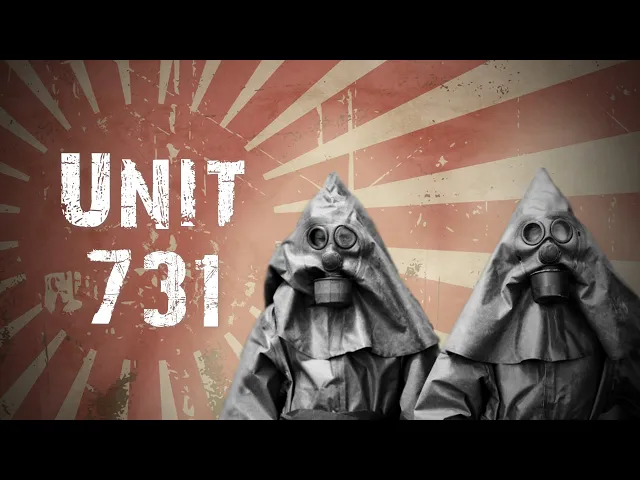
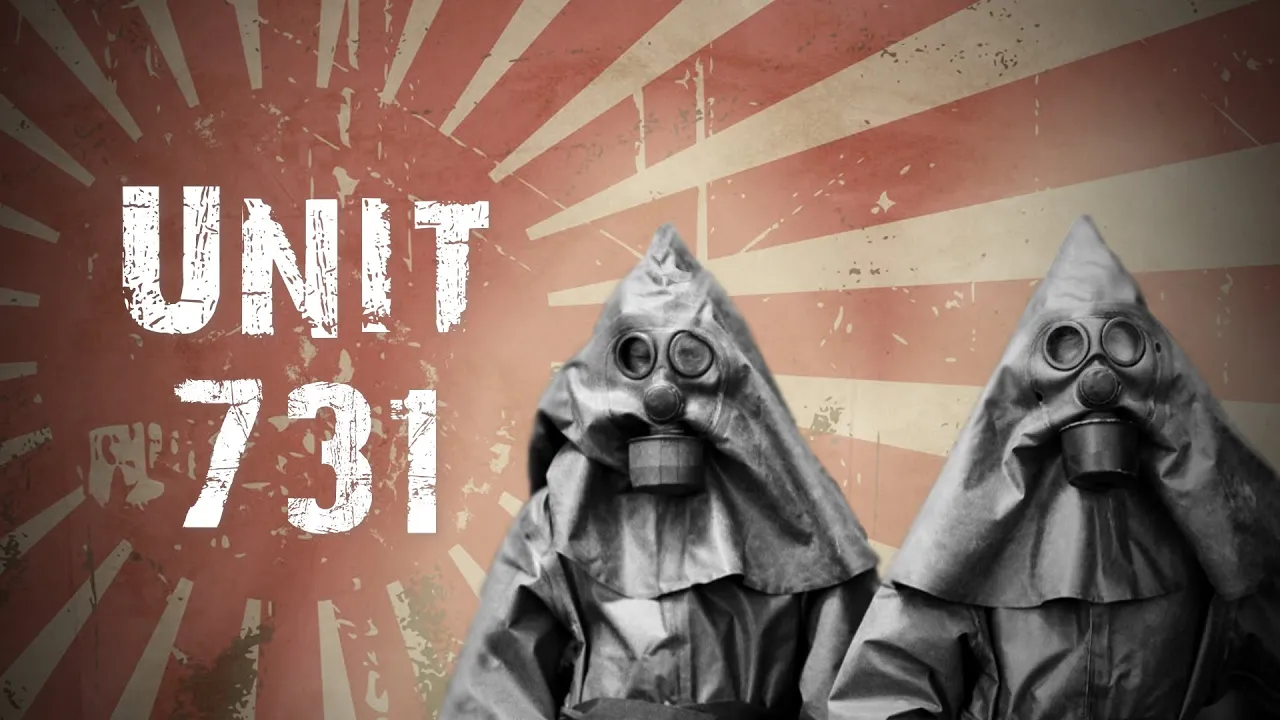
But few people are aware of what the Japanese were also doing and for a much longer period of time and with an even larger human population to work on. What was Unit 731? What was their actual purpose?
What did they do that was so horrific? Was anyone involved held accountable as were the Germans? What do the Japanese of today think about these men?
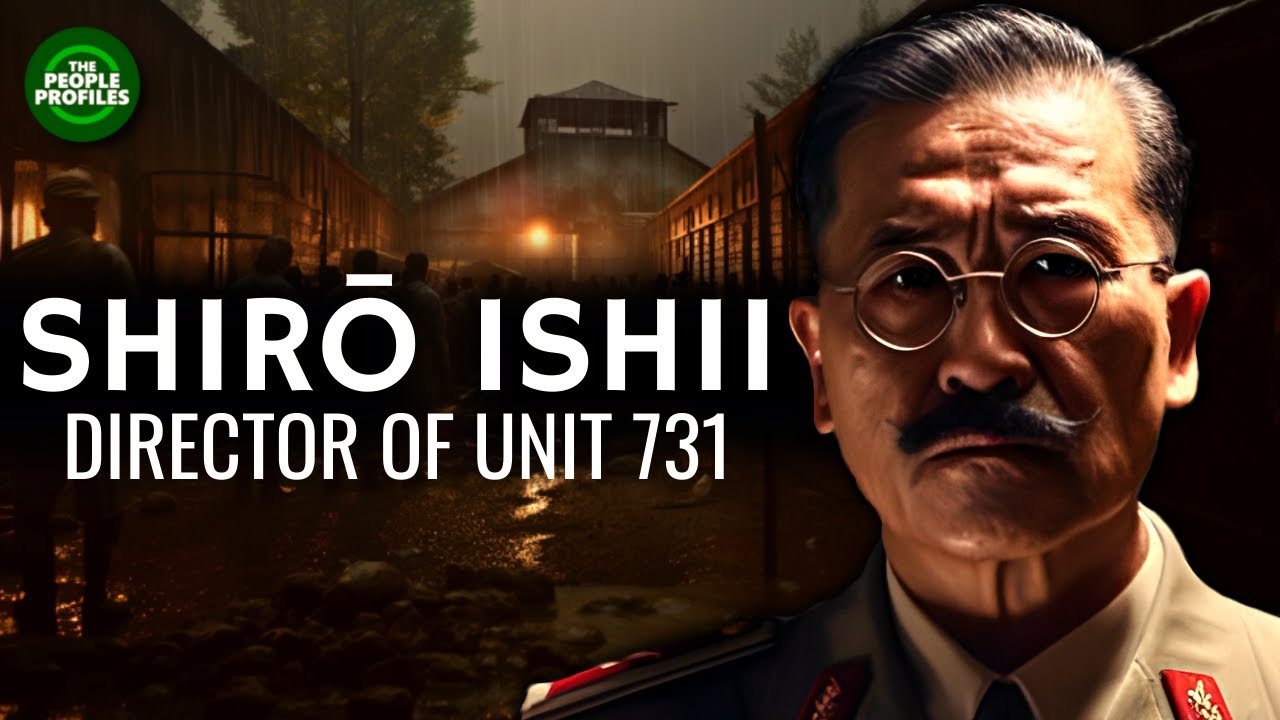
Hello I'm Colin Heaton a veteran of the United States Army and Marine Corps former history professor book author and welcome to this episode of Forgotten History [Music] [Music] In 1931 Japan invaded Manchuria and for many years established a strong presence in northern China. Later as they invaded China proper and then continued throughout Asia and the Pacific Islands the brutality of the Japanese Army became legendary. In 1937 Unit 731 was created as a medical engineering unit responsible for testing producing and storing biological weapons as well as using these on humans to test theories and develop vaccines and treatments under the direct command of General Shiro Ishii a well-known microbiologist.
It was based near the northeastern Chinese city of Harbin just north of the Korean Peninsula border with the Soviet Union. Once most of China had fallen the Army was under orders to harvest the people for forced labor, execution and upwards of a half million or more for medical experiments. Many were injected with venereal diseases to examine their spread.
They were injected with bubonic plague, cholera, bombarded with intense radiation, amputations to study blood loss and other horrific experiments. Many people were intentionally infected with gangrene to test remedies as the Japanese did not have penicillin. Many were sealed into bunkers as they were killed with a variety of poisonous gases to learn their effects and there was the removal of various body parts and internal organs while some subjects were still alive, intentional starvation, deliberate exposure to freezing temperatures to examine the effects of frostbite and hypothermia and many were infected with yellow fever and malaria to examine the results and study the efficacies of alternative medications as opposed to using quinine.
Not all of these experiments were isolated within the Unit 731 compound and facilities. It was decided that a larger pool of test subjects was needed and the most dangerous forms of parasite hosted diseases such as bubonic plague, anthrax as well as other lethal pathogens were dropped in canisters on the nearby towns of Changde and Ningbo to assess the results of biological warfare. The effects were horrific.
Men women and even children were used as guinea pigs. These activities were outlawed by The Hague Convention of 1907 and the Genevic Protocol on the use of biological weapons in 1925 and later incorporated into the entire Geneva Convention of 1929 ss a result of using various gases in World War I. Not just Chinese were victims, there were untold thousands of Koreans even Russian civilians and prisoners of war who were used as lab rats.
American prisoners mostly downed air crew were also victims. Using these biological weapons was not to be restricted to Asia. There was a plan to release canisters of fleas containing bubonic plague in San Diego, California from submarine-launched aircraft but the war ended before that could be executed.
The mission was code named Operation Cherry Blossoms at Night. After Japan surrendered General Ishii ordered the destruction of Unit 731 which included more than 150 buildings all the Laboratories and the two adjacent airports as the Allied forces closed in. Many hundreds of prisoners and some believe as many as several thousand who had survived up to that time were immediately killed.
Ishii wanted no living witnesses. Japan never signed or ratified Geneva 1929 but that did not absolve them of the responsibility of adhering to the laws in force at that time. Japan violated every provision of the laws of warfare until they were finally defeated in 1945 but few people were ever held accountable and no one for Unit 731 ever stood trial much like the deals made with top Nazi doctors and scientists.
The men of Unit 731 and their senior officers and scientists were protected. The researchers at Unit 731 had maintained very detailed records of their experiments and used them as bargaining chips just like many Germans did. Ironically General Ishii kept a detailed diary during his entire military service to include his work in China but there is no reference to any of his time commanding Unit 731 or its activities.
That alone illustrates that he knew what he was doing was illegal and a violation of his oath as a physician. Ishii and his men in U. S custody managed to avoid being charged with crimes against humanity and placed on trial unlike their brethren who had murdered Allied pows in the occupied regions under Japanese influence.
This was due to the fact that Ishii and his associates received immunity from prosecution for war crimes because the U. S wanted their research for its own use in the U. S biological warfare program and keep many of the documents and the years of incredible data out of the hands of the Russians.
This was sanctioned all the way up the American chain of command from the general staff all the way up. Their primary catalyst for this was Edwin Hill the chief of the biological warfare laboratory at Fort Detrick Maryland who after reviewing the thousands of pages from Unit 731's files stated in his secret report from 1946 that the "information was absolutely invaluable it could have never been obtained in the United States because of scruples attached to experiments on humans and the information was obtained fairly cheaply. " On May 6, 1947 General Douglas MacArthur wrote to president Harry S.
Truman and the Judge Advocate General's office that additional data possibly some statements from Ishii probably can be obtained by informing Japanese involved that information will be retained in intelligence channels and will not be employed as war crimes evidence. Basically it was a get out of jail free card. As a result the horrors perpetrated by Unit 731 never became public knowledge in the west until recently although some information was gathered by the Soviets who placed several of Unit 731 personnel in the docks at the Khabarovsk War Crimes Trials.
The Japanese themselves knew nothing about this unit and its activities for decades. In fact its existence was even denied and it is not taught in schools nor are any other Japanese war crimes. This was only possible due to the protection the United States government gave to Ishii and his men keeping the story secret as a reward for gathering all their medical research.
Their primary Japanese war criminals such as Hideki Tojo were put on trial at the International Military Tribunal for the Far East which was better known as the Tokyo War Crimes Trials. Testimony from General Ishii which was taken from his post-war interrogation in Maryland was submitted as evidence. Ishii and his officers, doctors and scientists were never charged with war crimes.
In another incredible sense of irony the surviving members of Unit 731 held annual reunions to where they gathered in mutually respected comradeship. General Dr Shiro Ishii retired rather comfortably and he died in Tokyo on October 9, 1959 from laryngeal cancer at the age of 67. Prior to his death he was baptized into the Catholic faith by Dr Herman Heuvers the former president of Sophia University in Tokyo whom Ishii had known before the war.
His funeral was chaired by Lieutenant General Dr Masaji Kitano his second in command at Unit 731. And the irony continues. Kitano was one of the founders of the Japanese pharmaceutical company and first commercial blood bank the Green Cross which was renamed Welfide in 1998 and which became part of Mitsubishi Pharma in 2001.
Kitano died on May 19 1986. He was never charged with a crime either, but in 2018 things began to change and the Japanese government seemed to be acknowledging part of its violent past. As it happens people talk and as the men involved with Unit 731 grew older a few probably decided that they could live no longer with their conscience.
The government provided a list of names of more than 3,600 members of Unit 731 to a Japanese scholar for his research. Much of this forthrightness was due to intense pressure from China and South Korea both nations with its own database on Unit 731 and its activities over the years. As more information emerged it became harder for Japan to ignore its past and hide the truth.
For example in 1995 an article in the New York Times published the comments from a medical assistant assigned to Unit 731 under Ishii. To quote the article< ". .
. the Chinese prisoner had been deliberately infected with the plague as part of a research project, the full horror of which is only now emerging, to develop plague bombs for use in World War II. After infecting him the researchers decided to cut him open to see what the disease does to a man's inside.
No anesthetic was used. " The former medical assistant said, "out of concern that it might have an effect on the results. " So remember that at least the Germans apologized for what their previous government did to the peoples of Europe.
Japan has never made such an overture. Thank you for watching Forgotten History. Please click like, subscribe and share.
Send us comments and show ideas and we will get back to you as soon as possible.