see so uh today we're here to present our work about the article uh that explains uh how decentralized groups particularly digital activities manage to organize effic effectively without relying on traditional managerial control so uh starting by the anonymous concept uh it is recognized for they are recognized for their ordinated protest actions against powerful institutions often using tatics like online attack and public uh demonstrations uh and basically the the central question of the research is how these activities managed to stay organized and effective despite the inherent risks of disorder and Chaos in an open Digital Network
so now going through the challenges of s organization IND digital colle collectives so uh basically one of the major challenges is the potential for information overload so for example during large scale operations many participants might contribute simultaneously uh creating a chaotic environment where it's hard to maintain focus and Direction so uh but if these challenges are so significant ific how did anonymos manage to involve and continue operating effectively so now we're going through the three main phases so the first phase was uh during uh experimentation phase so anonymos was involved in a small scale and
hog protest actions so these actions shaped the early culture of the collective where anyone could participate but Effectiveness dependent on understanding and follow in the group's emerging Norms then we go to the second phase which was where the lack of coordination almost compromised the effectiveness of the protest against the Church of Scientology so uh what did anonymos do to regain control and manage uh this Growing Pains so finally we arrive in the order phase which uh was where anonos transitioned from a chaotic organization to one capable of handling the complexity of growing Ambitions without sacrificing
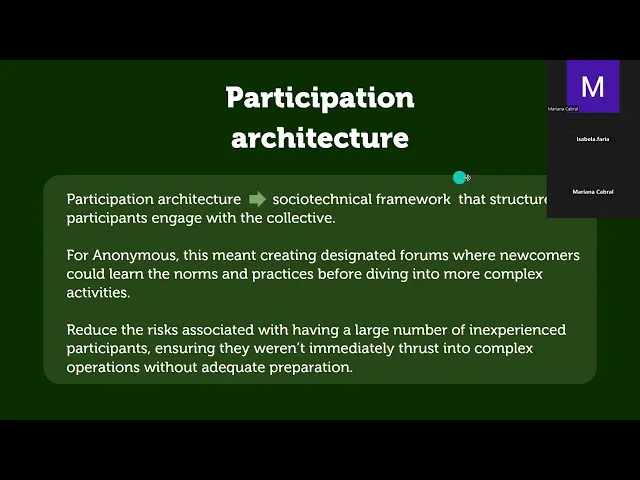
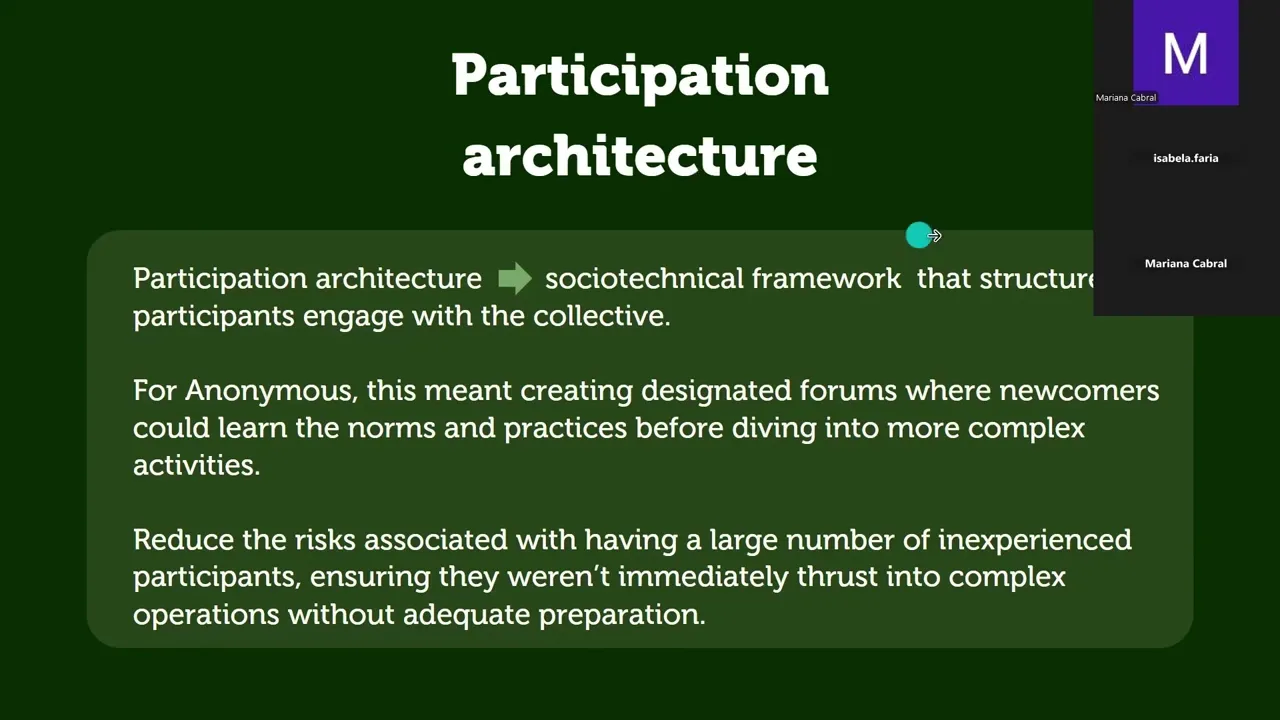
its decentralized nature so uh delving into the context of participation actor it's a technical framework that structures how participants engage with the collective so for anonymos This was um designated forums where the the new Commerce could learn the norms and practices before for diving into their activities so it reduced the risk associated with having a large number of inexperienced participants so they weren immediately thrust into complex operations without adequate preparation so um they were empowered to take on leadership roles without creating a traditional hierarchy so they were capable of coordinating action and developing strategies for
example and kept spontaneity and open participation so uh ensuring their actions were also coordinated and effective so with this anonymos managed to arrate more sophisticated operations but how does this participation architecture apply to organizations outside the real of digital activisms so they study centers on Anonymous but it has broaden implications for other collectives um and an animal showed that with the right architecture even large and diverse groups self organized effectively and it is factually relevant for social meds and online communities that Foster Innovation by decentralizing decision making however is this approach Flawless or are there
limitations uh so there are limitations so what worked for anonymous might not be directly applicable for more traditional corporate environments without significant adaptation so the success of a participation Act detector depends heavily on the contest and the nature of the organization's goals participants in operation environment so each one has its own particularities so this study is about Anonymous but it doesn't have only to focus on this you have to see the brighter look on the contest so um this was our presentation and thank thank you very much