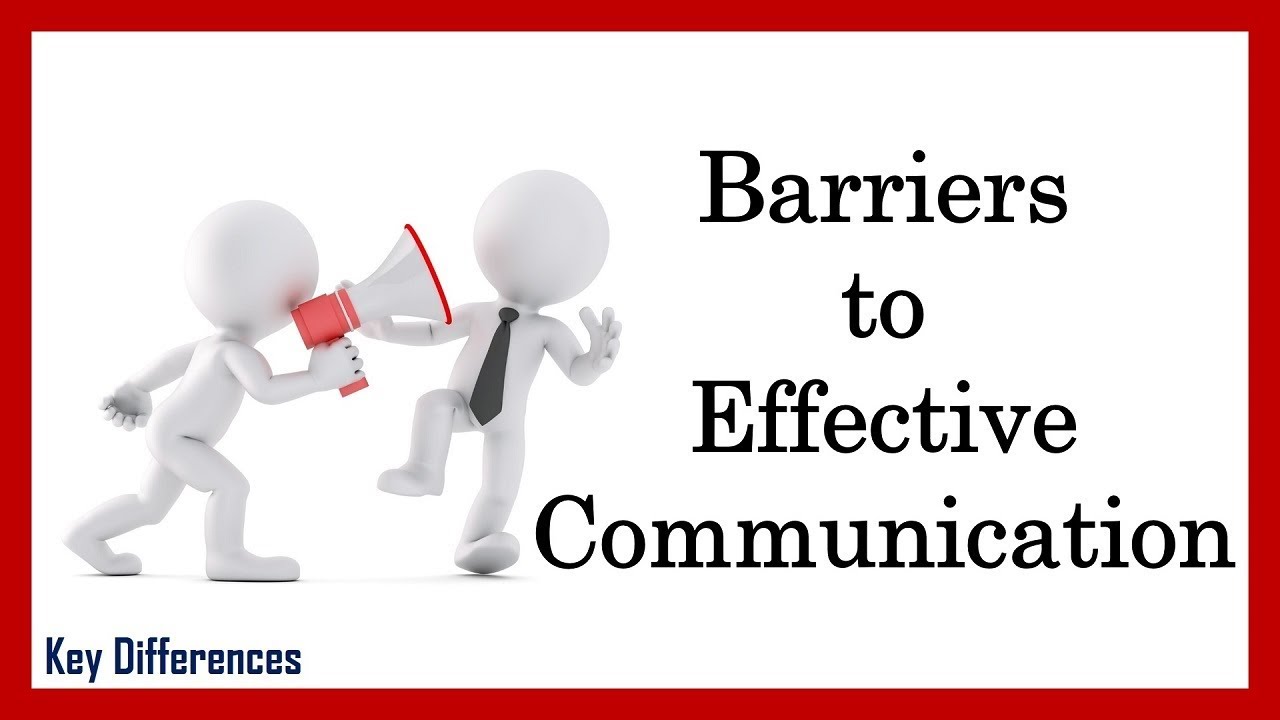
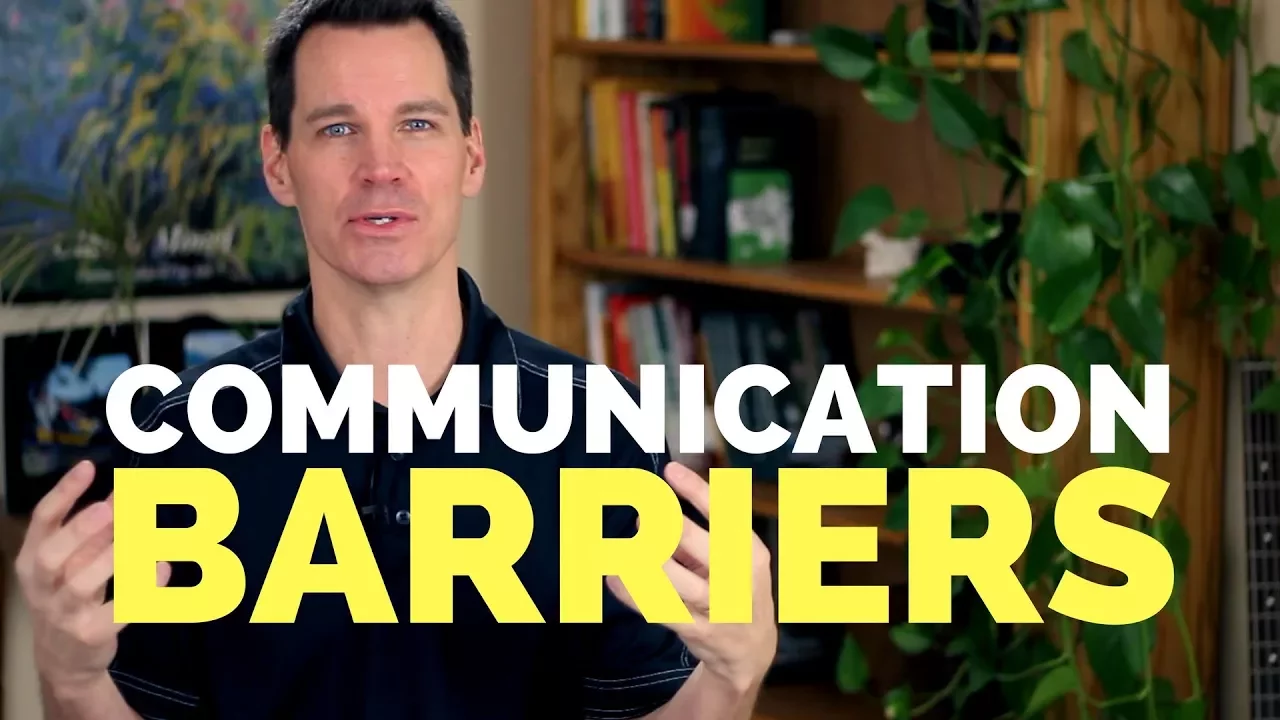
In this video we're going to talk about common barriers to effective communication. I'm going to angle all these to professional settings. So let's get into the details.
Hello again friends. Alex Lyon here. And if you've not yet subscribed to this channel, Communication Coach is here to help you with your professional development to help you get to that next level of leadership so you can be a blessing and raise up all the people around you.
In this video, we're going to talk about common communication barriers. And as we talked about this list of three groups of three, I'd like to ask you, which one do you want to work on the most? So as we look at this list, feel free to make a comment in that section below the video.
So in the first group of three, we're going to talk about barriers that involve words. The first one is language use. One of the ways that we get caught up on language and misunderstand each other is because we're being too technical.
A lot of times we have an area of expertise that we've learned a lot about and we're quite good at. And if we use that overly technical vocabulary, all that jargon with people, it could cause a real barrier. So we have to remember to speak in everyday language, plain English, as I like to say, to connect with people in a more natural way.
At the other end of the spectrum, sometimes we are much too abstract. we're talking in vague ambiguous terms. And that could cause a barrier as well.
And in those cases you might have to be just a little bit more detailed in what you're talking about so people can connect with it. The next way we use words that can cause a barrier is the way we've organized our words. So if you're talking in a stream of consciousness, rambling, disorganized way, it's gonna be very hard for people to follow what you're talking about.
So instead, what you want to do is give an orderly presentation of ideas. Let's say you're in a conversation or at our meeting, you want to give some main points and stick to your message. Be clear and concise in other words.
And the third way that words can become a barrier is information overload. If you're on the other end of this you know what I'm talking about. Someone's talking at you for an extended period of time and it just gets overwhelming.
It's very hard to keep track of everything they're saying. And so you don't want to be this person on your end of the conversation. You want to take a lots of talking turns.
Take short talking turns and bounce the conversation back and forth. There's lots of checking in and a back and forth pattern of conversation, much more opportunity to clarify if anything needs to be clarified. so those are the three ways that we get barriers and experience barriers around words.
We'll turn now to people's background and the first one is our attitudinal differences. So we were raised a certain way we have a whole set of life experiences and a lot of times we might have a bias toward a person or a topic. So as soon as they bring up a particular topic and start talking about it, we might have a resistance to that and that can cause a big barrier.
We might have a lack of interest. We might be preoccupied. These attitudinal differences based upon all of the opinions we've had up to this point our lives can become a barrier.
We have to make sure we don't tune out as soon as they bring something up that we don't care as much about. Another area of a background is our demographic background. So if we're a certain age, we come from a certain culture, or gender, or status background, all of these are filters.
Not really--like if my age is not necessarily a filter--but because I came from a certain generation I might see what you're talking about a certain way. I might care about some things more than others. So those demographic background cues can signal a kind of attitudinal difference that I might have toward a topic.
So you might have a lot of trouble relating to someone who's 40 or 50 years older than you and it might be obvious but sometimes even a difference of 10 or 20 years in the workplace or between a man and a woman the differences can be a little bit exaggerated. Or I'm from one culture and you're from another, we develop a common sense based upon our background. That can become a barrier.
And the third area under our background barriers are our triggers and filters. So you have a common sense that you've developed your whole life about the way you see the word world and if you hear something the wrong way that other person might not have meant it that way but maybe you heard it that way through your filter. They might have pushed your hot button and now you upset you're seeing red about a particular topic.
And that comes from your background you came up a certain way and they might be quite innocently and genuinely talking about something, but you heard it another way. So keep in mind that you have filters and triggers that could be affecting this. They come from your background.
So those are the different ways our background can influence us. Let's look at the next group of three and these all have to do with what I call physical barriers. So the first and most obvious one is the physical distance that we often have in our professional settings.
We do a lot of our work on email or we're texting or online. And that physical distance can become a barrier because we're losing a lot of being nonverbal cues. If you can't see someone's face and you're not face to face you might misunderstand the other person or not really get the humor that they might be using or a warmth that could come across and face to face conversation isn't that really communicated once you have that physical distance and you're using technology.
Another area of physical barrier could be the noise. So maybe you're in a noisy physical environment and that's causing a barrier. Sometimes there's noise in the communication system that you are using.
So your messages are getting garbled or are not making sense. That can also cause some problems. And the last physical barrier is--what I'm calling it a physical barrier because I don't have a better way to describe it--sometimes our physical ears don't work so well.
For example, you might have a hearing impairment. I know a lot of people that have hearing impairments and that can cause a barrier in communication. In fact, I personally have a hearing impairment in my left ear causes me a lot of trouble.
And when I'm talking to people I normally have to look right at them and focus so I can hear the best way I can and really see what they're saying as well. Another physical [hearing] barrier is sometimes we come from a different place. And so over time we have a different language that's part of us and maybe the other person is not speaking the same language when they were growing up.
So now we're both speaking English but there's that physical mind difference that I might hear literally hear your words differently because you're speaking with a different accent, a different rate of speech, and it's not that I'm not listening to you and paying attention. I care but physically I can't necessarily keep up because my ear is not tuned in and my mind is not as sharp on that particular type of language. Now if I were trying to speak your language, I would be having a lot of trouble too but in a conversation this becomes a barrier for both people involved no matter what language you are speaking.
So you have to realize this and be much more patient in a situation like this. So these are the nine barriers, the three groups of three that I came up with based upon all the research and thinking and reflection that I've done over the course of my professional career. And as you look at this list which one do you feel like gives you the most trouble?
What barrier do you experience the most? I would love to hear your comments in that section below the video. So thanks.
God bless. And I will see you next time.