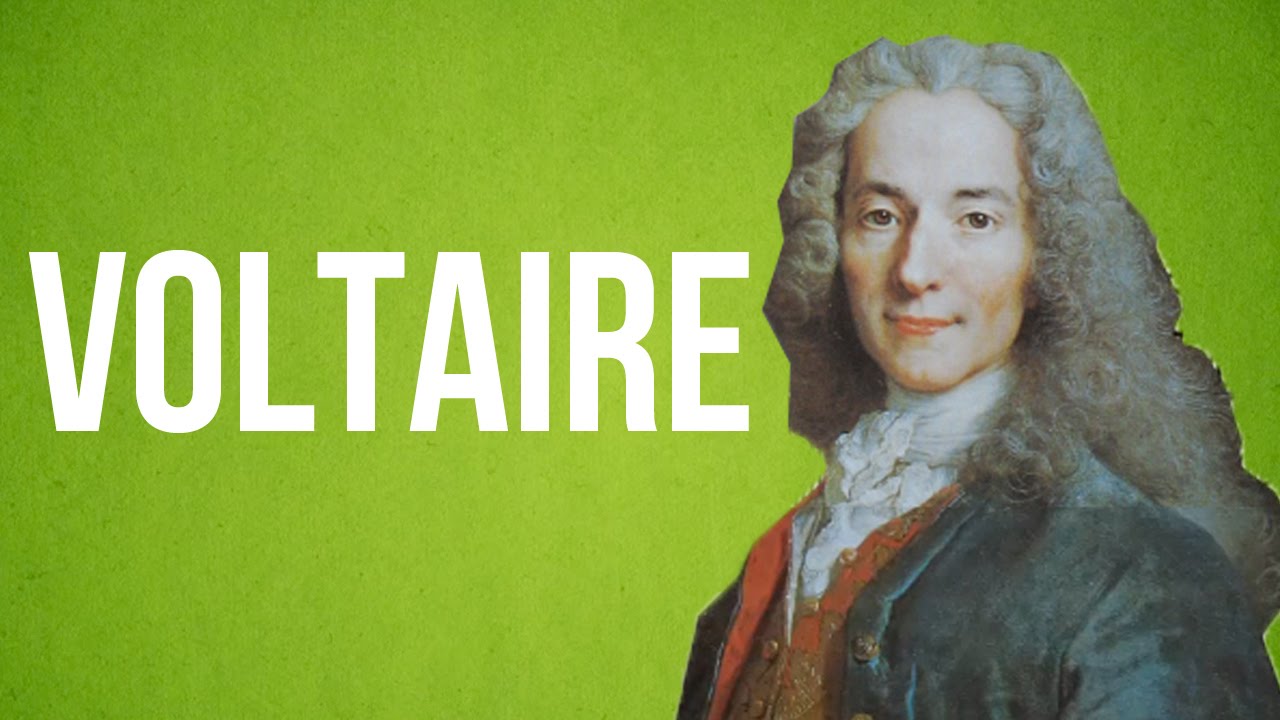
I think that the fuelers of saw culture as a power as a force and so in the famous last line of Candide and it's Voltaire's most popular book I'm sure every student must recon deed at one time or other he wrote this last line that people are still trying to understand we must cultivate our garden what did he mean by that some people thought he meant we withdraw into the garden and cut ourselves off from society it's a kind of despair but I think it's the opposite he meant to cultivate as in farming but also
to develop culture as in literature and he sees literature as a power so in fact Voltaire withdrew into his own garden between France and Switzerland but inside his garden he is writing one pamphlet after another sending them to France sending them everywhere in Europe and even to the new world in order to change things so there is this sense of the printed word as a power I believe it's really around 1750 that the book the pamphlet the newspaper become forces penetrating into the society of the old regime in France and everywhere else in the Western
world but that was not true earlier of course since Gutenberg we had episodes when the printed word made a difference the most important is certainly the Protestant Reformation where the printing press producing what the Germans call Pflug blether these are little pamphlets that circulated everywhere this actually mobilized society and you got a huge revolution actually of peasants and ordinary people behind the printing press in its first century especially from about 15 15 to 1580 but then the Enlightenment builds on this at a time when we know the ability to read and write is increasing the
population is growing you've got a new consumer society and people are interested in books for entertainment for amusement and also for learning so all of these are combined in the literature of the Enlightenment books are supposed to be fun for readers and these writers knew how to make books funny both entertaining and and as vehicles of instruction Voltaire's motto was in French fo Mecca the year the nut riccati we must get the laughter on our side so he used laughter as a weapon against prejudice and by prejudice he met he meant the Catholic Church the
legal system which was very corrupt and even to a certain extent the political system we through so it's much more radical because he argued for a complete democratization of the political system but he too used the printed word and what amazes me and when I read Rousseau is how he created a new relation between the writer and the reader this I know because I studied all of the letters he received people wrote of Rousseau saying Monsieur you have touched my heart I know you I've made contact with you by reading your book tell me what
next will happen to the characters in the book because people thought that characters like Sam Priest and Julie were real people and they took them into their lives almost like soap operas today but then it was something new you find the same thing happening in England and in Germany with the great novelists such as Richardson in England Goethe in Germany Rousseau in France they're creating a new kind of relation between reader and writer and that produced more power so that people are moved emotionally after having been mobilized through laughter by Voltaire so the movement from
Voltaire to Rousseau is one that is taking in many aspects of human nature and bringing them together for the common cause of enlightenment





![Fronteiras do Pensamento - Steven Pinker Parte I [1/2]](https://img.youtube.com/vi/dVNXcmzKkpI/maxresdefault.jpg)