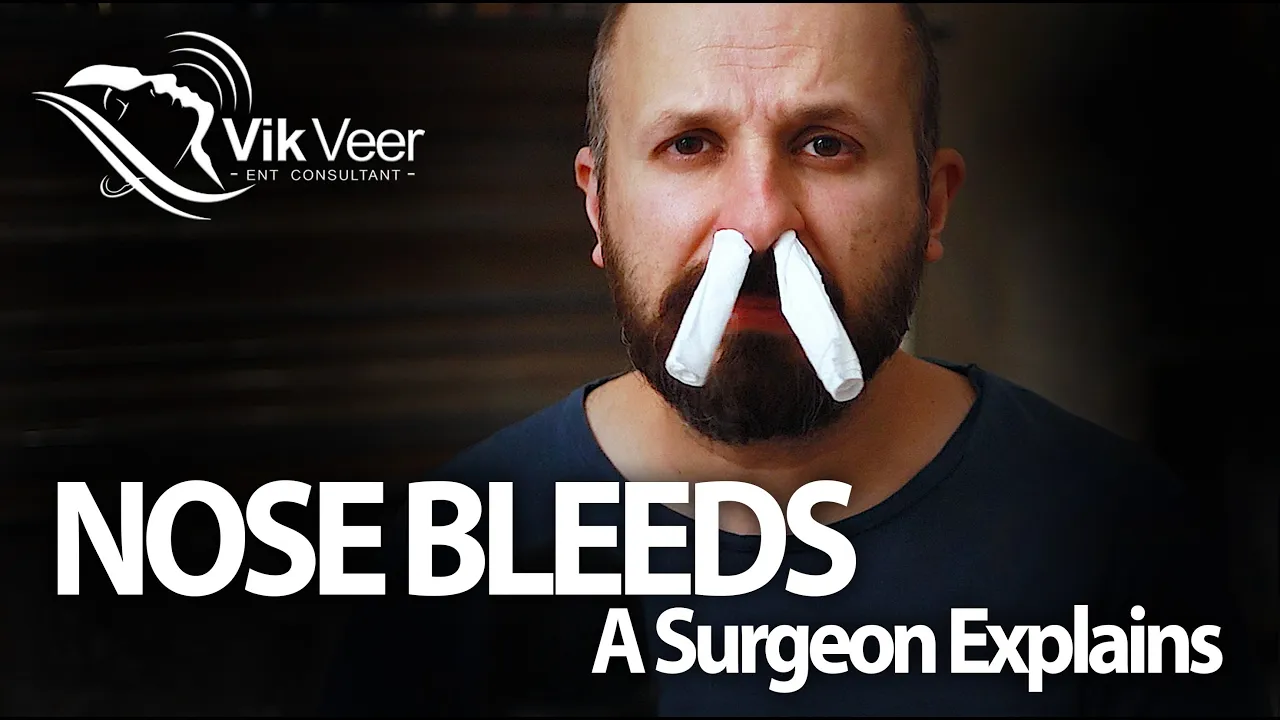
hi there my name is vikvah i'm an ent surgeon working for the nhs in central london and whilst at work i see an awful lot of nosebleeds but i also see a lot of people stopping their nosebleeds incorrectly what i want to do is give you some advice and 10 tips that will help you stop a nosebleed and i really think you're going to learn something new from this video and just to prove it i've got a quiz right at the end of this video and anyone who manages to get 10 out of 10 i'll
give them a sort of tiny small prize so let's get on with the video we'll start off with this to really understand nosebleeds you need to know a little bit about the anatomy of the nose specifically the blood vessels to the nose there are two blood vessels that come up from the top called the anterior and posterior ethmoid basically they sort of come from the eye and go into your nose from the top and there is a big blood vessel coming from the back of the nose called the sphenopalatine artery and there are two more
blood vessels that come from underneath one is a blood vessel that goes along the roof of your mouth and it goes up into your nose called the greater palatine artery and there's another one that goes in the upper lip and that goes up into your nose as well all of these blood vessels coalesce at the front of your nose in an area called little's bleeding area littlest bleeding areas just about here or here just where you pick your nose or where you do this and because we normally bleed from these blood vessels your picture goes
right at the bottom of your nose and try and take up all from the tip all right down to the bottom near your front teeth and hold it tight you're meant to hold it for 15 minutes now i see an awful lot of people pinching their nose right on the top here now with your knowledge of anatomy now you know that there are no blood vessels that go in between the skin and the bone here it doesn't make any sense at all there is no blood vessel that comes here if there was you'd sort of
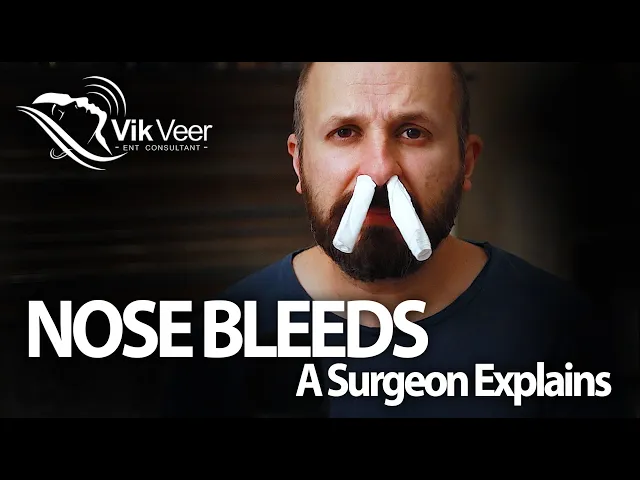
see it pulsing and you could feel a pulse there it's a bit like having a cut here and then pressing down on the elbow here there is no connection between the two another thing i see people do is roll up some tissue paper like this and put it up in their nose like this and we would call that in the int profession the walrus sign and some people more commonly put two up their nose and that's called the bilateral walrus sign please don't do this again going back to my analogy of the bleeding arm you
wouldn't just leave a bit of tissue sitting on top of it like this and just let it soak up the blood equally if you have a bit of tissue like this and you just sit there and let the blood just ooze out of your nose why do people do that it's like having a cut here and letting it drip down your arm and then leaving the tissue here to collect all the blood so it doesn't drip on the floor if you've got a bleed in your arm you put your thumb over it hold it there
until the bleeding stops the same thing you should be doing with your nose should be pinching your nose like this holding on until the bleeding stops as i said before about 15 minutes the next thing you should do is lean forward pitch your nose put your head down you shouldn't be doing any of this because if you do this blood will be going down the back of your throat and you'll start choking with the blood the reason why you're sitting up is also because the heart has to pump blood up into your nose so the
blood pressure subtly goes down if you're sitting up if you're lying down or heaven forbid your head is between your knees and your head nose is lower than your heart it's much easier for the blood pressures to go up in these situations you're trying to get the blood pressure down in your nose so you don't bleed so much now even while sitting up pitching your nose putting your head forward if you don't catch it in time there will be some blood going down the back of your throat if that happens please don't swallow it spit
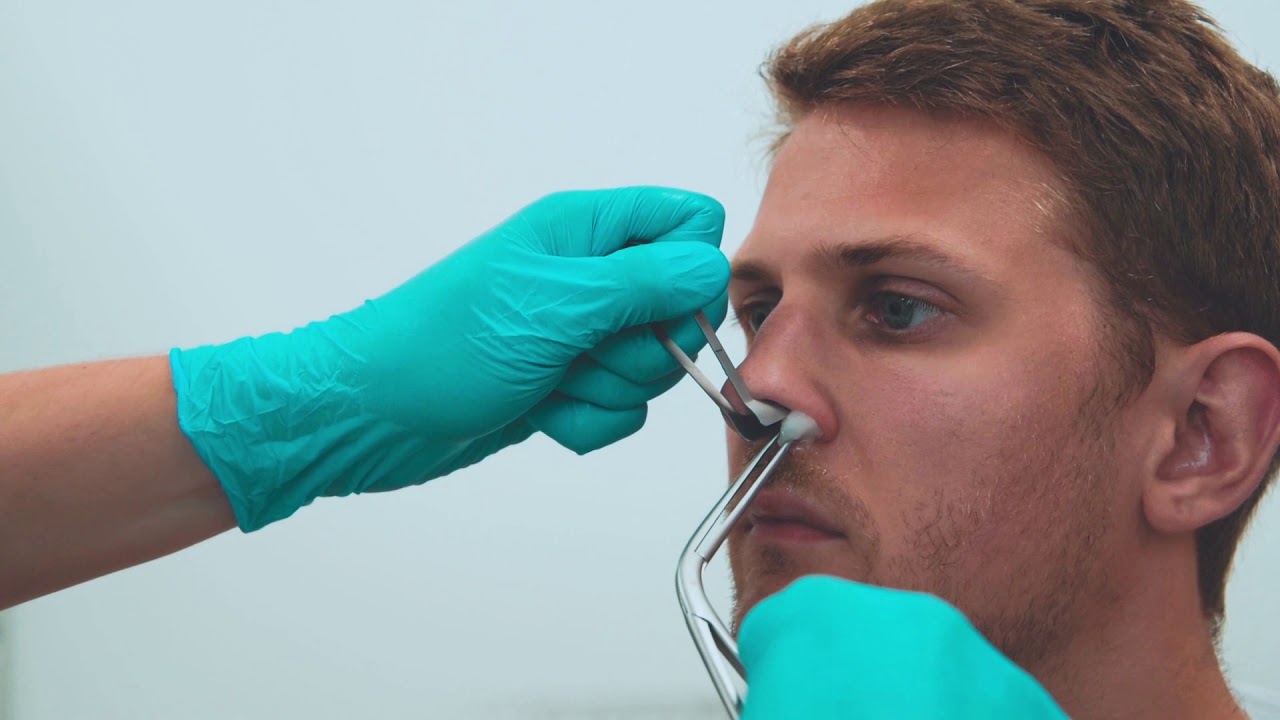
it out because if you keep swallowing the blood you'll end up vomiting it out because the summit doesn't like the taste of blood and it just vomits it up later and then you realize oh my god i've lost a lot of blood so what you do is you pinch your nose lean forward and if it doesn't stop in 15 minutes really should be thinking about going to the emergency department in the vast majority of people those two maneuvers will stop a nosebleed but there are some extra things you can do that will help you stop
this so the first extra thing you can do is use a decongestant spray things like ultravine cyanx sprays i think the americans call it afrin or something and all you do is you spray that up your nose and then pinch again the way they work is to stop blood flow to your nose and that's great because that means less blood is going to your nose therefore less blood pressure you don't bleed so much it works very well in most cases [Music] another thing you can do is use ice now i see an awful lot of
bad practice here as well a lot of people seem to be putting ice on their forehead or on the top of their nose again with your sorry with your superior knowledge of anatomy you know there is no blood vessel that goes here i also see people put ice here on the back of their neck i promise you there is no blood vessel that goes from the back of your neck and comes around the front here goes to your nose here there are blood vessels as you know they're in the roof of your mouth and in
your upper lip and you could put this that's really cool there are some blood vessels in the roof your mouth if you numb them or sort of freeze those blood vessels in the roof of your mouth you can reduce the blood flow to your nose it actually reduces by about 23 i guess you could also do stuff to your upper lip as well but trying to hold all those pieces of ice is a little bit more difficult so those are the four things i think you should be doing if you have an active nose bleed
you should be leaning forward pinching your nose right at the bottom here icing the mouth or the roof of your mouth and also using some ultraviolene spray just to decongest those blood vessels obviously also you have to also go to the emergency department if it's going on for too long and now what i'm going to talk about is the things you should be doing after a nosebleed to stop you from having another one so now that you've stopped the nosebleed by pinching your nose and all those other things you'll have a little clot or a
scab inside your nose that'll be plugging up that hole what you don't want to do at this point is pick that little scab off and then you start bleeding all over again i know it's very hard to tell children not to pick their nose but try your very best the reason why they're picking their nose is these clots shrink with time and that causes itchiness inside your nose so do try really hard to remind them not to pick their nose or even just do this because normally the clots if you remember or the scabs would
be just here inside your nose [Music] you might find that you'll get more nosebleeds in the winter months because if it's cold outside and the radiators are all on there's a lot of dry heat inside the house the very delicate skin inside your nose with the lining of your nose cracks ever so slightly and exposes those big blood vessels i told you about at the start of this video so just stop this from happening use a moisturizing size your nose a lot of people use vaseline at night to stop them from bleeding at the middle
of night because a lot of people sort of rub their nose and they don't realize they're doing it vaseline protects and moisturizes the nose so it doesn't crack and also it stops the air from getting to it because that sometimes can dry out the nose as well if you've been to your family doctor or the emergency department they may have given you a cream called naceptine which is an antibiotic moisturizing cream the moisturizing thing you understand now because it stops the skin from cracking the antibiotics stop the infection that often causes these nose bleeds [Music]
now again i see a lot of people getting this wrong the way you put this up your nose is to put a little bit at the end of your finger like this and put it gently up your nose like this don't put your finger up your nose or put it on a cotton butt anything like that don't put anything up your nose basically just put it at the entrance of your nose like this and then rub gently from the outside here some of it will come out and that's fine all you do is just push
it back in again and just keep massaging it very gently you don't want to set off another nosebleed before i move on if you're using naiception just make sure you're not allergic to peanuts because it's got peanut oil within that moisturizing cream and also if you're allergic to soya because peanuts and soy have a bit of cross reactivity don't use it either use something else like bactroban or something another thing you should be thinking about is reducing the blood pressure that goes to your nose because you don't want a huge blood pressure that pushes that
clot out the way then you start bleeding again so the things you should be thinking about is not straining so things like weight lifting or lifting heavy shopping or straining at stool i did general surgery for a few years the thing i remember most about that job was that you must never strain on stool if you've got constipation or anything like that get someone to treat it get some lactulose center things like that but speak to your doctor about that if you're very worried and you seem to be bleeding quite a lot it may be
worth sleeping sitting slightly up because you want your nose slightly higher than your heart to keep the blood pressure down so you end up sleeping at about a 45 degree angle or something like that it's not very pleasant but it might help you not get a nosebleed that night [Music] some people also sneeze very aggressively and if you find that every time you sneeze you seem to get a nosebleed because you're blowing that clot off remember if you're about to sneeze press very hard just here press hard with your finger up against the front teeth
like this just before you're about to sneeze and the sneeze will just magically disappear another thing to think about is not do the opposite of putting ice in your mouth you want the blood pressure to stay low so don't drink hot water or teas and coffees and things like that because those hot drinks will expand that greater palatal artery that goes along the roof of your mouth into your nose and that may start blow off that gloss and start another nosebleed so try and have cold drinks if you can for that two weeks or so
after a really bad nosebleed some people say don't eat hot food and i think that's a little bit harsh because no hot food just salads for two weeks that's horrible so what i say to someone if you're having a hot meal with every bite that you have wash it down with ice cold water and that should stop this problem from happening now after all those little tips it does get a little bit more complicated particularly when you see an ent surgeon like me we talk about cauterization packing ligating those blood vessels embolization things like that
and if you're really interested in that sort of thing i guess i could make other videos about it now the last thing i want to say about nosebleeds before we get onto that quiz is that nosebleeds are serious they can be very bad you need to see a medical professional if you have a nosebleed this is particularly important for people who are very elderly because those people tend to have nosebleeds not at the front but further back just where the cenoparitone artery is and pinching it again forward is still the right thing but the blood
seems to go down the back of the throat particularly if you've got anticoagulants such as aspirin capital warfarin or some of these new fancy sort of anticoagulants now i said at the start of this video i really think you're going to learn something from this so what i'm going to do is put 10 things here it's very hard to do an interactive quiz on youtube but anyway i've got to put 10 things here and what you need to do is look through that if you think that you didn't learn anything new from these 10 things
and you knew it already then by all means go to the comment section and write 10 out of 10 and i'll give you a little emoji or a gold star or something like that and just tell me your scores if you learned something that's great try and use it if you have a problem in the future you might be able to help someone else so stay safe everyone thank you very much bye