What if I told you that God's name is more than just a name? What if it contains a hidden meaning, one so profound that it connects history, archaeology, and biblical prophecy? For centuries, the sacred name of God has been spoken in reverence, hidden in ancient texts, and even erased from history.
But what if I told you that embedded in its very letters is a mystery that points directly to the Messiah and even foretells the future? This is no ordinary discovery. What we're about to uncover will challenge everything you thought you knew.
Stay with me, because by the end of this video, you will see God's name in a way you've never imagined before. Before we dive in, don't forget to like, subscribe, and turn on notifications, because understanding this revelation could change how you see the Bible forever. Let's begin.
Throughout history, different cultures and religions have given God many names to describe His power, majesty, and relationship with humanity. In the Bible, we find titles such as: 1. Elohim, meaning God or Mighty One, used in the very first verse of Genesis.
2. Adonai, meaning Lord or Master, emphasizing His authority. 3.
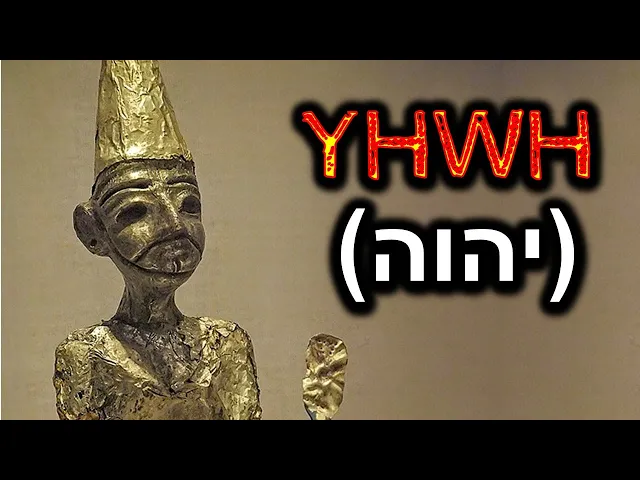
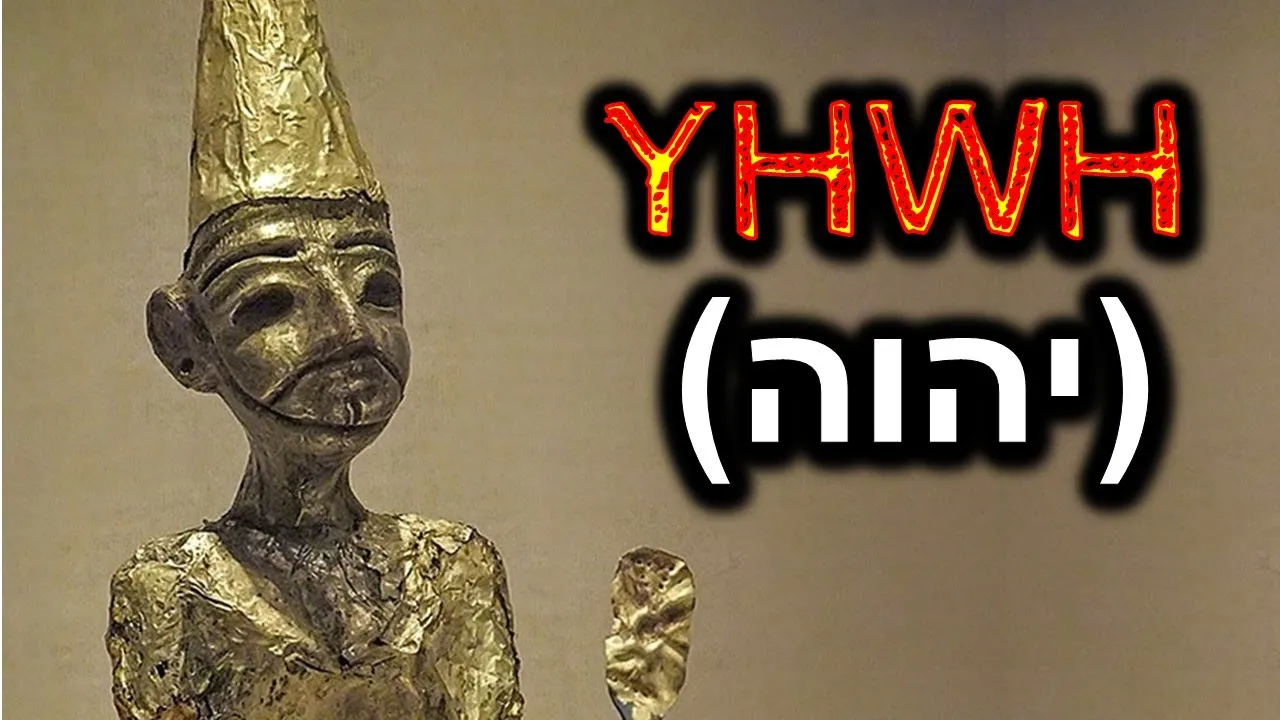
El Shaddai, meaning God Almighty, often associated with His provision and protection. Yet among all these names, one name stands above them all, a name so sacred that the ancient Israelites feared to even speak it aloud. That name is the Tetragrammaton, YHWH, often pronounced as Yahweh and translated as Lord in most English Bibles.
But why is this name different? Why does it carry such profound significance? The answer lies in its hidden divine meaning, embedded within the ancient Hebrew language—a meaning that would not be fully understood for thousands of years.
To truly grasp the power of this name, we must go back to one of the most pivotal moments in biblical history: the encounter between Moses and God at the burning bush in Exodus 3. After years of exile in Midian, Moses, a former prince of Egypt, is now a shepherd. One day, as he tends to his flock near Mount Horeb, he sees something extraordinary: a bush engulfed in flames, yet it does not burn up.
As he approaches, a voice calls out to him: "Moses! Moses! " and Moses responds, "Here I am.
" Then the voice declares, "Do not come any closer. Take off your sandals, for the place where you are standing is holy ground" (Exodus 3:5). Moses falls to his knees as the voice identifies itself: "I am the God of your father, the God of Abraham, the God of Isaac, and the God of Jacob" (Exodus 3:6).
At that moment, Moses realizes he is in the presence of the Almighty God. God then tells Moses that He has heard the cries of His people in Egypt and has chosen him to lead them to freedom. But Moses, full of doubt, asks an important question: "Suppose I go to the Israelites and say to them, 'The God of your fathers has sent me to you,' and they ask me, 'What is His name?
' Then what shall I tell them? " (Exodus 3:13). At this moment, God reveals something truly mystical and powerful: "I AM THAT I AM.
" Then He adds, "Thus you shall say to the children of Israel, 'I AM has sent me to you'" (Exodus 3:14). This statement is one of the most profound declarations in the Bible, but what does it really mean? At first glance, the phrase "I AM THAT I AM" might seem simple.
However, when we look at it through the lens of ancient Hebrew, we discover something extraordinary. First, "I AM" or "I WILL BE" signifies God's eternal existence. He has no beginning and no end; He is self-sufficient.
He does not depend on anything or anyone; He is unchanging—the same yesterday, today, and forever (Malachi 3:6; Hebrews 13:8). Second, the repetition "I AM THAT I AM" emphasizes His absolute sovereign nature. Unlike the gods of Egypt, which were made by human hands, Yahweh is the one true living God.
He is not defined by human limitations; He exists beyond time, space, and matter. Third, this phrase connects directly to the Tetragrammaton. "YHWH" in Hebrew means "I AM," and while the terms "YHWH" and "He IS" are closely related, God is revealing that His very name is linked to eternal being.
This means that when we read "Yahweh," we are not just saying a name; we are declaring His unchanging, self-existent nature. But why have the Jews stopped pronouncing "YHWH"? For centuries, the Israelites held this name in such high regard that they eventually stopped pronouncing it altogether.
By the time of the Second Temple period (515 BC to 70 AD), the name Yahweh was considered too holy to be spoken aloud. Instead, they replaced it with "Adonai," meaning "Lord," to avoid saying the divine name in vain (Exodus 20:7). When reading the Hebrew Scriptures, Jewish priests would substitute "Adonai" wherever "YHWH" appeared.
This is why, in English Bibles, "YHWH" is often written as "LORD" in all caps instead of being spelled out. The name of God, YHWH, often pronounced as Yahweh, is more than just a name; it holds a hidden prophetic message embedded within its very letters. To understand this, we need to look at the pictographic meaning of the ancient Hebrew alphabet.
Unlike modern alphabets, each Hebrew letter originally had a symbolic picture associated with it. Let's break down the four letters of YHWH and see what they reveal. The word "Yod," in ancient Hebrew, was depicted as an arm or hand, symbolizing work, action, or power.
It represents the mighty hand of God seen throughout the Bible in creation, deliverance, and judgment. For example, "Your right hand, O Lord, is majestic in power" (Exodus 15:6). Let's move to the word "He.
" The letter "He" is an ancient symbol of a person with. . .
Raised hands signifying revelation. "Wonder" or "breath" often means to look, to behold, or to reveal. It appears twice in Yahweh's name, emphasizing the importance of revelation and divine breath.
Example: "Behold, God is my salvation" (Isaiah 12:2). Now, what about the word "Vav"? The letter Vav in pictographic Hebrew was represented as a tent peg or nail, symbolizing connection, binding, or securing.
This is significant because nails were used in crucifixion, binding Jesus to the cross. It is also used as a grammatical connector in Hebrew, linking words, ideas, and truths together. Example: "And they pierced my hands and my feet" (Psalm 22:16), a prophecy of the crucifixion.
The last word, "Hey," the second Hay in God's name, repeats the idea of revelation and breath, emphasizing divine insight and understanding. It reinforces God's desire to reveal Himself to humanity. Example: "Be still and know that I am God" (Psalm 46:10).
Now let's put it all together: Yod means hand, Hey means behold, Vav means nail, and Hey means behold. That is, "Behold the hand, behold the nail. " This is astonishing because long before Jesus walked the Earth, the very name of God contained a hidden prophecy of the crucifixion: "Behold the hand" — a reference to the hands of Christ; "behold the nail" — a reference to the nails that would pierce Him.
The repetition of "Hey," behold, emphasizes that this event is something divinely revealed and significant. Could it be that God embedded the message of salvation into His own name from the very beginning? This aligns with what Jesus said in John 5:39: "You search the Scriptures because you think that in them you have eternal life, and it is they that bear witness about me.
" The name of Yahweh itself bears witness to Jesus's redemptive work on the cross. What about the ancient discoveries confirming the name of God throughout history? Skeptics have questioned the authenticity of the Bible, particularly regarding the name of Yahweh.
Some claim that belief in Yahweh developed late in Israel's history or was borrowed from neighboring cultures. But what if archaeology proves otherwise? What if we have physical evidence etched in stone and preserved for thousands of years confirming that the Hebrew people called upon the name of Yahweh long before modern times, just as the Bible records?
One of the most groundbreaking discoveries is the Mesa Stela, also known as the Moabit Stone, discovered in 1868 by a German missionary in Dibon, Jordan. Ancient Moab dates approximately 840 BC, only about 100 years after King David. Written by King Mesha of Moab, an enemy of Israel, this stone is a victory monument celebrating Moab's rebellion against the Kingdom of Israel after the death of King Ahab.
Why is it significant? For the first time in history, we have a non-biblical source mentioning Yahweh by name. The inscription says, "I took the vessels of Yahweh and dragged them before Kosh, the Moabit god.
" This confirms that Israel was worshiping Yahweh during the 9th century BC, just as the Bible states. It also proves that Israel and Moab were at war, aligning with 2 Kings chapter 3, which describes Moab's rebellion against Israel. This is clear evidence that Yahweh was recognized as the God of Israel, even by their enemies.
In 1979, a team of archaeologists made one of the most shocking discoveries in biblical history: the KF Hinam Scrolls, discovered in a burial cave near Jerusalem around 700 BC, before the Babylonian exile. They found tiny silver scrolls with Hebrew inscriptions. These scrolls contain the earliest known copies of a biblical text, even older than the Dead Sea Scrolls — a priestly blessing from Numbers 6:24-26, which says: "The Lord Yahweh bless you and keep you; the Lord make His face shine upon you and be gracious to you; the Lord turn His face toward you and give you peace.
" This confirms that Yahweh's name was being used in Jewish prayers centuries before the Babylonian exile. It also proves that the Book of Numbers existed at least 700 years before Christ, countering claims that it was written much later. The fact that this text is engraved on silver suggests that it was used as an amulet of divine protection, indicating that God's name carried spiritual and protective power.
Another powerful discovery confirming God's name is the Laish letters, a collection of clay tablets written by Jewish military officers just before the Babylonian conquest of Judah in 586 BC. Discovered in the 1930s at the ruins of Laish, a city in ancient Judah, these letters date from 590 to 580 BC, the time of the Prophet Jeremiah. Written on ostraca, pottery shards used as makeshift paper, these letters were urgent messages exchanged between military outposts during the final days before Nebuchadnezzar's invasion.
One letter records a desperate plea: "May Yahweh let my Lord hear good news today. " This proves that soldiers and commanders invoked Yahweh's name in times of crisis, confirming the widespread use of God's name in Judah before the Babylonian exile. The letters also mention military events that match Jeremiah's prophecies, showing how real-world history aligns with biblical accounts.
The Laish letters serve as firsthand historical evidence of how people called upon Yahweh during war, just as the Bible describes. Beyond these three major findings, other artifacts continue to confirm the use of God's name in ancient times. The Heet Elcom inscription (8th century BC), found in Judah, is a graffiti-like carving invoking Yahweh's name in a blessing.
The Kuntillet Ajrud inscriptions (9th century BC) mention Yahweh alongside Asherah, hinting at the struggles between true Yahweh worship and idolatry. The Dead Sea Scrolls (3rd century BC to 1st century AD) contain multiple copies of biblical texts, preserving Yahweh's name in its original Hebrew form, even when other words were written in Greek. Century later, the name of Yahweh has been obscured, replaced by titles like "Lord" or "God" in many translations.
The Prophet Jeremiah warned about this. My people have forgotten my name for ball (Jeremiah 23:26). Ba worship involved calling on the names of false gods instead of Yahweh.
Over time, people stopped saying God's name out of fear, replacing it with substitutes. Even today, many believers do not know or use the original name of God, but Zechariah's prophecy assures us that God will restore His name in the last days. Another powerful prophecy about God's name is found in Revelation 22:4: "They will see His face, and His name will be on their foreheads.
" This directly connects to God sealing His people in the last days. But what does this mean? Revelation warns about a coming World System where people must choose between two marks: the Seal of God (His name on their foreheads) and the mark of the beast (666 on the forehead or hand).
Revelation 14:1 confirms this: "Then I looked, and there before me was the Lamb standing on Mount Zion, and with Him 144,000 who had His name and His Father's name written on their foreheads. " This seal is a sign of divine protection and ownership; those who bear it belong to Yahweh. This is similar to how the high priest in the Old Testament wore God's name on his forehead (Exodus 28:36-38).
The Israelites placed God's name on their doorposts (mezuzah) as a sign of covenant. Jesus has prayed, "Holy Father, keep them in Your name" (John 17:1). In contrast, the mark of the beast represents a counterfeit system that opposes God's name.
Revelation 13:16-17 warns that the beast causes all, both small and great, rich and poor, free and slave, to receive a mark on their right hand or on their foreheads. This mark symbolizes allegiance, just as God's name on the forehead represents loyalty to Him. The mark of the beast represents loyalty to the Antichrist system.
This means that in the final days, humanity will have to choose Yahweh's name or the beast's mark. Which one will you choose? As we approach the fulfillment of prophecy, God's name is being restored, just as Zechariah 14:9 foretold.
Isaiah 52:6 confirms this: "Therefore, My people shall know My name; therefore, in that day, they shall know that it is I who speak; here I am. " The restoration of God's name is happening now. More believers are discovering the original Hebrew name, Yahweh.
Biblical Hebrew is being revived, fulfilling prophecy (Zephaniah 3:9). People around the world are calling on God's name, as He foretold. This is preparing the way for the return of Jesus the Messiah, who bears the Father's name.
Revelation 19:16 describes Him: "On His robe and on His thigh He has this name written: King of Kings and Lord of Lords. " At His return, all nations will know and worship Yahweh alone. Now that you know the hidden meaning of God's name, how will this change your faith?
If this video helped you understand something new, let me know in the comments. Don't forget to like, subscribe, and share, because more people need to hear this powerful message. And remember, His name is eternal, His name is salvation, and His name reveals the truth.