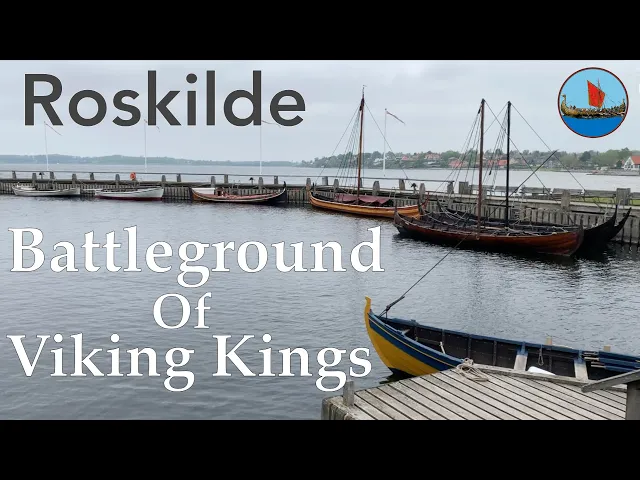
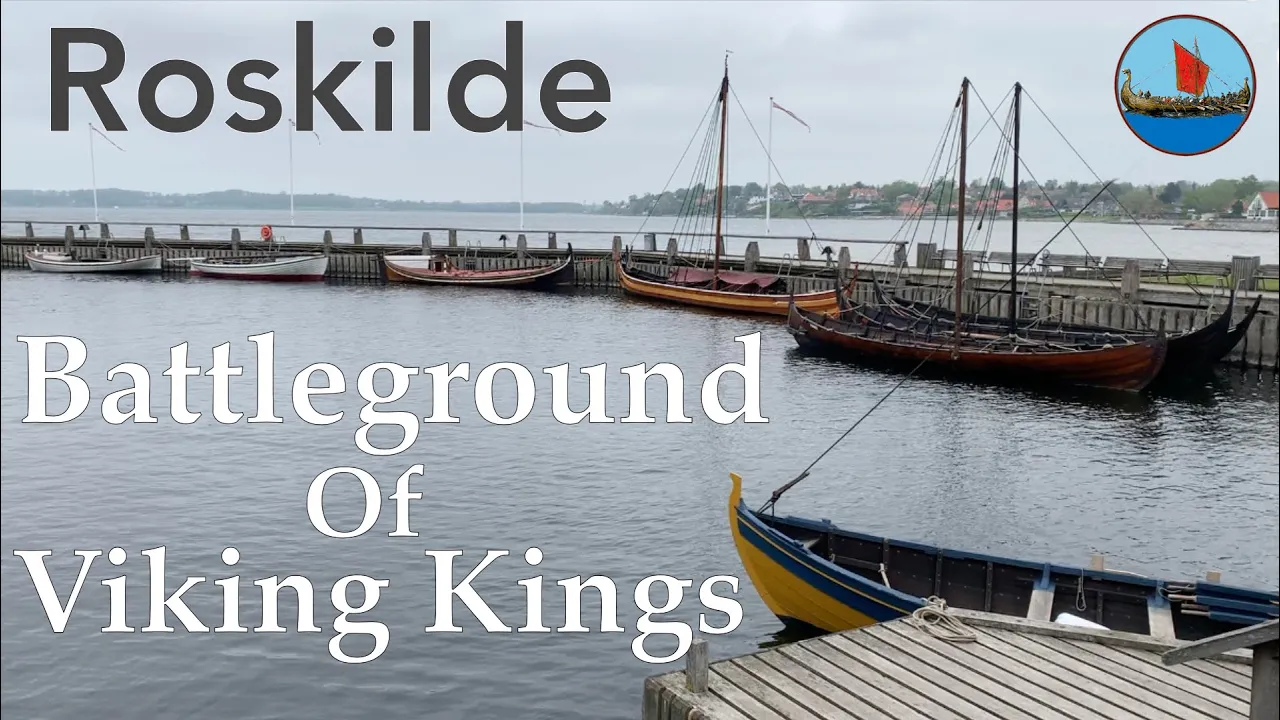
Roskilde now a sleepy city just outside of Copenhagen a place for festivals museums and commuters part of the urban sprawl home to some 50,000 people a metropolis in the ancient world though nothing special today and tiny compared to its economic powerhouse of a neighbor the natural harbour here the reason for the city's initial success has long been rendered redundant in the modern age being far too shallow to receive modern ocean-going shipping vessels like its neighbor Copenhagen yet during the early Middle Ages when even the largest ships didn't sit particularly low in the water Roskilde as
shallow fjords didn't matter in fact they were a blessing offering protection from the elements and from enemies [Music] back then Copenhagen didn't exist not as we know it's today anyway instead the capital and most important city for the fledgling Danish crown was none other than Roskilde for this settlement nestled between boggy lowlands and wooded hills as a long history stretching far back even before the Viking era into the pre-christian age of old let's turn the clock back some 1,000 years to the middle of the 11th century to a time when the Scandinavia we know today
was first beginning to take shape [Music] back then Roskilde had a population of some 5000 people it doesn't sound like much but during the Viking Age this was one of the largest and most important settlements in all of the kingdoms of the North Sea still predominantly a rural society with scattered farming communities throughout the Danish islands and the Jutland Peninsula Roskilde was one of just a handful of towns to exist during this time in part developed as a trading centre as well as by intentional effort from the Danish crowd ever since they had learnt the
art of statehood from their German neighbors to the south and Anglo Saxon cousins from across the sea according to the near contemporary German chronicler Adam of Bremen and the slightly later Danish writer Saxo gramatica s' Roskilde had been founded in the 1980s by the Danish King Harald Bluetooth the son of gorm the old one of the first verifiable kings of Denmark in history harald continued his father's work in unifying the kingdom yet despite building massive fortresses all over the land and adding to the Dane murca fortifications along Denmark's southern border the greatest threat to his
authority still came from the German Kingdom to the south a threat which eventually forced Harald and his family to abandon their previous power base at yelling on the Jutland Peninsula entirely we can see why they chose Roskilde as their new lair far away from land attacks from Germany the Danish Kings could grow their power in peace gazing ever outwards to the Baltic and Norwegian coasts though the town was unfortified at first it was located in an excellent geographical position at the base of the Roskilde field in a naturally protected Harbor thus in the 1980s taking
no more chances on the mainland with the Germans on a high hilltop overlooking the excellent natural harbour on the north side of the Danish island of Zealand where ships could lay at anchor below Harald Bluetooth a Christian now built a wooden church consecrated to the Holy Trinity as well as a royal residence nearby yet there were older links to the place to sack so gramatica s-- and other medieval Danish sources associate the name perhaps meaning rose spring with the legendary King roar who possibly lived here during the murky sixth century in the wake of the
migration period roar is also known by another name we may be more familiar with Hrothgar the skilled in King famous from the anglo-saxon epic Beowulf as well as Norse Sagas and Danish chronicles whether this 10th century association is true or not it certainly imbued the place with a sense of history and for those who lived there power though bluetooth was ultimately overthrown by his son spend for beard in the 1980s the son brought his father's body here to be buried in the church he had built a tradition that would carry on for centuries around the
Year 1000 it was Forkbeard who would concentrate the power of Danish crown here turning the city into a new monarch achill and ecclesiastical capital a position it would hold well into the 15th century as time went on and his Danish power waxed and waned this city would be forced to build defenses of its own not against the Germans on the mainland but from Vikings to the sea it's thought that the approach of hostile fleets would have been signaled by a system of beacons strategically placed fires lit on high ground from the fjords mouth at Kattegat
in the north all the way down the coast to Roskilde and make no mistake the beacons would be lit for Denmark made many enemies from the reign of Spain Forkbeard onwards a ruler who launched attack after attack in all directions and his son Knut who did the same for close to a century to come the surrounding seas would be a battleground for Viking kings hey everybody sorry to break up the video for a moment but have got some announcements to make I'm Pete Kelley on the one-man team behind this channel I'm delighted to announce that
this video is the first of five that I'll be releasing this month all of them on Vikings we've also got a bunch of other channels making videos on the same sorts of topics of course there's our brother channel voices of the past which is run by my actual brother we've also got the legendary history with Hilbert we've got the history of Vikings in both podcasts and YouTube formats and we've got hikmah history make sure you go and check out all of these fantastic channels and podcast you can find links to everything in the description below
and if you want to see me and my brother david from voices of the past traveling around the world to look at historical sites and go subscribe to my channel creatively called peat Kelly because that's my name also I'll be doing book recommendations climbing hill forts visiting castles and going to ancient monuments so don't forget to subscribe to that too now back to the 11th century in the year 1020 Spain's son Knut newly crowned as king of both Denmark and England elevated Roskilde to a bishopric giving it high national status by 10:30 he was the
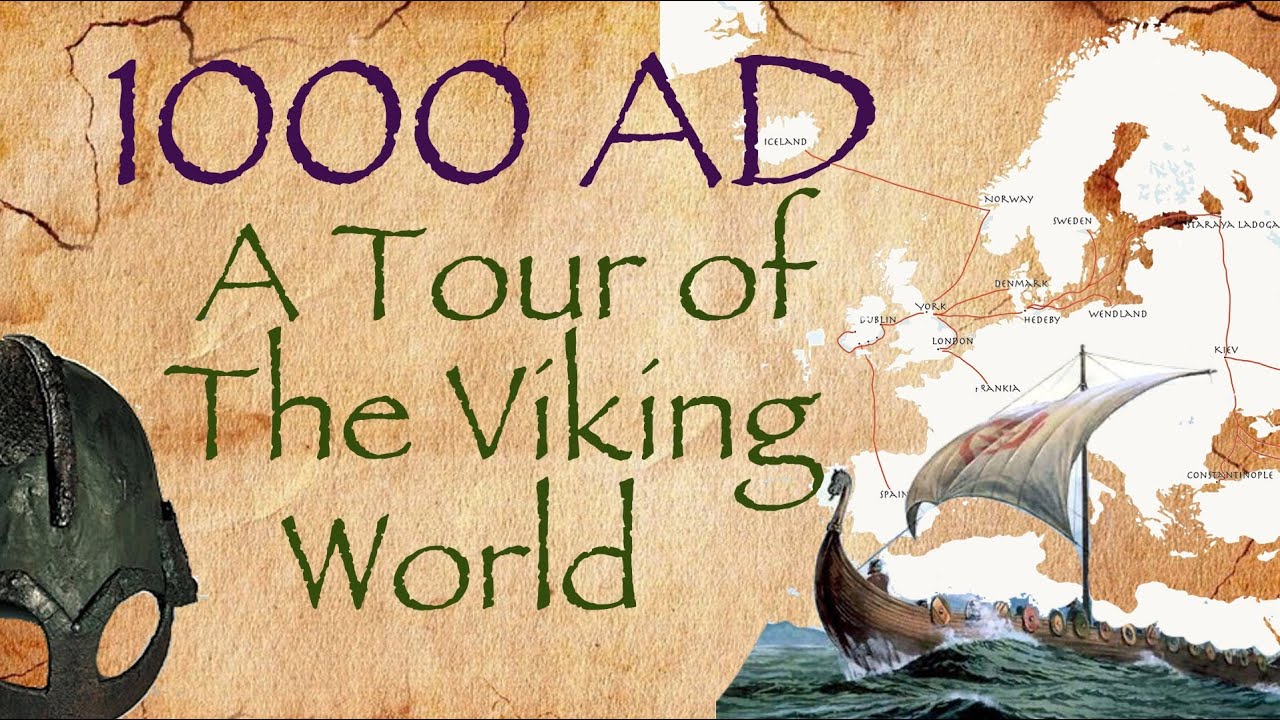
ruler of a North Sea Empire holding Norway - and even parts of Sweden under his rule thus turning Roskilde into one of the most important towns in northern Europe eclipsing many of the older emporiums and trade hubs on the Danish peninsula such as head to be and reap during the mid 11th century it wouldn't have been an unusual sight to see German Bishops here anglo-saxon feigns pagan Swedish swords for hire Baltic merchants and even Russian travelers coming in off the Baltic Sea all could be seen walking these streets the north sea empire was to be
short-lived however in 1035 it all came crashing down and Knut would live to see some of it crumble his oldest son and appointed successor in Norway span was overthrown in 1035 dying in exile at Roskilde not long afterwards just a few months later he was followed to the grave by Knut assuring in succession crisis all over the North Sea kingdoms a series of wars that would only come to an end some fifty years later [Music] by 10:50 Gorm the olds line had come to an end the yelling dynasty was dead and in its place at
arisen a dizzying array of Viking kings and warlords to replace them all battling it out for a small slice of the leftovers [Music] now one of those Kings was on the warpath only recently arrived back in his native Norway after a long exile in service to Constantinople Varangian guard having seen battle in far-off Anatolia and even the Holy Land rich and confident with an elite force of hardened warriors behind him and an impressive fleet of long ships Harald Hardrada had returned and Denmark was about to burn at Roskilde the man who had inherited the Danish
throne son of one of Canute's henchmen and by most accounts the best man for the job didn't know what was about to hit him he was fain ester it'san and though not related to the yelling monarchs through the male line he was at least a Danish man which was more than could be said for his Norwegian predecessor Magnus the good [Music] a man whose claims on Denmark were now being pressed by the new King Harald by 1050 the Norwegian fleet arrived at the trading Emporium of Hedeby situated in the southern part of Jutland near the
ancient border of the Dana verka the most famous port of its kind in Denmark with a rich and storied history dating back well into the 700s hard rada was not a sentimental man court seemingly unawares the townspeople stood little chance what happens next survives both in the archaeological record and in the saga tradition stuff a norwegian scowled or court poet whose words are recorded by Snorri Sturluson as the following to say about the fight burnt in anger from end to end was header be high rose the flames from the house when before dawn I stood
upon the strongholds arm [Music] for Hardrada have learnt a thing or two about burning ships from his time in service to the Byzantine emperors setting some of his on fire and sending them headlong into the town to do his work for him the charred remains of which were found at the bottom of the slide during recent excavations next on the agenda was our hosts put to the torch its goods plundered by the Norwegian fleet who just managed to escape Spain and make it home for the next 14 years to come war raged on as hot
rodder periodically ravaged the Danish coasts undertaking a perennial scorched earth campaign against his rival all the while over on the other side of Jutland though every now and again at RADA came within his grasp for the most part all Spain Astrid sin' could do was fortify and wait for his moment to strike but he was a patient man at around the same time as hot rodders Marauders harried the Danish coastline putting many of its most important settlements to the sword an elaborate system of defensive barriers was established on the Roskilde fjord it was finally time
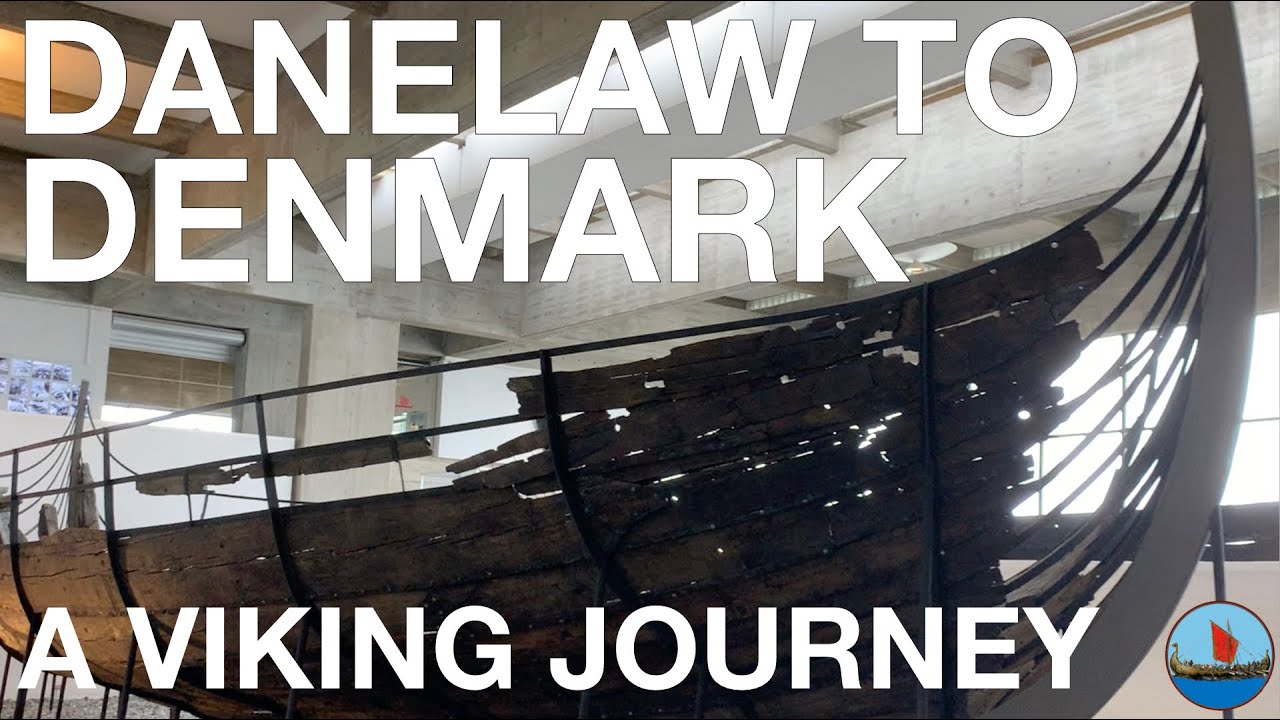
for the Danish Kings always previously on the offensive to protect their capital but how does one fortify a sea well these ships excavated from the 1950s onwards and now housed in the Roskilde ship Museum have opened a unique doorway into the early medieval world and the workings of a Royal Danish sea defense during the height of the Viking Age [Music] some of the finest examples of longships ever found in history in life these vessels were used for trade defense fishing and war and in death they would go on protecting their people around 20 kilometers out
from the Roskilde harbor near the town of scold Aleph at the point named pepper ndon where the channel inland is narrowest three of these vessels numbered one three and five were towed out and scuttled at some point after 1050 there they were filled with stones and sunk deep into the sailing channel forming a wall under the water the Skjold her life ships are one of the finest examples of viking-age sea defences found anywhere no longer with these ships sail on the high seas now forming permanence and floating obstacles to slow down and stop an attacking
army and to give enough time to raise a defending force along with rock filled boxes in time the scolder left shift formed a massive coherent defense system that could even close off the fjord entirely if necessary and the defenders weren't finished not by a long shot as long as Hardrada reigned in Norway they were under threat and after a number of years once the original ships had sunk low enough into the mud another two were scuttled on top of them evidence of other defenses have been found - such as stakes pushed into the ground and
platforms along the sides of the fjord for Guardsmen to occupy as well as to control traffic in the inner fjord their aim was to protect the town from attacking forces from the sea forcing any potential foes to enter a bottleneck filled with fierce Danish warriors lining both sides of the shore [Music] though the two Viking countries of Denmark and Norway would remain locked in conflict for decades to come there is no evidence that Hardrada ever came here he was far too cunning for that knowing that he and his man would face a barrage of Danish
Spears and arrows if they did so certainly on the way out if not the way in and besides he had a greater prize in mind after besting Spain and huge sea battle in 1062 the two finally made peace in 1064 and two years later Harald embarked on the final venture of his career to England [Music] in that same year what remained of Hedeby was finally destroyed for good after a raid by slavic warriors from the south today all that remains of this once prosperous trading center is an earthen rampart and a Viking museum yet Roskilde
had survived though its troubles weren't over yet a new generation of Defense's would soon be built on top of the old on the 25th of September 1066 near a bridge just outside the city of York the greatest English victory ever won against an invading Viking army was achieved just weeks later however the architect of that fight Harold Godwinson was dead killed by a second invading army this one from another Viking influenced land Normandy only around 25 Norwegian ships managed to limp back home after their defeat at Stamford Bridge and in the wake of Harald Hardrada
death the tables were turned as Spain astrid soon briefly contemplated an invasion of his own ultimately Spain would choose a different path Spain had been born in England content with being King of Denmark and concentrating his efforts on England making peace with herald-sun Olaf in order to wage war against William the Conqueror a man he saw as wholly illegitimate nevertheless though this decade long period after 1066 is usually seen as a peaceful time for Danish Norwegian relations there was a brief moment when war was on the cards once more we can see this tension in
archaeology and in the written record by 1075 we have direct evidence for a further strengthening of the sea wall at Roskilde with two large additional ships scold Aleph 2 and scold Aleph 6 being sunken into the defence it seems that at this time there was reason to fear an attack but from where the new norman overlords in england were busy putting down revolts and fending off periodical danish attacks of course this new threat came from the north from norway in 1078 we find an extraordinary surviving letter from Pope Gregory the seventh this miraculously surviving document
provides a brief glimpse into both the psychology of 11th century kings and the confused geopolitical situation Scandinavians again found themselves in when incorporated into the other surviving accounts from this time we can arrive at a somewhat basic interpretation of events in 1076 Spain estrogen finally died after a rain of close to 30 years he outlived most of his rivals enjoyed an extraordinarily long lifetime and left a substantial brood of warrior sons to squabble over the kingdom left behind many of these with names such as Erik ever good Harold Han Knut and Olaf hunger but seen
service during Spain's many ultimately unsuccessful campaigns against England far from being over the Viking Age lived on in these warlike men who often went out to war on dragon headed long boats [Music] initially the son who came out on top was Harold Hamm a shrewd man content to give up portions of kingly power in order to obtain the support of regional Lords of course there were many who opposed for succession chief amongst them Harold's younger brother Knut a warrior Lord every bit the embodiment of his earlier namesake Knut had been born back in around 1042
he is first recorded by the anglo-saxon Chronicle as an important member of Spain's 1069 campaign in England and again in 1075 this time in a more senior role hinting at a superior reputation as a war leader to his brother Harold also suggested by other victories in Scandinavia recorded by the scowled kalman arson on his way back to Denmark in 1075 Knut stopped off in Flanders a Frankish County staunchly opposed to Norman interests whilst there he managed to secure support for a future campaign against England all he had to do was take the Danish throne in
the next year however everything fell apart for Knut when his brother succeeded to the throne far from going away quietly Knut went north at first seeking refuge in Sweden before moving on to the Norwegian court where it is thought by many historians that he roused up support for a campaign against Denmark for Norway was ruled by Harald Hardrada son Olaf a figure who would become a firm ally of Knut Oh laughs a capable soldier had been present during the Stamford Bridge campaign in 1066 to see his father die just as his father had been at
stick lestat in 1030 to see his benefactor olaf haraldson died ultimately though tensions were high the assault on Roskilde never came at least no evidence of it exists anyway Harold died in April 1080 allowing Knut to succeed him without lifting a finger on his accession Knut married a dealer a daughter of count Roberts the first of flanders a marriage he probably had in mind since 1075 and together they set about their efforts to invade England finally in 1085 backed up by his brother-in-law Robert of Flanders and his ally Olaf of Norway Knut called his banners
together raising one of the largest armies seen in Denmark and generations ultimately however Denmark's old enemy would rear its head again curbing any ideas of an invasion of England to the south the most powerful ruler in Europe the Holy Roman Emperor Henry the fourth had designs of his own and motive in the form of Rudolph of reign Feldon an estranged nobleman who'd sought refuge at Canute's court [Music] in delaying his invasion of England whilst he waited to see what Henry's move would be Knut was also reluctant to allow his peasant levies to return back to
their homes to till the fields for winter crippled by indecision in early 1086 full-scale revolt broke out but first the King fled to Schleswig and eventually to odenza there in July 1086 according to the chronicler Hellmuth of Canterbury he was trapped inside a church along with his brother Benedict and 17 followers and cut down before the altar two decades later the king being made a saint by the Pope his image ultimately gracing the walls of some of Christendom most holy sites Robert The Count of Flanders meanwhile put the resources he would have used to invade
England to a different use traveling far to the east making a pilgrimage to Jerusalem and in a brief precursor to events to come in providing much-needed military support to the Byzantine Emperor Alexius Comnenus against the seljuq turks a people originating in central asia currently ravaging imperial lands but that's a story for another day Knut the fourth was the last Scandinavian monarch - seriously attempt an invasion of England by 1085 the Viking Age was mostly over Scandinavian powerbrokers now looked to the papacy in Rome and continental European rulers for allegiances and marriage proposals yet the sons
of Spain Astrid son would continue to rule the next Kings Olaf hunger and Eric ever got respectively both having participated in their fair share of Viking raids in their youths yet for Roskilde the times of trouble were over both these Kings were allies of Norway who would spend time at the Norwegian Court it was across the North Sea with Norman England that a new cold war would be fought though ultimately an entirely new frontier was about to open up just as Scandinavian monarchs now stood as equals with European continental rulers soon enough they would follow
in their footsteps to the east in conquest and in pilgrimage for the Scandinavian world was about to open up to an even wider stage in 1103 following a drunken brawl which led to the deaths of four of his man King Eric ever Gert took it upon himself to go to the Holy Land on pilgrimage recently conquered by the armies of the First Crusade including the Count of Flanders Robert the Friesians son Robert the Crusader travelling down through the river systems of Eastern Europe in a great procession Eric made it to the court of the Byzantine
Emperor Alexius Comnenus by now used to putting up European magnates soon however Eric fell ill but insisted on traveling gone anyways upon arriving on Cyprus he died being buried at Paphos his wife queen / Dale however pushed on making it all the way to Jerusalem before she passed away being laid to rest on the Mount of Olives the Viking Age was mostly over the age of crusading had begun [Music]