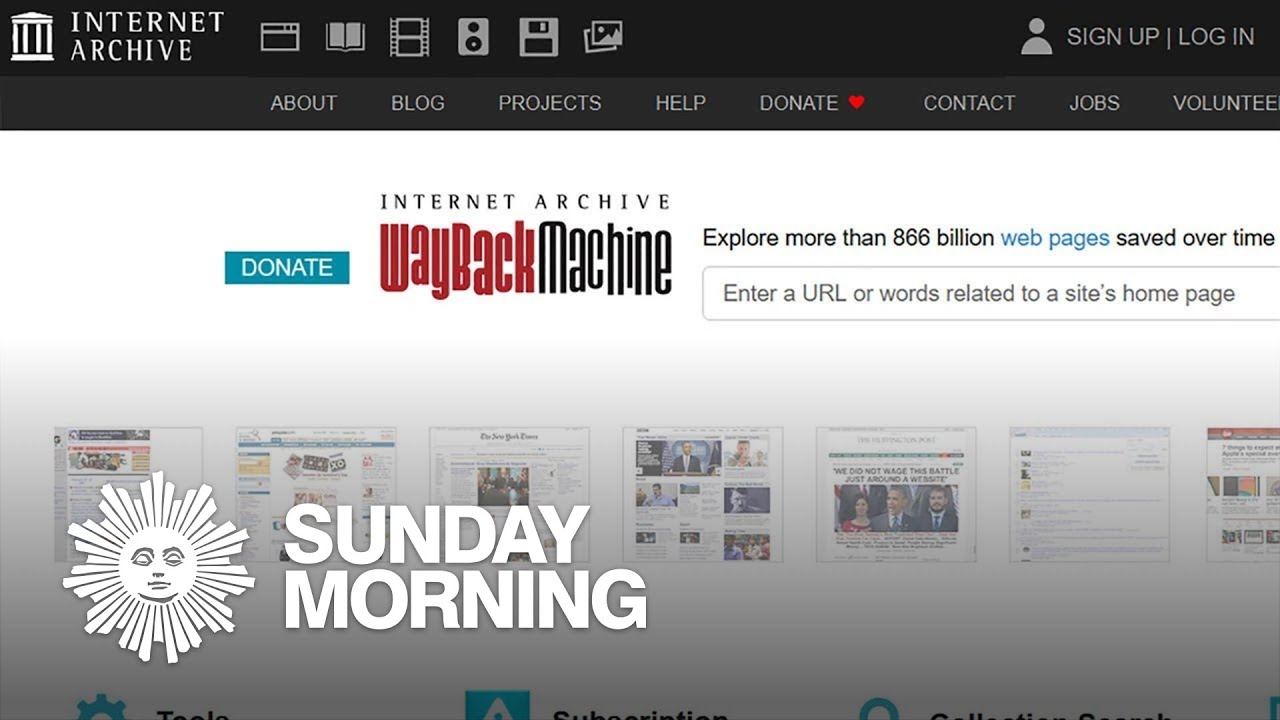
This is the San Francisco headquarters of the Internet Archive. From the outside, this nonprofit organization looks like a library, but inside, instead of books, it's filled with stacks of servers that store countless real-time snapshots of the web. It's a time machine for the web.
We are a digital library um for our times and hopefully for all times. Mark Graham is the director of the way back machine, a service of the internet archive which has been doing this work for almost three decades. It maintains a running catalog of websites that populate the internet.
Its software is constantly crawling the web which is always changing and so uh if you go to a URL one day and then you go back the next day it might be different. So this is where the wayback machine enters. We have this um historical record of versions of web pages that people go back to and look at.
The internet archive also preserves a lot of physical material like books, records, and videotapes here at their Richmond facility that one day will be digitized. It all gets stored in these massive shipping containers. The organization says they get one to two containers worth of that kind of material every single week.
That's a lot. It's a lot. And and you know that's all based on donations, right?
And also a lot of clever, enthusiastic people. If you just meet the people that are here, you'll just see how I don't know happy they are. Can you hear me in the back?
The founder of the Internet Archive, Brewster Kale, gives fans of the nonprofit occasional tours. He says libraries and historians send the organization materials from all over the world. So, we only want one copy.
I guess if we were offered two Grotenberg Bibles, we'd keep it. Um um but in general, we just want one copy uh of of everything. The Internet Archive has been celebrated by figures ranging from digital afficionados to political figures.
In 2024, Elon Musk praised the organization on X. He wrote, "Even though the Internet Archive has a ton of negative BS about me, it is still a public good that should exist and encouraged his followers to donate. But these days, the organization finds itself embroiled in politics.
That's because the administration of Donald Trump has been scrubbing a wide array of government websites. Experts say it's not uncommon for those sites to change as one administration hands off to another. But they say this time is different.
What's unusual is the scope and the scale of the material that has been um removed from the public web. Entire web sites have just gone dark, including some that contained information on critical issues like healthcare and climate change. The site of the humanitarian aid agency USAID has mostly disappeared from the live web but remains available to users on the way back machine.
Then they can navigate the archive of that site just as if they were navigating uh the live web version of the USA ID site. Former Air Force flight test engineer Jessica Peterson found herself on the receiving end of the US government's so-called digital refresh earlier this year. Celebrations of her work, including her final flight, an all female flyover of a game played by the US women's soccer team were pulled down for celebrating diversity, equity, and inclusion.
The thing that really got me is I mentioned it to my daughter and I saw her emotional response. She was so upset about it. That's when it really started to hurt.
She posted about it on the social media site LinkedIn and was overwhelmed by the response. Through that, there were people that brought my attention to the Wayback Machine. I didn't know that it existed.
Jessica found that all of her videos and photos were there. I still was sad that it had been removed, but knowing that I personally could have it and I could still share it, that definitely gave me some relief. The Internet Archive is among several nonprofits and universities preserving these websites.
It is a valid concern uh whether or not the Trump administration will replace the information it is purging from federal government agencies with inaccurate information. Governments in Russia or in China, they have the ability to block websites entirely. The concern is could that happen in the US and is that where we're headed?
Despite being under threat, Mark Graham says he and his team aren't scared. I'm grateful that that the Internet Archive exists and we're just taking it a day at a time. You know, just trying to be the best library that we can be so that people have access to our our cultural heritage.