Continuing with our analysis of Arthropoda, the exact phylogeny of Pancrustacea is still contested. The most recent phylogeny proposed in 2019 places two superclasses under Pancrustacea, Oligostraca and Alocrustacea, while Alocrustacea contains Multicrustacea and Allotriocarida, which also includes the Hexapodan Insects. There are many other proposed phylogenies for Pancrustacea, but this is the most recent.
In this tutorial, we will be covering all marine forms of Pancrustacea, that is, the paraphyletic clade known as “Crustacea”, often considered one of the five subphyla of arthropoda, though this classification is now dated. Depending on how one classifies crustaceans, there are between 10 and 12 classes. We will be going over 11 classes over the next two tutorials.
So let’s get started with class Ostracoda, which includes more than 10,000 described species commonly referred to as “seed shrimp” or simply “ostracods. ” These are extremely small, most being about 1 millimeter long, though the smallest grow to only 0. 2 millimeters in size, and the largest, like Gigantocypris, can grow up to 30 millimeters in length.
They are flattened from side to side and protected by a bivalve-like, chitinous or calcareous valve or "shell," where they often keep their legs and swim using antennae. They are some of the most common arthropods in the fossil record, and they are an important part of marine ecology, as they are often considered to be zooplankton. Some, like the sea-firefly, have a light organ that produces luminescent chemicals.
The ostracods are generally accepted to be split into 5 orders, but depending on the classification there may be many others. There is order Myodocopida which includes the giant ostracod. Members of this order have lateral compound eyes as well as a rostrum and incisure from which the antennae protrude.
Members of order Halocyprida are similar to Myodocopida, but they lack lateral eyes. Most species of order Palaeocopida are now extinct, and photos of living taxa are rare. Order Podocopida is the most diverse of all ostracod classes and includes the vast majority of the freshwater ostracods such as the common freshwater seed-shrimp, Cypridopsis vidua.
Finally, there is order Platycopida which is sometimes listed as a suborder of Palaeocopida, all of which entirely lack eyes. Next, class Mystacocarida is monotypic, containing a single order. As of 2023 there are only 13 described species of mystacocarids, all of which are microscopic, and live in the meiobenthos between grains of sand on marine beaches.
Branchiura is a parasitic class of ectoparasites that are commonly called fish lice, all of which are in the same order. They were once thought to be highly derived copepods, but are now classified as their own class. There are about 170 described species which can be found on both marine and freshwater fish.
They have a flattened, oval body, which is almost entirely covered by a broad, oval carapace, four pairs of swimming legs, a pair of anterior compound eyes, an unsegmented abdomen, and highly modified mouths that feed on the blood or mucus of their hosts. Members of class Pentastomida are commonly called “tongue worms” because members of the genus Linguatula somewhat resemble vertebrate tongues. All of the 130 or so described species are obligate parasites with highly degenerate anatomy, all of which parasitize the respiratory systems of vertebrates, including humans on rare occasions.
There are currently four extant orders of tongue worms recognized, of which Porocephalida is the most characteristic. They were once placed within their own phylum but have recently been classified as a sister clade to the parasitic fish lice, though this is still contested by some. Next up is class Copepoda, commonly known as “copepods,” though their name means “oar feet.
” They are a widespread group of small crustaceans, most are just a few millimeters in length. They are usually tear-drop shaped with large antennae. However, their morphology varies considerably, from the bioluminescent deep sea copepod, to parasitic forms like Lernaeolophus sultanus and the cod worm.
Regardless of their morphological divergences, all copepods lack a carapace and many adults retain a simple median compound eye. They have been found in nearly every freshwater and saltwater habitat on earth. Though most species are planktonic, some are benthic, others are parasitic, others have been found living in swamps and small puddles, and still others live in subterranean groundwater.
Some species have been used to combat mosquito larvae and occasionally turn up in drinking water, but they are completely harmless to humans. Though most are tiny, their collective biomass exceeds billions of metric tons. There are at least 13,000 described species of copepods, often split into 10 orders: Calanoida, Cyclopoida, Gelyelloida, Harpacticoida, Misophrioida, Monstrilloida, Mormonilloida, Platycopioida, Polyarthra, and Siphonostomatoida.
Free-living members of the largest orders Calanoida, Cyclopoida, and Harpacticoida generally have a typical copepod anatomy of a short, cylindrical body, with a rounded or beaked head, though there is a great diversity of forms. Orders Gelyelloida, Misophrioida, Monstrilloida, Mormonilloida, Platycopioida, and Polyarthra are all considered to be more cryptic. Some, like Mormonilloida only have five species, others like Gelyella are found only in European groundwater, while still others like Monstrilloida are found in oceans around the world, but lack oral appendages.
Finally, Siphonostomatoida includes a great deal of parasitic copepods, many of which feed on fish and marine worms. They are noted for their truly bizarre forms as adults. Next up, class Tantulocarida includes about 30 species of extremely tiny, highly specialized parasitic crustaceans, most of which are ectoparasites that parasitize the bodies of copepods, isopods, and ostracods.
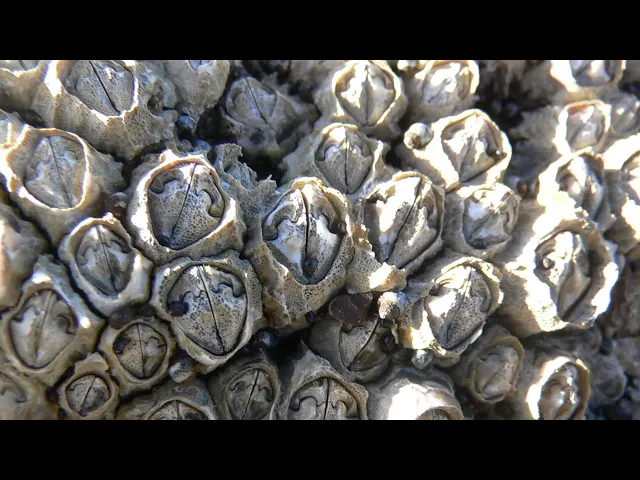
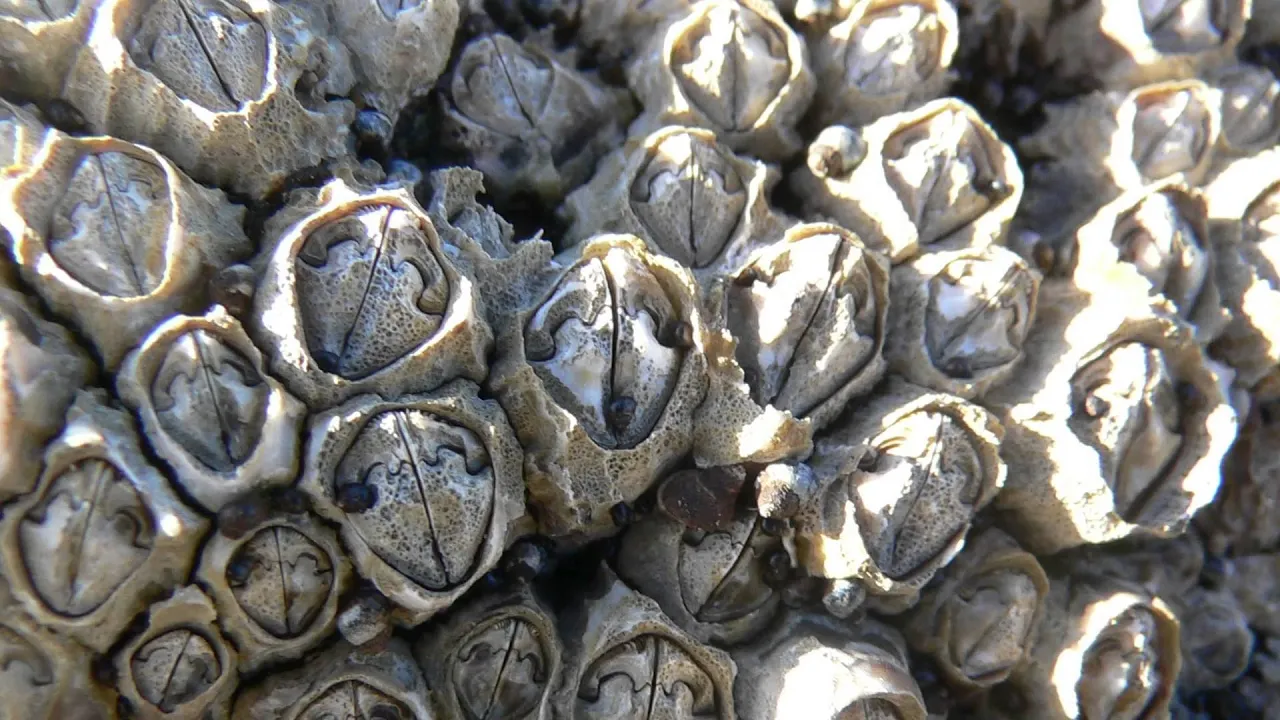
The closely related class, Thecostraca includes about 2,200 described species, most of which are planktonic as larvae and sessile or parasitic as adults. They are split into three subclasses; Ascothoracida, sometimes called the “copebarnacles” due to the resemblance of many species to the copepods, Facetotecta which includes just 11 species of mysterious “y-parasites”, and Cirripedia, most of which are commonly known as “barnacles. ” As adults, barnacles are sessile.
They are found around the world in almost all marine environments, where they attach themselves to the substrate either directly, like in the acorn barnacles, or by a stalk, like in the gooseneck barnacles. They have a reduced head, no abdomen, and long thoracic legs with many-jointed cirri and hair-like setae. They extend their cirri through an opening between their calcareous plates to filter feed.
In addition to their unique physiology, they are noted for their extreme metamorphosis. Some, like the “invading barnacles” Sacculina have an even more extreme metamorphosis that involves invading the living tissues of a crab, and growing through a “root-like” system throughout the crab’s body, eventually growing externally and manipulating the crab to treat the parasitic protrusion like its own eggs. In addition to their marine ubiquity, they are infamous in taxonomic and evolutionary circles for their difficult classification that puzzled many researchers, including Carolus Linnaeus and Charles Darwin, the latter of which, in his obsession, became a world expert on barnacles.
With some crustacean diversity covered, let’s move forward and look at the remaining classes next.