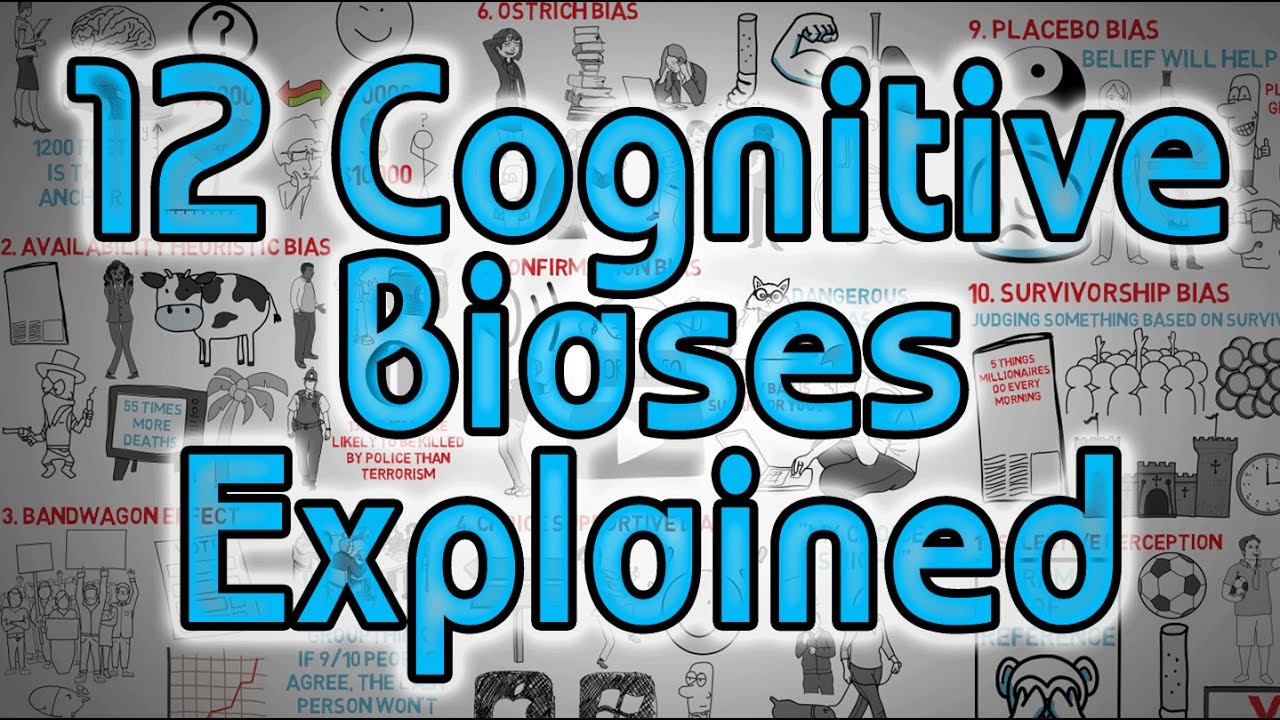
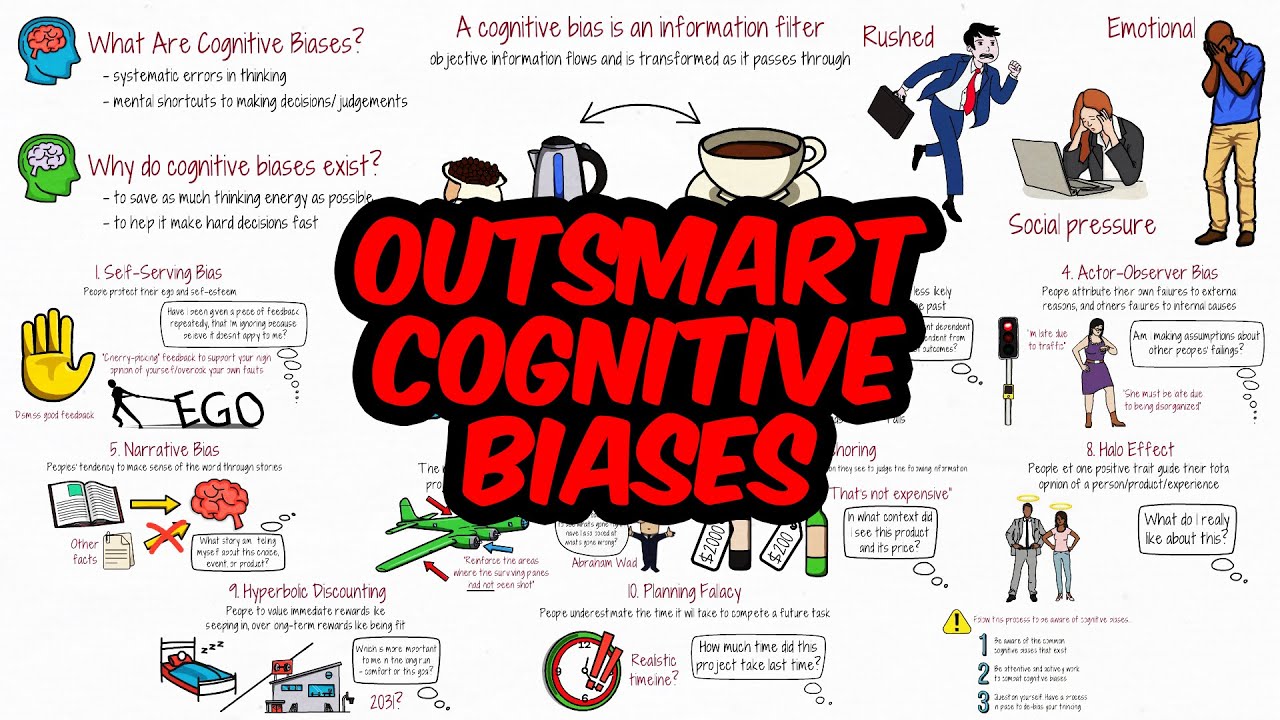
[Music] have you ever wondered why you see the world the way you do greetings dear viewers what if I told you that much of your reality is filtered through a series of visible biases subtly shaping your decisions your beliefs and your interactions these invisible strings known as cognitive biases tug at your perception often without you even noticing today we'll unravel these threads and explore how they mold your understanding of the world cognitive biases are systematic patterns of deviation from Norm or rationality in judgment these biases often arise from our brain's attempt to simplify information processing
think of them as mental shortcuts that help you make decisions quickly while these shortcuts can be helpful they can also lead to errors and skewed perceptions understanding these biases is the first step to seeing the world more clearly let's start with confirmation bias the tendency to Sur search for interpret and remember information in a way that confirms one's preconceptions imagine you're a detective but only Gathering clues that support your initial hunch ignoring all evidence to the contrary this bias can severely impact decision making as it blinds you to the full spectrum of information available leading
to a skewed understanding of reality next consider the anchoring effect this bias occurs when people rely too heavily on the first piece of information they encounter the anchor when making decisions for instance if you're negotiating a salary and the first offer is set High your expectations and subsequent offers will likely be influenced by that initial number it's a mental anchor that holds fast swaying your judgment the Dunning Krueger effect is another fascinating cognitive bias it's the phenomenon where individuals with low ability at a task overestimate their ability while experts tend to underestimate their competence it's
like climbing a staircase of knowledge the less you know the fewer steps you see this effect can create a false sense of confidence leading to misjudgments and overestimations of One's Own capabilities the halo effect is a bias where the perception of one positive trait influences the perception of other unrelated traits for example if you find someone attractive you might also assume they are kind and intelligent even without evidence this bias can distort reality as it leads you to make assumptions based on limited information often resulting in unfair judgments and decisions the availability heuristic is a
mental shortcut that relies on immediate examples that come to mind when evaluating a specific topic concept method or decision if something can be recalled easily it must be important or at least more common this is why people often overestimate the likelihood of dramatic events like plane crashes if you can easily recall instances of something happening your brain assumes it happens more frequently leading to skewed perceptions and irrational fears hindsight bias also known as the I knew it all along effect is the tendency to see events as having been predictable after they have already occurred this
bias can distort our memory of past events and influence our perception of decision-making processes once you know the outcome it seems obvious but this retrospective Clarity is an illusion recognizing this bias can help you understand the limitations of foresight and the complexity of predicting future events the self-serving bias is the common habit of taking credit for positive events or outcomes but blaming outside factors for negative ones this bias serves to protect and enhance yourself self-esteem for instance if you Ace a test you attribute it to your intelligence or hard work but if you fail you
might blame the Test's difficulty or poor teaching this bias can hinder personal growth and accountability as it prevents you from recognizing and learning from your mistakes the sunk cost fallacy is the tendency to continue an Endeavor once an investment in money effort or time has been made it's the classic gambler's fallacy you've already invested so much so you keep going hoping it will pay off eventually this bias can trap you in unproductive or harmful situations as it focuses on past Investments rather than future outcomes recognizing this fallacy can help you make more rational decisions about
when to cut your losses the framing effect is when people react to a particular choice depending on how it is presented for example if a medical treatment is described as having a 90% survival rate versus a 10% mortality rate people are more likely to choose the treatment when framed in terms of survival this bias highlights how the same information can lead to different decisions based on its presentation understanding this can help you see through the framing and evaluate information more objectively the curse of knowledge is a cognitive bias that occurs when someone communicating with others
unknowingly assumes that the others have the background to understand when you know something well it's challenging to remember what it was like not to know it this bias can make experts poor teachers and communicators as they struggle to break down information in ways that novices can grasp recognizing this bias can help bridge communication gaps and enhance understanding across different knowledge levels the bandwagon effect is the tendency for people to align their beliefs and behaviors with those of a group when more people adopt a particular Trend or behavior the more likely others will hop on the
bandwagon regardless of their own beliefs this effect can drive social movements and fads but it can also lead to the spread of misinformation and herd mentality being aware of this bias can help you make more independent and thoughtful choices rather than following the crowd blindly recognizing and mitigating cognitive biases requires self-awareness and a willingness to question your own thinking it involves slowing down your decision-making process seeking diverse perspectives and challenging your initial assumptions by actively questioning your thought patterns and considering alternative viewpoints you can reduce the influence of biases on your perceptions and decisions this
practice not only enhances your decision-making but also leads to more objective and balanced understanding as we come to the end of our exploration of cognitive biases it's clear that these invisible strings have a profound impact on how you perceive and interact with the World by understanding these biases you gain the power to see beyond them making more informed and rational decisions knowledge of cognitive biases equips you to navigate the complexities of life with greater Clarity and insight thank you for joining me on this journey through the Maze of the Mind as you go forth remember
that these biases are part of Being Human but recognizing them is the first step to overcoming them may your newfound awareness guide you to a more insightful and balanced perspective until next time take care and keep questioning the world around you [Music] [Music]