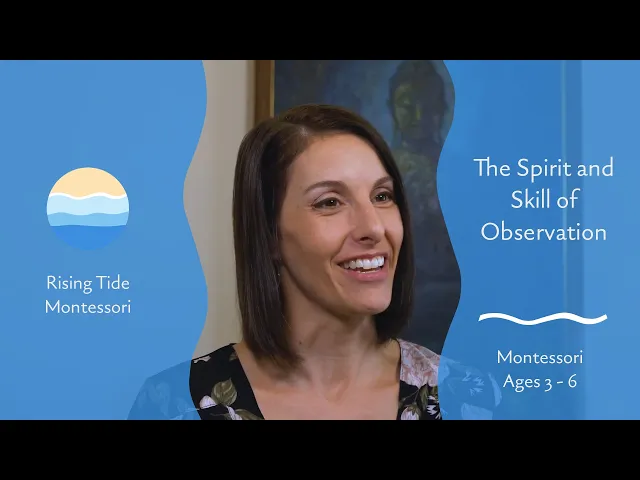
There are two aspects to observation. There is the spirit of observation and then there's the skill of observation. Now, in the spirit of observation this is rooted in the adults genuine interest to understand the child.
There's the element of curiosity here. It's based in reference and respect to see the child as the person that they're going to become. The skill of observation now, this is learned, it's developed, and it's practiced.
We work on balancing objectivity and subjectivity because as adults our judgments are going to get in the way of what we see and we need to be aware of that. Observations can be very practical and very useful not just in connecting the child to materials, but in our own record keeping. We have a whole series on observation that covers the balance between objectivity and subjectivity, that covers practical aspects of observation, and also the challenges of observation because it does come with its own unique set of challenges.
Observation is a fundamental component of our work with children. In fact, without it we can't serve the children like we're supposed to be. We need to be watching their development and connecting them appropriately.
This needs to happen every day and it should be documented.