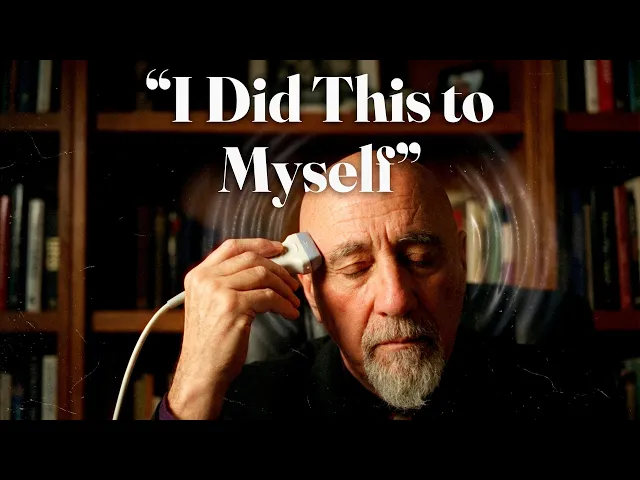
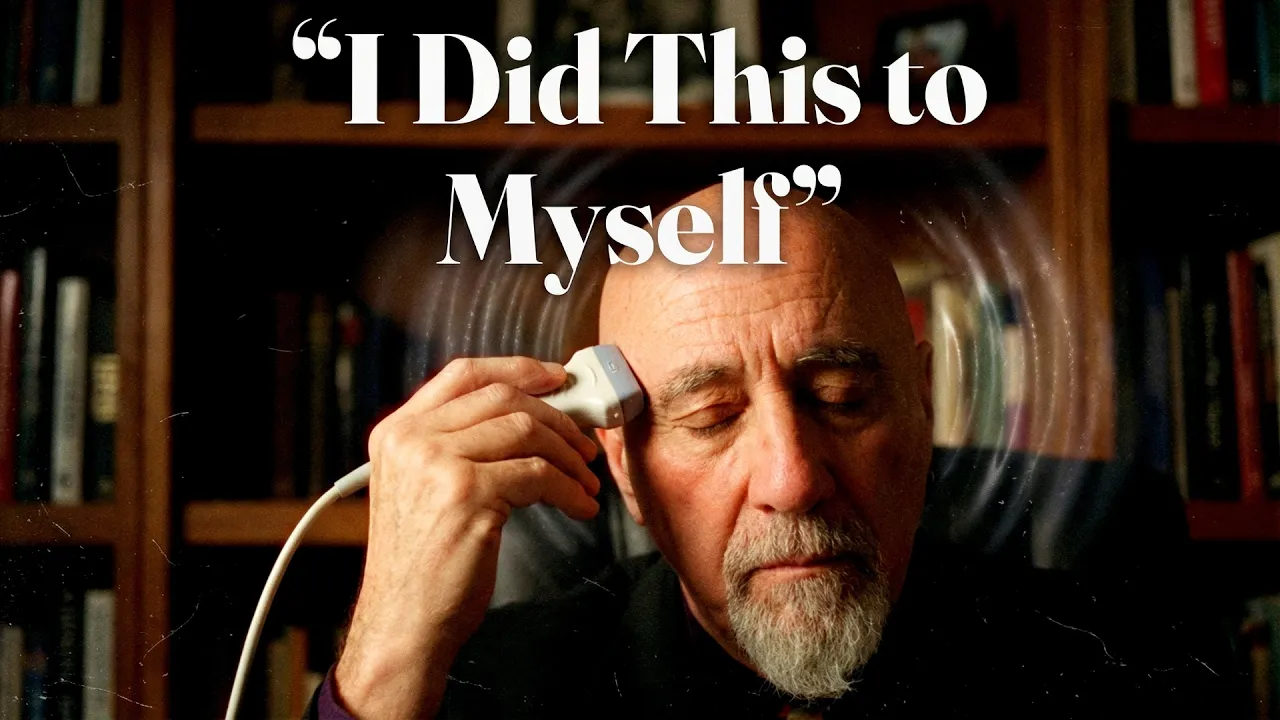
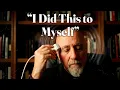
One point you mentioned that you can vibrate, literally vibrate the microtubules to treat cognitive disorders, and that you did this to yourself at some point. Okay, what were the results of that, and can this be done at home? I got to be careful here, and not practice medicine over the internet, but when Anirban came out with this idea, or discovered that there were these vibrations in microtubules, including in megahertz, then, you know, so he had terahertz, gigahertz, megahertz, kilohertz.
So I said, I wonder if there's a way to treat the microtubules. So terahertz is infrared, and people actually do try that, but it's kind of hard to get photons into the brain. Gigahertz is microwaves.
I wasn't interested in putting microwaves in my brain, although that's that, apparently that weapon that the Russians, or I forget who used it, on our embassy people, these loud pops, and apparently that was microwave, and so I wasn't interested in doing that. Megahertz is, in electromagnetics, is radio waves. I wasn't interested in doing that, but megahertz in mechanical is ultrasound, and we use ultrasound and anesthesia all the time, and so when I read this, I looked over, and there's an ultrasound machine sitting there, and I said, I wonder if anybody's put ultrasound into the brain, and ultrasound's been around forever, and it's mechanical vibrations, megahertz bounces off, echoes off surfaces, so you get an image inside the body.
You can see the babies in the uterus, and so forth, and so I looked up, and sure enough, a guy had been putting ultrasound into the brains of animals and getting behavioral effects, and, you know, they could move their paw. You could make them move their paw by pinning the paw region and physiological effects, and I wondered what would be the effect on mental states, and ultrasound had been approved for imaging the brain, so people would be getting ultrasound of the brain, but it wasn't very good compared to, you know, MRI and CT for imaging the brain, so it wasn't really useful, so I said to my anesthesia colleagues, you know, we have chronic pain patients who are depressed. In addition to taking care of people in the operating room for surgery, we see chronic pain patients do nerve blocks and that sort of thing, and I'd worked in our pain clinic a while, and I said, you know, they're all depressed.
Maybe we should put ultrasound into their brain and see if they feel better. All over the brain or in a specific region? Well, I didn't get that far, and, you know, I hadn't really thought about it, and my friend said, okay, you go first.
You know, we don't try it on anybody unless we try it on ourselves. Well, you have an easy head for it. Yeah, that's true.
I do, but it was also my idea. In fact, that's what my friend said. He said, you got a shaved head.
Your idea. You go first, and so it was the end of the day. We're sitting around a table, and I said, okay, what the heck.
I thought about it, and I wrote, well, it's approved for ultrasound brain imaging. It can't be that bad. Mm-hmm.
How many seconds, sorry to interrupt, how many seconds does it take for the imaging? Like a minute? Imaging happens immediately.
Okay, so they don't leave prolonged ultrasound on your brain, at least not in humans that they've tested. Well, I'm not sure anybody used it for brain imaging very much. It was approved, but then CT and MRI came around, so I don't know if it was, there wasn't any guidelines.
You know, I knew what they used in animals and that sort of thing. Anyway, so they called my bluff. My friends called my bluff, and I was sitting around the table, and I picked it up with my right hand, and you put this goo on it because it's got to have gel, and being right-handed and knowing that the temporal bone is the thinnest, I put it right here, turned on the machine, saw what sort of looked like my brain on the screen, kept it there for about 15 seconds, put it down, and I didn't feel a thing.
I said, oh, well, that's disappointing, but about a minute later, I did start to feel something, and I felt kind of a buzz. I was like really energized and invigorated and felt really good for about an hour, and so I said, you know what? We should try this, so we did the first study in 2012.
It was actually published in 2013 in Chronic Pain Patients in the journal Brain Stimulation and showed improved mood and reduced pain in chronic pain patients with 15 seconds of ultrasound to contralateral to the pain in chronic pain patients in a double-blind crossover study. You don't feel it, so it's easy to do a double-blind study. Now, since then, a number of other people did it, and we did a study about a year ago with much better studies, showed improved mood and changing MRI connectivity, so it actually does change the connection patterns in the brain.
Did you ever try it again? I tried it a couple times, but. .
. Nothing again? You didn't get that one hour of buzz?
Yeah, I did, but I didn't, yeah, but. . .
Have you tried it for creativity? What's that? Have you tried it to increase creativity or productivity?
I don't want to mess with it. It's something at work. I don't have one at home.
It's not something I'm really into trying, but I think if I had Alzheimer's or something like that, I'd damn well try it. Okay, let me get off on a hypothetical plunge here. Some people suggest that the universe as a whole is conscious.
Now, I assume you suggest that to some minor degree, proto-consciousness, more like a cacophony than a symphony because you need to cohere it in some manner, okay, but then consciousness is associated with 40 hertz, 10 hertz? It could be at any frequency. Okay, well, where I was going with this was you can look at the universe as a whole through astrological data and cosmological data, and I'm wondering, is there a way of seeing if the universe is vibrating?
And then let's imagine it's not vibrating at some level, then does that mean that as far as we can tell, we are the most conscious parts of the universe? Well, it may be vibrating. The question is whether it's vibrating coherently, or is everything connected?
Some people would say yes, that everything's entangled. Going back to the Big Bang, everything's entangled. You're asking me whether there's God out there in terms of this, and I think there might be, but I don't want to say yes or no for sure.
I think there's something like God, and it has to do with platonic values and consciousness out there, but I'd rather leave it vague because otherwise, it becomes religion. Okay, well, then what I was wondering is, let's imagine that we are the most conscious parts of the universe. Now I know that's extreme hubris, then does that mean that we have a chance at directing the evolution toward the universe being more conscious in the next cycle?
If consciousness is somehow directing the evolution of these cycles, and we happen to be the most conscious in this universe, then do we have some hand at that? This is a huge speculative jump. Yeah, yeah, I know, I know.
I mean, I did speculate that, or Raj and I did speculate that, you know, these crossovers of eon to eon, but just to get there, you know, you have to have this deep depth of the universe, and I think we would be long gone, and it would be our consciousness somehow, you know, in the, in the Planck scale and the fine scale structure of the universe, whatever that is. So I don't know, that's, that's a tough one. What do you agree with Deepak Chopra on?
And what do you disagree with him on? I was watching the interview between you and him. And I said this on the most recent interview I did with Bernardo Castro, that I'm, I don't disagree necessarily with Deepak, it's not like I agree or disagree, because I just reserve judgment, I don't know the ideas enough.
But I see him as looking for scientific credibility from people. So when you say something that is in line with what he thinks, he'll ask you to expound. And then say, Well, what do you say to people who disagree and say that I espoused woo woo?
Well, you're a scientist, and you believe something. So I see him as fishing for scientific credibility. Rather than someone who is open to different viewpoints and is challenging his own in the moment.
But I'm curious what you think of Deepak, where you agree and where you disagree. Well, he's a friend of mine. And, you know, I've heard the criticisms and and you know, I think he's, he's, he can be criticized along the lines of what you what you said, but his heart's in a good place.
And he means well. And let's just leave it at that. He's a friend of mine.
When people say that we're all one, and not just some abstract sense, but in that we share some entity. What do you make of that? Like consciousness is fundamental.
I think we can be one I think, I think, you know, people can be entangled. I don't, you know, I think ESP and that sort of thing, parapsychology can. Can occur by quantum non locality.
But does that mean we are all entangled at any one time? Not necessarily, I think, potentially, we can be but again, I don't want to go too far in that direction. I've already gone on quite a limb in a lot of areas.
Okay, I'll take some questions from the audience. So let's take a look here. Is the depressed person more or less conscious?
Well, you can say they're less conscious, but they would require the same amount of anesthesia, probably. So I'd say they're probably the same, but just on a negative pole, you know, you can have good news and bad news, but it's all news. But on the other hand, I do have a graph in one of my papers where we plot the number of tubulins and, you know, versus E sub g.
And so the intensity of the conscious experience to be related to the frequency of the of the number of orc aware events you can have. So a plant cell might have, you know, a few per minute, and we can, we might have, you know, trillions of tubulins. Trillions per second.
So yes, there are levels of consciousness, but within humans, it's kind of hard to say this mean depressed doesn't really necessarily make you less conscious, you certainly feel less conscious, but maybe that's the same thing. But would Stuart be interested in seeing raw neural signals in awake primates that show timing supporting his time predictions for network properties? And I just read that verbatim.
I don't quite understand what's going on. So perhaps you do. It would support what?
Okay, would Stuart be interested in seeing raw neural signals in awake primates that show timing supporting his timing predictions for network properties? If you mean something that shows a response before the stimulus, the backward time effect, yes. And I suspect they're all over neuroscience, and they get buried, because people don't want to deal with them.
We had a talk to one of our conferences, and somebody was showing implanted electrodes in patients and responses, different, different faces, you know, the Halle Berry neuron would fire the Bill Clinton neuron would fire. And it seemed that the, the, the firing, which he was showing on the screen were happening slightly before the picture appeared. And I said, Are these synchronized?
And he said, Yes. I said, So you mean the neuron response just before the before the picture actually appears? He goes, Yes.
And he said, Well, I said, Well, how do you explain that? He goes, I can't. And I said, Do you think they're backward time effects?
He said, I don't know. He wouldn't go, he wouldn't go there. This was Christophe Koch student at the time.
And I invited him to the next year's conference to talk about that. And he showed up and he talked about something different. I said, Well, why don't you talk about the backward time effect?
And he said, Christophe said it would ruin my career. Really? That would ruin his career?
What's the has this been published? No. But there's been a lot of stuff published on backward time.
You know, Darrell BAM had, you know, eight, eight experiment and nine experiments, eight of nine or eight out of nine of which showed backward time effects. Okay, do you mind repeating that person's name? This way?
I can. Darrell BAM, a psychologist. Oh, back in 2012, something like that in a mainstream psychology journal, did nine experiments showing an eight of them showed essentially backward time effects.
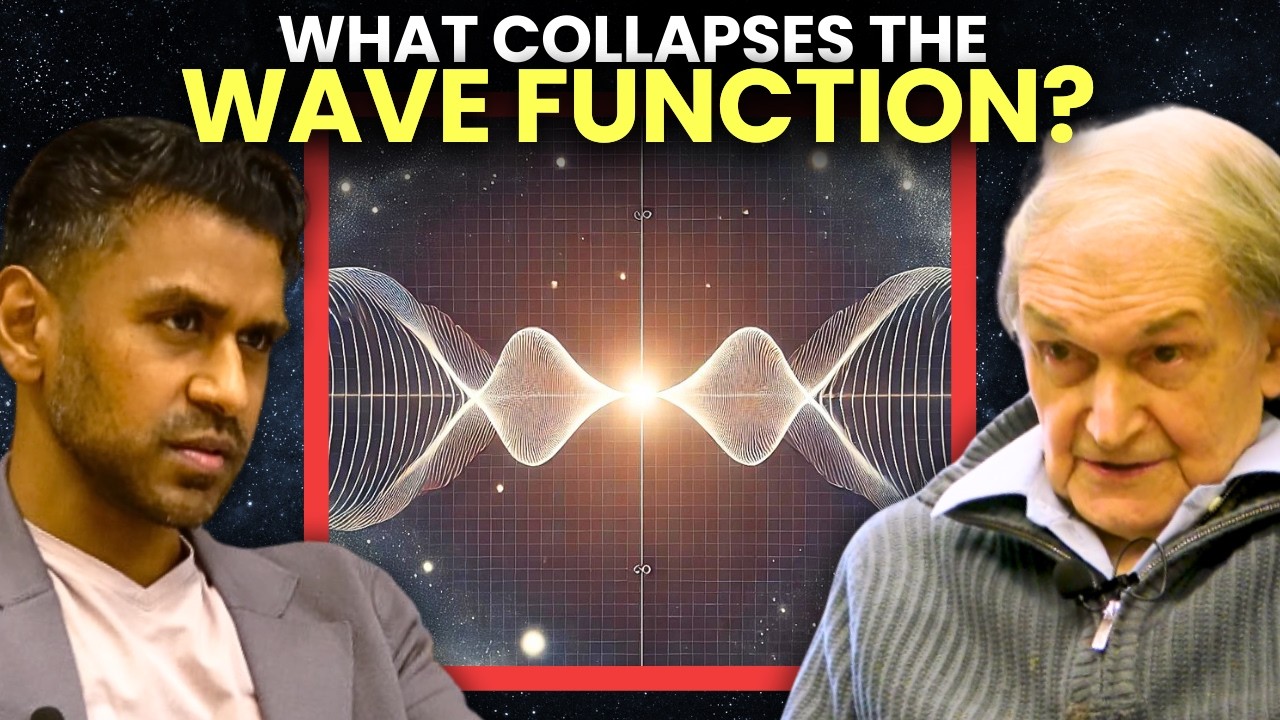
See, I'm super, super interested in talking to people who have done studies that demonstrate something that seems like ESP, or near death experiences or paranormal psi events, because unlike most of the physicists, I don't see it as contradicting physics, I see it as perhaps there's, this is indicating new physics, or the way that consciousness interacts with physics, which to me is part of an explanatory framework. Right. And Rogers work on this retroactivity.
Now, which could explain this, but he's doing it as a way to get rid of the well, for different reason, because of the two is objective reduction in the tails problem and quantum collapse that I, I don't know that much about. But hopefully, we'll hear more about that in our next paper, because he said he's working on it. Andreas Cole says, I'm so excited for this.
Could you ask him what he thinks about open individualism, and what theory of self he personally subscribes to? And then what does Orca say about that said theory of self? I don't think you need a self to have consciousness, I think you can just have experiences that over time, build up memories, and the memory is the self.
So I'm not committed, you know, and then Julian James, you know, had this idea that 100,000s of years ago, there was no one you, there was no one Curt in your head, there was no one steward in my head, there's just a bunch of voices. And, and, you know, the gods or the gremlins, or whoever, and then over over time, it consolidated into itself. So I don't think you need a self to to be conscious, I think.
And of course, if you know, the whole point of meditation is to lose self. So I, I, I don't worry about that too much. And I think if you have a sequence of, you know, the course of a lifetime of conscious moments and memory, you're going to have a self built up.
But that doesn't mean it's the self having the consciousness, consciousness could just be, it's, you know, occurring by itself by itself. Have you researched much about Jung? Because what you described sound like what Jung described as the individuation process.
And that is that there are different personalities disparate, maybe disjoint, that are competing and conflicting. It could be. I am not a I know a little bit about Jung and Betsy studies young and my, my good friend Harold Atman Spocker is big on Jung.
But I don't really know that much about it. Okay. And lastly, Dan arm says, Does he think there may be any basis to the hypothesis that the sun has consciousness?
The sun? Yeah. The only thing I want to say about that is that Roger once said that neutron stars have giant Bose Einstein condensates, so they could have moments of collapse in a neutron star might be having conscious moments, but other other types of stars, I don't know.
And that's it for this discussion. Don't forget to follow Theories of Everything with Curt Jaimungal on Spotify for exclusive content and in depth discussions. Your support on Spotify helps us grow and to reach more curious minds like yours.
Check out the link in the description and join the Core TOE community on Spotify today. See you there.