If you're raising a family, you're a workingclass person here in America, you're using public health care, right? You're getting Medicaid and or you're saving for retirement, this is going to affect our wallets. It's going to affect how much money we bring home every single time we get paid.
If you look at left-leaning journalism, they're going to paint this thing one way. If you look at right leaning journalism, they're going to paint it a whole different way. You always got to be careful and consider the source when you're watching and listening to this information, guys.
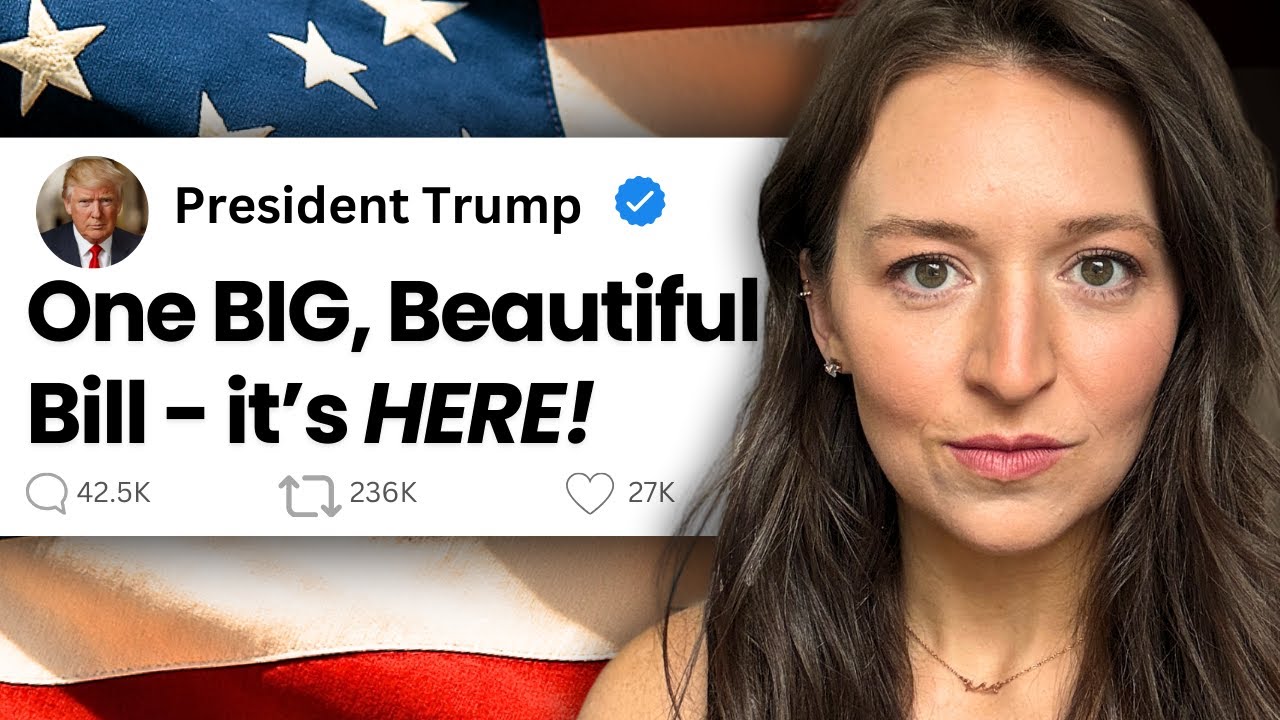
Most people have no idea what's inside of Trump's one big beautiful bill. This one big beautiful bill matters. And it matters for all of us because it directly impacts our wallet, our health care system, our taxes, what we're going to pay in taxes, our future opportunities, right?
Whether we realize this or not. So here's why it's important. We're talking Medicare.
We're talking Medicaid. We're talking national defense. We're talking about all the things that really matter to us as Americans and what you keep from your paycheck and lots of other things, right?
So, most people have no clue what's in this big beautiful bill and most people frankly just aren't ready for it. So, on this quick video, I want to give you a truly unbiased breakdown of Trump's one big beautiful bill. Now, the bill is over,00 pages long, so it's pretty extensive.
So, I'm not going to go over every single thing in it, but I want to give you sort of a overview and a breakdown of the major pros and cons that are the pros that are good for the American people and the American consumers and the cons, the things that are going to be problematic about the bill for us as American consumers and American citizens, right? So, whether you're for it or you're against it or whether you sit on this side of the aisle or that side of the aisle, all of that really doesn't matter to me. I just want to lay out some facts for us as I know them.
And look, this video is going to be down the middle. And I urge you to watch this entire video with an open mind so you can get a feel for where you stand on it, right? This way you can clearly make a decision about what you think, right?
And I'm not here to tell you what to think. I'm really here to tell you just to think. So, as of yesterday, President Donald Trump's one big beautiful bill was currently moving through Congress.
And what it is, guys, it's an overall comprehensive legislative package. And the whole goal of the bill is to really sort of reshape the United States's fiscal policies, the US's health care policies and immigration policies and more. Right now, a lot of people are going to beg to differ on this, and that's cool, too.
Right? But as we stand right now, the bill has advanced out of the House Budget Committee, and it's waiting on a full House vote. So, they're going to be voting on this shortly.
Now, let me say this. The House is mostly made up of Republicans at this point. the Republican kind of have the majority.
The Senate is mostly made up of Republicans as well. The Republicans have the majority in the Senate as well. So, this is probably one of the key times when something like this is going to be most favorable to happen.
However, the bill is facing internal Republican disagreements, right, over things like Medicaid reforms and state and local taxes and all that good stuff. So, there is some push back and it's not that clear-cut that this thing will pass. Even though the Republicans make up the majority of Congress members in the Senate and the House as we speak, the Speaker of the House, Mike Johnson, his goal, and he's mentioned the goal quite often, he wants to pass this bill by Memorial Day, which is less than a week away, right?
So, it's not really looking good for that right now. So, let's jump into it, guys. Again, I want to go through the pros, the good stuff, and I want to go through the bad stuff, but I want to do it on a high level.
so you can get a feel for exactly what's in this bill. Okay, the first pro, and we'll talk about pros first, but stay tuned. We'll get to the cons and issues and problems as well.
So, the very first pro or the thing that's good about this bill is it offers tax relief for workers and for older people. Okay, so this bill extends these 2017 tax cuts, reducing individual income tax rates. And so, Republicans that are for the bill are sort of touting this as a big issue, right?
Right? These are some of the largest tax cuts in the nation's history. Right?
And let me give you a quick refresher on what the 2017 tax cuts were. The 2017 tax cuts under Trump as president, it was called TCGA or Tax Cuts and Jobs Act. It was a major overhaul, right, of the US tax code.
It was signed into law, I think at the very end of 2017. It basically lowered individual income tax rates across really most brackets now and it doubled the standard deduction and reduced some personal exemptions. Now it also lowered the corporate tax rate I think from 35% down to about 20 or 21%.
Right? The 2017 tax cuts also increased the child tax credits and it limited deductions for state and local taxes as well. Now, it also made some of the most individual tax cuts temporary, and they expire in 2025 this year, and that's one of the reasons they're revisiting this thing and trying to extend them, right?
Its goal basically was to stimulate some economic growth back in 2017. But its critics also came out and really harp on the fact that it significantly increase the national debt and it disproportionately benefited corporations and wealthy people. So that's what the critics said about the 2017 tax cuts.
But for the most part now Trump's big beautiful bill is trying to extend those tax cuts even further and introduce some of these tax exemptions for things like tips if you work in the service industry. So if you work in the service industry and you get tips, there will be some tax exemptions for you. There'll also be some tax exemptions in this one big beautiful bill for overtime pay.
And one they tout quite a bit is social security income for all seniors earning under $75,000 a year. There'll be some tax exemptions for you as well. And this one big beautiful bill will also remember we're talking about the pros here.
The one big beautiful bill will also are supposed to raise the standard deduction and increase the child tax credits right up to $2,500 through the year 2028. Now that's some good stuff, right? tax cuts extended.
Uh lower federal income taxes, no taxes on tips and overtime, tax-free social security income for many or most seniors, all that make under $75,000 a year. Child tax credit boost. Right now, why does these particular pros matter?
Because this is more take-home pay in the short term for most of us. Right now, most of these benefits are fairly temporary, though, and they could expire by the year 2028. So, we'll see what happens.
Now, another pro or good thing about this one big beautiful bill and how it will affect us is that it establishes what they they're calling a MAGA account for newborn babies. Babies born between 2024 and 2028 will receive $1,000 towards a savings account. And they're calling that a MAGA account, right?
So, that's a governmentf funed savings account. Now, why does that matter? Well, it's kind of giving a leg up or helping out young babies born, right?
And another pro is to increase the small business tax reduction from 20% to 23% which is going to supposedly benefit more than what 25 or 26 million entrepreneurs in America. So again some good stuff there. Another pro is that it will enhance border security and national defense.
So this one big beautiful bill, it allocates about $70 billion for border security measures, including continuing to build that wall between Mexico and America and increasing the personnel that are working down there at the border as well. The bill also provides $150 billion in additional spending on defense, right? Focusing on, you know, unmanned systems and drones and modernizing the military capabilities and all that good stuff.
Probably a good thing as well. That's why I put it on the pros side, right? So, more money for military modernization, more money for border control and defense.
This is going to reduce illegal immigration and possibly hopefully what they're hoping improve national security. But remember, this could also divert funds from some in infrastructure and divert some funds from social programs in America as well. But I don't want to go there just yet, right?
If you're waiting on the bad things, the cons, they're coming up. Just be patient, right? We're going to get to those in just a moment.
Another important pro or good thing about this one big beautiful bill is that it's going to invest about 12. 5 billion dollars towards modernizing the FAA, the Federal Aviation Administration, right? Traf air traffic control systems and all that stuff.
And we all know the tragedy that took place just a couple months ago regarding that, right? And based on the few people that I know that work at the FAA and work long overtime hours at the FAA, that's a good thing for workers there as well. So, that's kind of an overview of some of the good things that's coming out of this bill.
The pros of Trump's big, beautiful bill. Now, let's talk about some of the problems, the cons for the American people and for the American economy. First big con is this.
This bill is going to usher in some really significant Medicaid reductions. And so you know Medicare is federal, Medicaid is state, but Medicaid at the state level also receives some federal funding. So you know, right?
So Medicaid, this is going to impose this one big beautiful bill is going to impose work requirements for Medicaid recipients, right? Medicaid recipients between I think the ages of 19 and 64 starting in 2029 is when those work requirements are going to really kick in with now there's some Republicans that are pushing back on the bill saying that hey wait a minute we think this should really start earlier than 2029 but I think 2029 was put in there to give people sort of a cushion to get there right give people sort of a preparation prior to cutting this very very important government funded help right so the Big Beautiful Bill. Also, another con is that it introduces co-pays and reduces some of the reimbursements that some people are saying potentially could lead to probably 7 or 8 million Americans losing Medicaid coverage.
Now, listen, I don't know about you, but I know people who receive Medicaid. And most of the people that I know that receive Medicaid, they need it. Okay?
So, you're talking about perhaps 7 or 8 million Americans losing their Medicaid coverage. Now, another con or problem or issue with this one big beautiful bill is it's going to increase the national debt. Now, the bill's tax cuts and spending provisions some places, depending on where you read, it says it will add two to$3 trillion to the national debt over the next decade.
Now, listen. Here's the thing about the national debt. When the national debt going up is good for a certain political party, a political party will jump on it like, "Okay, let's raise the debt.
" But, however, when it's bad for a particular uh party to actually push it, then all of a sudden, they don't want to push it. Right? So, we can look at that on both sides of the aisles.
There's times when you see mostly Republicans saying, "No, no, no, don't raise the national debt. " And you see Democrats that say, "Oh, yes, we got to raise the national debt. " And then there's other times like now when you see that increasing the national debt is all of a sudden good for Republicans.
And so all of a sudden you see Republicans saying, "Oh, no. It's okay to raise the national debt. " And now you see Democrats saying, "No, no, no.
We don't want to raise the national debt. " It's really, really weird, guys, because neither political party has a real strong stance that they don't waver from regarding the national debt. It's kind of like they both flip-flop on the issue.
So, I put this under the cons because this is what we're seeing a lot of Democrats saying right now that this is going to really really increase the national debt to the tune of two or three trillion dollars over the next decade. And we don't like it because of that. Now, look, I do want to say this about the national debt.
Just a week or two ago, you had Moody's that came out and lowered its credit rating for America, right? Just like you have a FICO score, right? Experian, TransUnion, and the other one that rates your credit rating and gives you an overall FICO score.
Well, look, each country in the world also has three credit rating bureaus that actually rate their credit rating as a country. One of them is Moody's and Moody's just downgraded America's debt rating. Now, the other two credit rating systems downgraded America's rating over the last several years as well.
So part of the reason they always cite for this is the national debt. And so the national debt is a really important thing. So if the bill passes, ultimately we're talking an increased national debt more than likely.
Now another big con or problem with Trump's one big beautiful bill is that it's going to not only just cut Medicaid, but it's going to cut other social programs. Reducing the funding for programs like food stamps or SNAP, right? and clean energy subsidies are going to go away as well, at least be reduced quite a bit.
It also eliminates federal direct subsidized loans for undergraduate students. And it sort of restricts the national secretary of education's regulatory authority as well. And so we got work requirements for Medicaid.
We got fewer people having access to free or affordable care. So, if you rely on Medicaid or might need it in the future, this could be a major threat to your health care safety down the road, 5 10 years down the road, right? And obviously, why does this matter?
Because you're talking about people losing health coverage and health benefits, increasing people's out-ofpocket medical expenses, right? That's a problem. That's less money that you can take home and go buy groceries with, right?
Another con of this one big beautiful bill is the temporary nature of some of these benefits, right? Several of the tax benefits that I mentioned earlier, including exemptions on tips and overtime, those things are set to will be set to expire by 2028, right? Which means that perhaps if this bill goes through, oh, tax relief for a couple of years, then all of a sudden those taxes come back.
Right? Now, I'm not sure if any politician in the year 2028 is going to be the one who's responsible for increasing taxes and bringing those taxes back, but it's a possibility, right? So, that's sort of the over big view of the pros and the cons for us as American people, which I think is really important because look, you can talk all day to your blue in the face.
The one thing that matters to most American people is how is this thing going to hit me in the pocketbook? Do I care more about increasing the budget and losing some of the cuts to these social programs like Medicaid or do I really want these tax cuts right now? Right?
So, for a lot of Americans, which one of those things do you really want? Right? Let me know in the comments below.
What's your thought process? Are you looking at this big, beautiful bill as more of a positive or as more of a problem for the American people? Right?
Just drop that in the comments section below for me. This bill got out of the House Budget Committee and it passed the House Budget Committee with a 17 to6 vote after they had to have some negotiations with some of the conservative folks that was holding out. And then the next step, it just passed through the House Rules Committee just yesterday.
And now we're waiting on a full House vote that's expected soon before Memorial Day and then ultimately it's going to have to go through the Senate as well. Let's take a quick look at this article that came out from the AP. It actually came out yesterday morning, but it was revised in the afternoon.
Trump on Capitol Hill employers divided Republicans to unify behind his big tax cuts bill. And on this article, it just talks about how President Trump yesterday visited with House Republicans and implored House Republicans at the capital to drop their fights over this his big tax cuts bill and get it done. This article also goes on to say that during more than an hour-long session yesterday, Trump warned Republicans not to touch Medicaid with cuts and he told New York lawmakers to end their fight for a bigger local tax deduction.
And it goes on to say that the president arrived at a pivotal moment. Negotiations for this big, beautiful tax bill are slogging along. And it's not at all clear that the package with its sweeping tax breaks and cuts to Medicaid, food stamps, and green energy programs has the support needed from the House's slim Republican majority.
Lawmakers are also being asked in the bill to add $350 billion to Trump's border security, deportation, and defense agenda. And it says inside he spoke privately in what one lawmaker and lawmakers are just Congress members what one lawmaker called the president's weaving style and he took some questions. The president also made it clear he's losing patience with various holdout factions of the House Republicans because again Republicans are sort of divided on this particular bill.
We're still a long way away, said Representative Andy Harris, who's a Republican out of Maryland and the chair of the House Freedom Caucus. So, conservatives are insisting on quicker, steeper cuts to federal programs to offset the cost of the trillion dollars in lost tax revenues. At the same time, the core group of lawmakers from New York and other high tax states want bigger tax breaks for their voters back home.
It goes on to say that the sprawling 1116page package carries Trump's title, the One Big Beautiful Bill Act, as well as his campaign promises to extend the tax breaks approved during his first term back in 2017, including no tax on tips, no taxes on automotive loan interest, and no taxes on social security. So guys, that's where we are with this one big beautiful bill. That's what's inside the bill.
Most people, we really don't have a clue what's in the bill. And again, the bill is very long, so it'll take you a while to go through it. But here's the deal.
The thing that we got to remember is that there's pros and there's cons. There are things that most of us can live with and things that a lot of us can't live without in the bill. So whether you sit on one side of the aisle or the other side of the aisle, doesn't really matter.
The facts are be thinking. Be thinking for yourself as an American consumer, as somebody who has a vested interest in whether or not this bill gets passed or doesn't get passed. Be careful about what you're watching on TV.
Right? If you look at left-leaning journalism, they're going to paint this thing one way. If you look at right-leaning journalism, they're going to paint it a whole different way.
You always got to be careful and consider the source when you're watching and listening to this information about things like this that are political. But hey, this is going to affect our wallets. It's going to affect how much money we bring home every single time we get paid.
So, it matters, right? It matters because it's going to affect whether your taxes go up or down, whether you can afford health care, whether government programs stay strong, what kind of debt burden we're going to pass along to the next generation. Right?
It's a big bold piece of legislation that's really going to shape many of our lives for years to come. Especially if you're raising a family, you're a workingclass person here in America, you're using public health care, right? You're getting Medicaid and or you're saving for retirement.
So, I hope this video explained what the bill is all about, at least at a high level. Guys, let me know if you like and appreciate this type of unbiased information that allows you to make up your own mind rather than being fed, you know, far-left leaning political news or far right leaning political news. Let me know if you like it right down the middle with the facts so you can make up your own mind.
If you got value from this video, just type in the comments, I got value. Don't forget to smash the like button and share the link to the video with at least two people who you know and keep your ears and eyes open for what's happening with this bill as it goes through the House. There you have it.
Until the next video.