[Music] [Applause] [Music] [Applause] [Music] welcome to loaded and rolling I'm your host Thomas Watson and for those living under a rock we've recently had a lot of changes this year new Administration new regulations new things that I have to pay attention to because every four years of course we may shake up the box or continue to keep the box at the same way but one of the big topics that we're going to talk about today is autonomous Trucking an autonomous vehicle something that uh if you've been keeping a breast of the situation there's been a
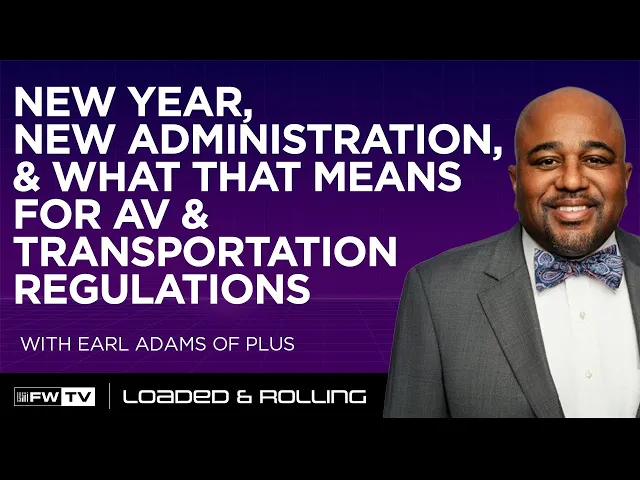
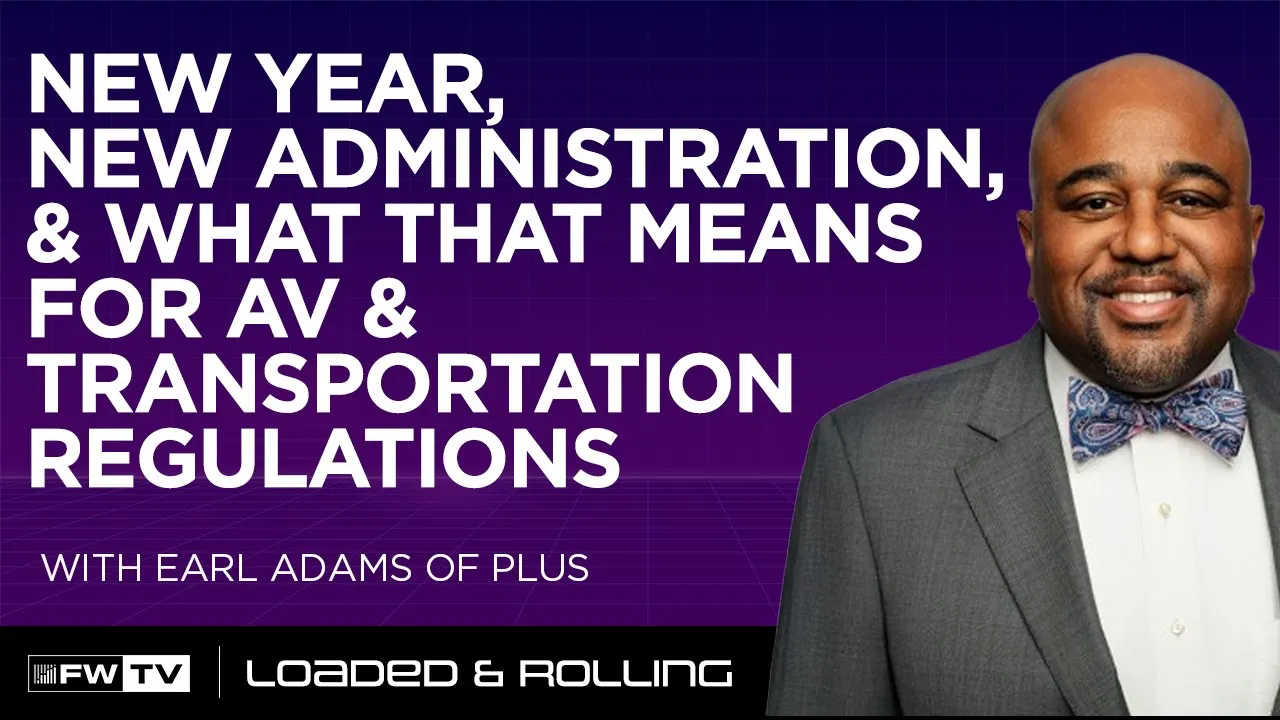
lot of changes especially in the development of the technology the autonomous systems are getting a lot better but now we're also waiting to see what the regulatory side is going to be and so we're going to be talking with the folks from plus today I've had a great experience talking with them in the past they've got some amazing software and they recently made some news by bringing on Earl Adams he's the vice president of public policy and Regulatory Affairs at plus we'll be talking with him today about not only some of his experiences uh but
get some of his thoughts and plus his thoughts as we are starting 2025 so Earl pleasure to have you on great getting to uh getting to talk to you uh you know tell us a little bit about yourself first Hey Thomas thank you so much uh Happy New Year it is really great uh to be uh to be with you today and uh you know this is has been an amazing year for me uh you know particularly I I left the uh Administration actually back in December 2023 um where I was the Deputy Administrator at
uh the federal motor CER safety administration and before that was the chief counsel um it took a a little bit of a a stop at a global law firm called Hogan levels uh where I was uh working in the transportation regulatory space uh but then now have made my way to plug and really excited about helping to lead uh this great team of folks as we as you said navigate uh the regulatory world uh around autonomy um one of the great things um that that makes me I'm really happy about being at plus is that
I worked with them uh while I was at FMCSA one of my roles was overseeing the team that was attempting to develop the first set of guard rails uh for a federal framework for self-driving commercial vehicles and so now to be with a a great team here plus as we're uh looking at you know what the next four years are going to to offer uh in the autonomy space uh like I said really excited uh to to be a part of it and and frankly uh excited for the industry uh given uh you know this
the new Administration and I mean there's been a lot of fun changes let's talk a little bit about some of your experiences at the FMCSA and law before starting at plus because I think a lot of folks uh you know autonomous has been slowly chugging along slowly improving it but on the regulatory side what was kind of some of the behind the scenes with the technology because one thing that at least from my understanding was it almost felt as if uh let's wait and see as this stuff develops but not too heavy-handed as in we're
going to start immediately issuing rules and regulations until it's kind of developed to a certain point Thomas you know you're not you're not too far off there um you know if you think back to you know 10 years ago uh autonomy has always been 2 years uh you know for deployment and uh I think in that Spirit the the the ru making process is very it's intentionally slow it's very intentional and so I think that there was a uh a rightfully uh concern about uh you know not moving too fast uh you know for a
technology that is innovative and we know it's going to continue to innovate you don't want to uh jump out uh too soon and then have whatever you did become obsolete and so uh at at FMCSA you know during my time there uh you know frankly uh leveraging and taking a uh leaping off from where the first Trump Administration left off with its vision statements around AV so av1 and two um we sort of took the same view like hey you know this is going to uh it's going to take time it's um you know we've
got to to be nimble uh but at the same time and this is I think goes to your question what what was going on behind the scenes was this realization that this is real this is happening so in the sense that if 10 years ago it was every two years it's you know two years away well we were now in a place where on any given day you know there are hundreds of miles of testing um being being done in L you know with L4 uh capabilities on public roadways and so in that Spirit um
not to not to to hamper The Innovation but frankly just to make sure that we established that there were just guard rails from a safety standpoint uh there was a lot of discussion around how do we just make this at a thresh at a sort of a preliminary level as safe as possible while this testing is occurring while these loads are being moved um that was the most important thing and that's that's what we were trying to to accomplish uh at FMCSA while I was there and uh one of the big things I'm hearing about
a lot of buzz from other autonomous companies as well is that there's big plans for this year 2025 some are announcing someone to do commercialization in 2027 I know the two-year thing we just brought up but uh what do you think kind of makes this different because it does feel like we have a brand new slate we have a new Administration and so given your regulatory experiences um what are what are some of your early thoughts as as we are just now getting our our foot in the door for a second Trump Administration compared to
the outgoing you know previous Biden one sure yeah no I think that that this is an exciting time uh you know jokingly saying two it was two years away two year every two years I think we're now here uh when I look at what plus is doing um you know we have a plan towards 2027 uh commercial rollout where we will have trucks coming off of the line uh through our Partnerships with our Global OB oems the traon group uh in veco and um and uh and Hyundai but with traon group you know by 2027
we will have uh trucks coming off the line and and that's that that is a reality uh with I think that you know several years back was not really uh was not as likely but now um you know in that Spirit of uh you know these Global Partnerships oems are realizing that they need to find great Partners uh plus is one of only three that has these types of oan Partnerships you know this is we're at an inflection point and I think that there's really just a it's a very exciting opportunity uh in the AV
space on the regulatory side I think we're all very cautiously optimistic um you know I I believe that the Trump Administration is going to pick up where they left off uh where they were leaning forward uh and in creating a regulatory environment which was uh supportive and uh and frankly encouraging of Av Tech deployment happening and I so I don't I don't think that there's I don't see anything that's going to necessarily uh prevent that from happening if you look at uh secretary Desy Duffy's confirmation uh hearing you know it was very much about autonomy
and you know he he seemed very interested in um you know in making sure that uh there is a framework for this um technology to be deployed in you know a safe and effective way while also you know addressing a lot of the you know the benefits for the economic benefits and the sustainability sustainability benefits that will come from autonomy so you know to your question very excited about the next two years I think that plus is in a great place as a result of the relationships that we have have with our oan partners uh
you know traon and Veo and Hyundai uh and that 2027 commercial uh commercialization date is is is real and I I think that we're we're we're going to be ready to to see that happen and I'm excited about you know what what that what that uh is going to mean to the to the sector uh in general and I mean two years is very fast by federal government rules uh given the rule making review the comment period all the stuff uh if I want to from how I've seen other launches you have a trail vehicle
let's say that I want to get my level four going I want to do the driverless one is there anything right now any big questions I need to answer in order for me to reach that is there any kind of gaps that we're missing or is the current regulatory stuff in place that I could just kind of roll it out without having to really overcome any hurdles yeah so you know this is one of the reasons why it's so important that we have a federal uh framework uh right now it's uh you know it's the
the guideline or the regulations that are guiding the industry are on a state base uh you know individual states so we're doing uh you know testing right now with uh uh traon groups brand International in Texas and Texas has leaned in on uh creating a a very um you know supportive environment for AV testing and so you know a a company like ours we we are still doing our testing with um with a driver in but you know on closed roads we're we're going to be moving towards um uh driverless testing in our L4 and
that is the you know I think that that's the natural progression you have other companies that are announcing that they're going to go driver out uh you know as perhaps as early as as this year on public roads and you know Texas they are working with their with as we are um know with State uh with Texas state and local officials in order to do that in a way that you know uh uh complies with Texas's rules um but we are now at this place where um I think as I said this inflection point where
L4 uh driverless uh driver out uh runs are going to be a reality and you know plus is uh you know we're going to be continuing to partner with our uh with our o Partners uh in order to do it in a very you know safe and systematic way but yeah very soon uh you know I think that all of the uh ads operators will likely be uh trying to conduct some type of Drive route um uh demos and more more likely than not in States like Texas uh Arizona which have you know very much
sort of uh you know establish uh that they want to be leaders within the AV space so we kind of have a cool opportunity because I I did some reporting earlier one of the companies that wanted to do driver out in 25 uh they had problems with cones who would have thought the FMCSA and little cones that you need to put at the side of the road and that versus having a reflective uh flasher a blinker having something and so now the FMCSA is like wait a minute I need to go check on the cone
status um So currently I guess that's where the big scramble it's almost like going uh to the Brave New World because if you can get the states to make the right framework through the testing then you can also try to Lobby the government to have favorable regulations is that kind of what's on your what's on your wish list this year new Congress uh some new Senators uh new folks to the fmsa like what are you kind of looking at now as you're trying to hit the ground running cuz it looks like if the states if
one state does really well maybe can just tell the congressman or the fmcs say hey let's do it like Texas or let's do it like California yeah no so you know those Provisions those few provision Provisions within the fmcsrs uh which require a human driver I mean those have to be dealt with FMCSA um you know recently as you know uh denied a petition from um uh from Aurora um you know with respect to their warning triangle uh solution I think that that is a you know my wish list is that FMCSA will revisit that
um and will sort of identify uh as the regulations allow um you know if if if there are Provisions that uh within the proposal that don't work rather than an outright denial uh that they would put conditions in order to help uh ensure that there is a gradual phase in of the uh technology if that's what they believe is going to achieve an equivalent level of safety and that's what regulations require anytime that you seek to um for an exemption or a waiver of of of the regulations so you know number one of my wish
list is that the agency will you know take a look again at that petition and you know hopefully identify what they believe are conditions to make it safe and will approve it um I think that there's also a need and and I'm actually again cautiously optimistic about this that Congress May engage in some form of legislative action um you know there are a lot of members of Congress that are very um you know knowledgeable around around autonomy both on the passenger side as well as on the commercial vehicle side and so I you know would
not be surprised if there's some type of legislative action that occurs um and then I think the president you know through just the executive power has the ability to in the bully pull pit to you know really establish a um uh you know sort of I guess a a an atmosphere or a um a playing field which which makes it clear that you know that there is a uh this administration supports the the safety benefits the economic benefits and the sustainability benefits that can come from autonomy and that that will sort of serve as a
jump off point for whether it's on the state level additional regulations that can help clarify when driver out uh um operations can occur uh on up to as you said to the federal government level where you may be able to to see Nitsa uh begin to you know earnestly look into establishing some standards or on the operation purely on the operation side FMCSA you know being willing to just establish that clear statement that driver out technology uh L4 technology is permissible under the fmcsrs when done in these with these conditions so it's almost like because
that's what I noticed in the research the FMCSA themselves had mentioned in the denial that well we haven't really as I interpret this we haven't really looked at it before we tried to get the national highway traffic safety administration then we also have the Federal Highway Administration and we have the FMCSA so is it kind of like not Dueling Banjos but if you want to get everyone to kind of move forward especially on an autonomous truck you got to deal with the highway people the standards people the regulatory government people and then we all have
to come together to then decide on uh this overarching theme right it's it's almost like wrangling departments no without a doubt uh you know at dot we call it them our sister agencies um you know there's sometimes a little sibling rivalry that happens uh but ultimately you're correct all of the agencies the modes within dot have to be aligned and moving in the same direction in order to ensure that there is uh you know uh a clear Clarity within the regulatory framework because that lack of clarity I think is the uh represents one of the
the the uh uh threats if you will from a reg standpoint to this industry you know where you have one agency operating you know going faster than the other everyone needs to kind of be working at the same level and so you know in the end Nitsa sets standards uh around the op the the operation of both commercial and passenger vehicles that process is that that is requires a great deal of data and testing I think that the AV step program and other uh efforts by Nitsa and the last administ ation to uh just kind
of get as much data as they can uh from related to the operations I think that's a good first step I think FMCSA without question um is you know has to engage on the operational side and like I said I hope that they will revisit uh the petition and and then let that serve as a jump off point for other actions uh and then Federal Highway you know ultimately frankly has the money and you know they're the ones that if we can get them to uh begin to look at from from an engineering standpoint you
know the way that roads are developed the way that they deploy their their Grant dollars in order to help encourage uh additional demos that would be uh you know that's what's going to be necessary so yeah it is that that you know all of them sort of driving in the same direction at the same speed which is going to be so important and haggling and I wanted to go look at the reg legislative aspect because you did mention earlier that if you have a bully pull pit if you have Congressional legislative support uh is that
something where like if I'm if I'm Plus or I'm a AV firm I'm targeting I want to make sure I want to get some good regulations passed uh do you kind of spread out your strategy among the do and the sister agencies or do you try to put it and think that maybe if I can pass legislation that may speed up the agencies or are the agencies just kind of like well you got to like get with Congress and then they can give me more power to like speed this up is there a specific way
to like a gas button a gas pedal so to speak I think that the uh legislative path does represent a a bit of a uh you know sort of an acceler uh in part because the agencies right now all believe and understand that they have the authority uh to um to promate rules for autonomy the issue is just the the ru making process is just it just takes a long time and so if Congress gets involved well what they can do is they can begin to set deadlines they can set a timeline the agency must
do this within this time frame and I think that there's nothing you know nothing better when you're working towards a deadline as opposed to when you don't have one so yeah I think that the legislative path can um you know can be fruitful at the same time you know if the president makes it clear that this is a priority that will move the agency in the exact same in the exact same way so I don't think that it's either or I think it's and um you know the a the the the industry will benefit from
you know direct action uh whether it's from the executive uh from the White House or from Capitol Hill um but we just the bottom line is is that there needs to be some some motion and some movement and I like I said I'm cautiously optimistic that whether it comes from the legislative branch or the executive you know that we're in a good position now and let's talk about public acceptance I feel like I'm part of the public that so I've been here coming up on four years now since 21 Allan Adler amazing Rider has been
doing the truck Tech beat for a while I've just recently taken it over so large fleets and autonomous it's suddenly become something where it's in both of my wheelhouses now let's talk about acceptance uh the first one is you did mention a lot of oems it feels like acceptance on the oems a lot of testing a lot of deals bringing in the hardware uh for Trucking fleets and operators uh what's kind of the uh the vibe right now so to speak in acceptance I know there's a few trial runs with various ones but do you
think this is something that's more Upstream first do you think eventually Downstream at the the operator level we may start to see some some big moves well I think that it it you're definitely right that the oems are have identified that this is a area that they want to to develop and focus in you know um you know our 30 partners are definitely you know demonstrating and leaning forward in that respect um but the reality is is that if they didn't think that their customers were interested it would not matter so I think that even
Downstream there is definitely interest in seeing how uh autonomy can help with uh our the driver shortage which exists and you know looking at the hardest part of the uh the the the trucking experience and that's over the road the that group of truckers is not growing it's not expanding and so if uh autonomy can help uh you know be one part of the solution as to how we resolve that I think that's the reason why you're seeing uh Downstream you know shippers that are interested in understanding how autonomy can help them uh in their
in their business um you know it is definitely going to be I think with all Innovation sometimes it is it can be topped down but ultimately you know these are business decisions that uh you know that shippers are making and I I think that it's it's clear that whether it's from a driver shortage standpoint or even from a safety standpoint uh there are benefits that can come from autonomy and so I think in that Spirit that's why we're seeing this move uh for both uh adoption on the OEM side and as well as uh you
know awareness and and acceptance moving towards adoption uh on the uh the fleet operative side do you think there's an angle to say uh this is based on a conversation that may maybe the autonomous trucks are going to be safer than the autonomous cars I talked to a buddy who said well if you think of the terms of Tesla they're really obsessed with cameras but then I was talking with another autonomous maker and they said one thing we really like the fact is we have cameras Liars Radars we have multiple redundancies in case of uh
fail points and that's one of the reasons why the generative AI is such a big deal is we can finally get all this processing power and start consuming it is there the potential that that could be an issue as well cuz I know there's a driver shortage in my opinion there's a shortage of very safe drivers which see with the nuclear verdicts and stuff is there any kind of angles on that in compared to like a standard car that's zipping around with just one type of Cheaper technology yeah well you know I I'll be honest
my my area of expertise is not as is not on the passenger side uh as as as much but I will but you did hit on it it is about redundancies it is about being able to have as wide of a field of vision as possible being able to you know to to see down uh down down the road as far as possible so that the system can un can can identify and anticipate and to react in a time that you know can be done in a safe manner um I think that when you look
at the various use cases um you know each of them has their own challenges uh that they're going to have to overcome and on the passenger side uh without question I think that the technology is going to have to improve uh as to how you know from a driver assist and then ultimately to an L4 as to the the field of vision that those vehicles and the technology that you can can put on top of the passenger car so that it can can have as wide of a field Vision as possible on the commercial vehicle
side because these these trucks are so big and as we know you know I used to say all the time at FMCSA I mean these are 70 mile per hour bullets that are going down uh the highway um it's so important that the technology you know have as many built-in redundancies as possible and uh you know in that in that spirit I think that that's why the when I look at the two use cases and moving towards pure commercialization and deployment I do think that the commercial vehicle uh use case is perhaps the most uh
viable today um and I think it is again the reason why you see oems uh like traon uh and inco that are investing you know in time and in Partnerships um you know Hyundai as well you know it because they know that this is uh from a use case standpoint this one here probably makes the most sense from an economic standpoint as well as from a safety and a sustain we haven't even talked about sustain sustainability I mean you know the cost savings that come from you know that that uh very measured ongoing travel time
you know just from gas alone is beneficial so I think those three benefits are probably more are probably clearer in the commercial vehicle space than the passenger side and that's why uh you know I think the the commercial uh use case is moving uh is is kind of moving at at a faster clip we're going to have to do a whole other segment on the sustainability one because yeah there's definitely a lot there's a a point of Pride optimiz optimization in fleets and stuff especially with the idling and you know taking your break uh one
last question got a little bit of time left if you had your Christmas list I know Christmas has already passed but with the new Administration is there anything that uh folks should be aware of or any immediate goals or regulations you want to get brought up or put on people's radar that would really help towards the next steps which is you know that path to commercialization yeah I think that as I said the uh number one is FMCSA needs to uh take a look at uh hopefully a re revisit the the petition that Aurora put
in regarding warning triangles um all of the regulations that require a human driver uh need to be reviewed and identified with how can we ensure an equivalent level of safety uh using technology leveraging Technology Innovation that's what needs to that's what needs to occur and I think that that will be um you know if if we're if we're having that conversation I think that we're moving in the right direction the second thing and this kind of actually relates back even to um you know the the adoption piece of it and that's from the public I
would love to for for the for public adoption of of this technology um I would love to see um FMCSA dot using its bully pulit its soft regulatory authority to help uh increase the education and awareness around autonomy and around autonomous vehicle uh commercial vehicles to talk about the safety that can come from their use uh because that really the Public's acceptance of uh commercial autonomous vehicles is is truly the threat uh the existential threat for the industry and so I think that through education and exposure so regular touch points and then leveraging the evaluation
or the testing and the data that the industry has I think that will go a long way in helping to move towards public adoption and if dot were to use secretary Duffy and and others uh were to use their leverage in order to um uh to increase that awareness I think that would be really beneficial and it would be a great uh year for the autonomous vehicle uh industry perfect Earl thanks so much for coming on the show a lot of great information as well we'll definitely have to have you on again to talk about
as the developments continue on if folks want to learn more about plus they're get in contact with you learn what youall are working on what's the best way to find out they can go to www. plusai uh or can they reach me always at earl. Adams plusai appreciate your time time say hey wish you the very best this year thank you Sirah you too that's going to be a wrap for this segment if you're just catching us we are on Apple YouTube and Spotify also while you're at it sign up for the loaded and rolling
newsletter and the truck tech one I'm double dipping today check it all out a lot of great developments that's it for this episode but join us next time we'll see you soon [Music] [Applause] [Music]