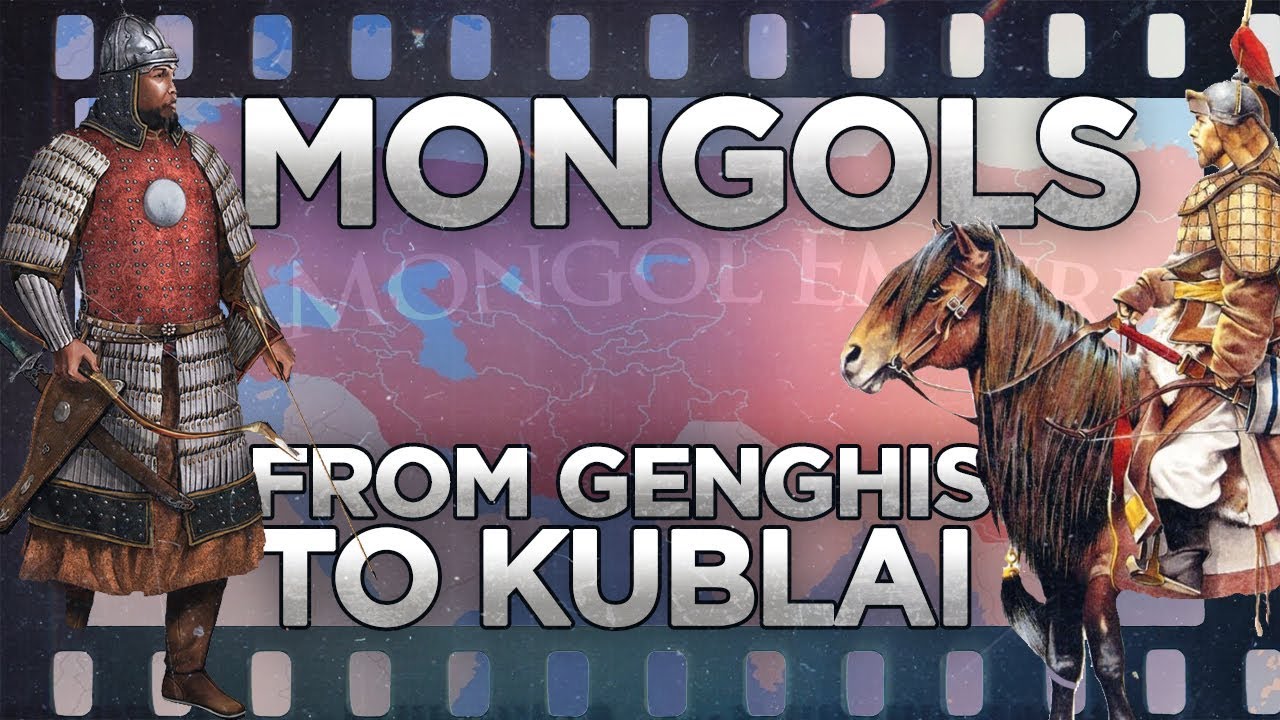
just in time for the holidays there are three new items in the horses store check it out at www. horses. land jingus Han's life was steeped in blood from the very beginning the Han's birth was celebrated with a human sacrifice at just 10 years old jingus Han murdered his own brother born an impoverished peasant and left to die by his clan the Han went on to conquer an area larger than the continent of Africa Africa through an unending pursuit of Ruthless total Victory his efforts made the accomplishments of Julius Caesar Alexander the Great and Napoleon
look like Child's Play In fact history only offers us one other individual who born a peasant Rose to reshape the entirety of humanity around him that is Jesus of Nazareth perhaps jingus Han's only true equal jingus Han has been deservedly called the most important man of the Millennium he impacted the world in ways we still feel today the great Han fundamentally and permanently altered the world system and there is even a rumor that 1% of the global population is related to jingus Han we will discuss this fact and so much more later in this video
you see jingus Han was not a bloodthirsty Maniac indeed throughout his life he displayed qualities of kindness and open-mindedness that we would all aspired to possess but the questions remain outstanding who was jingus Han further how and why did an illiterate impoverished peasant conquer the world this essay is not a play byplay of jus' life we will not be regarding every event and conquest and battle but instead examining jingus Han the man his methodologies and his motivation we will determine how he was able to soar to Such Great Heights in doing so we will indeed
learn much about the events of his life along the way but to begin we should get a simple understanding of jingus Han's story even if in Broad Strokes jingus Han was born as tamuin in about 1162 in Mongolian tradition a child could inherit the power of a captured Chieftain if that Chieftain was slain and the child given his name tun's father yasugi did just that he had captured a tartar leader and likely celebrated the birth of his son with a ceremonial Human Sacrifice the boy was brought up in the traditional Mongol way he learned archery
horseback riding and hunting in his early years ujin's Early Childhood was mostly unremarkable but this changed radically on his 12th birthday when his father was killed after the death of yuge ujin's Clan did not have the resources to feed and take care of the now fatherless family so they essentially exiled timujin his mother and his brothers the family was stripped of their possessions and genuinely simply left to die on the Mongolian step the eldest brother of a Mongol family was like the household emperor of course this sort of despotic role would do very little in
the aims of sheer survival perhaps ujan perceived this or perhaps he had just had enough of his older brother begar one day timujin caught a large fish and begar stole it begar cooked the fish entirely for himself rather than sharing it with the family so in his first Act of brutality ujin shot begged her full of arrows killing his own brother timujin was just 10 years old at the time after the murder timujin was arrested by a Mongol leader named tarai tarai captured the boy and held him in a sort of restrictive wooden collar but
tarai issued only one soldier to guard the prisoner one night the captive ujan snuck up on his guard clubbed him in the head and made his Escape into the night air when he arrived back to his family they were only barely surviving they remained penniless and without food never one to be ruled by circumstance timujin spent the next years building himself into a young Mongol warlord this eventually led to ujan meeting his first wife a young woman named borte the two were very much in love it would prove to be the greatest love of ujin's
life however tragedy struck when borte was kidnapped by a group of rival Mongols this incident became the impetus for timujin to grow from fledgeling warlord to outright leader of men still a teenager tamuin rallied clans of Mongols to go reclaim borte the success he had in these efforts was remarkable the official Mongol historical claim is that tamuin LED 500,000 men to go reclaim his wife this is surely exaggerated but the Coalition ujan assembled was immense the proceeding battle was a full total outright victory for uin one which resulted in him saving BTE but when he
reunited with his wife she was pregnant with another man's child showing great integrity timujin declared that she was his wife and so the child was his son indeed ujan would go on to raise this child child as his own ujan would have liked to Simply return home with borte retire from warling and live a quiet pastoral life but by this time he was just in too deep he had pledged lifelong Alliance to other leaders and had a veritable Army of men acting under his own Banner retirement just wasn't an option furthermore ujan had within him
a RedHot sense of ambition even as a teenager he was aiming towards entire Supremacy over the Mongols tamuin LED his Newfound Army all over the step in an effective and ambitious plan to eliminate all of his Rivals the actions which followed and surrounded these conquests were brutal indeed the word genocidal could accurately describe timujin as his hordes swept through Asia he was entirely successful in his Pursuits he was soon affirmed with the title genis Khan which meant something like Universal ruler in the decades which followed the new con would conquer land in a way Humanity
had never conceived but how how was an impoverished illiterate peasant able to conquer an entire continent this comes down to three things theon's personal qualities his incredible military genius and his innate ability to operate a society throughout history a lot of people have been conquerors a lot of people wiped out massive populations took land and secured their spots in the cannon of humanity but jingus Han is singular he is unlike any to have come before and probably to ever come again the Han had what we would call Talent some can sing some can dance and
others can build Nations but in Mongolia there is a spiritual idea which says we all have a Wild Horse inside of us a sort of spirit animal in life we must learn how to tame and ride this horse so that we can be propelled to our Highest Potential many people spend their whole lives trying to tame this horse and failing to do so consider the types of individuals who possess endless never Tobe fulfilled plans and Ambitions jingus Han to the Mongols had mastered his wild horse on a truly profound level of course we can look
to less abstract personal qualities to better understand the man himself jingus Han placed a tremendous importance on loyalty he practically started a small War to reclaim his first wife borte although he took many other wives throughout his life as was custom jengis remained married to borte until he died this loyalty bled through to his life as a conqueror as well jengus Han spent part of his life fighting against a man named jamuka when it seemed clear that Han would emerge Victorious juka's men turned him over to jingus Han and surrendered themselves in response the Han
killed all of juka's men as punishment for disloyalty to their own leader this loyalty was not just to the individual but to the hans's law and word under Han's law if a city capitulated to the Mongols they would be unharmed in one instance he found out that one of his sons had had robbed a citizen from a city who had surrendered to the Hans forces Jenis stripped that son of his rank in the military and demoted him to the lowest position in the Army he forced his son to fight on the frontmost line of the
next battle and the son was quickly killed above most other things jingus Han was resilient indeed he had this resilience in his very blood he was left on the step to die and yet through sheer grit and under the T Village of his mother the Han did so much more than survive throughout his career jingus Han suffered setback after setback but he never suffered destruction Yan identified his weaknesses and faults corrected them and continuously pushed forward even when he should have been on his deathbed succumbing to internal bleeding from a fall from his horse jingus
Han fought on he continued to raid and Conquer through Asia jingus Han was to immensely car Matic he had a lifelong tendency to listen to the opinions of others and he generally was quite a good judge of character and intention whatever kindness was issued to the Han was typically repaid and then some this was in no small part how jingus was able to repeatedly rally men and even armies to his own Banner the hanon was to a generous man in one famous incident he saw a peasant laboring in the sun on a hot Summer's Day
struck by empathy jingus issued a pardon to The Peasant freeing him immediately for life from all taxes and forced labor in another episode jus' hordes won a battle with an enemy City the Adolescent son of the city's Governor managed to save his own home the young boy told jingus that the governor wanted to surrender rather than fight but had been overruled by his military the Han immediately adopted the now fatherless boy jingus Han was a conqueror he killed many many people and raised hundreds of cities but even still the Han was not considered remarkably or
especially cruel in his time when we look at other figures in history like Henry VII who were perceived as bloodthirsty Maniacs by their contemporaries we find a remarkable distance from the Han even the Han's closest neighbors the Persians and Jinn Chinese had reputations for immense cruelty which jingis did not up to the this point we have an idealized image of jengus Han with the aforementioned profile the Han who emerges is a resilient loyal charismatic figure with no small amount of Goodwill but this is only a partially accurate version of the man there isn't a lot
to suggest that jingus Han was himself a gifted Soldier instead his success in Warfare came from his ability to recog recognize and organized Talent he had an incredible collection of generals and an uncanny ability to deploy them appropriately perhaps this is not the most damning quality to have one could argue it is mostly good the Han was presumably able to see his own faults and work around them certainly his lack of talent as a soldier never slowed down his conquering Ambitions the Han often found Victory through outright treachery or outsmarting his opponent he employed an
array of clever psychological trickery in his Warfare and on more than one occasion sheer luck seemed to be well on his side indeed the original Mongolian text which tells us of the Han's life goes to Great Lengths to communicate this idea to tell us that planning cunning and simple good luck were all critical to jus' success the Han was intensely paranoid as the historian Frank mclin has noted jus' quote attitude towards his own kin was suspicious at best and malevolent at worst jingus devoted significant amounts of time to uncovering conspiratorial plots amongst his men only
a few of which turned out to be genuine in one instance jangus executed 12 of his soldiers out of suspicion that one of them might have been disloyal he was also prepared to kill one of his own brothers without trial after a series of vague rumors and accusations the h paranoia unfortunately paired with regular bouts of uncontrollable unprovoked rage these episodes were often focused on his own men in the 1220s the Han hired a scribe and dictated a letter which was to be sent to Persia scribe was something of a diplomat and a master of
the Persian language and culture so he paraphrased the hans's words adding in Persian colloquialisms and a tone of necessary flattery to its recipient jingis had the letter translated into Mongolian and read back to him upon discovering the Scrib's stylistic choices which were again reasonable the Han called The Scribe a Trader and had him immediately executed in another incident jingus Han suspected one of his wives of being unfaithful and he immediately had her tortured nearly to death on the suspicion alone these outbursts of Rage were made even more unjustifiable by jus' insistence that his men remain
for ever stoic the Han in fact had a standing law which specifically required the Mongol forces to not show their emotions when one of the Hans Sons suffered the loss of his child jingis prohibited him from any kind of outward mourning last although certainly not least jingus Han was a murderer of men we are right to couch this label in the context of his time and his status as a conqueror it is also true that his tendency for brutality was not especially remarkable by the standards of his time but the fact remains that jingus Han
is responsible for millions of deaths we will later examine this number in a more precise way but for now as we discuss the hans's less agreeable traits his Mass murdering must be considered there are a few incidents which speak to the Han's prodigious use of violence it is said that jingus once poured molten lead into the mouth of a conquered Governor there is also a tale which says as the con was raiding a rival Clan an old woman swallowed some valuable pearls to prevent jingis from taking them the Han proceeded to slice her open and
retrieve the pearls from her dead body while either of these specific events May Be legend or fact jingis was never one to shy away from brutality so in fact the Han was neither an amiable empathetic leader or a rage fuel Maniac he was perhaps both as we examine his strategies on the battlefield we can see how his complex personality lent remarkably well to his Waring Ambitions in battle jingus Han's strategy was based on total Victory Warfare as he saw it was not some sporting Affair wherein two parties needed to abide by a set of rules
it was was a quest for annihilation as noted Han's scholar Jack Weatherford has said quote victory did not come to the one who played by the rules it came to the one who made the rules and imposed them on his enemy before moving to conquer a city jingus Han would announce that if his enemy surrendered everyone would be safe The Invasion would be painless the conquered City would just pay taxes to the Mongol Empire instead of their current leader and life would go on as normal many cities took jingus Han up on this offer and
the Conqueror never once broke his word however if the city resisted jingus Han told them they would all die he would be ruthless and he would wipe out anyone who even attempted hostility most remarkably this included the wealthy aristocratic Elites at the time the wartime killing of elite Society was something of a taboo the so-called civilized belief belief was fine kill the poor and the workers but you can't kill the aristocrats however by the Hans estimation these Elites could not even defend themselves against the Mongols so what use did he have for them in his
Empire this approach this willingness to break the rules of traditional Warfare painted Han as a barbarian in the eyes of his enemies a label which has largely stuck with him in modernity one problem was that the Han had a relatively small roving Army didn't really have administrators so once his people left conquered cities those citizens could Revolt quite easily if this happened and it did on occasion the Han turned his army around and killed all of the conquered people throughout the history of warfare leaders have generally used the methods of War which are produced by
their culture these things present a sort of toolbox from which they operate in Wartime Mongols raided around the step and they fought one another but as a people they had never even conceived of Continental domination jingus Han himself was a nobody from nowhere with no conception of traditional Warfare strategies by the Mongols or otherwise so when he began to warlord through the continent he was forced to become a true innovator we can see this in one of his very first conquests when the Han was a young warlord he traveled to China it was the first
time he'd encountered a City given his background on the step it was perhaps the first time he'd even seen a wall the Han noticed the complex Chinese irrigation system by which the city had rechanneled a river he thought if they could rechannel a river and use its great force for irrigation he could rechannel a river to take down their walls the Han had no weapons of war so he told his man to start digging a canal towards the walls this all went very poor L the River flooded the Hans camp but he repeated the tactic
and next time it worked and it did tear down a city's walls this was a pattern jingus Han truly learned from his enemies and his failures the Han never believed himself so omnis that there was nothing he could be taught he took blame for his failures and he did not repeat them but much more so than Innovation the Han's tendency to assimilate was a major source of his success he didn't really develop new weapons at all instead jingus Han took from a diverse group of people when he encountered a strategy or tool which could serve
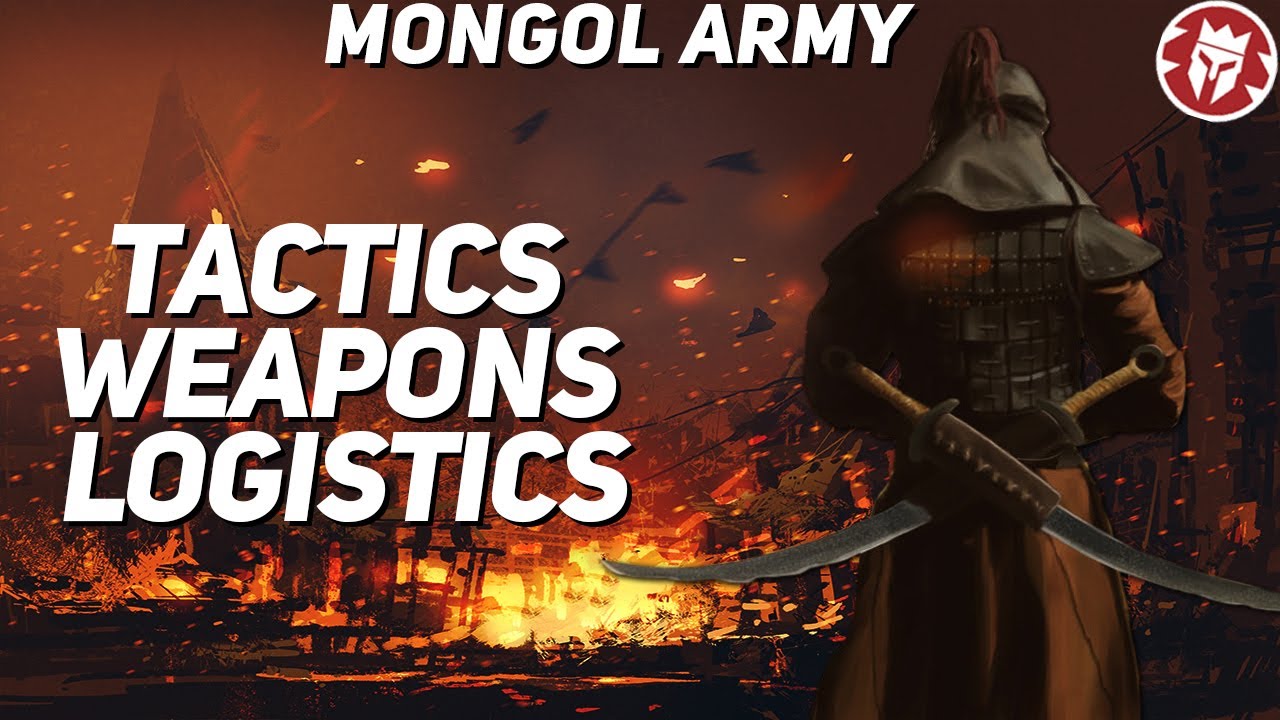
his army the Han Incorporated it into his forces this led to a diverse amalgamation of weapons within the Mongol Army all borrowed from disperate cultures but now used for the first time under a single leader the Mongols had Siege weapons like catapults trebuchet and manganel to hurl stones at enemies but they also use these devices to throw pots of burning fuel explosives and flammable liquids which would be ignited by flaming arrows they built massive crossbows on Wheels the Mongols pushed portable towers for long range attacks all the while Mongol soldiers dug beneath the Earth to
engage in a sort of protot trench warfare to serve both function and psychological warfare Mongols piled captured soldiers into enemy Moes as human Bridges over which they could push wield weapons this was how the Han won allout ruthless Onslaught one victim of a Mongol invasion described the events as quote a RedHot furnace fed from without by hard sticks thrust into the recesses while from the belly of the Furnace Sparks shoot into the air before his men were quickly quote drowned in the sea of annihilation now it's tempting to think that the Mongols were pure bronze
a horde of simple Brute Force Terror but this isn't quite true the Han also engaged heavily in psychological warfare for example before approaching a city the Mongols would deploy a few Messengers to the area who would spend weeks spreading rumors about the size and brutality of the Mongolian Army on some occasions the Han would instruct his men to light four or five fires each at Camp Nightfall this would make it appear as if the soon invading forces were several times larger than they really were it would be an understatement to say that the Mongols were
and still are incredible equestrians they were all but raised on Horseback and by the time a Mongol child reached adolescence he was an expert Horseman the Han put this skill to Great use on the battlefield in battle Mongolians employed a technique of Rapid movement assaulting the enemy from all sides on Horseback which made the Mongol Army appear much larger than a traditional formation the Han also had a strategy wherein a group of men on Horseback would ride far back from the battlefield and speed towards the conflict this gave the impression the Mongols had incoming reinforcements
demoralizing and panicking the enemy the Han even employed psychological warfare in the weapons he used the Mongolians developed a type of arrow with perforations in the arroe head which Amplified the whistling sound they made as they flew through the air as enemies ducked for cover they could only hear the arrows and such a cacophony fraudulently promised that thousands more were on the way just this threat could cause enemies to break formation making it easy for the Mongols to decimate in battle another moment of the Han's Brilliance came when the Mongols set out to attack the
wall city of razen by this time the Mongols had a huge number of laborers in their forces these men cut down trees transported them to Mongol lines and built a new wall which completely surrounded the already walled enemy City the Mongol construction prevented the city's Defenders from sending out troops or destroying any of the Hans Siege machines it also stopped any reinforcements or supplies from entering the city the people in razen were trapped and stricken with the horrifying reality that there was absolutely no way to escape furthermore the enemy could not even see the Mongol
attack as it came indeed the Mongols proceeded to take the city City with ease using ranged weapons and Siege machines from behind their wall personal qualities and warfare Talent were fine but the Han also needed to maintain order in his newly conquered lands certainly without Prosperity his Empire would have been radically shortlived but fortunately for the Mongols the Han's Talent indeed appeared again I think one of the most profoundly true things about jingis Han was his practicality he did not quest for personal greatness or material gain instead he wished only for the prosperity of his
people this was expressed in virtually every decision he made for the Mongol Empire jingus Han was a deeply religious man throughout his life ascribing to a sort of Mongolian Shaman tradition he worshiped the mountain on which he was born and that same sky above his birthplace although his specific religious beliefs grew and changed through his life jingis would regularly return to this mountain and pray in solitude for days at a time despite his relatively strict religious beliefs jingus Han granted religious freedom to everyone in his Empire like you will see with so many of his
policies this was not out of some humanitarian altruism instead it was simply to reduce conflict conflict and infighting within the Empire it was also a way to attract people to life under the Mongol Banner cities in the Mongol empire were some of the most religiously free in the world jingus Han even held debates wherein religious leaders could discuss theological issues these subjects included good versus evil the nature of God and the prospect of an after life importantly these debates never really had winners the Han believed in his words that each religion was like the finger
of a hand mankind was better off with all represented and intact there is a modern sort of rumor that the Han mandated women's rights in his Empire this is true but again not out of any altruism or Proto feminism kidnapping women and taking them for wives was for a long time a traditional part of the Mongol Society but jingus Han ident ified and indeed knew firsthand that this caused little more than infighting someone kidnapped a wife retaliation came then retaliation for retaliation etc etc so one of the Han's first laws was to prohibit the sail
and kidnapping of women this was purely practical it was an effort and an effective one to reduce Warfare amongst disperate Mongol tribes these types of social developments were largely functional rather than built out of principle but jingus Han was too an immensely principled leader one of his strongest beliefs was in Merit jingus ensured that to live work or fight in the Mongol Empire was to exist in a pure meritocracy being a man from nowhere and nothing himself jingis perceived that it was not the birth of an individual that mattered but the capability if a captured
city did not capitulate all of those who resisted would die however the Han spared skill workers like Merchants scribes and basket Weavers unskilled people who had not resisted his invasion were put to work in dangerous military construction roles jingus Han had no interest whatsoever in material gains famously saying quote I wear the same clothing and eat the same food as the cow herds and horse herders we make the same sacrifices and we share the riches in a more succinct quote jingus Han expressed his opinion on the matter saying I'm I hate luxury this was more
than just Aesthetics for jingus he once declared that the Eternal Blue Sky Had condemned those people he conquered because of their quote hotess and their extravagant luxury and like most other ideals this disdain for luxury had a functional purpose in the Hans Empire while he had no interest in personal wealth the Han wanted to make the Mongolian Empire prosperous he believed that the exchange of money and goods was was the best way to ensure prosperity for a people of course massive Fortune came his way as he conquered throughout Asia but jingus Han simply gave it
all away he believed that the circulation of riches would help his Empire more than him just accumulating wealth indeed much of his conquering was in this interest rather than personal Glory or Greed for example jingus Han saw the tremendous wealth that was in circulation via the now famous Silk Road in China he wanted this trade route to fuel the Mongols wanted his Empire to be the beneficiary of all this Commerce so he tried several times to draft trade agreements with the Chinese they repeatedly broke each of these agreements and so seeing that it was the
only way to control Chinese trade jingis Han conquered the nation of China Merchants also had a tremendous role in jus' Empire along Mongolian trade routes jingis set up small stands where Merchant could receive free food and horses for their Journey when he conquered hostile cities Merchants were rarely executed but instead assigned to work within the Mongol Empire so we now know of jingus Han as he lived breathed conquered and ruled but what of the Han in death what did he leave Humanity in 1227 Dingus Han was riding on horseback hunting wild horses in the Gobi
the Han was on a particularly temperamental horse which bucked suddenly and threw him to the ground this caused some sort of internal injury to the Han who quickly came down with a serious fever the Han refused Medical Care instead continuing with his conquests across Asia 6 months after the accident jingus Han succumbed to his injuries and died details on the place and circumstances are mostly unknown historical record basically stops with the fall from his horse certainly historical events and figures are always subject to perspectives debate and disagreement but there can be little doubt that jingus
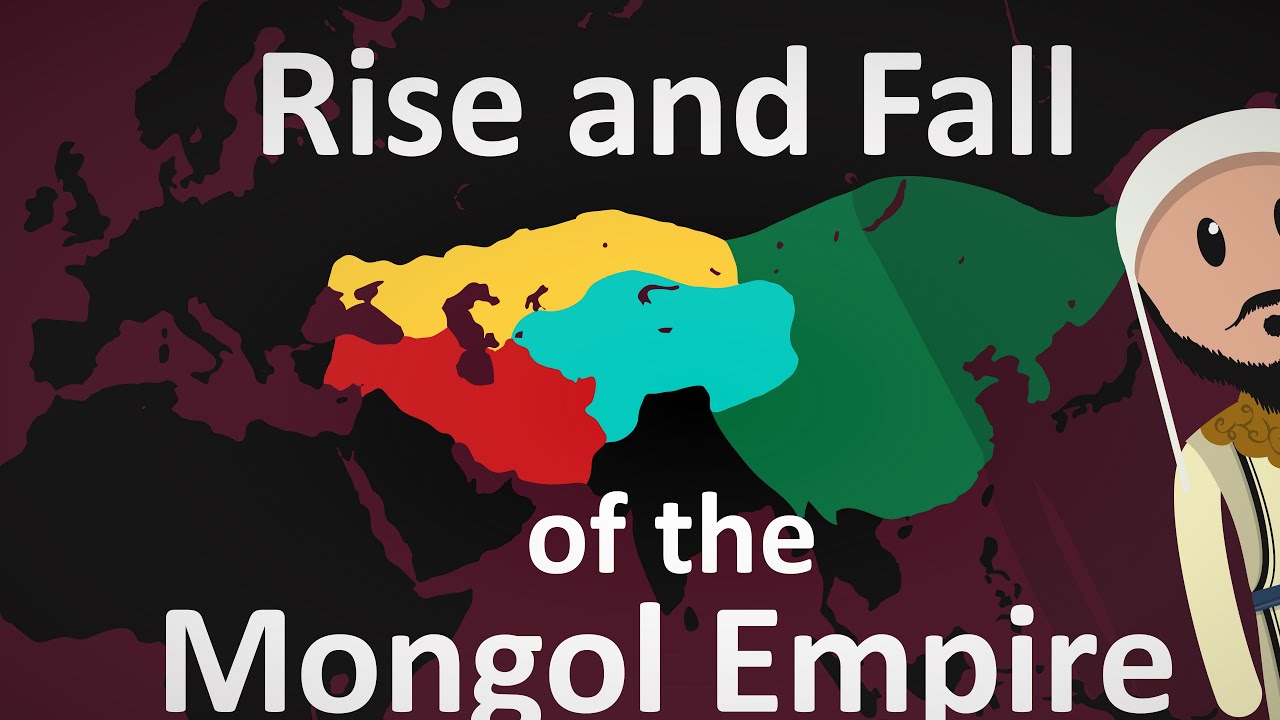
Han was the single greatest conqueror our world has ever seen historian Frank mclin offers a staggering description of the Hans Empire jingus Han and his sons vanquished peoples from the Adriatic to the Pacific the Mongols eventually reached Austria Finland Croatia Hungary Poland Vietnam Burma Japan and Indonesia his Empire stretched from the Persian Gulf to the Arctic Ocean Mongol influence extended as far as Mali in Africa the Mongol Empire covered 12 million contiguous square miles an area as large as Africa and bigger than North America by contrast the extent of the Roman Empire was about half
half that of the Continental USA by 1240 Mongol conquests covered most of the known world and even at jus' death in 1227 embraced more than half of this world the modern population of the countries ruled by the Empire at its greatest extent contain 3 billion of the world's 7 billion population consider as mcclin notes that this all came from nothing Alexander the Great's father built a military apparatus for him juliia Caesar entered the world with three centuries of Roman military dominance to call upon even Napoleon came from a long line of advanced military tradition jingus
Han was born in a tent Alexander the Great's teacher was none other than Aristotle Julius Caesar was taught by the Roman education system which was the greatest Humanity had to offer Napoleon could and did find wisdom in the mass of European Romantic Era Works jingus Han never learned to read or write gingas Han did not just bring his nomadic people to near global domination he recognized that this was even possible despite there being absolutely nothing to indicate as much the Conqueror invented a culture and solved massive unforeseen societal and political problems from nothing but thin
air and force of will time when xenophobia was ingrained into the mind of humanity jingus Han was Unshackled by the fear of the other he embraced new ideas tactics and cultures both out of conquering ambition and pure personal interest jingus Han was an awesome man his deeds were too awesome in the most terrible and violent sense of the word there has been much conversation and study about the Mongols violence specifically what amount of death they can be credited with of course as to be expected there exist Extremes in thought some say the Mongols death counts
have been overblown to absurdity While others would be happy to rank them generationally in the billions it's very difficult to say how many people the Mongols really killed under jingus H's reign as a general rule determining wartime death counts is always difficult even recent conflicts provide us with estimates and often wide ranges this becomes even more complicated when we examine historical peoples ancient sources multiply death counts for the sake of propaganda in One Direction or the other meanwhile contemporary Scholars are often too conservative sometimes letting skepticism pull their numbers into outright falsehood death counts further
are generally predicated on reliable population statistics ancient sources certainly do not provide these we will turn again to the historian mlin you would like to see the entirety of his methodology it is on screen now taking into account all of the known events and populations mlin puts the Mongol death toll in Russia and Europe somewhere near 1 million after adding this in with the much more significant Asian events and minor Wars mclin gets to his total number by his educated estimate jingus Han was responsible for a truly astounding 30 7.5 million deaths one of the
Han's closest advisers once described the Mongol Warfare strategy as this the basis of the state is the people if when a country has been conquered the population is then murdered what advantage does the state have moreover if the innocent are killed this simply stiffens the enemy's will to resist this is not in accord with the leader wishes this would seem to fly in the face of the Mongols massive death toll but we must remember the Hans Everlasting surrender or die policy the early Mongol Army and population were relatively small as such they were very likely
concerned with their own numbers with sustaining a complete and utter decimation of the enemy would have been the best way to reduce Mongol casualties further the Mongol basically saw jingus Han as having a divine right in Mongol Legend he was the product of an Immaculate Conception the Han was literally Heaven Sent to bring the Mongol people to their Apex resisting the Mongol hordes was basically resisting God himself it was an act of blasphemy with this in mind it's easy to imagine why the Mongols were so willing to kill well there's nothing to suggest that jenus
Han propagandized or exalted himself as some Divine being it was certainly a motivating idea within his forces now even by ancient standards it is difficult to justify the massacre of nearly 40 million people by modern thought this is impossible to justify but certainly the Han was a mostly pragmatic man he did not kill for the sake of killing and indeed his brutality had both function and results some of which can certainly be described as positive many scholars believe that the Han ushered in an era called the Pax mongolica which was a longlasting peace in prosperity
in Eurasia during this time it was said that you could travel from Palestine to Mongolia with a gold plate on your head and not be bothered other historians believe that this Pax mongolica was either a very short-lived piece or in fact did not happen at all regardless of this disagreement it can be said with certainty that the Mongol Empire singlehandedly linked two continents together in a way which proved to be permanent during the Crusades Europe had come into contact with the Islamic world but still European presence and influence functionally ended at Jerusalem as jingus Han
conquered China he was becoming convinced that agriculture would generate more prosperity for his Empire than nomadism the Mongols would grow crops and trade them along a massive network of trade routes including those which led to the Islamic World which now had some European presence so the Han brought Asia into contact with the Middle East and thus with Europe this is more than just retrospective Theory at various times there were Mongolian envoys present in France and England and French workers operating in the Mongol Capital the Hans trade routes and the Commerce which flowed on them were
so great they essentially held the very System Of The World Together the knowledge of firearms silk Ceramics and woodblock printing all came to Europe from Asia on trade routs propagated by jingus Han himself unfortunately the Han's propensity for trade had negative effects as well render pest is an animal disease similar to human measles this illness wiped out huge amounts of of livestock after being spread by Mongol conquests and trade however this pales in comparison to what recent research has revealed evidence of the black plague has been found in Central Asia which predates the disease's European
Presence by a decade it is very likely the Mongols or their trade routes spread the black plague to Europe there is an often told rumor that some. 5% or 1% or 2% of people alive today are descendants of jingus Han as a result of the Han's prodigious procreation historians and mongle Scholars widely reject this claim the idea is made quite fraudulent when we consider that scientists have no DNA from jingus Han himself there is no way to check if any DNA matches the Hans because we don't have any of his jingus Han was a famous
man and he had many children but these descendants were very well documented as late as the 1500s there was only one remaining male direct descendant of jingis Hanan then when Mongolia fell under the rule of the USSR the party killed every descendant of the Han they could find so if anything there has been a historical shortage of jus' blood in the centuries that followed his life it should also be said that once the Mongols conquered China they were forbidden from marrying the Chinese when more broadly the Mongols generally married and had children with one another
they did not really procreate with conquered people while we can't say this precludes exceptions intercourse or lawbreaking it certainly puts a dent in the idea of mass breeding on the part of the Mongols the study which originally revealed this ostensible factoid does not actually support its own conclusion either the participating scientists did find a genetic marker in common throughout 8 million men in Central Asia but they didn't find evidence to indicate that this marker came from jingus Han the claim represents an enormous leap in logic to say that because this trait is shared and Asian
it must have come from the Han indeed more recent Studies have completely disproven this whole Theory the Mongol Empire was truly a doomed Venture the Mongols were a few people at the Empire's height the ratio of M to conquered peoples was 1 to 100 the sheer weight of this population meant that the empire was simply too large for the Mongols to maintain indefinitely with such an outsized number of subjects to rulers Rebellion would mean a certain victory for the captured population indeed the Mongols greatest weapon was in their agility and Mobility they were a pastoral
Force who Moved quickly around land on Horseback it became clear that Agriculture and civilization were the way forward for an Empire at this scale so as the Mongols began to pursue this way of life and abandon their nomadism they abandoned the very things which made them so effective indeed the empire did eventually crumble due to these factors and due to the con waning from his merit-based conviction at the end of his life he turned his Empire over to his sons who proved to lack much of the great Hans leadership abilities jingus Han is a man
today with many reputations to some he was a genocidal Barbarian who brought waves of blood across the world for others he was a great man who United millions of desperate people and paved the way for Asia as it exists today in fact he is both and he is everything in between born an Eon omous illiterate peasant jingus Han went on to build the largest Empire humankind has ever seen in just a few short decades but he did this through ruthlessly massacring millions of people so indeed as it often goes in history the greatest men are
too the most terrible