For decades, the Fermi Paradox has puzzled scientists and thinkers alike. If the universe is so vast and old, why haven’t we found evidence of extraterrestrial civilizations? The paradox, named after physicist Enrico Fermi, highlights the contradiction between the high probability of intelligent life existing elsewhere and the complete lack of observable signs.
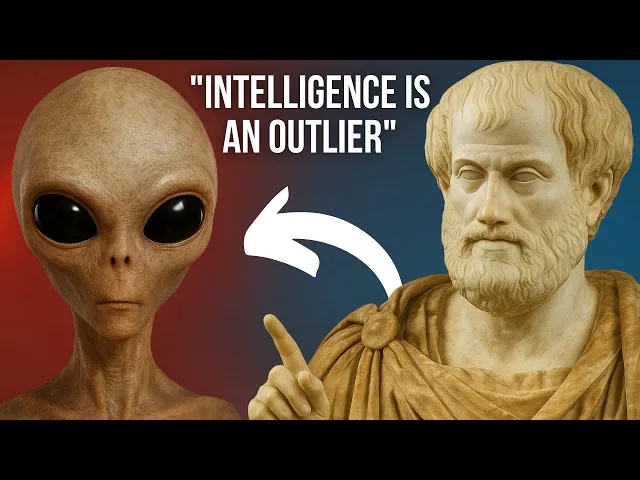
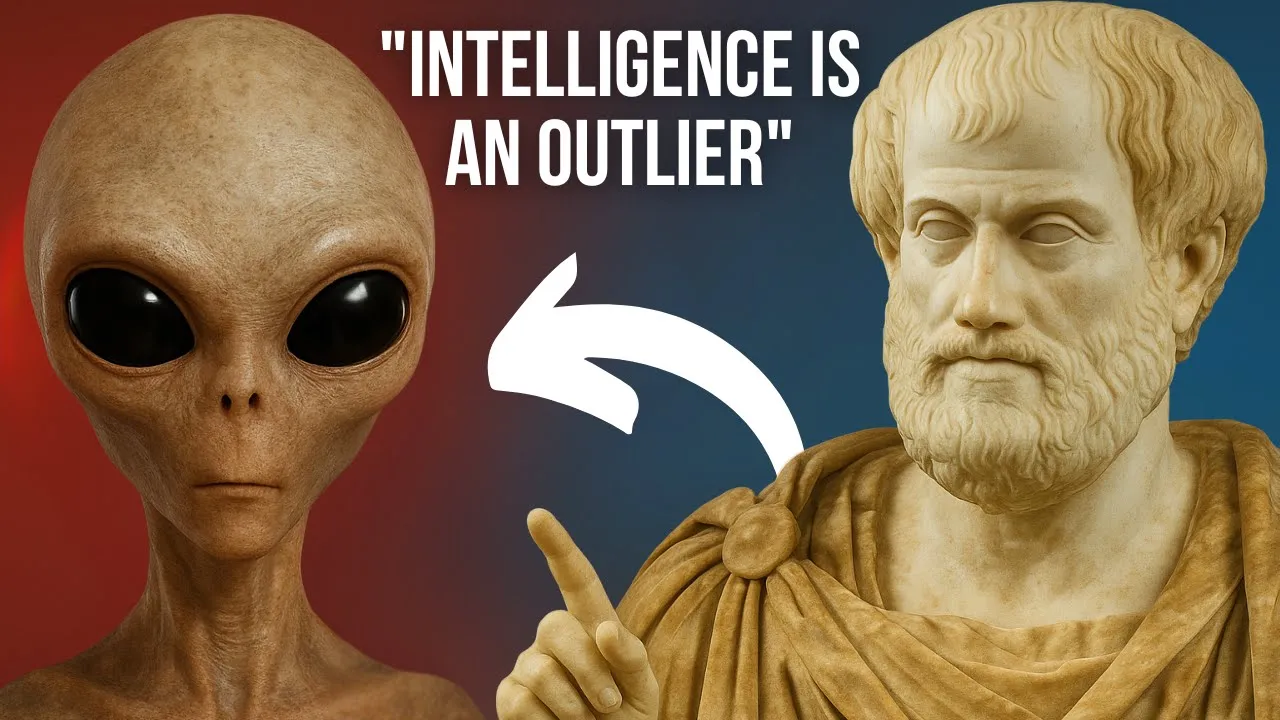
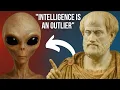
But what if we turned this paradox on its head? What if the real question isn’t why haven’t we found aliens but rather why are we so sure they should exist in the first place? This is the core idea behind the Inverse Fermi Paradox, or as we might call it, Aristotle’s Revenge.
The Classical Assumption: Life is Common Modern thinking about extraterrestrial life is built on an assumption: given the right conditions, life will arise naturally and evolve toward intelligence. This belief stems from the Copernican Principle, which suggests that Earth is not special. If life emerged here, it should have emerged elsewhere too.
This assumption is further reinforced by the sheer vastness of the universe. With an estimated two trillion galaxies, each containing hundreds of billions of stars, and many of those stars hosting planets within habitable zones, the numbers suggest that life should be abundant. The discovery of exoplanets, some of which appear to have conditions similar to Earth, has only strengthened the argument that the emergence of life should not be unique to our planet.
The Drke Equation, formulated in 1961 by Frank Drke, attempted to estimate the number of communicative extraterrestrial civilizations in our galaxy. It considered factors like the number of stars, planets, the likelihood of habitable conditions, and the probability of intelligent life developing communication technology. However, while the equation highlights the probability of life, it relies on assumptions that remain speculative.
Each factor in the equation involves uncertainties—particularly the probabilities of life forming and evolving into intelligence, which we have no empirical data to confirm. Despite the optimism, skeptics argue that this model assumes that life is a standard outcome of planetary evolution rather than a rare and delicate process. Even though microbial life might be widespread, the emergence of complex, intelligent life may require an extraordinary combination of conditions that is not guaranteed to occur even in seemingly habitable environments.
Evolution on Earth took billions of years, and intelligence as we define it appeared relatively late in planetary history. This raises a critical question: Is the universe teeming with life that simply hasn’t reached a communicative stage, or is the assumption that life is common flawed from the beginning? If intelligence was a predictable consequence of evolution, why don’t we see multiple civilizations broadcasting signals, colonizing planets, or leaving any detectable traces?
If this assumption is incorrect, then the absence of extraterrestrial civilizations is not a paradox but an expected reality. The belief that life should be abundant may be a reflection of human-centric thinking rather than an objective truth about the cosmos. The Inverse Fermi Paradox suggests that we have no reason to assume that intelligence is a natural outcome of evolution.
Instead, it might be an extreme outlier—a one-in-a-trillion anomaly. Aristotle, the ancient Greek philosopher, believed that the Earth was unique, the center of everything, and that humans occupied a privileged place in the cosmos. Modern science largely dismissed these views, embracing the idea that we are just one of many possible intelligent species in an indifferent universe.
However, if intelligence is so incredibly rare that it only happened once in the observable universe, Aristotle might have been right in a way we never expected. The vast silence of space could be evidence that we are, in fact, alone. Not because life doesn’t arise elsewhere, but because the combination of conditions that led to human-like intelligence may be virtually impossible to replicate.
One of the strongest arguments against the commonality of intelligent life is that intelligence is not an evolutionary inevitability. Life on Earth has existed for about 4 billion years, yet complex civilizations have only existed for the last few thousand years. For most of Earth’s history, bacteria, algae, and simple multicellular organisms dominated the planet.
Even when life became more complex, intelligence of the kind humans possess did not become widespread. Dinosaurs ruled the Earth for 160 million years and never built spaceships or wrote poetry. Octopuses, dolphins, and crows display remarkable intelligence, but none have formed civilizations or developed advanced technology.
If intelligence were such an evolutionary advantage, why is it so rare even on our own planet? The answer may lie in the fact that intelligence is not necessarily the best survival strategy. Evolution selects for traits that enhance reproductive success, not necessarily intelligence.
Bacteria, for example, are among the most successful life forms on Earth—they adapt rapidly, thrive in extreme environments, and reproduce in enormous numbers, all without the need for intelligence. Furthermore, intelligence requires significant biological investment. A large brain consumes vast amounts of energy—about 20% of a human’s total energy intake—making it a costly adaptation.
Many species have evolved other, more efficient ways to survive and reproduce without developing intelligence. Even when intelligence does emerge, it does not always lead to technological advancement. Many intelligent species, such as whales and elephants, have no use for fire, tools, or written language.
Their intelligence serves social and survival needs rather than technological progress. Thus, while intelligence may be beneficial in certain contexts, it is not a universal requirement for evolutionary success. The fact that humans exist at all might be a fluke—a lucky accident rather than an inevitable outcome of evolution.
The Great Filter: Are We the Exception? The Great Filter is one of the most discussed solutions to the Fermi Paradox. It suggests that there is some step in the evolution of intelligent life that is incredibly difficult to overcome.
This could be: ●The emergence of life itself (perhaps abiogenesis is extraordinarily rare). ●The development of complex multicellular organisms (life could be mostly microbial across the universe). ●The leap to intelligence and technological civilization (maybe intelligence rarely provides a survival advantage over simpler biological strategies).
●The self-destruction of civilizations before they become interstellar (nuclear war, resource depletion, or artificial intelligence wiping out its creators). If intelligence is the bottleneck, then the silence of the cosmos is not surprising at all—it’s expected. The universe may be filled with microbial life, but intelligent, technological civilizations might be a one-time occurrence.
If that’s the case, then we are not waiting to discover aliens. Instead, we are the anomaly, the only intelligent species in a lifeless void. The placement of the Great Filter is also crucial.
If it lies in our past—meaning we’ve already overcome it—then we may be unique in our intelligence and ability to build civilizations. However, if the Great Filter lies ahead of us, it suggests that advanced civilizations inevitably destroy themselves before they can spread into the stars. This would be a warning that our own survival is precarious and that we must take care to avoid self-inflicted catastrophe.
Some scientists speculate that self-destruction is an unavoidable consequence of technological progress. The development of nuclear weapons, climate change, artificial intelligence, and other existential threats may represent barriers that no civilization can surpass. If so, the reason we haven’t detected aliens is because intelligent life tends to extinguish itself before it has a chance to expand.
Alternatively, the Great Filter could exist at the very first step—abiogenesis. If the conditions required to form life itself are astronomically rare, then intelligent civilizations may simply never emerge in the first place. In this case, we are not just alone in our galaxy, but possibly alone in the entire universe.
Regardless of where the Great Filter lies, its implications are profound. If we are unique, our responsibility to preserve and expand human civilization becomes even greater. If we are not unique but simply have not yet reached the filtering event, then our future may be at risk.
If the Inverse Fermi Paradox is correct, the implications are profound. It would mean that humanity is alone, not because of some cosmic catastrophe or a lack of exploration, but because intelligent civilizations simply do not emerge elsewhere. We might be the first and only advanced species in the observable universe.
This realization forces us to reconsider our place in the cosmos. Instead of looking outward for intelligent life, we may need to look inward and recognize the sheer improbability of our own existence. Every moment of human civilization, every achievement, and every failure is happening on the only intelligent world we know.
If no other species has or will ever develop intelligence, then our survival becomes infinitely more meaningful. We are the universe’s only opportunity to explore itself, to ask questions, and to understand the laws of nature. This also raises an existential question: if intelligence is this rare, what are our responsibilities as its sole representatives?
The universe, for all its vastness, may be indifferent to our existence, but that does not mean our existence is meaningless. Instead, it places upon us a profound duty—to preserve, to learn, and to create. Moreover, if intelligence is unique to humanity, then everything we achieve is not just for ourselves but for the cosmos itself.
Our art, science, philosophy, and history are the only records of what conscious existence can be. In a way, we are the universe experiencing itself—a lonely but deeply significant role. This perspective should shift how we view our civilization.
If we are alone, then we have a responsibility to safeguard our future. The threats we face—climate change, nuclear war, artificial intelligence—are not just risks to a single species but to intelligence itself. If we fail, the universe may never get another chance.
This loneliness, rather than being a curse, could be the greatest motivation we have. We should not look to the stars waiting for a sign of others; we should look to ourselves and realize that we are the sign. We are the meaning-makers, the explorers, the storytellers.
If we do not preserve and expand our knowledge, no one else will. Conclusion: Aristotle’s Revenge? Aristotle may have been wrong in the details, but his central idea—that humans occupy a unique place in the universe—could be more true than we ever imagined.
The inverse of the Fermi Paradox suggests that instead of a crowded cosmos teeming with intelligent life, we exist in an almost impossibly empty one. If intelligence is rare to the point of near impossibility, then our role in the universe is both profound and terrifying. Rather than seeing this as a loss, we should recognize it as an opportunity.
If we are alone, we have an obligation to survive, to thrive, and to make the most of our existence. The future of intelligence, of knowledge, and of meaning itself may depend entirely on us. So the next time we look up at the stars and wonder, Where is everyone?
—perhaps the answer is simple: There is no one else.