Maxing out regularly, so performing a one rep max lift, isn't completely uncommon, especially in the strength world. For instance , the bulgarian method, based on my limited reading, appears to have involved maxing out daily on the snatch, clean and jerk, as well as squat variations. In the powerlifting world, it seems modifications of the bulgarian method exist.
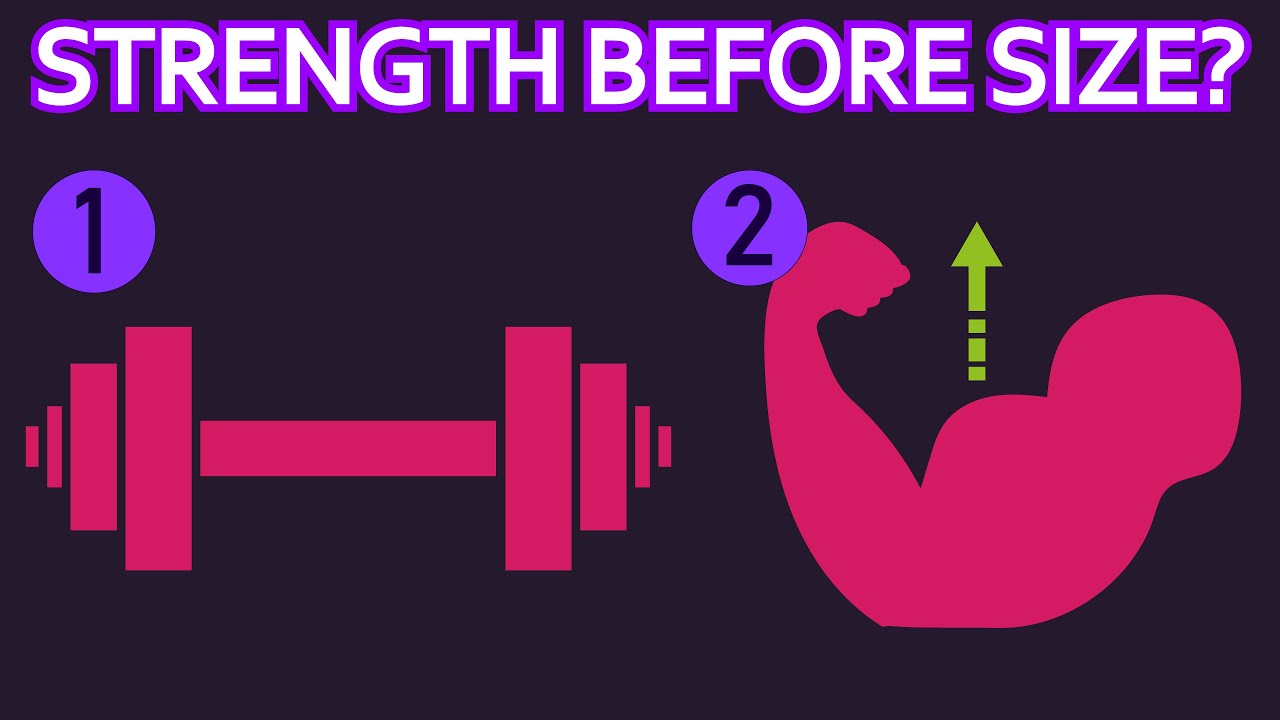
In this scenario, maxing out is done with the back squat, deadlift, and bench press. Some reasons as to why regular one rep max training may be great for strength gains , involve improved motor learning with heavier loads and greater neural adaptations. But, what about muscle hypertrophy?
We often associate numerous repetitions being effective for building muscle. But could one rep max training still be effective? Two research papers can help us here.
Let us begin with a study by Danekel and colleagues. 5 men, with at least one year of training experience,had one arm assigned to a one rep max arm and their other arm assigned to a volume arm. They trained both of their arms for 21 days straight.
With the one rep max arm, they worked up to a one rep max on the unilateral dumbbell biceps curl each day. To prevent momentum, their backs and shoulders were kept against a wall. They also performed a maximum isometric contraction of the biceps at 60 degrees of elbow flexion, using a dynamometer.
This was done for two contractions each lasting three seconds. With the volume arm, they did exactly what was done with the one rep max arm,so working up to a one rep max on the unilateral dumbbell biceps curl and performing the maximum isometric contraction. However, in addition to this, the arm performed three sets of 10 reps on the unilateral dumbbell biceps curl with a 70% one rep max load.
Before , on day 8, day 15, day 21, and three days after the 21st session, thickness of the elbow flexors , which would have included the biceps brachii and brachialis, was measured at 50% 60% and 70% of the upper arm length. Additionally, through the training protocol itself, one rep max on the dumbbell unilateral curl and maximal isometric contraction strength on the dynamometer was noted. Increases in one rep max strength and maximal isometric contraction strength were similar between both arms.
However increases in elbow flexor thickness at all measured regions throughout the 21 days favored the volume arm versus the one rep max arm. Looking more carefully at the data, it's quite evident the one rep max arm experienced virtually no growth. Therefore, one rep max training for 21 days straight on the dumbbell biceps curl does not appear to be effective for building muscle.
Adding some volume, in this case three sets of 10 reps on the dumbbell biceps curl, appeared to be necessary for inducing muscle growth. Now, this study had subjects trained daily and the study was only 21 days in duration. What about rest days in between and a longer duration study?
Mattocks and colleagues can help us. 17 men and 21 women, all untrained, were assigned to either a testing group or a hypertrophy group. Both groups trained the unilateral knee extension (they did train both legs) and chest press, twice per week for eight weeks.
The hypertrophy group each session performed 4 sets to failure with an 8-12 rep max load and 90 seconds of rest between sets for each exercise, the testing group, each session, warmed up and worked up to a one-rep max for each exercise. 90 seconds of rest was given between attempts. One rep max on the unilateral knee extension for both legs and chest press was measured before and after for both groups.
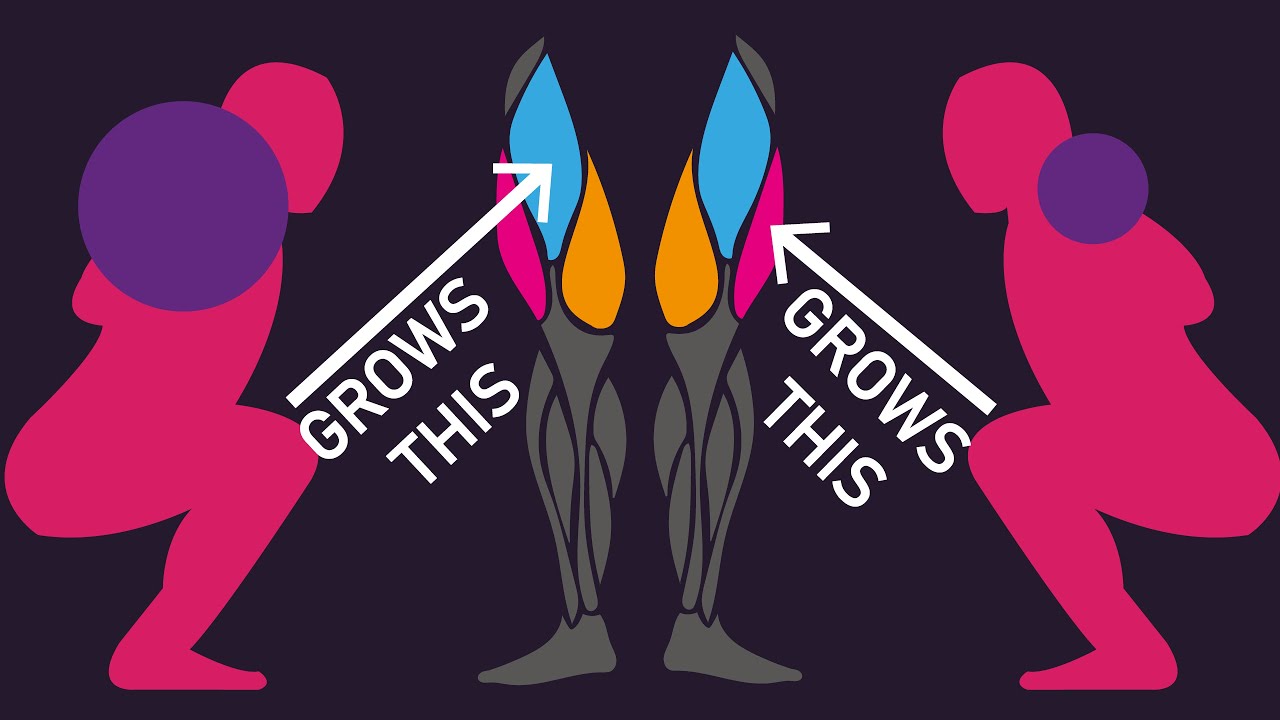
Also, thickness of the anterior thigh and lateral thigh was measured at 50%, 60%, and 70% of the thigh length before and after for both groups. Note, the anterior thigh would have included the rectus femoris and vastus medialis, while the lateral thigh would have included the vastus lateralis. Increases in unilateral knee extension one rep max for both legs and chest press one rep max were statistically similar between both groups.
For all measures of anterior and lateral thigh thickness, the results favor the hypertrophy group. However, for all measures done on the legs for the lateral thigh, the differences were not classified as statistically significant. Similarly, at 60% and 70% of the anterior thigh for the dominant leg, differences were also not classified as statistically different.
Even so, it's evident that overall, the hypertrophy group experienced much greater growth than the testing group. The before and after changes for each group further demonstrate this. Looking at the testing group results, we can see that for nearly all measures, there were virtually no increases, rather slight decreases.
Conversely, the hypertrophy group experienced increases across virtually all measures. To sum up, the study by Dankel and colleagues and Mattocks and colleagues appear to suggest that one rep max training, although effective for strength gain, isn't effective for building muscle. These findings would support the idea that one rep max training likely produces significant strength gains through neural adaptations and/or improved motor skills, rather than muscle growth.
For building muscle, the current evidence indicates that reps between 5 and 35, roughly equating to loads between 85% one rep max and 30% one rep max produce similar muscle growth, provided repetitions are performed to failure. Which is the point at which no more repetitions can be performed. Interestingly, there does exist some research exploring the use of heavy sets of 2 to 4 for hypertrophy.