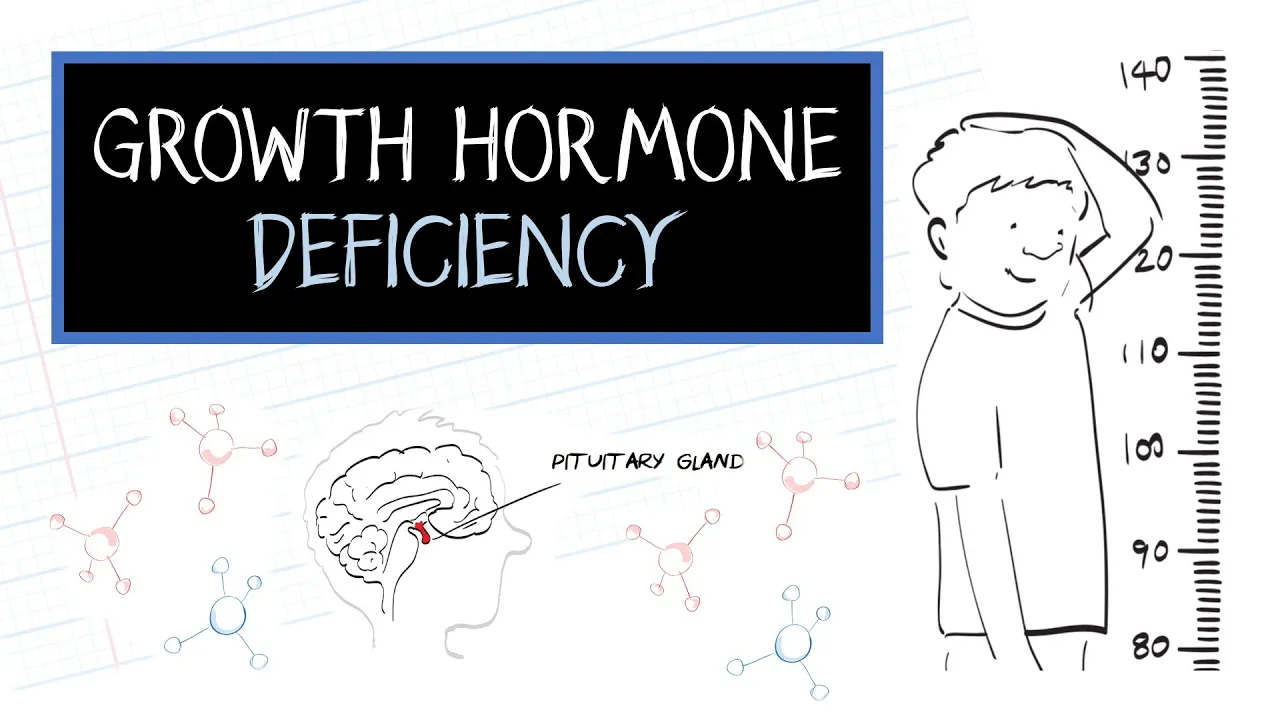
Hello, in this HealthSketch, we want to talk to you about Growth Hormone Deficiency in children, a condition that occurs when the body can’t produce enough growth hormone. We’ll talk about what it is, why it occurs, its signs and how it’s managed. Growth hormone deficiency is treatable and with careful management most people are able to enjoy long and normal lives.
Hormones are chemicals that travel around the bloodstream giving messages to different parts of the body. Growth hormone is released by the pituitary gland in the brain and stimulates the growth of bones, muscles and organs in our body. Growth hormone deficiency is caused by a problem with the pituitary gland such as a small or missing gland which leads to less of the hormone being produced.
Growth hormone deficiency in children is rare, occurring between 1 in 3000 and 1 in 10,000 children. It tends to be more common in boys than girls. The extent of growth hormone deficiency can vary from mild to severe.
Either way, growth hormone is widely available, in the UK, so everyone should be able to get the treatment they need. Children with growth hormone deficiency are short and might look young for their age as a lack of growth hormone delays physical development and bone growth but their bodies are in normal proportion and they have normal facial features and normal intelligence. Before starting treatment children with growth hormone deficiency might be overweight as growth hormone also helps to control the amount of fat under the skin.
It’s diagnosed using blood tests to measure the level of the hormone in the blood. This is called a growth hormone stimulation test. Once diagnosed and on treatment height is regularly measured to monitor growth and sometimes a bone scan and brain scan might be done.
It’s treated with a small injection of growth hormone each day. Injection sites tend to be in the stomach, thighs and buttocks The dose will change as the child grows. Treatment is usually led by a doctor specialising in children’s hormones called a paediatric endocrinologist.
There are usually no side effects although sometimes there might be a small skin reaction at the injection site which can be treated by moving the injection site. Very rarely children might suffer headaches, vomiting or problems with eyesight which can be stopped by reducing the dose. It is important for any side effects to be reported to your doctor.
It is natural to sometimes feel worried or upset about having growth hormone deficiency or having a child with growth hormone deficiency, and you should talk about these feelings with your doctor. Patient support groups are a good source of support, as you can connect with others with the condition who have had similar experiences. For most children, growth hormone treatment enables them to return to normal growth and reach their expected height.
We hope this HealthSketch has been helpful to you and those around you.