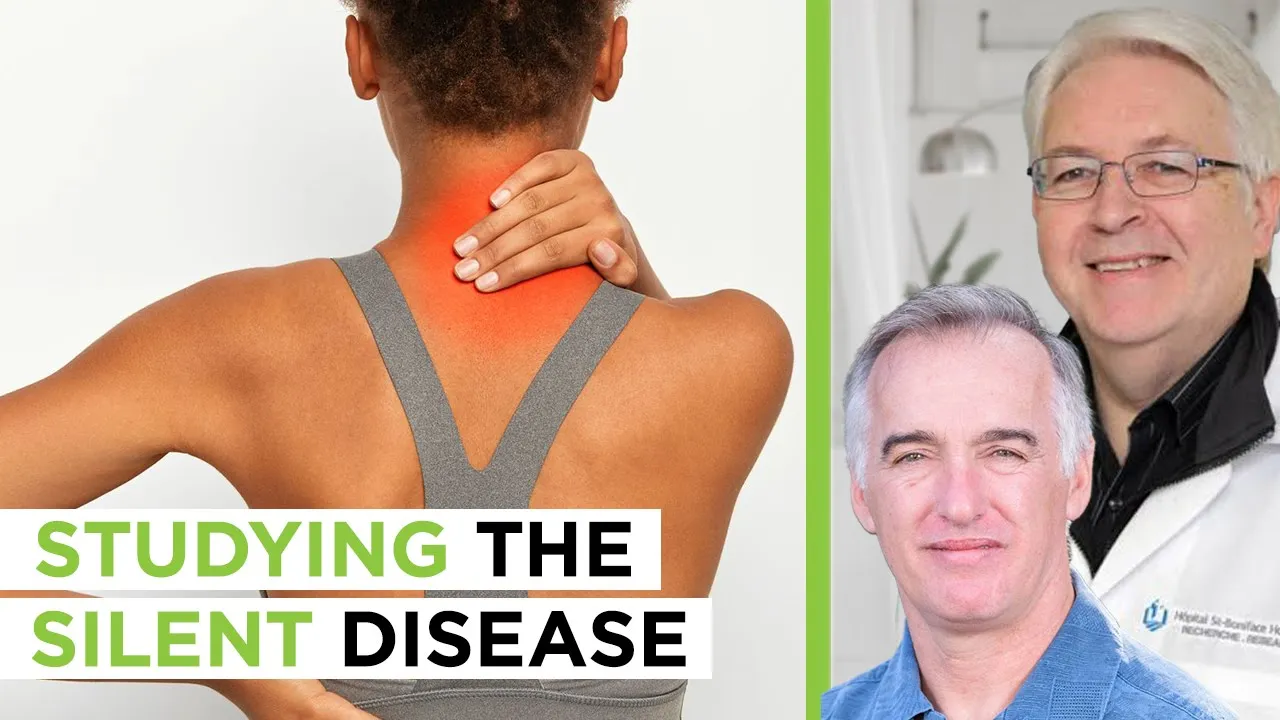
There is a strong argument now across the field that mitochondria is possibly a target of the disease but the thing I want to stress is that even if it's not part of the iology of the disease if you target the mitochondria to drive up its function you can overcome the degenerative process and I think that's what we're seeing with our particular drug [Music] Well hello everyone I'm Dr David PRM welcome back to the Empower neurologists we spend a lot of time on this program talking about things brain and spinal cord related the brain and the
spinal cord are part of what we call the central nervous system we don't spend as much time talking about the other nervous system called the peripheral nervous system and that means the nerves the peripheral nerves that then exit from the brain and exit from the spinal Cord and can have issues as well there is a condition called peripheral neuropathy that happens to be a pretty widespread condition estimated that here in America about 20 million individuals suffer from problems related to periphal nerves or peripheral neuropathy now a large number of these people are diabetics you've probably
heard of diabetic neuropathy and that occurs in more than 50% of diabetics at some point during their lifetimes other causes of Uh damage to the peral nerves include things like chemotherapy up to a third of chemotherapy patients will have damage to their nerves they can lose sensation they can have pain uh it is certainly higher in certain types of chemotherapy like the Platinum based uh chemotherapies and uh in addition various types of drug treatments uh like treatment for HIV for example can induce damage to the nerves but around a quarter of all peripheral neuropathy These
are what we call idiopathic means that we don't fully have a readily available explanation uh in terms of what's causing that peral neuropathy so we have guests today who have developed an interesting approach to actually treating the damage to the nerves that seems to be occurring not primarily focusing on things like pain loss and sensation or uh dysfunction of the autonomic nervous system but actually focusing on what what makes a good nerve Go bad and they've identified loss of regrowth of nerve tissue is one factor and in addition problems with guess what the mitochondria is
yet another mechanism and they've identified a really fascinating treatment that first demonstrated its efficacy in the laboratory and now is being tested in humans that's really very very exciting and yielding some incredible results let me tell you about our guest today Dr Paul fero is uh uh gained his PhD in Biochemistry in the department of biochemistry at the University of Sheffield he then carried out post-doctoral research at Colorado State University King's College in London and as a welcome trust post-doctoral fellow at St Bartholomew's Medical College he subsequently worked as a tenur lecturer in the school
of biological science Sciences at the University of Manchester he then moved to Winnipeg in 2004 and set up a neuroscience research group at St bonifasi Hospital uh Research Center and holds a tenur professorship in the department of pharmacology and Therapeutics at the University of Manitoba there his research has been in the cell biology underlying neurod degener disorders of the peripheral nervous system with a focus on the impact of Dio diabetes a biotech startup called wind sandor that we're going to be talking about today has been established and is Directing Phase 2 clinical trials in diabetic
neuropathy and chemotherapy induced peripheral neuropathy our other guest is Dr Nigel a calat uh he took both his Bachelor of Science in Zoology and a PhD in physiology and pharmacology at Nottingham university in England following post-doctoral research in the department Department of pharmacology at St Bartholomew's Hospital in London and in the department of anesthesia at the University of California San Diego he was appointed to the faculty of the Department of pathology at UC San Diego in 1993 he first began studying nerve damage caused by again diabetes as an undergraduate with a largely unsuccessful but nevertheless
entertaining and informative attempt to generate diabetic chickens in the laboratory of the esteemed ornithologist uh Professor David Tomlinson uh he has continued his work uh in biotechnology and is also a founding member of wind sandor uh and a nonprofit organization diabetes research connection so very excited about joining our two guests today to learn more about neuropathy and their exciting breakthrough in its treatment well welcome gentlemen to the program it's great to have you here today thank you for inviting us yes thank you very much I want to start off as I mentioned in The introduction
uh so much interest in the field of Neurology centers on brain and spinal cord related issues the central nervous system if you will uh and so little attention seemingly gets paid to the peripheral nervous system meaning basically the peripheral nerves and yet it's a really big problem and to some degree I would say unrecognized so let's first talk about the scope of the problem Nigel perhaps you can uh why Don't you open up a little bit let us just get a sense as to how big of a problem this really is uh yeah you're right
David this is a huge problem the the worldwide incidence is difficult to estimate but there have been estimates 25500 million people in the US um of around 30 million people suffering from some form of peripheral neuropathy um I think that comes about the lack of study perhaps comes about because it's It's it's usually an add-on to another disease there's another disease causing it so the common causes of neuropathy in the US are number one is diabetes um and then also things like chemotherapy um leprosy although not a big thing in the US in the rest
of the world um um HIV is another large one in in the US and so people have these diseases there are very prominent diseases there's a lot of publicity about diabetes in the World at the moment of Lin interest in trying to prevent and cure it um and neuropathy is just considered a bit of you know another problem associated with diabetes um same with HIV and the others so it's it's ever since I've worked in it it's been considered sort like an add-on disease and the primary interest is fixing the primary disease and then everything
else will sort itself out that of course is not good for the patients because the Patients who are suffering neuropathy because of these diseases this impacts the their daily lives hugely and they can't they don't want to and can't afford to wait around for the entire disease to be fixed well let me let me comment a couple things of interest when I took my neurology boards an awful long time ago uh one of the questions was what is the most common ideology of neuropathy periphal neuropathy in the world and at that time it was indeed
Leprosy I think other things may have supplanted that in terms of the number one position but let's just talk about diabetic neuropathy that'll occur in about 50% or more of diabetics at some point in their diabetic lifetimes if you get the blood sugar under control can we assume that the peripheral neuropathy is going to uh improve itself miraculously um that that's actually always been a hope I suspect an underlying hope um fix the Hypoglycemia everything else follows we have seen over the last 20 years or so the you major advantage in controlling glycemia as long
as you have access to the insulin pumps and all the modern technology and not a lot of people do um so it's still a distant goal for a lot of people to achieve G good glycemic control but it's always been recommend it we do know that over the last 20 to 30 years in the US the rate of the progression of neuropathy is has been Slowed and that is sort of assumed to be at least in part due to improved glycemic control um but it's not making it go away um there there seem to be
factors outside of high blood sugar within the diabetic iology that are also causing neuropathy or contributing to the neuropathy so whil hypoglycemia is you know the often been considered the dominant factor it's not the only Factor so a pure focus on bringing blood sugar Back to normal possibly isn't going to do the trick yes and I I just add something there David um I'm here in Manitoba where we have a large indigenous people's population where Nigel's point about access to health care is is very valid because they're in the middle nowhere they don't get close
care in terms of maintaining hypoglycemia so sure enough diabetes and its complications is appalling in those particular populations and I'm sure it's The same in parts of the US with the Puma Indians and things like that you know and I think that to be fair while there are new approaches being developed that a lot of uh people don't really rein in their blood sugars as aggressively as they should you know the mentality here still seems to be we'll check your fasting blood sugar once or twice a year and every 3 months we'll check your A1C
and make the adjustments and your medications based Upon that but there's a lot being written these days about the area under the curve as it relates to blood sugar and blood sugar control and the variability of that blood sugar as well as a matter of fact study that I just read last night in the journal neurology talked about risk of dementia with just variability of blood sugar from one office visit to the next so it's not as if everybody can get a continuous glucose monitor and really reain in the Blood sugar and I think the
point is well taken that there are changes pathological changes going on the peral nerves that are Beyond just related to the hypoglycemia that there's free Radical Media stress that there's elevated levels of glycation of proteins and fats uh elevated levels of inflammatory markers that we know ultimately creates environment that's damaging to the peral nerve so again as It relates to diabetes my gosh one would think prevention would be you know the way to go because this is you know affecting pre-diabetes or diabetes 86 million Americans right now I can only imagine what that is uh
worldwide uh you mentioned um chemotherapy as a I mean I think we've seen Perl neuropathy in as many as a third of chemotherapy patients and uh what can be done uh that relates to perhaps minimizing uh peral neuropathy developing in that Chemotherapy patient well um I I'll speak to that first and then Paul will uh correct me um the the have a good thing going here I could tell already and I was Laurel and Hardy most of the time yeah we we we've known each other for for what 30 odd years so we're we're allowed
to rough each other up a little um the you mentioned about a third of patients with chemotherapy and actually Really depends upon the chemotherapeutic used some of them it's 80 or 90% of patients would be expected to get neuropathy um at present um what seems to be the the treatment plan is to scale back on the chemotherapy being used to dial down the amount of of drug given um to until a balance is reached where the patient can to at it and I I'm not a clinician I'm a PhD but we we interact with clinicians
all the time on this and they tell Tales of patients who would Rather come off the chemo than tolerate the pain and other Sensations and the loss of Sensations that goes with the neuropathy so it it can really um impact the treatment plan for the patient um each physician will have a specific plan for that patient and a dosing regime and a duration of dosing and neither they have to scale back the dose and or cut the duration of the treatment regimes which of course is not good for the treatment of the cancer so it's
a Terrible conundrum to be in well we we've seen a lot of data over the years that the co-administration of intervenous glutathione as it relates to at least the Platinum based chemotherapy agents was pretty dramatic in terms of reducing the number of those individuals uh who ended up with a peral neuropathy problem and I think it is the plat based chemotherapies that tend to be more Associated but I think uh you know if if if the technology that we see evolving Towards immune based uh regimens for various cancers uh takes us where we hope it's
going to take us then we'll be able to abandon these uh more primitive if I may uh approaches to cancer by by using chemotherapy uh infectious agents as well have been related and and where HIV how does HIV treatment which seems to be so uh remarkable these days how does that relate to the presence of pery or the Prevalence um well again my my understanding is that um in HIV neuropathy studies there's now a sense that both the the the underlying infection can lead to to neuropathy but also that some of the therapeutic agents being
used that have been remarkable in what they've achieved in keeping people alive and relatively healthy are also causing the neuropathy too so we've only we've done less work in that area than in diabetes which has been the primary Focus because it's the largest numbers and it's where Paul and I both have our expertise background expertise um but it it does in the studies that we've done and the conversations I've had that there is a concern for both um both both attacking both the disease itself and the again the the Therapeutics oh sorry um yeah just
just to add some of the therap the HIV Therapeutics actually hit mitochondrial function which is one of our targets with our drug that we hear About later so it sort of fits quite nicely in terms of our therapeutic approach to overcome that problem that might be contributing to the neuropathy in the HIV patients under therapy is there much uh periph neuropathy related to co infection H Paul that one to you you compiled a bit of information on that there's lots of case studies showing that people are getting neuropathy who have had covid but I have
not gone any Deeper into it it's all over the place and as you're going through at the moment the symptoms seem to be all over the place I've just had covid and I had the worst um covid I've ever had and I um but it was mainly G tracked stuff it's um and so there's certainly case studies with people suffering from neuropathy but I don't really know the details or what the final outcomes are and then again there is a about a quarter of of Individuals who have peral neuropathy and are suffering and there is
no known uh at least they've not been able to identify a cause we call that idiopathic so you know who knows what's going on in that situation but there was mention just now of the notion that mitochondrial dysfunction may be playing a role and let's uh who wants to take that just double click on that for a moment open that up a little bit and talk about why the peripheral nerves are So dependent on energy production and what role the mitochondria or dysfunction of the mitochondria might be playing in terms of the manifestations that we
see well I let me do that one Nigel since I mean that's really where I started I'm a mitochondrial person um the peripheral nerves have very high demand for energy because many of them you have unmyelinated fibers which means the nerve conduction Has to go all the way along the nerve with local production of ATP along the whole length of the nerve as opposed to a melinated nerve where you have energy production primarily at the nodes AR Ramia so these small fibers are packed full of mitochondria um and it's been shown in a number of
peripheral neuropathies certainly in chemotherapy induced neuropathy and I think HIV that there are in human Samples mitochondrial abnormalities and the same is true in diabetes and so many years ago we started looking at the impact of diabetes on mitochondrial function and what seems to happen is the cell changes its um bioenergetics it's its metabolism is affected by all this sugar that's coming into the neuron and as a result it becomes more Reliant upon glycolysis and so it actually switches off its Mitochondria um as almost as an inbuilt system and what this means though in terms
of neurons especially the nerve endings which have very high energy requirements you actually see a loss of mitochondria and it's been shown in human tissue as well as animal studies and we've shown using a number of different drugs that or growth factors that if you increase mitochondrial function you can overcome the nerve damage and it really led into our our Work with these drugs um and we can talk about that in more detail later if you wish but there is a strong argument now across the field that mitochondria is possibly a target of the disease
but the thing I want to stress is that even if it's not part of the iology of the disease if you target the mitochondria to drive up its function you can overcome the degenerative process and I think that's what we're seeing with our particular drug well um as a neurologist Am constantly lobbied in terms of advertisements Etc to treat various types of neuropathy you know mostly painful neuropathies uh and uh things like diabetic neuropathy by using U either anti-convulsive medication or various topical preparations of things like Gabapentin or lidocaine to reduce the pain Etc but
it to me seems as if those are targeting the smoke while they're ignoring the fire that there's something wrong with the nerves that is Being completely neglected in terms of uh being able to offer a patient a therapy that would Target the underlying problem so am I wrong in assuming or just having this perception uh that actually targeting neuropathy has not really been an area of interest in terms of pharmaceutical development if that's the case then why would that be well um let me start with this one um it's actually ebbed and flowed over the
last 40 years should we say that you Know the first work in diabetic neuropathy in terms of trying to look at iology and Therapeutics came in the late 60s and 70s and the early 70s and and and the big Target there was an enzyme called Aldo reductase and Inhibitors of all those reductase were developed through the 70s right the way through to the 2000s um as potential Therapeutics and at that point and this is where I first got into studying diabetic neuropathy and Paul Too um in the late ' 80s um everything was about the
neuropath not not the pain um it was very all the focus was on nerve degeneration and gen race of preventing degeneration and trying to drive regrowth um I got into the study of diabetic neuropathy because I was interested in Axel transport which is a mechanism of supplying nerves and driving growth um that moved in the late '90s I would guess broadly um there were a lot of Failures of clinical trials through the 80s and '90s um large scale big farmer trials failed at Phase 2 or phase three for for lots of different reasons um retrospectively
we know um and so there there was a a bit of an impass and everything was a bit stuck and then the emphasis shifted onto pain um in the late 90s early 2000s and at least in the scientific Community I think that you know the pain had always been there it impacts what about a third to a half of The patients with neuropathy we should make it clear that diabetic neuropathy is is really defined as the degeneration and damage to nerves painful diabetic neuropathy or painful neuropathy is one is one of the symptomologies of of
diabetic neuro neuropathy and not all those with diabetic neuropathy will have pain it's around third to a half so there was this then shift everyone was a bit stuck in studying what was causing the degeneration that there was a Movement on to well okay let's look at the pain and that I think very broadly that was driven by the rise of Gaba pentin and gabapentinoids their Discovery in other areas and finding out they were applic applicable to multiple pain States including in some patients with diabetes so we saw in the 2000s onwards a sort of
a shift in academic research and pharmaceutical interest into treating the pain because that seemed to I perhaps it was considered a Bit a bit more of a solvable problem than the neuropathy because people have been going at the neuropathy for 20 years and hadn't solved it so the other thing we had and I think this this is an important consideration for everybody academics industry everyone involved is that there was a rout to Market um Gaba pentin was approved event or pravin was approved the son of Gaba pentin was approved for useing diabetic Neuropathy and suddenly
there was a route that that you could follow do this do that do the other achieve these things at the FDA the FDA knows what it wants you to do and you'll get uh approval so once there is a a route to Market it's just a case of following it um because nothing has ever been approved to treat diabetic neuropathy the degenerate nerve degeneration and loss um there is no root there is no well-trodden route where the FDA can Just say do this do that the other and you'll get approval um the targets that you're
asked to aim at um to show efficacy shift over the years and so it's a it's a it's a much trickier landscape To Tread that that's my overview take on you know interesting the early attempts were were Aldos reductase Inhibitors and I think for our viewers you may be familiar with this term Aldos reductase we've talked about this before in the context of what that Enzyme actually does it converts within the body glucose into fructose and we've had this discussion in terms of the damaging effects of that fructose in terms of the liver fatty liver
disease and the downstream um metabolism that fructose into uric acid which we've talked about quite extensively so the notion of inhibiting Aldos reductase uh to reduce fructose and that might be helpful as it relates to diabetes then should start to make a little bit of Sense uh in terms of the whole mechanism through fructose and his metabolism to uric acid and how uric acid inhibits nitric oxide which interestingly is very important for the function of nerves for the vascular Supply to nerves nourishing nerves metabolism of nerves and even how insulin is able to drive glucose
back into the nerve uh to allow those mitochondria to to function appropriately so uh to conclude what you Were just saying as we have this conversation there is no here in the United States FDA approved drug to actually treat diabetic neuropathy while there are drugs available to treat the symptoms correct yeah to there are a number of approved approaches they drugs and also know medical devices for for addressing the pain and and that has been the big push in the last 5 to 10 years um just to go back to the Aldo reductase thing U
not to get me started But that's where I got started uh in the 80s um the the the the primary observation was made by a lady named Ruth van heinan in the 1950s who looked at the distribution of Aldo's reductase and noted that it it just happen to be present in all the organs of the body where you got diabetic complications the eyes the nerves the blood vessels kidneys these were all the levels with high expression of Aldo Reductase so there was a an association made very early and that's what drove the initial work in
the 60s and 70s to to look at Aldo reduct days and see what happened if you blocked it the cataracts is a very um you know Common feature of diabetes um basically the you know very crudely the glucose gets into the cells of the lens they swell because they make sorbitol I mean the progression of Aldos ruat from glucose to fructose includes Intermediate sorbitol that is a very strong osmolyte and so the sorbitol accumulates in the lens they swell the lens fibers burst and and you start getting cataracts with these accumulations and other Cas Inhibitors
are perfect blockers of cataract Genesis um in fact they cured most things in animals through the 60s and 70s and 80s um in all the animal models they fixed pretty much everything they just never Translated to clinical use many clinical failures whether that was because the animals don't reflect the humans which is always a big concern or whether the human trials were not done done appropriately and if we went back and Revisited them now perhaps they'd be designed very differently um has never really been resolved um so if you want to cure diabetic neuropathy in
fact most complications of diabetes in a rat or a mice Aldo ruas is your is your Creature I'm biased I studied them a long time we we've talked about this on the program actually if so if viewers want to learn more about it you would go to the interviews uh that I did with Dr Richard Johnson and the parts of the interview that you'll find interesting have to do with What's called the polyol pathway that's this pathway that you correctly identified has sorbitol as an intermediate on the way from glucose to Be transformed into um
other sugar in this case um which is then degraded to other threatening products we've talked about uric acid and inhibiting nitric oxide um uh so you know we what we talked about in this one study was that the intrac seral or brain related uh production of fructose sugar through activation of the polyol pathway may have originally been an advantage such that it made that individual uh less restricted in his or her activity and More likely to be able to find food and water and avoid predation kind of you know we we took this out to
the nth degree but uh but like you say you know it's important to realize that we're generating this damaging sugar throughout our bodies through the polyol pathway we do so when our blood sugar is elevated we also do so when the body senses it's dehydrated as in when the blood has higher levels of salt so even if you're not dehydrated consuming Excess salt and raising your sodium level is perceived in your brain as dehydration and this activates this pathway the poly pathway such that we then create fructose which as you indicate uh this pathway does
play a role in damaging the nerves well hi everyone Dr David promter here we hope you're enjoying this content and if you would do so go ahead and hit the like button and if you're not already a subscriber to our Channel please Consider doing so uh we're really grateful to have you as part of our community so let's get right back to the presentation uh so you have stumbled upon or that's that's not fair you have rigorously studied and explored and discovered um uh Chance favors that prepared M as said Louie pasture H but this
is a remarkable approach that seems to be a dare I say universally applicable to periphal neuropathy but seems to be uh really quite therapeutic As it relates to the autonomic components the pain components the lack of sensation uh components many of the issues that are so damaging to Q as you talk about quality of life in neuropathy so I want to go through quite uh in detail if you don't mind and both of you can share this how uh this uh approach differs from other approaches where you're actually inhibiting something to have a positive effect
in terms of nerve regrowth neurogenesis at the nerve level Etc and let's uh I'm not sure where you want to start this but why don't we talk a a little bit about this historically how you got started and what led to the Discovery okay well Paul should probably start this I do The Stumbling he does the precise science Paul I think it's Paul so yeah Paul we didn't stumble AOSS it but there was no there was no hypothesis there was no hypothesis okay it was a drug screen Okay so JDRF our Diabetes Research Foundation and
National Institutes of Health were fed up with the scientists not making any progress and so they said okay we're going to give you a thousand drugs many of them are FDA approved throw them on your particular prep and see if it does anything and so I came forward with this prep we have where we take adult Sensory neurons from rats or mice put them in a dish and they grow they put out axons So when you say Neurogenesis they put out these axons and so on and so that was our Endo we were looking for
drugs that could increase the growth of these neurons in a dish so we laboriously screened a thousand compounds and of those we had about 20 hits that increased growth by at least twofold and then we looked at these and we saw there was a little subgroup of anticolon ergic or antimuscarinic drugs within that 20 hits and I selected Penipen so this is the antimuscarinic um antagonist It's relatively specific for a G protein coupled receptor called the muscarinic receptor it's actually a type one there's actually five subtypes so it's quite complex um and so then we
followed up and we've been we're still following up trying to work out the mechanism of action of this drug and and as you mentioned it's an Inhibitor and so what happens during development in the peripheral nervous system and in the adult you have this pushpull thing you have positive signals that drive growth such as things like nerve growth factor and you have NE negative influences that tend so you got this very fine control Exquisite control of innovation of Target tissues and what we've discovered is that the muscarinic receptor is a key component of a negative
ative influence so acetol Choline which is a neurotransmitter binds to the muscarinic receptor sends a negative signal that inhibits growth and we've done lots of studies to uncover all that and so when you come in with an antagonist or a Blocker of the receptor you block this coleric constraint as we as we termed it and you see increased growth um and in vitro so that's what we've been studying we we can go into more of the pharmacology if you wish there's some Interesting things going on with these drugs gpcrs are extremely complex proteins there are
700 FDA approved drugs that interact with gpcrs I think it's like 35% of all drugs involv gpcrs and that's what our drug is doing so we discovered some of the mechanisms but what I'll do is I'll pass you on to you because then he took it on and did the invivo stuff in the animal models to show that these drugs could protect in animal models of neuropathy let me just Slow down for one second if I can and again um the notion is then that you took a large number you said I think a thousand
of drug thousand drugs and or chemicals that were already uh approved or easy to come by and you were able to test them in terms of what they could do in the laboratory related to to these nerves and you know that's kind of an interesting kind of approach I think that people may not really be able to get their arms around but you Know this is kind of standard uh in in biomedical research and if if people want a good analogy when you have a urinary tract infection they send your urine to the lab for
what is called culture and sensitivity they want to culture the bacterium we get that but but they also test the sensitivity of your infection to a wide variety of antibiotics that are typically useful and they select the one or more than one that seems to be the most effective Based upon the testing that they did in a very real sense that's what you're doing you're screening a large number of chemicals to see if they do a particular thing and then you're narrowing down the focus you find some of that work and then you are able
to focus the research in a much more um um refined way to then further develop the uh the mechanism of action Etc and the second thing you talked about is that the growth of neurons is there are factors that Enhance the growth and there are factors that inhibit the growth and what you're doing is basically taking the brakes off by blocking this particular muscarinic receptor you're taking what would otherwise be slowing the growth by blocking this receptor you're allowing then the growth to continue and I guess that's where we are let's take it further yeah
so um I mean I think I'll pass you on to Nigel he can talk about some of the invivo stuff um yeah the you You did right we you it was first when Paul first Paul first told me about what he was working on and that he'd isolate the these muscar onic antagonist it took a few seconds for the penny to drop for me to go hang on antagonist not Agonist um because most people in in in in our world think about driving growth and pushing growth and more agonism and Paul and I both worked
in the the area of neurotrophic factors for many years all of which are you know a condition to Drive growth and so it was hang on antagonist that doesn't make sense um but Paul had the data so um we were able to get funding again through JDRF and NIH to take this into animal the animal models which is what I work with um rats and mice generally um to see whether it could actually really make things grow in Vivo um so o over a number of years we we looked in all the models and um
sometimes we are looking at loss of Sensation that comes with nerves degenerating so a loss of sensitivity to heat um sometimes in some of the models the animals will develop pain States as well so there are a lot of things we can measure measuring the animals that have clinical equivalents and that's what we try to do we try to make the measurements as close to those that one would use in humans so nerve conduction velocity is a stand you know we do it the way a standard neurologist would do Nerve conduction studies um we can
look at um effectively what we would call a clinician would call quantitive sensory testing you know sensation to heat to touch to vibration um of course can't tell you when it's perceiving warmth or different temperatures but it can you can make an assessment on its behaviors to when it finds something unpleasant so if you warm its pore to a point where it's unpleasant it will pull its Poe away the Same as we can put our fingers into the machine and see exactly the same thing and believe me I've done it many times you put your
finger in you feel warmth warmth warmth and then a sudden stabbing pain and that that becomes heat pain as as the small nose receptors that responsive to high temperatures kick in and fire so you can make these assumptions from the animals about gaining sensation losing sensation you can also do classical neurology and Electrophysiology studies and we we use penipen promly it was um from Paul's suggestion and the choice of penine there are a lot of antimuscarinics um and and um we had a lot to choose from to which one we might focus on should we
say and that came down to a couple of things um firstly um we were very concerned about the drugs not Crossing into the central nervous system because the there's a lot of known effects and side effects of of Over over treating with antimuscarinics and so penipen was one of those drugs that existed that did not cross into the CNS so it made it purely a peripheral acting drug a second thing that made penipen interesting to us is that it existed we hadn't got to build it from scratch um we weren't thinking like a drug company
we were thinking like academics we wanted a tool that was immediately available um and penipen existed in that It had been used in millions of people around the world um for treating gastric ulcers um it was developed by a a German company Merk um and you took it as an oral um pill I believe and it blocked acetal choline um driven release of HCL in the stomach so it was system delivered orally but it wasn't systemic it was a topical effectively it was effectively working as a topical in the stomach and it didn't seem to
have great Penetration um into the bloodstream and distribution around the body they didn't want it you wanted it kept local in the stomach so those were all interesting features for us for why we picked penipen um it had never been used in the US it was never approved here um I think because proton promp inhibitors came along and took the market before they were Advanced here so it ticked a lot of boxes for something that was going to stay peripheral and stay Local when we applied it um so that we could perhaps start using it
topically to where the nerve endings are and where they're starting to pull back from in the skin because we were all very acutely aware of side effect potential of antimuscarinics once you have give too high doses systemically you're going to start getting you know the dry mouth the tachicardia the things that one Associates with antimuscarinics in high Doses so we were trying to tread a fine line and keep the side effect profile to a minimum whilst being able to give enough locally to affect the nerves and that's what we did in the animals we we
gave it systemically first and then we developed topical ways of delivering it and and effect and effectively showed that you could make the nerves in the skin and the eye regrow so you could we all have sensory fibers in our epidermis of our skin that sense heat and heat Pain and cold and cold pain and in humans and in animals we can use the same biopsy techniques and count the number number of fibers and see whether they're disappearing and whether they're regrowing there's also a very interesting technique called cornal con focal microscopy which takes a
con focal microscope and aims it at the eye and this was originally developed I think for looking at the retina but you can back off and look at the cornea and in The cornea um there are high density of sensory nerves yeah the eye is somewhere you need to protect it needs to be very ex exquisitely sensitive to potential injury so has a very high sensory Innovation and it has been well documented Now by a colleague of ours rias Malik who's worked on this now and really elevated it to an art form as well as
a science form that you can use these con con focal microbes to to look At nerves in real time so I can I can you can come and sit the con focal microscope have it focused on one eye and your other eye if you can move it a bit and look at the computer screen you can see your sensory nerves real live real time so you can use this to measure degeneration apply drugs to the eye and look a Regeneration all in a human or an animal life well a popular or well-known antimuscarinic is oxybutinin
people are quite familiar With that drug here in the states and there is a study ongoing using topical oxybutin for periph neuropathy uh where where are we on that study um well let me speak to that first and then Paul can chip in um that was an opportunistic study um we were advancing penipen um as as a focus drug as I mentioned of all the antimuscarinics um but it wasn't approved in the FDA so to start working on it in humans it has to be it's Treated as a new chemical entity so we have to
go back to square one we we were impatient we wanted to see whether everything we'd seen in animals could be applied to humans whether we could make nerves regrow in humans um so we cast around looking at things that were on market and oxybutinin um is marketed and it at that time it was just being marketed as a topical so here we had an antimuscarinic topical and already approved for Treating overactive bladder in the elderly um so it became quite straightforward to get NIH fun Ing and as an off Lael study so that's what we
did with collaborators in East Virginia Arthur vinck and his colleagues who the who the clinicians and very well versed in dealing doing clinical trials in diabetes and um so we did this trial with um oxybutinin um it wasn't it isn't the the Drug of choice you wouldn't ever recommend it as a long-term treatment in patients with neuropathy um but as a short-term exploratory study was allowable and we were able to do it um the trial is completed and I think now I I can say that the because um we saw efficacy we we saw that
it helped nerves regrow in the skin of diabetic patients significantly um that paper was approved this weekend for for publication so we Can speak about it publicly as being a legitimate thing it's been peer-reviewed the editor emailed on Saturday to say that it was accepted um so we showed proof of concept we showed that you could take an antimuscarinic that work oxy unin works on M1 but it also works on other receptors so it's not ideal um and it could you could measure nerve regrowth in the skin of diabetic patients that didn't happen with a
placebo um interestingly a number some Aspects of patient quality of life also seem to improve so it seems that by improving nerve growth and protecting nerves from degeneration and causing to grow you can also make other aspects of of their neuropathy and their diabetes uh better or which is very encouraging but I I would I really want to say oxybutinin is not is not a a potentially safe drug for longterm use so it was purely um because of the high doses that get system Al the Side effect profiles the potential for Crossing into the CNS
Etc um the reasons that we selected penine that it doesn't cross into the CNS that we can do it at very low doses so let me let me summarize if I can there there is this drug that's available now which is uh Ditropan people may have heard of Ditropan used for hyperactive bladder or bladder control issues uh that works in this way as an antimuscarinic but and can work Topically but the concern is uh that there it may be a dangerous for example in people who have glaucoma it may dry the mouth it may constipate
and it may have some cognitive uh issues as well so what you're working on then this penipen seems to be a way of really keeping that drug right where it needs to be uh in other in other words so we don't have to be as concerned about those other potential side effects and can still reap the Benefit exactly right you know somebody with diabetes is going to be treated for years and years with this drug so we can't have any penetration into the CNS and many of these patients are elderly so there there severe cognitive
issues with any of those drugs that are being used for overactive bladder so um you know what are the metrics then that would be employed to determine that the drug that you're Developing is a good drug how what are the ways that the FDA would look at it in order to say uh this makes sense you've done XYZ in terms of reached your uh clinical uh goals uh in terms of the Improvement what would you be looking at and I know we can look at Nerf conduction studies Etc but what are the metrics that would
be uh utilized by the FDA in terms of approving an approach like this yeah um and that that's where it's The I mentioned earlier that the the the Quest for a drug for diabetic neuropathy is an untrodden path nothing yet has succeeded um you mentioned nerve conduction velocity and and that for 20 years was almost like the gold standard of if you if you want to show that you've your drug has worked against diabetic neuropathy show that improve nerve conduction and and that was there for a long time um the were building concerns that you
nerve conduction Studies are large fiber studies and a lot of the a lot of the problems that we've described in diabetic neuropathy are small fiber and so you were measuring the wrong fiber type so there was a stirring amongst academics and clinicians that nerve conduction studies alone weren't you know weren't possibly the the the best thing to do alone and that we should be looking at small fiber issues as well so a school of thought went that well skin biopsies and coral Con focal microscopy we actually looking at the pathology and the dieback and the
Regeneration would be a nice hard biometric end point for measurement and I think over the last 10 years a lot of people have put a lot of effort into making those measurements and standardizing them and the such like what we've what we've actually seen is the FDA is has taken a different stance or and it's an interesting stance um their position is evolving to we're not Really sauss about Biometrics and things that can be hard measures what we concerned about is the patient experience and does the patient feel better um which I I can absolutely
get because that you sort of want your patients to feel better there's no point telling them they're cured if they still feel just as bad I I can appreciate that but it's something that's really really really really hard to measure and nobody's done it um or standardize it to The extent that it's an acceptable measurement so we don't seem to have um clear guidance as to what is considered an acceptable efficacy against diabetic neuropathy we do against the pain side of things and as I mentioned earlier there's been a big interes in pain over the
last 10 years and a lot of thought has coalesced around how you measure pain and how you stand ardize it and make it a you know a scientifically measurable thing we've run into a very Similar uh conundrum as it relates to Alzheimer's drugs uh you know there the drugs are clearly shown to both uh rid the brain of beta ameloid or work on its production via what's called beta secretase to reduce its production and do they do that you bet they do uh but they don't really have much effect on cogn in terms of preservation
the people taking the drugs still decline just about as rapidly as those of the placebo group I think you're in a similar Situation here that you can demonstrate uh these metrics of increased neurogenesis and perhaps even metabolism via mitochondria but I think that you know what appeals to doctors reading these medical journals is are the metrics related to patients reported X percentage Improvement in what pain strength functionality uh sweating whatever nerve related issue you you want to tackle but that's the one because that's when the Patients give the doctors the reinforcement that hey your intervention
seems to be working I'm all in keep me on said drug pharmaceutical companies are happy patients are happy doctors get a pat on the back and you know the world is a better place so I think it's it's we we see that in an awful lot but um you know I guess that's a big challenge then moving forward for you the validation with C in within certain parameters of what you're trying to Accomplish here but it seems to me that uh man you've hit the nail on the head you're growing new nerve fibers and you're
demonstrating through the various techniques you've just offered that this this approach is is a home run from from the biology and metrics point of view yes you know the key is now the there are measurement tools out there for patient reported outcomes and clinician reported outcomes um that have been developed over the last 20 or 30 Years the key is organizing them to something that's an accept a single acceptable metric that that the FDA and other agencies will say okay right that's validated enough we'll accept that one so we we find ourselves unfortunately at The
Cutting Edge of um metrics which we hadn't anticipated 10 years ago when things were still around Biometrics understood but I mean I the the FDA does have those metrics they approved Lidoderm a topical treatment for postoptic neuralgia for example topical Gabapentin you know these things have been metrized in a way that allowed the FDA to sanction them so I I just you know I guess you for pain yes for pain yes um it's an one interesting feature that we we we've been noting over the and I should say that penipe having included that oxybutin in
trial um the company that Paul and I founded um to help develop this because we discovered That as academics you can only go so far uh and indeed if you then P if you publish your stuff straight away you lose intellectual property and nothing's going to happen so Paul and I and a a third member of our group laki cotra from Toronto co-founded a company which we've called winds santor um to help us develop this and to take it through and wi santor with help from Canadian government and US government has concluded two phase two
clinical trials Now both of which have shown success in in showing nerve regrowth and other patient descriptors of effect so that's very promising um one of the things though that we've learned we seem to be learning from that is that you mentioned the approval of Lidoderm um a lot of these drugs for that are pain related that are alleviating pain and and that comes from using the vas which is the visual analog scale so on a scale of one through nine 10 how bad is your pain Today versus before you took the drug and that
it it's turning out look is a very good good measurement system and very standardizable for acute anal G music actions the patient can remember what it felt like before they took the drug that day you know and frankly if you if you developing an acute analgesic if it doesn't work in two hours patients aren't going to be that interested anyway they want the pain to go away Now um so vas is very good for acute analgesics for the type of thing we've ended up developing which is fixing the nerve and eventually we found in animal
studies and in some of the human studies the pain will go away but this is not cute analgesic it won't go away in two hours as you rebuild the nervous system eventually it stops signaling pain for whatever complicated reasons that we're not clear about um But that may take weeks or months if you then ask the patient how is your pain now compared to two two or three months ago it it's a much um harder ask for the patient to give an accurate description and what we find is that I if you if nine on
this deeper inquisition of the patient even though nine things may have got better if one thing hasn't they will focus on that one thing soort naturally it's the way the world yeah so um so it so it's a different Beast is what I'm Saying from the the approvals for Gaba pentin and the others that were around vas is a very different beast from the type of metrics we're having to look to develop to to to measure efficacy against neuropathy well um I would say that uh this really resonates with me because I'm all about treating
the fire not just the smoke and I think for our viewers uh aside from the incredible science that we're talking about what a great insight Into what it's like for Brilliant Minds like like you guys who have found something really exciting but how challenging it is to jump the hoops and uh you know bring it to Market and you know I I just think it's it's really been fascinating for us to explore that how are you funding the research where does the money come from Paul you're the money guy in terms of the basic research
it's it's through the Canadian federal government at my End and the same for Nigel through NIH the National Institute of Health funds the basic research but that's you know that's a million dollars here or there we need 30 to 50 million for a phase three and where do we get that you know that's where we are at the moment we're stuck I'm hoping that's a rhetorical question yeah um I and I would say that you know both the Canadian government and the NIH have been incredibly supportive in Us in bringing us to this Point they
they they have NIH has been very proactive in building a funding pipeline that they recognized that academics made discoveries but have got no way of getting through all the doll research stuff the toxicity studies the genotox dox studies Etc and have provided a funding mechanism for people um to be able to take it as far as phase two trial or phase one phase two trials um and that yeah but the N ultimately is about medical research and It's cut off is around where we're at now so they've supported us very well to this point but
then you hit a point where you're out on your own for the fa for raising the phase three money um we we have a CEO Stan Kim who's very been very good at making Liaisons and and deals to to bring money to the company to date and it fall it you know it primarily falls on Stan's plate to help us find the money to do the phase three trial that's NE Necessary well let Stan know we are going to put your company information on this podcast and uh who knows where that may lead but I
I would say to our viewers that uh you know here is a company that's doing some Vanguard work for a problem that I think a lot of people don't recognize and that's peripheral neuropathy which is so pervasive especially as we just you know watch the the numbers of diabetics virtually explode based upon just the You know the lifestyle changes that are happening globally so uh I commend you guys for the work that you're doing I mean it's bench science that becomes translational and uh it's it's very very exciting and I I I like the way
you've pushed through this notion of of uh of favoring an antagonist you know favoring something that blocks something because you show that when you block something good things happen you know neurogenesis happen so it's it's great that you were Able to take the deep breath and move through through that so thank you for for both of you for spending time with us today it's an incredible story thank you DAV thank you for inviting us DAV is pleasure to talk about it okay uh we'll be uh we'll talk soon byebye for now well I enjoyed today's
uh interview uh quite a bit not just from the perspective of the science I mean these guys have really developed some Leading Edge science that I think is going to Have Global application in treating such a big problem uh as I mentioned um infectious disease can cause this type of nerve damage as well and leprosy still is present globally and one of the leading causes of neuropathy here in America of course diabetes heads the list and as mentioned we see ever increasing numbers as it relates to diabetes and if 50% of diabetics are going to
have neuropathy that becomes a big number it validates This research Even more uh very exciting to see this research and what they are doing in terms of their outcomes we're going to follow this very closely thank you all for joining me today on the Empower neurologist I'm Dr David prut and we'll be back soon bye for now [Music]