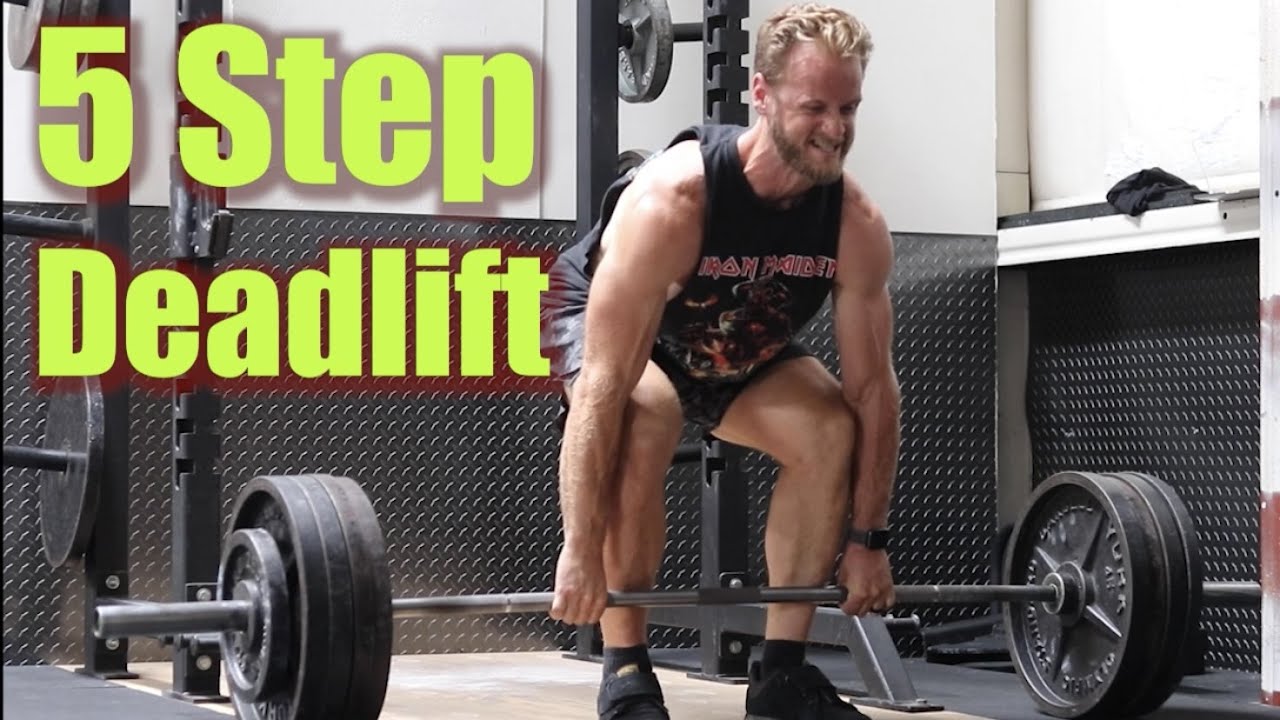
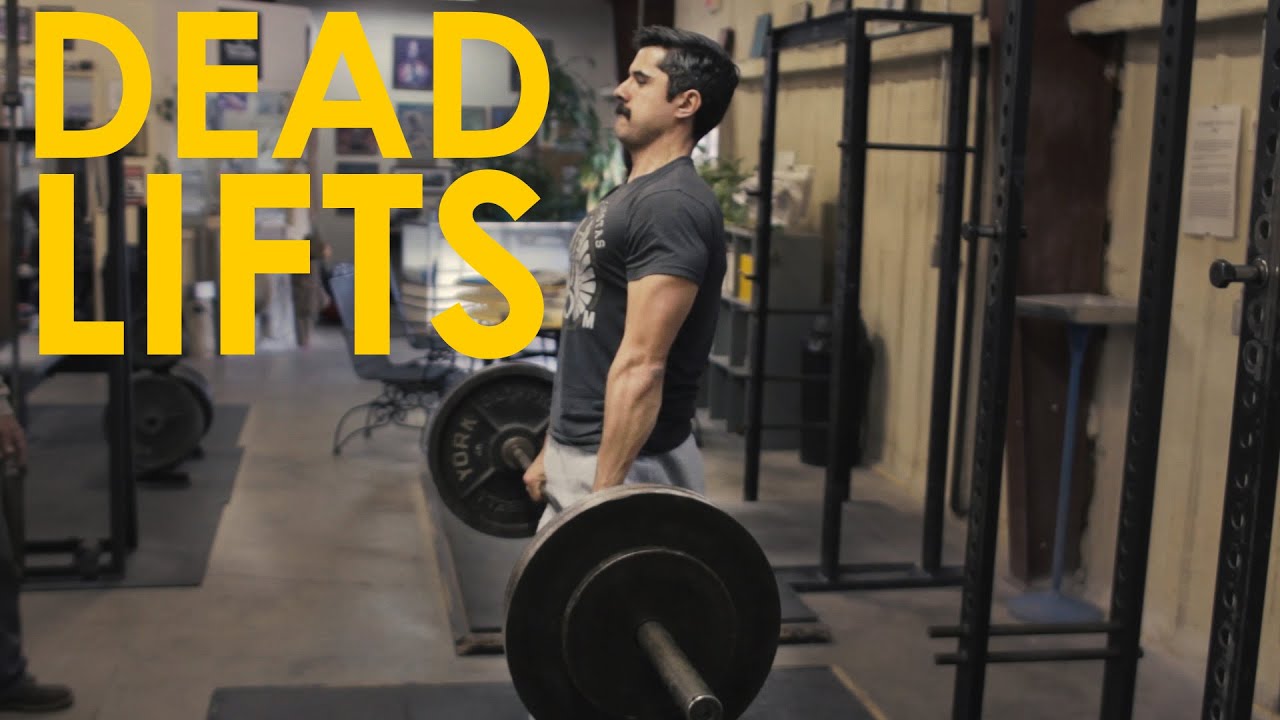
we're going to go over how you can hit your first four plate deadlift and we're going to start right now growing up one of the coolest things I would ride my bike 3 and a half miles up to the local bodybuilding powerlifting gym called bodyw works I would go in there there'd be dudes so this is the late 99s early 2000s there' be dudes ripping up there in their Harley they'd have their Jorts on they'd have their Tims uh they'd be wearing their their American flag bandanas they'd have they'd have their denim jacket with like
this crazy Eagle on the back they were in biker gangs and but this was like cool this was extraordinarily fun and I'd go in with one of my buddies we'd meet there once a week without fail there'd be four to five of these guys hitting monster Deads just Monster Deads and the one dude pulled over 600 lb it was probably like 210 215 and he he had the technique similar to uh Eddie cone okay so not like a true Sumo not not conventional he was shorter probably like 5'7 um but had that like semi Sumo
type pull and I would constantly just sort of watch what they would do I would ask them questions they would talk to me uh about uh supplements what what was I eating and things like that even at one time the one guy I would there was a shine next door I would actually go get a doughnut in strawberry milk after lifting and he'd be like yo have a little bit more protein than a doughnut but anyway one of the biggest things that I wanted to find out was what could I do to get to that
point I dreamed of having not just you know four plates but even getting to the point where you could deadlift two plates on each side the three plates on each side the one dude would consistently talk about the most important aspect is having a training partner okay so you have a training partner and you have somebody who helps you be accountable uh you have expectations on when you're going to show up in the gym and then you know essentially you know what you're going to be doing every time that you get into the gym so
that was like that first key lesson is that you had to have a training partner okay so lesson number one F training partner now the next tip is that when we wanted to work towards that 405lb deadlift this guy would see us and and they were like powerlifting bodybuilders basically there's a place in our town called cartech all these guys worked at cartech okay so they were welding they're doing like metal work just old school type dudes right the next thing I would see is that as they were building up in their sets they might
take like 135 for like a set of 5 lbs 13 5 lb for like a set of five then they put on another plate 225 they'd hit for like a set of five they'd rest a little and they'd hit again and they'd have good speed and every single rep would be dialed in focus on explosiveness focus on good speed past the knee everything was dialed in okay 315 same thing boom and you'd almost hear like these two pulls it's almost like they grab and then there'd be like a big pop into the bar again as
that they were accelerating I'm standing there and we were hitting uh handang cleans off of their squat rack myself and my one buddy we called them dewe and one of the things that one of the guys was telling us is how important technique was for something like a clean you have to have good technique and that's the same principle in the deadlift at a very young age recognizing that if you need technique in the deadlift to move heavy weight and you need technique to be fast in the deadlift you really need it in the clean
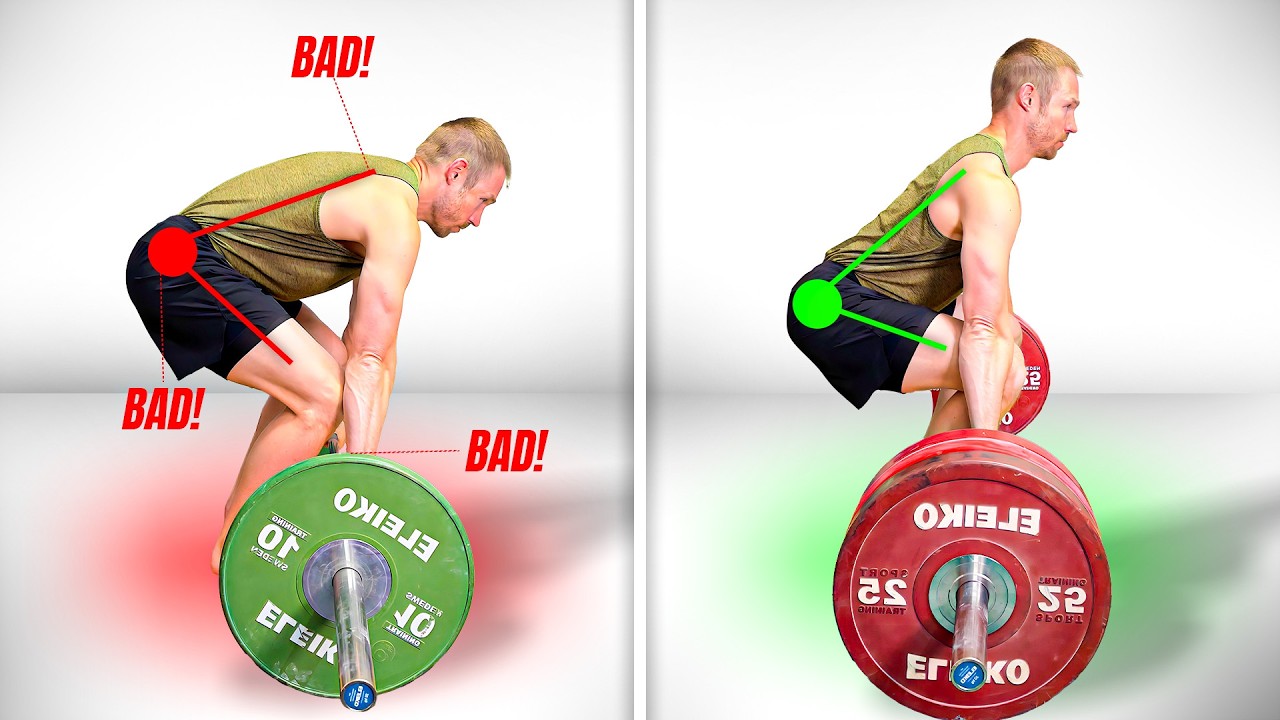
you need it in the squat you need it in the bench and it's like finding that fine line around technique I'm going to write this down the second big principle is you have to identify technique now for this specific video cuz we're trying to get you guys to pull those four plates let's just talk about technique in the sense of a conventional pull okay so we're going to go off on a conventional pull technical pattern before we get into some more of these lessons from the old heads at Body Works the biggest thing that I
recognize with kids that come in or older it's actually more so middle-aged guys that'll come in is they'll spend 15 20 seconds on their setup which is great okay good job but they spend so much time on their setup that they're constantly concerned about every like they're super finicky with everything instead of just get set go and when you're thinking about any lift like if you watch the best weightlifters in the world they get set they get set they get set boom and they're moving that clean they're moving the snatch fast same thing with the
best deadlifters they're getting set they're getting set boom and they go and I think one of the downfalls is that when we haven't pulled let's say 315 or 225 even we get so caught up in these these aspects of our technique that we actually hinder the aggression that we we need to execute the biggest thing that I recommend is like if we're going to take a conventional poll try to have a stance that's like 12 to 16 in okay somewhere along those lines find where you're comfortable but just put them there and go don't like
stand there and do the the whole Wibble wobble raise your hands up and like Get Set again raise your hands up again and go and then then you drive down to the bar and you get set again the big thing is set your feet 12 to 18 Ines somewhere in there 12 to 18 in set your feet there every freaking rep okay now the next thing I recommend like the elbows could be almost right outside the the the crook of the elbow could be right outside the knee okay so now you drop down you get
that set you know where the grip's going to be okay every single rep you know exactly where the grip is going to be now the next thing okay you want to start you want to keep in the deadlift you want to keep those shins as vertical as possible okay this is one thing that I learned from these guys was like they would talk about the more forward the shin is what then ends up happening is sometimes when you pass the knee you can then have a problem trying to lock it out so you don't you
don't you know in a clean you're going to have your shin angle here whereas the shin angle here in a deadlift is going to be a little bit different so what we want to do then is we want to set up an a triangle okay from the shoulder and I like to think about from the shoulder to the lat to the to the hand and the the big thing I like to teach okay so slightly rounded okay just like a slight round for the pole of the deadlift okay and what I want to do is
I want to get set just a little bit right here okay so I'm holding almost a hollow position in my abs I'm setting my upper back I'm setting my lats okay and then I'm getting set and I'm putting tension through my whole foot into the floor okay so the technique is set your feet set your hands set the triangle in the hollow and then we want to set tension into the bar by pushing into the floor and we get that tension in and then we go so it's almost like two pulls tension boom and we
want to think as we come up I like to think push and almost fall back push chest up so there's like a couple ways you can think you can even think push through the full foot some guys will literally say if they're if they're long enough that they're just falling backwards and that helps raise the chest some people don't like that Q so you say raise the chest bring the hips through and so now we're establishing this technique okay that is executed consistent stantly at 135 at 225 at 3:15 and that goes back to those
lessons of me watching these guys do these polls and going man they're they're dialed in at every single weight and so at an early age I'm 14 years old watching this going like wow they're really prioritizing like their intensity and then I you know realized the intensity is a display of their technique okay so that's a really really important thing is that if you establish the foot position you establish the hands you establish how you're going to hold the trunk you Lish the the lats with the triangle and what's interesting is that now when you're
going to deadlift heavy the next day you're going to feel your lats way more than you ever have before and that's actually going to help keep that bar tighter off the floor and then tighter past the knee so that's going to lead to better lifts now if you guys need help with your programming head over to Peak strength. apppp the Google Play store or the Apple iOS store inside Peak strength we have a powerlifting program and we even have A New Path if you want to train for a specific goal like getting stronger you can
actually get inside a Peak strength you can select your experience level okay so if you haven't deadlifted four plates you're probably advanced intermediate or Advanced you're not yet Elite when you're deadlifting 405 to 500 that's when you become Elite so you select that you you're an advanced athlete and then after you select Advance select that you want to train on a powerlifting program we've got a 5day split we've got a 4-day split anything that you want to improve that overall max strength and speed again that's in Peak strength you can click on the link Down
Below in our description deson foot stance position 12 to 18 in okay establish the arms coming down crook of the elbow get comfortable establish the lats with that triangle okay know how to fill your belly button I even like to think about some people I don't like to pull with a belt I've never really liked pulling with a belt some people if they think about pulling the belt on they push into the belt when they bring in that air okay and they keep that in there they don't exhale they keep it in there okay so
that's the technique so we had training partner the second thing was technique the third thing now we're going to establish training frequency so this is going to be one of those expectations that you set with your training partner we got a goal we want to pull four plates okay one of the biggest factors that I remember with these old dudes is that they just show up four to five days a week and I remember going like these guys work full-time and like they're they're doing like labor jobs and they're they're ripping in on their Harley
probably drinking heavily as well on the weekends but they're training pretty consistently and for me what I think is a very easy thing to do is to CH challenge yourself you got a training partner and what I like to do is use this framework called the 255 okay so 255 you're going to commit to 20 weeks and you're going to do five hours a a week minimum okay for five days okay so that means not not every day is five hours but you're going to go into the gym 5 days a week and every day
that you're in the gym you're going to be in there for at least an hour and you're going to going to do that for 20 weeks okay so minimum you're going to get 100 hours over the next 20 weeks of training okay so now you just K you sit there and you can commit and you say okay for 20 weeks my goal is to increase my deadlift now what ends up happening is that when you're dialed in on increasing your deadlift you start to do other movements that transfer to your deadlift and you start to
have primary movements of transfer secondary movements of transfer okay and then what ends up happening is that because your AR goals or deadlift these other lifts also go up you've committed 20 weeks to your specific training and then what ends up happening is now you're easily able to make these goals more achievable and you hold yourself just a little bit more accountable because you're following that 255 framework okay so 255 20 weeks 5 days a week and you get five hours in a week okay it's if you're focused and you're dialed in on this this
is something that you can easily do so that's that next thing and when we're doing that you can set up those splits you the way we do it in Peak strength is we have a Max uh lower body uh we have a a dynamic upper body we do an Impulse or a jumps depending on on your athletic ability and then we do the the dynamic lower body and the the maximal strength upper body so we sort of flip back and forth but then we're we have two to three days focus on speed workor okay so
that's another big factors that we want to get with that technique and then with that 255 framework we want to get deadlifting once a week okay we want to get the the explosive work in and we want to get the groove established a lot of you guys also will read like old school stuff and they'll say well you should only deadlift once every two weeks reasonable if you're pulling 600 700 lb I don't think it's a bad it's a bad recommendation I think it's a decent idea but a lot of you guys don't even have
the work in yet like dude get get to 315 before you even think about backing off uh deadlift every week I would literally deadlift every single week do you really need to back off a deadlift that much not really once a week is going to be fine as long as we're balancing the speed uh or even those primary transfer movements so that's another big factor there is that the training frequency is absolutely key now the next thing this is going to be a great takeaway is to establish the best reps and sets for technique okay
establish the best reps and sets for technique so what does that mean that means if we have a day that we're working on technique let's say it's speed-based all right I want to take that and say from a percentage Based training okay if I want to improve my technique anywhere between 70 to 75% all the way up to like 83 to 85% and I want to do anywhere like three to five reps okay and the reason why I like it a little bit more than 70% a little bit south of 85% is that we want
to be able to do uh technical movements we want to be able to do these movements M with some load okay so if we have some load in there now our positions get better and then they will transfer over to heavier weight when we're going heavy and we don't want to think about technique the whole goal with technical work is that you get it so dialed in with your nervous system that when you go really heavy you can just shut off and just start screaming and take a lot of caffeine and you're going to hit
the lift that's the whole goal with having good technique so we've got to make sure that that transfers that still also means that when we're ramping up we're hitting those positions that we're looking for and we're dialing them in as clearly as possible now I think for reps and sets for technique let's say 6 to8 sets uh 3 to five reps 70 to 83% you're going to be golden okay now that's going to be number four so we got to we got to identify best technical reps and sets now the next thing best reps and
sets for strength okay so that's going to be number five if we're looking at the best reps and sets for strength we're going to be focusing on anywhere from doubles to sets of four okay singles to sets of four seven sets to 10 sets okay it sounds crazy but 7 to 10 sets doubles to four singles to four somewhere in there okay those are the best sets going to be 6 to 10 reps 1 to four somewhere in there percentage start at 80% you can ramp up over 95% now one of the big things why
I kept that percentage around 83% is that for technique is because once you get over like 85% you might see a little bit of fatigue and you'll have a negative performance with your Technique with strength with strength here we want to keep those reps lower we don't want to hit fives we want to do triples okay we want to do doubles and so that enables us to execute more load while sort of managing that fatigue aspect so that's that's a big key factor is knowing the best reps in set for strength okay now that way
what you can do is you can go maybe on your Dynamic and your speed day you're doing like a a seven triples at 70% you're focus on technique you're focus on really really good speed of the bar okay on the on the the actual max strength day where we're trying to push the load of the deadlift okay now we're do seven doubles at 855 to 95% so now we're taking those two and we're sort of playing back and forth to make sure that we're executing specific to our goal to get to those four plates okay
so we're playing that game the next game that we've got to play is we look at the primary lifts of transfer okay so number six primary lifts of transfer okay we're going to write that down primary lifts of transfer so what does that mean that means these are the absolute best lifts that transfer over to the deadlift okay so if we're looking at and there's a couple outside of this but if we're looking specifically at lifts that transfer over we're going to look at a box squat okay we're going to look at a front squat
or a pause front squat I'm going to look at a diml deadlift and I'm going to look at a deficit deadlift now I like to take the primary lifts of transfer and I'll say okay something that as a weightlifting coach that I've learned from the powerlifting world is that on certain ranges if I do a box squat at a certain point I hit a box squat here it's going to actually help my pull off the floor so even weightlifters will notice an improvement with that pull if they're doing a lower box squat so what do
we do if we want to increase our deadlift we'll do lower box squats okay so it's it's got a very direct correlation to the deadlift okay now pause front squats another and you can do pause back squats I would recommend pause High bar back squats that's another aspect I wanted to bring up is that we've got to think through you train High bar and then you do that for 12 weeks then the last eight weeks out of the 20 you train low bar okay that that's a one real quick secret but now we're going back
to that primary lifted transfer the next one would be a pause front squat now a lot of powerlifters don't like to do front squats but guess what you do front squats for 20 weeks straight your back gets really stupid strong you get more mobile hips and you're going to be cranking that freaking pull right off the floor it's going to increase your pull off the floor also now we're looking at uh one of the things with the box deadli or the box squat is that if we have the cue to extend the hips quickly off
the Box bring them out of hip flexion into hip extension that will help the lockout of the deadlift as well for a lot of athletes now then we're going to look at dimal deadlifts one of my favorite movements to improve the lockout so go past the knee lock out past the knee and we do that for sets of anywhere from like s to 17 reps dimmel deadlifts gives you a good Rhythm it's going to help you find the groove it's going to help strengthen and hip flexion okay you're lengthening the hamstrings but it's also going
to help that that lockout position and then off the floor deficit deadlifts are going to improve that position off the floor it's also going to transfer to the finish of the actual deadlift because you're still doing that full deadlift so these primary lifts of transfer would be a pause front squat a box squat a dimal deadlift and a deficit a deficit deadlift okay so those are some really really key exercises that we're looking for that are primary now the the number seven lesson here uh that we can use to actually increase your deadlift and get
to those four plates is that now we're going to focus on those secondary lifts of transfer so secondary lifts of trans transfer are going to be uh movements that Target specific weaknesses in your chain so if we're looking at uh somebody's got weak hamstrings uh we'll do an RDL if somebody's got a weak low back we'll do high rep reverse hypers okay somebody has weak connection between hamstrings glutes and low back will do ghd if somebody's heels are constantly popping with the bar passing their knees we're going to hammer very heavy kettle bells okay so
we're looking at heavy kettle bell swings like 150lb kettle bell make sure your heels do not pop when you're extending with the hips do not pop the heels okay if you can extend with the hips and your heels stay grounded you're going to improve your deadlift if you have a weak uh chain link between the back the glutes and the hamstrings ghd okay hit those g hit the ghd 7 to nine reps focus on strength if you're rector's low back or weak let's hit reverse hyper you know sets to 17 to 20 and get get
some big swinging going when we're talking about that those are just those you know those are those three that I absolutely freaking love that are going to transfer phenomenally to you increasing your deadlift so we're looking at secondary lifts of transfer and then what we do is we play this game you know inside Peak strength you're downloading you're getting inside the powerlifting program you want 20 weeks that you're going to commit to increasing your deadlift to get those four plates and now you go through this and you're programming so that one week you do this
the following week or two weeks later we hit something else and then we might come back and forth and we just play this game of balancing maximum strength with that Dynamic work one thing I want to like just chime in here a little bit as well is that I think it's important for powerlifters to learn from weightlifters I think weightlifters need to learn from powerlifters and one thing that I learn from powerlifters is to use box squats more frequently is to use pauses way more frequently okay and one thing I think with with powerlifters they
could learn to use more High bar back squats to increase their pulse okay High bar pause back squats I think also potentiate your pulse so that's like a little bonus recognize that there's things to learn and then finally even looking at being more explosive training your nervous system to be as elastic and as Twitchy as possible is going to lead to this much higher performance so if you're somebody who maybe isn't as coordinated but you're doing jumps now all a sudden you're increasing the intelligence of your nervous system it can recruit at a higher speed
and it can be more stable at that higher speed which in turn will then lead to a PR in the deadlift you're going to hit those four plates especially after you download Peak strength at Peak strength. apppp the Google Play store or the Apple iOS St get to work use that 255 framework I'm going to go back through this get yourself a good training partner know that technique and get it set have that training frequency again 255 know the best movements that transfer to the best technique understand the best strength exercises reps and sets know
the best reps and sets for technique understand those primary lift of transfer understand those secondary lifts of transfer get that work done tag us when you hit those big time PRS if you want more videos around dead left click on this video right here because remember freaks if you want to become a champion you've always got to cultivate your power peace