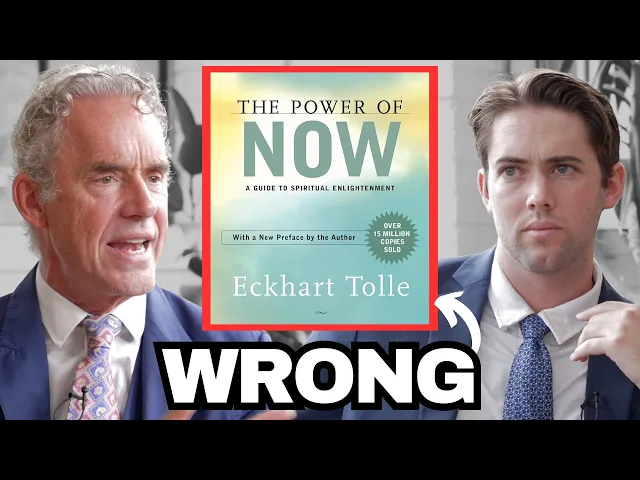
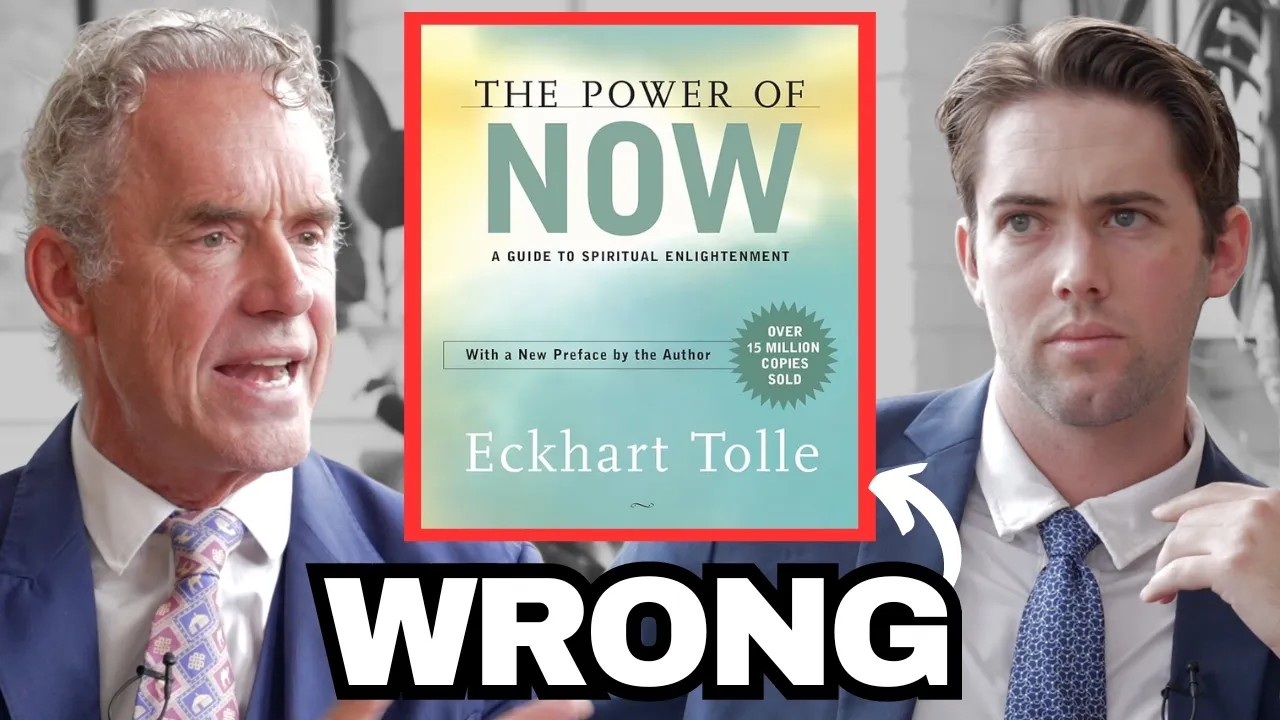
what are your thoughts on eart tol I don't know enough about him really to to comment in depth I mean eart tol is part of that 1960s humanist movement essentially and like fundamentally the humanists were wrong so it so that would go along with say conceptions like self-actualization that would be Abraham masau and uh what did Carl Rogers describe it as something like the fully functional person the person whose actions are commensurate with their utter who's transparent to themselves and others who communicates in a manner that's striving to bring themselves and other people upward but
it's all within the humanist framework and it's that that in the final analysis that's um it's weak it can't withstand ideological assault with any degree of resistance I I found eer toll to be I mean his two books were also some of the most important books I've ever read both of those made trem differences a lot of it to do the fal idea of those books is very similar to what a lot of different philosophers say a lot of philosophers when you boil it down like I'm sure you're you know you know that the the
fundamentals are pretty much the same it's just the abstractions from it differ I feel like if you've I'm sure you've observed that but I think those two books were some of the most important things for me at least to use as tools to alleviate I learned a lot from the humanists when like Rogers and nazza for example when I read them when I was I don't know something approximately how old are you 25 25 so a little how old are you 34 34 I read them when I was a little younger than you and they
had I learned a lot from Rogers and from maslo so you know the effect that a book has on you depends to some non-trivial degree on where you happen to be standing when you encounter the book and if the person who's writing the book knows much more than you do about something at that moment well then the book can be very enlightening and lots of books like I learned a lot from Freud you know I don't I think Freud was fundamentally wrong in his insistence that it was the hedonic element that drove life itself he
he used the sexual impulse as a standin for hedonic orientation I just don't think that's true but I still learned a lot from Reading Freud lots of thinkers can be wrong in some ways and right in others and you know a discriminating reader pulls out the wheat leaves the chaff behind I learned a lot from Ernest Becker's book the denial of death which is sort of the ultimate extension of the Freudian view it's brilliant book it's wrong but it's brilliant and there's much in it that's correct fundamentally it's wrong because Becker believed that the heroic
orientation in life was also a form of defense against death anxiety that's just that's not yeah it's a good theory it's an interesting Theory sometimes it's true but fundamentally it's true for