Oh Reverend father's blues and gentlemen I do have a slight problem in giving these talks because so many people seem to read so many things that I've written you know there is a problem of just repeating things I've put in my books and pamphlets but on the other hand you always get someone who's come for the first time and has never read any so I can't presume that they they're already familiar with what I've written that's When you're teaching one of the first things you have to do before giving a lesson is decide upon the
amount of knowledge presumed in the people to whom you're speaking our teaching 11 year old children one of the first things I have to do after the summer holiday each year is teach the long division which they've all learned the year before but I can always presume that none of them at all can do long division because they all forget it in the summer Holidays so for the purposes of this talk tonight I shall be presuming moreless that people do not know everything about the liturgy so some of it will be fairly basic but don't
think there'll be a great deal of harm in that and I am approaching it from a different angle something I haven't done before which is the question of division a divided liturgy in a divided church now the word liturgy is one of the most frequently used and least understood Terms and use among Catholics today and this is particularly true in Catholic schools teachers are usually female I feel bound to say concoct what they claim to be liturgies without having the remotest idea what the liturgy is and it is very sad to relate that for the
most part school chaplains acquiesce meekly I suppose I can't blame them too severely because having taught in a school with an all-female staff apart from myself for 21 years I tend to acquiesce meekly Now in the when the ladies all gang up on me but and as I said savvy though the chaplains coming to the school and they're given what is called a liturgy and then they perform this liturgy and they perpetrate whatever observed it is they're ordered to perpetrate and without so much as a whimper I know one very courageous priest who declined to
participate in what was more reminiscent of a musical act than the mass and for his pains the Bishop removed him from the parish and sent him elsewhere because he'd stood up to a headmistress whose own knowledge of the liturgy from what I could gather was somewhat less than that of Benjamin bunny now the most profound analysis an easily readable form of the nature of the liturgy that I know of can be found in the encyclical made here today of Pope Pius the 12th which I believe this Catholic truth society is still selling other who wouldn't
surprise me if it had Gone down the memory hole Pope Pius the 12th defines the liturgy as the whole public worship of the mystical body of Jesus Christ head and members thus acts a worship which do not form part of the official public worship of the Catholic Church as set out in her liturgical books are not deter jackal I'm not suggesting for one moment that non liturgical worship is without value the liturgy constitution of the Vatican Second Vatican Council reminds us the Spiritual life however is not limited solely to participation in the liturgy the Christian
is indeed called to pray with others but he must also enter into his bedroom to pray to his father in secret furthermore according to the teaching of the Apostle he must pray without ceasing popular devotions of the Christian people provided they conform to the norms and laws of the church are to be highly recommended especially when they are ordered by the Holy See one of The most beautiful acts of worship in the school I teach is the may possession during which the children process to our lady's grotto reciting the rose the statue of Our Lady
is crowned and will Marion hymns are sung each child leaves a bouquet at her feet but will most certainly an act of worship this is not a liturgical act our word liturgy is derived from a Greek root meaning a public duty or service to the state undertaken by a citizen and the Septuagint the Greek version of the Old Testament it is used for the public services in the temple and is thus invested with a religious sense as the function of priests in the ritual of Jewish worship our Lord is described as the light or gasp
of holy things in Hebrews chapter 8 verse 2 the liturgy is his holy work for his people and this is very very important the liturgy is therefore primarily not something which we do but something which our Lord does It is an action of Christ an axial Christe but an action with which his mystical body the church is able to unite itself the Liturgy Constitution of the Second Vatican Council stressed the nature of the liturgy as a christ-centered action in terms that could hardly be more clear or more traditional now quote from the Constitution Christ is
always present in his church especially in her liturgical celebrations he is present in the Sacrifice of the mass not only in the person of his minister the same now offering through the Ministry of priests who formerly offered himself on the cross but especially in the Eucharistic species by his power he is present in the sacraments so that when anybody baptizes it is really Christ Himself who baptizes the liturgy then is rightly seen as an exercise of the priestly office of Jesus Christ in it full public worship is performed by the mystical Body of Jesus Christ
that is by the head and his members from this it follows that every liturgical celebration because it is an act of Christ the priests and of his body which is the church is the sacred action surpassing all others no other action of the church can equal its efficacy by the same title and to the same degree in the earthly liturgy we take part in a foretaste of that heavenly liturgy which is celebrated in the holy city of Jerusalem toward which we journey as pilgrims where Christ is sitting at the right hand of God minister of
the Holies and the true Tabernacle the council is stressing here the fundamental Catholic truth that the priesthood of our Lord Jesus Christ did not come to an end when he ascended into heaven he perpetuates it in his mystical body the church which and his innermost reality is an extension of the Incarnation throughout the nation's and The centuries our Lord has perpetuated not only his priestly office but also the sacrifice of our redemption to be present at Mass is therefore to be present at Calvary the mass lies at the heart of the Catholic liturgy the mass
is Calvary made present among us each time a Catholic priest dares to ascend to the altar of God to act as the instrument of Christ the great high priest of every Mass a prayer in the Liturgy of st. John Chrysostom evokes The profound truth that it is really thou who just offer and art offered thou who does receive the offering and art given back to us Christ our God when he reflect upon the innermost reality of the mass that we are present at Calvary it is hard to understand how our priests dare to ascend to
the altar or how we dare to be present before it Kuang terriblest as ty cora cries out the deacon in the syrian liturgy how awesome is this our awesome indeed it is when Our Savior and our God is present among us as priest and victim no one has expressed the sublime reality of the mass in a more profound manner than father Joseph Youngman in his work the mass of the Roman Rite he explained when Christ on the cross cried out his consummate amassed few with a man who noticed it fewer still the man who perceived
that this phrase announced a turning point for mankind that this death opened into everlasting Life gates through which from that moment on all the peoples of the earth would pass now to meet the expectant longing of mankind this great event is arrested and through Christ's institution held fast for these coming generations so that they might be conscious witnesses of that event in the last centuries and among the remotest nations and might look up to it in holy rapture now there is only one sacrifice of the mass Wherever it is offered and whenever it is offered
it is as father Youngman expressed it Calvary made present among us but although there is only one sacrifice it has been and is offered according to many different rites a rite of mass consists of the words and ceremonies surrounding the essential elements instituted by our Lord the different rites of masks evolved in a gradual and natural manner over many centuries with prayers and ceremonies Evolving almost imperceptibly in every case codification that is the incorporation of these prayers and ceremonies into the liturgical books followed upon their development this thus particular prayers and ceremonies are found in
the liturgical books because they were used in the liturgy and not vice versa this is a crucially important distinction one of Britain's greatest historians a Protestant incidentally Professor Owen Chadwick remarked that liturgies are not made they grow in the devotion of centuries there is a very clear pattern of development in all the sacramental rites in both East and West this pattern is wellick blamed in the teaching of the Catholic Church an authoritative exposition of Catholic doctrine edited by Canon George Smith it states throughout the history of the development of the sacramental liturgy the tendency has
always been Towards growth additions and accretions the effort to obtain a fuller more perfect more clearly significant symbolism note carefully here the reference to growth growth additions and accretion until 1969 there had been no precedent within any Catholic Rite for the opposite process that of removing prayers and ceremonies in previous use such an idea had been unthinkable incompatible with the Catholic ethos commenting on Thomas cranly's liturgical Revolution Cardinal Francis Gasquet wrote of the reverence felt by Catholics for sacred rites coming to them with the authority of centuries any rude handling of such rights must cause
deep pain to those who know and use them for they come to them from God through Christ and through the church but they would not have such an attraction where they not also sanctified by the piety of so many generations who have prayed in the same words and found in them steadiness in Joy and consolation in sorrow the Cardinal added correctly that the forms of public prayer are the very center and kernel of the religious life of a Christian people Don fennel Cabral the father of the liturgical movement insisted that even the so called art
isms of the Missal are the expression of the faith of our fathers which it is our duty to watch over and hand on to posterity for such quotations could be multiplied indefinitely but it is not Necessary to do so as not even the most fervent promoter of the post consider revolution in liturgie could have the temerity to deny that the attitude that I have described here was held universally within the church until the post conciliar period I will give just one more example to illustrate this attitude the Anglican bishops had attempted to refute the final
and irrevocable condemnation of Anglican orders by Pope Leo the 13th in 1896 the Catholic Bishops of England answered them in 1898 and condemned in the strongest possible terms the action of the Protestant reformers in omitting or reforming anything in those forms which immemorial tradition has bequeathed to us this is what the Catholic Bishops wrote for such an immemorial usage whether or not it has in the course of Ages incorporated superfluous accretions must and the estimation of those who believe in a Divinely guarded visible church at least have retained whatever is necessary that in earlier times
local churches were permitted to add new prayers and ceremonies is acknowledged but that they were also permitted to subtract prayers and ceremonies in previous use and even to remodel the existing prayers in the most drastic manner is a proposition for which we know of no historical foundation and which appears to us absolutely incredible i remark earlier That the veneration for traditional rights and their preservation as a sacred trust characterized the church until the post vatican ii epoch I did not say as many critics of the liturgical revolution would until the Second Vatican Council the council
fathers voted for no more than moderate reforms which would have left untouched the ethos of the traditional rites the mass in particular but as Cardinal Heenan has testified the experts who Drafted the liturgy Constitution in an ambiguous manner planned to use it in a manner which the pope and the council fathers did not suspect when after the council the experts known as the purity preachers is the latin word for an expert advisor when after the cancel these experts intended to gain control the commission which would be set up to implement the liturgy constitution and interpret
it in accordance with their own wishes the Liturgy constitution itself makes it very clear that the council fathers did not have the least intention of unleashing a revolution which would destroy the roman rite as one of the experts responsible for this destruction expressed it himself the council commanded specifically that latin was to remain the language of the roman rite the faithful should be able to sing or say that in those parts of the ordinary of the mass that pertains To them gregorian chant was to be given pride of place in the church achill services the
treasury of sacred music was to be preserved and fostered with great care all eternal rights were to be preserved in the future and fostered with great care and there were to be no innovations unless the good of the church genuinely and certainly required them it is thus hardly surprising that such notable critics of the liturgical revolution as professor Louis Sarang or Father knew Hebrew a were not at all apprehensive about the liturgy Constitution seeing it as a blueprint for renewal even archbishop lefebvre bones of the forthcoming reform to the holy ghost fathers now I'm coming
to the subject of the divided liturgy it is clear that the post consider liturgy is divided from the pre conciliar liturgy in a number of ways the first division derives from the very act of undertaking a radical reform of the liturgy I have Already quoted professor Chadwicks dictum the liturgies are not made but grow in the devotion of centuries the commission known as the concilium which implemented the liturgy Constitution had a very different idea and actually imagined that it could compose the liturgy which would be superior to the one that had grown up in the
devotion of 15 centuries professor Dietrich von Hildebrand has ridiculed the very idea that the men of The second half of the 20th century could do this until the establishment of archbishop Union his Concilium no one but the Protestant reformers had had the temerity to undertake a radical reform of the existing liturgy it was therefore fitting that archbishop union he should have called upon the services of sects of em persist him in undertaking what he termed a major conquest of the Catholic Church the archbishop denied the protestant observers played an active Part in the composition of
the new rites but i wrote to one of them and discovered that this was completely untrue it is the Rite of mass that most affects the lives of the ordinary faithful and where the liturgy of the mass was concerned the concilium had no scruples whatsoever in subtracting prayers and ceremonies in previous use prayers and ceremonies bequeathed to us by immemorial tradition nor did the Concilium hesitate to remodel the existing right in the most drastic manner possible the English Catholic Bishops in 1898 had found it absolutely incredible that Protestant heretics should have done this what would
their reaction of being if told that the Catholic Mass would one day be remodeled in the most drastic manner possible by a commission acting on behalf of the Holy See with the assistance of six Protestant heretics Who had been convulse pacifically in their capacity as Protestant heretics this to quote those English bishops once more is a proposition for which we know of no historical foundation and which appears to us absolutely incredible it is thus be on dispute that the very act of remodeling the liturgy in the most drastic manner constitutes in itself a division or
breach with our Catholic past one cannot help recording that the Greek word for breach or division is sysm the very act of this drastic remodeling would have been deplorable even had the result of the reform been far less reprehensible than what was eventually forced upon us it is alas hardly possible to exaggerate the reprehensibility of these reformed or rather revolutionized rites I shall be concerned today principally with the mass as it is celebrated in a typical parish today this involves a second Division the division between the official Latin version of the missile of Pope Paul
the sixth promulgated in 1970 and what takes place in our parish churches there is often less resemblance between the celebration of mass and most parishes today and the Latin missile of Pope Paul the sixth then there is between this mass and that of the mass of Pope's umpires the fifth to say that the typical mass is often a travesty of the Latin Mass of Pope Paul the sixth Does not mean that this right of mass is a certain satisfactory far from it I consider the Latin missile of Pope Paul the sixth to be interfere liturgically
spiritually doctrinally and aesthetically to that of popes and pius v and that of course is an opinion that any catholic is entitled to to hold obviously if one is going to change or modify a literal right the resulting reform will either be equivalent to the previous right just as good it will be Worse or it will be better obviously those making the reform thought it would be better but we are quite entitled to to maintain that it was worse and as I said I consider it to be inferior liturgically spiritually dot finally and aesthetically to
the missile of popes and Pius v however the new mass is definitely valid it contains no heresies and contains nothing that could be considered intrinsically harmful to the Faith of the Catholic people that it could have contained anything intrinsically harmful to the faith of the Catholic people is impossible due to what is known as the in defect ability of the Catholic Church what is meant by the in defect ability of the Church is that the Catholic Church can never fail in the mission given to it by our Lord this mission isn't just to teachers the
truth but to provide us with a means of holiness to enable us to live up to that Truth now if a liturgical Rite coming from the church itself could actually harm the faithful that would mean that the mystical body of Christ of which the head of course is our Lord Himself was feeding itself poison it would mean that our Lord was poisoning the members of his body and to maintain that the new Rite of mass is intrinsically harmful is to maintain that our Lord is deliberately harming the members of his body which is is totally
impossible so The new mass could not per se contain anything intrinsically harmful but as I said that doesn't mean that it isn't in fear in every possible respect to the previous liturgy oh I don't intend to spend much time discussing the Latin missile of Pope Paul the six because this mass is celebrated according to this missile are in fact much rarer than celebrations of the trial endtime mass the mass of sin pius v you can see when celebrated faithfully according to the Missile of Pope Paul the sixth in the Brompton Oratory and in the archer
in Birmingham and perhaps a few other churches in London but I'd say 99% of Catholics in England don't have access to the mass celebrated in that and according to the missile of Pope Paul the six whereas a far higher proportion have access to a try in time mass what I want to examine today is the liturgy to which the faithful are subjected each Sunday what Is actually happening in our parishes now as you know a few weeks ago Cardinal Hume allowed Kabul two or three churches in his diocese to have a tried endtime mass each
Sunday and he gave a statement which was published in the universe saying that the desire of the tried endtime mass must be put into perspective and that the overwhelming majority of Catholics are perfectly contented with the new mass as its celebrated in their churches today I Will delete it to the universe saying that this was ridiculous I didn't lit in quite those terms as they wouldn't have printed it they didn't print it anyway better as if we're going to get down to facts get down to the nitty-gritty as this in America the overwhelming majority of
Catholics don't go to Mass at all seventy percent of Catholics don't go to Mass only thirty percent go now and the number is decreasing by thirty thousand a year so it's just Nonsense to say that the overwhelming majority of Catholics are satisfied with the new liturgy and it's also wrong to maintain that those who do go to Mass every Sunday do so because they find the new mass preferable to the old if the very very sad thing is that most of those who go to Mass now go because they were educated before the council and
they know it's their duty to go to Mass on Sunday and they've been taught the nature of a mass as a sacrifice and they Impose that knowledge almost artificially under the celebration in which they're taking part but as I said of those people are going 30,000 or dropping out every year and by the end of the century who will be going I don't know in my own Deanery they did a survey among the children thousands of children going to Catholic schools and they concluded only two percent of them will practice their faith and they leave
the secondary School baptisms have gone down by 50% since the council and this is what's even more alarming of we have only 50% of the number of Catholics being baptized and 50% of those do not get confirmed in the bad old days of boring religious education 92% of children who are baptized were confirmed are not a mathematician but if you if I I know Jamie Bolden has worked all this side and is actually far worse than it Appears is when you get the figures worked out properly it isn't just 50% of 50% being confirmed it's
even lower and the number of first communions they're going down at such a rate that in 14 years time there wouldn't be any if they content continue to decline at the rate they're declining now and as I said of those children are confirmed if 98% of them lapse before they leave school what future does the church have In this country but you cannot get a single bishop who will admit that anything is going wrong you might remember at the bishops Synod which father Harrison talked to about this morning Cardinal Hume said we must not be
deflected from the path which we have been following since the council what would happen if his managing director of any company where every aspect of that company's business was crumbling away where their customers had declined by 30 Percent within a few years and they were losing 30,000 a year and he said we are not going to be deflected from the policies were following so in criticizing the new Masson upholding the merits of the old we are not flying in the face of a great pastoral renewal there isn't any past ruin your there'll be no good
fruits from the liturgical reform of the Second Vatican Council if anyone here knows of any I'd lied like to hear about them later but we're not Nostalgic people who are going against something which is greatly benefiting other others the liturgical reform has been pastro Fiasco father Louie booyah has said that now getting back to the new mass as it's celebrating our churches today if one of our martyr priests had returned to any church in this country up to 1965 I mention that date because even though in theory the Tridentine mass was still being used then
very many Made a change major changes had been brought into the manor its celebration but any one of our martyr priests would come back into a Catholic Church in this country prior to 1965 could have picked up the missile and celebrated Mass without any problems whatsoever the only problem he would have had would been if he wanted to do a son Mass because some parts the tent had the notation changed in the goog Orion chart and he might have gotten a muddle over The preface but apart from that every practically every word in every rubric
would have been identical now what would one of those martyr priests think if he came into a typical Catholic parish church tomorrow morning he would think he'd come into a Protestant church and he'd rush out of the church in horror actually find very little difference if he walked into many Anglican churches as there's very little difference indeed between the new Catholic Rite of mass And the Anglican series three liturgy I've heard many many cases say of French visitors who quite happily gone around Anglican churches the whole time they've been in this country thinking they were
present of the new Mass they weren't being ecumenical they've put the new English Mass so closely resembles the new masses is celebrated in France they they they didn't know the difference so they're obviously then here is a great division between our faith as expressed Liturgical e in the time of the english martyrs in the town of cardinal newman in the time of our parents in the time of our own childhood and mass as it is celebrated today a division definitely does exist and it's pointless to hide it for example in my own case I'm divided
for my own parish I don't attend Mass in my parish church because I absolutely can't stand going to the new Mass it actually makes me feel ill and I travel many miles each Sunny to take part in the Tridentine Mass in another parish now the object is this is very very sad because the object of the mass isn't simply to offer public adoration to Almighty God but it is to build up the mystical body of Christ this is particularly true the reception of Holy Communion st. Augustine noted that we become what we receive we receive
the body of Christ in Holy Communion and we become the mystical body of Christ thus the mass which Should be the means and a symbol of unity has become a means and a symbol of disunity among Catholics and this disunity doesn't exist simply between Catholics will tend to try the entire mass and those who attend the new Mass but it exists among those who attend the new Mass because many Catholics the date attend mass in other parishes sub perhaps they find their own parish too conservative or they find their own parish too liberal or too
progressive I'm sure many of the people who go to the Brompton Oratory Sunday are refugees from other parishes some of you might have wrote read a pamphlet I wrote called the barbarians have taken over which starts off with the description of the situation of a parish the parish of Christ the King in Kansas City in the United States where a very good very conservative parish priest he didn't have the mass in Latin he had a straightforward new mass but he had People still kneeling for communion the altar rails were there the tabernacle was on the
altar there are no extraordinary ministers of communion no sign of peace no offer tree procession all these things are optional and his mass attendance went up over a period about four years from two into 5,000 other parish priests complained to the bishop so what did the bishop to the bishop dismissed him instead of telling the other parish Priests to do the same so even within people who attend the new Mass there are divisions people have to find a mass which they find tolerable rather than go to Mass in their own parish and as I said
this is very very sad because the mass should be a means of building up the unity of Catholics not bringing disunity among them so let let us then let us make a brief examination of a typical celebration of the new Mass as celebrated in a typical parish today Which is as I said the sign of so much division within the church today Don I hope this is going to work out on two separate sheets of paper I've made a note of a prayer or ceremony in the Tridentine Mass and then they're corresponding or in most
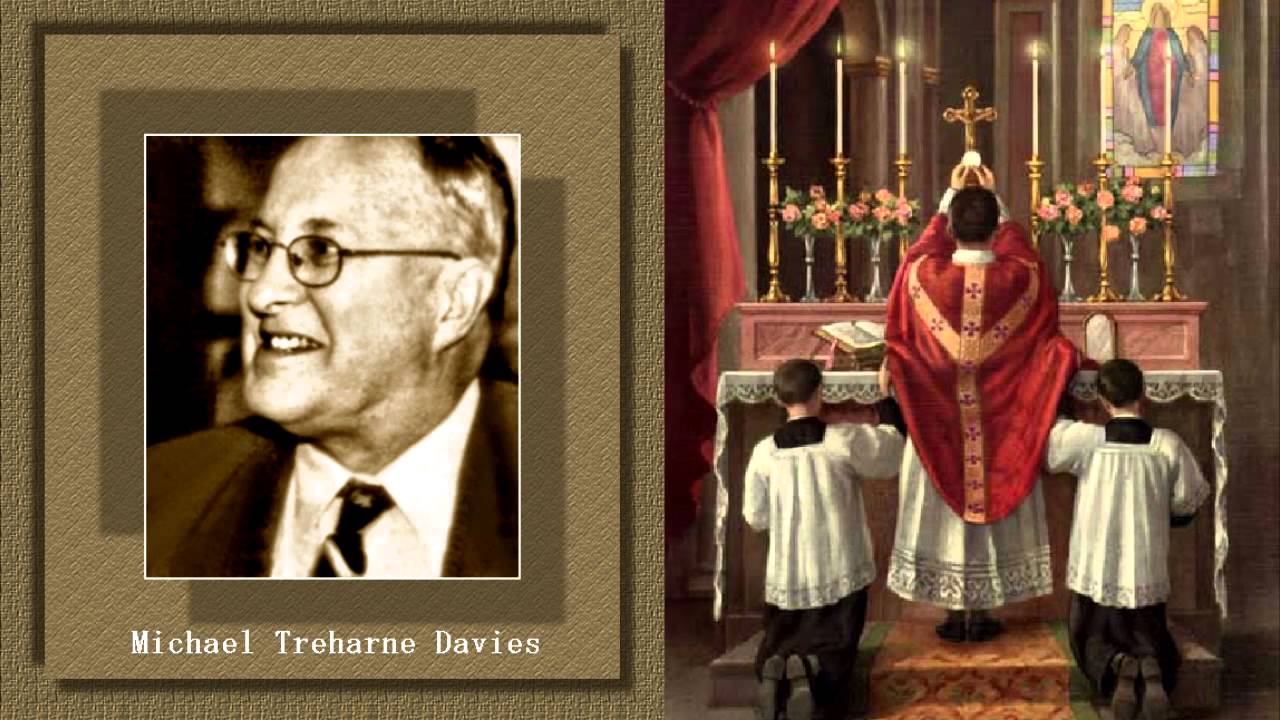
cases and corresponding ceremony in the new Mass both begin in the name of the Father the Son and the Holy Ghost but from then on there is a radical divergence the tried endtime mass think for a moment how does It begin in true ebo adult re day I will go into the altar of God a priest ascend steps he goes up to the altar of God to offer a solemn sacrifice this phrases repeated several times in the psalm you Dakar may what does the priest do in the new Mass he greets the people we're going
to find that the people have become the focus of attention in the new Mass as celebrated typically today in the Tridentine Mass we have two separate configures the separate configure by the Priest is very important as it sets him apart from the people and one of the greatest defects of the new Mass evening Latin is the lack of distinction between the priests and the people in the entire missile of Pope Paul 6 apart from the prayer ort frat res which by the way I was Bishop commit puny knees consider him try to abolish and it
he was forced to put it back again by Pope Paul the six apart from that there are really no prayers at all was distinguished between The priests and the people except in the Roman canon where frequently refer will not frequently there three or four references to the priests separated from the people if you had a complete celebration of the new Mass using canon to that mass could be considered a consul abrasion by everyone present which of course is that is what Protestants think of it as so this separate you see people said this was an
unnecessary duplication the two Configures but it isn't it sets the priests apart from the people now then the people make their configure and what does the priest do at the end of it he gives them absolution what do we do in the new Mass and move over to the sheet priests and people say one of a number of penitential writes and asked together for God's forgiveness there's no absolution of the people by the priest all of them are brothers and sisters and they ask for it together There's nothing heretical in that we are all brothers
and sisters the priest is our brother and sister but this plays down the separate sacrificial role of the priest in the Tridentine Mass there probably a prayer a lot of you have never even noticed and it won't bring anything to you but look in your missiles afterwards is called the prayer Alfre nobis and it refers to the priests entering into the Holy of Holies that's we look away that's point three in the New Mass it's being subtracted the fourth part there's then an invocation of saints particularly the Saints whose relics are here that's here in
the oldest stone as you all know in a traditional Catholic altar a little section has been cut out in the middle and a stone with the relics of saints or martyrs is placed in it and these are invoked in the new Mass it's being subtracted and this is hardly surprising because in the new mass in the new Liturgy you don't have to have an older stone traditionally you had to have an altar built of natural stone you can now have a wooden one if you like or one of those hideous concrete things that they have
it doesn't have to be an altar of natural stone now and you can have an older stone if you wish but that's optional so it's hardly surprising that they don't make any reference to the saints who are here because they may well not be but much of the literature The of the word is is very similar but even here what I find reprehensible though in itself it isn't but it's part of a general pattern is having the lay readers to read the Epistle or the first lesson you see once again a lay man or more
frequently la woman goes into the sanctuary to read the lesson in my school 99% of the times the girls who read the lessons because the boys don't want to the boys seem to get embarrassing and they want to sound a Mill chauvinist I'm accused of being that in my school is just that's just stating the fact the girls love little girls love getting up any time they can anything or get them attention but but anyway so once again you see the the role of the priest is being diminished in the Brockton oratory of course they
don't do that at least not at the Sun Latin Mass now we come across after that to the Creed then this ridiculous we believe power isn't I'm not going to Spend much time today talking about the errors of translation in the new method that that is an added defect I'd be going on the whole day if I did that you might have known Christopher Moncton when he was editor of the universe he thought the bishops would be very pleased because he got letter after letter complaining about the new masculine translations so he took a week
of his own holiday and went right through the missile that's the new Missile comparing the Latin with the English and he found over 400 mistakes some of them very very serious indeed and he wrote about this of the universe and he had the whole fury of the bishops and the liturgical establishment came down upon him from that for that his worst mistake of course was to have a poll when the Pope is having his inquiry about the trial in time Mass he genuinely thought the bishops would be pleased to find out what the people were
Thinking and as you remember something like 10,000 people voted for the trial in town Missoni about 2,000 new one and he was sacked through through that it was mainly the influence of Bishop Lindsay I'm glad to say he wrote about that in the Evening Standard a few weeks ago and stated in public that he had been sacked because of that but and we will leave the mistranslations in the Creed and the rest of the mass and we'll get on to the aura offer tree now the Traditional offer tree prayers are replete with sacrificial language the
prayer if I had time I'd read it youths the prayer sucia pay sancti parter father pious posh was a very very prominent figure in the liturgical movement he said this prayer contains a whole word of world of dogmatic truth you could write a whole treatise on the mass just based upon this prayers ship a saintly Potter in the new offer tree by the way Archbishop you nene want to know new offer tree at all he totally abolished it but he was forced to put in a few prayers most of which consists of a jewish grace
actually these all these prayers about the work of human hands is it's just a jewish grace this is by a very beautiful grace but and there's only one brief in the entire offer tree in the new masters only one brief reference to sacrifice though of course we must be glad that There is one reference to sacrifice there now of course the offer tree is not essential to the validity of the mass not having all those offertory prayers doesn't mean that the consecration in the new mass is any less valid than the consecration in the old
masse you see it's all part of an overall pattern and also saying these prayers once again set the priest apart from the people in both rites I'm glad to say we still have the Aurora T fraud Tracer although as I mentioned the concilium did remove it it was placed back again then we come to the canon of the mass as I've said you only in the Roman canon is a distinction made between the priests and the people but in the new Eucharistic prayers three and four there is satisfactory and adequate sacrificial terminology the Eucharistic prayer
too only has a prayer to offering this bread in this cup which actually really strict well-informed Protestants Would find that unacceptable but as I said this Eucharistic prayer Eucharistic prayer number two what people call the mini cannon that could be used by people who believe the entire congregation is Cohn celebrating but now we've got to the very heart of the mass we'll examine some of the differences between the new mass and the trodden time as some of the divisions you see which are not mandated in the Roman Missal of Pope Paul the six some of
you might very politely refrain From interrupting me and I said it can contain nothing harmful by saying what about having Mass facing the people what about having a table and serve an altar what about communion in the hand what about extraordinary men not one of those practices is even mentioned in the Latin missile of Pope Paul the sixth where communion in the hand is concerned the discipline of the Roman Rite which we belong is that communion should be placed upon the Tongue every country where you have communion in the hand and in doubt has been
given where actually scored a risk ripped giving permission for this as a deviation from the norm it said I often recommend people to read the novels of Kafka I don't know if anyone here has read a novel by Kafka because I think they're the only books which adequately describe the state of the church today apart from George Orwell's 1984 here his books today describe a world which is Completely it's just completely insane and you you would go insane from trying to cope with it but as I was saying communion on the tongue is the norm
but I say well in 99% of parishes you have communion the hand which is a deviation from the norm but officially communion on the tongue is the norm so that hasn't that is a harmful practice but it hasn't been imposed by the Pope because God would not let the Pope impose a practice on the people that could harm them in a Weakness he can give way allow something as a concession that communion the hand has never been imposed it's a concession so let us then look at a few points now as we imagine we're seeing
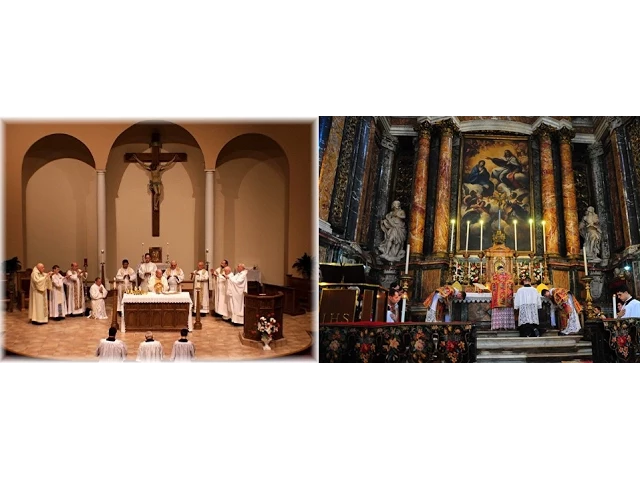
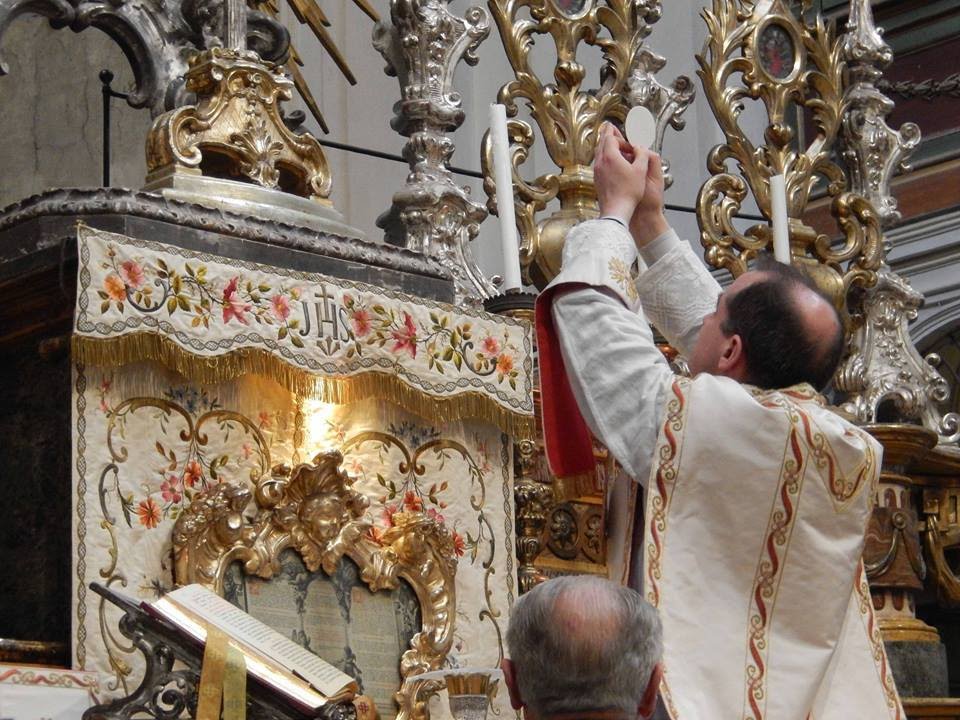
the Canon of the mass in a celebration of the trial endtime mass you have the priest going up as a set of beautiful altar not with his back to the people but facing the east from the very beginning of the church in East and West Mass has always been celebrated facing the East this was A break with the practice of the synagogue and of Jewish worship Jews when they worship turned towards the temple in Jerusalem Christians broke with that by turning to the heavenly Jerusalem represented by the East the Rising Sun was a symbol of
resurrection it's believed that when our Lord returns again in glory he will come from the east and there are beliefs that he will return during the celebration of mass so that people be turned towards The east ready to welcome him so that there's very beautiful symbolism in this that's why the Reformers took the altars away from the east wall and they reversed it because they would not allow their communion services to be celebrated facing the East because the East symbolized sacrifice so in the new Mass priests and people have turned in on each other it's
become introspective that is a very very important psychological break with the past and Even while the Tridentine mass was still being used that changed the entire ethos of the mass and then when you have these dreadful tables beautiful altars literally paid for with the pennies of the poor poor Irish immigrants who went without food to pay these old has they've been smashed up some of you might have seen the picture I think it's in that pamphlet I have the barbarians have taken over of a bishop in New Zealand who had a bull it was the
Hundredth anniversary of his church a century of his church and he brought a bulldozer into the church to smash down the altar and he asked the people to give him fast sums of money to to renew the church to celebrate its centenary as you know when the first things the Protestant reformers did particularly the Bishop Nicholas Wrigley was to have Altis destroyed and tables put in there because he said an altar is to offer sacrifice upon and a table is to eat a Meal of home so we now in most churches technically their altars but
they look like tables and on them instead of a priest as we said facing the east he faces the people now most of the Canon in the Trenton mass is said inaudibly not silently but in order bleah which enhances the solemnity of the occasion and the role of the pre as the person who is actually offering the sacrifice as Pope Pius the 12th said in media today the priest doesn't offer Sacrifice as representative the people but as representative Christ in the person of Christ obviously in a way he acts on behalf of the people we
associate ourselves with him but when he is up there on the altar saying Mass we are really looking at Christ Christ is saying that Mass and using the priest as his instrument Krannert would not have anything said in his entire communion service which the people could not hear and we have now followed that practice In itself there's nothing wrong with the people hearing it and it's none you can't say is intrinsically bad but once again it detracts from the role of the priest in the Eastern Rites by the way the most solemn part of the
Eucharistic liturgy take place behind the iconostasis that people can't even see the priest let alone hear him so if people like the late father clifford howl and similar liturgist they said it's contrary to the Nature of the mass for the people not to barely hear what is taking place well that's a gratuitous insult to all the Eastern Rites the Orthodox churches and the Catholic Eastern Rites because the people certainly can't hear everything that's taking place then nor could we for at least a thousand years again in the trial endtime mass the priest says it in
Latin in the new Mass is almost invariably said in the vernacular you might have read what Dom Garin J had to Say about that he said when the greatest desires of the enemies of the church is to abolish the use of the Latin language and he said once they do that they will have come very close to their object of destroying the church and wherever it's interesting in history wherever the vernacular has been introduced in the liturgy those churches have eventually gone into sysm you look at all the Orthodox churches where the Pope's made concessions
but apart from that once you Get away from having as the norm you cut you open the way open for all these appalling mistranslations and once again is he Latin belong to the very ethos of the mass as everybody knew it and experienced it so simply by having it in the vernacular the whole ethos of the mass was changed let's come on to the distribution of Holy Communion in the tried endtime mass when community is given you see a very clear Distinction between the priest and the people pope john paul ii has said that to
touch and distribute the sacred species is a privilege of the ordained this has always been the traditionally in the roman church for about 1,500 years it's true that at one time commune was given in the hand but you see traditional catholics believe in development we believe in liturgical development and as it reverence for the sacred species increased it came to the Point where only the priests could touch and distribute the hosts so that's development so actually it's the progressives who are against liturgical development by insisting that we go back so the practice of the house
being placed on the tongue is an immemorial tradition and as we said naturally I'm sure if our Lord appeared in this room now every one of us would kneel down people kneel don't receive our Lord if anyone had said to one of you at one of Your priests before the council let us abolish or make optional every single sign of reverence to the Blessed Sacrament they would have thought you were crazy but that has happened afterwards I'd be glad if one person could tell me a single sign of reverence towards the Blessed Sacrament involved in
the Holy Communion that hasn't been abolished or made optional you think of it only a priest could touch the chalice or the sacred vessels only a priest Could distribute communion you hadn't kneel to receive Holy Communion you had to receive it on your tongue the priest kept his thumb and forefinger together from the moment of consecration so that this part who couldn't fall now you get them running down from their altar date it was shaking hands with everyone in sight how about what but but NES as they don't use a communion plate when kameen is
distributed usually now I was going to say when they rushed down shaking People's hand you would lose particles of the house but no precautions are taken to obviate this during the distribution of holy communion anymore now you can have Holy Communion standing in the hand from an extraordinary minister of communion and anyone can touch the sacred vessel so every one of those signs of reverence has been abolished or made optional including putting thumb and forefinger together it's incredible how did it happen how Did people suddenly find themselves standing I just want to mention very quickly
there is no such thing in the Catholic Church as a minister of communion or a special minister of communion there are only extraordinary ministers of communion and they're only meant to be used in the most extraordinary circumstances where you can have genuinely old and infirm priests who perhaps would not be capable of giving out Holy Communion to a large Congregation but but I knew of such a priests and he was to sit down and the people came up to him I can't think a single instance in this country where you need these extraordinary ministers but
again in most parishes now it would be extraordinary not to find them you see it's again we're entering the world of Kafka we see these practices all of them completely alter the ethos of the mass in the trial endtime mass of course holy commune is given and only under one Kind increasingly now in the new mass it's given under both kinds again there's nothing intrinsically wrong with it but what from the book is important from the Catholic view is that Protestants maintain that it is intrinsically wrong to give communion under only one kind and while
they maintain this by going back to giving the cherish to the laity we're conceding in a way that they are right another reason for the all the Efforts being made to make communion to both kinds the norm is the so called mule symbolism of the mass many literature's consider the mass now to be primary a meal and they say what meal you go to with a host gives his guests nothing to drink so that's one of the reasons for that coming back well towards the end of the mass is a very very important prayer called
the Pledger tibi look it up in your missiles later and you'll see why it was totally Unacceptable to the Protestant reformers who removed it from all their liturgies and you won't be surprised to find that it has been subtracted from the new mass we then have this is the sixteenth point of me I could have made about fifty the sixteenth point was the last gospel who could ever get tired of hearing the last gospel why was it did the good of the church genuinely and certainly require that it be abolished of course it didn't but
it went then we had the prayers for Russia well they they weren't actually part of the mass but they've been abolished and it's interesting the prayer for said Michael to keep the temple down in hell because when we stopped saying that he certainly appears to be out and busy but if time permitted I could know don't we are not going to do it I could now go right through the order of mass and make another series of comparisons I could make a series of comparisons of prayers which Thomas Cranmer remove from the saram liturgy in
this country and the serum liturgy in all important respects was almost identical to the Tridentine mass and you would find that the list of prayers and ceremonies which I have said have been subtracted from the trial in time as they were subtracted by Thomas Cranmer I have actually my book poke pause and UMass I've got them in columns and it's almost frightening the extent to which the changes made by Archbishop you Nene Correspond the changes made by Thomas Cranmer Catholics and Anglicans or ecumenical or humane yeah cause I prefer to put it there absolutely delighted
about the rapprochement between the two liturgies the Anglican liturgy in the Catholic liturgy but it can hardly be denied that the more closely our worship resembles that a Protestantism the greater the extent to which we're divided from the Catholic tradition and from our Forebears in the faith I'm now going to mention very briefly four other sources of division brought about by the new Mass one of course we'll go back to the vernacular again now I'm sure everyone here experienced how before we had a new Mass when we went to a place like Lourdes or if
we went on holiday to Spain everyone could just go to Mass together but I remember the first time I took my children to a holiday on Spain in Spain we went to see about the masses On Sunday and they had masses in about six different languages they had there in English French German Spanish Catalan and something else so obviously people had turned out safer nine o'clock mass and it wasn't the one in their own language they weren't going to go and come back so they went in and understood nothing which seems to obviate the whole
point of the exercise and it's a lord now many people have told me how you see little groups of people rushing about From altar to altar trying to find a mass they can understand so there's another division here the Catholics from every country being divided from each other they can no longer worship together another division caused is between what is between the reformed liturgy in the Second Vatican Council because in many respects the reformed liturgy is in flagrant contradiction towards to what the Second Vatican Council ordered so that's Another division it's in disobedience to the
council another division is without of the liturgical movement those who read the books of some of the major proponent the surgical movement priests like Dom Cabral and father Pius parsh will find what they wanted to do mainly was to have the full potential of the existing literature use now there is no doubt at all that a liturgical reform was needed at the time of the council Most Catholics had no experience of the Catholic liturgy beyond one low-mass on Sunday each week very few of them ever went for some mass and services like Vespers a complan
were really unknown to almost everyone except the clergy it would be rather like suppose if we take the works of Shakespeare people kept reading Twelfth Night over and over and over again never read Hamlet or Macbeth or King Lear Twelfth Night is an admirable play but you really would be Depriving yourself of great richness if you ignore all the rest of Shakespeare's plays and his poems well what the detergent want to do is to open out the whole riches of the Catholic liturgy to the people they didn't want it abolished destroyed mutilated but that was
what happened so there is a division between what we've got in the whole paper he approved liturgical movement of this century and now a very very serious division is hoping up the closer our Liturgy gets to Protestant liturgies the father it takes us from the Orthodox churches the only church is with whom there's any realistic possibility of us achieving union I was talking a couple years ago to an Orthodox priest a piece of the Russian Orthodox Church had gone into a Catholic Church to mass and he said he walked out the moment the consecration taken
place he said I just couldn't believe the Peace of the people in that church really believe in the Real presence and he said I never want to go to another Catholic Mass again if any of you have been to an Orthodox or an Eastern Rite it is you'll understand why I mean to compare in Russia there's a big to the Orthodox faith among the younger people and it's because they've kept the liturgy absolutely unchanged young people have been brought up as communists going to perhaps a requiem in a Cathedral and they're transformed in a Moment
or who would be transformer greens with typical English parish church attending the banjos and the guitars these pathetic little hymns it's it's just so sad so that's another very very serious division and I'm going to conclude now you'll be glad to know with the most serious division at Paul is the division to which all these changes in the ethos of the way mass is celebrated has been leading up now in the Tridentine mass and all the traditional Rites of mass in east or west they are quite clearly God's centered rituals they are quite clearly solemn
sacrifices offered to Almighty God the Liturgy of the Catholic Church has meaning and significance only insofar as it is directed to Almighty God until Archbishop uni's Concilium began its work of mutilation only one criterion had governed the manner of celebrating Mass in all the traditional liturgies of East and West Does this prayer does this gesture does this ceremony contribute to the honor and glory of Almighty God in whose honor and in whose name the sacrifice is offered no one from whatever religions whatsoever who is present at any celebration of mass in any traditional liturgical Rite
could doubt that he was at a solemn sacrifice no one from any religion whatsoever who's present at a typical parish celebration today could possibly imagine that he was present at A solemn sacrifice unless he was informed of the fact and in most cases even though he might accept that what was taking place was a sacrifice it could hardly be described as a solemn sacrifice to a large extent the celebration of mass has been changed from a celebration in honor of Almighty God / celebration of man himself Cardinal Ratzinger 'he's deplore the fact that in all
too many cases today the congregation comes together to Celebrate itself which he points out in reality means that it celebrates nothing at all all too often the mass has become an expression or has become a means of self expression a means of entertainment a fun event in the United States and what happens in the United States will eventually happen over here they're bringing in clowns and dancing girls to liven it up now only last year Cardinal Ratzinger wrote these very very profound words we ought to get back to the Dimension of a sacred in the
liturgy the liturgy is not a festivity it is not a meeting for the purpose of having a good time it is of no importance of the parish priest has cuddled his brains to come up with suggestive ideas or imaginative novelties the liturgy is what makes the thrice holy God present amongst us it is the burning bush it is the alliance of God with man in Jesus Christ who has died and risen again the grandeur of the liturgy does not rest Upon the fact that it offers an interesting entertainment but in rendering tangible the totally other
whom we are not capable of summoning he comes because he wills in other words the essential in the liturgy is the mystery which is realized in the common ritual of the church all the rest diminishes it may experiment with it in lively fashion but find themselves deceived when the mystery is transformed it into distraction when the chief actor In the liturgy is not the Living God but the priest or the liturgical director now where mr. blame for this change in the of a mass from God to man come earlier on in my tour had praised
the liturgy Constitution of the Second Vatican Council now I must blame it because in one of the directives it states that in the celebration of mass nothing must come before the active participation of the People when the fathers voted for that they didn't notice the significance but it said the active participation of the people must come before all else and that short statement has been used to justify a change in the ethos of the mass from a celebration worshiping Almighty God for celebration of glorification of man now there are two solutions to the problem the
first one Cardinal Ratzinger probably favored which would be to try and get the new Mass celebrated as closely as possible to the rubrics in the missile of Pope Paul the six but that would not work the missile of Pope Paul the six even its Latin version has so many options and alternatives that you could never if it was always celebrated exactly as it is in the oratory of the Roman Canon people kneeling for communion the altar rails there the altar still there facing the east know of a tree procession no extraordinary ministers the faith of
the People would not be too greatly harmed but that hasn't happened if it hasn't happened up to now how could it suddenly start happening secondly even the new mass is celebrating the Oratory is as I maintain earlier inferior to the Tridentine mass liturgical e-dot finally spiritually and aesthetically that isn't good enough for God for God we must only have what is the very very best I think we have only one solution to our problem and that is to work for the complete Restoration of the Tridentine mass throughout the entire Roman Rite this is the form
of mass that father Faber described as the most beautiful thing the side of heaven this is the form of mass that Cardinal Newman said he could attend forever and never be tired I'd like to give you a little quotation from Father Adrienne Fortescue our greatest liturgical historian he said the Tridentine mass goes back without essential change to the age when It first developed out of the oldest liturgy of all it is still redolent of that liturgy of the days when Caesar ruled the world and thought he could stamp out the faith of Christ when our
fathers met together before dawn and sung a hymn to Christ as God the final result of our inquiry is that in spite of unsolved problems in spite of later changes there is not a rut in Christendom another right so venerable as ours there is not in Christendom Another right so venerable as ours so how did anybody dare to just throw it away but in the wastepaper basket how did they dare to do that and we should work for its restoration we're told that this is the age of the laity then let us act upon an
exhortation address to the laity bison Athanasius in the fourth century when the cause of tradition also appeared to be art be beyond hope but the cause of tradition must prevail Because tradition is the legacy of the divine founder of our church who has promised that the gates of Hell will never prevail against it but a great mystery concerning the mystical body of Christ is that our Lord now uses the members of that body to do his work st. Teresa of Avila made the very simple but very profound statement and profound things are often very simple
that God has now has no hands but ours to do his work no feet but ours to go upon his Errands of mercy so the gates of Hell will not prevail against the church but they won't prevail because of the efforts of the members of the mr. body guided by their head to prevent this happening so I hope that we will heed this exhortation of some Athanasius and spare no effort at all to work for the restoration of the tribe in time as things are happening now people had not even dared hope for a few
years ago who would have thought that carnal human Other bishops would actually be allowing Sunday Masses regularly in London once again what is dense / is pathetic but it's happening it's a beginning these are the words of st. Athanasius the church has not just recently been given order and statutes they were faithfully and soundly bestowed upon it are the father's nor has the faith only just been established but it has come to us from the Lord through his disciples may what has been Preserved in the churches from the beginning to the present day not be
abandoned in our time may what has been entrusted into our keeping not be embezzled by us brethren as custodians of God's mysteries let yourself be roused into action on seeing all this despoiled by others but thank you very much so I went on too long as usual