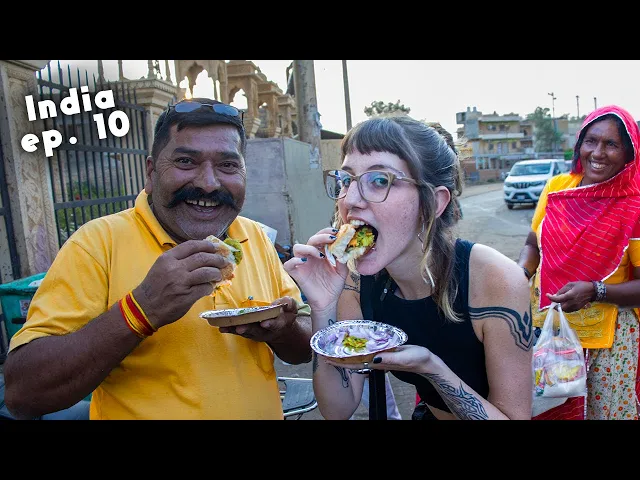
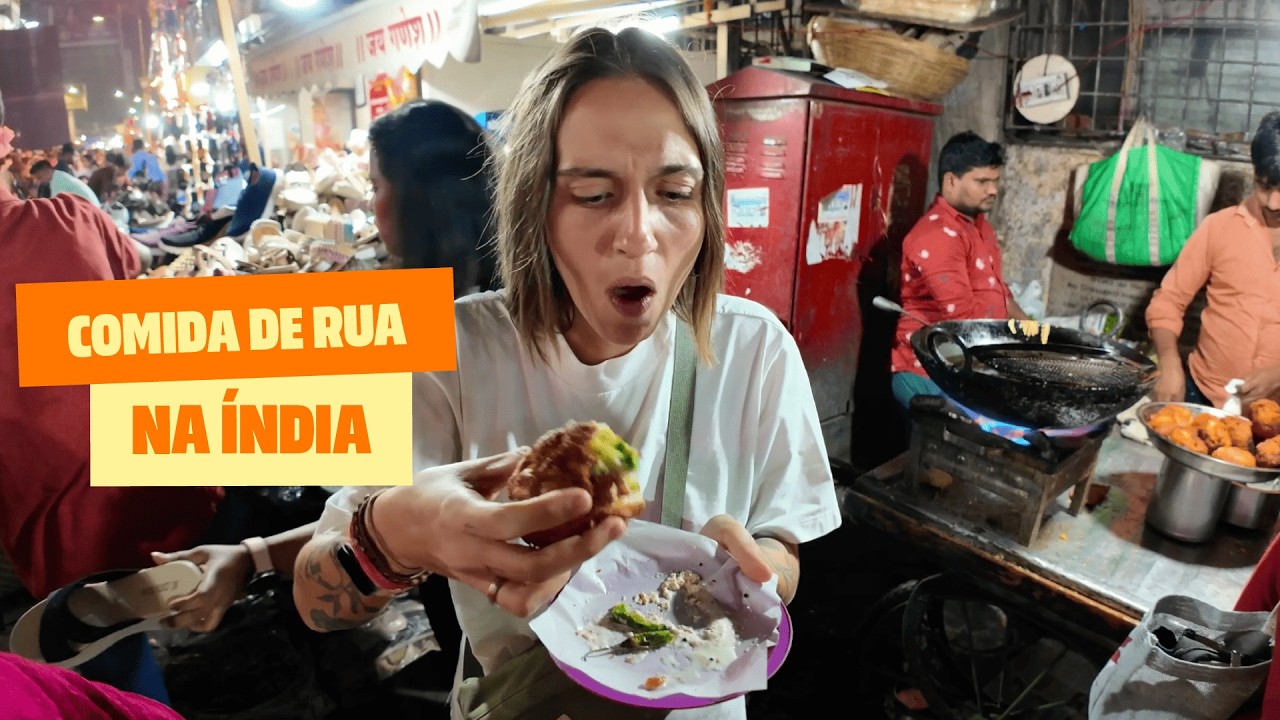
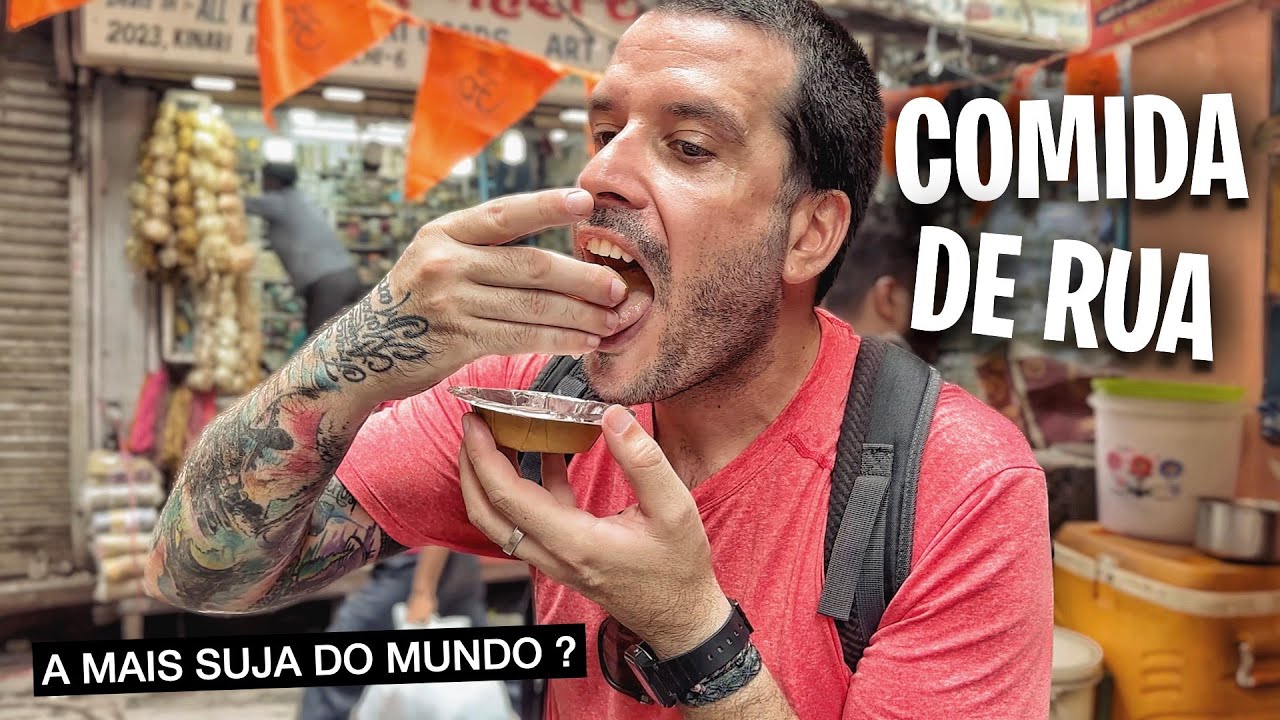
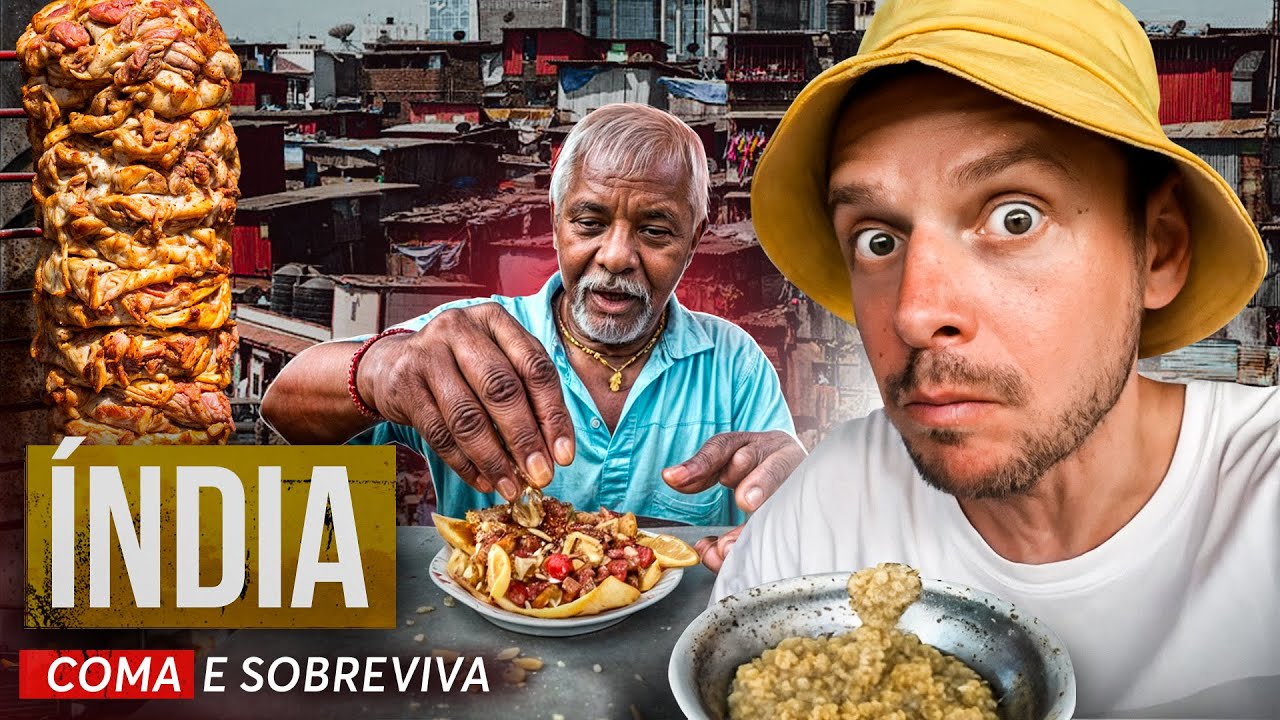
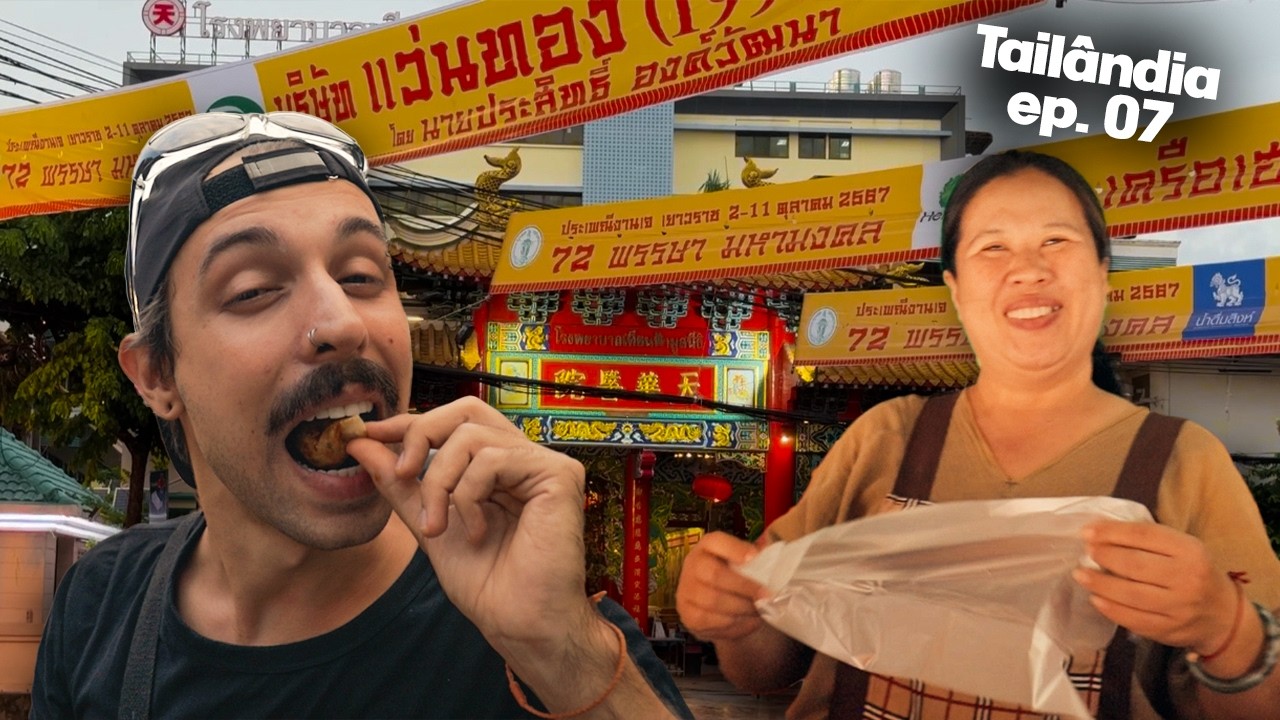
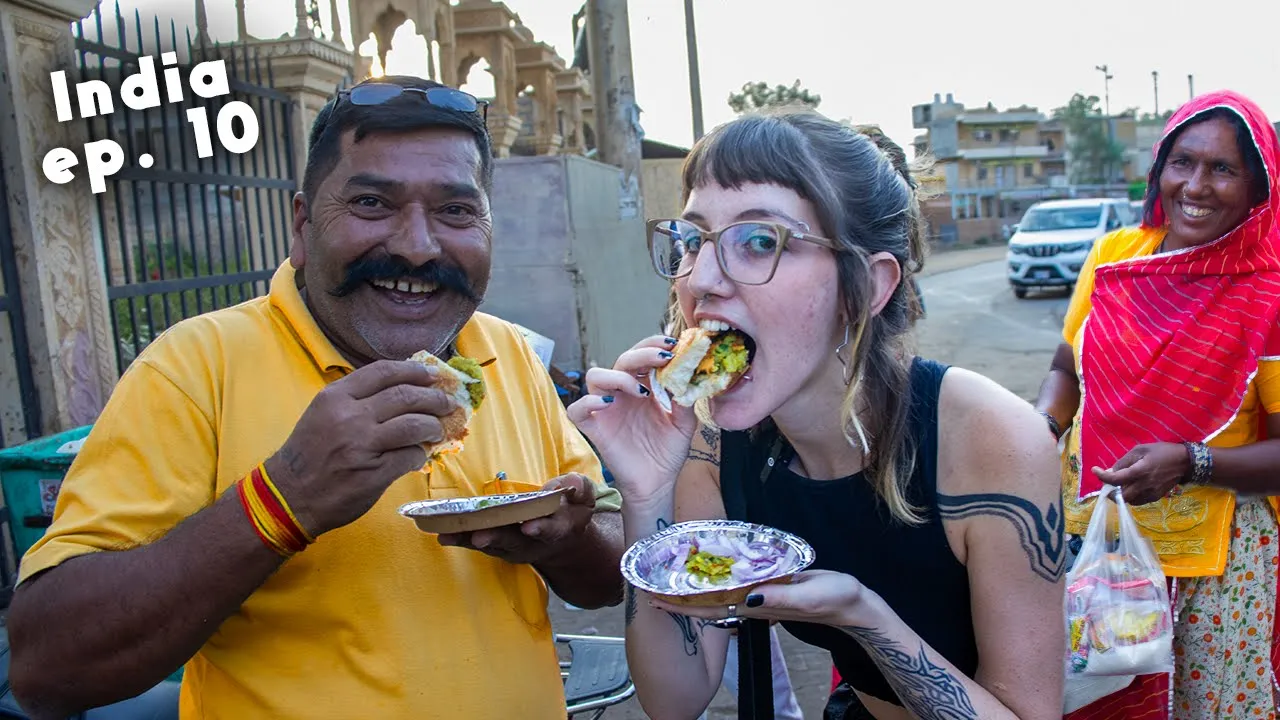
After more than two months traveling around India, today we decided to make this video dedicated to the controversial and controversial Indian street foods. We're going to take a risk today because, when we came last week, I caught a bad shit. We're in Jaisalmer, India, and today we're going to try some Indian street food.
Let's go! Before enjoying these culinary wonders, I need to withdraw money. Many places here in India do not accept card payments.
Therefore, we are having to withdraw money to make the payment. Whenever I need to withdraw money, even though I don't have a physical card, I use Nomad's digital card. Nomad's global account has been a huge lifesaver on our trip because their rate is the lowest on the market.
So, we can convert currencies, make purchases with a card and withdraw money by paying very little at the time of conversion. Nomad is accepted in more than 180 countries, and we got a Ponto Azul coupon that, if you use it when registering, you get up to 20 dollars in cashback. And now, with the money in hand, let's get started!
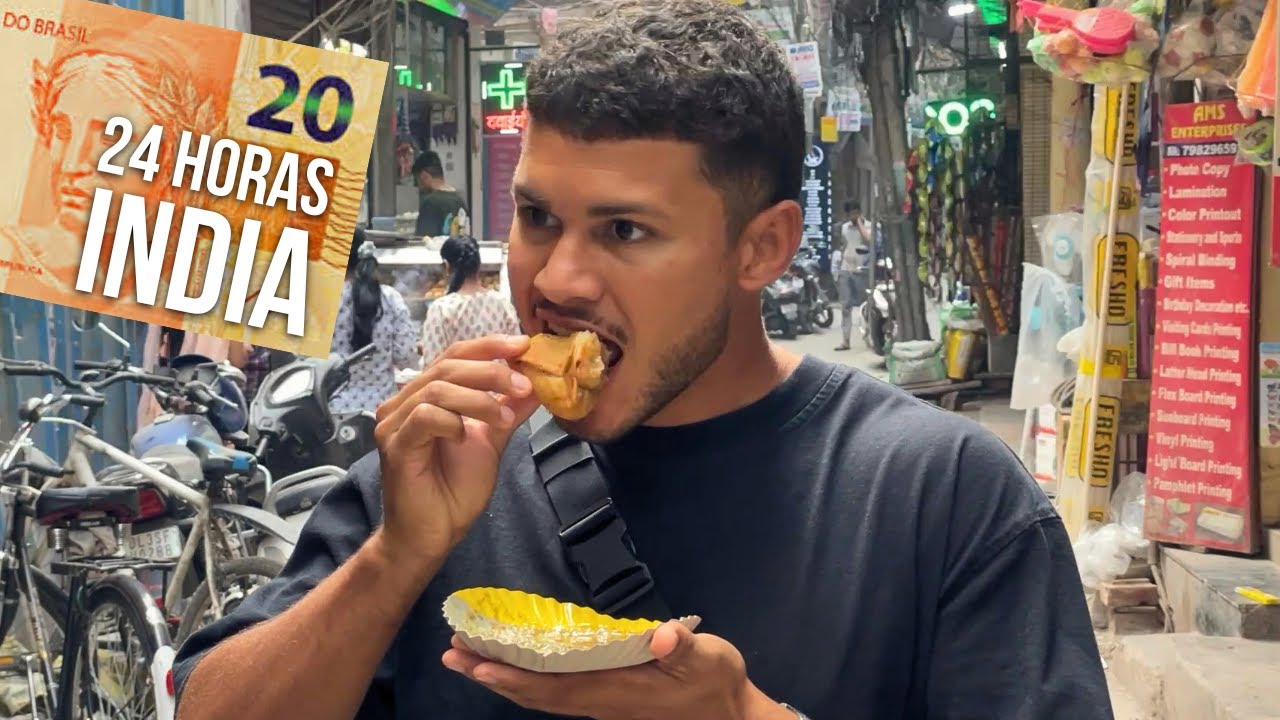
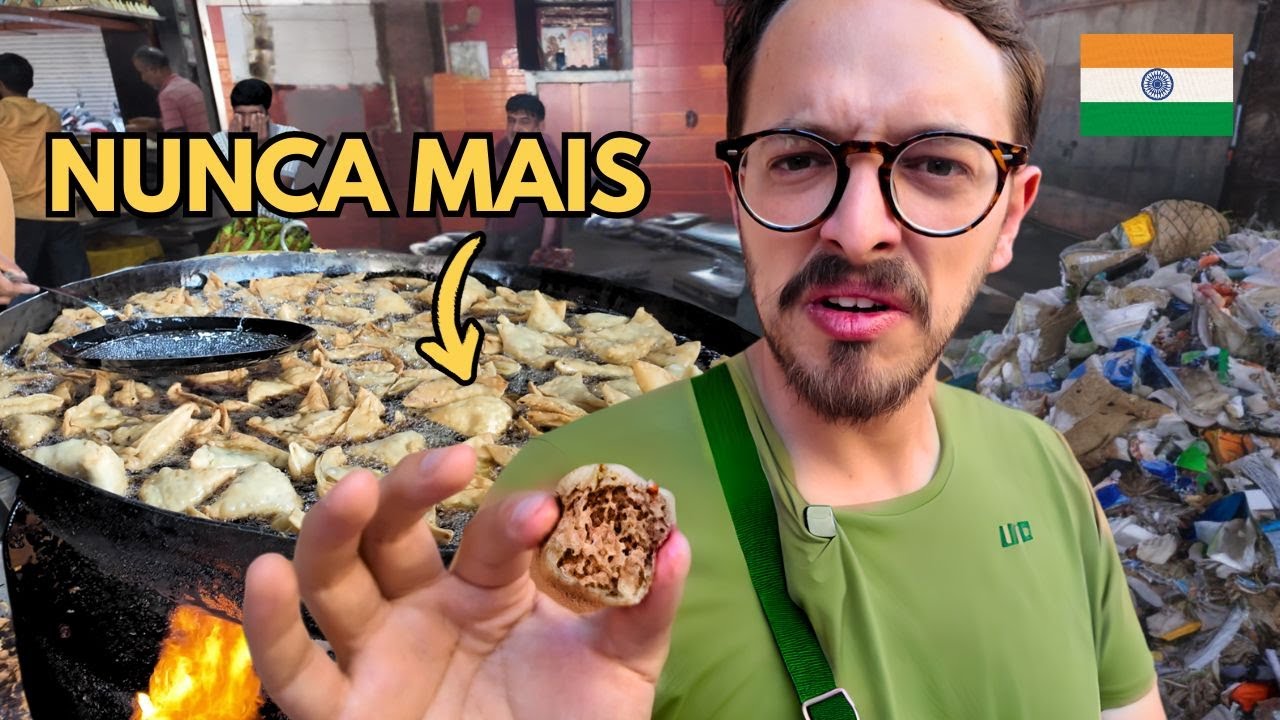
Samosa! Please, thanks. Samosa is a type of Indian pastry.
The shell is very similar to that of pastry. The filling is made from potatoes. He breaks the pastry with his own hand and puts sauce on top.
First, he added chutney, which is a sweet sauce, and then this greenish sauce, which is spicy. He also threw red onion on top. We really like samosa, perhaps because it reminds us a little of the Brazilian pastry.
But it depends, because some samosas are extremely spicy, others not so much. Let's see. .
. This one is spicy. It's spicy, but I don't think it's that strong.
It's not so strong today. I started well! Today it's different.
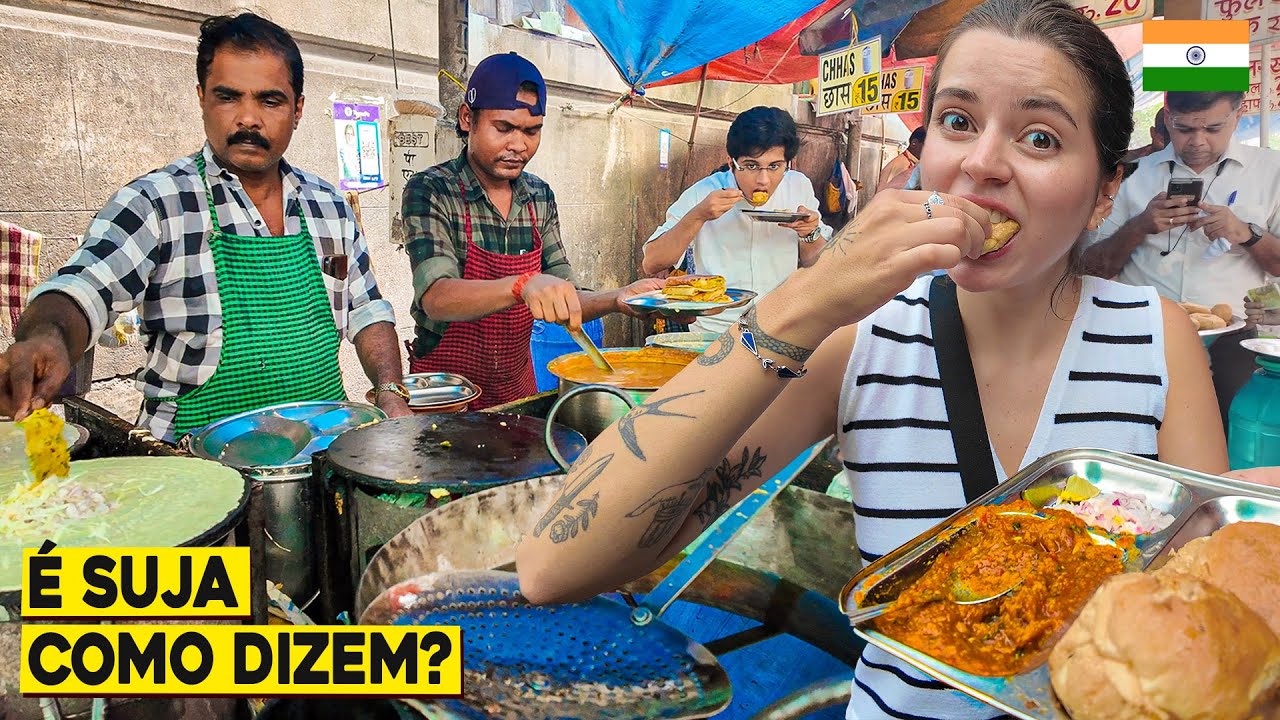
The vast majority of foods here in India are eaten by hand, even street foods. And, next to the shops, there are usually a few gallons of water that people use to wash their hands after eating. Like, he didn't give me a spoonful, he didn't give me anything.
I'm eating with my hands, and the only way to wash it is using these waters here. They also drink this water, but I don't know. .
. I think it's water from the sink. I also think it's sink water!
Let's go to the next one! We left the house with a liter of water, but it's already running out. And so far we have only eaten the samosa.
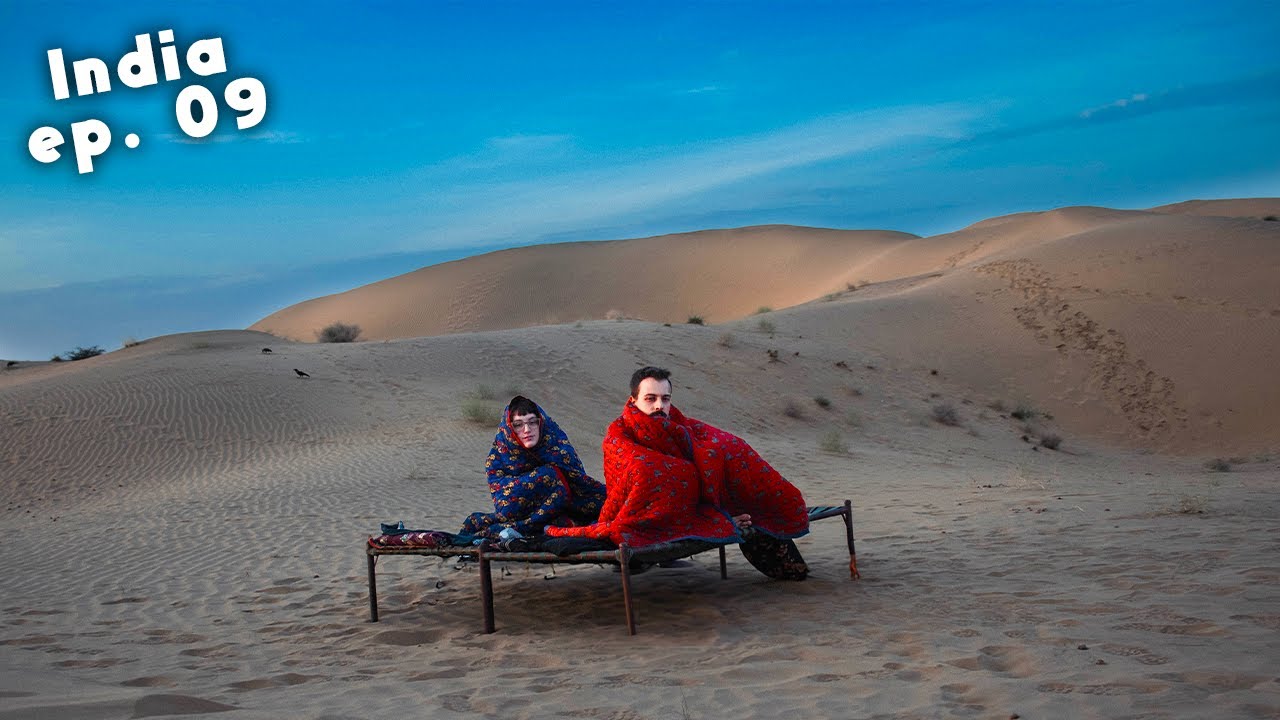
The issue is that, here in the city where we are, the climate is desert, right? We are in Jaisalmer and our mouths dry out a lot. As soon as we left the house, our mouths started to dry and we had to drink water.
Now we have little water for the rest of the food, which will be very spicy. Here in the city there are many cake shops, some very beautiful cakes. We tried a slice of cake the other day, more or less similar to the one here, and, therefore, very good!
For me, the best thing about Indian cuisine is the sweets. And today we're going to try some sweets too, especially to cut down on the pepper. My mouth is already burning just because of a samosa.
We haven't even started. I just bought some toilet paper because we ran out of toilet paper. We've been out of toilet paper for a few days now , and it's a little hard to find.
That was the only store I had seen. So, we're buying like a soda here. Indians love to drink soda.
We always see Indians around soda shops simply drinking and chatting with friends. It's the first time we're going to have a soda. Oh, he puts stuff in the soda.
What does he put in the soda? — What did you [__] here? What is this?
— Ah, ok. . .
Black salt! It's like. .
. It's not without! No, that kills turtles, so.
. . It's here.
It's like salt, Himalayan salt, but black. Oh, why? It foams!
I don't think he understood anything you said. Greet! Look, he's already thrown the onion and tomato into the clean pan.
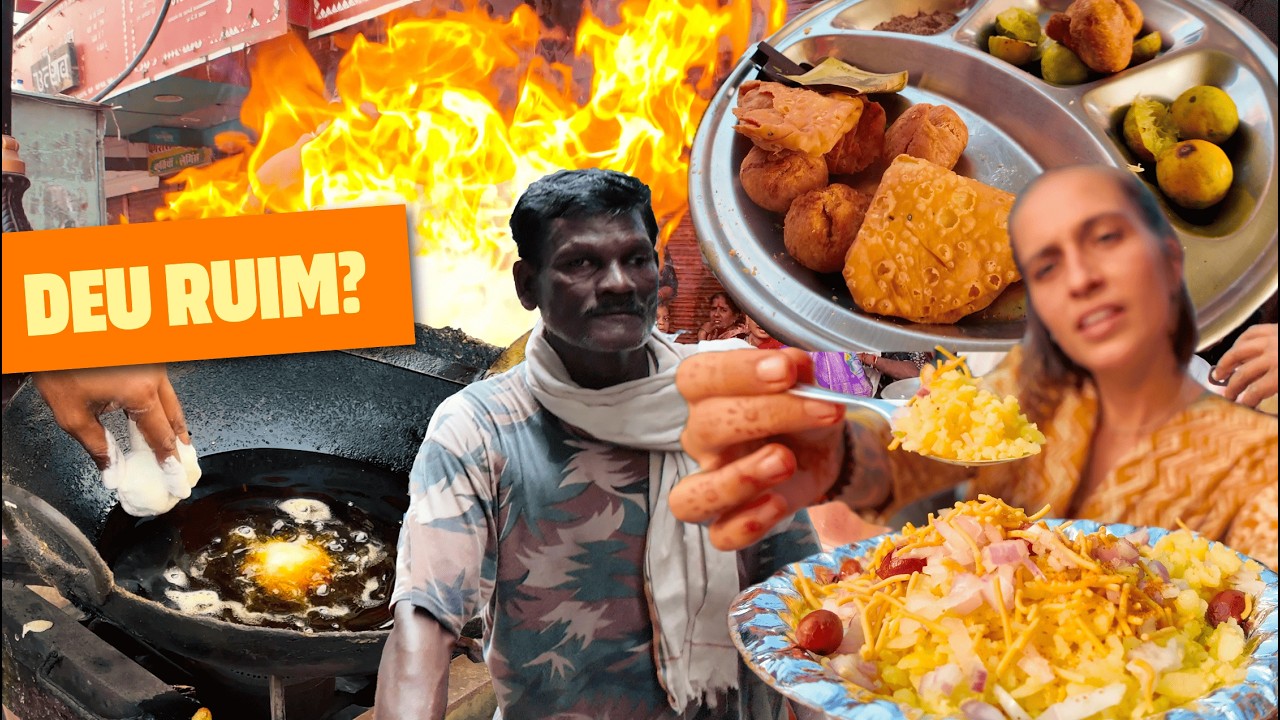
A handful of rice flakes, straw potatoes with raw pasta, an unidentified suspicious object, a small peanut that cannot be missed. And add seasoning: massala, killer pepper, lemon to give it that flavor. Move, move, move, move!
He almost forgot about the mysterious liquid. And now. .
. Yes! Stir a little more.
Something that our chef didn't like was carefully removed. What was it? Oh, jeez!
Another little crunch. Thank you! And of course, right?
With the same hand that makes the food, it takes the money. This one is the bel puri or del puri. Basically, it's a bit of a thing, like cornflakes, I don't know.
I know there's rice. . .
How did he say the name? Rice! It's like flaked rice.
There are several crunchy things, very reminiscent of cornflakes, straw potatoes. . .
But it's not straw potatoes, it's like raw noodles. He seasons, he throws his mysterious spices in there, the classic Indian spices that we never know where they came from. I know there is massala, because there is massala in everything, even tea!
He also adds finely chopped onion, chives, tomatoes, parsley. . .
No tomatoes! It is very good! When we look at it like this, it seems very heavy, very oily.
But when you eat it, it's very light, it's crunchy, it really reminds me of cornflakes. And now we have our soda here to help all the spiciness go down. This is one of the best things I ate in India.
Do you see all these people here behind me? So this is a puri shop. It's like a round cookie.
The guy breaks it with his finger, puts a crushed potato inside with some sauces. And then people buy six pieces for 20 rupees. While he prepares them one by one, the crowd waits and he puts them one by one in each person's hands.
And so he rotates the puri. Let's get in there in the middle of this rotation and see what it's like. Now, with the same hand that takes the money, he assembles the puris.
Normal here in India, that's common, that's the standard. He fills it with sauce. You have to throw everything in at once.
It's an explosion inside your mouth. It's very tasty, but I feel a little pressured to have to eat it quickly, because it starts to melt the crust. You have to eat quickly, otherwise everything will break inside.
And we have to eat quickly too, because the seller is already rotating, look! It won't drip all over your feet. There's a potato in here with various seasonings.
It's very strange because, when you bite, the train explodes in your mouth and this green liquid goes everywhere, it enters your throat. It's very spicy! So, it's very strange!
I've heard that Pani Puri is the terror of tourists because, in fact, it is the strangest food in India. For me, it's the strangest. My nose is already running with pepper.
Come on, one more. Sensation. .
. it's something. .
. I think we're not used to that sensation. You bite into something and see a lot of liquid inside your mouth.
With 20 rupees, we are entitled to six, but we only ate. Eduardo ate three and I ate two. We didn't notice the last one.
It's strong, and I want to eat other things. I want to have more space to try other things, so that's fine. It's strong, strange.
The price? Oh, how much? 40?
This dough is a dough that we had seen before. We were interested in eating, but I don't like this one. It's wrapped in newspaper and also, I don't know, I don't see anything he's going to put as stuffing.
So let's go. Fun fact: everything that has “pav” in the name is because it’s something with bread. Pav is bread.
There’s the pav samosa, which we ate. Oh, there's the samosa pav, which is the samosa inside a bread. Here is the vada pav.
Vada is like a dumpling, also fried, like a samosa, and inside bread. Vada pav. Hello, my friend!
Come on, let's go. Come on, come on. So, he is now doing the vada.
Ready to eat the fat? We never ate the vada pav, I think. Just the samosa pav.
It's pretty salty. . .
sort of. Apparently it is. I found it too salty.
I don't know if that's right, but I found it very salty. — Let me try it then. I like salty things.
It's potato. I liked. I can't eat.
The vada pav is served with red onion and green chillies around it. I denied the pepper because I think it's too strong, even though it's fried pepper, which isn't that strident, but I don't like it. We made a video for Instagram this week talking about the history of pepper here in India, and we researched it.
It is very interesting that pepper was brought to India by the Portuguese, during the time of the Great Navigations, that is, more or less around 500 years ago. This pepper was brought from the Americas here to Asia, to India, and thus became completely popular. It turned into a fever.
So, if today India is a country that cannot live without pepper in its traditional cuisine, Part of this cause lies with the Portuguese, who brought peppers here from the Americas. It is also very interesting that the closer the country is to the Equator, the greater the chances of having spice in that country. This is because countries that are close to the equator are the hottest, and in hotter countries, food spoils more quickly.
So, seasonings, especially pepper, are used to preserve the food and, if the food has already spoiled, to mask the bad taste. Pepper and other seasonings also have antimicrobial action. So, if a person eats spoiled food, the chances of getting sick are lower due to the seasonings.
This is more in relation to the past, right? In the past, when refrigeration processes were not as good as they are today, pepper had the function of masking, protecting, and preventing food from decomposing. Nowadays, it is no longer used for these reasons, but it remains very popular nonetheless.
So, we see this historical issue regarding spices, especially in countries that are close to the. . .
. . .
Equator. Tuc-tuc! I bought another soda, I couldn't resist.
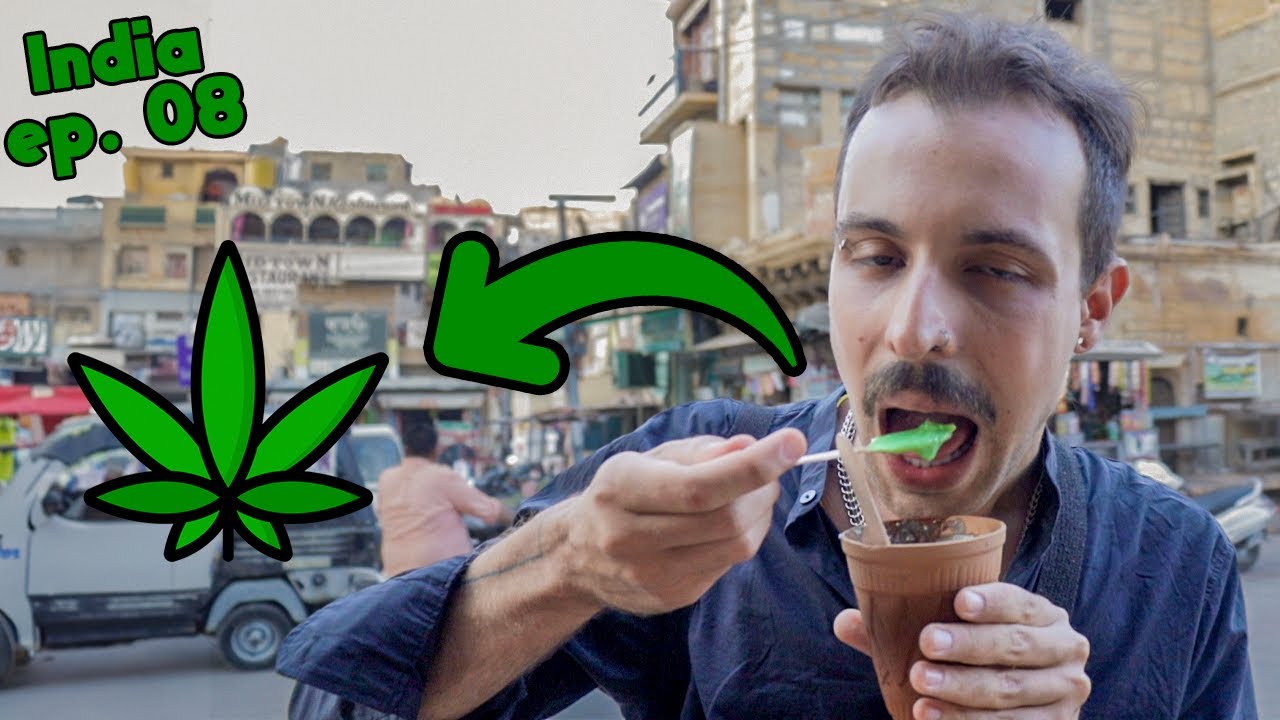
This time, I got the mint one, which has mint, black salt and lemon. Everything in this crazy mix here, with things floating around that I have no idea what they are, but there was no way I could ask them not to put that stuff in, no. I wanted to drink like they drink, I wanted to taste like they taste.
Therefore, it tastes like the green liquid of Pani Puri. Oh, so it's made of mint. Puri's green liquid, refreshing.
But this one is a soft drink, right? It is a mint flavored carbonated drink. How delightful!
Good, right? After eating spicy food. .
. wow, it's really good. We were at this market here, but we already ate everything Indian.
Now there's only. . .
there's a Chinese stall, there's pizza, there's hamburgers, but we don't want to eat those things. We want to eat Indian things. So, we're going to start walking towards Jaisalmer Fort to see if we can find anything else.
. . .
. . something.
The day is coming to an end, so we're going to take a chance today. Because we came here to record a video for Instagram last week and we ate some street food. But, a day later, I caught a bad shit.
I spent about three days in bed. Eduardo didn't have anything, but I felt really bad. He even had to buy medicine for me here.
— Boy, the medicines, thank you. One is for intestinal flora and this one is for cutting poop. Now that I'm better, we're going to try Indian street food once again.
Here, who is also trying out Indian food. . .
You guys honk too much, right, old man? But, like, it's not because of a lack of education or anything like that. They even learn to honk at driving school.
When we were there in Goa, we saw a boy learning to drive a car and so on. His instructor, as soon as a car appeared in front of him, would put his hand on the steering wheel and honk the horn. On the back of the trucks, on the back of the buses, it also says: "Honk, please.
" So this is how traffic here operates, it is through the horn that they locate themselves in relation to themselves. The people here don't look back. Motorcycles don't have rearview mirrors, and in cars, they don't look at the rearview mirror.
The way they drive is by honking their horn, to let you know they are passing by and avoid an accident. I noticed that people drive looking only ahead, no one cares about who is behind. So, to warn that they are going to make a maneuver, they honk their horn.
This is our third video here in Jaisalmer, and I still don't get tired of looking at the architecture of this city, which is very beautiful. Here is the fort, where the city used to be entirely inside the fort, and everything is made of sandstone. We have two more videos here on the channel, where we talk a lot about this city, some interesting facts.
I highly recommend it. Hello, my friend! The pinch of salt goes.
. . Look, the pinch of salt goes, and.
. . cheers!
And the business is bubbling. You have to drink it, otherwise it will spill. The milk here is always sold in bags.
We have never seen milk being sold in cartons. It seems They sell a lot of fresh milk, they don't have the habit of processing or industrializing it. And although India is very vegetarian — most people are vegetarian — they consider chicken eggs to be a non-vegetarian food.
They drink a lot of milk and use milk in many recipes and drinks. Also. .
. "Would like new" is the name of. .
. So, it looks like he makes a cone with a dough that probably uses wheat flour. Then it makes this little crunch and, with it, apparently, you eat other sauces and some fillings in between too.
This is one of the sauces that we can eat with the dosa. Friends next door said that dosa is a South Indian recipe, with plenty of oil to make it delicious, just the way I like it. It seems like every time you run out of sauce, you can come back here and refill the jar.
I don't know how you eat that. I think it's with the hand. Our first time eating this.
I have no idea what it is. "Eat first! " I don't know if it's bitter, salty, sour.
. . Alentado?
It's still very hot, and it's very oily. I just pulled over and it left my hand oily. It has a good smell, like an omelet.
It looks crunchy, oily. I think it's good. I only took it from the dough.
It's very tasty. I don't know what that is. It tastes like absolutely nothing, just a strange texture.
What is this? "Pero. .
. " This one is spicy. It's not that strong.
I think he gave a shout out. That is good. It has two sauces: red sauce and white sauce.
The red sauce is very spicy, a typical Indian sauce with masala and lots of pepper. I couldn't understand what the white one is, but maybe it's made with peanuts. I just didn't understand the flavor, but this one reminded me of something with cheese, maybe crepe?
It's crepe! When we finish this food, we're going to eat sweets to cover all the pepper we're eating, because, wow, it's very strong, very strong. I had to buy some water, guys, I couldn't handle it.
It was very spicy. I finished eating, washed my hands, and let's move on to the next one. Now it's very crowded.
I didn't even manage to eat that last one, I just tried it. It was delicious, I recommend that one. Indian sweets are something that always catches our attention, because they are all beautiful and the ones we have tried are all delicious.
So, I think we have to take something that we have never tried. We never caught this orange here. The name of this here is boota, a typical sweet from Jaisalmer, which is the city we are in.
I already took the first bite. It's quite tasty. From the outside you can see that it looks a little oily, it has a slightly oily shine, but there is no filling, and I can't identify what it is made of.
"What's the name? " "Gotua. .
. gotu. " They pronounce it like gotu.
It looks like a drumstick. It's delicious, like other sweets we've already eaten. Overall, these round dough sweets are very similar.
I'm so full, so full, that it's hard to eat. Cut the pepper in your mouth, without pepper. .
. "Thank you, bye! " Bye!
Eduardo, toilet paper!