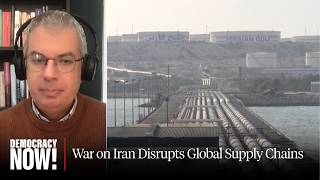
Two weeks into this conflict, Iran made its most striking move yet. It wasn't a missile, a drone, or any conventional weapon. Instead, it was a single sentence from a senior Iranian official to CNN on a Saturday morning.
Iran would allow oil tankers through the strait of Hormuz, but only if the payments were made in Yuan, not dollars. Just four words, Yuan only. but they carry more impact than any explosion or strike over the past 14 days.
This isn't a military maneuver. It's a direct challenge to the system that has placed the United States at the center of the global economy for half a century. Today we'll unpack what this statement really means.
Why it's far more significant than anything you've what is the petro dollar seen on TV and what could happen globally if this approach spreads. When people hear petrod dollar many tune out it sounds technical, abstract or like something discussed in boardrooms far from the battlefield. But here's the truth.
The petrod dollar system is why America can project military power across the world. It's why the US can run deficits that would sink almost any other nation. Despite trillions spent on wars, debt, and global operations, the dollar remains the currency every country needs to hold, disrupt, or seriously weaken that system.
And the financial bedrock of American power begins to shake. And with this announcement, Iran just hurled a stone at that foundation. To see why this matters, we need to go back to 1971.
Before then, every dollar was tied to gold. Each note in circulation could at least theoretically be exchanged for gold stored in US vaults. Nations.
How the system was built trusted the dollar because of that guarantee. But when President Richard Nixon ended the gold standard, the dollar faced a question it had never encountered. Why should anyone trust it?
The answer came from the Middle East. In 1974, the United States made a deal with Saudi Arabia. The kingdom agreed to price all its oil sales in US dollars.
In exchange, America promised military protection. OPEC followed suit nation by nation and the global oil market became dollar denominated. The result was extraordinary.
Suddenly every country that needed oil which was every country had to hold US dollars. Japan needed dollars. China needed dollars.
India, Germany, Brazil, all industrial nations had to maintain dollar reserves to keep their energy flowing. This Iran's game-changing move arrangement created a permanent structural demand for the US dollar. That demand allowed America to borrow without limits, spend endlessly, and maintain a global military presence that no other country could match.
The petro dollar is far more than an economic deal. It's the backbone of American global power. And for 52 years, it has endured because every attempt to challenge it has been crushed.
Iran is not the first to test this system. In 2000, Saddam Hussein tried shifting Iraq's oil sales from dollars to euros. Three years later, the US invaded and Iraq's oil returned to dollar pricing.
Muamar Gaddafi suggested a goldbacked Panaffrican currency for oil trade. In 2011, NATO intervened in Libya. Gaddafi was killed and the plan died with him.
Venezuela under Nicholas Maduro pushed oil trade outside the dollar and strengthened ties with China. In January 2026, the US moved against him as well. Analysts call this pattern the pro-china's growing influence dollar war theory.
The idea that countries challenging dollar-based oil pricing face consequences far beyond normal diplomacy. Now, Iran, a country the US has been bombing for 14 days, has announced it will reopen the straight of Hormuz, but only under conditions that bypass the dollar entirely. This is deliberate.
A senior Iranian official told CNN that Iran is considering allowing a limited number of oil tankers to transit the strait if the payments are made in Chinese yuan. Notice what this means. Iran isn't just reopening.
Hormmo's roots. It's reopening on new financial terms. Terms that exclude the dollar, favor China, and set a precedent never seen in the 52-year history of the petro dollar system.
The Revolutionary Guard Navy has already started issuing what analysts call IRGC certificates, permits allowing ships to pass. Iran controls the valve, and now it controls which currency you must use to open it. For China, this is huge.
Beijing has spent years trying to expand the yuan's role in global oil trade through yuan denominated futures on the Shanghai exchange. Swap lines with dozens of countries and other measures. All of it has been building toward a moment like this.
A major oil choke point operating in Yuan with Hormuz partially closed and oil above $100 a barrel. Countries that rely on that oil face a tough choice. Wait for the US to reopen the strait on dollar terms or quietly accept Iran's yuan condition and keep their oil flowing.
Some are already deciding. India has received asurances from Iran's ambassador for safe passage and is weighing yuan payments to secure energy. Turkey faces the same calculation.
Gulf states are diverting oil through alternative pipelines. But those pipelines max out at about 2. 6 million barrels per day while Hormuz normally carries 21 or that leaves a daily deficit of roughly 12 million barrels.
That deficit gives Iran enormous leverage. Every week Hormuz remains partially closed. Countries across Asia feel the squeeze and the UAN alternative grows more attractive.
Meanwhile, China is already buying 90% of Iran's oil through shadow networks via Malaysia, Singapore, and Vietnam to bypass sanctions. The financial framework for UAN denominated Iranian oil is already in place. Iran isn't countries face a tough choice proposing something brand new.
It's making something that has long operated in the shadows into an open large-scale system through the world's most vital waterway. So, what does this mean for America? The short answer, the US cannot bomb its way out of this problem.
Air strikes can destroy facilities, eliminate generals, or flatten infrastructure, but they cannot stop China from buying oil from Iran. They cannot prevent India from quietly weighing financial choice. And once a precedent is set in global energy markets, it cannot simply be erased.
The dollar's dominance in oil trade isn't upheld by aircraft carriers alone. It's reinforced by habit, trust, and the lack of a viable alternative. Iran working closely with China is now actively creating that alternative.
Not by defeating the US militarily, but by offering the world a solution that makes sense when the strait of Hormuz is partially closed and energy is urgently needed. Oil prices are already up 47% in just 15 days. Brent crude has reached highs not seen since the worst moments of the 2022 Ukraine crisis.
Each day prices remain elevated and each day tankers wait outside the straight. Governments face mounting pressure to find a workable solution. And right now, what this means for the future Iran is the only actor offering one on its own terms in UN.
Here's why this moment is historically significant. For 52 years, the petro dollar system survived every challenge because the challengers were isolated. Saddam was alone.
Gaddafi was alone. Maduro was alone. None of them had the backing of the world's second largest economy.
None controlled a choke point carrying 20% of the world's oil. Iran has both. China isn't going to invade to stop this.
Instead, it will quietly support it. Every one denominated oil transaction through Hormuz is a data point, proof that oil trade can function without the dollar. And once a precedent like that exists, it tends to become permanent.
Washington understands this perfectly. Rebuilding a military is possible. Rebuilding a financial system once the world doubts your currency is far harder.
Trump's war strategy focused on strength, showing that the US could not be challenged, restoring deterrence. But in this scenario, America could win every military battle and still lose something far more vital. The quiet structural authority that comes from being the country whose currency the world cannot operate without.
That authority has never been seriously threatened until now. Not with China supporting an alternative. Not with 20 million barrels a day effectively held hostage by a country offering a new system.
52 years ago, a deal between Washington and Riad created the financial foundation of American global power. Today, in the narrow waters between Iran and Oman, that foundation is quietly being dismantled. Whether the dollar survives this crisis could shape global economics for the next 50 years, far more than any missile or drone overhead.
Two weeks into this conflict, Iran made its most striking move yet. It wasn't a missile, a drone, or any conventional weapon. Instead, it was a single sentence from a senior Iranian official to CNN on a Saturday morning.
Iran would allow oil tankers through the strait of Hormuz, but only if the payments were made in Yuan, not dollars. Just four words, Yuan only. But they carry more impact than any explosion or strike over the past 14 days.
This isn't a military maneuver. It's a direct challenge to the system that has placed the United States at the center of the global economy for half a century. Today, we'll unpack what this statement really means, why it's far more significant than anything you've what is the petro dollar seen on TV, and what could happen globally if this approach spreads.
When people hear petro dollar, many tune out. It sounds technical, abstract, or like something discussed in boardrooms far from the battlefield. But here's the truth.
The petro dollar system is why America can project military power across the world. It's why the US can run deficits that would sink almost any other nation. Despite trillions spent on wars, debt, and global operations, the dollar remains the currency every country needs to hold, disrupt, or seriously weaken that system.
and the financial bedrock of American power begins to shake. And with this announcement, Iran just hurled a stone at that foundation. To see why this matters, we need to go back to 1971.
Before then, every dollar was tied to gold. Each note in circulation could at least theoretically be exchanged for gold stored in US vaults. Nations.
how the system was built trusted the dollar because of that guarantee. But when President Richard Nixon ended the gold standard, the dollar faced a question it had never encountered. Why should anyone trust it?
The answer came from the Middle East. In 1974, the United States made a deal with Saudi Arabia. The kingdom agreed to price all its oil sales in US dollars.
In exchange, America promised military protection. OPEC followed suit nation by nation and the global oil market became dollar denominated. The result was extraordinary.
Suddenly, every country that needed oil, which was every country, had to hold US dollars. Japan needed dollars. China needed dollars.
India, Germany, Brazil, all industrial nations had to maintain dollar reserves to keep their energy flowing. This Iran's game-changing move arrangement created a permanent structural demand for the US dollar. That demand allowed America to borrow without limits, spend endlessly, and maintain a global military presence that no other country could match.
The petro dollar is far more than an economic deal. It's the backbone of American global power. And for 52 years, it has endured because every attempt to challenge it has been crushed.
Iran is not the first to test this system. In 2000, Saddam Hussein tried shifting Iraq's oil sales from dollars to euros. Three years later, the US invaded and Iraq's oil returned to dollar pricing.
Muhammad Gaddafi suggested a goldbacked pan-African currency for oil trade. In 2011, NATO intervened in Libya. Gaddafi was killed and the plan died with him.
Venezuela under Nicholas Maduro pushed oil trade outside the dollar and strengthened ties with China. In January 2026, the US moved against him as well. Analysts call this pattern the pro-china's growing influence dollar war theory.
The idea that countries challenging dollar-based oil pricing face consequences far beyond normal diplomacy. Now, Iran, a country the US has been bombing for 14 days, has announced it will reopen the straight of Hormuz, but only under conditions that bypass the dollar entirely. This is deliberate.
A senior Iranian official told CNN that Iran is considering allowing a limited number of oil tankers to transit the strait if the payments are made in Chinese yuan. Notice what this means. Iran isn't just reopening Hormma's roots.
It's reopening on new financial terms. Terms that exclude the dollar, favor China, and set a precedent never seen in the 52-year history of the petro dollar system. The Revolutionary Guard Navy has already started issuing what analysts call IRGC certificates, permits allowing ships to pass.
Iran controls the valve and now it controls which currency you must use to open it. For China, this is huge. Beijing has spent years trying to expand the yuan's role in global oil trade through yuan denominated futures on the Shanghai exchange.
Swap lines with dozens of countries and other measures. All of it has been building toward a moment like this. A major oil choke point operating in Yuan with Hormuz partially closed and oil above $100 a barrel.
Countries that rely on that oil face a tough choice. wait for the US to reopen the strait on dollar terms or quietly accept Iran's yuan condition and keep their oil flowing. Some are already deciding.
India has received asurances from Iran's ambassador for safe passage and is weighing yuan payments to secure energy. Turkey faces the same calculation. Gulf states are diverting oil through alternative pipelines, but those pipelines max out at about 2.
6 6 million barrels per day while Hormuz normally carries 21. That leaves a daily deficit of roughly 12 million barrels. That deficit gives Iran enormous leverage.
Every week, Hormuz remains partially closed. Countries across Asia feel the squeeze, and the UAN alternative grows more attractive. Meanwhile, China is already buying 90% of Iran's oil through shadow networks via Malaysia, Singapore, and Vietnam to bypass sanctions.
The financial framework for UAN denominated Iranian oil is already in place. Iran isn't countries face a tough choice proposing something brand new. It's making something that has long operated in the shadows into an open large-scale system through the world's most vital waterway.
So, what does this mean for America? The short answer, the US cannot bomb its way out of this problem. Air strikes can destroy facilities, eliminate generals, or flatten infrastructure, but they cannot stop China from buying oil from Iran.
They cannot prevent India from quietly weighing financial choice. And once a precedent is set in global energy markets, it cannot simply be erased. The dollar's dominance in oil trade isn't upheld by aircraft carriers alone.
It's reinforced by habit, trust, and the lack of a viable alternative. Iran working closely with China is now actively creating that alternative not by defeating the US militarily but by offering the world a solution that makes sense when the straight of hormuz is partially closed and energy is urgently needed. Oil prices are already up 47% in just 15 days.
Brent crude has reached highs not seen since the worst moments of the 2022 Ukraine crisis. Each day prices remain elevated and each day tankers wait outside the straight. Governments face mounting pressure to find a workable solution.
And right now what this means for the future Iran is the only actor offering one on its own terms in Yuan. Here's why this moment is historically significant. For 52 years, the petro dollar system survived every challenge.
Because the challengers were isolated. Saddam was alone. Gaddafi was alone.
Maduro was alone. None of them had the backing of the world's second largest economy. None controlled a choke point carrying 20% of the world's oil.
Iran has both. China isn't going to invade to stop this. Instead, it will quietly support it.
Every one denominated oil transaction through Hormuz is a data point proof that oil trade can function without the dollar. And once a precedent like that exists, it tends to become permanent. Washington understands this perfectly.
Rebuilding a military is possible. Rebuilding a financial system once the world doubts your currency is far harder. Trump's war strategy focused on strength, showing that the US could not be challenged, restoring deterrence.
But in this scenario, America could win every military battle and still lose something far more vital. The quiet structural authority that comes from being the country whose currency the world cannot operate without. That authority has never been seriously threatened until now.
Not with China supporting an alternative. Not with 20 million barrels a day effectively held hostage by a country offering a new system. 52 years ago, a deal between Washington and Riad created the financial foundation of American global power.
Today, in the narrow waters between Iran and Oman, that foundation is quietly being dismantled. Whether the dollar survives this crisis could shape global economics for the next 50 years, far more than any missile or drone overhead. Two weeks into this conflict, Iran made its most striking move yet.
It wasn't a missile, a drone, or any conventional weapon. Instead, it was a single sentence from a senior Iranian official to CNN on a Saturday morning. Iran would allow oil tankers through the strait of Hormuz, but only if the payments were made in Yuan, not dollars.
Just four words, yuan only. But they carry more impact than any explosion or strike over the past 14 days. This isn't a military maneuver.
It's a direct challenge to the system that has placed the United States at the center of the global economy for half a century. Today, we'll unpack what this statement really means, why it's far more significant than anything you've what is the petro dollar seen on TV and what could happen globally if this approach spreads. When people hear petro dollar, many tune out.
It sounds technical, abstract, or like something discussed in boardrooms far from the battlefield. But here's the truth. The petro dollar system is why America can project military power across the world.
It's why the US can run deficits that would sink almost any other nation. Despite trillions spent on wars, debt, and global operations, the dollar remains the currency every country needs to hold, disrupt, or seriously weaken that system. and the financial bedrock of American power begins to shake.
And with this announcement, Iran just hurled a stone at that foundation. To see why this matters, we need to go back to 1971. Before then, every dollar was tied to gold.
Each note in circulation could at least theoretically be exchanged for gold stored in US vaults. Nations. how the system was built trusted the dollar because of that guarantee.
But when President Richard Nixon ended the gold standard, the dollar faced a question it had never encountered. Why should anyone trust it? The answer came from the Middle East.
In 1974, the United States made a deal with Saudi Arabia. The kingdom agreed to price all its oil sales in US dollars. In exchange, America promised military protection.
OPEC followed suit nation by nation and the global oil market became dollar denominated.