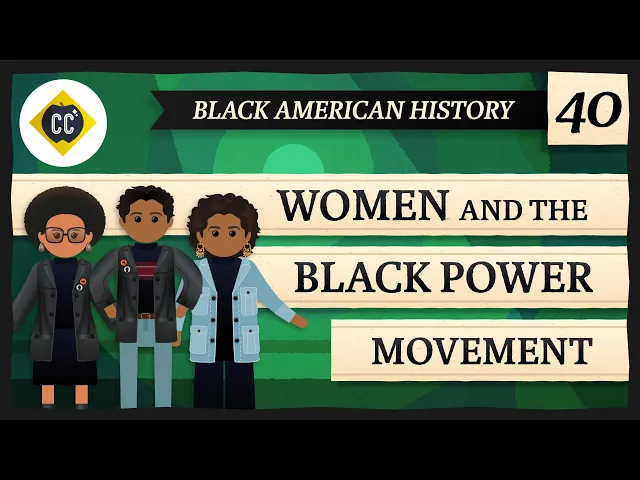
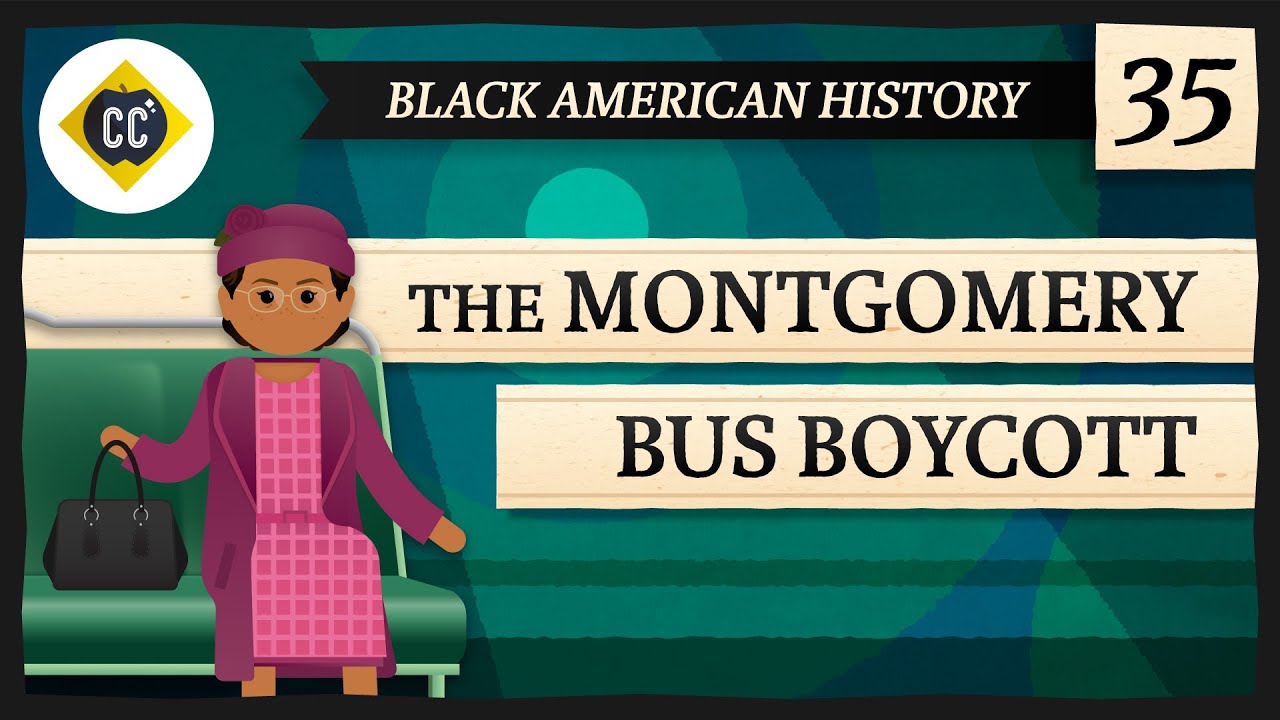
hi i'm clint smith and this is crash course black american history one theme we've seen throughout this series is that women were and are some of the most important people in the movement for equality there is a long lineage of black women freedom fighters that extend from slavery through reconstruction through jim crow through the civil rights movement folks like harriet tubman mary church tyrell ida b wells rosa parks claudette colvin zora neale hurston fannie lou hamer ella baker daisy bates the list goes on and on but that work didn't end with the civil rights movement
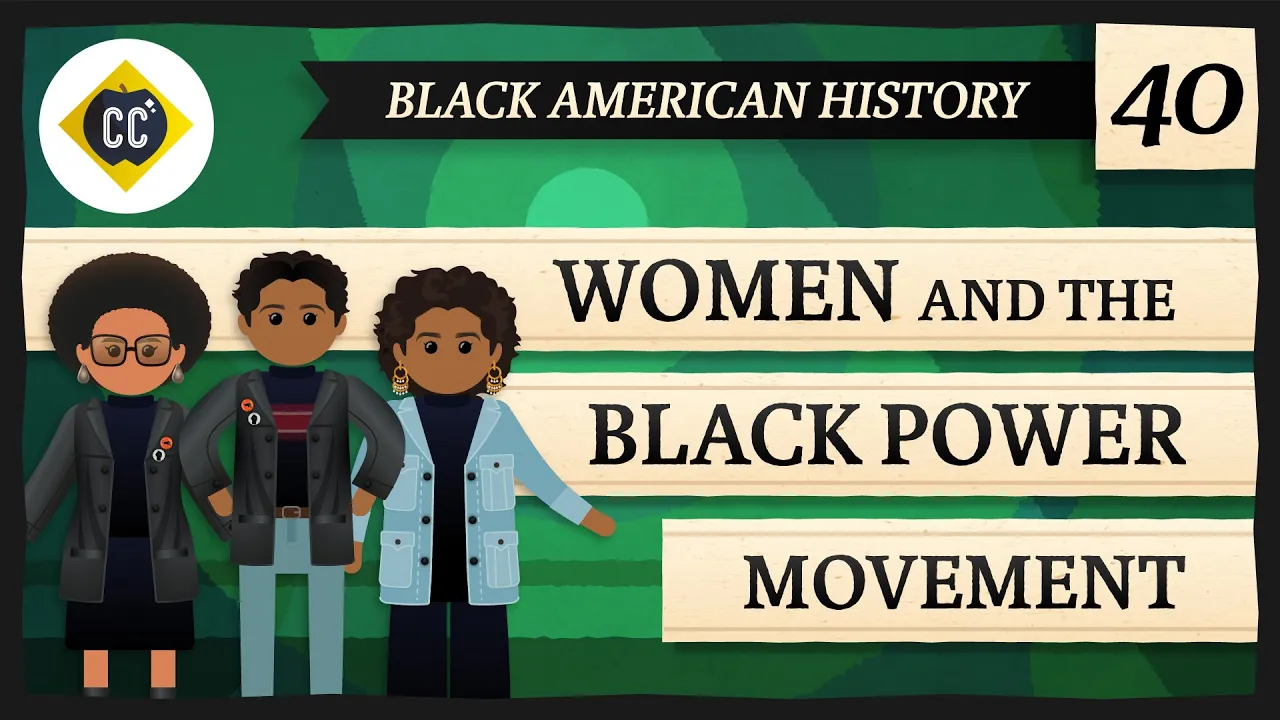
black women continued to lead this fight even when they weren't at the center of attention the black power movement is usually characterized by what men did but today we're going to specifically highlight the roles that black women played in that space and how their work helped to bring us to where we are today let's start the show [Music] listen the role of women activism is imperative to acknowledge it's not just some inclusivity thing we do just because we think we're supposed to do it we bring it up because it reflects what actually happened black women
were at the forefront of community organizing and black thought both before and after the civil rights movement the women of the black power movement brought to light the significance of what we call intersectionality which is a way of saying that women experience the world differently than men do because of misogyny and gender discrimination and then if you multiply that by the consequences of being a black woman then you often find that the world treats you even worse and intersectionality also applies to all different parts of identity including sexual orientation nationality and socioeconomic status the black
power movement was a global activist movement that involved three essential pillars black community control black self-determination and black self-defense black power has historically been characterized as being anti-white but that's not really the case the black power movement was an outgrowth of black nationalists thought that privileged black self-determination and pride but it was not inherently racist in its scope it recognized the role of white supremacy in everyday society and essentially encourage black people to create spaces for themselves in a society that was constantly excluding them from its services resources and institutions inspired by folks like malcolm
x the black power movement encouraged black people to stop worrying about inclusion and to start creating spaces for themselves the idea of black power was not a new phenomenon but it did become more popular during the 1960s his popularization stemmed from the decolonization of the african continent disillusionment with the shortcomings of the civil rights movement and a recognition of the decades-long trauma of jim crow many black americans were struggling to find social and economic stability after generations of state-sanctioned segregation while many believe that the civil rights movement did formally end jim crow one of the
major critiques of the movement and its legislative victories like the civil rights act of 1964 the voting rights act of 1965 and the fair housing act of 1968 was that it did not adequately address issues of poverty housing inequality unemployment over policing and a lack of educational resources and these are all things that disproportionately impacted black communities and while the black power movement was a political phenomenon it was also a cultural one it provided a space for black americans looking for validation of their culture affirmation of their dignity acknowledgement of their beauty and intelligence and
a collective assertion of pride in a world that often devalued them many organizations within the black power movement have been framed as male dominated and sexist and in many ways this is true these organizations weren't perfect by any means sexism did manifest itself both structurally and interpersonally and it should be acknowledged and taken seriously at the same time it's also true that women were present vocal and influential in the ranks of all of these organizations just as they were during the civil rights movement and are in today's black lives matter movement again both can be
true and it's always important for us to sit with that complexity not run away from it many women join these organizations in order to push the men to be more thoughtful and equitable with regard to sex and gender and the organizations were better for it the women members were the ones who pushed the group in the direction of a more radical interpretation of what it means to work toward full liberation for all black people not just black men so let's talk about the role of black women in one of these organizations black panther party here
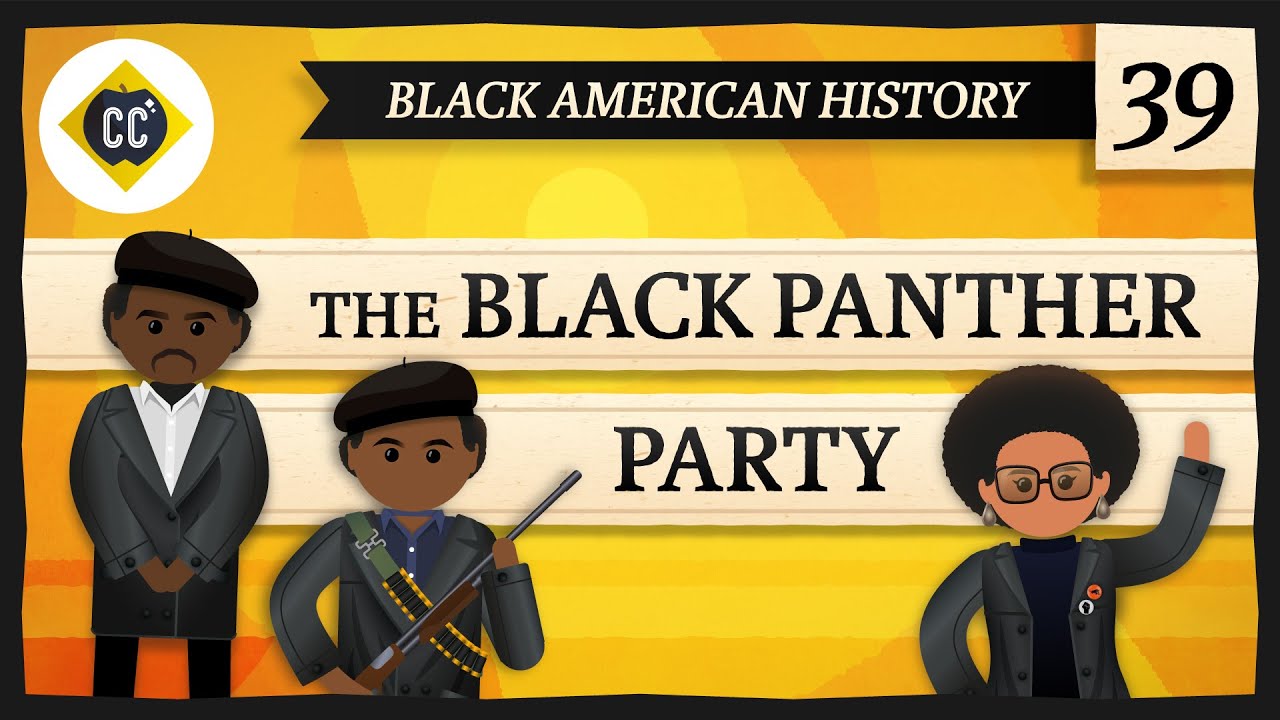
in the thought bubble the black panther party originally known as the black panther party for self-defense was founded by huey newton and bobby seal in october 1966 in oakland california the first female member was jay tarika lewis she was a 16 year old high school student when she joined the party in 1967. she participated in their political education classes attended rallies and was an artist for their newspaper she played an integral role in shaping how the black panther party was publicly viewed as well as how they viewed themselves as the party grew more women joined
some of the most notable women were kathleen cleaver erica huggins and elaine brown kathleen cleaver was a former member of the student nonviolent coordinating committee commonly known as nick cleaver was the communications secretary and the first female member of the black panther's main decision-making body erica huggins had multiple leadership roles becoming a leader in the los angeles chapter and founding the chapter in new haven connecticut elaine brown was appointed the new leader of the entire black panther party in 1974 after huey newton fled prosecution to cuba even though she faced quite a bit of sexism
during her tenure she led the party for three years and also established the black panther party's liberation school thanks stop bubble needless to say women were a huge part of the black panther party and the black power movement more broadly and that wasn't all of them there was charlotte hill o'neil a musician poet and artist who was a major figure in the international section of the black panther party there was assata shakur who led the black panther party in harlem she was later charged with killing a police officer in 1973 and fled to cuba where
she maintains her innocence and of course there's angela davis who remains incredibly influential through her speaking and writing and as a mentor for young activists today women ultimately composed two-thirds of the black panther party membership across 40 chapters and their influence within the organization continued to grow many of the head editors of the black panther party's newspaper were women and many of these women pushed the panthers to include child care centers for each local chapter black women weren't only involved in political organizations tied to the black power movement but also artistic and cultural ones in
these spaces black women writers and artists use black power ideologies to help express themselves through music literature and theater black women told stories of their lived experiences and outlined how they shaped their political philosophies much of this was done through the black arts movement the black arts movement lasted from 1965 till about 1975. it was founded by the writer leroy jones was later known as amiri baraka he also founded the black arts repertory theater and school many of the women who produced art during this period were known as cultural naturalists cultural naturalists used culture through
poetry novels visual art and theater to affirm community promote black consciousness and to achieve liberation if you read any poetry during your high school literature courses you may have heard some of these poets for example maya angelou's work grew after the black arts movement her most famous work i know why the caged bird sings is an autobiography of her childhood which addresses themes of black girlhood femininity racism and trauma there was also the play entitled for colored girls who have considered suicide when the rainbow is enough by untazake change who was influenced by the black
arts movement as well poet and writer sonia sanchez was another major contributor to the movement two of her most important collections of poetry were homecoming and we are bad people her work focused on the highs and lows of the lives of everyday black women audra lord was another important contributor to this movement she wrote many books during this period including the first cities cable to rage and from a land where other people live her books addressed many topics her blackness her identity as a woman her identity as a lesbian and motherhood nikki giovanni is one
of the most famous poets to come out of this period dubbed the poet of the black revolution some of the most important works she contributed to the movement with the poetry collection's black feeling black talk black judgment and recreation i feel lucky to have been able to talk to ms giovanni about her work and how so much of the work she did makes the work that i do possible all of these women paved the way for even more exploration of black liberation and the nuance of black women's experiences in literature much of the work produced
by women of the black arts movement focused on power and agency through the feminist lens to tell the story of black women and america even though the 1960s and 70s can sometimes be thought of as an era in which women were rarely more than secretaries typists assistants and homemakers the women of the black power movement redefined and rejected that notion these women shaped the trajectory of the fight for inequality not just in the black power movement but in the feminist and gay rights movements as well and not only did they lead across these movements but
they forced them to become even more radical by de-centering the experiences of just men to create space for the experiences of women and lgbtq communities but again this is not new and it would not be the last time black women have been at the forefront of social movements throughout american history that there is no doubt that they'll continue to be thanks for watching i'll see you next time crash course is made with the help of all these nice people and our animation team is thought catholic crash course is made possible by all of our viewers
and supporters thanks to all of our patrons who support the show on patreon and all of you who participated in the 2021 crash course learner coin campaign your contributions support millions of learners thank you