An eight-year-old girl’s simple question silenced a crowded town hall and left Caroline Levitt sharing a deeply personal story about faith and redemption. What happened next moved everyone to tears. The town hall in Springfield, Missouri, was packed; rows of metal chairs lined the worn wooden floor, filled with people eager to hear Caroline Levitt speak.
Some leaned forward, listening intently; others sat with arms crossed, waiting for a reason to be impressed or disappointed. The air carried the faint scent of burnt coffee from the refreshment table, and the occasional scrape of a chair leg against the floor punctuated the low murmur of conversation. Caroline had been here before—different towns, different faces—but always the same energy.
Some came looking for hope; others for answers. She was used to tough questions: policy, leadership, the economy. She had rehearsed answers for all of them, but nothing prepared her for the small voice that broke through the noise.
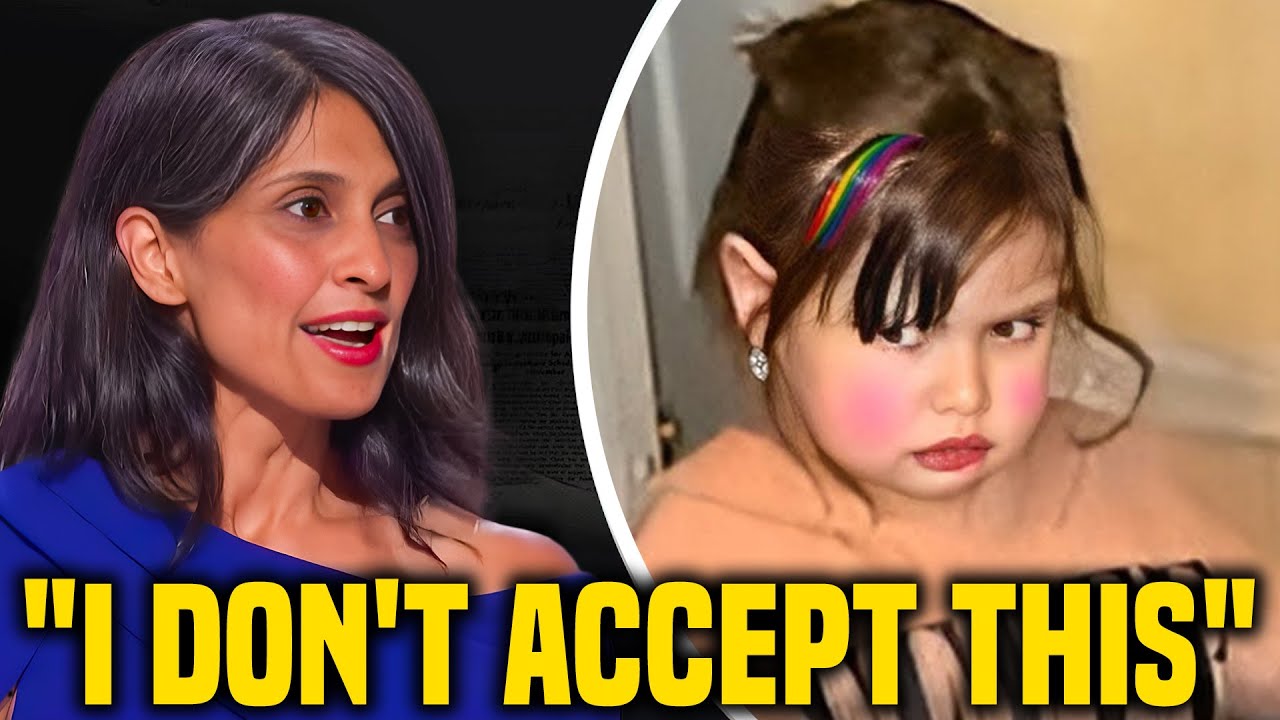
A little girl, no older than eight, stood near the front, her brown curls slightly frizzy from the humid air. She clutched the hem of her light pink dress, her fingers twisting the fabric nervously, while her mother, standing a few feet away, looked surprised that her daughter had spoken up but didn’t stop her. "What does God mean to you?
" the girl asked. The room's conversations died mid-sentence; a few people turned in their seats, their expressions shifting from curiosity to something deeper. Even those who had been scrolling through their phones moments earlier now glanced up, waiting.
Caroline had been shaking hands, smiling, and making her way through the crowd with practiced ease, but now she froze. Her fingers, still extended from the last handshake, curled into a loose fist at her side. This wasn't a policy question; it wasn't about polls or party lines—it was something else entirely.
She could feel the weight of the room pressing in. The silence wasn't uncomfortable, but it was heavy, expectant. For the first time in a long time, Caroline didn't have an immediate answer.
She lowered herself to the girl's level, knees bending until their eyes met. The girl's expression was open, searching, as if she truly wanted to understand—not in a way adults asked questions, fishing for contradictions or trying to prove a point, but with genuine curiosity. Caroline took a slow breath.
"That's a really important question," she said, buying herself a few more seconds. The little girl didn’t blink; she waited. Caroline thought back to nights spent staring at the ceiling, whispering prayers into the dark, hoping someone—anyone—was listening; to the moments when faith felt easy and to the ones where it slipped through her fingers like sand.
She could lie; she could give a polished, rehearsed answer—something clean, something safe—but she didn't want to—not here, not to a little girl who had the courage to ask something so simple yet so profound. She parted her lips to speak, but the words caught in her throat. Memories flooded her mind—memories she hadn't planned on sharing tonight—but before she could find the right words, something shifted in her chest, a feeling so raw and sudden it almost made her gasp.
She clenched her hands into fists to steady herself. She looked at the girl again, and this time her vision blurred slightly—not from the bright overhead lights, but from something deeper. But before she could answer, something unexpected surfaced—something she hadn't allowed herself to think about in years.
The moment stretched, thick and unmoving. The audience didn’t fidget, didn’t cough, didn’t shift in their seats. It was as if they were holding their breath, waiting for something unplanned, something real.
Caroline swallowed, her pulse steady but loud in her ears. She had never been afraid of speaking—not in front of hundreds, not even thousands—but this wasn’t a debate. It wasn’t a sound bite; it wasn’t the kind of question where the right phrasing could smooth over the rough edges of truth.
The little girl, still clutching the fabric of her dress, tilted her head slightly. Her face was open, patient; she wasn’t demanding an answer; she was just waiting. A man in the second row crossed his arms, his expression unreadable.
A woman near the back lifted her phone, aiming the camera in Caroline’s direction. Whether she was recording out of interest or waiting for a misstep, Caroline couldn’t tell, but it didn’t matter. She glanced at the mother standing behind the girl.
The woman’s lips parted slightly, as if she wanted to intervene, to tell her daughter not to put a public figure on the spot, but she didn’t; she let it happen. Caroline exhaled slowly. "What does God mean to me?
" she repeated, as if saying it out loud would somehow untangle the knot in her throat. She could hear her own voice echo back at her, softer than usual. She wasn’t sure why it felt so fragile.
Her mind flooded through the expected answers: God is love, God is hope, God is everything. True, maybe, but those words felt hollow—too clean, too easy. She thought about the nights she spent sitting on the edge of a hospital bed, gripping a frail hand that once felt so strong.
She thought about the whispered prayers that went unanswered; the days when faith felt like an anchor and the days when it felt like a burden. She thought about her own childhood when believing was simple—before the world became complicated. She took in a breath, her fingers curling slightly against her palms.
"To me, God is. . .
" She hesitated—not because she didn’t know, but because she suddenly realized the weight of what she was about to say. She looked back at the little girl, whose eyes held the kind of trust that only children seem capable of—the kind that made you want to tell the truth even when it was hard. Voice, when it finally came, was quieter than before.
"God is the reason I'm still standing here. " A murmur rippled through the crowd, faint but unmistakable. The man in the second row uncrossed his arms; the woman with the phone lowered it slightly.
But Caroline wasn't finished. She could feel something pushing at her, an old memory clawing its way to the surface. A part of her wanted to push it back down, but another part—the part that had been carrying it for far too long—knew it was time.
She blinked, her throat tightening, but before she could continue, the past came rushing in, demanding to be spoken. Caroline's breath hitched. She hadn't expected to go back there—not here, not now—but the question had opened something inside her, something raw and unresolved.
She pressed her lips together, forcing herself to steady her voice. "When I was 19," she began, "I lost someone I loved more than anything in the world. " The room, already quiet, became impossibly still.
The little girl's expression didn't change, but her grip on her dress loosened slightly. Caroline's fingers found the edge of her blazer, smoothing over the fabric as if grounding herself in the present, but her mind was elsewhere. She could still see it: her father's hands gripping the steering wheel, his knuckles white, his jaw tight.
The rain had been relentless that night, hammering against the windshield as they sped down the highway toward Saint Louis General Hospital. Her mother was in the back seat, cradling the body of a boy barely breathing—her brother. He had been everything to her—three years older, full of life, always the one cracking jokes at the dinner table, making their mother roll her eyes with a half-smile.
He had this way of making people feel like they belonged, like they mattered—until the accident. Until the driver who had downed four shots of whiskey decided he could make it home. She could still hear the sirens wailing in the distance, see the flashing red lights reflected in the rain-slick pavement.
She had prayed so hard that night, gripping the cross around her neck so tightly it left an imprint in her palm. "Please, God, don't take him. I'll do anything—just don't take him.
" But the monitors had gone flat, and nothing, nothing had brought them back. She didn't cry then— not in the hospital, not at the funeral, not even when she saw her mother hollowed out by grief, clutching her brother's favorite hoodie like it could bring him back. It wasn't until she sat alone in a church weeks later, staring at the stained glass windows, that the weight of it all crushed her.
She had walked into that church with the last thread of faith she had left, and she had walked out without it. For years, she didn't pray, didn't believe. She told herself that if God was real, He wouldn't have let her brother die on that rain-slick highway; that no loving God would leave a family shattered like that.
And yet, something had changed—not all at once, not in some grand revelation, but in small moments: the neighbor who left home-cooked meals at their door even when they stopped answering, the stranger who paid for her coffee one morning when she hadn't even realized she had left her wallet at home, the friend who sat with her in silence when she had nothing left to say. Little by little, she had started to see it: God wasn't in the things she had lost; He was in the hands that reached for her when she thought she was drowning. She blinked, bringing herself back to the present, to the faces watching her, waiting.
Her voice was steady when she spoke again: "For a long time, I thought God had abandoned me, but the truth is, He was the reason I survived it. " A heavy exhale swept through the crowd as if they had all been holding something in. The little girl's fingers relaxed completely now, her hands falling to her sides.
But Caroline wasn't finished, because there was one more thing she needed to say. But before she could, an unexpected voice broke through the silence—a voice from the crowd cut through the stillness. "That's nice and all, but where was God when my son died?
" The words were sharp, not in anger but in pain—the kind of pain that had no resolution, no clean answer. Caroline turned toward the source: a man, late 50s maybe, sat near the middle of the room. His face was lined, worn in a way that had nothing to do with age.
His hands, resting on his lap, were balled into fists, knuckles pale against his tan skin. She met his gaze; he wasn't challenging her, he wasn't trying to humiliate her, he just wanted to understand. The weight of his grief sat between them, raw and undeniable.
She inhaled slowly. "I don’t have the answer you want," she admitted. "I don’t know why some prayers go unanswered.
" The man let out a breath, shaking his head slightly, but he didn't look away. He wanted more. Caroline thought back to the night she spent staring at the ceiling, waiting for some kind of sign, some proof that her pain wasn't meaningless.
She thought about the moment she almost gave up on everything. She hadn't spoken about that night in years; she wasn't sure she wanted to now. But looking at him, looking at the way his fingers twitched like he was holding something back, she knew this moment wasn't just about her anymore.
She sat back on her heels, still at eye level with the little girl but addressing the entire room. "The night before my brother's funeral, I stood on the edge of a bridge," she said quietly. "I don't know how long I was there—minutes, maybe an hour—I just…" Remember the sound of the water below, the weight of everything pressing down on me.
A murmur ran through the crowd, but no one interrupted. I didn't think I had a reason to keep going, and I didn't ask God for one because I didn't believe He was listening. She swallowed hard, the memory sitting like a stone in her chest, but then she continued.
My phone rang. The words felt small, almost laughable, but she still remembered the way it cut through the silence, startling her. It was an old friend, someone she hadn't spoken to in months.
She had almost let the call go to voicemail, but something made her pick up, and when she did, the first thing she heard was, "I don't know why, but I felt like I needed to call you. " Her fingers tightened slightly at the memory. That call saved my life.
The man in the crowd blinked, his expression unreadable. Caroline exhaled slowly. "I don't believe God stopped that driver the night my brother died.
I don't believe He stepped in and changed the outcome, but I do believe He made sure I wasn't alone in my darkest moment. " The silence in the room felt different now. It wasn't just weighty; it was understanding.
The man who had spoken rubbed a hand over his jaw, exhaling through his nose. He still looked pained, but something in his posture had shifted. The little girl, still standing in front of Caroline, finally spoke again.
"So God doesn't fix everything? " Caroline's chest tightened at the honesty in her voice. She shook her head.
"No, He doesn't. " The girl frowned slightly, thinking. "Then what does He do?
" Caroline's throat burned. She wasn't sure if this answer would satisfy the girl or the man in the crowd or anyone else listening, but she knew it was the truth. But before she could answer, something happened that no one in the room expected.
A woman near the back let out a sudden, shuddering breath. It wasn't loud, but in the heavy silence of the room, it sounded like a crack in the air. All heads turned.
She was older, maybe in her late 60s, her short silver hair neatly curled at the ends. She clutched a folded tissue in one hand, gripping it so tightly her knuckles pressed white. When she realized everyone was looking, she shook her head slightly as if apologizing for the interruption, but her voice wavered when she spoke.
"He doesn't fix everything," she said, repeating the little girl's words. She let out a soft, almost bitter laugh. "No, He doesn't.
" Her gaze lifted, landing on Caroline. "But sometimes, sometimes He holds us together when we should be breaking. " No one moved.
Caroline's lips parted slightly. The woman's voice, so quiet yet so certain, hit her somewhere deep. The little girl turned back to Caroline, her young face caught between curiosity and something else.
"Is that what you meant? " Caroline let out a slow breath. "Yeah," she said, "that's exactly what I meant.
" The girl thought for a moment, then looked down at her shoes. "So even when bad things happen, we're not alone? " Caroline's throat tightened.
She nodded. "That's right. " The girl's fingers brushed against her own arm as if thinking.
Then she asked, "How do you know? " Caroline felt the weight of that question settle over her. It wasn't a challenge; it wasn't disbelief.
It was genuine, raw uncertainty—the kind that only came from someone who wanted to believe but wasn't sure if they could. She could have given a theological answer—something about faith, about scripture, about the idea of a grand plan—but that wasn't what this little girl needed. She needed something real.
Caroline's voice was steady when she answered. "Because I felt it," she said. "Because when I had nothing left, when I was sure I couldn't take one more step, someone showed up.
Maybe not in the way I expected, but in the way I needed. " The girl lifted her chin slightly, like the phone call. A small, breathy laugh escaped Caroline's lips.
"Yeah," she said, "like the phone call. " The girl chewed on the inside of her cheek, thinking. Then, without warning, she took a small step forward and wrapped her arms around Caroline's waist.
The room held still again, but this time the silence wasn't heavy; it was something else, something warm. Caroline blinked hard, her hands hesitating for only a moment before she returned the hug. It lasted only a few seconds, but when the girl pulled away, something had shifted in the air.
The man who had questioned her earlier let out a deep breath, rubbing his hands over his face. The older woman dabbed at her eyes with her tissue. Someone near the back murmured something, but their words were lost in the moment.
Caroline cleared her throat, finding her voice again. She looked out over the crowd, her gaze sweeping across the faces still watching her, still waiting. She wasn't sure what they had expected tonight—a speech, maybe, a performance.
Instead, they had gotten something real. But before the night could end, there was one last thing she needed to say. Caroline straightened, her heartbeat still steady but her chest tight in a way she couldn't quite name.
The little girl had returned to her mother's side, slipping her small hand into her mother's fingers, but the girl's eyes never left Caroline, watching, waiting. The room felt different now. It wasn't just that people were listening; it was something deeper, something unspoken.
The walls that had been there at the start of the evening, the quiet barriers people built around themselves, had thinned, some even crumbling. Caroline glanced toward the man who had challenged her earlier. He wasn't looking at her anymore; his gaze had dropped to the floor, his foot tapping absently.
Maybe he was thinking of his son, the one he had lost. Maybe he was thinking. Of all the nights he had asked that same question in his own silence, waiting for an answer that never came, the older woman who had spoken up was staring straight ahead, blinking rapidly, pressing the tissue to her lips.
And then, slowly, something unexpected happened: a man near the aisle, a burly guy in his 40s—the kind who looked like he spent more time under the hood of a car than in town hall meetings—spoke up. His voice was rough, not from anger, but from where I haven't prayed in years, he admitted. The confession was blunt, simple, and yet it cut through the room like a blade.
A few heads turned, some shifting in their seats. The man let out a breath, shaking his head. “I used to every night.
Then my dad got sick, and I prayed harder than I ever had in my life. ” His jaw flexed. “Didn't change a thing.
” He shrugged, like the word should have been easy, but they weren't, so I stopped. Caroline didn't move, didn't say a word; she just listened. He exhaled sharply, rubbing a hand over the back of his neck.
“But hearing you talk about that phone call, about the people that showed up for you…” He paused, like the thought was forming in real time. “Maybe I had it wrong. Maybe he was never supposed to fix things.
Maybe he was just supposed to make sure we didn't have to go through it alone. ” A murmur moved through the crowd. It wasn't loud—just a few whispered words, a few small nods—but Caroline could feel it, like a current shifting beneath the surface.
She swallowed. The burly man cleared his throat. “I don't know if I believe like I used to,” he glanced up at her, “but maybe I ain't as alone as I thought.
” His words settled between them, heavy but not suffocating. “None of us are,” she said softly. A woman near the back wiped her eyes.
The man in the second row shifted forward, elbows on his knees, staring at nothing in particular. Even the ones who hadn't spoken, the ones who had been sitting with their arms crossed, their expressions unreadable—something in them had changed. Caroline could feel it.
She took a step back, her hands settling at her sides. “I think that's the thing about faith,” she said, her voice steady now. “It's not about having all the answers; it's about knowing you don't have to go through the questions alone.
” She let her gaze sweep over the room one last time. “For a long time, I thought faith meant certainty, that if I doubted, if I questioned, then maybe I didn't believe at all. ” She shook her head slightly.
“But I was wrong. Faith isn't about never questioning; it's about holding on even when you don't have the answers. ” A quiet sigh rippled through the crowd.
Some people looked at each other; others looked down at their hands. But no one—not a single person—looked disinterested. For the first time all evening, it felt like they weren't just an audience; they were a part of this.
Caroline inhaled deeply, but before she could close the night, there was one final thing she needed to do. Caroline let the weight of the moment settle over the room. This wasn't the ending she had expected for the evening, but it was the one that had found her.
She shifted slightly, glancing toward the little girl who had started it all. “Did that answer your question? ” Caroline asked gently.
The girl hesitated for a moment, her small fingers still linked with her mother's. Then she nodded—not eagerly, not because she felt like she had to, but because she had found something in the answer that made sense to her. Caroline felt a tightness in her chest—something between gratitude and grief.
She had spent so many years trying to put her faith into words, and yet it had taken the innocence of a child to pull the truth out of her in a way she had never quite managed before. She turned back to the room, letting her gaze sweep over the faces watching her. Some were visibly emotional—eyes damp, lips pressed together in thought.
Others sat still, unreadable but not indifferent. “Before I go,” she said, “I want to leave you with something. ” The silence deepened, anticipation threading through it.
“I used to think faith was about being strong,” she admitted, “about standing firm, never doubting, never questioning. ” She let out a quiet breath. “But I don't believe that anymore.
” She looked toward the man who had challenged her earlier, his grief still sitting in his eyes like an old wound that had never fully healed. “I think faith is what happens when we're at our weakest,” she continued, “when we don't have the answers, when nothing makes sense, when we're standing at the edge of something we don't know how to survive. ” A few heads dipped, as if the words had struck something deep.
“Faith isn't about knowing everything will turn out the way we want,” she said, her voice steady but low. “It's about knowing that no matter what happens, we won't be left to carry it alone. ” She saw the burly man near the aisle swallow hard, his hands flexing at his sides.
She saw the older woman press the tissue to her face again. She saw the little girl squeeze her mother's hand just a little tighter, and she saw the quiet shift in the room—the unspoken understanding that for all their different lives and experiences, they weren't as alone as they had thought. Caroline straightened slightly, exhaling as she reached for the final words she wanted to leave them with.
“When I was at my lowest, when I was standing on that bridge, I thought no one would miss me if I disappeared. ” Let the words settle, heavy but true. I was wrong.
A lump rose in her throat, but she pushed through it. If you're carrying something heavy, if you're walking through something you don't think you can survive, I hope you know you don't have to carry it alone. She paused, then added, "You are not alone.
" The weight of her words settled over the room. She didn't expect applause; she didn't want it. This wasn't about that.
This was about a little girl who had asked a question; this was about a room full of people who had come expecting one thing and left with something else entirely. This was about faith, about grief, about what it meant to keep going even when you didn't have all the answers. Caroline let out a slow breath and then she simply said, "Thank you.
" A long moment of silence passed before someone finally stood—the burly man. He didn't say a word; just gave her a small nod before slipping his hands into his pockets and heading toward the door. And just like that, others began to move—some wiping their eyes, some murmuring to each other, some simply sitting as if they weren't quite ready to leave.
The little girl looked up at her mother, then back at Caroline. She didn't say anything, but the way she smiled, soft understanding, told Caroline everything she needed to know. As Caroline turned to leave, she felt something settle inside her—not closure, not certainty, but peace.
And maybe, just maybe, that was enough. If this story meant something to you, if it made you think, share it with someone who might need to hear it, because sometimes the smallest moments can leave the biggest impact.