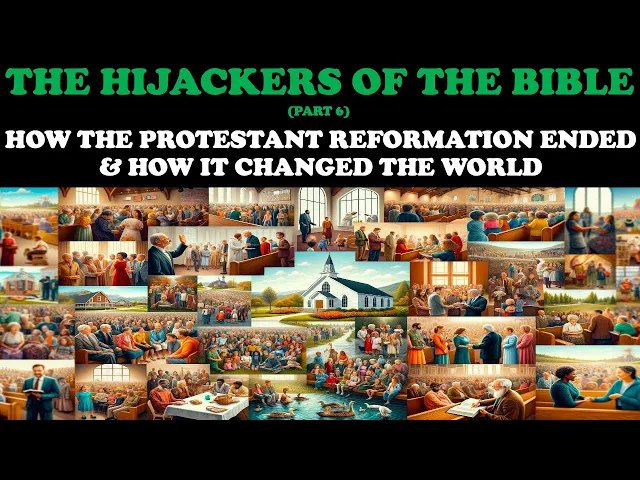
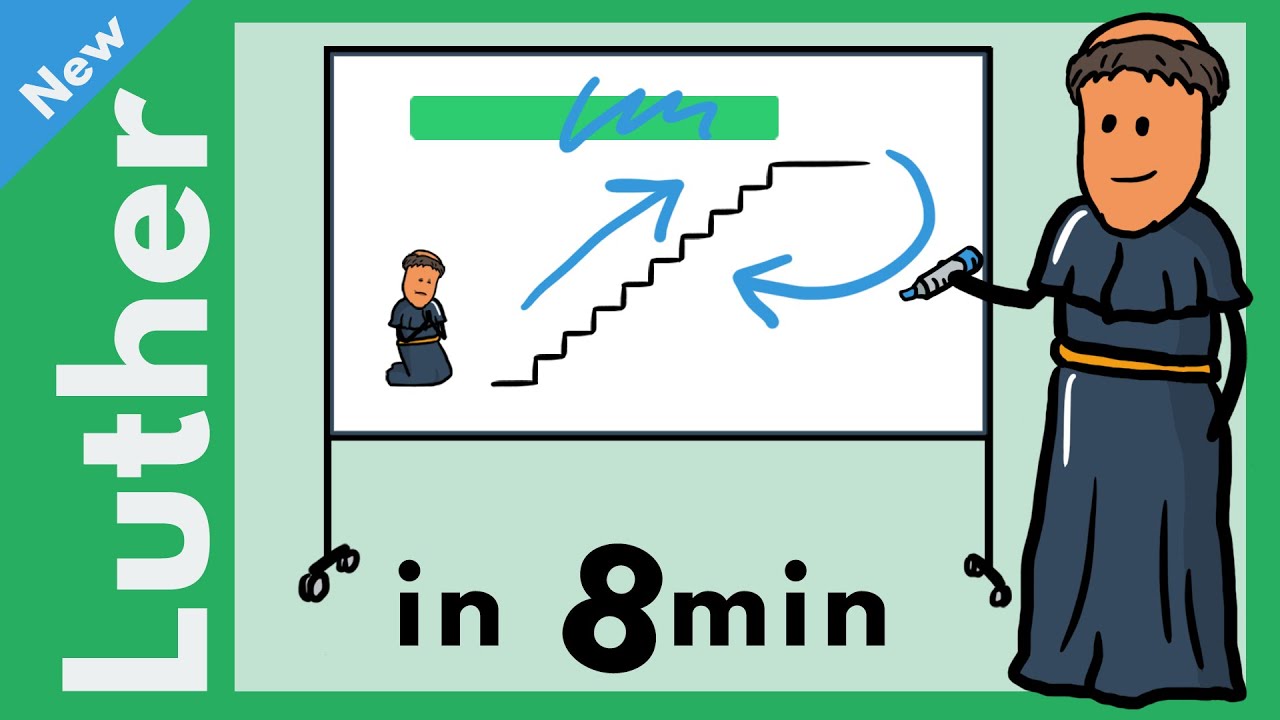
Over the past few weeks, we have been covering a topic that needed a great deal of attention. I have been making videos and teaching for a little while now, and of all the many different subjects I have covered, I think this subject has been one of the most important ones, just due to the size and scope of the influence. The Protestant Reformation is a major movement in this world that every one of us who claims Messiah but also rejects the doctrines of Rome has been influenced by as we seek to come closer to Yahweh.
I understand that it is hard to really break free from the foundational structures of religion that we have come to know because the mere scope and size of the influence can often intimidate you. You can often have feelings like there’s no way that people could be wrong for so many years in this way. But then you go back to the Scriptures and remember that it is prophesied that Satan deceives the whole world, so doctrines and understandings that a majority of the world holds up as truth are more than likely propped up by a lie.
The Protestant Reformation is a big deal because it is how we all have been influenced into the religion of Christianity. Wherever you are in this world, if you’re not a part of the Roman Catholic or Greek Orthodox Church, and you are attached to the Protestant Church, you have been influenced by this movement. And as I have been saying since the beginning of this series, for this to be such an important subject that so many of us have been influenced by, it is really something that a majority of us don’t have a strong understanding of—the events of this movement and exactly what changed, especially with the enormous amount of writings Martin Luther has done for a population that has all these Protestant churches in every city around the world.
While also being a population with a structured education system, a topic like the Protestant Reformation that changed the world should be one that is surrounded by strong understanding, but unfortunately it is not. So, as we, those who truly love Yahweh and are preparing for His kingdom to come, break off the shackles of falsehoods and come to worship Him in spirit and in truth, we find that this subject about the history of the Reformation—with Martin Luther being explained—brings much clarity and conviction as we are desiring a more truthful relationship with Yah based upon His word and less upon religious doctrines and traditions of men. We have gone through the first three parts of this history about Martin Luther and the Protestant Reformation, but in order to move on with our understanding, we must bring this topic to a close.
We need to move on to what happened after the Protestant Reformation and how we got to all these different denominations. So, in order to close this discussion, we must speak about what happened after Luther’s famous words at the Diet of Worms and understand the final story and overall influence of Martin Luther. This video will conclude this part in the series about the hijacking that occurred due to the Protestant Reformation.
Let's [Music] begin. Okay, so when we left off in part five, Martin Luther was standing before Emperor Charles I of the Holy Roman Empire. He was being questioned and asked if there was anything from his writings that he wished to retract.
From these questions, he gave his famous words, “Here I stand, I can do no other. ” But von der Ecken, the man asking the questions, told Luther that his remarks had not answered the questions sufficiently, and Luther was escorted out of the chamber. The morning after Luther had taken his historic stand, the emperor, along with the other nobles, were discussing what should be done.
The German nobles were not sure what to say just yet; they needed more time to think. But the emperor said, “I shall read to you my opinion now. ” He said a lot of words, but the conclusion was, “I declare that I now regret having played so long the proceedings against him and his false doctrines.
I am resolved that I will never again hear him talk and will act and proceed against him as against a notorious heretic. ” It seemed that Luther’s fate was sealed. The next day, despite all the nobles initially declaring themselves to be in full agreement with the emperor, only four of the electors consented to sign.
But even with just those four, the emperor still felt that he had enough support to proceed with formally declaring Luther an enemy of the Empire. So Luther was declared an enemy of the Holy Roman Empire, and he was sentenced to the fate of a heretic, which was death. Now, let me say that what happened next says to me conspiracy.
If you recall from my series about the history that should not be ignored when speaking about the Knights Templar, during this period in time after their dissolution, the Templars went dark. Though they were still in existence, they were no longer a known organization in the public eye; they went underground and became a hidden, i. e.
, secret society. It is my belief that what happens next with Luther is due to some influence of that secret society, but I cannot prove it, so I do not use it in my conclusion. I just believe that there’s a lot more to the story than what we are presented with, so I wanted to just make sure that that was stated.
Anyways, Luther was declared an enemy of the Empire as a heretic and therefore he was sentenced to death. That same night, when this was declared, some troublemakers, under the cover of darkness, posted. .
. A number of posters around VUMS featured the image of Bua, the peasant Shu, which was the symbol of the working classes and stood in contrast with the high boots worn by the nobles. The posting of these posters around VUMS was a very clear threat.
The message was: "Beware! If you convict Luther, we shall rise up. " They spoke of a force of 400 horsemen and 1,000 foot soldiers.
You see, the German people had found Luther as their champion, and they declared that they would not stand aside while some Spanish emperor and Italian papal admins came to crush one of their own. They despised the unquestioned power of the church and had seen the abuses of that power and the hypocrisy of much of the clergy. They had had enough, and so an unknown movement sprang up overnight that declared a revolution would occur if Martin Luther was killed.
In order to stop a revolt, the leaders of the Roman Church tried to get more time to persuade Luther to recant. The emperor wanted nothing to do with any of it himself, but he gave them three days to do what they could. In the end, however, nothing was settled or changed.
Luther was comparing himself to the early apostles, who were also persecuted. He asked that the archbishop simply allow him to depart VUMS gracefully so that there was no revolt. This was agreed to, and they let him leave, but the emperor wanted him back because he was taking action against him.
Essentially, they were going to let him go so that the noise would calm down, and then they would finish it all a few weeks later. The emperor granted Luther safe travel out of VUMS, and Luther was free to go, but the condition was that he must be back at Wittenberg within 21 days, and he was forbidden to preach or even to write. Luther knew that even after he left safely, he would eventually return to Wittenberg.
The emperor would issue an edict declaring Luther an outlaw, but for now, he was free. Luther departed WUMS on April 26th to go back to Wittenberg. On May 6th, Emperor Charles presented the final draft of his edict against Luther.
It was written: "WR: His teaching makes for rebellion, division, war, murder, robbery, arson, and the collapse of Christendom. We have labored with him, but he recognizes only the authority of scripture, which he interprets in his own sense. We have given him 21 days, dating from April 15th.
We have now gathered the estates. Luther is to be regarded as a convicted heretic. When the time is up, no one is to harbor him; his followers are to be condemned; his books are to be eradicated from the memory of man.
" The edict was signed May 26th. Luther was now a wanted man and an outlaw in every corner of the Holy Roman Empire. The edict warned that everyone within the empire was not to take the aforementioned Martin Luther into their houses, not to receive him at court, to give him neither food nor drink, not to hide him, nor afford him any help, support, or encouragement, either clandestinely or publicly, through words or works.
Where you can get him, seize him and overpower him. You should capture him and send him to us under tight security. When Luther was captured, he would be put to death by burning, but the only problem was that Luther was nowhere to be found.
So what happened to him? Luther left VMS on April 26th in a wagon. While on the road to Wittenberg, their wagon was stopped by a group of armed horsemen.
The men pointed their bows at the wagon, grabbed Luther, and kidnapped him. Once they got far enough, they identified themselves as friendly. They stripped him and dressed him in a knight's cloak so that anyone seeing him would have no idea he was a monk.
They took him to Wartburg, where Luther would hide in exile, escaping his death. So, as you can see, from the posters being put up threatening a revolt to the kidnapping of Luther by friendlies, there was definitely a conspiracy that kept him alive. Again, this is why I say I believe there is a lot more to the story, but we can only go off what is recorded.
Thus, I cannot speak about any of the people involved in the conspiracy to keep Luther alive. I cannot say whether any of them were tied to the Templar Knights, whose order was dissolved two centuries earlier, but I believe there is more to this than what we are told. There is a lot of history that transpired while Luther was in exile, but the details don't really provide any new revelations.
Perhaps the most important thing that we should note is that, while he was hiding at Wartburg, Luther stood up to Rome and accomplished something that symbolized his contribution to Christendom: he translated the New Testament into German, releasing it from Latin, in which it was read during that period. At that time, most ordinary citizens did not know Latin and did not have Bibles, so most people did not read the scriptures themselves. However, because of the example from Luther… Erasmus, translating the New Testament to Greek, inspired Luther, who translated the New Testament into German.
Luther wanted to clarify the theological meaning of many previously poorly translated and therefore misunderstood passages. He felt that those bad translations and ideas contributed not only to the misunderstanding of individual verses and theological ideas but also to the wider problem of general unfamiliarity with the Bible. So he translated the New Testament into German and then later moved on to translating the Old Testament as well.
Now, a quick point I need to make: this goes to my fundamental point about Luther's foundation and the foundation of those who follow and are influenced by this movement. The false foundation of this movement should easily be recognized just by the direction that he took in translating the Scriptures. He translated the New Testament first because this was his foundation.
I remember early on, this was my way as well: read the New Testament first because this is the most important thing to understand. But this is a false way of reading and understanding the Scriptures because you are leaving out the fundamental foundation of the Scriptures. There is no way to understand Yahusha in full understanding without understanding Yahweh and Israel first.
Anyways, he translated the Old Testament a while after because to him, the Old Testament was just secondary reading material; it was more about legalism. I'll show this in a second when I speak about more of his influence, but yeah, he translated the Scriptures into German. When he did this, it changed the German language.
In his biography, Hinrich Borom (I might say that wrong), he sums it up by saying it was from Luther's Bible that the German people learned to speak the language they were to have in common. You see, through Luther's translating the Bible, he had the effect of creating a new German language, which is now called High German—a unified German language being used in more places. But let's talk more about the Reformation.
Now that Luther was in exile, what he had started had now taken on a life of its own. People were motivated by his ideas, yes, but they advocated for those ideas in ways that Luther was against, which in his mind brought shame to the sacred cause of the Gospel. But there was no going back.
Many were reading his works and spreading his ideas just as he hoped. His followers were increasing in numbers every day, so that even people far from Germany were forced to take sides in this new open war of ideas. This was the real Protestant movement.
After he spoke against the authority of Rome, his words took on a life of their own, and he was not in a leadership position to guide them. His ideas got even as far as London, where there was a public burning of his books. Henry VII had already taken a stand against Luther early on by writing an attack on his "Babylonian Captivity" writing.
I refer in part to five. Other people began to have their own ideas as well, and they became a lot of different challenges to Luther's ideas and his doctrines. It's important to highlight this because this is how the formation of new denominations started.
It's also important that you understand some of the influences that come from Martin Luther. We will start with the biggest debate: the debate about communion. This was a huge divide, and it still is a problem today.
As the Protestant movement grew and Luther's influence grew, his teachings were being spread. One particular doctrine that he brought correction on was about communion. The overall issue of the debate was: when Messiah said, "This is my body, and this is my blood," what exactly did he mean?
This whole controversy, which later on actually comes with bloodshed because of this argument, was all about what the meaning of the word "is" is. You see, the Catholic Church had always thought that the priest was able, via his singular spiritual authority, to transform the bread and wine into Christ's body and his blood literally. This meant that when the priest prayed over the elements during the Mass, they somehow became the actual body and blood of Jesus.
This doctrine is known as transubstantiation. Luther disagreed with this doctrine, holding that the plain meaning of Scripture must be grasped—no more, no less. Jesus said that the bread was his body and the wine was his blood.
So Luther said that when a Christian, in faith, says these words: "This is my body, and this is my blood," the body and blood of Christ are present because he has spoken these words of Jesus in faith. Luther called this doctrine "real presence. " Jesus was genuinely in the elements; this is what that doctrine states.
But others in the Reformation disagreed. This was one of the first major ways that other denominations began to form. The most major one at this time was Huldrych Zwingli of Switzerland, who said that the word "is" actually meant "signifies.
" Basically, "This is my body, and this is my blood" signifies that it is not actually the literal body or blood. They felt that the wine and bread taken in communion are only spiritual or symbolic of Jesus' blood and flesh. This was the challenge, and from this, there was a major rift.
The debate was over whether, when Jesus said, "This is my body," he actually meant that the bread actually was his body or that the word "bread" merely signified his body. They were debating whether Jesus' use of the word "is" was literal or merely metaphorical, and this debate still lives on to this day. This sect that started from Zwingli was later called Calvinism, and this debate between Lutherans and Calvinists still takes place today.
This date, the followers of these denominations carry on the spirit of the men who started their doctrine. If you ever bring this up with either of these two, it will take you places you do not want or need to go. Both of them are arguing philosophy and miss the most important point, which is to do this in remembrance of Yahusha.
Because they are caught up in debates of philosophy, they are distracted from the truth of the Scriptures, and they literally take up one side or the other to prove doctrinal points that Luther and Zwingli both argued. These denominations carry on the spirit of their founders, while keeping the followers lost from the most important points. The foundation that the founders started from was flawed, and being that they were following these men, their foundation is off.
So, people go to school and they get these theology degrees, arguing these points while never understanding that what they are fighting for is mistaken because they came into the faith from a false foundation. If we were to follow what the Scripture says, then we would know that these things they are debating about are distractions. Beware lest anyone cheat you through philosophy and empty deceit, according to the tradition of men, according to the basic principles of the world, and not according to Messiah (Colossians 2:8).
Let's be clear: those of you who still want to ignore what I'm saying here because you are so caught up in this debate need to know that you're distracted. The most important thing for you to do is to actually do it and remember the sacrifice of our Messiah. All these other points of debate are Gentiles arguing about things they will never understand because they never actually knew our Father.
I can go on and on about this, and I may revisit it later, but from this debate is where we see Calvinism formed, which is another denomination that sprang up because of the Reformation. Okay, so let's get back to Luther. One thing that is not well known by the majority is the influence we get from Luther.
He also introduced congregational singing in these modern churches. He knew that the best way to spread his beliefs about Scripture into the minds of every man, woman, and child was to put good doctrine into musical forms. To him, it would be wonderful if all his doctrine was reinforced by congregational hymns that were sung.
There had been no new hymns for many centuries in the Roman Catholic Church, so Luther created some. In creating the worship services for the new Reformation Church, he sought to bring every kind of good music into God's service and to bring the priesthood of all believers into God's choir in church. So, the hymn book started with him.
During the Reformation, through Luther's hymns, people began proclaiming the word of God musically. Through his reform on public worship of God, Luther provided congregations with a framework through which to incorporate congregational song in the public worship service. Luther addressed a lack of musical skill among churches by strongly insisting that pastors and school teachers be trained musicians.
He believed that musical competency would translate into effective musical training for school children, who would become well-versed in Scripture through consistently performing hymns and Latin chants. Growing musical ability in many churches increased the use of hymns in services, and a growing number of comprehensive hymn collections published specifically for congregational use extended the reach of Lutheran theology and increased the acceptance of hymn singing. Now, Calvinism took things a step further, turning the Psalms into hymns, but I think the strategy of Luther is what needs to be noted here.
He believed in teaching doctrine through music and hymns, and he was one of the first to restart this, with others following. Another interesting point to note is the direct influence that Martin Luther had with the conspiracy that plagues us today. Always remember that the Protestant movement was happening during the Renaissance period.
During this time, Renaissance painters were painting churches all over Europe with humanist drawings of biblical characters. I have made a video covering this topic in depth. Please note and understand that all these teachings, if watched in order, will expand on earlier topics for more understanding and comprehension.
But okay, let's deal with Luther and images. What is not really well known is that the problem with the images and man making God in their image was supported by Protestants like Luther. Luther, although he was against the authority of the Roman Catholic Church, as I have repeatedly said, had a foundation that stemmed from Rome, and because he did not recognize the false foundation that Rome provided, he pushed a movement that took this false foundation even further.
Luther's doctrines upheld the drawing of images. As the Renaissance painters were creating these images, there were reformers who followed Luther's Reformation movement, but they broke from him in unity in other areas. Like I showed with union and Calvinism, in regards to images, there was one man who definitely differed and opposed Luther: his name was Andreas Karlstadt.
He was another church reformer, but he came into conflict with Luther and switched his allegiance from the Lutheran camp. He took issue with doctrines of Luther on the subjects of images, infant baptism, and communion. When Luther was challenged by him, Luther moved from a mere position of having mixed feelings on images to stating that churches should, in fact, display them.
He critiqued men like Karlstadt as tending towards legalism, which Luther himself saw as directly opposed to the message of grace in the Bible. He linked legalism with the law of the Old Testament and therefore with the Pharisees and the Jews. Essentially, he felt that because the Pharisees were.
. . False, and they persecuted Jesus.
We must stay away from the law of the Old Testament altogether; that was the basis of his regards to the Torah. He was vehemently against any prohibition of images; he wanted them to be made. In 1524, Luther responded to Carl's writings.
He published the first part of what would be a two-part opinion piece about Carlstadt and all others who differed with him on images, infant baptism, and communion. It was titled "Against the Heavenly Prophets in the Matter of Images and Sacraments. " In this writing, he cited what he saw as legalism—Old Testament legalism.
He believed it was an overzealous anti-popery that had run so far away from Rome that it had stupidly circled the globe to end up back at Rome without ever knowing it. Luther saw the take about being against images as the opposite of the freedom promised in the gospel. He looked at these reformers as running so far from Rome that they missed the gospel.
But if you read his writings and his pride, he never actually realized that it was him who did not run far enough away from Rome. And so let me be clear: just because I may agree with certain positions that other reformers took against Luther, I am not for any of these movements or groups. They all start from a false foundation and are arguing points while never dealing with the heart of the matter of what Yah desires for us and the covenant He has actually made.
They all follow replacement theology and falsely believe that they have replaced Israel. The one last influence I will mention in regard to Luther is his influence on the canon of Scripture. So many people love speaking against the Apocrypha, but they don't recognize that they are just influenced by Luther.
The canon of the Bible accepted by the Catholics contains 46 books in the Old Testament and 27 books in the New Testament. The canon accepted by Protestants usually contains seven fewer books, following the lead of Martin Luther. The following are the books rejected by Luther: Tobit, Baruch, Judith, Wisdom, Ecclesiastes, and First and Second Maccabees.
Luther rejected these books; his basis of reasoning was, what authority from God would Jews have in the Christian era to determine which books of the Old Testament were or were not divinely inspired? So let's be clear, the term "apocryphal" had been used since the fifth century, but it was in Luther's Bible of 1534 that the Apocrypha was first published as a separate intertestamental section. He did not exclude the Apocrypha, but he simply placed them between the Old Testament and the New Testament, terming these as Apocrypha.
In the Lutheran tradition, the Apocrypha are non-canonical but worthy of reverence. He considered them not to be equal to the Holy Scriptures but useful and good to read. Later on, this influence was followed even more as we get to King James.
This man, Martin Luther, is the one who has determined how most of you accept the Apocrypha—a Gentile man with a false foundation that comes from Rome has determined these books are not equal to Scripture. To also add to this, Luther's problem with the Bible wasn't only limited to the Old Testament. His attitude toward certain New Testament books is also shocking.
He almost threw out the Epistle of James, which he called an "Epistle of straw," with no character of the gospel in it. This is because he was lawless. He also dishonored Jude, Hebrews, and Revelation, declaring that they were not on the same footing as the rest of the books of the Bible.
His feeling was, where does the Bible teach that? Luther placed all four of these books in an appendix to his German translation of the Bible. This is the man who holds major influence over Christianity without us even knowing it.
Personally, I refuse to be influenced by him and his movement; I think this is important to understand when we consider this Protestant movement and Martin Luther. Let's finish up with him and the history. The reason he was able to have all these doctrinal challenges and debates was that he eventually left from exile and was able to return home to Wittenberg.
After he returned home, he married a former nun who turned Protestant, and then they had children, because the Reformation had spread, and other beliefs began to spring up. Emperor Charles held an imperial diet in the city of Augsburg on April 8th in the year 1530. He allowed all the other Protestants, who were technically outlaws, to attend.
Martin Luther was not allowed to actually attend, though, so he came as close as he could but was not in actual attendance. His followers were still there, so his influence was still felt. With the emperor in attendance, this diet might serve as something like a church council, where ecclesiastical matters and doctrinal differences were debated and resolved.
This was something the pope at the time, Pope Clement, deeply resented. The very idea of an emperor meddling in such matters was, to him, a very clear case of imperial state overreach in the affairs of the church. But the lines between what constituted church and state were very fuzzy at that time.
At the diet, the Lutherans presented a statement of faith, listing items they were unwavering on and that differed from the Roman Church's teachings. This included the marriage of the clergy, rejection of the idea of the mass as a sacrifice, the Lord's Supper in both kinds, bread and wine to everyone, and the end of monastic communities. It's known as the Augsburg Confession, also known as the Augustana.
It is the primary confession of faith of the Lutheran Church and one of the most important documents. Of the Protestant Reformation, this is a list of the 28 confessions of the faith. So I can make a point, let's talk about the topic of the last days.
Let's go to Article 17, "Of Christ's Return to Judgment. " Lutherans believe that Christ will return to raise the dead and judge the world. The godly will be given everlasting joy, and the ungodly will be tormented without end.
The article rejects notions of a millennial kingdom before the resurrection of the dead. If you read through this, nothing about this faith even mentions Israel; nothing about Israel and Judah being joined back to one another. It's all about going to heaven or hell, and this is what the Protestant Church was built from.
This is the foundation that expanded from the Augsburg Confession, which became the primary confessional document for the Lutheran movement. They formed a military alliance of Lutheran princes within the Holy Roman Empire known as the Schmalcaldian League. They formed this league with the intention that it would replace the Holy Roman Empire as their focus of political allegiance; this would be their new government.
The league admitted anyone who subscribed to the Augsburg Confession and became a Lutheran. They essentially formed a military alliance to fight against the Holy Roman Empire. Eventually, they fought a war known as the Smalcaldic War, but they did not win.
Emperor Charles seemed to have won the battle against the Protestants. Protestant Germany no longer existed on the maps, and so the emperor thought he had beaten the Protestant movement. But by this time, Luther's ideas had spread too wide and sunk too deep into the lives of too many people.
The Reformation was not defeated because the ideas of Luther were still very much alive and spread across Europe. In fact, many of the princes and key reformers who were a part of the Schmalcaldian League, such as Martin Bucer, among others, who was exiled to England after the loss of the Schmalcaldic War, directly influenced the English Reformation. It is from this history that the Christian faith in America and in Africa was spread through the empire; England gets its start.
We will get to it, God willing. Okay, so though the emperor won the battle against the Protestants, he lost a war. There was resistance and then more resistance until, in the year 1555, the emperor was forced to accept the Protestant territories.
He signed the Peace of Augsburg treaty, also called the Augsburg Settlement, formally granting status to the Protestant territories. From this point on, Europe would never be a united Catholic territory again. It officially ended the religious struggle between the Protestants and the Roman Catholics and made the legal division of Christianity permanent within the Holy Roman Empire.
It allowed rulers to choose either Lutheranism or Roman Catholicism as the official confession of their state. Calvinism was not allowed until the Peace of Westphalia treaty in 1648 was signed. Charles I abdicated his throne a year later, and this is how the Protestants became accepted in Europe, away from the Roman Catholic Church.
And that's the story of the history of the Protestant movement. To summarize Martin Luther and his effect, let's say this: the Roman Catholic Church before Luther had nearly infinite power and authority, and then after Luther, that all changed. Luther opened the door to many direct challenges to the Roman Church.
How it might be framed in the mainstream is that he opened the door to a second church that would be called the Lutheran Church; but what he really did was open the door to an infinite number of churches. When you look at the movement in a way that takes power away from Rome, it can be viewed positively. However, when you actually understand what came about from this movement, it looks a lot different.
You see, once the pope and the Church's authority were openly challenged, lies and confusion were now able to be given a free hearing along with the truth. There was no more truth, just a lot of opinions that brought forth many different doctrines and spurred many new what we now call denominations. Once Luther's influence took hold, there was nothing stopping any fool or perhaps any person with ulterior motives against Yahweh from establishing their own interpretation of things and creating their own religion, deceiving millions and leading them all to hell.
As we go through history, you'll see that in the centuries that follow Martin Luther, this is precisely what happens. What in fact happened was that through the Protestant movement, though it's labeled as simply protesting against the Church, it's more about protesting against truth. If you had a rational argument, you could pose it, and this could now be considered truth.
It spurred the beginning of a revolution that Freemasonry would take the reins of a couple centuries later. Once Luther sided with the view of the Bible that was different from Rome, our modern idea of freedom was born. All of the major changes in history that influenced our modern world followed after this movement and were inspired or influenced by it.
First, there were a bunch of new churches that were started. The Reformation spread beyond Germany to England and many other countries in Europe. England is the most important one because this is what influences and controls us in America, as I have repeatedly stated.
But after the growth of the new churches, this idea of freedom grew into something else. It turned into a new way of seeing things. To understand it, look at what happened shortly after: in 1644, amid the English Civil War, John Milton published "Areopagitica," a landmark defense of freedom of speech and expression, inspired by the struggles of the Protestant movement and inspired by Luther in 1689.
England decided that it would tolerate religions other than the established Church of England. In the first 10 years of the 17th century, men and women we call Pilgrims were being persecuted by King James, and they fled to Holland and then crossed the Atlantic to Massachusetts, all in the pursuit of carrying out their religious beliefs. In the beginning of the 18th century, the secret society of Freemasonry came out into public view in England.
This was all inspired by the protest Martin Luther started against Rome. During the Great Awakening of the 18th century, George Whitefield preached the Christian Gospel up and down the 13 colonies so often that by the time of his death in 1770, not less than 80% of all Americans had heard him preach in person at least once. He preached a Christianity that underscored Lutheran ideas of being more devoted to God than to any church or government.
So it followed that those who did violence to the teachings of Jesus must be disobeyed, and this played a huge role in emboldening the American colonists to move toward self-government. When England forced its hand, as Rome had forced Luther's, they revolted against their mother country just as Luther had rebelled against his mother church. Luther's rebellion was the basis for change.
We live in this world through the new nation of America, which was born in 1776, enshrined in the idea of religious liberty and its laws, such that every citizen must be free to follow his own conscience and his own religion. All of this is said to be influenced by the legacy of Luther and the Protestant Reformation. You have to see the bigger picture: it wasn't just about protesting against Rome, but it was protesting for what they wanted.
When you also add the influence from the mental and social shifts that happened during the Renaissance, that also took hold during the Reformation—like humanism—we can see that the protest was about freedom; it wasn't about Yahweh. Later on, from Luther's legacy, others would then take steps further, and through Freemasonry, these ideas really took on a life of their own. If you research, they credit Luther's protest and his ideas as the beginning ideas that spurred the new nation of America.
Don't ever forget that this American Revolution was fought by Freemasons from Masonic principles. What I'm trying to explain is that the Protestant movement was less about putting the Most High first, but more about putting the thoughts and minds of the people first. It began a mental idea that transformed the world.
It was the spark of an idea that you can protest against the powers and authorities of this world, and eventually, through this protest, we all will make this world a better place—a Christian world. This is the Protestant Reformation. You have now been given a four-part history lesson that has provided you with an in-depth history of how the Protestant Christian world was started.
However, we do have a long way to go in the history. The summary of this, and what I need you to understand, is that most of the Christian church today has received their doctrines of Christianity from the foundation that Roman Catholicism laid. Rome was the beginning, and men like Luther took this false foundation and created more doctrines that have led the Christian world into division.
This division probably will not be brought into unity until the satanic agenda arrives, as men like Albert Pike have said they have a plan for. He said those disillusioned with Christianity will be lost, and they will be guided into their false utopia. It's all because the foundation of our faith was off, and our true biblical faith was hijacked.
Instead of breaking away, people used their indoctrinated lessons from their church to validate their actions. The point I am making to you is that if you are trying to get closer to the Messiah and be ready for Him, you must identify the falsehoods and deceptions. Romans chapter 16:17-18 urges us to note those who cause divisions and offenses contrary to the doctrine which you learned, and to avoid them.
For those who are such do not serve our Lord Yahusha the Messiah, but their own belly, and by smooth words and flattering speech deceive the hearts of the simple. It's time that you recognize where your doctrines come from and why you do certain things. Let's be clear: for the most part, online interpretations of scriptures are not justifications for full doctrine.
The Hebrews had a culture and a way, and it was taught about many times in the scriptures. Yes, Yahusha brought clarity and explained many other things and showed us that it was all about what was in our heart, but He did not change the way of the Hebrews; the hijackers did. This is why the Christian faith does not resemble the faith of the Hebrews at all.
This is why the Christian faith does not observe most of the commands in the Old Testament. If you are a self-declared Christian, you have been directed by a foundation of the universal church, and you do not have to share all their doctrines and beliefs in order to be steered away from Yahweh. The universal church hijacked the authority and made themselves the holders of Yah's covenant, and they conquered the world through this false authority.
It's time to identify doctrines that have been taught by our enemy, remove them, and live a life of faith more intertwined with the scriptures and less intertwined with the traditions of men. As you can clearly see now, the influence of the Protestant Reformation is massive, but because many of us are not Lutherans, this information probably does not hit close enough to home yet. That's why we have.
. . More to speak on right now; you are just being educated on the falsehoods, so that as we continue to break bondage and layers, these things can start becoming much more clear.
What I ask is, while Yahweh provides this clarity and directs me as to where this information leads next, please take time daily to read the scriptures for yourself and align yourself with Yahweh. Drp all the false ideals and the traditions of men. I pray that you heed this advice and let Yahweh set you free.
Be blessed. Hallelujah, praise Yah! Okay, thanks again for watching.
If this has blessed you, please do not forget to like it and share this video with others. If you have not done so already, please do not forget to subscribe to this channel. Y'all willing, I upload every Friday.
Also, please do not forget to follow this ministry on Facebook and Instagram, as well as on my website, truthunedited. com. As always, I'd like to thank all of you who support this ministry.
Thank you; your contributions truly bless this ministry, and I'm thankful and humbled by your support. Thank you for being a blessing and letting Yah lead your heart. Be blessed.
Okay, thanks again, everyone, for watching. I love you all.