I am at guillermi underscore liberge and my expectation for this episode is to hack my way to the lowest turn of the decade ah here he is at ahoba standard Liberty and my expectation for this episode is to prove to everybody with chant that's contract the advisor or agents is the best option to your content here is at John Victor I'm a expectation For today's episode is to learn how to spend the max amount of money possible to grow profitability out Sean Ellis uh on Twitter but uh yeah my my expectation for this episode is
to really explore How uh uh yeah an agency can actually engage with a company on a on a deeper level to drive real value in in growing sustainably customers that that will help the business be much more valuable In the long run [Music] [Applause] is with us in English like switch the language and start it hot so a little hard not not hot as hot as possible start to um welcome to the high Hunters podcast the biggest the best podcast about growth in Brazil very exciting to be on thank you it's a top podcast and
I want to ask uh the first question here is since you wrote growth hacking in 2017 yeah yeah uh would you rewrite something well I don't know that I would necessarily change the book but what I can tell you is that a lot of people who read the book come up to me and say this book has been so frustrating for me and so what they say is that they they try to do the things in the book and their organization says no and and so they have to fight the battle and so if there
was anything I was going to add to The book I would probably give more Direction on how how do you get the rest of the company to actually support you in the efforts to do growth hacking and uh so yeah I mean so that's kind of the test and learn you put something out there and then you you get a lot of people saying why it was frustrating and uh and then gives me gives me something else to help them with so this is absolutely a problem in our projects as well yeah Or uh directions
to able to give people about how to get support from a whole company to implement a growth mentality yeah so so what I learned is if you if you try to convince the the team to to do one experiment at a time each time you have an idea for an experiment you say let's run this experiment it's a lot of energy you have to sell that experiment it's frustrating so before doing that what I recommend is to to take like one Day away from the day-to-day execution in the business and and essentially have like an
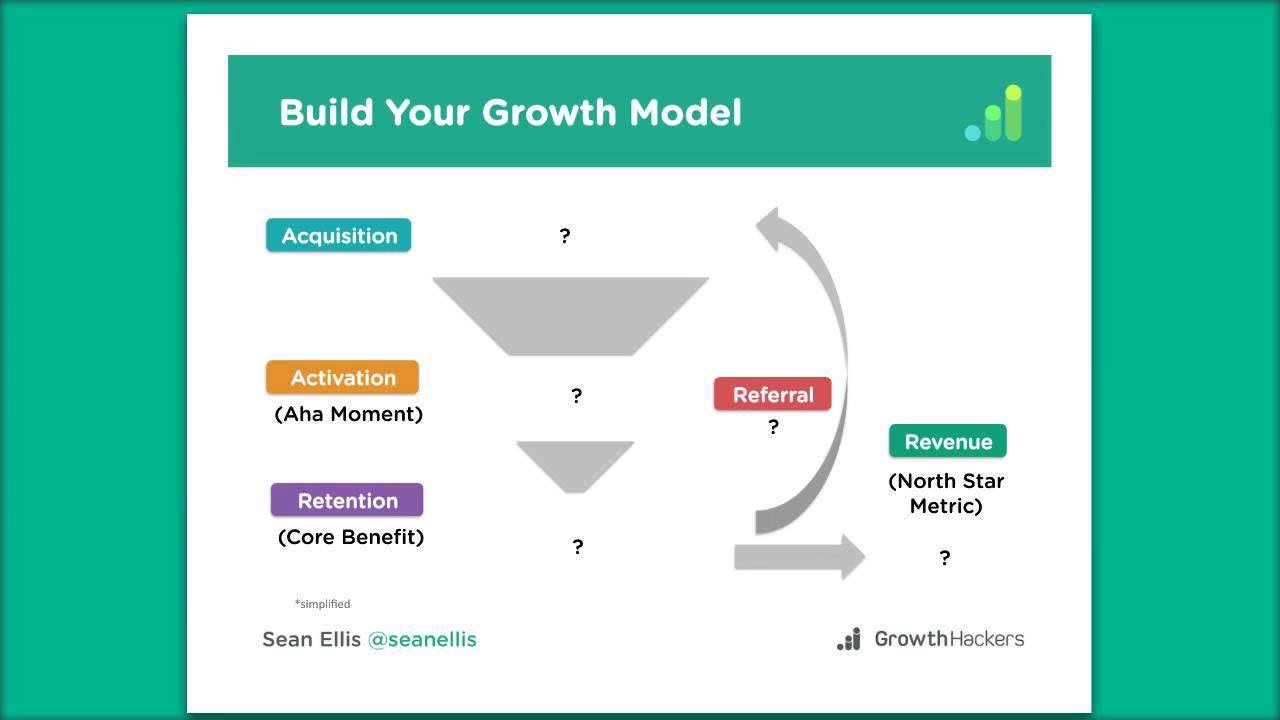
off-site meeting or a workshop but essentially get everyone to step back and say how can we be a lot better as a company and really go through the the whole process of uh essentially starting with why do customers need us in the first place kind of what's the mission of the business and then if you can find one metric that you're all trying to move Together we call that a North star metric now you at least have something so it's not marketing is trying to get leads and and product is trying to get people to
use longer but you have one metric that that everybody can share in and then and then they still have their individual metrics this is how I contribute to that metric so once you have that and then once you start to say this is the machine that moves that metric and and together design that Machine so it's not just the marketing or the growth people saying this is the machine but but saying let's let's work together to say how does the machine work today then you have everyone on the same page around this is the number
we need to move for Success this is what the machine looks like and then is it perfect is any of it perfect usually the answer is no and then then you can introduce the testing process for driving improvement on the machine and Now now people are are kind of looking at the business in the same way they understand the importance of testing and and I find that in one day if I do that up front or or teams do that without me that then they can much more effectively execute a growth hacking process so yes
you can have a lot of people in the company read the book that can help but it's it's really better to to to step back and and just rethink collectively how are we going to grow this business In a new and better way and I think if you take that time then then it's much less frustrating uh I I would like to say that's um I I guess a lot of owners of the business that listen us here uh they are not the the growth hacker in the process so someone they trust to to give
this opportunity to implement growth hacking there and what are you say now is perfect but I guess they have some problems to to have a budget to test and if you fail you lose this money The the owners would like to have it absolutely searches that this is will get right and don't don't have some confidence with the lose money this is part of the game if you are scientist you have to lose some money how you can how the guys will convince the company to have this part of the budget and how I and
our owner will know that the guys is just learning this is good but when the this is not right and he'll lose my money I have to shut down this operation You know yeah so so I think the the key there is if you excuse me if you have people who uh test just a little bit it's it's much better than you know if you look the problem with most marketing teams today is that that if they don't have good tracking in and they're not testing and trying things maybe they're they're losing a lot of
money and opportunity and so you need to to test small if it works you then put The big dollars there so so usually anything that you lose from testing if you do it in the right way isn't really an important amount of money for the business it's just a small amount of money I believe there's some threshold like one percent ten percent five percent of your total budget you should be okay with testing like uh just treat you guys at some costs like a five percent of your marketing budget is for testing and it's okay
if you lose that There's a number yeah I actually prefer 20 of the marketplace to be for testing but but to keep in mind that even if it loses money you don't lose 20 of your marketing budget you maybe you invest you know a hundred dollars and you get back ninety dollars and so it's not it's not something you want to invest in long term but you actually only lost ten dollars it's not like you're Investing For and give it you gotta zero back like maybe you got a negative Roi but it's Not and you
don't get it on the whole thing if you are smart about testing you're gonna get some of it's gonna be positive and some of it's going to be negative and then when you find the positives then then the goal is how do I spend as much money on the positives as I can and and the other thing with growth is it's not always about spending money that's that's one way to grow but you know sometimes figuring out programs to get existing customers to bring in New customers or even like search engine optimization so that you
set your pages up in the right way and and the search engines find you uh you know automatically that's they want to find the right content that people are looking for So Paid is just part of the mix but I think for were paid to have 20 percent every month that's testing that's how that's how you end up figuring out how can you how can you actually spend a lot more money with a Very fast payback on investment so that's the other piece that I think a lot of people get wrong is that it's not
just did I get the money back or not was it a positive Roi so Roi is a good thing but it's how fast did I get that money back and so I when I'm investing I'm trying to think about what is my payback window and if if I'm saying I'm gonna spend as much money as I can with a three month payback window that's going to constrain where you can spend money Effectively compared to if you say with a one year payback window and and it really depends on the business like if they have a
lot of cash on hand you can have a longer payback window but if you're if you're really tight on on money and it's uncertain Financial Times maybe you want to have a a faster pay back window and so when I was at LogMeIn we our payback window was about three months so every month we spent one million dollars three months later we Had one million dollars back by the fourth month it was profit profit profit everything afterwards so yeah what do you saying now about this payback window is perfect it's so much important but sometimes
I saw that when the guy started the process of growth in your company they saw to the three months about paper payback window this is the goal of the most part of the business that come to us here After that you you learn something but don't get the payback in the guy give up about growth overall you know and don't do more or nothing what do you say for these guys uh first of all for the people that are in the beginning of the process they don't have nothing you know we're starting they I have
to test this growth overall and have to pay back in three months if they don't come I will give up and yeah when every dollar matters yeah so so I think just yeah if You can just uh stay a little closer to them it's loud in here yeah yeah so the yeah I think the the challenge is that especially in the beginning it might be that you uh you actually don't have a viable business and that's that's what happens in the beginning so even before you worry about the channels like can I get a positive
return on investment do people even care about the product I've created and and so we call that product Market fit and so if you can't Get people to use the product and continue to use the product it's going to be very hard to spend effectively but just because you can get them to use the product and continue to use the product you still don't have a real business until you have a way to grow that business and so it it's a it's really hard in the beginning to find that first channel that second Channel and
and yeah it might be frustrating but if they decide We're not going to do growth then they're really deciding we're not going to do the business and so that's you know and not everyone that I think that's what differentiates like a good entrepreneur versus versus one that maybe should be in a safer job which is um it's risky and and it's hard work and and you have to decide how long am I going to work at it before I give up yeah but um but because situation here like a lot Of customers are like accountants
allowers people whose PHP services that they pretty much good at business like five seven years ago grow out this time just by referrals and now they think hey let's test out some paid marketing social media and those things are really different from what they are used to do sure and they have a viable business model but they just don't have the confidence that or the knowledge that takes time to develop new channels so How to convince them or I don't know teach them that okay you have to try and you take some time for those
new channels to work it's not because it didn't have a good payback in one or three months that doesn't work for you yeah in this type of business they have for example inside sales have to build before the internet come clients to them yeah so sometimes they invest money in Facebook ads and don't have sales team and doesn't work and he think that is The problem of his Instagram not the sales team have to build right both things together it's like they have a business and a Bricker mortar word but they don't have a digital
uh arm of the business building so how to do that so I'll look at it from a couple of directions one it's actually it is really hard if you think about okay I'm going to be the accountant that's going to spend money to acquire customers keep those Customers do all of that profitably um there's a lot of other accountants out there competing for that same attention and and it might not work very well for you but what I can tell you that it's even in a tech company the a lot of times if I just
go out and start testing channels and try to make that work I'll fail and uh I'm and then I have to Ask myself is it because because I don't earn enough money from my product so sometimes maybe I need to change my business model is it because no one likes the product or is it because it's really hard to start using my product for the first time and and so in in tech for example I told you that would log me in we spent a million dollars we have that paid back in three months but
when we started I could only spend ten thousand dollars with a one Year payback and it was really hard to spend any more than that and we had raised 10 million dollars from Venture capitalists so 10 000 was not enough speed of spending to to get happiness from our investors and so what I then looked at was for all the people who sign up how many of them actually use the product and get value so so log me Ins at that time was a remote control software you put on your computer and then you can
control It from any other computer and what I found was that 95 of the people signing up never used the software not even one time and so of course it's going to be hard to build an effective way to get more and more people if if they don't use it they're definitely not going to pay for it and so we had a free version and a paid version so for us what we had to do then was really figure out how do we make it really really easy to set up and use that first time
and uh it meant Taking the entire product team and the marketing team to work together to try a lot of experiments to make it easier to get started with the product and we were able to move from five percent of the people using it to 50 percent so 10 times as many so for every dollar we're spending now we have 10 times as many people using it that's when we got to as soon as we did that now I went back and tried the same marketing things and I could actually spend a million Dollars per
month so it would be like uh different channels will bring different types of people and those different type of people you have different levels of easy to use your products and maybe if you want to try this new channel you have to change your product to be easier to be used for this new kind of people that the new channel is bringing exactly so even if we go with the financial accountant example that You know just just getting them interested is is part of it but getting them to actually share the financial data with you
that's scary I don't know you so what does it take for them to be comfortable to share that do they do they need to talk to one of your other customers do they just need to see a written endorsement from one of your other customers that they need do they need some other things that say okay now I Trust this person and so it's not spending the challenge is not just spend did I get the money back but spend and now how do I now how do I get them to actually buy and and that's
where a lot of the experimentation that actually makes it easier to spend the money profitably and most people skip that and I think that's that's what makes it hard to spend every time and I think that um maybe when we try to translate uh all these things that we are talking about To a loan Tech business um I think that the insights that I take here is like maybe you need to get start small testing this new for example Instagram or Facebook or anything like that start small with a low budget and at the same
time try to gather a lot of data and data in this case to a non-tech business will be like a research questions questioning your clients exactly leads try to speak with them uh to understand if the solution makes Sense for them and how and where will you get more customers I I think that's a way to translate you have to research fashion research to get information in in I guess the problem is the guy puts a lot of money and have to get the payback this is the problem yeah it's better you put a little
bit but continue investing and understand this r d phase a research moment to get information and after that keep pushing yeah yeah until to get the Information now I know that you should have just they should invest the maximum amount that they are willing to lose yeah right like that I mean even if you just take an analogy like a baby does not go and run a marathon a baby it's exciting when they take their first step and then they take their first five steps and and so you as much as you want to go
to the end and say I want to spend a million dollars profitably it's you have to learn how to spend a hundred Dollars profitably yeah if you want to be able to spend a million profitably and at the same time I really think that uh I will throw this at the table and we can discuss but uh I really think that the name like growth hacking uh and growth hacker is is a way or people understand that like it's going to be a hack for my business so I'm going to implement this hack and going
to like make a lot of sales and if you both see before because our business uh the the Maybe this is Logan before companies like our business is to sell yours is to help them sell more yeah yeah uh and they really think that we have like a formula you know like like something that I'm going to just put there and it's going to make it happen right and it's not like that never like that but I really think that the name helps people understand it like it's a hacker it's something that you're going just
to click and it's interesting like hacking Hacking has a lot of definitions to it yeah and so you know some of them are like the the magic trick hacking and I think that's what you're talking about there yeah to me hacking is also about like creative testing and trying and I'm gonna I'm gonna hack together something that will work and and so you know there you talk about life hacking and so when I came up with the term growth hacking I was looking more like that even even Facebook Facebook's on one Hacker Way That's the
that's the name of the street that Facebook is located on and so hacking has this sort of creative engineering approach but it's not it's not like want you just figure it out and magically everything happens it's about it's it's being creative and testing and and I'm going to to solve the these complicated puzzles and that and that's really what we're doing here and and so I think most people when they can't spend the dollars they think the problem Is I'm not putting them in the right place but the problem is usually somewhere along the way
that you know if if it turns out that the people that you're getting and maybe maybe you come up with a creative idea that I'm going to you know coming back to like the accountant example I'm going to publish tax rates in every state municipality and and so Google's gonna find that and then people are going to come in and they're going to see that and then I can Cross promote my my tax services to them and then but that that just because you have that information doesn't mean that they're not happy with the tax
services they have right now and so then you then you have to start to segment who is not happy with it and so you have to think how do I get them from this state of mind to you know a research about how how to get the most value from your tax accountant and as they take that next step maybe you find That like they you you uncover who's not happy and who is happy and then you then you can start to offer your solution as a better alternative and so it's really it's thinking through
every step of the journey from the customer perspective to First identify which customer really needs us and then secondly figure out how do I get that customer to recognize they need us and and to get value from us in a way that they say wow this is amazing before they give up and say uh I I guess I'm happy with what I have and so so all of that is is very different than just can I creatively spend a dollar in Facebook you know there's there's a there's a lot that you have to get right
to be able to do that perfect I really think that in Brazil we have to maybe translate growth hacking a little better I don't know that's what I'm hoping that my book did to some degree yeah unfortunately I've not been able to read The translation myself so maybe they left that part you need to translate the Portuguese version to English again just to check I just keep going back and forth until it's completely wrong nice so just to maybe keep going here sure uh and start to entering um the part where we are going to
start to talk about strategies so for example uh one of one of the questions that we wrote here was like more to the other side of the hack you know not the the Iteration or the correct side of the hacking but something like what can I do what can people do people that are already have a business that they are testing things testing channels what can they do to sell more like in the in this quarter yeah you know is there anything uh something like the most common low hanging fruits yeah something that they are
probably messing up and of course that's like every business is different so it becomes very hard so so I think That really the question you're asking is how do I get that creative big idea that that for my unique situation is going to help me grow really fast and that I think is two things one unfortunately you do have to go through the iteration process okay you need a lot of bad ideas to figure out the one good idea but the shortcut there to find the good idea faster is spending more time with your customers
the more time You talk with your customers the more time you survey your customers the deeper you understand them the more likely you're going to come up with with actually that magic bullet that says this is this is how we're going to grow this business so when I was with Dropbox for example I very quickly learned that the users on Dropbox absolutely love Dropbox and they tell their friends about it all the time and so the big idea that really helped to grow Dropbox Faster was let's give them an incentive to bring in other people
and let's make that incentive free space on Dropbox and so you know I think it's starting with that realization that people already talk a lot about Dropbox they have a lot of ways to share and let's let's let's figure out a way to to amplify that and so when we when we introduced an incentive we saw a very fast significant uh acceleration and growth and so so I again I don't think but I can tell you With Dropbox I ran a survey to Dropbox users for my first 30 days there it was not the same
users each day but I ran a different survey every single day to users so what I learned today gave me five more questions I ran another survey to a different thousand users and then the next day I ran another survey to the next house so it's having that intense curiosity to truly understand how they interact with the product what they need How they what they do out in the outside world that makes them need the product and when you do that that's when you get the the big ideas that that quickly accelerate survey with declines
should be a routine not some specific thing yeah and but what's interesting is I didn't always think that way so what I used to I used to think I even had an investor one time tell me uh he used to always say to me when was the last time you talked to a customer and I Would say you know what I don't really care what customers say I care what customers do and I'm always testing to get them to do better things I thought you know I'm young in my 20s being a smart ass and
he said okay that's nice I want you to talk to a customer every single day and so all right so so every every day he kept he kept telling me when was the last time he died so of course I want to say talk to a customer two hours ago so anytime You asked me I wanted to be able to give him that answer and what I found was I started running much better experiments when I talked to customers because now it wasn't just random guessing but I I was truly understanding the customers in a
way that that led me to to run experiments that could get a lot more of them to have a great experience with the problems I really think that people have the culture to um Try to see the customer as they don't really know what they want you know yeah they don't know what they want if they knew what they want they they weren't going to need me yeah the whole thing they want a faster horse you know yeah that's that's the yeah perfect perfect example um but at the same time do you get like some
type of um tips or things that customers say that that don't work or don't how can You measure if it's a good thing or something like a professor horse yeah so so my way of doing that is I don't think I think you can do two things one when you're trying to innovate you can actually spend a lot more time understanding the customer problem so that your solution is a better solution but then I think what I uniquely do is when I'm when I'm trying to grow a company I want to make sure that people
actually care about that product and so I'm I want to come in after they've proven people care about the product then I can can effectively grow that company so I came up with a survey question that helped me uncover that where I ask existing users on the product how would you feel if you could no longer use this product I must have a scar yeah yeah so that's a I made that up uh when I was at Dropbox I made that question up and that question helps me identify users who say I would be very
Disappointed without this product and so now that tells me okay this is what success looks like and I want to create a million more of these successes but until I have that one success of a customer says I would be very disappointed so then how did that customer discover the product what did they first do with the product what were they using before what is the main benefit they get from the product and so I I give you an example I I had one Company I went in and worked with in the very early days
and I asked that question to their customers and only seven percent of the customers said I I would be very disappointed without this product and I was committed to work with them for six months and I was like maybe I should have asked this question before I committed but too late so I'm going to make the best of the situation we got the next group of customers to sign up uh we're out at 40 and then six Months later it was at 60 so it only took us two weeks to move from seven percent to
forty percent and we did that by truly understanding the seven percent how were they using the product what is the benefit they were getting changed the messaging to highlight that benefit now the next group of users came in to use the product with the right expectations about what the product was truly great at but to just change the message or your chain to product I did Two things I changed the message first and that that created like a filter to bring in you know maybe even my my correct my conversion rate might have even been
a little bit lower but now I'm bringing the right customers in but then the other thing that I did was we had like four or five different parts of the product one was important to that benefit so I hid the other four I said okay you come in you're just going to you're going you're going to set up this Part of the product first and now now we delivered on that benefit so they had the right expectation and they very quickly said wow it really does do that this is great then slowly we could introduce
them to the other things the product did but that's so it's very easy to change the messaging and it's very easy to hide some of the stuff and so that that was how we were able to to quickly and and that business went from me thinking they're going to go out of Business soon to being a billion dollar valuation in just a few years just I would like to give a example that what we will do in our offside partner meeting we have uh a lot of Partners in before can we can I just make
a question that is going to be with the MHS so the must-have Score first of course um so just to compare here uh we use must-have Square to do the the thing that you said here and how do you compare it to The NPS What is better yeah I think the must-have score is is basically the entry point to know you can survive as a business essentially it says I would be very disappointed without this product you need some people who who consider the product a must-have The NPS is more of a business performance score
so I'll give you an example of that if if I let's say I have a drug that I have to take because I have a sickness okay and That that drug if I don't take it I'm going to be very sick all the time like that's a must-have for me but the business charges so much money every time I try to call them they they leave me on hold for a long time they they run out of stock a lot of times they you know I don't like to do business with them but I need
that product so I'm not going to recommend that product to someone but I need it so so that's where obviously You want both I want to have a must-have product and I want to serve customers really really well so NPS is a good a good metric that tells you that you're really doing a good job serving customers but it's going to be somewhat category specific too if it's let's say adult diapers like if I need adult diapers it's a must-have but am I going to recommend them to all my friends probably not maybe on a
big night of drinking but that'd be the only thing I Used to say that if you have a high uh must-have score and a lower nnps your business basically has a business that is really well positioned to be disrupted for a competitor because you have something that people really need and use nuts everything well so like competitors it's a bigger person yeah it's a bigger person for your competitors exactly so I I think it's a great way of looking at it the other way I would look at it there is if you have A high
must-have score and a low NPS that's a lot easier to fix than if you have a low score yeah yeah because you have to essentially fix the whole product where this you just have to to be a better business uh you say that you have two things you aren't uh interface but I would like to know a little bit more about that because we do a meeting with our partners in our company uh it's Carter and in this part I will do an outside meeting like you say in a moment And my first Dynamic that
I will do with them is give some clients a contact of some clients that turn in this quarter to eat more call for them and question why they turn you know try to understand what we do wrong and try to after that make a dynamic tube plan what you have to do better in the next opportunity yeah my idea is to bring the culture about talk with the clients uh and try to be better first think about think about the vision about the clients what Do you think about this Dynamic and and to to question
to the current clients you know not the the promoter clients so I think it's I think it's a good to understand that but yeah I think you run two risks what one is by focusing on that you're not focusing on why did the client stay you're focusing on why did the other ones leave and so maybe you missed the opportunity to really understand what am I doing well But then then the other risk is you start to learn the ones that are leaving and they give you requirements when you start to serve their requirements now
the ones that love you start saying I don't like the product as much so you you kind of move away from your core so that's why I start with I want to make the product better and better for my must-have customers and then I like what I what I learned from uh superhuman if you have you do you know superhuman it's A good company yeah you may own email yeah so they they took my my initial idea with this must-have score and then they they turned it into a into a you know they they evolved
my methodology to to actually I think really do something better that solves that problem so where I said if they don't say that it's a must-have I ignore feedback from everybody who doesn't say it's a must-have and for those reasons that I just said what they said is okay I like that but I'm going to focus on the must-have users what is the benefit that matters most to the must-have users and then I'm going to say who are the users who said I would be somewhat disappointed if you took away this product if I could
no longer use this product who also cared about that benefit and now I'm going to figure out what can I do to improve it for them so I'm not moving away from my core benefit but I'm making my core benefit something That I can bring that group in and and experience that benefit better so it what that starts to do is I as a marketer by background I'm I'm mostly thinking about the product is kind of a fixed thing and and how do I how do I get the right people to experience the product in
the right way what they're essentially saying is how do how to actually improve the product and and you can use the data that they collected to uh to to actually improve the product as Well and so I I think that that is a is a good Twist on the methadone allergy that actually makes it makes it so that you can start to you're gonna the ones who say I'd be somewhat disappointed are going to churn but it's you're essentially saying I'm not going to look at all churn users I'm going to look at churn users
the the set of churn users that should have loved this product yeah it's like on The NPS like on G4 we You have about promoters detectors and neutral we pretty much don't count that much for the tractors because they are so far away from like us that yeah okay so promoters let's listen then and neutral because it's easier to turn neutrals into promoters than the tractors into promoters and most of people try usually focus on the detractors yeah it's easier to solve a problem than it is one thing that we did in this last part
that Get downward churn rate was focus on the promoters in and find ways to get more money from them and forget the turn in our turn get down because we have a lot of upsell and sell more to the promoters yeah and the logo should keep the same but my Revenue drop you know because I sell more for the promoters and yet you know what I think the the the number one thing to improve churn is and it's kind of like by the time they're churning it's sort of too late So to me I think
the number one thing to improve churn is actually to get people using the product the right way as quickly as possible so focus on the beginning of that journey and it kind of comes back to what we talked about so if you invest much more time and energy on that new customer onboarding and it and it doesn't have to be like in a tech product where it's like I'm gonna a B test a whole bunch of screens but it can be you know do we do we set up a half Hour call with every new
customer so that we truly understand their needs and help them help them get the most out of this of the solution so it could be a very like touch way but you you just want to make sure that if if they don't use the product right in the first place those are usually the customers that churn yeah absolutely maybe our growth class that we made was supposed to be that but it didn't really affect the churn I think it's it's a Good good point to bring here right yeah I guess yeah so just to explain
to you so um our process is providing marketing services for our clients so that's it and uh we have some somewhere around nine ten percent of Revenue churn monthly so it's an SMB focused businesses a business and our Benchmark says that this is okay it's not good but it's not like you're going to die so it's okay Yeah yeah we saw like 500 clients monthly yeah so it's a lot uh and one of the things that we try to do to reduce this churn to make it go away maybe or just a little less uh
was what we called a growth class so we took any all of the clients that bought in that month and the first thing that they did that they received was a call like a one-on-one call to explain like uh what is what is wrong how to manage the team that you were hiring right now right Um and we thought it would be like like amazing so we are we're going to do like how can I say verdajino recruit The Naked Truth yeah like like the naked truth of growth you know like it was It was
supposed to be like that and it was okay and we also offered like uh a thousand re-eyes which is okay it's a good amount of money uh foreign [Music] [Music] clients uh we saw that the biggest Problem was expectations yeah so they thought they they were going to sell a lot very fast uh and then our growth class was like man you're not going to sell a lot very fast it's going to take like six [ __ ] months yeah and if you think that's uh that that we sold you wrong so you can live
right now you're not going to pay pay us and we are going to pay you back more 1000 more ice it was like revolutionary a good idea but it didn't move like nothing on Earth Yeah it seemed like a good idea but it didn't work yeah why do you think it didn't work I think there's a couple of things um and that kind of moves more toward Consulting and and I can't pay you I make I make sure I go through things where where suddenly like I can't I can't business comes at me so fast
that I don't like oh I can't keep up with it and then every once in a while every once in a while like business will stop for me and I can't understand why and and usually what happens is that I get too excited about my process and less excited about the results or less focused on the results that they're going to get and I agree like there's a separate thing that you talked about like the unrealistic expectations that's A whole different thing but like I think sometimes when you when you actually take down the process
people say that sounds easy I'm going to do it myself and so that would be my guess of like opening up too much and and and sharing like like these things that they're like I thought I was hiring someone who had this like magic powers but we can do that and so that would be kind Of like what my fear is so so sometimes like if I like if I'm writing a proposal then I'm gonna and I tell them exactly everything I'm gonna do they look and they say wait those things don't take that long
that's so expensive where if instead I say I say I'm going to increase your conversion rate I believe I can increase your conversion rate from here to here and that's going to add one million Dollars in value to your Revenue every month then and and there's a number of things that I'm going to do that includes some surveying and some testing and you know we're gonna we're gonna look at your metrics we're gonna you know but it's it's not too specific it's just like it's a mix of things then then they then they get excited
about it but if I say I'm gonna I'm gonna do 19 surveys I'm gonna do this like the the More I get exact on it it just it just feels like it feels like they're overpaying for it so I'm not saying that that's what happened with you but it could be that sometimes when when you take a little bit of the mystery out of it they they don't feel like it's so important to be able to to keep working with you on it it's a good Insight uh people didn't really uh took the Thousand real
eyes and gave up like yeah It was like three clients and we did like maybe at I think 300 400 clients in this uh with this case with with the growth class uh but in the end like three four six months after they made they had the growth class they had the same issue in the end so they still our attention was the same yeah the facial was the same okay but that's just the number yeah but the um the the the reason that they churned was the same reason Um which even which was like
uh the ex the higher expectations yes okay even when I told him it was not gonna happen like that yeah so this was weird but I don't really think that we need to but the only thing that I will say is that like to me it's always a red flag when when business is too easy for me like when when somebody says we want to work with you tomorrow and I say but let me show you what I mean no no I believe it just come in you know Like something must be bad there like
they're they're desperate they like let me let me take a little bit of time to make sure I want to work with them if they're so desperate to have them maybe they are their own clients yeah so sometimes the unrealistic expectations also goes with like other more deeply rooted problems in the business yeah I got it okay let's continue then I thought you had some questions so if you're keeping This topic if they podcast you win yeah but I I really think that we can talk a little more about this issue when we are doing
growth um in any type of company we Face the problem of scale so for example uh we have like 80 salesmen I guess yeah sales team of 80 plus people and we are investing uh more than a million rise in this case uh monthly and it always becomes harder to scale yeah what are your tips to prevent the downgrades of The conversion conversion rates and the upside of costs and so that type of thing that was actually the topic of my presentation yesterday was was really around you know when I started the whole idea of
growth hacking it was really a an early stage startup thing where it was mostly like one growth hacker figuring out a lot of this stuff and uh but you know eventually if it works then you need to do it at scale and so and then at the same time if it works then The big guy starts saying why aren't we doing that and so everything has moved in the direction of scale so I think two things that we've kind of covered a little bit already one is you need to move from kind of a growth
process executed by like one person or even a small team to to Really aligning the entire company around growth so that everyone everyone's executing on the same machine so it's all that stuff where I said like do do that upfront Work to get everyone on the same page around what is the key metric we're moving let's focus on how customers get value from our service what is what are all of the ways of improving that metric so one of them bring more customers in the door another one of them get those customers to use the
product right so that would be the that would be the activation step and we've talked a lot about that another one might be get existing Customers to use more often that'd be engagement and and so different teams are going to control some of some of these different areas but if everyone looks at the engine in the same way and knows that the goal is to grow this metric that that reflects how much value customers are getting now you have an aligned organization and then the the the thing that I'm realizing more recently now that now
that I'm actually going I haven't Been working back in companies for a while so I just started doing that again working with a company called Mandela and one of the things that I discovered pretty quickly was that I can do all of that but the traditional way of running a business doesn't really support that the traditional way says I need to decide what the marketing budget is a year in advance I need to decide what the head count plan and how to grow the team a Year in advance and maybe maybe I'll make adjustments quarterly
but what happens if what happens if you discover tomorrow a way that you can spend a million dollars with a very fast payback should you wait till the next year to do it until the next budget cycle what's some quantity meeting yeah what have you what if you actually budgeted to spend a million dollars but you know you're going to waste that money because like the the way that Google works all Changed and so you need a lot more flexibility in in how you plan but you do need that predictability that bigger companies need in
in their overall planning and so I I kind of call it it's like a new operating model for businesses that kind of balances that need for predictability with flexible ability that allows you to move into opportunities more quickly and back out of of problems more quickly so it brings that agility to things but it but it Really requires a rethinking of the business from top to bottom to do that amazing I agree this is a lot of problems with this uh I know a budgets in your clients they they they say that the budget is
uh entity you know in the company nobody questioned about the budget the budget is that and that's it we have a great history uh one of the students in G4 like they had like 1 million to spend their marketing yeah they have a Target Uh Roi like for each dollar you should get far back yeah yeah so they are bringing five back for each dollar invested but it was so good that they spent the whole marketing budget like um half of the month the financial department says okay you don't have money stop out campaigns come
back next months exactly that truly uh happens it's a real company but that's because that's that's the way it's always been done and and maybe they need to because Like it's a cash flow thing that if it if it takes six months to get that money back and no what was another case like it was a project usually that's not the case but it could be the case is the growth should be part of our culture all departments it's not about the growth department and that's and that's what I really liked about Dropbox when I
was there my contract at Dropbox said that the number one objective was to create a culture of growth and Experimentation and when I was there there was eight people today there's four thousand five hundred people and so we we basically everything we did was to was to get people understanding how growth works and working together to drive that growth and two things that I'm really proud of one I interviewed the worldwide head of growth a couple of years ago when they already had thousands of of uh of of employees in the company and she said
What's different about Dropbox is that everyone takes ownership of growth so that was like we were so intentional about that but then the second thing is Dropbox was the fastest company that's a SAS business ever to reach one billion dollars in Revenue when it hit one billion dollars in revenue and it was it was you know we really created a machine where the the best ideas for growth all came from me For about one month [Laughter] and after that month we tested those ideas the re I was the only non-engineer on the team they didn't
work when they when they saw the power because it's math right yeah when they saw the power of if we try these different things they can see the acceleration and growth they very quickly said I'm not wasting my time With this experimentation this is cool this is fun what if we did this what if we did that so then all the best ideas started coming from the engineering team and after I left so I had a six month project there after I left there was another nine months before the next marketer joined the company and
so the engineering culture continued that that test learning process and it was just like baked into the whole company they didn't Need a marketer anymore because the whole company was was operating that way do you think that do you have any type of uh tips to make it flexible and predictable already the budgeting yeah I think they're the the biggest thing that you want to do is is first of all like have that expectation up front so I when I went into andela one of the very first things that I I said was like Let's
I'm probably one of the first marketers that does that but I said let's spend less money like that was that was my first first thing you know most marketers are like just give me more budget and I'm going to be happy with it and and it was let's spend less money and and take the time to figure out how we can spend a lot more money but I gave them the the constraint that said six month payback on marketing dollars Invested and then I'm working with my agency and and my agency also has had has
a challenge understanding this so I like I talked to the agency and uh this was literally this week while I'm in Brazil and uh and one of the guys at the agency says to me we we've increased results by like 25 percent compared to last month just in this first week this is amazing and I said the goal here is not to increase results by 25 it's to figure out how to spend Way more money than we're spending right now and to quickly skip I'm not using this testing budget to now get 25 more on
this testing but I'm using this testing budget to figure out how to spend one million dollars every month with a very fast payback on dollars invested and he he got it like that but it was like don't celebrate a handful of more leads like that this budget the results of this budget is not what we're trying to optimize we're optimizing for The learning of how we can spend a lot more so I have to control the expectations on the on the advertising agency but then also inside your company our growth investors not better investors so
sometimes the guys don't think about to increase the budget and get more results but they try just uh make more deep dance you know a little bit maybe it's like it's not about how you increase your Roi but how can you invest in math some amount of money with A good Roi a good payback to make more money for each dollar invested but how to invest the maximum amount of dollars with an okay within returning within your acceptable limits I say for my clients and starters that they go of all companies should have is to
be the to be and have the biggest beverage in the in the uh comparison absolutely yeah and that's a hard concept for people to get get across a part of me when I cut the budget when I when I brought it down Obviously the sales leadership what are you doing we need these leads and the only way I could get the sales leadership excited about that cut was I want to spend 10 times that budget and to to spend 10 times we need a new test learn process so that we can identify those opportunities to
to to get there and we're not going to get 10 times more until we change everything and so this reduction is temporary and and so then They get excited about okay 10 times more all right I'm on board okay but of course then there's a lot of pressure every day can we spend 10 times more all right guys give me some time but sales team is always like that yeah this is a problem that we have in before that most part of the time of the company we increase the budget each month you know yeah
each month we increase the budget but I guess now that we have a lot of birds It is hard to to get this this increase of the birdage in the right place you know yeah and we have think about to change to increase just one time per quarter to give some time to the guys uh get correct where to put the money you know exactly and it's the same thing too like I so I I interviewed on my podcast uh you know Wise like used to be transferwise now it's wise yeah perfect so their their
head of growth he he said that basically how they optimize their Growth is on NPS and so everything they do they measure the impact on Improvement on NPS and sometimes they start to grow so fast that their NPS drops because they're growing too fast and the reason is because now the support team can't keep up and when the support team can't keep up then the time it takes to get help starts to take longer and longer and and then The NPS starts to come down because people aren't so happy with the service Anymore and so
it just starts to show like you're you're managing a machine and when you see that NPS go up you should know we're gonna have more needs on the support side support team be ready we're we're on a new trajectory and it takes time for them to plug in and train more people and so that's where I'm saying like it's it's uh you need to be able to communicate you need the the information like the good Dashboarding of of what's Happening that how do you look at the data in the right way and then how do
you communicate the important things across the company and then and now how what are the what are the the flexible planning how do you make the changes to the flexible planning to adjust to the to the new reality yeah what do you say now uh come to my mind some problems that all the companies that you have contact have that is the problem with the growth and Marketing team with the engineer and the product team you know the communication and sometimes you we believe that the churn problem will will be fixed with the change in
the product and we need the engineering yeah yeah the customer support team but uh sometimes look that this is not so fast as I can you know as a marketeer that I can do some things so fast the guys have there's a uh other velocity you know yeah yeah how they can Organize better the internet in with the marketing team right and and so again that comes back to because a lot of time the products change everything if you change something in the product exactly but so that's why it comes back to that first meeting
that I said like have step back in that first meeting and hopefully you have a mission that gets everyone excited in the business so like with andela we have this mission of you know there's there's uh Talent is equally Distributed around the world and if we can uh you know and then but opportunity is is focused just in little areas and and our our goal is to get more talented people plugging into more opportunities and so we've brought more jobs to Africa for example engineering jobs where we plug them into some of the best uh
best companies in Europe and in United States for for long-term roles and so when people look at that the one thing I found everyone was really excited about The mission where whatever role they were in so then I had to say what what's a metric that we can all look at that that we can feel really good about that mission and so so then that metric becomes more around how how do we how many people are in positions that we put them and they're still in those positions what's the what's the active positions that we've
placed so then you start to say okay how do we move that Number the the product team has a lot of things they can do to move that number the marketing team the sales team Talent acquisition Team all you know so so then we create this this shared vision of what does the entire engine of this business look like and now now we start figuring out how to how to work together effectively on that engine but the reality is most people are just so caught up in their own little silos in The business that they
don't even they just think those crazy sales people or those crazy product people the why do the product people hate marketing so much and why are why are marketing people so spammy they if we gave them control of our product they put big red buttons everywhere it's it's just it's true it's true yeah and why do the lawyers not allow us to do everything or anything and and so so there's like but but when you can all Rally around like a shared Mission and why is what we're doing important and how do we measure progress
and and and now like everyone's starting to to manage the same machine then then the magic starts to happen it's a it's a big investment but when you think about it's a one day investment if you do it right to get everyone on the same page and then forever afterwards it's it's much easier to work together so for me I would never work with a company that Didn't agree to do that that upfront one day together and so that's that's kind of you know that would be my my biggest learning since putting out the book
in the beginning I tried to solve the problem with just me Consulting I'd go in and you would be cross-functional you'd be cross-functional and it's uh you can't you can't convince people one function at a time to be cross-functional you have to you have to get it has to happen all at the same Time and and so that's that's I think the the different way of looking at things and and and the you know to make this thing really work at scale foreign foreign [Music]




![Growth Hacking no Marketing | Com Raphael Lassance [T2#18]](https://img.youtube.com/vi/urAwNilJWO4/maxresdefault.jpg)