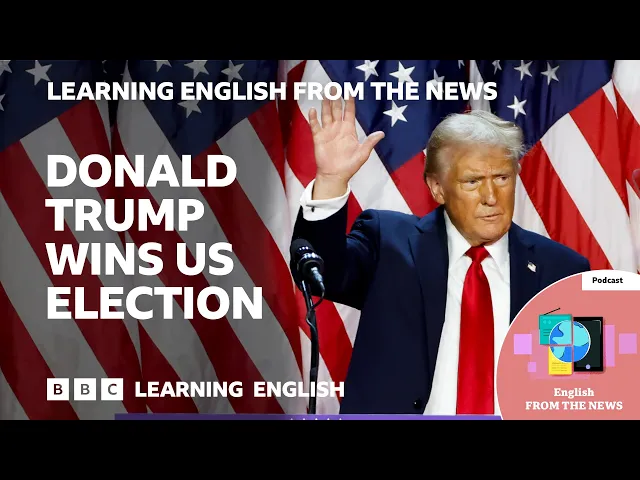
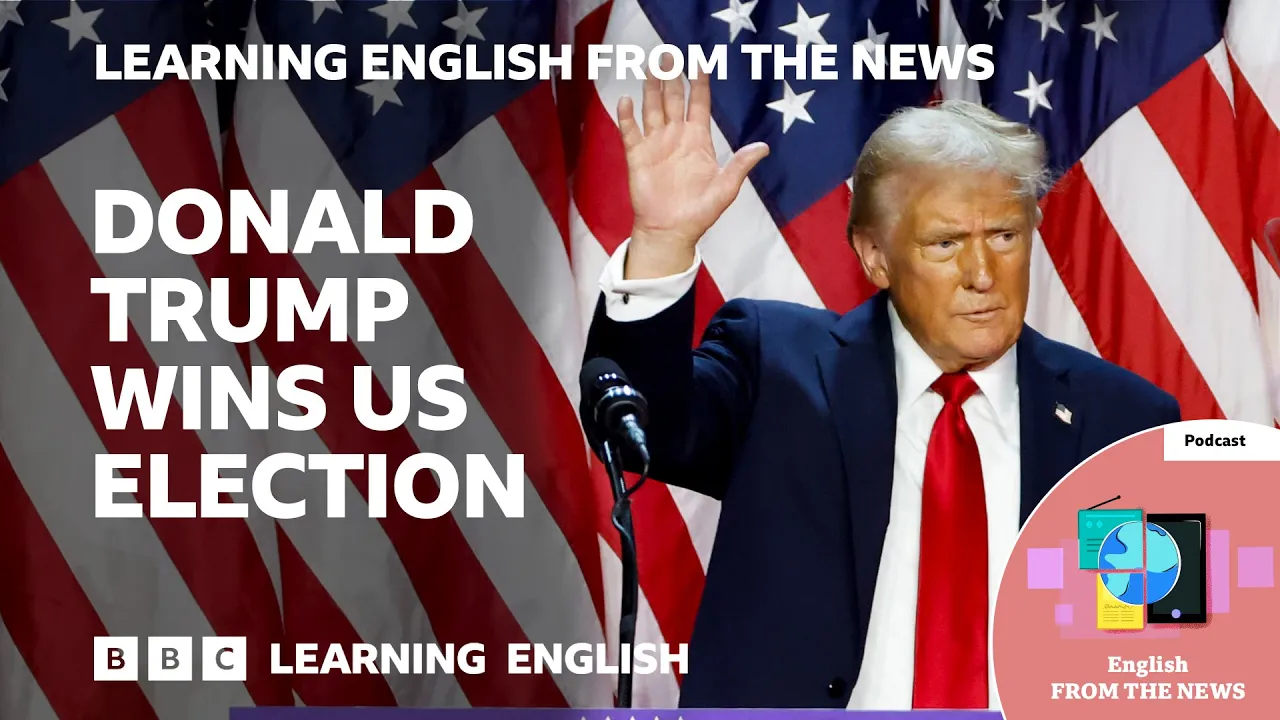
From BBC Learning English, this is Learning English from the News, our podcast about the news headlines. In this programme: Donald Trump wins the US election. Hello, I'm Beth.
And I'm Phil. In this programme, we look at one big news story and the vocabulary in the headlines that will help you understand it. You can find all the vocabulary and headlines from this episode, as well as a worksheet, on our website, bbclearningenglish.
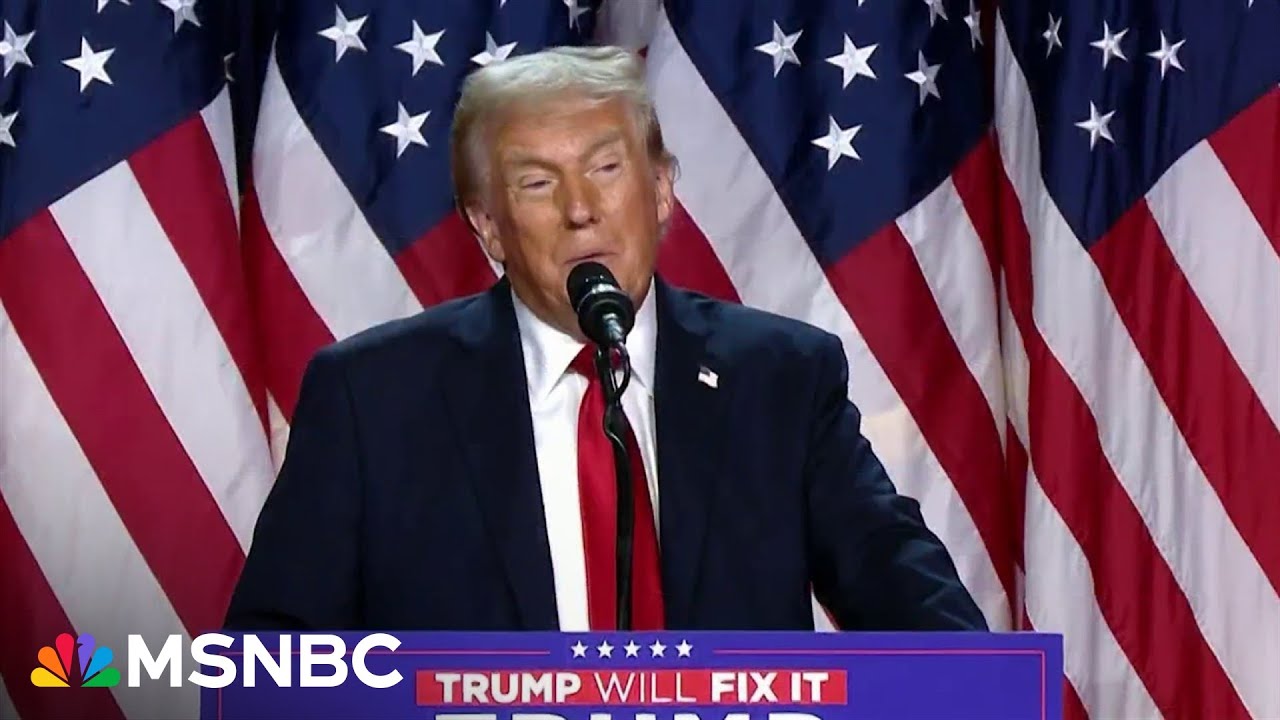
com. So let's hear more about this story. Donald Trump has won the 2024 US presidential election.
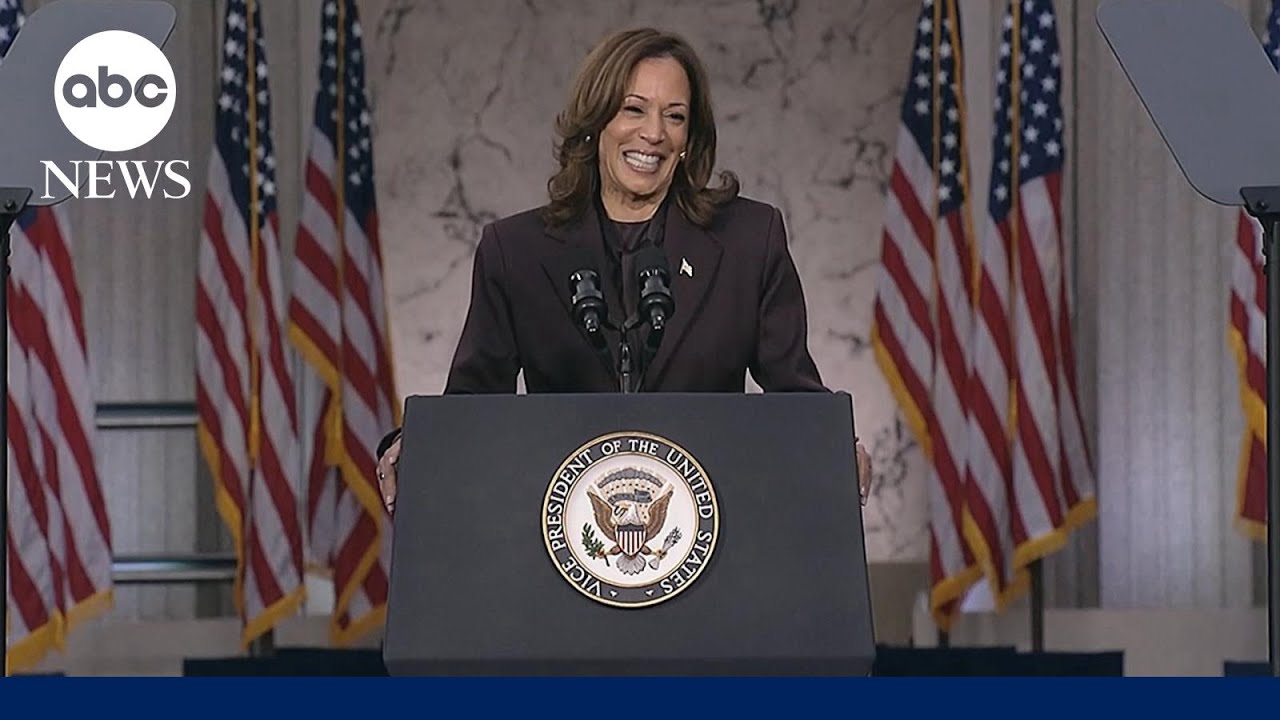
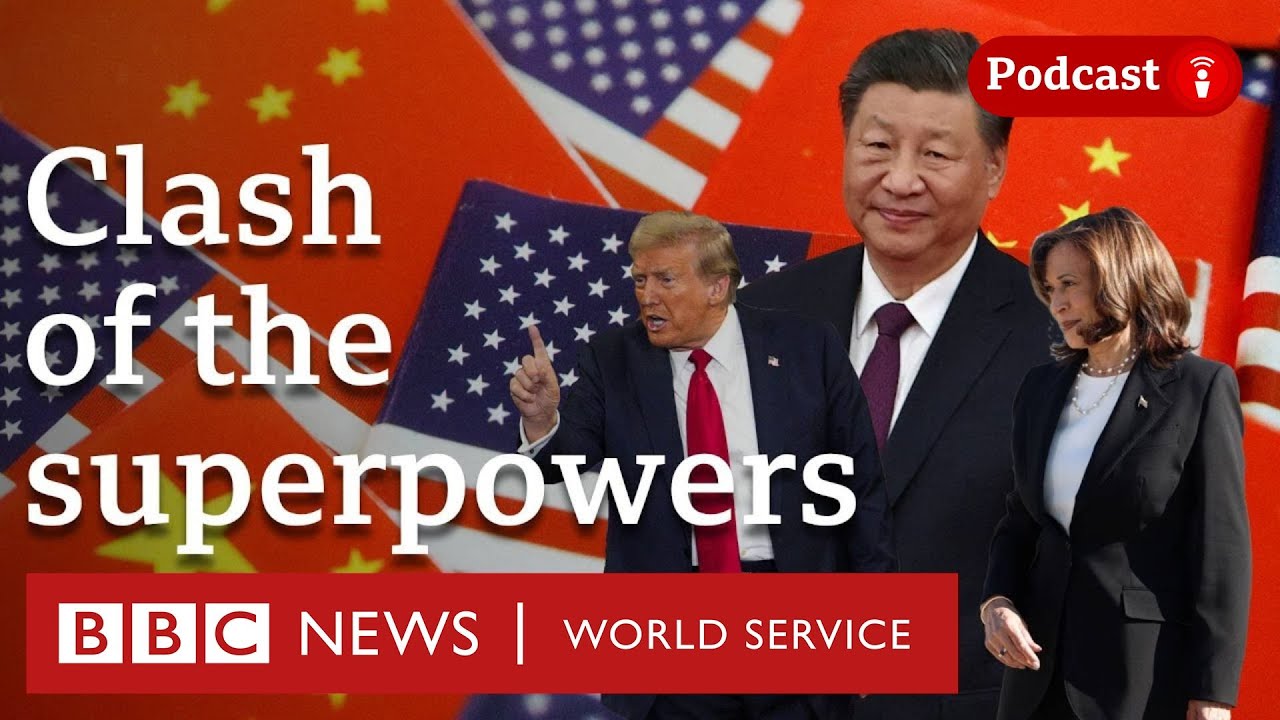
Trump has more than the 270 electoral college votes needed in the US system to give him a victory over democrat candidate Kamala Harris. Harris is the current vice-president of the USA. She replaced President Joe Biden as the Democrat candidate after he decided in the summer not to stand again.
Before the election, many experts expected the election result to be closer than it has been. Donald Trump will become the first US president in over 130 years to have a gap between his two presidencies. During the campaign, Trump survived two assassination attempts.
World leaders have started congratulating him on his victory. Our first headline is about Trump's speech in which he told his supporters he'd won the election. And we have a headline here from BBC News: Donald Trump declares magnificent victory in speech to jubilant supporters.
That headline again: Donald Trump declares magnificent victory in speech to jubilant supporters. And that's from BBC News. So, Trump said that his victory is magnificent, meaning extremely good.
But we're looking at the word 'jubilant'. Yes. And 'jubilant' is an adjective, and it describes a mood of celebration.
That's right. Trump has just won a presidential election, so of course his supporters are very happy and in the mood for celebration. But why jubilant?
What is it about this word that makes it appropriate in this context? Well, jubilant is not a word that is just for any kind of happiness, is it? No, it's about celebration because of success.
So, you can be jubilant after success in your university final exams. It's a big deal. And we use it with the prepositions 'at', 'about' or 'over'.
So, to give some examples, you might be jubilant at success in your exams or jubilant about winning a team final, or jubilant over an election victory. We often use it, as in this context, about groups of people or crowds. The supporters were jubilant after their team won the cup final.
And one last thing – it's a bit formal sounding. It's often written rather than spoken, and it makes the events that we're describing sound important. We've had jubilant – extremely happy because of success.
For example: Jubilant crowds celebrated their team's unlikely victory. This is Learning English from the News, our podcast about the news headlines. Today, we're talking about Donald Trump's victory in the US presidential election.
During election night, as the results were coming in, it became clearer that Trump was likely to win. And our next headline talks about this: Donald Trump closes in on US election victory. And that's from Politico.
And that headline again: Donald Trump closes in on US election victory. And that is from Politico. Yes.
And we're looking at the phrase 'close in on'. It means to get close to something, especially when it takes skill or effort to do so. Let's imagine ourselves, for example, as a detective.
You're trying to catch a criminal and you're getting close to catching them. In fact, it is very likely that you will catch them. You're closing in on them.
We can also use it if we're trying to win a competition. We can be closing in on the prize as we get near to winning it. Yes, and we can close in on a deal if we're nearly at the end of negotiations.
The thing that we are closing in on is usually something that we'd think of as an achievement. So when this headline was written, Donald Trump was getting close to winning the presidency. He was closing in on victory.
We've been looking at close in on – get close to victory. So, for example, we could say: With that win, the team is closing in on the championship. This is Learning English from the News, our podcast about the news headlines.
Today we're talking about Donald Trump's victory in the US presidential election. Our next headline was written in the lead up to the election. Now in the lead up, the polls, and opinion polls are when people are asked how they're going to vote, were almost equal.
No one knew for certain who was going to win. A Harris or Trump victory were both thought to be possible. And here's the headline: US votes as polls show Harris and Trump neck and neck.
And that's from the Financial Times. Again, that headline: US votes as polls show Harris and Trump neck and neck. And that's from the Financial Times.
Now we're looking at the phrase 'neck and neck'. We know neck, the part of the body that supports your head, but what does 'neck and neck' mean? Well, neck and neck means very close or equal in a race or competition.
Now, this phrase comes from horse racing. So, Phil, imagine two horses running and about to cross the finish line. The first neck to cross the line will be the winner.
So, if they are neck and neck, they are equally likely to win. So we usually hear neck and neck in relation to racing. It could be a literal running race, like at a kids' sports day, but it could also be used for a metaphorical race, like an election.
OK. Could we use neck and neck for other things that have results like, um, exams or tests? Not really, because it's about being able to see the progress in the race as it happens in real time.
In an exam, you just get a score at the end and we don't see the progress of counting the marks. But in an election, we see the scores as the votes are counted. And in a physical race, we can see the progress each person makes.
Yes, it's about the scores being level or equal at a specific point – neck and neck. We had: neck and neck – equal or very close in a race. For example: It's neck and neck.
I have no idea who's going to win! That's it for this episode of Learning English from the News. We'll be back next week with another news story.
If you've enjoyed this programme, why not try our Learning English for Work podcast? Our new series, all about business jargon, can help you understand the strange phrases people use at work. And don't forget to follow us on social media.
Search for BBC Learning English on your favourite social media platform. Bye for now. Goodbye.