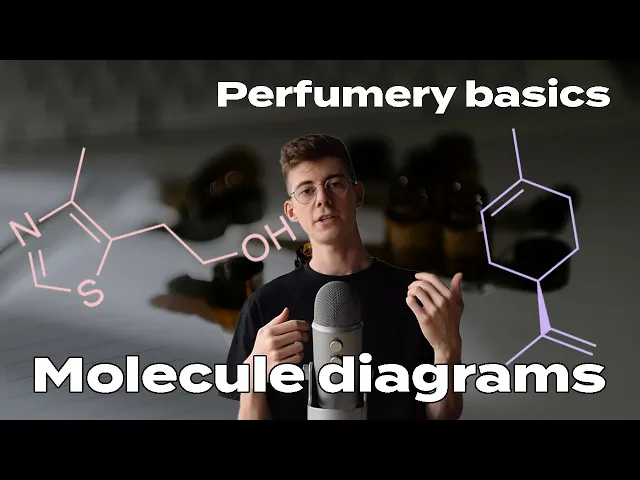
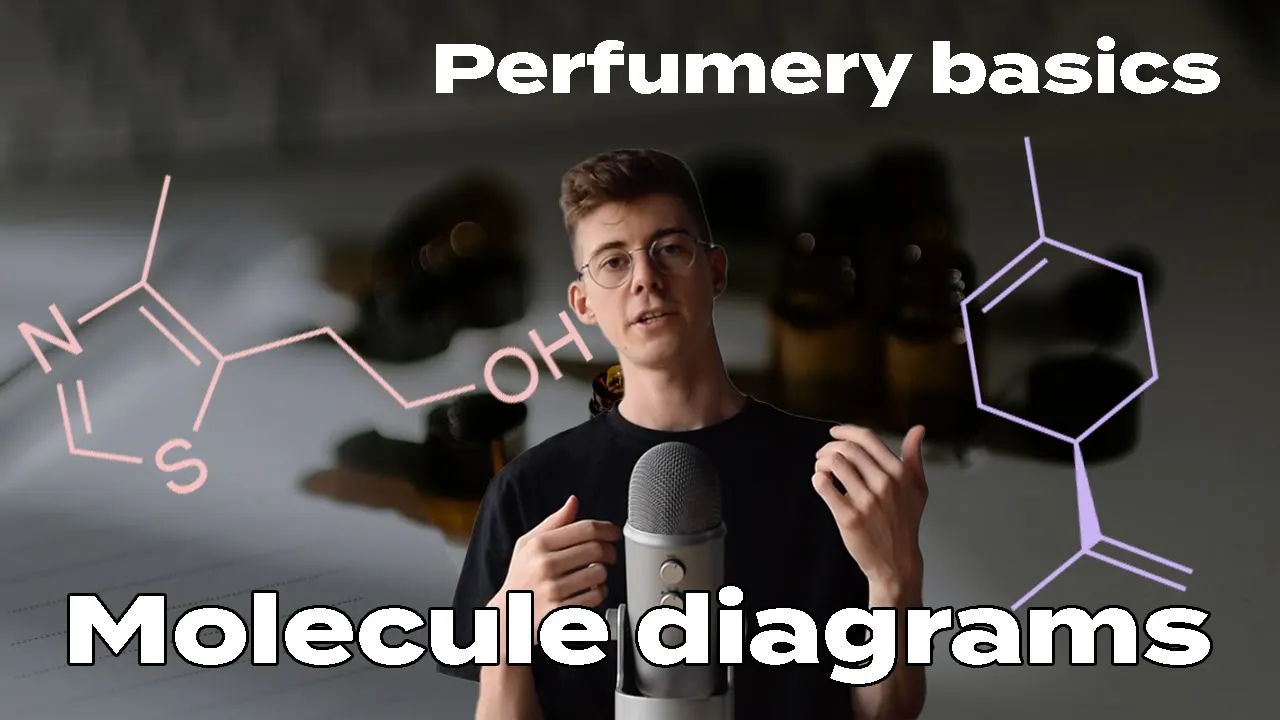
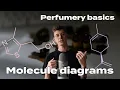
welcome to the video so today i'm gonna be doing a video about molecular structures um and this is especially for people who haven't got a background in chemistry and are kind of interested more a bit what the actual molecules used in perfumery might look like so in some of my videos i sometimes flash up an image of a molecule on the screen which is one of the ingredients and and basically the idea of this video is to kind of explain what those diagrams actually mean now these diagrams are called skeletal formulas so in chemistry when
you have a molecule you use something called a formula to denote it and what a formula essentially does is tells you which different atoms are making up the molecule so all of your atoms like your carbons your hydrogens oxygens etc you might have a formula which tells you okay the molecules got this this and this in it now there are different types of formulas so you might have a very basic representation for example c4h10 that would show you that you've got a molecule with four carbons and 10 hydrogens but what that wouldn't do is it
wouldn't show you exactly how they are arranged in the molecule now a skeletal formula is a certain type of formula which is really good for organic compounds organic compounds are basically compounds with a lot of hydrogens and carbons in and all almost all perfumery molecules fall under this category um so it's the ideal kind of formula to use now what a skeletal formula does is it effectively is a picture of the molecule however instead of like some other formulas where all of the atoms are shown the skeletal formula is a simplified version it's a kind
of a skeleton of a formula and what it does is everything that's a carbon or a hydrogen isn't actually shown it's just denoted as such instead and the reason this helps is because there are so many atoms in the molecules that we're using and so many of them are hydrogens and carbons that it can get really confusing if we draw them all out so if you look at an example skeletal formula so i'll put one on the screen here um what you can see is you've got all of these lines connecting together now a line
what it means is it's a bond between two atoms so every time you've got a line that just means there's a bond there in the skeletal formula every time there's a carbon it's actually removed from the formula so when two lines join together what it shows you is that there's actually a carbon at the point where two lines join now in general the way things usually work in chemistry is every time you have a carbon it likes to form four bonds so the way these formulas work is every time you've got a point which would
be your carbon any line coming off of it is a bond to something else so that might be another carbon now carbons are also normally bonded to hydrogens as well so again this would be quite inconvenient to draw out all of those hydrogens so in these formulas every time a carbon has a missing bond where it should have one what that actually means is that there's a hydrogen there instead so for example if you look here at this point there is a carbon um and you can see that because it's got two lines coming off
of it so it shows there's something being bonded to two other things and you can't actually see what it is itself which means it must be a carbon now because we know carbons always like to bond to four things or to make four bonds it's only got two which means it also must have two hydrogens attached so if we look at this what we can actually see at this point is okay this is a carbon atom and it's got two bonds two other carbons and two bonds two hydrogens so if you draw it out fully
it will look like this over here now the final thing about the skeletal formulas is well of course not every atom is always a hydrogen or a carbon even though they're very common there are still other things and the way we denote these would just be like any other chemical formula so what we would do is we would just put a letter or two letters which represent the name of the element so for example oxygen would have an o nitrogen would have an n and sulfur would have an s and to be honest there probably
aren't many other elements you would ever really come across in a perfumery compound um but any element in theory in these kind of formulas would just be denoted with its letter which is you know the same lesson you see on the periodic table okay so just to illustrate this a bit further i've taken this molecule which is sulfural now as you can see we have three different elements here which are not carbon or hydrogen so we've got the nitrogen here we've got the sulfur here and then we've got the oxygen here now we've also got
a h on the end of the oxygen um and what that means simply is that the hydrogen is bonded to the end of the oxygen so that's kind of instead of writing it out fully which should be the oxygen at the end of one bond and then another bond to the hydrogen so it's effectively the same thing now okay after this we've got one other thing that we haven't come across before and this is the double bonds which are here and here so what these double bonds mean or double lines um they just mean that
there's two bonds instead of one so it means that for example here this is sulfur and the carbon that's next to it have got two bonds between them so it's effectively like a really strong bond and again here we've got two carbons next to each other so carbon one and carbon two and there's two bonds between them so they're double bonded now if we wanted to work out what this formula looked like fully we would have to work out where the hydrogens would go and which which carbons are in there so i'll draw that out
below so we can see the the oxygen and the hydrogen would still stay the same and then coming up here we've got a carbon now that goes up to one more carbon but if we remain on this carbon down here we can see that we've only got two bonds going out of it and as i was saying before carbon in general likes to have four bonds so that means we're going to replace um or we're going to add two hydrogens to the end of it now the next carbon up here is in exactly the same
situation so we're going to do the same add two hydrogens and now we come to another carbon now this one we've got a bond going to the sulfur and we've got two bonds going up to the next carbon um so because we've already got our four bonds we don't actually need to add any more hydrogens to this one now going up around here we've got another carbon coming off this one has only got this one carbon bonded to it so we know there's going to be three hydrogens coming off of it this and then so
that's done now going back to that carbon we can see that there's one we'll bond here now to the nitrogen now nitrogen um let's not worry about that too much but just know that actually the nitrogen does not have anything else bonded to it it's just got one bond going to the carbon and one bond going to the other carbon um just with nitrogen that's not always the case however you won't come across it too much in perfumery anyway so i wouldn't worry about it for now now coming up this carbon here we've got two
more bonds going to that sulfur um and that completes that part now we can see that this carbon we've just done um it's missing a hydrogen because it's only got three bonds so we're going to add that there and in doing that that is the molecule complete so that would be kind of how you would draw out fully the molecule so if you actually wanted to imagine the atoms how they would look in space it's this is the way they're connected together yeah so that's it um so i know there wasn't any actual perfumer in
this video but the idea of this is just for people who've never come across this kind of thing before and especially when you're dealing with synthetic ingredients so synthetic molecules um it really i think it's quite nice to be able to actually see the molecule see what it looks like anyway so hopefully this helps someone let me know in the comments if you like these more kind of technical videos or if you prefer just um actual making perfume making the formulas and yeah give this video a like hit subscribe and have a great week i
will see you next time