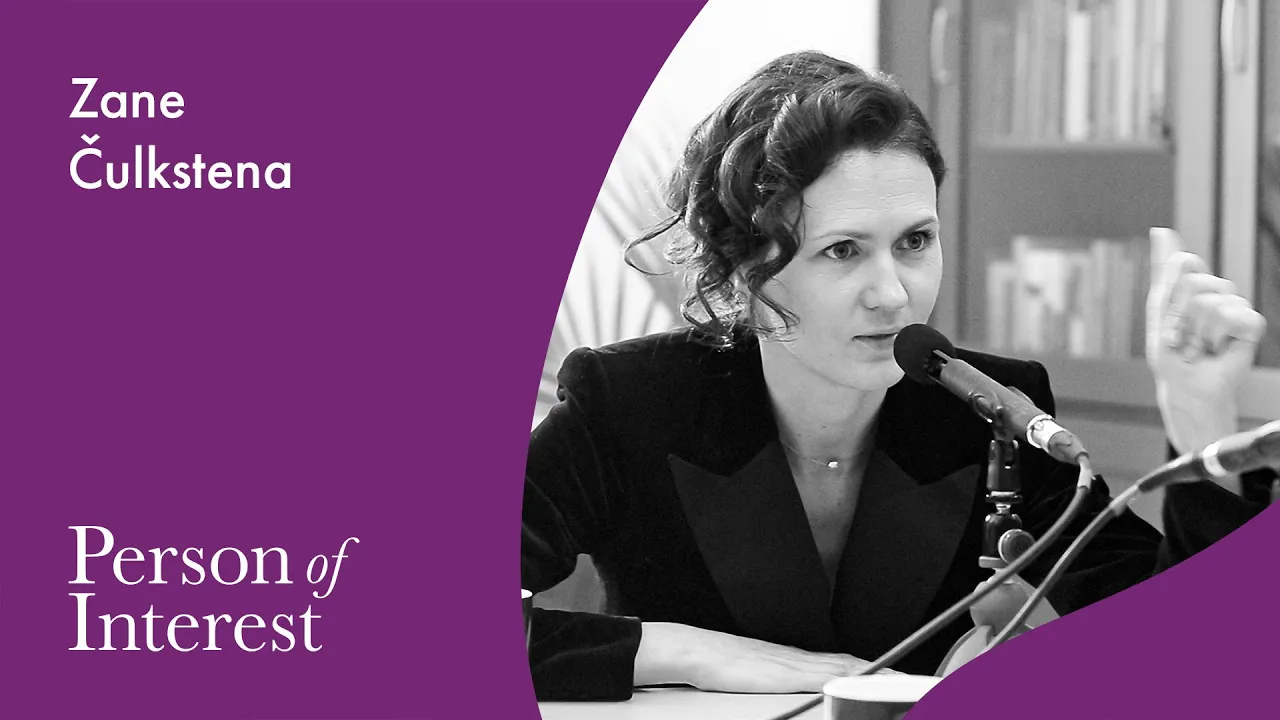
[Music] this is the person of interest podcasts where we meet extraordinary people for the story to tell well welcome back to the Stockholm School of Economics here in Riga on a moderate spring day but I've got a very good guest to speak to today it's xarna chooks tena Zanna welcome to SSE Riga well thank you for having me do you have any connection to sse we always ask this at the beginning because it's amazing how many people do yes so yes a series my alma mater and I was very active while studying here and in
a way I've kept that connection ever since I was in Alumni Association had a couple of cooperation projects and yeah so in a way for me that I keep coming back here and we're very grateful to you for joining us because I understand you just come off a long-haul flight so yes South Africa I also have to say I'm semi ill so yeah if I don't make sense that's that's because of you know trip and not feeling okay and if there were no podcast for a few weeks then after this we all know what now
like many of the people have been talking to there are various strands that you're working in involve you you were a founder of the Kim Contemporary Art Center you have to say it like that because at the end the aired a consulting firm but the principal topic we're going to be talking with you today is about the Rieger your mother music festival which only started last year its first iteration and you were the CEO and I understand basically the moving force behind getting it up and running so what exactly is the Rieger um a music
festival for those who don't know so regional music festival is a new classical music festival yes that was started in 2019 the the way we started or the idea behind it is in a way quite simple la Pia has very special traditions well or phillipians music has always been very important you know this is how we've kept our nation alive you know so far we've been mostly exporting more classical music stars Madonna's nelson's heavily in a garage [Music] you don't Graham so mission my ski the the list goes goes on we wanted to start a
new classical music festival which would give a reason for international audience basically to discover Lobby as a you know classical music I say hum so this is how we started and we invited Martin angstrom who is founder and director of very be a festival there be a festival is quite known classical music festival in Switzerland and celebrated 25 year anniversary I believe last year and Martin have before that also been the artistic director of Deutsche Grammophon he was the one who discovered they say on the TEPCO and lung-lung where he just started the contract I
don't know he says he discovered no no he did so I go to gramophone being this sort of preeminent classical record label for many many years exactly and so yes Martin is is very highly regarded professional in this in this field and and he was asked to come up with a concept for the festival because obviously Europe doesn't like classical music festival there are hundreds of them and his idea was to focus on weekends so it's a series of mini festivals essentially last year and this year it's going to be four weekends next year five
weekends already and each weekend is anchored by a major Orchestra each of them performing twice which is not that typical you know really no money well no it's also the opposite not many festivals can afford you know both inviting major orchestras but then also having them stay for you know most of the cases for four days so so so yes so that's the artistic part and then we have major soloists young stars most of them winners of Tchaikovsky Competition and many many others so each weekend has total of five five concerts but it's obvious that
the the its structure is designed the way to to really work or on or attract international international attention and visitors and as I understand it there was something like 20 concerts over the four weekend symphonic and chamber concerts yes what was interesting to me viewing sort of the first iteration was maybe I was approached it with a slightly cynical bent in that I saw Rieger your mother music fest when I thought well this is going to be a load of garlic concerts and you know crowd pleasers and then when I actually looked at the program
it wasn't that at all it was kind of the high level proper we can apply the full piece not the overt or no know what they were definite decision taken to Texas really absolutely and even you know now it's it you can see very clearly what kind of concerts are more popular and which ones are less and and we made a conscious decision of you know we we are sticking to our artistic concept and or artistic leadership and it is really about you know leading talents in this in this field so for example data on
concerts you know is a new format for fallout yeah and of course once you're trying to communicate 20 concerts you know some will be louder and and the choice will be more obvious as in case of minority you Jevon performing together with Zubin Mehta and Israel Philharmonic Orchestra you know and they have a young stars that nobody have heard and and I myself in them before we started it was not sure we'll be able to pull it off and the first daytime chime I consider so it's it's well even if there will be five people
in the audience we are keeping this because it's magic but but luckily we've been actually very successful in respect also audience both numbers and general receptions so I saw on the website you were quoting a figure of 16,000 yes yes more like fifteen and a half thousand but yes well when I remember we're talking as well at the beginning with Martin and he was telling that when they started Verbier basically the holes were empty and he said like you know you have to give it time you know it's it's a new festival so don't worry
about it but we have been full - yeah we've been close to full capacity for for most of the concerts so it's there is something about classical music in laughs oh yeah that's well yeah that was the thing that really surprised me was like I thought that as as you suggested this sort of thing building up something where you have the ambition for it to be a major european classical music concert okay the first one it's gonna be a bit of a trial run you can see what works what doesn't the second one it will
build a bit of momentum third one maybe ten years down the line you look at Eva but it seemed that you've really got a head start and that year one was big and year two then has the potential maybe to fulfill this you know it's already a big European standard absolutely I mean was there a secret behind that is it a matter of getting the networking skills right no no I think it's it's it's all about the program Madi statistics I always it's it's Martin and our associate or to see director Miguel Esteban I mean
they they really know what what is what is a good program a and B they were able to put it together in a matter of two months usually you book orchestra to three months ahead of time they were approached at the beginning of the summer of 2018 at the end of summer - doesn't it 18 they presented the concept and we had to announce the program in two months this is unheard of yes yes so so I think that you mentioned work networking you can say so but in this case it's the it's it's really
the the experience and connections of or artistic leadership that must happen didn't have total confidence in these partners yes which we do which which we do the other side of course we've been very lucky with with local team so apart from artistic leadership or all the all the team is in Latvian all of us have very diverse backgrounds people who worked all their life in banks and I myself in in in in other fields and so most of us actually didn't have direct experience but there was such a determination into making most out of it
and I think that also made a huge difference and the third I think magic component really is is the audience and I've heard a lot from the artists first of all we as as an organization kind of internally agreed that meaning artists experienced will be number one thing for us because we believe it seriously you know effect so how or kind of influences their performance and and their willingness to come back and and so forth and and and and and they said that there is there's hardly any place they can think of which have welcomed
them so warmly and taking such a good care and and they said the same about the audience it's even though I heard I heard every single coffin okay every single candy and unfortunately we did had some cell phones ringing and and so forth but but overall meaning Lambie and audiences are vitally well educated and in the field of music because it for the classic well music education system basically so and that's one thing that all artists notices well they enough of them attention attention that they really got from the audiences when you definitely can't fake
that feeling in the concert hall can you I mean you know where there is some sort of rapport when the audience is receptive and I imagine it's pretty obvious must be immediately obvious to the performer when they sit down at the piano or pick up the instrument and they know that the first three rows are all there because it's you know corporate entertainment and then they have no interest in the music so yeah as you say I think there is something in the lab week in Seoul which yes kind of takes music very seriously and
then and gives it sort of respect and winners respect back but you mentioned something about the diverse backgrounds of the people involved in putting the festival together can we just go back a little bit in time and learn a bit about your background did you did you come from musical family it did you have a long-standing interest no both of my parents were professional dancers yes so I think I've been I've been asked this question many times I think I don't have to ask therapists or someone but but I so I don't know where it
comes from but but I've definitely spend part of my childhood around stages you know and that's one part but the second part was that as professional dancers my parents were one of very few well the work is a janitors part-time time to make you know their ends meet but but but but the the good side I guess about being professional dancer was that they were able to travel a little bit more than an average you know kind of misses ballet it was between ballet and folk it's like full Valley you know so and and and
they were to bring you know show kind of the Latvian culture in assimilated version of Latvian culture around former USSR but not only so they were able to I don't go to powers you know or or Tokyo or or Delhi you know and and I think that might have influenced it even more that we grew up equally poor you know as everyone that time but but at least I knew there was a world outside because they had sort of artistic connections musical connections little ones because you know where the dance and whether they like sportsmen
you know so it's it's it's but but yes so so that's as when it comes to childhood but as long as I remember myself I've I've been always very good at math and I love math but I always loved arts as well so I guess this kind of explains the the the all following steps so so the math helps with what the organizational aspects of it yes I know I'll see Hudson but also meaning even you know it helps to get a good education you know I I graduate from Riga first gymnasium and they entered
both Faculty of math at Levine diversity and stone School of Economics in Riga and end up studying ended up studying here but while studying here you know I spend I guess 50/50 time in 51 studying by 15 organizing I was the President of Student Association year and one of the things I introduced was arts week you know which is still alive and well called Jesu so kind of it's always been there I guess yeah and then when I graduate so economics know even when I graduated I started working and in the last year of my
studies I said working in advertising agency in ddb you know and there I grew into role of strategic director mostly responsible for research and and so forth and in between University of Sussex media and cultural studies I was organizing short film festival in Latvia for short yeah for four three four years yes and then I was approached by at that time Minister of Culture Helen and Emma go well with suggestion to help sit together Contemporary Art Museum that at that time where they were trying to pull off yeah and I agreed and we started working
and a year later financial crisis came and I went to bust but the in the year I came to understand that it doesn't change the desperate need of the artist to have a permanent place for Contemporary Arts and really because at that time there was none literally none so with the initial funding from Ministry of Culture which was quickly cut right after the crisis started we we managed to secure a place in in speech today and and started a nonprofit organization which is which is Kim and Kim actually stands as a question for two questions
because it marks less of what is art but initial also Cosima sighs what is museum so this is how we started and there's been 10 amazing years and while being a Kim I also understood that many if I'm going to arts management field I need more skills in particular in fundraising and that's when I pro-life or Fulbright and went study to us Columbia University's the university of mosses in arts administration yes and then I came back and have continued to kind of both be very active in India arts but but also started my own consulting
company because I realized that also for my arts institutions you need to be you know both for your network and Marley for your own financial capabilities to donate your own arts institutions you need to be also in the business world so I've been doing two things parallely well it sounds to me like more than two because it's it sounds as if you're you you have this interest in the arts you have this interesting business yeah you have these organizational you have it consulting and education it seems to be keeping continue studying once once more for
sure but but no the way yes I have a very kind of special psychological makeup that you can keep I mean some people I think I probably would be completely freaked out by trying to keep all these plates spinning at once but you seem to be very easy with that no I think I've always been meaning even at school so you know in lapping education system you can be in school until 6:00 p.m. and then I would have two more extracurricular activities so I would be coming back home every night I know nine and then
still studying and the night so in a way it's like I don't think it's like I've always been doing it but the way I see it there are two parallel phones so one one is arts and the other than one is business so and in arts I have Kim Contemporary Art Centre which is one of my babies and then reggae you have more music festival which is another of my babies the own business side I have added that which is consulting company and then I have two year old daughters which involves all the above skills
but it's very interesting listening to you you know go through your brief biography there and quite casually say well and so then I organized arts week and then I organized this and then I organized that as if this is something which was quite natural not at all intimidating I think the idea of setting up even an arts week at a student arts week let alone a major classical musical festival would be something that a lot of people would find intimidating highly stressful a lot of people would probably say I'm not gonna try because I think
it'll be too difficult or the risk of failure is too high is that something that just doesn't occur to you are you stressed when you're on these projects or do you maintain this sort of can-do approach all the time no I'm kind of know meaning of course I worry about about how things will turn turn turn turn out and and in all of the cases they're big moments where I'm thinking what the hell am i doing you know it's it's impossible you know for for so many reasons and and I cannot pull it off but
I think I have I mean has there ever been one project which is just flopped or which you've tried to set something up and it just didn't work either conceptually or there was no well that there have been a minor once but I think one of my qualities is I know how is in English speed things yes I'm stubborn yes I'm quite stubborn so so we so so many people will tell you that will not work and I'll give you reasons why why not work and and the trick is just just to do it it's
that is one part I guess in the second part is is really I have I have the part of me is I have this I feel like also the civil servants genes some more meaning I feel that a lot deserves so much better and and we can do so much more but part of the problem is lack of a initiative be you know mess is just I want the definitely lack of you know cooperation skills and and just get get it done new noses so and I think yeah I often times I think I'm just
trying to do things in spite of what I was say or do but I've been very lucky as well I've been both the festival and and and and Kim would never be possible with with without the support of I know or patrons friends you know colleague so I also don't want to it's not a it's not a one-man show you know so there's very many people involved and and all of them have been extremely supportive in so many ways so yeah so where did the initial idea for the Ricky Ramallah festival come from what was
the moment when it became a possibility mmm-hmm no the the idea actually comes from pure Robin he's a businessman no money nobody's allowed in citizen for I know 10 years now and and he actually spent quite a bit of time and mud on where his grandfather comes from and and the way he tells it is that I know he's been coming here for you know 10 years spending summer but let's be honest there's not much for doing the summers here because you know opera season everything finishes and in Mason of June and then restarts in
September and that was one kind of that's how he came up basically with the idea meaning laughs he's very good in classical music but this story is not told you know and and and also you know we we have to give a reason for people to come to to trigger you know for them to see what a wonderful country it is and so he said he was back it financially so yes he said but he was quite smart about it because you know it's as for all all initiatives of this kind the sustainability you know
it's a big question you know you can do it once you can do it twice you know how can you do it long term you know but he immediately started you know approaching pretty much everyone who is interested in classical music Oh have any connection Latvia you know or you know his Latvian not being businessmen and and people who has connections will not by yourself right now we have already 17 trustees basically and with every next one who feels like it is becoming more sustainable so it's no it's not dependent on one dividual anymore not
even no two or three so so basically it was his his idea and he contacted you yes they had already contacted martin martin and miguel so they were thinking about the artistic concept too and then they contacted me he tells in all interviews that one of our supporters and rather sizable philanthropists in LA yawns Suzanne's was the one who told that I will support this only if some jokes then we'll do it I'm not sure if that was the was the case but I was initially approached to to put together as a consultant the plan
and basically like here's the artistic program the concept and we need to understand you know what what will it cost you know how will it work you know Allah so I put together a plan and then they tell excellent now I have to do it and putting the plan together was that a matter of just making a lot of phone calls finding out oh you know we we actually did there were two of us both as Assyria graduates and I actually pulled up quite a bit of material study materials from Columbia University and and we
did quite a few visits Verbier festival to ask how they started you know what's there's funding structure you know what's their audience structure meaning why are they doing marketing you know so so so basically we went through all all topics and it was a serious research and and and then then a plan as a result of it and so what was the feeling then when you're sitting in I don't may be the first and the last concerts of the initial festival there must have been tremendously satisfying but was it as you had imagined in your
initial plan or your was it something different the problem is that I think the festival has ruined my classical music experience eternal life because once your organizer all you can think about is though that one cuff at the you know third row second on the right or you know I know it's not dangerous seeing behind the screen basically you're stressed all the time the 2,000 people in the audience and there is like you know 110 on the stage and you know with I know Israel Philharmonic Orchestra those security Joe and and bum checks before and
and then there is being television is recording it and it's going live at that time and and you know a little girl jumps on the stage to kiss you javonni and so it's it's it's a it was extremely stressful of course the the the first year the level of responsibility but also definitely extremely rewarding and it I think it exceeded everyone's expectations everyone's both supporters artists audiences and our as a teams but we we were working these four four four weekends and well total of two months like non-stop how many people were in your team
the team is actually small well full-time we are all year round we are kind of four people many but they're many they're working part-time and also as a freelancer sword join us in these two well actually more like three months to but I the core team is even with those who join us in the summer is 12 people and just to wrap up what can we expect from the Rieger uml festival this year well you can expect equal oddity is still available actually just half of the tickets are available and it's just February so it's
we've been doing surprisingly well in that respect as well so so tickets are still available they are extremely affordable if you compare it them with I know Salzburg or let's say my earth you know so well you cannot quite compare it though by Roy but and you're closer to the city as well yes so now but tickets really start from 10 euros and we have student discounts in your discount so many other discounts so so tickets are available and affordable and we'll have yet again for amazing Orchestra you know each weekend has at least three
major soloists we'll have a bit of piano orgy pianist thorgy this this summer we will be announcing one very special additional concert in two weeks so it's going to be once again unforgettable and and this year we managed to to have two weekends in Regan - in you in Milan because it's it's always about the availability of orchestras and and venues but this time it's it's it's 50/50 there which I'm very glad about as well well congratulations on the success of it and on managing to slightly close the export/import gap in music and thank you
for joining me today to talk about thank you so much well I'm looking forward to see you in the summer at the concerts thank you for listening this podcast was produced by SSC Riga if you'd like to learn more about the topic visit the open course schedule at SSC Riga executive education for more podcasts find us on Spotify iTunes or the platform of your choice remember share this episode with your friends and colleagues