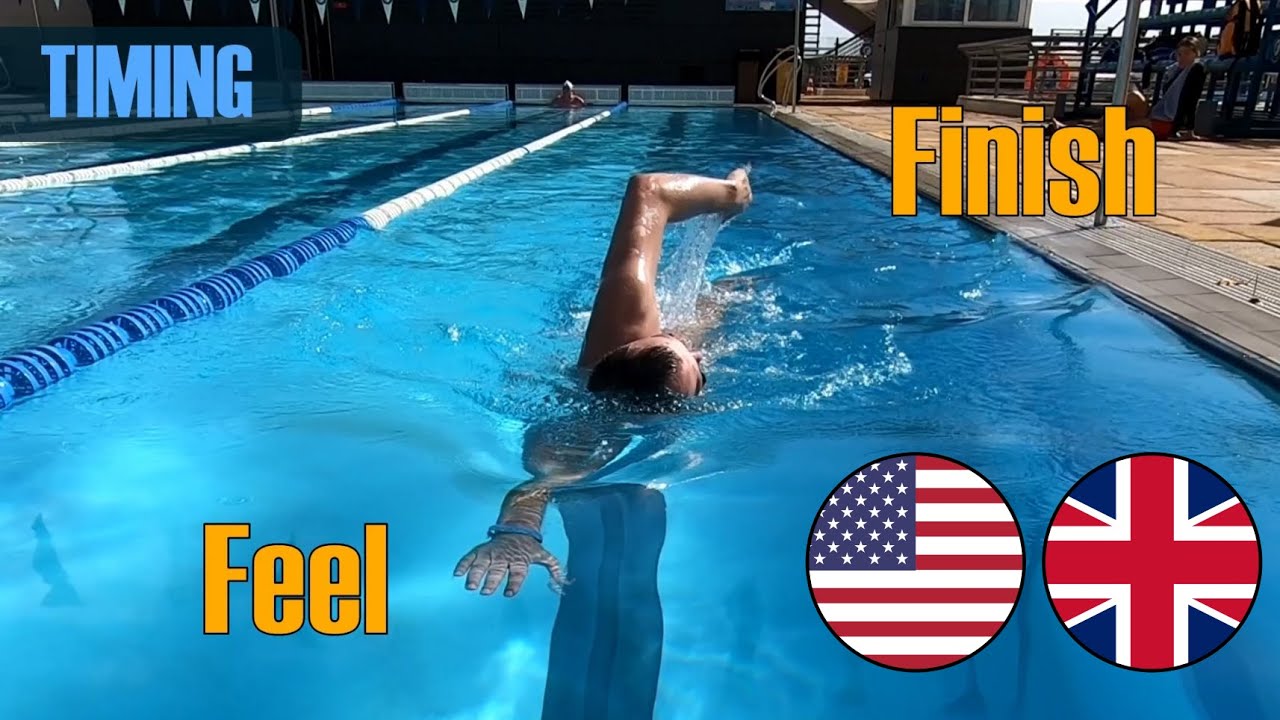
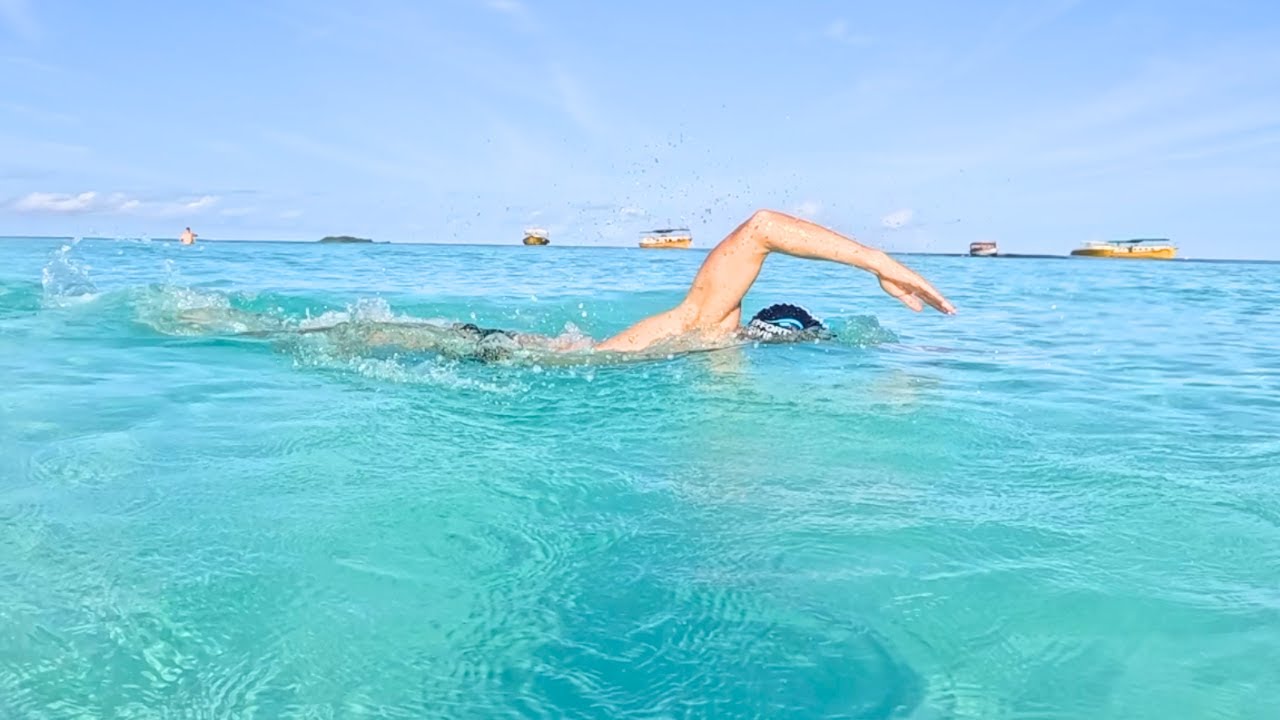
I've coached more than 8,000 swimmers from beginners up to Pro triathletes in this video I'm going to share with you everything I know about freestyle that will take you from feeling like you're stuck in the mud with your swimming to gliding effortlessly through the water the very first thing we always have to do when we swim is make sure that we are relaxed and a big part of our relaxation comes down to breathing when people are new to swimming they have this tension they have this disease with the water where they just don't feel comfortable
and they end up changing the way that they breathe so we need to make sure that our breathing is natural now what makes it not natural is when people have this fear or Panic of either putting their head completely in the water or just feeling like they are going to sink down to the bottom now when that happens they tend to breathe very shallow their breathing becomes almost like hyperventilating they short shallow upper chest breathing and when we do that we don't absorb the oxygen from the air that we take in so what always need
to start with is making sure that our breathing is relaxed comfortable and natural now part of that means that we need to breathe using our diaphragm which is this Dome shaped muscle at the the base of our lungs here and that just means drawing our breath in somewhat deep as opposed to short and shallow now that doesn't mean that when we swim we want to have these really big inhales where we're filling up everything but it does mean that we can start our session we can when we're at the pool when we're going to begin
we need need to make sure that we are relaxed so what I'd recommend to people is that if they just focus on breathing in for 3 to 5 Seconds using their diaphragm so we feel like we're filling up sort of through our our tummy and then uh down lower and we just have this deeper breath so in for 3 to 5 Seconds out for 3 to 5 and that can help just Comfort them and keep their heart rate down low and making sure that we're not hyperventilating when we're swiming so we've always got to start
with breathing and and sometimes that can take several sessions for someone who's afraid of the water to get to the point where they can breathe comfortably but we've always got to start there now after that we want to go to reducing drag because water is 800 times denser than air so anything we do to create unnecessary drag is going to slow us down and I find that people have a bit of a a tendency to not either press their chest or their head deep enough in the water to raise their hips or their legs when
they're first starting they want to hold their head up kind of high they want to hold their chest up kind of high because they're not comfortable putting their head in so one thing that we can do is that if you push off the wall if we see that when you push off that you are going like this and your legs are dropping straight away you're probably not pressing your chest and head down into the water enough really good swimmers when they push off the wall they'll sink down to about that far under the water and
then they will push off with their chest head underneath the water and they'll have a nice trajectory going forwards because they've got that level of comfort so the first thing we can see there and we can work on is just making sure that you are comfortable enough pressing this deep enough down in the water because your body needs to be horizontal when you swim so the three touch points that we want to work on our head hips and heels all at the surface that means you're going to be horizontal which means you're going to be
very streamlined in the water now quite often I'll have some as who come to our clinics or send me videos online and they think and they feel like they are swimming in that position but more times than not their hips are low and their legs are low so it's always a good thing to check in with so if you can feel like maybe you're carrying a lot of water on your lower back a lot of water on your hips and if you can't feel your heels tapping the surface of the water when you're moving your
legs then there's a good chance that you're sitting too low in the water creating unnecessary drag and that's going to be slowing you down now in terms of holding a good body position it's not as simple as is just looking straight down there's a lot of other factors that go into it so the thing I always start with is well let's get the posture right how you hold the body so the way I think about holding the body is feel like you're long and Tall feel like you're getting your head away from your toes away
from your feet so we've got this long line from our head neck spine all the way through our legs if we hold our body that way then we've got this tness to it as opposed to being loose and floppy so if we've got this tness to the body we're somewhat firm and rigid here which means that we can coordinate things a lot better so we've always got to start with just holding the body correctly now the other part of that is your head position so where you look can determine what your legs are doing out
the back it's it's a big part of it so what I've seen when I've analyzed or I've coached some the best swimmers in the world eyes are anywhere from looking straight down to about 45° in front but what they do with their head and their neck neck is they lengthen it they tuck their chin slightly and that allows them to hold this good posture and that allows them to maintain good body position what we very rarely see is that they're sticking their chin a long way forwards where they've got this big kink in the back
of the neck we rarely see that so we need to make sure that we're looking in that 0 to 45 range long neck tucking the chin ever so slightly now the other part of that the third thing there is what we do with our legs in our core now a lot of times people will think that they need to move themselves forward with their with their legs so they end up having this really big kick out the back where they're bending their knees and they're doing this big kick that's almost coming out of the water
and coming well below their body line we've got to make sure that our legs are supporting us and we're not creating unnecessary drag with them and what creates that unnecessary drag is when we Bend from the hips and bend Too Much from the knee and our legs come below our body line that creates a lot of unnecessary drag so the way i' picture holding our lower half of the body and I've got to credit Andy Donson for this one I heard this from him is you want to imagine that you're trying to squeeze into a
tight pair of jeans one of the tricks was imagine you're pulling on a tight pair of jeans and you're really having to suck in as you zip up and get your jeans on and and that's the sort of subconsciously I think that's what you want to be doing and what happens when you do that you suck your tummy in a bit squeeze your butt cheeks together a bit and that gives you this this core and the hips that are kind of engaged and switched on and when you hold it like that then your whole body's
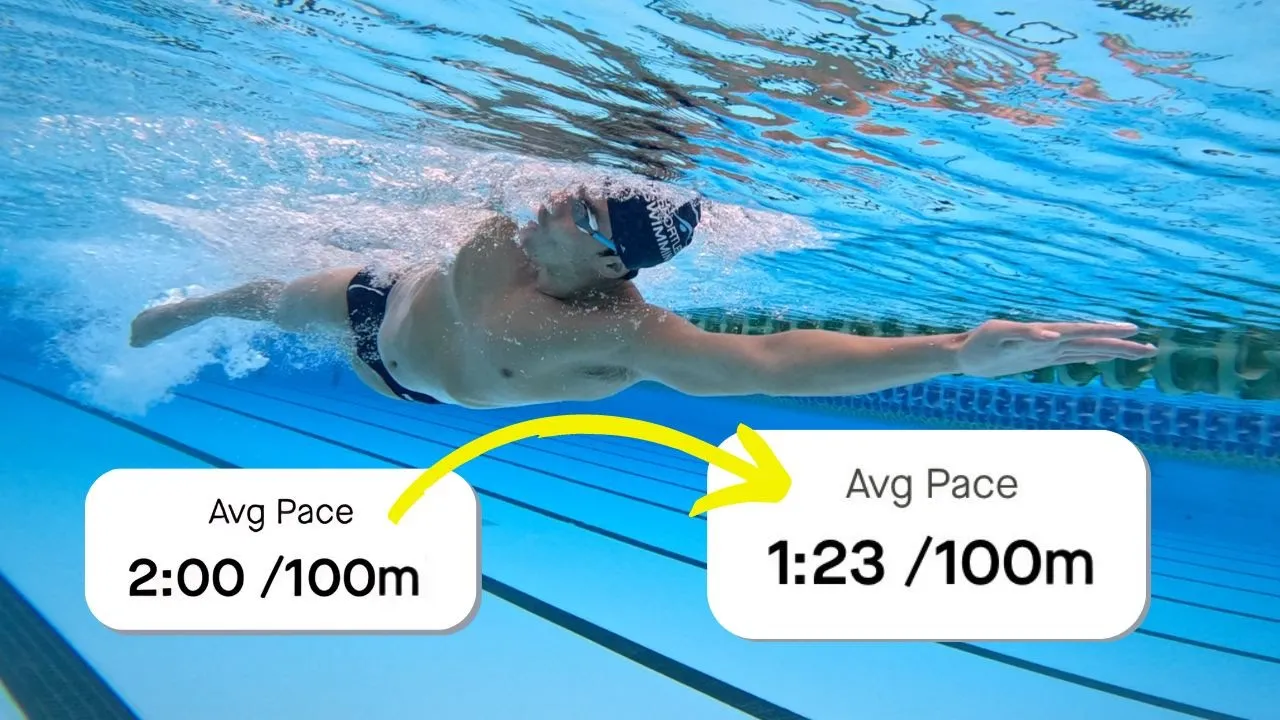
straight whereas if you're not holding it like that then your hips and legs will bend and you'll tend to drop through there so there's this tness and this length that we need all the way through the body just to start with and I've had swimmers who have gone from whatever they were doing before to just thinking about those couple of things and switching them on when they swim to where they've taken off three to five Strokes per 25 M so going from maybe 25 Strokes a lap down to 20 Strokes a lap just by changing
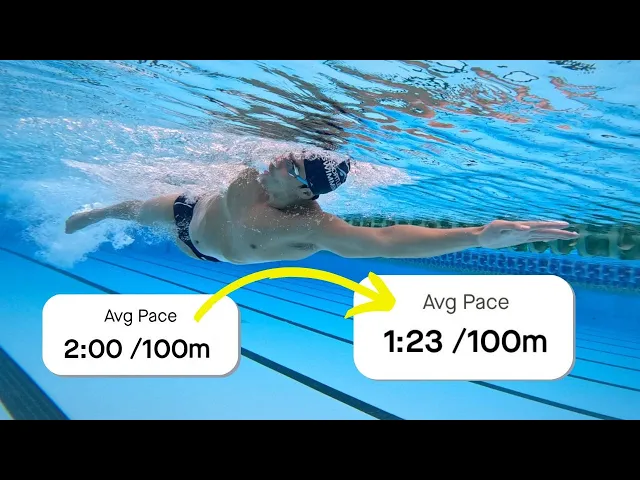
those things so don't discount the the impact that those couple of things can have on your stroke especially if you are slower than 2 minutes per 100 at an average pace if you are not faster than that 2 minutes per 100 you're probably doing something that's causing unnecessary drag so it's as simple as that stuff can seem if you spent a couple of months just FOC focus on that I can promise you that you will be swimming a lot faster if that is something that might be an issue for you at the moment now with
the legs as I mentioned before we don't want to be thinking about kicking ourselveses forwards CU that kind of that can feel like we're trying to ride a bike or kick a ball or something like that where we are kicking and it's not working for us so our legs are there to support us and I've got to credit Tracy bman for this one if you think about your legs and your and your kick feel like you're bringing your the top part of your legs like your your femur bones your your thigh bones there back and
forth from the hips just back and forth from the hips and that creates this flatter with the legs out behind you so it's not a kick it's a flutter and with that flutter you get this downwards press and upwards press there and what that does for your legs is it creates this counterbalance out behind you and it's this counterbalance that actually allows you to then feel like you've got something to hold and press against as you're swimming because the water just doesn't have the stability that we do on land but the stability comes from an
effective movement with the legs that creates this counterbalance that you can then feel like you can hold and press against and and rotate your body with when you're using your legs effectively and when the legs go when the legs aren't working in that way then everything starts to fall apart so while the kick isn't that important for propulsion it's really important for helping create this counterbalance to then be able to coordinate the stroke with so it's worthwhile just working on that effective flatter at the back that's just press up press down and that is what
allows you to feel like you've got good balance and control and stability all the way through the stroke the next thing we go on to is the rotation and In freestyle we should be rotating if we're looking directly in front of a su somewhere between 30 to 40° if we measure that angle with the shoulders at maximum rotation with the surface of the water now if you're a sprinter we normally find that sprinters will keep their hips a little bit more stable and their shoulders will do most of the rotation most of the people that
I coach are middle to long distance swimmers so we find that typically their hips and torso are going to rotate a similar amount side to side 30 to 40° through the hips and torso and the reason that rotation is important is because there's a lot of power that we can tap into through our hips and through our core if you think about someone throwing or pitching a baseball if they had to stand straight on with their feet even and they to throw a ball they wouldn't be making any major leg teams they can't throw it
very far or fast as soon as they can go one foot forward one foot back and they can open up through their chest their body their hips they can throw it a lot further and faster because there's a lot of power through this cross Connection in the body so we want to make sure we're tapping into that by rotating the right amount now the incorrect amount is either too flat or over rotating it's a really common thing that we see usually when someone takes a breath is when they will typically over rotate sometimes close to
90° sometimes even a little bit more and that's when they lose their balance and control so a good thing to check in with is when you take a breath are you rolling all the way on your side and if you are what can you do to adjust it how can you bring that back to that 30 or 40° so got to make sure we rotating evenly to both sides and within that 30 to 40° range now I'd recommend for people try feel like that rotation is originating from your hips feel like it's starting from the
hips and from the core because we've got to swim from the inside out we can't think about our fingers and our wrists and our hands we really should think about things from the inside out so from the core through the through the body to the extremities we've got to work from that way so feel like your rotation originates from the the hips or or from the core and that's where we should start that rotation and I like to think of it as though so imagine you've got like your your hips on Hydraulics like a Hydraulics
machine where you're not just twisting and you're really loose with things it's this nice drive this nice sort of hydraulic drive left to right that we can then use that to help with our even rotation because sometimes I'll see people thinking about rotation and they're really just twisting with no sort of stability or control so our movements need to have some control to them when we swim and there's a lot of ways to develop that rotation and quite often we'll do drills in our clinics or in our courses where the rotation when we when we
are doing drills often that's going to be a little bit more than what we do when we swim for example if we do like a a full body rotation drill put fins on Arms by the side I'd actually have you rotating to 90° in that drill now that's going to be further than what you need to do when you're swimming but the purpose behind that is you're going to get really good control over your muscles and your balance and your core if you're rotating past that point so there's times where you do want to go
further than that that's usually within the drills now when we look at your breathing when you swim freestyle breathing what all coaches see is that that's the thing that's normally going to cause your stroke to fall apart if we could swim with a snorkel at all times or we didn't have to turn our head to breathe most people would be fairly even fairly well balanced and be swimming a lot better than when they turn their head to breathe so what we want to aim for with the breath is it should be fast it should be
low and it shouldn't impact our stroke in a negative way and what can happen in a negative way there is that often people will cause their hips and legs to drop because they might lift their head up they might roll too far with they're looking up to the sky which state can throw their balance off so we've got to make sure that with our breathing that it's fast it's low and it's working with our stroke so a couple of cues that I've found to be really helpful there is we want to turn to the we
want to turn our head with the rotation of our body so we want to time it together so as you turn to breathe turn the head with the shoulder Roll come back with the shoulder roll now if you're rotating to 30 or 40° you're going to have to turn your head a bit further cuz our eyes need to be directly to the side which would be 90° so just get comfortable turning your head that a little bit more than you are with your shoulders but you want to time it together with it and that way
it's working together with your stroke as opposed to separately because quite often we'll see people wear timings off where they might turn their shoulders and then their head goes last and then they bring it back late so that breathing's out of sink with the rest of the stroke so we got to make sure we time it together the other thing which is really common is people will lift their head up and then turn and their head's way out of the water and your head weigh is a couple of kilos if you lift that up out
of the water it's probably going to drop the back end so that's a big factor that come that plays into body position is how you're breathing so we want to make sure we're looking directly to the side now in the pool we usually want to try and keep part of that bottom goggle in the water but sometimes we see that that's not always the case especially with sprinters and some distance from is where they they are looking directly to the side but their head's actually a little bit higher out of the water because they've got
either this more of a loping stroke where they sort of Bounce a little bit in the water so the main thing that I look for there is that as long as you're looking directly to the side your head can be a little bit higher it is good to work towards a bit of split Vision breathing half the head in half the head out but it doesn't have to be perfect necessarily and if you're swing in the open water and it's choppy well adjust to the conditions you might have to turn a little bit further to
avoid taking that water in so just adjust your Technique depending on the events that you're doing the recovery part of your stroke is when you bring your arm over the top of the water and in your recovery it's called recovery cuz you should be relaxed there's no need to use excessive tension or effort to bring your arm over the water because that's not where we're applying Force so use it as a as a bit of a recovery so I'd like to think about the hand the wrist being relaxed as you come over the top of
the water you'll have a little bit of tension through your shoulder you might feel like your elbow's really driving that recovery but we want to stay generally relaxed as a part of it and I think one thing that people get taught is a high elbow recovery but the way that gets interpreted is if the hand is very close to the body people tend to jam themselves up so we need to make sure that our higher elbow recovery isn't this here I see it more as have the elbow pointing to the sky as you swing your
arm over the top elbow should be pointing mostly upwards as opposed to behind you because that's how your your arm and your shoulder moves a lot better if your elbows there as opposed to if your elbow is here that's not as comfortable but that is a lot easier so elbow pointing up to the sky instead and another good way to think about that is feel like you're swinging your elbow over the top of the waterall water almost in like a rainbow sort of shape over the top there as opposed to some people are very wide
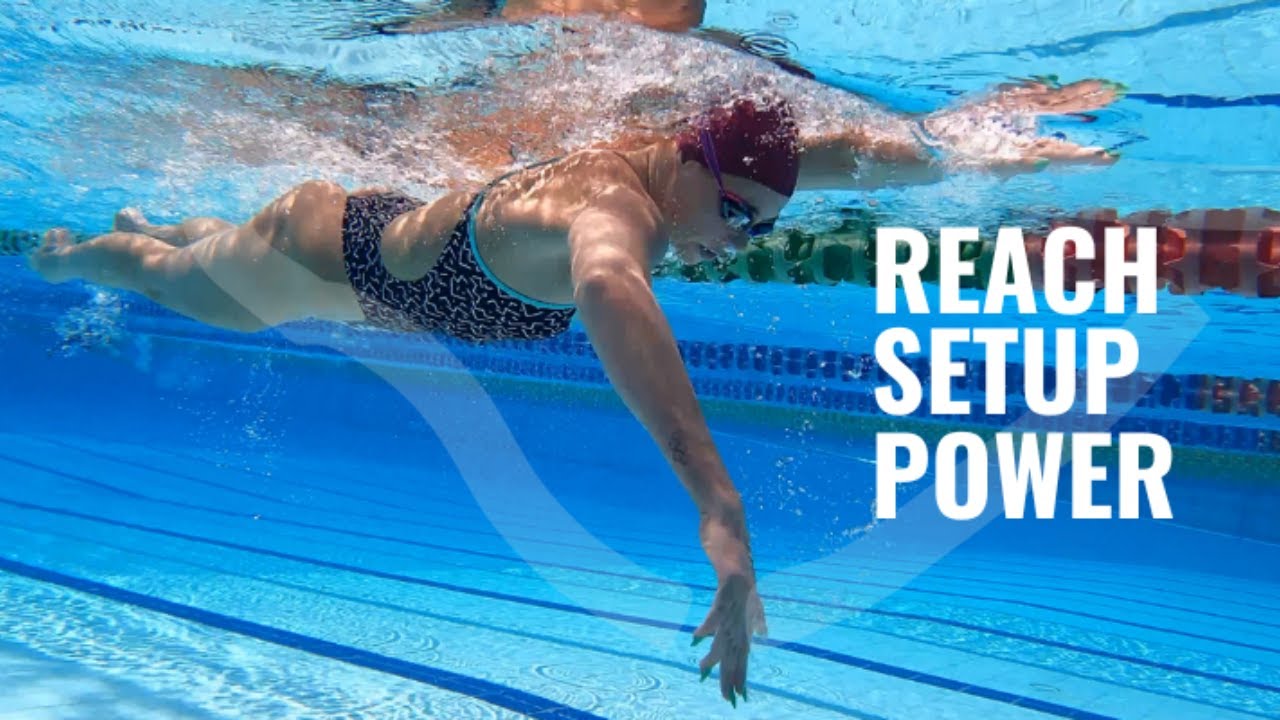
and flat and very low but we need to come over the top a little bit there and so I I like to think of this open sort of swing with the arm not swing where you're too wide somewhere in between this classic High elbow position to that wide position somewhere through there go with what feels comfortable and what feels natural for you so that's our recovery now that leads on to the entry position and what you see with most elite swimmers and there's always exceptions but most elite swimmers tend to enter with their fingers first
so it's good to think about that middle finger coming over hitting the water entering first with our elbows somewhat elevated it's almost like this triangle position when we see it from the side if you enter fingertips first and then you extend forwards underneath the water that's going to get rid of a lot of the bubbles and the turbulence on the hand by the time you start your catch now we're not looking for a complete clean no bubbles catch if you're going at speed very likely you're going to have some bubbles on your hand as you're
going through the stroke but if you enter fingers first elbow up and you extend forwards from there that last little bit of reach happening in the water then you're going to get rid of most most of those bubbles so you'll be a bit more effective with your catch and press now one thing that that we see there is a good position to enter the water in is anywhere from about your elbow to about your knuckles so in this sort of range is where we'd want the hand to be if you're entering before that let's say
where your elbow is it's too close to the head that's a long way for your arm to travel forwards as you going through it's going to create excessive drag if you enter so far out in front and the first thing to enter is your elbow and you're entering like this then you're starting your catch from a dropped elbow position which is not what we want so I always like to teach my swimmers a good fingertips first entry where it feels like the elbow is just being held up in the water cuz from that position then
it's you can just extend forwards and a really simple way to develop that and practice that is hold a kickboard hold the back of it and you're just doing a one-arm freestyle drill through here that kickboard is going to force you to enter early enough because if you overreach you're going to hit that kickboard so that drill is a really good way just to help dial in that sort of Entry position and I've had a lot of swimmers who have dropped their Times by a couple of seconds per 100 just from fixing their entry I
think probably because it helps them not drop the elbow straight away and it also just helps make their reach and catch a little bit more effective and cleaner so even something as simple as a better entry position can really help you going forwards when you enter the water and you're reaching forwards we need to make sure that we're swimming in line with our shoulders so the good water is out in front of the shoulders it's not crossing over now a really common mistake that we see is that people are entering and they cross the center
line really sending all of that momentum in that direction but we need to go from here to here we need to go forwards so we've got to make sure that momentum keeps going forwards so I talk about this as swimming on train tracks as you got this train tracks in line with your ears we want to enter in line with our ear or shoulder and go straight forwards each and every time and if you look at footage of the best swimmers in the world from the bird's eye angle they're all heading in that direction really
important to get that right but it's very common to cross over now with that train track position another part of it that we need to get right is the timing of the stroke so one angle that we film people in at our clinics and camps is this bird's eye view and good freestyle is typically done what we call front quadrant meaning if we split the body into four quarters so you've got four quarters the front quadrant would be from the head above that would be the front quadrant and we see with the best simmers in
the world with a few exceptions sometimes sprinters aren't quite in this range but majority of the elite swimmers particularly distance swimmers they are in this front quadrant where they always have something in front of their head so good timing in freestyle is front quadrant so when we look from above we should always see at least a hand or a forearm or an elbow out in front of the head at all times through the stroke now it doesn't mean we want to do this full catch up that's not good either but we do want to make
sure there's always something in front and a lot of times people who are maybe struggling with their breathing or people who are sinking a lot quite often it's their timing is out so it's good to think about always keeping something in front and a cue that I've used for that and I find this helpful for most people is the queue of slow to fast so our movement should be a little bit slower through here out in front and a little bit quicker through the back so slower in front faster out the back and if you
take your time just reaching forwards now you're not stopping as you go here but you're just going to take a little bit more time slow that down that gives the other arm a little bit of time to start to catch up so then you can switch once you're in this position whereas a lot of people tend to just rush it in the front so if you're not in that front quadrant you're probably just rushing the arm in front of you so a little bit slower be a bit more patient that can help you be in
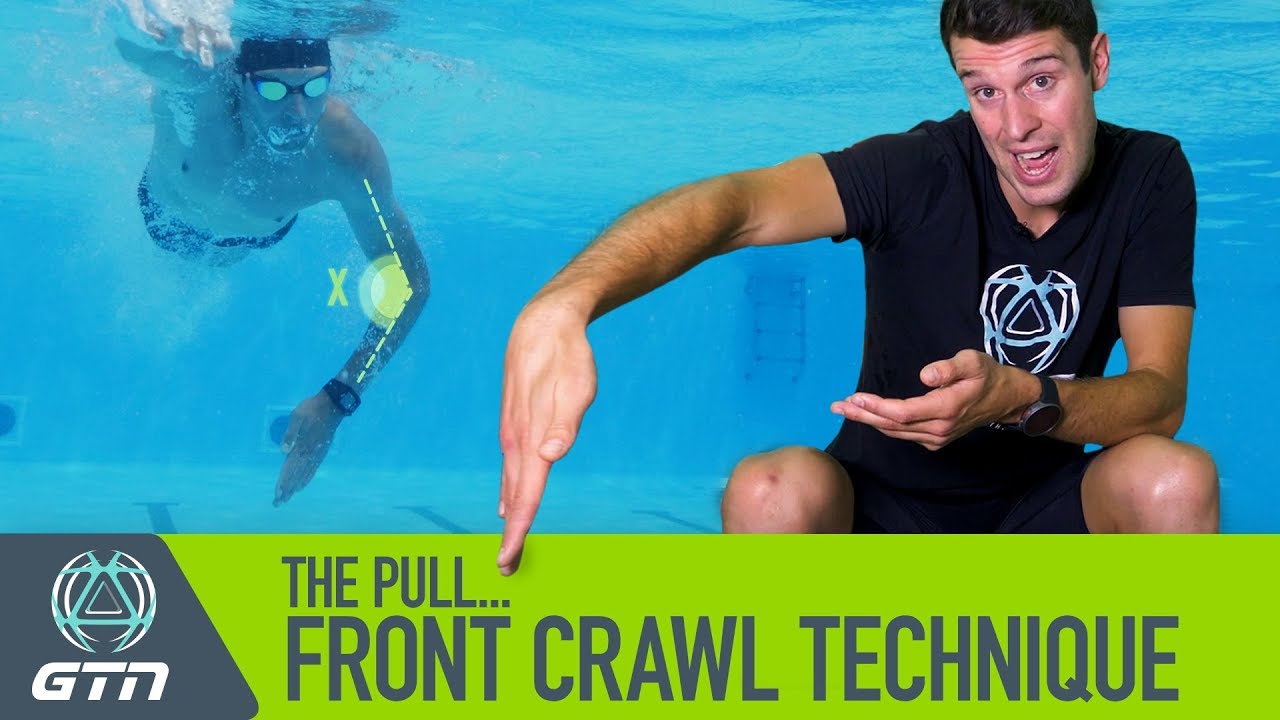
that front quadrant and that can help you feel like you're much better balanced and in control of your stroke as opposed to feeling like you're sinking and things are a rush and you're on this treadmill that there's no pause button to so we want to make sure we're swimming front quadrant the next part of the stroke and one of the last things we start to work on is what's happening with your arms under the water your catch and pull or your catch and press this is where most of your propulsion is going to come from
so we've always got to start with minimize drag that's number one then once we've started to minimize the drag and we've got good head and body position and effective legs we can then start to work on the catch and pool now the thing with the catch and pool is it can feel a bit of a challenge to be good at this and be effective at it and it does take time if you new to the sport you're not going to get this on day one this will take some time but I find that this is
the iding 20 of the stroke it's that 20% of the stroke that can make 80% of the difference so it's worthwhile investing the time into a really effective catch and hold of the water as long as you've got those other things in place first so the catch I consider the catch to be once you're out in front and you're on your side down to here where your fingers are pointing down and your arms at about 45° so this initial movement this is your your catch here this is not the power phase of your stroke if
we think about overhead movements we're not that strong especially compared to movements here more underneath us so the catch is not the power phase it's the setup phase of your stroke if you can moderate the power that you're putting in and have more of a focus on setting up a good position which I'll explain in a moment then you're going to be much better off through the rest of the stroke too often people are trying to muscle their way from here through there but if you're putting a lot of force in most of that force
is just going to go in a downwards Direction because you're not set up to effectively press back because if we want to move forwards we've got to make sure our big paddle which is our hand and forearm is facing mostly backwards that's how we need to move forwards but from here if you're going for broke and you're ripping hard there most of it's going to go down you lift your chest and your head up but it's going to drop your legs so we need to make sure that the catch okay might feel like a three
or four or five out of 10 in terms of effort so we're not just going completely limp with it putting a little bit of pressure on but more power more pressure will come as we're coming under the body so our catch it's a setup phase two things I like to see there fingers need to point down at the end of it and the elbow needs to bend quite often we'll see soon as they're going through their catch they are straight with their arm this elbow gets locked out and they have no Bend in it whatsoever
so we need to point the fingers down Bend at the elbow now when we do that and we do that effectively then we end up having it's almost like this big ball underneath us we could fit a big ball under there and that just means we've got this big surface area that we can use to hold the water and then move ourselves forwards so those two things now part of that and I see this is like it's an alpler versus a p plater in Australia L platers are six 15 or 16 years of age when
you can first get your license so when people first get their license they get taught 10 and two on the steering wheel elbows down here now this is a good position for driving is not a good position for swimming this is external rotation of your arms that's the same as what we call a dropped elbow catch you haven't got much of a paddle to work with there a p plater so when you get your licensed your full licensed you can drive by yourself 18 years of age a lot of guys start to drive like this
right here and this is internal rotation of the arm not as good for driving but great for your catch when you have this internal rotation of your arm that creates this fingers down elbow bent position that's what gives us a nice big paddle to work with so we want to make sure that we're doing our catch like a a p plater driving so this little bit of internal rotation of the arms now a mistake that a lot of people make there is they really internally rotate their shoulder to an uncomfortable position that is not strong
this is loading up the front of my shoulder right here so it's more of the arms internally rotating the shoulder is not doing much of it cuz this is going to compromise our strength so it's about finding that right out of internal rotation and doing it in the right position so once we've got that position we then want to make sure from there that we are holding this arm firm holding this arm strong now from here people then feel like they need to pull their arm back to their hip to move forwards but there's no
point just pulling your arm backwards in the water because it means that your arm will move but your body is not going to move forwards so a good distinction to make is once you're here feel like you are almost anchored in the water like you're holding your arm there and if you just go from here where you're on your side and you rotate onto the other side well your body's going to move past that point and naturally that hand will just exit past the hip because it's anchored and your body's moving past it that's a
much better approach at moving yourself forwards as opposed to thinking from here all right I've got to pull back as hard as I can and get my hand past the hip because what moves us forwards is that connection from our AR arm in the water through our shoulder through our body our core and our hips and a bit with our legs right it's it's that coordination of that movement so if you imagine like a ladder underneath you that ladder is going to have rungs on it now when you're swimming freestyle think about reaching forwards placing
your hand on that rung anchoring and moving your body past that point and then you do it again place it on the rung move past it now it's not going to happen exactly like that your arm will move back backwards a bit even the very best roomers in the world their arm does move backwards a bit as they're going through the stroke but that sort of concept helps you get the feel for holding the water rather than just pulling your arm through it and that's something that takes a bit of practice and if I'm working
with some as let's say in our our clinics or if I'm doing any any sessions with them in person we go through some drills and you know there's some drills in like a five day catch challenge where we go through this where we work on that concept of holding rather than pulling so that takes time uh it's not something you're going to get in the early days but the more you get the feel and the coordination of it the better return you you're going to get on the effort that you're putting in so it's a
good thought or a good cue to keep is once you have your catch so you want to point the fingers down bend the elbow and hold and move past there so that's the majority of what happens underneath you now where should you exit good swimmers they'll typically exit just past their hip or almost near their upper thigh so you don't want to come out early you don't want to finish the stroke and be coming out before the hip because you missed out on about that much water now you don't get a heap out of this
last part of the stroke but if you finish off the stroke well it gives you that last 5 or 10% of your propulsion and that helps you reach and extend forwards and then roll into the catch so we want to make sure we're finishing just pass the hip near the upper thigh if you are not sure where you're going just see if you can feel your thumb brushing your upper thigh you don't want to do that all the time but just as a way to get a feel for it that's a a good way to
make sure you're finishing just past your hip so that's your catch in your pull now quite often I'll get asked about how often should I breathe should I breathe every two should I breathe every 3 it's a very individual thing I personally like to breathe every two strokes especially when I'm racing and just to the one side but I do think it's a good skill to be able to breathe to both sides so in your session maybe you do 20 to 30 or 40% of your session breathing to your nonpreferred side because if we only
breathe to one side we tend to develop our stroke in a very uneven way tend to get a lot more powerful on our usually on our breathing side here and a little bit weaker on on the non- breathing side so it is worthwhile breathing to both sides in training and the way you can do that maybe you do breathing to the left on the way down breathing to the right on the way back so it's a skill worth developing especially if you're swimming Open Water you're going to likely have to breathe to your non preferred
side at some point if there's waves and wind and Chop on your preferred side well it makes it hard to breathe so sometimes you have to breathe to the opposite side in terms of the how often you should breathe it's very individual and it comes down to what you train so you look at someone like Arian tias she goes 24 24 when she's when she's racing and she trains that most people can't do that effectively but she trains that and it works for her a lot of distance MERS a lot of them will go every
two some every three but most will be every two strokes so it really just depends on the event that you're training for CU number one like it's got to be you've got to get enough air in if you're not getting enough air or enough oxygen you're not going to last very long so we've got to make sure we're getting enough air in so don't try and breathe every 3 or every four cuz you heard it's a good thing to do you've got to make sure that you're breathing enough to get enough oxygen in but then
just find whatever feels best for your Rhythm and Tempo now the final piece of the puzzle is looking at the Rhythm and the timing of the stroke and this is that dance part of the stroke this is that that part of the stroke that is a little bit more about how you feel in the water and it's this kind of beat or you know drum beat in the back of your mind that you get in tune with as you're swimming so with the Rhythm and the tempo sometimes this can come down to your breathing pattern
your kick Tempo whether it's a two beit kick a four beit kick or a Six B kiick and that can change within a race as well and then it's also just about practicing that sort of uh Rhythm and Tempo when you're when you're Racing for example if you look at say like a 1500 freestyle you look at some of the best rooms in the world they might do 1,400 M with a 2 beig kick now when it comes down to the last 100 m they're going to pick it up to likely a six B kick
now that six B kick can be harder to maintain because it uses a bit more effort but they bring it in because it can help increase their speed in that last 100 with that six be kick so your Rhythm and Tempo and your kick can change depending on the speed that you're going so it's worth worthwhile developing these different gears and different speeds and Different Strokes in a way for the different aspects of your race if you're racing but that's really further down the the towards the end of the line if you're fairly newed to
swimming start with the basics get your breathing right good head position good body position get the legs right those things can carry you very very far in your swimming so there's no need to go to the very end if you're around maybe that 145 or slower per 100 just at an average pace get those fundamentals right that can carry you very very far all the way past that 145 pce per 100 and then start to look at those other things now if you like this video please like it send it someone that uh that you
know is swimming and trying to get better and hit the Subscribe button if you did enjoy this video thanks very much for watching

![[Feedback Friday] How To Break 2:00/100m](https://img.youtube.com/vi/rQrb-7-x26U/maxresdefault.jpg)
![Pan Zhanle wins 800m freestyle and breaks the record! [EN/CH] The sky’s the limit for Pan Zhanle.](https://img.youtube.com/vi/YVwTUALfoRI/maxresdefault.jpg)