So uhm, yeah, I’m not… not doing great. We have all, at some point or another, questioned our identity. We have all had moments where we felt unsure about who we really are, or about how we fit into the world around us.
Maybe you felt pressured to act in a certain way, or felt lost in a sea of possibilities. Maybe you felt unrecognized by others, or perhaps it was you yourself who no longer recognized the person staring back in the mirror, no longer had a sense of your own wants and needs. It’s a feeling of alienation, and when such feelings persist for a prolonged amount of time, it can be said that we are dealing with a crisis of identity.
What do you do, cakeman? The importance of a somewhat coherent sense of self is reflected by many, if not most of the stories we tell, in which we generally follow characters going on journeys that result in them learning more about themselves or about their place in the world. Whether they become a wizard, a jedi or a superhero, find the success they’ve always wanted, overcome a tragedy, or fall in love with the partner of their dreams, all these outcomes are really just different expressions of the real victory; the achievement of a stronger sense of self, of an identity that feels more solid, more comfortable and more meaningful than the one they had before.
So what's your story? - So what's your story? What's your story?
Why'd you come here? We often think of our own identities as stories too. To be someone is to have a story, to have past experiences, character traits, to have goals and aspirations.
It’s not just that we desire this for ourselves on an individual level, it is also a collective issue. In our social interactions, we continuously fall back on what feels like a mandatory act of self-identification through storytelling. In other words, when people want to know us they generally want to know our story, and we do the same when we want to know them.
What do they do for a living? What brought them there? Where do they want to go?
What are their passions, their values, their dreams? What defines them as a person? We tend to feel more at ease when someone offers a coherent story, and when we ourselves can offer one in return.
A coherent story implies an authentic identity, this doesn’t mean that you have it all figured out, but merely that you know yourself well enough for others to get to know you too, and to feel comfortable with you in their presence. And so it is understandable that if we struggle with our identity we risk significant social consequences as well. If you don’t have a coherent story, if you don’t know who you are, and are being vague or overly reclusive about yourself because of it, people will likely find it more difficult to connect with you, which in turn will probably only worsen your self-doubt and feelings of alienation.
In short, a crisis of identity is no small matter, and has serious consequences not only for the way we feel about ourselves but also for the way we fit into the world around us. And so today, I want to explore this struggle, and how it is reflected by stories, in more detail. To do so, I worked together with Dutch philosopher Simon Gusman, who together with his friend and colleague Arjen Kleinherenbrink, conceptualized 3 types of identity crisis that give us a better insight in the problem of identity, the different ways in which we can experience a crisis of self, and, perhaps most importantly, how we can deal with them.
This video is sponsored by CuriosityStream and Nebula. For over a thousand generations, the Jedi Knights were the guardians of peace and justice in the Old Republic. Before the dark times.
. . before the Empire.
Displacement is the feeling that we have become disconnected from a past where everything was still as it should be. It’s the idea that there was once a harmony that through whatever developments has been disrupted and now we feel lost because of it. Perhaps the most archetypal story of displacement is that of Adam and Eve, who once lived in perfect harmony with themselves, with each other and with the world until they ate from the forbidden fruit and were cast out of Eden.
I'm trying to understand this deep connection that the people have to the forest. Displacement can take many other forms however, we for example see it in the many stories about our disconnect from nature, which often feature native peoples as metaphors for how we too once lived in harmony with the natural world, but have been led astray by greed and technology which, based on the also many stories about dystopian futures, are surely to disconnect us further and further until we are alienated beyond repair. The thing is, Bob, it's not that I'm lazy, it's that I just don't care.
We also see it stories that deal with other aspects of our society. There are many films for example that explore the frustration with modern working life and, besides making other commentaries, invoke the feeling that we once had real jobs that produced real things, that could be practiced with pride and dignity, yet that have now been reduced to purposeless servitude. Gentlemen, welcome to fight club.
Or look at the way masculinity is seen in films like Fight Club and 300, which are just two examples of stories that seem to reach back in the past in search for that time where men were still men, where there still existed a purer, more complete version of masculinity that has since been watered down by shifting gender norms. Just how, in one generation, have men gone from guys like jack Nicholson and Harrison Ford to. .
. In today’s cinema, displacement, more than ever it seems, is also associated with a strong sense of nostalgia. If I could live any place and any time, I'd live here in London in the '60s.
It must have felt like the center of the universe. Besides reaching back to past eras, we also seem to be increasingly reaching back to past films. That first park was legit.
It is as if to say “we are no longer making films like we used to,” or perhaps it is because of streaming or because of the deteriorating attention span of the audiences. In any case, the increasingly ubiquitous appeal of the past invokes a feeling of something not being quite right today, something that used to be better back then. If only we could return to that time… Whereas displacement is fixated on the past, and often concerns the collective, you know; ‘we do not belong here, we have to go back,’ constrictment, on the other hand, is oriented towards the future, and is much more an individual issue.
The thing is, Diana, there has to be two of you. There's the real one, and the one they take pictures of. We speak of constrictment when someone feels trapped in their environment, in their body, or in some construct that dictates who they are supposed to be, and wishes to escape from it.
To feel constricted is to feel; ‘I do not belong here, I have to go somewhere else, I have to become someone else’. Every day, you wake up and there'll be less of you. You live your life for them and they don't even see you.
You don't even see yourself. Like displacement, feelings of constrictment can take on many forms. One obvious example is the significant identity crisis that people can experience when their sexual orientation does not reflect the norms of their environment.
Or when they do not experience the gender that the people around them have attached to their physical bodies. In stories like these, you can clearly see the pain people can go through when they are not able to harmonize their inner feelings with other people, and with the outside world. I'm nothing, I'm nowhere.
Constrictment is also often experienced by people who feel trapped in their families, or in their more general social environment that imposes norms on them that they cannot fit themselves in. We see this is classic stories of those who want to dance but are not allowed to, read poetry where it is forbidden, or who simply want to discover something about themselves and about who they are on their own terms. Characters experiencing such conflicts are first and foremost driven to escape; escape from their families, from their jobs, their hometown, from the person they are expected to be.
It can also be the case that people feel trapped between multiple conflicting identities, that they’ve been living in multiple worlds that cannot seem to be reconciled, resulting in the feeling that they do not belong to any one of them. So if I'm not black enough and if I'm not white enough, and if I'm not man enough, then tell me, Tony, what am I? The ubiquity of stories depicting the struggle to escape constrictment can in part be explained by the rise of individualism in the second half of the 20th century.
Beginning with the counter movements of the 60s and 70s, the search for identity became in large part be defined by a certain defiance, and that still rings true today. To be an authentic person is, to some extent, to be non-conformist, to author your own identity instead of merely being an expression of an existing one. We see this is the many stories of people trying to find fame and success, but even for those who do not have such lofty ambitions, there often still is that pressure to be someone unique, to stand out from everyone else, to find your true identity.
And on this matter, there is good news and bad news… Displacement and constrictment are both based on the same fundamental problem, that being; a lack of possibilities. Someone who feels displaced cannot restore a past identity, and someone who feels constricted cannot express their desired one. As such, the solution seems, and has historically been, pretty obvious: more freedom.
If individuals, or even whole communities, have more space to become who they want to be, that’s exactly what they could do. And we’ve already seen a lot of progress with providing this freedom, especially when it comes to resolving issues of constrictment, at least in Western societies. Coal mine is your life, not mine.
The internalization of individualism has made it generally less likely that children are expected to follow in their parents’ footsteps, and more likely that they are encouraged to find their own identity. Don't ever let somebody tell you, you can't do something, not even me. Furthermore, we’ve drastically increased our mobility, both in the sense that it is easier than ever to move around physically and explore different settings and environments, and in the more social and ideological sense as we are increasingly recognizing and celebrating different identities in all their diversity, and in doing so, making it easier for people to express themselves.
The very fact that we have so many stories now that show, in so many different ways, the liberation from constrictment is, to some degree, a testament to its waning power. Hey guys, Kayla back here with another video. The growing presence of the digital world has also been a big contributor to this as, through the internet, our access to other people, other norms and ways of thinking has become virtually unrestricted.
It has given us unprecedented opportunities to explore our identities, to encounter likeminded individuals and communities, and to find a sense of belonging. As such, it is understandable to think that we are well on our way to eliminate crises of identity once and for all, that we have figured out the solution, albeit on a conceptual level as in practice the freedom to be who you are is certainly not distributed equally and universally yet. But the path is clear, and soon everyone will be able to be who they want to be.
Except, this doesn’t seem to be true, does it? Despite us having more freedom than ever to express our desired identities, why do we still feel so alienated? Why do we still struggle to figure out who we are?
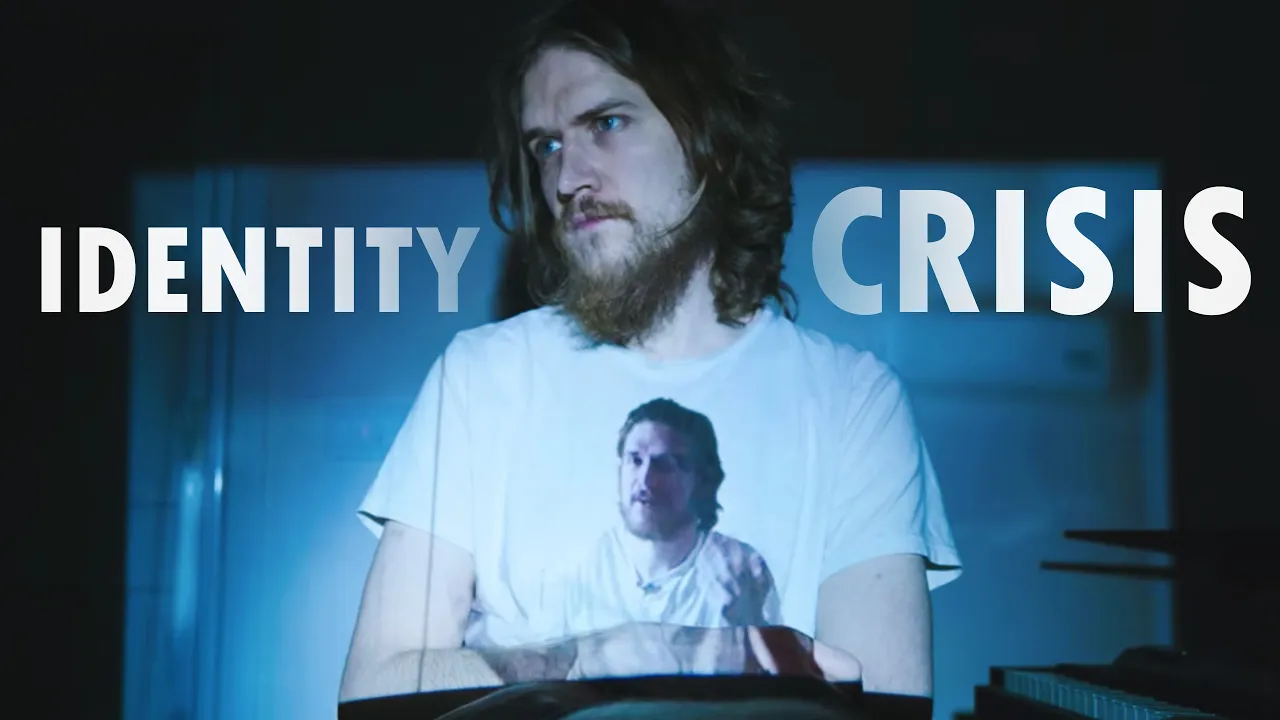
Well, this is because in our effort to resolve feelings of displacement and confinement, we have run into a third type of identity crisis. Though not an entirely new phenomenon, the feeling of overwhelming freedom has become much more prominent in modern times as a sort of side-effect to our progress in the first two types of identity crisis. As the name suggests, overwhelming freedom is defined by an overabundance of choices and different ways to give shape to your identity, resulting in a feeling of restlessness, of over-stimulation, or as Bo Burnham captures it: Could I interest you in everything all of the time?
A little bit of everything all of the time. In many stories, overwhelming freedom often follows the deconstruction of a pre-existing identity. In the Blade Runner films for example, the existential crisis experienced by the replicants stems from them breaking free of their previous roles.
For years, they lived as servants to humanity, but once they stopped defining themselves by that identity, they no longer knew who they were, nor what their purpose was. But other stories too show how it is not uncommon to lose your sense of self after being introduced to new ways of being. It's hard to believe it's only been three months.
I barely remember my own life. I don't know who I am anymore. Here we also find the stories about crises of faith, which are generally centered around believers who can no longer explain their world or themselves by the word of God, thereby destabilizing their identity as believers and resulting in them feeling alienated in a world that has suddenly become unrecognizable, chaotic and frightening.
I pray, but I'm lost. Or am I just praying to nothing, nothing. .
. It is true that to open a new door is to step into the unknown, and it makes sense that this results in period where you have to re-evaluate your relation to yourself, to those around you, and to the world you live in. But what we are experiencing today, or at least, so it seems, is a constant pressure of potential, which subsequently turns what should be a brief period of adjustment into a constant state of being.
There’s a whole genre of stories about people just sort of drifting around, aimlessly wandering, trying to figure out who they should be in a world of endless connections. They show that when we are free to be everything, it becomes really hard to be anything. After all, when you’re experiencing overwhelming freedom; every choice can be unchosen; every job, every town, every partner can be left for another.
There is an ever-present ‘what if? ’ lurking on the horizon. The film Synecdoche, New York in particular portrays this struggle beautifully as the main character, a theatre director, is given a blank check to create his magnus opus and, as a result of this overwhelming freedom, cannot seem to settle on anything.
None of those people is an extra. They're all the leads of their own stories. They have to be given their due.
With every moment, every person, everything becoming equally desirable, equally meaningful, there can be no definitiveness, nothing can be hold on to. Our identities become eternally unresolved, perpetually in search of something else, something different, something more. So I've been working on this.
. . So I've been working on this special for, uhm.
. . So I've been working on.
. . So how do we deal with all this?
Because if the answers to displacement and constrictment only lead to a third form of identity crisis, where do we go from here? How do I begin? Well, the most important thing to remember is that a crisis of identity is not a problem that is ever going to be fully solved, but is a fundamental aspect of the human condition.
Just look at the way every generation experiences feelings of displacement in some form or another, how we always seem to romanticize a time just before ours, just before everything went wrong. Guess I just like the old songs better than the stuff today. What this really reveals about displacement is that most of the time, such feelings do not stem from an actual historical misstep by our society, but from our tendency to mythologize a past that never really existed.
Sure you can make a case for how certain things used to be better at an earlier point, but when it comes to the problem of identity, and our relation to ourselves, others and to the world, there was never really a time where it all came together more harmoniously than it does now. It's like you feel homesick for a place that doesn't even exist. The same goes for constrictment.
While it is absolutely true that you can find yourself in a situation that you need to escape from, especially when that situation is actively harming you, the act of doing so will never make you feel truly whole, at least, not in some kind of definitive, ever-lasting way. We're just living in the pretense of a marriage, responsibility, and all these ideas of how people are supposed to live. Just as there is no state of perfect harmony, of absolute authenticity in the past, there also won’t be one in the future.
Sure, we can become happier, more confident, we can find more supportive environments for ourselves, or better partners, and we definitely should when we need to. But in the end, our identity is not only something that we are, or at one point can fully become as a truly authentic person, it is also something that we relate ourselves to. In this sense, there is always going to be a certain distance, a certain degree of alienation, between ourselves and our thoughts, feelings and convictions.
There is always going to be that part of us that can reflect on these things, that can wonder; “is this still me? Is this still who I want to be? ” Especially today, when we are so pressured to keep asking such questions, to keep growing, keep changing, keep becoming, it is hard not to let all this overwhelm you.
But the thing about overwhelming freedom is that here too we are in large part dealing with an abstraction, meaning that even though we feel like we could theoretically do and be anything, in practice, this is never really the case. Even in a world of unlimited possibilities, we are still bound by a wide variety of constraints and limitations, and even though we may feel like we can become anyone, the identity that we have is already in large part defined by past experiences and past choices, and is, in its essence, not as interchangeable as we are sometimes led to believe. Every path is the right path.
Everything could have been anything else, and it would have just as much meaning. As such, a good start to dealing with overwhelming freedom is to shift our focus away from all the potential choices and identities that we could encounter, most of which only present highly superficial changes anyways, and towards giving weight to the choices and the identity that we have right now. We don't get a lot of things to really care about.
As the classic film It’s a Wonderful Life taught us so many years ago, sometimes what we need more than anything is to see what we already have, who we already are, instead of being blinded by all that we could become. I wanna do something big and something important. You know, George, I feel that in a small way we are doing something important.
Satisfying a fundamental urge. We put on brave faces for each other, we try to present ourselves with confidence, but we won’t always succeed in doing so. Sometimes we no longer know who we are, what we want, and who we are supposed to be.
But this does not mean that we are broken. And realizing this, truly realizing this, is perhaps the most important thing one can do to ease the pain of an identity crisis, and the associated feelings of alienation. No one has truly figured out life, no has truly figured out who they are.
Like our morality, crises of identity are a part of our existence, they are not defects to be fixed. Even in periods where we briefly forget about them, briefly feel secure and confident, they are never completely gone. We carry them with us, always.
But we can change our attitude towards them, find some degree of peace with their presence, and in doing so, let go of the constant pressure to keep becoming, and start just being. I can see it. This one moment when you know you're not a sad story.
You realize you are not special. - You are alive. If you want true love, then this is it.
This is real life. It's not perfect but it's real. This is everyone's experience.
Every single one. Everyone's everyone. I thought it was a dream, what we knew in the forest.
It's the only truth. I will rely on those closest to me, and I will share their burdens, as they share mine. Hey everyone, just a really quick announcement: not only has our creator owned streaming platform Nebula passed 400.
000 users, also the holiday sale that gets you both CuriosityStream and Nebula with a 42% discount has been extended until Christmas Eve. That is less than 12 dollars for a whole year of both Curiositystream and Nebula. Ok, so I should probably elaborate on this for those who do not know yet; Nebula is the place where you can follow all your favorite creators, watch extended and exclusive videos, including some of mine, and all that without any ads or sponsors, how great is that?
Oh, and CuriosityStream, of course, is the educational streaming service with thousands of documentaries and nonfiction titles, like The Norwegian Fjords, a beautiful portrait of Norway’s unique wilderness, which I was fortunate enough to visit once and I loved how this film took me right back there with its stunning photography. Whereas CuriosityStream is all about big-budget non-fiction productions like these, they also love independent creators which is why they are helping us to grow our platform Nebula, and which is why we have this great deal right now to get both services for just 12 dollars a year. So if you’d rather be watching extra content instead of this ad, enjoy some fantastic documentaries, and support a platform where creators like myself can rely on the support of a strong community, where we are free to be creative, and receive fair compensation, be sure to head on over to curiositystream.
com/likestoriesofold, to get the best deal in streaming, today.