This incredible hood. You know, the same company that restored the Cartier mansion on the New Avenue in New York. There's the same company that came and did all of the bronze and brass working here.
That's what 23 and a half million dollars will get you in Washington, D. C. High end real estate in the area is hotter than it's ever been before.
Daniel Hightower is a luxury real estate advisor with Sotheby's and the listing agent of 30 Chain Bridge Road in the Kent neighborhood of Washington, D. C. .
The volume of some of America's most successful businesspeople is here now. And we are watching this city shift because of it. We're seeing the market shift.
We're seeing home prices rise in the very upper brackets. Very recently, I set a record in Washington for selling the most expensive home ever for $25 million. Commerce Secretary Howard Lutnick reportedly bought this property from Fox News's Bret Beyer.
I think of myself a lot as like an art dealer, how we present and communicate properties value in maybe 30 to 45 minutes, if we're lucky to get a VIP family's time is everything. Usually, presidential cycles don't impact the market in such a tremendous way. Usually what happens is that when there's a change of administration, the vast influx of folks into Washington's capital region are folks that are coming to rent for a little bit.
What we're seeing certainly in this cycle is just the opposite. This isn't just a one level closet. It's actually a two level.
You're serious? So this brings you upstairs. This house does not disappoint on any level.
And there's a lot more here than meets the eye. In her 20 years as a housing economist, Lisa Sturtevant of Bright MLS has witnessed four presidential transitions. People bring all cash to the deal.
We have less inventory of luxury properties now than we did a year ago. Conversely, the entry level market and the move up market, there's more homes available for sale. Part of that is those luxury buyers aren't as interest rate sensitive as an entry level or a move up buyer is.
The interesting thing to analyze is the tale of two markets. On one hand, you've got this upper end bracket market that is going through the roof right now, and then on the other you've got a little bit more apprehension due to mostly interest rates being high, fears of the bottom falling out of the Capitol's real estate market started after COVID changed demand and prices. During the pandemic, the Washington area housing market was sort of on fire like it was in many places.
Record low mortgage rates brought a lot of buyers into the market. Our further out suburbs actually did really well during the pandemic. More people looking for more space, looking to move further out.
But even since then, even as mortgage rates increased, we still saw really strong demand here in the Washington area. And now we're sort of in this period where there's a lot more uncertainty in the market. How much bullishness is there about the future of of DC, given what we're hearing about how radically it might change?
I can tell you I've lived in Washington my entire life. We are multigenerational Washingtonians as a family. And what I've seen is that Washington is a unbelievably resilient market.
You know, well before I was even a licensed real estate professional, you can go back and study the data of 1997 and 2011. And you can see that really what happens in Washington is if there is a major global economic downturn, it is that the Washington market pretty much flatlines. And that, to me, again, is is a safety factor of why people would want to invest in Washington.
This is the seat of power for the free world. And while parts of it are being downsized, the main apparatus is going nowhere. In the conversations that I've had even more palatable than the actual government employees.
And what what reduction workforce there would be are the government programs and the companies that work based off of that government funding. You know, without the funding, then they don't have a reason to exist is extremely poor. Phillipe Lanier is a principal at East Bank, a D.
C. based real estate investment company that focuses on urban revitalization. They have leases, they have commitments to different vendors, and that ripples through the system.
So yeah, it's definitely going to impact business in this area. Trump's administration has already produced potential cuts of more than 100,000 federal workers, including in the Departments of Education and Veterans Affairs and social media posts, claiming that there is an exodus from the city or adding to the perception of instability in the D. C.
area. A threat on X with millions of views claims that federal worker layoffs have triggered a $139,000 decline in DC's median home price. I've heard this word exodus a lot, and I'm just not sure we understand.
And the magnitude of what the impacts will be. And what I mean by that is about 14% of the workforce here in the greater Washington area is a federal government civilian worker. So most of those federal workers are in households where there's another worker and those other workers likely work for the private sector.
The private sector unemployment rate here in the Washington area is less than 2%, meaning the private sector may be eager to hire folks who may be transitioning out of the federal government. If you look at the city right now, it's dealing with what I would say are three shocks to the system for a rapid change to the system. One, which is very normal, is whenever you have a change in administration, there's a rotation in and out.
So you're going through that change. The second one, which you know, it's obvious to everyone reading the news, is you wonder which government institutions are getting smaller or going away, you know, whether people are being let go. And how is that impacting the city's downtown core?
The third shock, however, is what is not really talked about as much is that the amount of people that are coming back to the office with the new administration is massive. Workers who are keeping their jobs and staying in the area are creating opportunities in real estate. It is a real fundamental shift in the fabric of downtown D.
C. And you feel it. You feel it in the metro ridership.
You feel it when you walk around. You know, we have a bunch of residential buildings. Therefore, there is a high demand for the residential buildings.
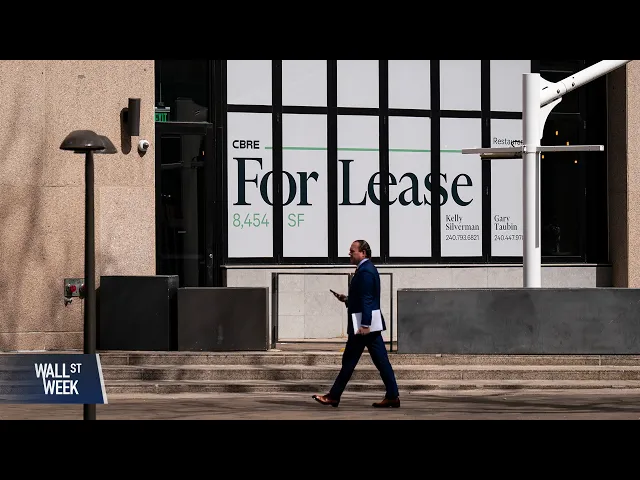
I'm not seeing what I read in the news that people are being let go. It's not just announcements about workers being let go. It's also the buildings they worked in.
Earlier this month, the Trump administration released a list of more than 400 federal buildings it could look to sell. They've since deleted the list, but it adds another layer of uncertainty in D. C.
. Some of the buildings that were on that initial list are in parts of the city where there hasn't been much private development. Areas that have been home to government office buildings for decades.
They're very clustered within an area. And so that that's a challenging valuation exercise because if you were to take control of one building and fix it, you have all these zombies next to you. So there's no real value in that building unless there's a broader strategy.
I would expect that that turns into more of an architectural master plan where you understand how to fix the whole thing at once. The properties north of the mall, they're much more interesting. They're more individual in nature.
And there are some properties that are put up for sale that were surprise to me that you can really do something with immediately. There's real land value and if you could assemble the capital structure to do something, you could build something that people want. One such former federal building has already been converted into a luxury apartment complex.
Annex building in the 1930s was used to, like, standardize all types of commodities for agriculture, served tons of purposes throughout the years. This section of the building was more of the warehouse of that building. So it's really lofted ceilings as we go throughout the building.
The building called Annex on 12th opened in December and has 561 dwellings ranging from about 400 to 1200 square feet. And it's the closest residential complex to the Smithsonian. So this next phase is called the Vaults.
And what that is, is it's a callback to a really cool relic. They were able to preserve the original building When they were walking the building, one of our developers spotted a vault door on the basement level of the building and it was in shambles. But he thought it looked really unique.
They were able to move it up here, and that's the centerpiece for our speakeasy. So as soon as you open up the door, that's the first thing that you can see. As soon as you walk in, there could be another use for federal buildings.
For the private sector, there's an opportunity to bring more private sector investment into the city. If the the sale of those buildings happens in the right way. One of the things that the greater Washington area has benefited from over the last couple of decades is that diversification in the economy, more private sector investment region wide.
The city itself, though, is still very highly concentrated in federal government activities. And so if those buildings can be repositioned as private sector activities, that feels like they could be a plus for D. C.
Even amid the changes in policy, the return of federal workers, their expected contribution to reviving the downtown area and the hope of attracting more tech companies make this a good time to be in Philip Lanier's commercial real estate development business. It's a good place to invest. They also typically have stability, so that's another reason why people like it.
It doesn't have heights. So if you want to make $1,000,000,000 deal in real estate, you go to New York, you don't really go to D. C.
, D. C. It's more like the 400 to $300 million size range.
But yeah, I'm confident that the city will remain relevant. The economic tide might already be turning for D. C.
and its commercial and residential real estate players are hopeful for its future. The number one indicator that I think most of your audience will agree with. You know, I can have all the best ideas in the world, but it's not going to change and less money comes in.
I just continue to think that Washington is is is resilient. And I don't believe that everybody who owns a home is going to sell that home. My bet is on Washington.
I believe in this city and the capital region, and I think it's going to continue to do well.